标签: North America

北美洲

  • Dubai: Family restaurant Moreish to close doors after 7 years; community nostalgic

    Dubai: Family restaurant Moreish to close doors after 7 years; community nostalgic

    DUBAI – After seven years of operation, Moreish, a cherished family restaurant in Dubai, will permanently shutter its doors on January 18, 2026. The establishment announced its closure through emotional social media posts, citing evolving market conditions and personal readiness to “turn the page” as primary factors behind the decision.

    The restaurant’s management expressed profound gratitude to patrons while acknowledging the difficulty of their choice. “With the heaviest of hearts, we’ve decided it’s time to move on,” the statement read, emphasizing pride in their culinary standards and the meaningful connections forged with the community.

    Local residents responded with an outpouring of sentimental memories and expressions of loss. Patrons highlighted the restaurant’s cozy atmosphere and lovingly prepared dishes, with many sharing personal anecdotes of life milestones celebrated within its walls. The announcement triggered widespread nostalgia among both current and former Dubai residents, including those who made special visits to Moreish when returning to the city.

    In response to the closure, customers proposed alternative ways to preserve the restaurant’s legacy. Suggestions included recipe publications and exploring new culinary ventures that would allow the community continued access to their favorite dishes.

    During its final weeks of operation, Moreish extended an invitation to the public for one last dining experience, specifically mentioning two signature dishes – Polenta Steak and Grilled Peach Bruschetta – that would particularly miss their devoted clientele. The restaurant’s departure marks the end of an era for Dubai’s dining scene, reflecting the continuous evolution of the city’s culinary landscape amid rapidly changing market dynamics.

  • Australia falls silent, lights candles for Bondi Beach shooting victims

    Australia falls silent, lights candles for Bondi Beach shooting victims

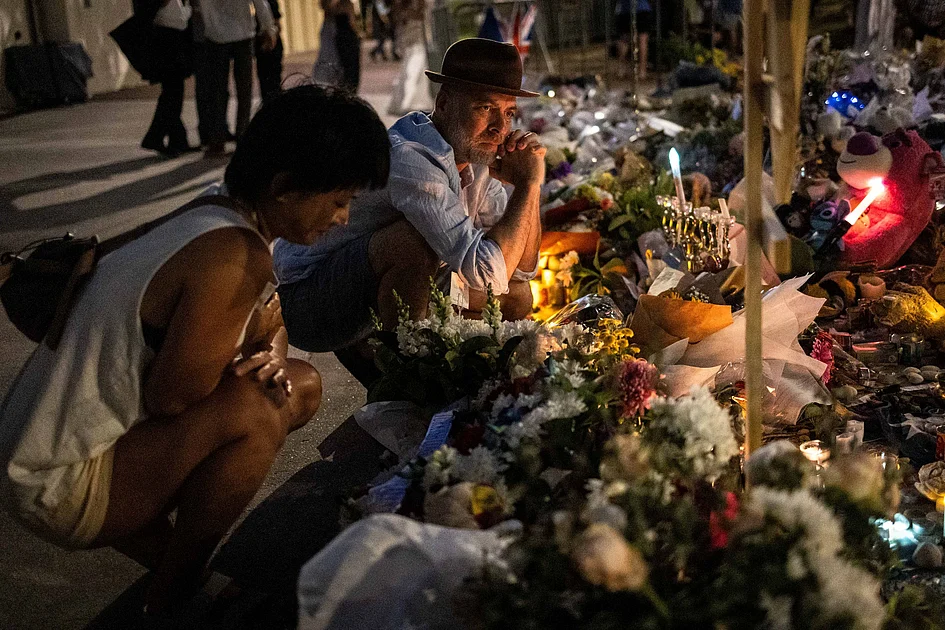
    Australia stood united in solemn remembrance on Sunday as citizens nationwide observed a moment of silence and illuminated candles to honor the fifteen lives lost in the devastating Bondi Beach shooting. The tragic incident, which occurred exactly one week prior during a Hanukkah celebration, represents the deadliest mass shooting the nation has witnessed in nearly three decades.

    At precisely 6:47 PM local time, the country fell silent—from vibrant urban centers to tranquil rural communities—marking the exact moment gunfire first erupted at the beachside festival. The nationwide gesture was accompanied by a powerful visual symbol as countless households placed candles on windowsills, embodying the Hanukkah theme of ‘light over darkness.’

    Approximately 20,000 mourners gathered along the Bondi foreshore as dusk descended, participating in an emotionally charged vigil where Rabbi Yehoram Ulman solemnly read the names of each victim. Among those memorialized were Matilda, a ten-year-old girl who became the youngest victim, and 87-year-old Holocaust survivor Alex Kleytman, who reportedly perished while shielding his wife from bullets.

    The alleged perpetrators—identified as Sajid Akram, an Indian national who entered Australia in 1998 and was subsequently killed by police, and Naveed, an Australian-born citizen currently hospitalized under police guard—face multiple charges including terrorism and fifteen counts of murder.

    While the ceremony emphasized unity and remembrance, underlying tensions surfaced regarding the government’s response to rising antisemitic incidents. Prime Minister Anthony Albanese faced audible dissent from portions of the crowd, with one individual shouting ‘Blood on your hands’ as he arrived at the vigil.

    Amid the tragedy, stories of extraordinary courage have emerged, including shopkeeper Ahmed al Ahmed, a Syrian immigrant and father of two, who successfully wrested a firearm from one attacker after maneuvering between vehicles. Additional accounts describe beachgoers confronting the heavily armed assailants, shielding strangers, and rushing through active gunfire to administer aid to the wounded.

  • US reportedly pursuing third oil tanker linked to Venezuela

    US reportedly pursuing third oil tanker linked to Venezuela

    The United States Coast Guard initiated an active pursuit of another oil tanker in international waters near Venezuela on Sunday, marking the latest escalation in a series of maritime confrontations between the two nations. This development follows Saturday’s seizure of a Panamanian-flagged vessel by U.S. authorities—the second such intervention this month—as part of Washington’s intensified enforcement of sanctions against Venezuela’s state oil company PDVSA.

    According to U.S. officials speaking to CBS News, the targeted vessel represents a ‘sanctioned dark fleet vessel’ engaged in Venezuela’s ‘illegal sanctions evasion’ operations, allegedly flying false flags while under judicial seizure orders. The Trump administration has justified these actions by accusing Venezuela of utilizing oil revenues to fund drug-related criminal activities, though no public evidence has been provided regarding alleged drug smuggling operations.

    Venezuela’s government, presiding over the world’s largest proven oil reserves, has vehemently denounced these interdictions as ‘theft and kidnapping’ of national resources. In response to Saturday’s incident, Caracas announced intentions to file formal complaints with the UN Security Council and various multilateral agencies, warning that ‘these acts will not go unpunished.’

    Maritime monitoring data from TankerTrackers.com reveals the scale of this confrontation: as of last week, more than 30 of the 80 ships in Venezuelan waters or approaching the country were under U.S. sanctions. The vessel seized on Saturday, while not explicitly listed on the U.S. Treasury’s sanctioned vessels list, was reportedly carrying ‘sanctioned PDVSA oil’ and had previously sailed under Greek and Liberian flags according to shipping records reviewed by BBC Verify.

    This maritime crisis unfolds alongside increased U.S. military presence in the Caribbean Sea, where American forces have conducted deadly strikes on alleged Venezuelan drug-smuggling boats resulting in approximately 100 casualties. These military actions face growing congressional scrutiny due to the absence of publicly disclosed evidence connecting targeted vessels to drug trafficking.

    The Trump administration has further escalated tensions by accusing Venezuelan President Nicolás Maduro of leading a designated terrorist organization called Cartel de los Soles—an allegation Maduro consistently denies. With Venezuela’s government heavily dependent on oil export revenues for public financing, these maritime interdictions strike at the core of the nation’s economic stability amid ongoing political and humanitarian crises.

  • At least 13 photos removed from justice department Epstein files website

    At least 13 photos removed from justice department Epstein files website

    The U.S. Department of Justice (DOJ) has temporarily removed several images from the recently released Jeffrey Epstein case files, triggering political scrutiny and raising questions about transparency. Deputy Attorney General Todd Blanche confirmed on Sunday that at least 13 files had been taken down from the official DOJ website, including one photograph featuring former President Donald Trump.

    The removal decision followed concerns raised by victims’ rights groups regarding unredacted images of women appearing alongside public figures. Blanche emphasized that the temporary withdrawal was strictly related to victim protection protocols rather than political considerations. ‘The suggestion that the photo was removed due to President Trump is laughable,’ Blanche told NBC News. ‘There are dozens of photos of President Trump already released to the public with Mr. Epstein.’

    Among the removed materials was an image showing Epstein’s credenza desk with an open drawer containing multiple photographs, including one depicting Trump, Epstein, First Lady Melania Trump, and convicted associate Ghislaine Maxwell. Other removed files displayed images of a massage parlor with nude artwork and photographs on the walls, where some women’s faces remained visible despite redaction attempts.

    The DOJ stated on social media platform X that the Trump-inclusive image was flagged by the Southern District of New York ‘for potential further action to protect victims’ and was removed ‘out of an abundance of caution.’ After review, the department determined no Epstein victims were depicted and restored the image without alterations by Sunday morning.

    The document release itself has faced criticism for missing Friday’s legal deadline and containing heavy redactions. Congressman Thomas Massie (R-KY), who led the push for disclosure, expressed frustration with the administration’s response and announced plans to draft inherent contempt charges against Attorney General Pam Bondi. Meanwhile, Democrats on the House Oversight Committee questioned the removals publicly, posting on social media: ‘What else is being covered up? We need transparency for the American public.’

    The newly released files, mandated by congressional action, excluded materials depicting child sexual abuse, physical abuse, active investigation details, and classified documents. Notably absent were internal DOJ memos regarding charging decisions, leaving limited new information about Epstein’s crimes despite the highly anticipated disclosure.

  • UAE student builds discount platform; users save up to 20% monthly

    UAE student builds discount platform; users save up to 20% monthly

    In an inspiring response to rising inflation, 19-year-old Emirati entrepreneur Naji Faqihi Al Awadhi has launched SmartPocket, a dedicated student discount platform that helps users save approximately 20% on monthly expenses. The concept emerged from Al Awadhi’s personal experience during his final year at the American School of Dubai, where he noticed his fixed allowance increasingly failed to cover basic necessities as prices continued to climb.

    SmartPocket, which went live in October 2025, now partners with over 20 brands across food, fashion, electronics, and subscription services. Students verify their status through university email addresses or official identification documents to access exclusive deals. The platform operates on a unique business model that charges no commissions or upfront costs to brands, instead offering free distribution to secure partnerships with companies typically hesitant about new platforms.

    The development journey spanned two years and required significant operational sophistication compared to Al Awadhi’s previous venture in sneaker reselling. After initially developing the concept with a co-founder through family and friends funding, Al Awadhi bought out his partner’s stake before launch. The most substantial challenge came from refining the redemption system after meetings with Dubai businesses revealed different needs than initially anticipated.

    Currently pursuing Entrepreneurship and Innovation studies at George Washington University, Al Awadhi manages the platform remotely while focusing on market feedback rather than immediate expansion. While GCC growth remains possible, the young entrepreneur emphasizes the importance of starting small and building gradually, crediting the UAE’s supportive business environment for enabling young innovators.

    The platform enters a competitive market alongside international student discount services but has already generated valuable user feedback regarding verification processes and interface design. While long-term revenue generation strategies remain undisclosed, SmartPocket represents a innovative approach to addressing youth financial challenges in an inflationary economy.

  • How Tech’s biggest companies are offloading the risks of the AI boom

    How Tech’s biggest companies are offloading the risks of the AI boom

    In an unprecedented financial maneuver, technology behemoths including Meta, Microsoft, and Google are implementing sophisticated strategies to transfer substantial portions of AI infrastructure risk to smaller entities and private lenders. This emerging trend represents a fundamental shift in how major corporations approach the enormous capital requirements of artificial intelligence development.

    Throughout 2025, these companies have orchestrated complex financial arrangements totaling tens of billions of dollars. Microsoft secured approximately $17 billion in computing power through Nebius, a neocloud provider with roots in Russian internet giant Yandex, followed by additional multi-billion dollar agreements with Nscale, Iren, and Lambda. Meta established a groundbreaking $30 billion data center project in Louisiana through Beignet Investor LLC, a special purpose vehicle financed primarily by Blue Owl Capital.

    The financial architecture of these deals enables tech giants to classify expenditures as operational costs rather than long-term debt, thereby avoiding balance sheet liabilities that might concern investors. This approach provides maximum flexibility to scale operations according to actual AI demand while minimizing financial exposure should the AI boom underperform expectations.

    According to financial experts including Columbia Business School professor Shivaram Rajgopal, these arrangements echo previous investment bubbles that utilized off-balance-sheet financing and special purpose vehicles. ‘Risk is like a tube of toothpaste,’ Rajgopal noted. ‘You press it here, it’s going to come out somewhere else. It’s always in the system.’

    The risk redistribution extends throughout the AI ecosystem. CoreWeave, a leading neocloud provider, has committed billions in high-interest debt financing to support computing capacity demands, with OpenAI contracting for up to $22.4 billion in computing power. This creates significant dependency relationships where smaller companies effectively bet their futures on the sustained success of AI development.

    Microsoft executives including CEO Satya Nadella have emphasized the strategic importance of maintaining flexibility in infrastructure planning. The company has implemented temporary pauses in construction projects while simultaneously expanding its network of shorter-term computing agreements through various neocloud providers.

    Industry analysts observe that only the largest technology firms possess the financial leverage and market position to execute such sophisticated risk-transfer strategies effectively. As AI infrastructure demands approach trillions of dollars in investment, these financial innovations represent both prudent risk management and potential systemic vulnerabilities within the rapidly expanding AI ecosystem.

  • When Sheikh Zayed opened a hospital in remote UAE town 44 years ago today

    When Sheikh Zayed opened a hospital in remote UAE town 44 years ago today

    December 21st marks the 44th anniversary of a seminal moment in UAE healthcare history when the nation’s founding father, the late Sheikh Zayed bin Sultan Al Nahyan, inaugurated a comprehensive medical facility in the remote western town of Ghayathi. This strategic investment in December 1981 demonstrated the leader’s unwavering commitment to ensuring equitable healthcare access for all citizens, regardless of their geographical location.

    The 50-bed hospital represented a significant advancement in medical infrastructure for the Western Region, featuring segregated outpatient clinics for men and women alongside multiple specialized treatment departments. The inauguration ceremony attracted prominent figures including Sheikh Mohammed bin Butti, the Abu Dhabi Ruler’s Representative in the Western Region, and Ahmed Khalifa Al Suweidi, the President’s Representative, underscoring the project’s national importance.

    Historical accounts from Khaleej Times document Sheikh Zayed’s personal involvement in the facility’s launch, where he emphasized the government’s dedication to fulfilling citizen aspirations through modern healthcare infrastructure. During his address, the founding father highlighted the necessity of extending quality medical services to remote communities, considering healthcare accessibility a fundamental pillar of national development.

    The then Minister of Health, Hamad Al Midfa, noted that Sheikh Zayed’s personal appearance at the inauguration symbolized his profound concern for citizen welfare across all emirates. The founding father received an enthusiastic reception from local residents before conducting an extensive inspection tour of the medical complex, expressing particular satisfaction with the facility’s operational standards and service quality.

    This historic initiative established a precedent for healthcare development in underserved regions, reflecting Sheikh Zayed’s hands-on leadership approach and people-centric governance philosophy that continues to influence UAE public health policy four decades later.

  • Abu Dhabi builds AI network to support farmers across climate-hit regions

    Abu Dhabi builds AI network to support farmers across climate-hit regions

    Abu Dhabi has launched a comprehensive artificial intelligence initiative to transform agricultural practices across climate-affected regions worldwide. This ambitious project addresses the paradoxical global food crisis: while sufficient food exists to feed the entire global population, approximately 720 million people faced hunger in 2024 according to recent data.

    The UAE’s approach centers on developing an integrated AI ecosystem through collaboration between Mohamed bin Zayed University of Artificial Intelligence (MBZUAI), NYU Abu Dhabi, ai71, and the CGIAR AI Hub. These institutions collectively span research, product development, and field deployment capabilities. The network has already reached 38 million farmers with AI-powered advisory services and aims to triple that number to 100 million by 2030.

    Fatima Al Mulla, senior specialist at the UAE Presidential Court, explained the nation’s unique perspective: ‘The UAE understands food security challenges intimately. We face harsh weather conditions, water scarcity, and high soil salinity. This lived experience naturally positioned us to develop technological solutions for global agricultural challenges.’

    The initiative employs multiple interconnected strategies. MBZUAI’s Institute for Agriculture and Artificial Intelligence serves as a digital advisory hub providing tools and training to governments and NGOs supporting 43 million smallholder farmers. The CGIAR AI Hub leverages 50 years of agricultural data from 13 global research centers, while AgriLLM—an open-source AI model developed by ai71—was trained on 150,000 agricultural documents to deliver crop-specific guidance.

    Crucially, the program utilizes SMS-based delivery to overcome connectivity barriers in rural areas. ‘Many farmers have basic phones,’ Al Mulla noted. ‘The SMS delivery method ensures critical information about weather patterns and planting schedules reaches those who need it most.’

    The UAE-Gates Foundation partnership, through its AIM for Scale program, has mobilized $1 billion to expand weather forecasting services across climate-vulnerable regions. India successfully delivered AI-powered monsoon forecasts via SMS to 38 million farmers in 2025, demonstrating the model’s viability.

    Beyond technology deployment, the initiative emphasizes capacity building. MBZUAI and the University of Chicago launched an AI Weather Forecasting Training Program in Abu Dhabi, currently training officials from Bangladesh, Chile, Ethiopia, Kenya, and Nigeria, with plans to expand to 25 countries by 2027.

    Al Mulla highlighted the urgent need for these interventions: ‘One-third of greenhouse gas emissions comes from our food systems, while one-third of all produced food gets wasted. Yet over 700 million people go hungry. This indicates an efficiency problem, not a quantity problem.’

    The ultimate goal is to establish Abu Dhabi as a global hub where technology and AI converge to provide practical solutions for farmers worldwide, transforming agricultural decision-making on an unprecedented scale.

  • From schools to theatres, venison butts beef off menus at UK venues

    From schools to theatres, venison butts beef off menus at UK venues

    Across the United Kingdom, a culinary revolution is underway as educational institutions, sports arenas, and cultural venues increasingly replace traditional beef offerings with wild venison. This strategic shift responds to growing climate change concerns by introducing a lower-carbon protein alternative to conventionally farmed livestock.

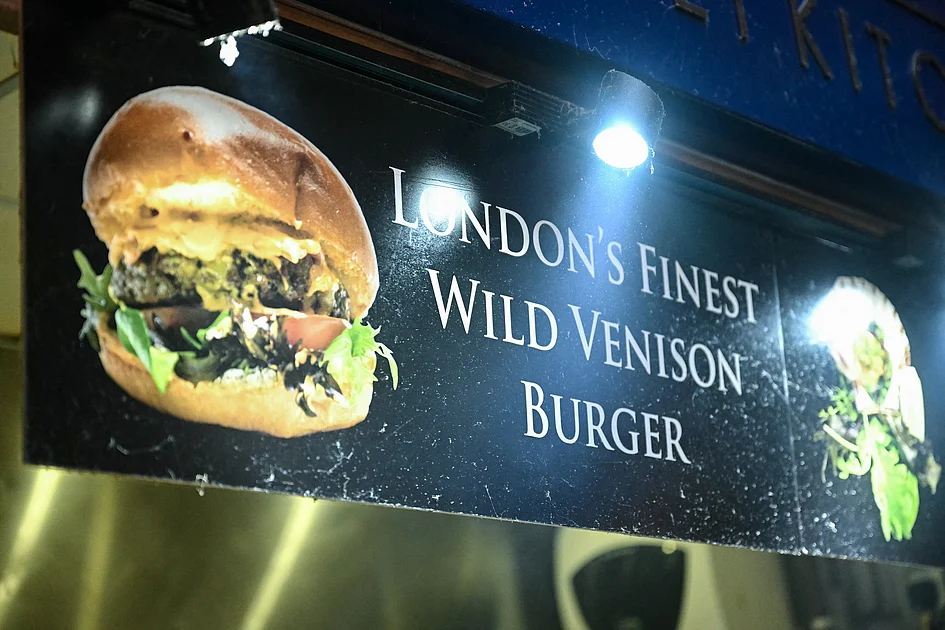
    The movement has gained significant momentum through catering giant Levy UK, which now serves deer meat at more than 20 prominent venues including London’s O2 Arena, the National Theatre, and Twickenham Stadium. During the recent women’s Rugby World Cup final, the stadium sold approximately 5,500 wild venison burgers within a single month. Similarly, Brentford Football Club in west London has incorporated venison burgers sourced from professionally culled deer in England and Scotland.

    This transition addresses multiple environmental and economic concerns. Britain’s deer population has surged from 450,000 in 1970 to approximately two million today—the highest level in over a millennium. Without natural predators, these animals can damage local ecosystems, making controlled culling necessary. Wild venison presents a substantially lower carbon footprint compared to traditional meats, registering 38% fewer emissions than beef and 49% less than lamb according to conservation data.

    Levy UK CEO Jon Davies emphasized the dual benefits of this approach: ‘I was keen to find something that was good for the planet but also nutritionally beneficial.’ The company’s ‘Game On’ initiative aims to replace 54 tonnes of beef burgers with wild venison alternatives, potentially saving 1,182 tonnes of CO₂ annually. Economically, the shift proves practical as beef prices have experienced double-digit inflation over the past year.

    The trend has expanded beyond sports venues to include Imperial College London, which eliminated beef from most campus cafeterias two years ago. Hospitals in East Lancashire and London’s Guy’s and St Thomas’s NHS Foundation Trust have conducted similar trials, along with schools in Scotland’s Islay and Jura islands.

    Despite environmental advantages, consumer acceptance varies. Some students express ethical appreciation for venison, while others prefer traditional beef. Chef Atesh Luximon of Imperial College noted the psychological barrier: ‘The perspective of it being a reindeer, a Bambi, doesn’t really appeal to people.’

    Industry experts caution that venison alone cannot meet total meat demand. Peter Windsor of the Irish Deer Society warned against market saturation, noting that clients typically use only premium cuts while lesser portions often become pet food. Levy UK claims commitment to utilizing entire animals through burgers, curries, and pies.

    Phil Brooke of Compassion in World Farming offered measured support: ‘Regeneratively farmed beef and culled deer can both be part of the solution—if eaten in small quantities.’ This balanced perspective highlights that while venison provides a sustainable alternative, it represents one component within a broader strategy toward environmentally conscious food consumption.

  • Trump did shock and awe in 2025. Reality may bite in 2026

    Trump did shock and awe in 2025. Reality may bite in 2026

    As President Donald Trump concludes his first year back in the Oval Office, his administration confronts mounting political challenges that threaten to undermine his disruptive agenda. The 79-year-old leader’s unconventional approach—symbolized by the physical demolition of part of the White House to construct a grand ballroom—has defined a presidency that began with what observers describe as a “political wrecking ball” strategy.

    Following an aggressive initial nine months marked by sweeping executive actions, immigration crackdowns, and confrontations with domestic institutions, the administration now faces the reality of governing beyond the shock-and-awe phase. Senior Fellow William Galston of the Brookings Institution notes that while Trump’s tactics initially sent opponents reeling, the effect appears to be diminishing as practical governing demands take precedence.

    The upcoming midterm elections in November 2026 represent a critical juncture for the Trump presidency, with Democrats poised to capitalize on growing discontent over cost-of-living pressures and the president’s declining approval ratings. White House officials indicate Trump is shifting focus toward economic concerns, planning increased domestic travel and campaign-style events to address voter anxieties about affordability and healthcare.

    Internationally, Trump continues his disruptive diplomacy, implementing tariffs that have created global economic uncertainty, engaging unpredictably with Russian and Chinese leaders, and achieving fragile peace in Gaza while potentially escalating tensions with Venezuela. The Supreme Court’s upcoming rulings on tariff legality and internal Republican tensions over the Jeffrey Epstein scandal further complicate the administration’s trajectory.

    Adding to the political landscape is the emerging battle for succession within the Republican Party, with Vice President JD Vance and MAGA figure Marjorie Taylor Greene positioning themselves for a post-Trump era. Speculation persists that Trump might test constitutional limits by hinting at a third-term bid despite explicit prohibitions, setting the stage for what experts predict could be an “explosive” political confrontation following the midterms.