标签: North America

北美洲

  • Democratic board member muted during Kennedy Center vote sues to remove Trump’s name

    Democratic board member muted during Kennedy Center vote sues to remove Trump’s name

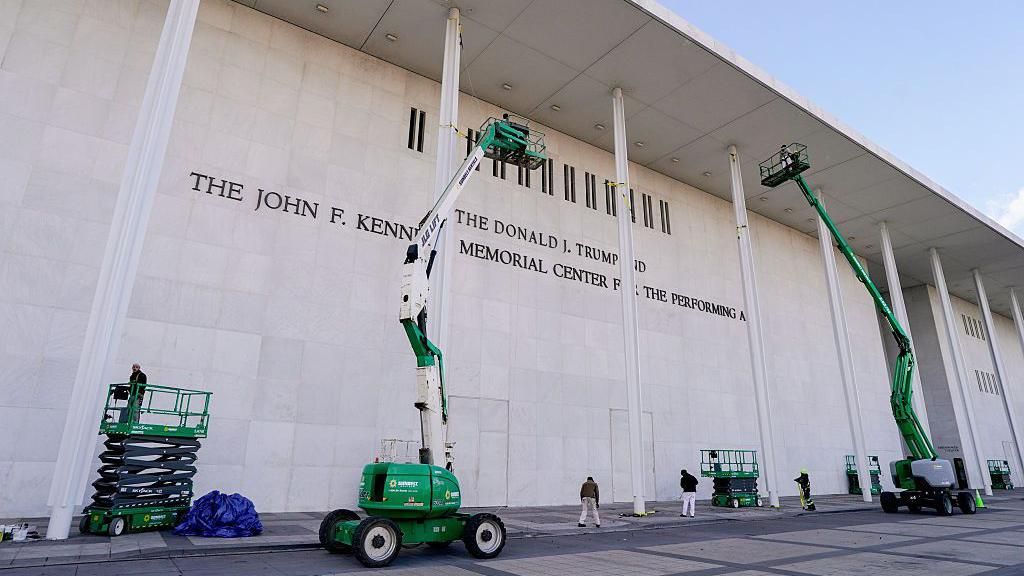
    A significant political and legal confrontation has emerged in Washington D.C. as Democratic U.S. Representative Joyce Beatty initiated litigation to reverse the controversial renaming of the John F. Kennedy Center for the Performing Arts to the Trump-Kennedy Center. The lawsuit challenges the legality of the name change orchestrated by the center’s board, which President Trump had previously stacked with political allies.

    According to court documents, Beatty asserts that the renaming procedure violated statutory requirements, arguing that congressional authorization is mandatory for any alteration to the institution’s name. The filing reveals that during the critical board meeting where the vote occurred, Beatty was allegedly muted when attempting to voice opposition to the proposal. The legal challenge characterizes the proceedings as reminiscent of ‘authoritarian regimes’ rather than democratic processes.

    The White House has vigorously defended the renaming, with spokesperson Liz Huston stating that President Trump’s intervention rescued the institution from financial instability and problematic programming. The administration credits Trump with securing approximately $257 million in congressional funding for extensive renovations and operational improvements, asserting these actions justified the honorary recognition.

    The cultural landmark, originally conceived in the 1950s and formally designated as a memorial to President Kennedy following his 1963 assassination, now bears both names on its exterior facade and digital platforms. This alteration has provoked strong reactions from political figures and members of the Kennedy family, including former Congressman Joe Kennedy III, who compared the action to attempting to rename the Lincoln Memorial.

    The center’s governance structure currently comprises 34 Trump-appointed trustees alongside 23 congressionally designated members, creating a polarized oversight body that reflects broader political divisions regarding presidential legacy and institutional preservation.


  • UAE: Why do Mondays feel exhausting despite sleeping more on weekends?

    UAE: Why do Mondays feel exhausting despite sleeping more on weekends?

    Across UAE workplaces, a curious weekly pattern repeats itself: employees who theoretically should feel refreshed after extended weekend sleep instead report profound fatigue as the workweek begins. This phenomenon, characterized by heavy limbs, mental fog, and significant difficulty rising on Monday mornings, has become so widespread that sleep specialists are now explaining the biological mechanisms behind what they term ‘social jet lag.’

    Medical experts from leading UAE healthcare institutions reveal that the core issue isn’t sleep quantity but circadian rhythm disruption. Jasmine Ceus, sleep consultant at Medcare Royal Specialty Hospital, explains: ‘When individuals maintain drastically different sleep schedules on weekends versus weekdays, they effectively subject their bodies to weekly time zone shifts. The internal clock never stabilizes, making Monday awakenings feel like being roused in the middle of the biological night.’

    The weekend compensation approach—sleeping significantly longer than during the week—often backfires by delaying the body’s natural timing. When early alarms interrupt this shifted cycle, sleep quality diminishes regardless of duration, resulting in non-restorative sleep and persistent grogginess.

    Psychological dimensions compound the physical effects. Fedaa Hasan, clinical psychologist at Aspris by Alkalma Wellbeing Centre, notes: ‘The emotional weight of transitioning from weekend freedom to structured work routines creates anticipatory stress. Humans are creatures of habit, and this weekly rhythm disruption generates irritability, anxiety, and mistaken self-blame.’

    Wellness coach Njoud Majali observes tangible physical manifestations: ‘Monday workouts feel heavier, movement becomes effortful, and mental focus disperses. The body resists these drastic weekly pendulum swings between discipline and liberation.’

    Practical solutions emphasize gentle consistency rather than rigid perfection. Specialists recommend maintaining wake-up times within a one-hour window across all days, seeking morning sunlight exposure, establishing calming evening rituals, and avoiding late-day caffeine. These minor adjustments help stabilize circadian rhythms without sacrificing weekend relaxation.

    The consensus among experts offers reassurance: Monday exhaustion reflects biological adjustment processes, not personal failure. Understanding this physiological basis helps reduce guilt and enables more effective energy management throughout the weekly cycle.

  • Global Partners Ltd unveils landmark residential masterplan at Dubai Creek

    Global Partners Ltd unveils landmark residential masterplan at Dubai Creek

    Dubai’s real estate landscape is set for a transformative addition as Global Partners Ltd, in partnership with OCTA Properties, announces a groundbreaking residential development at Dubai Creek. The project, officially launching in 2026, represents the asset manager’s second UAE fund and marks a significant advancement in sustainable urban planning.

    The masterplan, spanning 127,000 square meters, breaks conventional development patterns by dedicating 70% of its area to meticulously landscaped gardens and open spaces. This unusual green-to-built-space ratio creates an unprecedented balance between modern community living and natural serenity within one of Dubai’s most iconic locations.

    Architectural design prioritizes wellness-oriented living through low-rise residences that maximize panoramic views of Downtown Dubai, Dubai Creek, and surrounding parklands. The development will incorporate carefully curated retail establishments integrated within the residential and green spaces, ensuring both convenience and community vibrancy.

    Bader Saeed Hareb, Executive Chairman of Global Partners Property Fund II, stated: “Our vision to elevate urban living standards will materialize with construction commencing in 2026. This masterplan offers families, couples, and investors a tranquil lifestyle within one of Dubai’s most desirable communities.”

    Adding significant prestige to the project, Global Partners has secured collaborations with internationally acclaimed hotel brands to introduce two branded residential complexes within the community. These partnerships will bring world-class hospitality standards and luxury living amenities to residents.

    Fawaz Sous, CEO of OCTA Properties, emphasized: “As exclusive sales and marketing partner, we’re proud to present this visionary development that represents a new chapter in Dubai’s residential offerings. We anticipate strong interest from discerning buyers globally.”

    The development promises residents a secluded, nature-rich environment while maintaining excellent connectivity to Dubai’s main commercial hubs and attractions. Backed by decades of investment expertise, Global Partners aims to redefine urban landscapes through design-led, world-class real estate projects, while OCTA Properties leverages its extensive network to market the project to domestic and international buyers.

  • Colorado woman accused of killing her children extradited from UK to US

    Colorado woman accused of killing her children extradited from UK to US

    Kimberlee Singler, a 37-year-old Colorado mother accused of murdering two of her children, has been successfully extradited from the United Kingdom to the United States following her arrest in London two years ago. Authorities confirm she now remains in custody without bond in Colorado and is anticipated to appear in court imminently.

    Singler faces severe criminal charges including two counts of first-degree murder, one count of attempted murder, three counts of child abuse, and one count of assault. The tragic incident unfolded in December 2023 when Colorado Springs police responded to a reported burglary at her residence. Upon arrival, officers discovered the lifeless bodies of her 9-year-old daughter and 7-year-old son alongside a blood-stained handgun. A third child, who survived, was found with critical neck injuries and rushed to hospital.

    During extradition proceedings at Westminster Magistrates Court, prosecutors revealed that DNA evidence collected from both the firearm and a knife contained mixed genetic profiles matching both the children and Singler. The court also heard that these alleged crimes occurred amidst contentious custody disputes between Singler and her former husband.

    Notably, Singler attempted to challenge her extradition on grounds that her potential sentence would violate European human rights standards, though this legal maneuver proved unsuccessful. Prosecutors presented compelling counter-evidence including her ex-husband’s verified alibi—his GPS-tracked truck placed him in Denver at the time of the incident.

    Law enforcement officials have characterized Singler’s extradition as a pivotal development in this heartbreaking case. Colorado Springs Police Chief Adrian Vasquez acknowledged the profound community impact, stating that investigators’ hearts remain with the victims as judicial proceedings move forward.

  • Mother arrested after body of missing nine-year-old girl found

    Mother arrested after body of missing nine-year-old girl found

    In a devastating turn of events, California authorities have arrested a mother for the alleged murder of her nine-year-old daughter after the child’s remains were discovered in a remote area of Utah. Ashlee Buzzard, 40, was taken into custody Tuesday on suspicion of first-degree murder following the grim discovery of her daughter Melodee’s decomposed body earlier this month.

    The tragic case began when Melodee was reported missing by her school on October 14th, though she hadn’t been seen since August. According to the Santa Barbara County Sheriff’s Office, investigators faced significant challenges as the child’s mother failed to cooperate with the investigation from its inception.

    The breakthrough came when a couple photographing scenery in rural Utah stumbled upon human remains on December 6th. The body, later identified through DNA analysis on December 22nd as Melodee Buzzard, showed evidence of gunshot wounds and was found discarded off the side of the road.

    Sheriff-Coroner Bill Brown described the case as “extraordinarily tragic,” noting that evidence indicates the child was murdered by “the very person she relied upon and trusted the most.” Security camera footage from October 9th captured the mother and daughter together near the Colorado-Utah border, which investigators believe was shortly before the murder occurred.

    Buzzard had previously been arrested in early November on unrelated false imprisonment charges after allegedly holding a man against his will who had been assisting in the search for her daughter. Those charges were later dismissed by a judge before the murder charges were filed.

    The investigation continues as authorities work to build their case against Buzzard, who remains in custody without bail.

  • Trump’s transactional realism meets imperial overreach

    Trump’s transactional realism meets imperial overreach

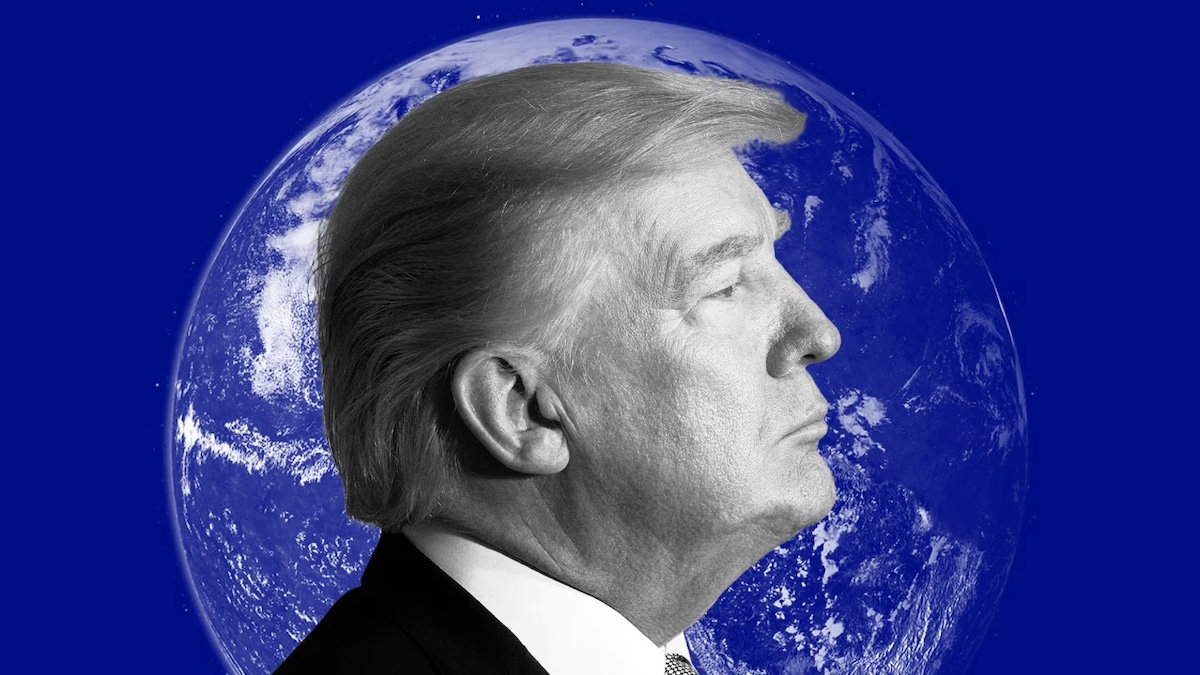
    As 2025 concludes, Donald Trump’s presidency has crafted a foreign policy doctrine that resists conventional classification. Campaigning on an “America First” platform and opposing prolonged military engagements, Trump has paradoxically embraced a strategy of selective interventionism—merging realpolitik, transactional diplomacy, and occasional imperial overreach under the guise of restraint.

    Notable achievements highlight the efficacy of strategic pressure. The Gaza ceasefire, finalized in October 2025, stands as the administration’s foremost diplomatic triumph. By leveraging alliances with Arab states and exerting simultaneous pressure on Israel and Hamas, Trump secured a cessation of hostilities that eluded his predecessor. The 20-point peace plan, though its long-term sustainability remains uncertain, halted immediate violence. Similarly, the reorientation of U.S. focus toward the Western Hemisphere—elevated as a priority in the 2025 National Security Strategy—addressed decades of regional neglect, acknowledging that instability in neighboring nations poses more direct threats than distant conflicts.

    However, these successes are undermined by profound inconsistencies and dangerous overreach. The Ukraine peace process exemplifies this incoherence. The deployment of Jared Kushner and real estate developer Steve Witkoff for negotiations with Putin—labeled as “personal diplomacy” by supporters but criticized as cronyism—resulted in initial proposals so favorable to Russia that Ukrainian analysts deemed them tantamount to capitulation. Despite revisions, the initiative flounders as military gains continue.

    Alarming rhetoric on Gaza further exposed policy chaos. Trump’s February suggestion of U.S. annexation and Palestinian expulsion—later walked back by subordinates—drew comparisons to ethnic cleansing and revealed a decision-making process devoid of strategic coherence. The administration’s embrace of the “Trump Corollary” to the Monroe Doctrine intensified concerns, deploying military assets to the Caribbean and designating drug cartels as terrorist organizations to justify interventionism in Latin America.

    China policy reduced great-power competition to economic transactions, ignoring security implications, while treatment of European allies mixed reasonable demands for defense spending with gratuitous provocations on domestic issues like immigration and far-right politics. These actions accelerated European moves toward strategic autonomy, counterproductively undermining alliance structures.

    Ultimately, Trump’s foreign policy demonstrates a grasp of realist principles—prioritizing interests over ideology, valuing transactional deals—but fails to apply them wisely. The pursuit of hemispheric hegemony without entanglement, burden-sharing amid alienation, and economic warfare with strategic accommodation proves fundamentally incompatible. Despite sound instincts on burden-sharing and regional focus, undisciplined execution generates chaos, risking new commitments while alienating essential allies.

  • Ho Ho No! Santa pulled over for speeding in Ohio

    Ho Ho No! Santa pulled over for speeding in Ohio

    A festive journey took an unexpected turn in Fulton County, Ohio, when local law enforcement intercepted a most unusual speeding violation. A couple fully attired as Santa and Mrs. Claus was brought to a halt by a sheriff’s deputy during a routine traffic patrol, creating a scene more fitting for a holiday comedy than a traffic log.

    The incident, which occurred in the lead-up to the Christmas season, saw the iconic red suits and white beards fail to grant diplomatic immunity from road traffic regulations. While specific details regarding the vehicle’s speed and the precise location were not immediately disclosed by the Fulton County Sheriff’s Office, the stop was confirmed as a legitimate enforcement action.

    This whimsical encounter highlights a recurring seasonal phenomenon where holiday cheer occasionally intersects with law enforcement duties. Similar incidents have been documented across various jurisdictions, where individuals in festive regalia are reminded that traffic laws remain in full effect regardless of one’s mythical status or charitable intentions. The episode serves as a lighthearted yet firm reminder to all motorists—whether on a sleigh or in a sedan—to prioritize road safety during the bustling holiday period.

  • Ping-pong diplomacy opened up China-US relations

    Ping-pong diplomacy opened up China-US relations

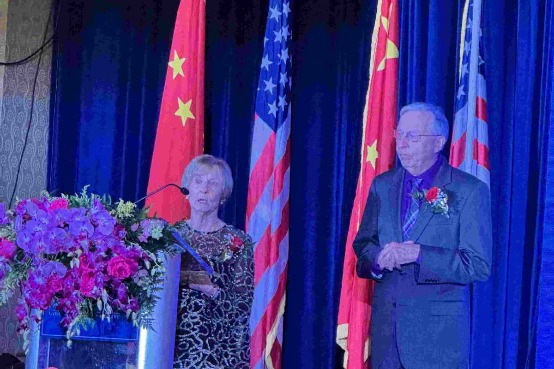
    LOS ANGELES – Five decades after a simple table tennis exchange thawed frozen diplomatic relations, the legacy of ping-pong diplomacy continues to resonate as a powerful example of sports bridging geopolitical divides. At a recent forum commemorating the 54th anniversary of the historic exchange, former athletes, diplomats, and community leaders gathered to reflect on how a sporting gesture transformed international relations.

    Connie Sweeris, former US national team member who participated in the original 1971 exchange, recounted the unexpected invitation that changed history. “On the final day of the World Table Tennis Championships in Nagoya,” Sweeris recalled, “the Chinese delegation invited the American team to extend their trip and visit China for what they termed ‘friendship matches’ – emphasizing friendship first, competition second.”

    This invitation marked the first American visit to China in 22 years, creating an unprecedented people-to-people exchange during a period of prolonged separation between the nations. Sweeris described feeling “privileged to be one of those people” who participated in the groundbreaking trip, which included a memorable meeting with Premier Zhou Enlai at the Great Hall of the People.

    Chinese Consul General in Los Angeles Guo Shaochun emphasized the historical significance of the exchange. “Fifty-four years ago, young table tennis players from China and the US planted the seeds of friendship and sincerity, breaking the ice of 22 years of separation,” Guo stated. “It opened a new chapter of our friendship that has lasted for more than half a century.”

    The forum, organized by the All American Chinese Association, highlighted how the ping-pong diplomacy initiative created a “small safe space for first exchange,” as described by International Table Tennis Federation President Petra Sorling. This human encounter, visible to the world, made larger diplomatic steps possible, including President Richard Nixon’s historic 1972 visit to China.

    Dragomir Cioroslan, Director of International Relations for the United States Olympic and Paralympic Committee, noted that the exchange proved “history is not only made in the halls of power by presidents and premiers, but also through the actions of ordinary people.”

    Contemporary applications of this diplomatic model were discussed, with participants citing recent table tennis exchanges between French and Chinese leaders in Chengdu. Virginia Sung, CEO of the USA Table Tennis Association, emphasized the ongoing relevance: “We gather not just to honor the legacy of ping-pong diplomacy, but to carry it forward – to continue using sport as a bridge to strengthen relationships rooted in mutual respect.”

    The personal impact of these exchanges was illustrated through the story of Jeffrey Lehman, now Vice-Chancellor of NYU Shanghai, whose attendance at a 1972 ping-pong match influenced his decision to pursue opportunities in China. “It taught me to cross borders, make new friends and discover myself in new ways,” Lehman reflected.

    Despite today’s more developed communication channels, participants agreed that genuine human encounters remain essential. As Sorling observed, “Today, we do not lack communication, but we lack genuine encounter – the opportunity to meet people who are different and exchange in good faith. Sport can create that space.”

  • US seizures of oil tankers condemned at Security Council

    US seizures of oil tankers condemned at Security Council

    The United Nations Security Council has become the arena for intense diplomatic confrontation following recent US naval operations in the Caribbean Sea. China’s deputy permanent representative to the UN, Sun Lei, delivered a stern condemnation of American military activities during a Security Council briefing on Tuesday, characterizing them as unlawful escalations that threaten regional stability.

    According to diplomatic accounts, the United States has intensified its military presence in waters adjacent to Venezuela under the declared objective of combating narcotics trafficking. This campaign has involved the sinking of over 28 vessels and the deaths of more than 100 crew members since early September, with Washington claiming these operations targeted drug smuggling operations.

    The controversy reached new heights with the interception and seizure of two Venezuelan oil tankers on December 10 and December 20, respectively. US Homeland Security Secretary Kristi Noem defended these actions, stating publicly that the United States would persist in disrupting the movement of sanctioned oil allegedly financing narco-terrorism networks in the region.

    Venezuela’s government has denounced these maritime interventions as ‘blatant theft and acts of international piracy,’ accusing US military personnel of hijacking private vessels and causing the enforced disappearance of crew members in international waters. Foreign Minister Yvan Gil contends that the underlying motivation involves coveting Venezuela’s substantial energy resources—the largest proven oil reserves globally, with exports averaging approximately 770,000 barrels daily last year.

    The situation has created significant uncertainty for international shipping, with numerous vessels carrying millions of barrels of oil reportedly anchored off Venezuela’s coast, hesitant to sail amid seizure risks. President Donald Trump has explicitly ordered a blockade against US-sanctioned oil tankers traveling to or from Venezuela and has not ruled out military escalation, stating he doesn’t ‘rule out’ regime change through force.

    China’s representative articulated broad principles against unilateralism, emphasizing opposition to any measures violating the UN Charter, infringing on national sovereignty, or employing force in international relations. Sun Lei called upon the United States to heed international concern, cease current operations, lift unilateral sanctions, and contribute constructively to regional peace and development.

  • China deposits with UN its instrument of ratification of agreement on marine biological diversity

    China deposits with UN its instrument of ratification of agreement on marine biological diversity

    In a significant move for global ocean conservation, China has formally deposited its instrument of ratification for the United Nations Agreement on Marine Biological Diversity with UN Secretary-General Antonio Guterres. The deposition occurred on December 15, 2025, according to official documents published on the UN website this Tuesday.

    The groundbreaking international treaty, established under the United Nations Convention on the Law of the Sea, creates comprehensive legal frameworks for conserving and sustainably using marine biological diversity beyond national jurisdictions. The agreement specifically addresses critical areas including deep-sea genetic resources, establishment of marine protected areas, environmental impact assessments, and international capacity building initiatives.

    This diplomatic achievement culminates a extensive negotiation process that began in 2004, involving more than 190 nations. The agreement reached consensus adoption on June 19, 2023, and opened for signatures that September. To date, 144 countries and the European Union have signed the accord, with 80 nations and the EU having completed their ratification processes.

    China demonstrated its commitment to the agreement by signing on the first day it became available for signature. The country’s formal ratification was completed on October 28, 2025, when the 18th session of the Standing Committee of the 14th National People’s Congress approved the decision. China will officially become a contracting party when the agreement takes effect on January 17, 2026.

    UN Secretary-General Guterres has hailed the ratification milestone as a “historic achievement for the ocean and for multilateralism,” recognizing the agreement’s significance in establishing international legal norms for deep-sea and open-ocean activities that will profoundly influence the global maritime order.