标签: North America

北美洲

  • Zohran Mamdani: New year brings new mayor for New York City

    Zohran Mamdani: New year brings new mayor for New York City

    New York City ushered in a new political era as Zohran Mamdani was inaugurated as the city’s first Muslim mayor during ceremonial proceedings that commenced precisely at midnight on New Year’s Eve. The 34-year-old Democratic Socialist, among the youngest mayors in the city’s history, assumed office following a distinctive swearing-in ceremony administered by New York Attorney General Letitia James, a noted political adversary of former President Donald Trump.

    The inauguration festivities continued at midday with a formal ceremony outside City Hall presided over by Vermont Senator Bernie Sanders, a prominent figure within progressive political circles. Columbia University political science professor Lincoln Mitchell observed that the celebratory atmosphere reflected one of Mamdani’s central campaign themes—that New York remains a desirable place to live despite its challenges.

    Mamdani’s political platform, characterized by its progressive agenda, focuses primarily on addressing the city’s affordability crisis affecting its 8.5 million residents. His key proposals include implementing rent freezes for over one million apartments, constructing 200,000 units of affordable housing, establishing universal childcare access, creating publicly owned supermarkets, and introducing free bus services throughout the city.

    The new mayor faces immediate governance challenges, including potential resistance from the city’s rent control board, which remains populated with appointees from previous mayor Eric Adams. However, Mamdani possesses a significant political advantage through his reportedly strong relationship with New York Governor Kathy Hochul, whose support would be crucial for implementing proposed tax increases.

    Despite his limited political experience—having previously served only as a local representative in the State Assembly—Mamdani has assembled an experienced team of advisors drawn from previous mayoral administrations and even former President Joe Biden’s administration. He has also engaged in dialogue with business leaders who had expressed concerns about his election, with real estate sector representatives recently dismissing predictions of wealthy resident exodus.

    As a Muslim politician of Indian descent and defender of Palestinian rights, Mamdani faces the additional challenge of reassuring New York’s Jewish community of his inclusive leadership approach. This concern gained relevance following the resignation of one appointee after the discovery of historical antisemitic social media posts.

    Beyond policy matters, Mamdani has already emerged as a cultural figure, with his background in rap music, improvisational theater classes, and distinctive fashion sense drawing public attention. His wife, Syrian-born artist Rama Duwaji, has similarly garnered significant public interest, accumulating over one million Instagram followers since November according to Social Blade statistics.

  • US pledges $2bn for humanitarian aid, but tells UN ‘adapt or die’

    US pledges $2bn for humanitarian aid, but tells UN ‘adapt or die’

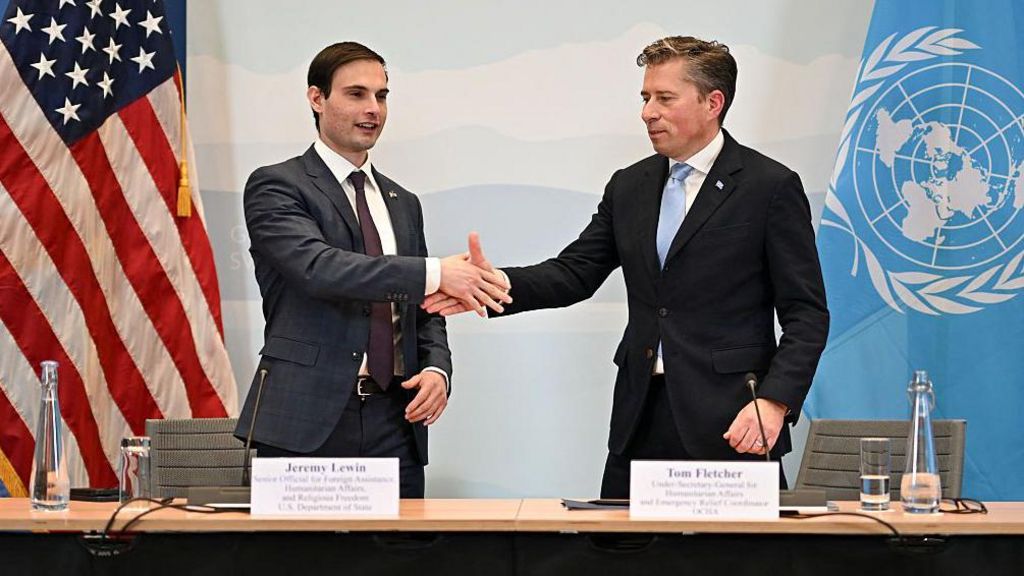
    In a significant diplomatic move that underscores shifting foreign policy priorities, the United States has committed $2 billion to United Nations humanitarian programs while delivering a stark ultimatum to the international body: reform or face financial consequences. The announcement, made jointly in Geneva by Trump administration official Jeremy Lewin and UN emergency relief chief Tom Fletcher, represents both a lifeline and a challenge to global humanitarian operations.

    The funding comes amid substantial reductions in American contributions to international aid, with previous annual commitments reaching approximately $17 billion as recently as 2022. While Fletcher acknowledged the new injection of funds would preserve “millions of lives,” the assistance carries unprecedented restrictions that break with traditional humanitarian principles.

    Washington has explicitly excluded Afghanistan and Yemen from receiving any portion of the aid package. Lewin justified this decision by asserting that evidence indicates UN funds in Afghanistan have been diverted to Taliban operations, stating emphatically that “President Trump will never tolerate a penny of taxpayers’ money going to terrorist groups.”

    Additionally, the funding prohibits expenditures related to climate change initiatives, which Lewin characterized as neither “life-saving” nor aligned with “US interests.” The assistance will be concentrated in just 17 predetermined nations, including Haiti, Syria, and Sudan, bypassing many regions experiencing severe humanitarian crises.

    Lewin, architect of the recent USAID restructuring that eliminated thousands of positions, delivered a blunt message to UN leadership: “adapt or die.” He emphasized that American generosity would not extend to “organizations that just want to return to the old system,” demanding focused, efficient implementation without program duplication.

    While UN officials publicly endorse principles of efficiency and accountability, concerns emerge regarding the politicization of humanitarian aid. The exclusion of specific countries and entire categories of crisis response challenges the fundamental humanitarian principles of neutrality and impartiality—cornerstones of international aid distribution.

    The funding reduction has already produced tangible consequences: closure of maternal health clinics in Afghanistan, reduced food rations for displaced populations in Sudan, and anticipated increases in global child mortality rates reversing years of progress.

    Despite these concerns, the UN faces the pragmatic reality that $2 billion represents critical support during an ongoing funding crisis, even from a skeptical donor administration. The arrangement illustrates the complex negotiation between humanitarian ideals and political realities in contemporary international relations.

  • Missing Texas teen believed to be in ‘imminent danger’

    Missing Texas teen believed to be in ‘imminent danger’

    A comprehensive multi-agency search operation continues in Bexar County, Texas for 19-year-old Camila ‘Cami’ Mendoza Olmos, who vanished under mysterious circumstances during her routine morning walk on Christmas Eve. Law enforcement authorities have expressed serious concerns about her immediate safety, suggesting she could be facing ‘imminent danger’ with potential scenarios including kidnapping, human trafficking, or voluntary disappearance.

    The disappearance has triggered an extensive response involving local deputies, specialized investigators, search-and-rescue teams, aerial drones, and cadaver dogs. The FBI has joined the investigation, providing additional resources to local authorities. Despite nearly a week of intensive searching, investigators have uncovered minimal evidence beyond a single surveillance video showing a woman matching Mendoza Olmos’s description searching through her vehicle trunk before apparently departing on foot.

    Notably, the young woman left behind critical personal items including her mobile phone, raising additional concerns among investigators. Only her car keys and possibly her driver’s license were with her at the time of disappearance. Sheriff Javier Salazar confirmed that immigration authorities have no record of detaining Mendoza Olmos, eliminating one potential explanation for her absence.

    The case has drawn emotional responses from family members, with her aunt Nancy Olmos making public appeals on social media: ‘Cami needs us. By the grace of Jesus Christ, we will find you, Cami.’ The investigation remains active with authorities pursuing all possible leads, including the possibility that the case might extend beyond national borders.

  • Southern California newspapers call Trump’s trade policies ‘disaster’

    Southern California newspapers call Trump’s trade policies ‘disaster’

    In a scathing editorial published Sunday, the Southern California News Group (SCNG) characterized former President Donald Trump’s trade policies as economically disastrous, citing his administration’s $12 billion agricultural bailout as evidence of fundamental policy failure.

    The editorial board’s piece, titled “$12 billion payout to farmers is a tariff-based disaster,” presented a rigorous critique of protectionist trade measures, arguing they function as hidden taxes on American consumers. The analysis challenged the rationale behind the substantial financial relief package for farmers, framing it as an admission that tariff wars inevitably harm domestic industries.

    Citing economic expert Jay Shambaugh of the Brookings Institution, the editorial warned that such trade conflicts would inflict multidimensional damage—harming consumers, undermining productive enterprises, slowing economic growth, and weakening international relationships. The piece particularly emphasized how previously stable agricultural exports, especially soybeans and other row crops, faced sudden market disruption due to retaliatory tariffs from trading partners.

    The criticism extended beyond crop growers to agricultural machinery manufacturers, noting that industry giant John Deere anticipated $600 million in losses for 2025 directly attributable to tariff policies. This comprehensive assessment portrayed the bailout as an inadequate solution to problems created by the administration’s own trade strategy.

    The Southern California News Group, representing 11 daily publications across five counties in the greater Los Angeles region, positioned its editorial as a substantive challenge to protectionist economic theory in an era of globalized commerce.

  • Video: One killed after two helicopters collide midair in New Jersey

    Video: One killed after two helicopters collide midair in New Jersey

    Federal authorities have initiated a comprehensive investigation following a devastating midair collision between two helicopters in southern New Jersey that resulted in one fatality and critical injuries. The tragic incident occurred Sunday morning at approximately 11:25 AM local time near Hammonton Municipal Airport, involving an Enstrom F-28A and an Enstrom 280C aircraft.

    According to the Federal Aviation Administration, both helicopters were operating with only pilots aboard when they collided in flight over Hammonton. The aircraft subsequently crashed in an open field, prompting immediate emergency response from local fire departments and medical teams. Hammonton Fire Department Chief Sean Macri confirmed that first responders executed a rapid rescue operation, airlifting both victims to a nearby trauma center for emergency treatment.

    Preliminary reports indicate one pilot sustained critical injuries during the impact, while the other victim experienced possible cardiac arrest during transport via ambulance. Authorities later confirmed one individual succumbed to injuries sustained in the crash.

    The National Transportation Safety Board has assumed leadership of the investigation, deploying specialized investigators to document the crash site and recover wreckage. The agency announced it will examine multiple factors including flight track data, aircraft maintenance records, air traffic control communications, and witness testimonies. All recovered components will be transferred to secure facilities for detailed technical evaluation.

    New Jersey Senator Cory Booker expressed profound concern regarding the incident, stating his office has established direct communication with federal investigators to monitor developments. In an official statement posted on social media platform X, Senator Booker described the crash as ‘horrifying and tragic’ while extending condolences to affected families and individuals.

  • At least 13 killed, 98 injured after train derails in Mexico

    At least 13 killed, 98 injured after train derails in Mexico

    A catastrophic train derailment in southern Mexico has resulted in substantial casualties, with authorities confirming at least 13 fatalities and 98 injuries. The incident occurred on Sunday when an Interoceanic Train carrying 250 people veered off the tracks near Nizanda in Oaxaca state.

    According to the Mexican Navy’s official report, the train was transporting 241 passengers and 9 crew members at the time of the accident. Medical authorities have classified 139 individuals as out of immediate danger, while 36 injured passengers required urgent medical attention. President Claudia Sheinbaum confirmed via social media platform X that five of the injured remain in critical condition.

    The Mexican government has initiated a comprehensive response, with senior officials dispatched to the accident site to coordinate rescue operations and provide support to affected families. Oaxaca Governor Salomon Jara Cruz expressed official condolences while emphasizing coordinated relief efforts between state and federal agencies.

    Mexico’s Attorney General’s Office has opened a formal investigation into the causes of the derailment. Attorney General Ernestina Godoy Ramos announced the probe through official channels, indicating the seriousness with which authorities are treating the incident.

    The Interoceanic Train service, inaugurated in 2023 under former President Andres Manuel Lopez Obrador, represents a cornerstone of the ambitious Interoceanic Corridor project. This strategic infrastructure initiative was designed to modernize rail transportation across the Isthmus of Tehuantepec, connecting the Pacific port of Salina Cruz with Coatzacoalcos on the Gulf Coast.

    The broader development project aims to transform the region into a competitive trade corridor capable of rivaling the Panama Canal through extensive modernization of ports, railways, and industrial infrastructure. The train service constitutes a critical component of Mexico’s national strategy to expand passenger and freight rail capacity while stimulating economic development in the historically underserved southern regions.

  • Washington at odds over insurance

    Washington at odds over insurance

    A critical healthcare crisis is looming for millions of Americans as enhanced Affordable Care Act subsidies approach expiration at year’s end, exposing deep political divisions in Washington. The premium assistance measures, initially implemented as COVID-19 relief in 2021 and extended through 2025, face almost certain termination without Congressional intervention.

    Current nonpartisan estimates indicate approximately 22 million citizens—representing over 90% of ACA marketplace enrollees—benefit from these enhanced subsidies. Their expiration would trigger average premium increases of more than 100%, disproportionately affecting low-income families, small business owners, and self-employed workers who rely on marketplace coverage as their primary insurance option.

    The Kaiser Family Foundation reveals nearly half of adults under 65 enrolled in marketplace plans are either self-employed, small business owners, or employees of firms with fewer than 25 workers. This demographic now faces impossible choices as projected monthly premium hikes of $1,000-$2,000 threaten to make coverage unaffordable.

    The return of the ‘subsidy cliff’ would particularly impact households earning just above the federal poverty threshold (approximately $63,000 for individuals). Under current enhanced rules, premiums are capped at 8.5% of income, but expiration would eliminate all subsidy support for these borderline earners.

    Age compounds the challenge significantly. Cornell University health policy expert Nick Fabrizio notes that early retirees ineligible for Medicare face disproportionate burdens, with 60-year-olds potentially seeing premiums jump from 8.5% to over 20% of income.

    The political landscape offers little optimism. Despite bipartisan efforts in the House of Representatives, similar legislation has already failed in the Senate. Emma Wager, KFF senior policy analyst, states, ‘It’s virtually guaranteed at this point the subsidies will expire,’ highlighting the uncertainty of January legislative actions.

    Geographic and demographic disparities exacerbate the situation. Southern states that voted for Donald Trump in 2024 have experienced the most significant ACA enrollment growth since 2020, with larger Black and Latino populations that achieved notable coverage gains through the enhanced subsidies.

    The potential coverage loss arrives as households already struggle with inflated costs for housing, food, and energy. Small business owners like Kathy Many of Vermont express fears that being uninsured could lead to financial ruin from a single medical emergency.

    This impending crisis raises fundamental questions about the US healthcare system’s ability to provide stable, affordable coverage to the small business and self-employed sectors that form the backbone of local economies and communities.

  • The US in 2025: a year of deep divisions

    The US in 2025: a year of deep divisions

    As 2025 draws to a close, the United States confronts the profound consequences of one of its most politically turbulent years in modern history. The nation finds itself grappling with unprecedented governmental dysfunction, systemic immigration breakdown, and deepening societal fractures that have left the country battered and exhausted.

    The federal government endured a record-shattering 43-day shutdown from October 1 to November 12, paralyzing essential services and highlighting the extreme partisan gridlock in Washington. The much-publicized Department of Government Efficiency (DOGE), launched amid grand promises of trillions in savings during President Donald Trump’s inauguration, was quietly dissolved in November. Its functions were largely absorbed by the Office of Personnel Management, while the aftermath of its budget cuts continues to reveal nearly $300 million in terminated contracts and criticized reductions in foreign aid programs.

    Harvard researchers document that by mid-2025, over 60% of US counties had experienced protests, reflecting widespread social unrest. A Pew Research Center survey in July revealed that 80% of American adults believe Republican and Democratic voters cannot agree on basic facts, reaching the highest level of perceptual division in recent tracking history.

    Immigration enforcement emerged as a particularly contentious arena, characterized by ambitious goals that overwhelmed systemic capacity. The administration extended travel bans to citizens of 39 countries while dramatically increasing H-1B skilled-worker visa registration fees to $100,000 per application. Congress approved a historic $170 billion four-year funding package for border security and enforcement operations—the largest such investment in US history.

    These measures produced severe operational consequences. The US Citizenship and Immigration Services reported a net backlog surge to approximately 5.4 million cases by FY2025 Q3. The immigration court backlog reached nearly 3.8 million active cases, with many asylum seekers waiting years for hearings, creating prolonged uncertainty and straining humanitarian resources.

    Anthony Moretti, communications associate professor at Robert Morris University, described the overall state of US society and politics as “unsettled,” noting that enhanced enforcement measures “defy common sense” and contradict America’s historical philosophy of welcoming those needing humanitarian assistance. The American Immigration Council warned in a November blog post that the administration’s “new mass deportation playbook” has created widespread fear and humanitarian challenges not seen in recent years, while simultaneously erecting new barriers to legal immigration and exacerbating distress for vulnerable populations.

  • Trump calls meeting with Zelensky ‘terrific’, few details released

    Trump calls meeting with Zelensky ‘terrific’, few details released

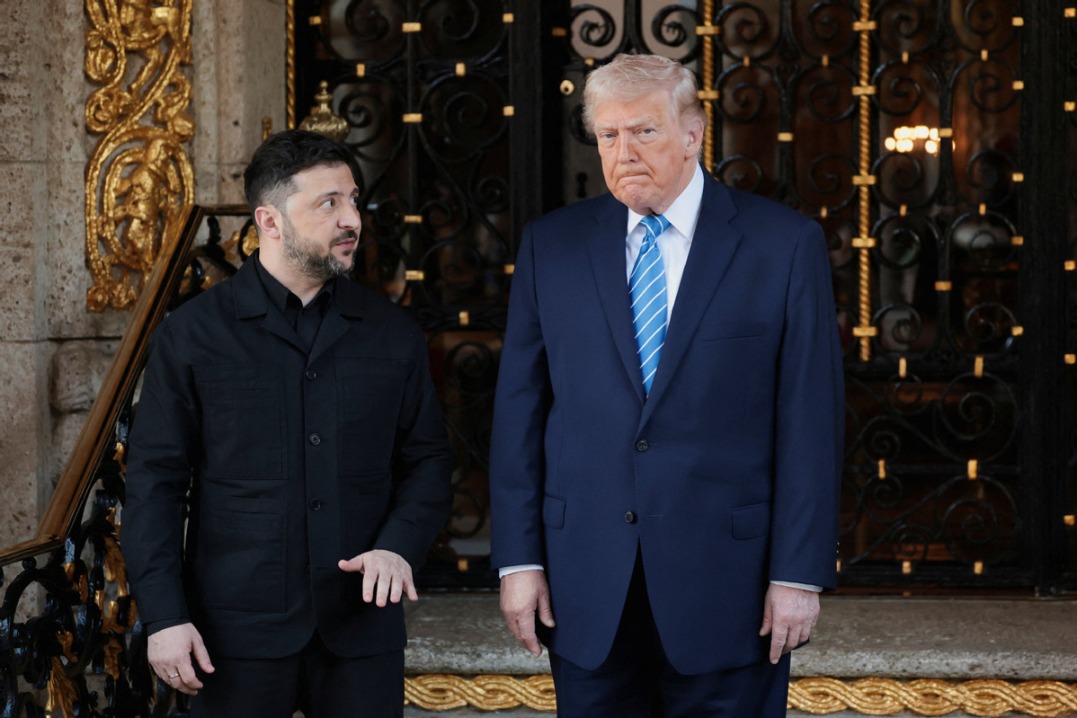
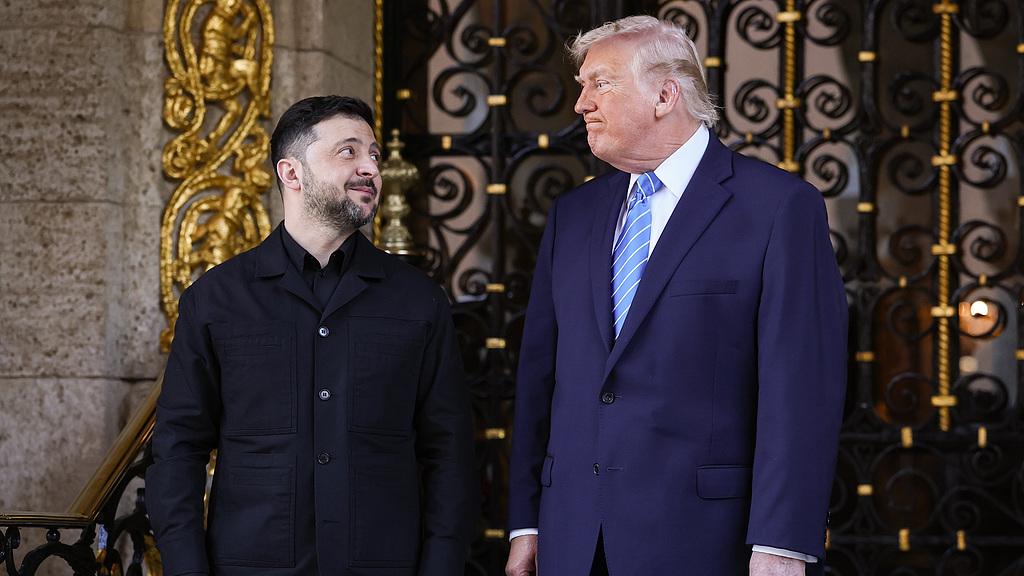
    In a high-stakes diplomatic engagement at his Mar-a-Lago estate in Florida, former US President Donald Trump hosted Ukrainian leader Volodymyr Zelensky for critical negotiations aimed at resolving Europe’s deadliest conflict since World War II. Both leaders emerged from the December 28, 2025 meeting characterizing the discussions as exceptionally productive, though significant hurdles remain before a comprehensive peace agreement can be finalized.

    Trump described the closed-door session as ‘terrific’ during a subsequent press briefing, noting that substantial progress had been achieved despite persistent ‘thorny issues.’ The US leader revealed that the negotiation process has been ongoing for approximately one month, emphasizing that ‘this is not a one-day process deal’ but rather ‘very complicated stuff’ involving multiple stakeholders.

    Zelensky corroborated Trump’s assessment, indicating that approximately 90% of a peace framework had been agreed upon by the negotiating parties. The Ukrainian president highlighted security guarantees as the cornerstone for establishing durable peace, noting that such protections were nearing finalization between Ukraine, the United States, and European partners. ‘We agreed that a security guarantee is the key milestone in achieving lasting peace,’ Zelensky stated, adding that technical teams would continue working on all aspects of the agreement.

    The Mar-a-Lago meeting represented the fifth direct engagement between Trump and Zelensky on US soil, underscoring the continuity of diplomatic efforts regardless of administrative changes in Washington. The US delegation included Secretary of State Marco Rubio and Defense Secretary Pete Hegseth, while Ukraine’s representation featured Economy Minister Oleksii Sobolev among other officials.

    In a revealing prelude to the Florida summit, Trump disclosed that he had held a ‘good and very productive’ telephone conversation with Russian President Vladimir Putin. Kremlin spokesperson Yury Ushakov confirmed the exchange, noting that both leaders shared the perspective that a temporary ceasefire would merely ‘prolong the conflict.’ The Russian administration further urged Ukraine to make prompt decisions regarding the status of the Donbas region without delay.

    Outstanding contentious issues include the disposition of Russian-occupied territories encompassing four key regions and the Crimean Peninsula, alongside the operational status of the Zaporizhzhia nuclear facility. Moscow has consistently demanded that Ukraine abandon its NATO membership aspirations, warning against any deployment of alliance troops on Ukrainian soil.

    The diplomatic movement occurs against the backdrop of competing peace proposals circulating in recent weeks, including a 28-point plan believed to originate from Moscow and a 20-point alternative put forward by Kyiv. Zelensky reinforced Ukraine’s commitment to peaceful resolution through a social media statement preceding the meeting: ‘Ukraine is willing to do whatever it takes to stop this war. We need to be strong at the negotiating table.’

    Significantly, the Ukrainian leader has indicated willingness to withdraw NATO membership applications if equivalent security protections are provided. The United States has recently committed to offering Ukraine security guarantees comparable to those extended to NATO members. When questioned about these assurances, Trump affirmed that ‘there will be a security agreement’ involving substantial European participation.

    The diplomatic tempo accelerated during the holiday period, with Zelensky holding discussions on Christmas Day with US special envoy Steve Witkoff and Trump’s son-in-law Jared Kushner. While characterizing these exchanges as addressing ‘certain substantive details,’ the Ukrainian president cautioned that ‘there is still work to be done on sensitive issues’ and anticipated intensive negotiations in the coming weeks.

    Trump struck an optimistic yet realistic tone regarding conflict resolution, observing that ‘Russia would like to see it end, and Ukraine would like to see it end, and I think it’s time to end.’ The Mar-a-Lago meeting thus represents the latest development in a complex multilateral negotiation process that continues to evolve amid persistent geopolitical challenges.

  • Trump says ‘a lot closer’ to Ukraine peace deal following talks with Zelensky

    Trump says ‘a lot closer’ to Ukraine peace deal following talks with Zelensky

    WASHINGTON — In a significant development toward resolving the prolonged Ukraine conflict, U.S. President Donald Trump declared substantial progress following high-level discussions with Ukrainian President Volodymyr Zelensky at a Florida summit on Sunday.

    At a joint press conference, Trump revealed that diplomatic efforts had advanced remarkably, stating that approximately 95% of peace agreement terms had received consensus from involved parties. The President characterized the remaining challenges as ‘one or two very thorny issues’ requiring further negotiation.

    The bilateral meeting featured expanded diplomatic engagement, with both leaders conducting consultations with European counterparts, including leadership representatives from NATO and the European Union. This multilateral approach signals strengthened international coordination toward conflict resolution.

    Ukrainian President Zelensky corroborated the optimistic assessment, confirming near-complete agreement on security guarantees for Ukraine among the United States, European partners, and his government. ‘We comprehensively examined all aspects of the peace framework,’ Zelensky stated, indicating thorough preparation for potential implementation.

    The diplomatic breakthrough follows extended periods of stalled negotiations and represents the most substantial progress toward peace since the conflict’s inception. Both administrations emphasized continued commitment to resolving outstanding issues through diplomatic channels.