标签: Europe

欧洲

  • Russia attacks Kyiv with missiles and drones, killing 1 and wounding many ahead of Ukraine-US talks

    Russia attacks Kyiv with missiles and drones, killing 1 and wounding many ahead of Ukraine-US talks

    In a dramatic escalation preceding high-stakes diplomatic negotiations, Russian forces executed a large-scale multi-vector assault on Ukraine’s capital early Saturday. The coordinated offensive, employing ballistic missiles, hypersonic Kinzhal aeroballistic systems, and drone swarms, resulted in one confirmed fatality and 27 injuries according to Ukrainian authorities.

    The sustained bombardment, which continued for several hours until daybreak, specifically targeted Kyiv’s energy infrastructure and civilian residential areas. Ukrainian Interior Minister Ihor Klymenko reported extensive damage to more than ten residential buildings, with emergency teams conducting rescue operations to extract survivors from collapsed structures. Among the most harrowing accounts was that of resident Olena Karpenko, who witnessed a man perish in flames, his screams haunting those who heard the tragedy unfold.

    Ukrainian air defense systems intercepted a significant portion of the projectiles, but the intensity of the assault overwhelmed protective measures. According to military administration head Tymur Tkachenko, seven distinct locations across the capital sustained direct hits, including high-rise residential towers in the Dnipro and Darnytsia districts where major fires required extensive emergency response.

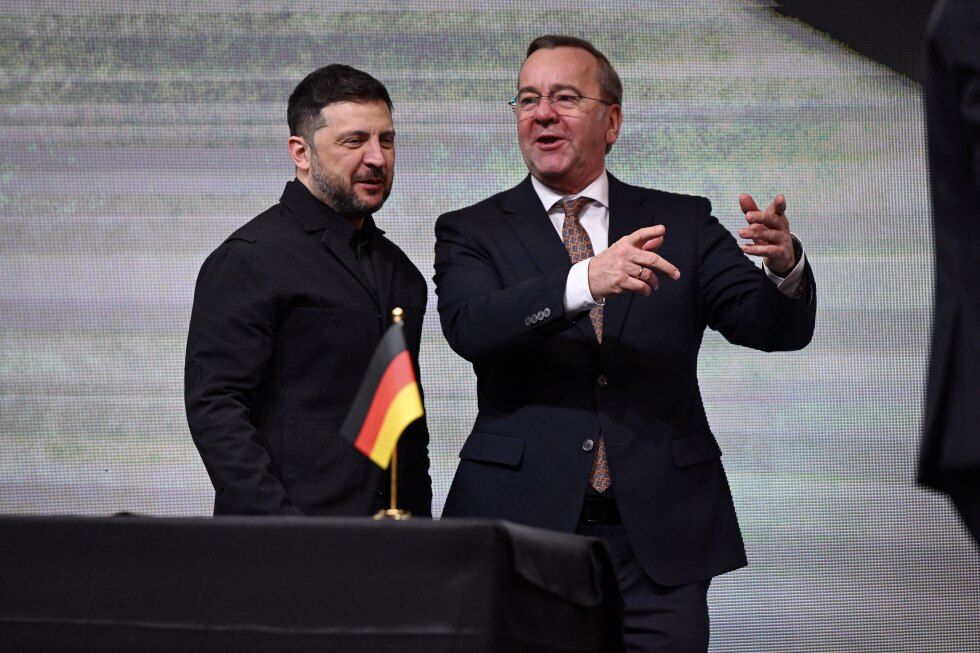
    The timing of the attack carried profound diplomatic significance, occurring just one day before Ukrainian President Volodymyr Zelenskyy’s scheduled meeting with U.S. President Donald Trump in Florida. En route to the critical summit, Zelenskyy characterized the assault as Moscow’s explicit response to peace negotiations, stating: “Today Russia demonstrated how it responds to peace talks between Ukraine and the United States on ending Russia’s war against Ukraine.”

    The Russian Defense Ministry acknowledged responsibility for what it termed a “massive strike,” claiming retaliation for Ukrainian attacks on Russian civilian infrastructure. The operation involved long-range precision weapons deployed from land, air, and sea platforms, specifically targeting Ukraine’s military-industrial capacity and energy infrastructure supporting defense operations.

    The geopolitical ramifications extended beyond Ukraine’s borders, with Polish armed forces scrambling fighter jets and temporarily closing airports near the Ukrainian frontier as a precautionary measure, though no airspace violations were confirmed.

    President Zelenskyy outlined the agenda for his meeting with President Trump, emphasizing that security guarantees resembling NATO’s Article 5 protection would constitute the primary focus. While acknowledging the necessity of discussing territorial issues concerning the Donetsk and Zaporizhzhia regions, the Ukrainian leader firmly reiterated that no recognition of Russian territorial claims would occur “under any circumstances.” The summit represents a crucial diplomatic effort to solidify international support while addressing the complex military and geopolitical realities of the nearly four-year conflict.

  • Libya holds funeral for military officials killed in plane crash in Turkey

    Libya holds funeral for military officials killed in plane crash in Turkey

    TRIPOLI, Libya — The Libyan government conducted a solemn military funeral on Saturday for Western Military Commander General Muhammad Ali Ahmad al-Haddad and four senior officers who perished in a tragic aircraft accident in Turkey. Their flag-draped caskets arrived at Tripoli International Airport, where a solemn procession of honor guards carried photographs of the deceased through the capital.

    The fatal incident occurred Tuesday when the private jet carrying General al-Haddad, four military officials, and three crew members crashed shortly after departure from Ankara. While preliminary investigations indicate technical failure as the probable cause, Turkish and Libyan authorities continue joint examination of the wreckage to determine the exact circumstances.

    This tragedy strikes at a critical juncture in Libya’s fractured political landscape. Since the 2011 revolution that overthrew longtime ruler Moammar Gadhafi, the nation has remained divided between rival administrations in Tripoli and Benghazi, each supported by separate armed factions and international patrons. Prime Minister Abdul-Hamid Dbeibah leads the internationally recognized government in Tripoli, while Prime Minister Ossama Hammad heads the eastern-based administration.

    During the funeral oration, Prime Minister Dbeibah eulogized General al-Haddad as a pivotal figure who maintained military organization ‘amid overwhelming darkness and outlaw groups.’ The late commander had been instrumental in United Nations-mediated negotiations to reunify Libya’s divided military establishment.

    ‘Our martyrs were not merely military leaders but statesmen of wisdom and discipline who carried profound responsibility,’ Dbeibah stated. ‘They believed the national Libyan army represents the nation’s shield and that institutional development provides the genuine path toward stability and security.’

    The delegation had been returning from Ankara where they participated in defense coordination talks aimed at enhancing military cooperation between Libya and Turkey. Ankara has traditionally supported Tripoli’s western government but has recently pursued diplomatic overtures toward the eastern administration.

    Turkey conducted a separate memorial ceremony at Murted airbase near Ankara attended by Defense Minister Yaşar Güler and Military Chief General Selcuk Bayraktaroglu, who subsequently accompanied the remains to Libya aboard a military transport aircraft. The fallen officers will be laid to rest Sunday in Misrata, approximately 200 kilometers east of Tripoli.

  • Kosovo heads to a snap vote to end political deadlock

    Kosovo heads to a snap vote to end political deadlock

    PRISTINA, Kosovo — Citizens of Kosovo are heading to the polls for the second time this year in a crucial snap parliamentary election aimed at breaking a political impasse that has plunged the Balkan nation into its most severe governmental crisis since declaring independence in 2008. The extraordinary Sunday vote follows Prime Minister Albin Kurti’s Self-Determination Movement’s inability to form a governing coalition despite securing a plurality in February’s ballot.

    This electoral deadlock represents unprecedented political paralysis for Kosovo, which hasn’t faced such governmental formation difficulties throughout its fifteen-year history as an independent state. Current projections suggest Kurti’s party remains the frontrunner, though political analysts question whether it can secure the necessary 61-seat majority in the 120-member Assembly.

    The prolonged political vacuum has prevented legislative approval of next year’s national budget, raising concerns about potential economic repercussions for one of Europe’s poorest nations. The crisis compounds existing challenges for Kosovo’s 2 million citizens, who already grapple with soaring inflation and economic instability.

    Further complicating the political landscape, lawmakers must elect a new president by March as current President Vjosa Osmani’s term concludes in early April. Failure to reach consensus on presidential selection could trigger yet another snap election, extending the period of governmental uncertainty.

    Regional security concerns loom large over the electoral process. Serbia continues to reject Kosovo’s sovereignty, while Russia’s invasion of Ukraine has heightened anxieties about potential instability in the volatile Balkans region, where Moscow maintains influence through its Serbian alliance.

    In February’s contest, Self-Determination captured approximately 42% of votes, narrowly outpacing the combined opposition bloc of the Democratic League of Kosovo and Democratic Party of Kosovo, which secured about 40%. Political analyst Leart Hoxha notes that marginal voting shifts could dramatically alter power dynamics, potentially enabling Kurti to form minority coalitions or forcing him into opposition.

    Kurti faces criticism from mainstream opposition parties accusing him of authoritarian tendencies and damaging relations with key Western allies. The United States and European Union have imposed punitive measures in response to Kurti’s uncompromising stance in EU-mediated normalization talks with Belgrade.

    Despite these challenges, Kurti has campaigned vigorously, urging Kosovo’s 1.9 million voters to deliver a decisive mandate. “We must achieve another victory that ensures rapid constitution of the national assembly and a stable government with full mandate,” he declared at a recent campaign rally.

    The campaign has centered on Kosovo’s persistent economic difficulties and national security concerns. Bedri Hamza, former governor of the Kosovo National Bank, highlighted widespread public frustration: “Wherever I go, citizens tell me the same thing—life has become too expensive, salaries are insufficient, prices rise daily.”

    Security remains paramount following 2023’s violent clashes with ethnic Serb communities in northern Kosovo, which injured numerous NATO peacekeepers. A recent positive development saw ethnic Serb mayors assume power peacefully after municipal elections.

    In a controversial move, Kurti’s administration has agreed to accept third-country migrants deported from the United States under Trump-era immigration policies, with one individual already transferred according to authorities.

    As one of six Western Balkan nations pursuing EU membership, Kosovo faces the additional requirement of normalizing relations with Serbia before accession talks can advance—a diplomatic challenge that will confront whichever government eventually emerges from this electoral process.

  • Cypriot fishermen battle invasive lionfish and turn them into a tavern delicacy

    Cypriot fishermen battle invasive lionfish and turn them into a tavern delicacy

    CYPRUS — Veteran fisherman Photis Gaitanos carefully disentangles the venomous spines of a lionfish from his net, a routine that has become emblematic of the ecological transformation occurring in Mediterranean waters. The 60-year-old marine hunter now primarily captures invasive species rather than the traditional sea bream, red mullet, and bass that once dominated his catches.

    The Mediterranean Sea, warming at a rate 20% faster than the global average according to the General Fisheries Commission for the Mediterranean, has become a welcoming environment for non-native species migrating from the Red Sea through the expanded Suez Canal. Two particularly destructive invaders—the strikingly striped lionfish and the silver-cheeked toadfish—are decimating local fish populations and threatening the livelihoods of approximately 150 professional fishermen in Cyprus.

    Lionfish, with their dramatic crimson stripes and defensive barbs, have spread as far north as the Ionian Sea, prompting Italian authorities to request public assistance in tracking sightings. The toadfish presents additional challenges with its powerful jaws capable of destroying fishing nets and a lethal toxin that renders it inedible.

    EU Fisheries Commissioner Costas Kadis, himself Cypriot, told The Associated Press that climate-linked extreme weather events are creating increasingly hospitable conditions for these invasive species. “The native marine biodiversity faces heightened competition and pressure,” Kadis stated, “with implications for local ecosystems and industries dependent on them.”

    The economic impact has been severe, with fishermen reporting diminished catches and increased costs due to damaged equipment. Gaitanos, who inherited his father’s boat in 1986, lamented that he hasn’t caught a red mullet in over two years—a species once abundant in the waters off Larnaca.

    European authorities have implemented multiple strategies to address the crisis. EU-funded compensation programs pay fishermen €4.73 per kilogram for toadfish catches, though the toxic fish must be incinerated. The RELIONMED project, initiated in 2017, enlists scuba divers to cull lionfish populations around wrecks and protected marine areas.

    A culinary solution is emerging simultaneously. The #TasteTheOcean social media campaign, launched in 2021, features top European chefs promoting invasive species as sustainable alternatives. Renowned Cypriot chef Stavris Georgiou has developed specialized lionfish recipes, while local tavernas are gradually introducing the species to customers.

    At Larnaca’s harbor fish market, lionfish now costs less than half the price of popular species like sea bass. Stephanos Mentonis, who operates a fish tavern in Larnaca, includes lionfish on his meze menu and reports positive customer responses. “When they try it, it’s not any less tasty than any other fish,” Mentonis noted, describing the meat as fluffy and tender.

    Commissioner Kadis emphasized the dual benefit of this approach: “By incorporating invasive species such as lionfish into our diet, we can turn this challenge into an opportunity for the fisheries sector while helping limit the environmental threat.”

  • Key issues unresolved in US-Ukraine talks on ending Russia’s war, according to Zelenskyy

    Key issues unresolved in US-Ukraine talks on ending Russia’s war, according to Zelenskyy

    Substantial obstacles remain in the diplomatic efforts to establish a viable framework for ending Russia’s war against Ukraine, according to President Volodymyr Zelenskyy. The Ukrainian leader confirmed last week that multiple unresolved issues persist in negotiations with United States officials regarding a proposed 20-point peace plan.

    Zelenskyy identified three particularly challenging areas requiring further negotiation: security guarantees for Ukraine, the status of territories currently under Russian occupation, and the future operational control of the Zaporizhzhia Nuclear Power Plant. Ukraine has formally communicated its positions on these matters to Washington, which is expected to relay these positions to Moscow.

    Kremlin spokesman Dmitry Peskov acknowledged ongoing diplomatic contacts, revealing that Russian presidential envoy Kirill Dmitriev recently met with U.S. representatives in Florida. Peskov characterized the discussions as productive, noting that both sides had ‘agreed to continue the dialogue’ while providing no specific details about the substance of the talks.

    Regarding security arrangements, negotiations continue on the precise nature and scope of international guarantees that would ensure Ukraine’s future security. Technical implementation details remain unresolved, including enforcement mechanisms and compliance monitoring procedures that would verify adherence to any agreement.

    The territorial dispute represents perhaps the most intractable challenge. Zelenskyy reiterated Ukraine’s firm position against recognizing Russian sovereignty over any occupied territories, including regions seized since the full-scale invasion began in 2022. Simultaneously, Ukraine refuses to relinquish control of territories it currently holds, directly contradicting Moscow’s publicly stated demands.

    The Zaporizhzhia Nuclear Power Plant, Europe’s largest nuclear facility, presents another complex dilemma. Under Russian military control since early in the conflict, the plant has raised international safety concerns due to ongoing combat in surrounding areas. Ukraine maintains that safe operation requires complete demilitarization of the facility and full access for Ukrainian technical personnel, conditions not currently met.

    Previous disclosures indicated that American and Ukrainian negotiators are discussing potential joint-access arrangements potentially involving all three parties: the United States, Ukraine, and Russia. Additional discussions between Ukrainian and U.S. teams are anticipated, including further meetings in Florida. Separate agreements concerning Ukraine’s economic recovery and future prosperity are also under consideration as part of the broader diplomatic process.

  • Zelensky plans to meet Trump on Sunday for talks on ending Russian war

    Zelensky plans to meet Trump on Sunday for talks on ending Russian war

    Ukrainian President Volodymyr Zelensky has confirmed an upcoming high-stakes meeting with U.S. President Donald Trump scheduled for Sunday in Florida, marking a significant diplomatic push to resolve Russia’s ongoing invasion. The leaders are expected to deliberate on a comprehensive 20-point peace proposal brokered by Washington alongside discussions regarding U.S. security assurances for Ukraine.

    This development follows extensive diplomatic engagements, including Zelensky’s hour-long Christmas Day discussion with Trump’s chief negotiators, Special Envoy Steve Witkoff and senior advisor Jared Kushner. The Ukrainian president characterized these preliminary talks as productive, noting they had yielded ‘new ideas’ for conflict resolution.

    Central to the proposed peace framework is the establishment of a demilitarized economic zone in eastern Donbas, requiring both Ukrainian and Russian forces to withdraw approximately 40 kilometers from current frontlines. This arrangement would effectively create a buffer territory while postponing definitive resolution on the region’s legal status.

    The negotiation process has evolved significantly since November’s leaked 28-point draft, with Ukraine securing multiple revisions to terms initially perceived as disproportionately favoring Russian interests. Current provisions include security guarantees modeled after NATO’s Article 5 commitment, ensuring military support should Russia launch future aggression. The agreement would maintain Ukraine’s military strength at 800,000 personnel despite Kremlin demands for reduction.

    While diplomatic efforts intensify, combat operations persist unabated. Ukrainian authorities report at least four civilian fatalities from Christmas Day strikes, with air defenses intercepting 73 drones overnight. Russia claims to have neutralized British-supplied Storm Shadow missiles, while Ukraine confirms targeting energy infrastructure in Rostov and Krasnodar.

    The Kremlin has acknowledged continued diplomatic channels, with President Putin’s senior aide Yuri Ushakov conducting phone negotiations with White House officials. Russian officials describe progress as ‘slow but steady’ while expressing skepticism regarding certain territorial aspects of the updated American proposal. Foreign Ministry spokeswoman Maria Zakharova accused Western European states of attempting to undermine diplomatic achievements.

    Outstanding contentious issues include the status of the Zaporizhzhia Nuclear Power Plant—currently Russian-occupied but proposed under the plan to have its energy output divided between both nations—and the complex matter of territorial sovereignty in disputed regions.

  • Zelenskyy says meeting with Trump to happen ‘in the near future’

    Zelenskyy says meeting with Trump to happen ‘in the near future’

    Ukrainian President Volodymyr Zelenskyy announced Friday that a high-level meeting with U.S. President Donald Trump is scheduled to occur “in the near future,” marking a significant development in diplomatic efforts to resolve the protracted Russo-Ukrainian conflict. The declaration came via Zelenskyy’s social media platform X, where he emphasized the urgency of negotiations by stating “We are not losing a single day” and suggesting substantial progress could be achieved before year’s end.

    This diplomatic breakthrough follows Zelenskyy’s Thursday discussions with U.S. special envoy Steve Witkoff and presidential advisor Jared Kushner, which he characterized as a “good conversation.” The Trump administration has intensified its diplomatic offensive to mediate the nearly four-year war, though negotiations confront fundamentally incompatible positions between Moscow and Kyiv.

    In a notable concession, Zelenskyy indicated Tuesday his willingness to withdraw Ukrainian forces from the eastern Donbas region—provided Russia reciprocates with troop withdrawals and establishes an internationally monitored demilitarized zone. However, Russian Foreign Ministry spokeswoman Maria Zakharova offered tempered optimism, acknowledging “slow but steady progress” while maintaining Moscow’s uncompromising stance on retaining captured territories.

    Meanwhile, military operations persist on both sides. Russian drone strikes targeted Mykolaiv and surrounding areas overnight, causing partial power outages. Ukraine retaliated with precision strikes using British-supplied Storm Shadow missiles against the Novoshakhtinsk oil refinery in Russia’s Rostov region, with Ukraine’s General Staff confirming “multiple explosions” and successful target engagement. Regional governor Yuri Slyusar reported one firefighter wounded during subsequent firefighting operations.

    The strategic exchange reflects competing wartime objectives: Ukraine seeks to disrupt Russia’s oil export revenue financing its invasion, while Russia continues targeting civilian infrastructure to compromise Ukraine’s energy grid during winter months—a tactic Kyiv officials condemn as weaponizing seasonal conditions against civilian populations.

  • Should a top Russian archaeologist face trial for digging in occupied Crimea?

    Should a top Russian archaeologist face trial for digging in occupied Crimea?

    The arrest of Russian archaeologist Alexander Butyagin in Warsaw has become a focal point in the escalating tension between cultural preservation and geopolitical conflict. Butyagin, a senior scholar at St. Petersburg’s Hermitage Museum, faces potential extradition to Ukraine over allegations of conducting illegal excavations in Crimea since Russia’s 2014 annexation of the peninsula.

    Ukrainian authorities accuse Butyagin of violating international protocols by continuing archaeological work at the ancient Greek site of Myrmekion without proper authorization. The 6th-century BC settlement, where Butyagin has led expeditions since 1999, contains artifacts dating to Alexander the Great’s era. A Kyiv court issued an arrest warrant in April 2025, charging him with ‘illegal partial destruction’ of an archaeological complex and unauthorized excavations.

    The case highlights a fundamental conflict: Butyagin’s supporters claim he has protected Crimea’s heritage from looting, while critics argue his work legitimizes Russia’s occupation. Under the Hague Convention’s 2nd Protocol, which both Poland and Ukraine have ratified, occupying powers must prevent archaeological excavations except in narrowly defined circumstances. Russia, not a party to the protocol, has permitted continued work through its Ministry of Culture.

    Evelina Kravchenko of Ukraine’s National Academy of Sciences asserts that any excavation during armed conflict without permission constitutes destruction, regardless of ethical intentions. The Hermitage maintains Butyagin complied with all legal norms, transferring finds to Crimea’s Eastern Crimean Museum rather than removing them to Russia—though this still violates Ukrainian law requiring artifacts to remain in Ukraine’s national museum fund.

    The extradition decision carries significant implications for European courts’ handling of similar cases. Previous requests have been denied citing the European Convention on Human Rights, which prohibits politically motivated persecution. Legal expert Gleb Bogush suggests that primary responsibility lies with Russian state officials rather than individual archaeologists, though this distinction may not shield Butyagin from prosecution.

    The case has drawn unusual alliances, with both Kremlin supporters and Russian anti-war figures defending Butyagin’s work. Meanwhile, cultural property experts like Samuel Andrew Hardy contend that official excavations don’t necessarily prevent looting and should not excuse violations of international law during occupation.

  • Zelensky hails ‘new ideas’ on peace after talks with US envoys

    Zelensky hails ‘new ideas’ on peace after talks with US envoys

    Ukrainian President Volodymyr Zelensky has expressed optimism following substantive diplomatic discussions with U.S. representatives regarding potential pathways to resolve the ongoing conflict with Russia. The nearly hour-long conversation on Thursday with American envoys Steve Witkoff and Jared Kushner yielded what Zelensky described as “novel concepts concerning negotiation frameworks, prospective meetings, and temporal considerations for advancing genuine peace prospects.

    This diplomatic engagement occurred shortly after the revelation of an updated 20-point peace blueprint, collaboratively developed by American and Ukrainian negotiators during recent talks in Florida. While acknowledging persistent challenges in addressing delicate matters, Zelensky emphasized productive alignment with the American delegation regarding implementation strategies.

    The revised peace proposal represents an evolution from earlier drafts formulated between Witkoff and Russian officials, which had faced criticism for perceived excessive concessions to Moscow. According to Zelensky’s Wednesday elaboration, the current iteration contemplates potential Ukrainian military withdrawal from eastern territories, establishing demilitarized zones in vacated areas. Crucially, the plan incorporates security assurances from the United States, NATO, and European nations mandating coordinated military response should Russia launch future aggression against Ukraine.

    Regarding the contentious Donbas region, Zelensky suggested a “free economic zone” as a potential resolution mechanism, while maintaining that any areas vacated by Ukrainian forces would remain under Ukrainian law enforcement jurisdiction.

    Concurrently, Kremlin spokesperson Dmitry Peskov confirmed Moscow’s analytical examination of proposals conveyed by Russian envoy Kirill Dmitriev following his American consultations. Peskov indicated that subsequent diplomatic engagement with American counterparts would be determined by President Vladimir Putin’s assessment of these materials.

    Amid these diplomatic developments, military operations persist unabated. Ukrainian forces reportedly struck the strategically significant Novoshakhtinsk oil refinery in Russia’s Rostov region using cruise missiles on Thursday. This facility plays crucial logistical role in fueling Russian military operations in occupied eastern Ukrainian territories. Meanwhile, Russia’s defense ministry announced its seizure of Sviato-Pokrovske settlement in the Donetsk region, underscoring the continuing territorial contestation.

  • Jimmy Kimmel jokes about fascism in an ‘alternative Christmas message’ for Britain

    Jimmy Kimmel jokes about fascism in an ‘alternative Christmas message’ for Britain

    In a provocative alternative to the traditional royal Christmas address, American television host Jimmy Kimmel utilized Britain’s Channel 4 platform to issue a stark warning about the erosion of democratic institutions in the United States under President Donald Trump’s administration.

    The 55-year-old comedian, whose ‘Jimmy Kimmel Live!’ show faced temporary suspension by ABC in September, drew parallels between current political developments and historical fascism during his broadcast on Christmas Day. ‘From a fascism perspective, this has been a really great year,’ Kimmel remarked with characteristic irony. ‘Tyranny is booming over here.’

    Channel 4’s Alternative Christmas Message, established in 1993 as a counterpoint to the monarch’s annual speech, has historically featured unconventional voices including whistleblower Edward Snowden and former Iranian President Mahmoud Ahmadinejad. This year’s edition continued that tradition of thought-provoking commentary on contemporary issues.

    Kimmel referenced his recent confrontation with the Trump administration, noting that his September suspension—celebrated by the president as ‘great news for America’—prompted an extraordinary defense of free speech from across the political spectrum. ‘A Christmas miracle happened in September when millions of people, some who hated my show, spoke up for free speech,’ he told British viewers.

    The comedian expressed particular concern about the systematic dismantling of democratic foundations, citing attacks on ‘the free press, science, medicine, judicial independence, and the actual White House itself.’ He acknowledged America’s current political turmoil as a ‘right mess’ that affects international allies, offering an apology to British viewers while urging continued transatlantic solidarity.

    Despite historical differences dating to the American Revolution, Kimmel emphasized the enduring special relationship between the nations and pleaded with the UK not to abandon the US during its political ‘wobble.’