标签: Europe

欧洲

  • Brigitte Bardot’s funeral will be held next week in French Riviera resort of Saint-Tropez

    Brigitte Bardot’s funeral will be held next week in French Riviera resort of Saint-Tropez

    The picturesque French Riviera town of Saint-Tropez will host funeral services for legendary actress and animal rights advocate Brigitte Bardot on January 7th, marking the final chapter for the cultural icon who profoundly shaped the resort’s international identity. According to municipal authorities, the 91-year-old screen legend passed away peacefully at her Saint-Tropez residence on Sunday, concluding a remarkable life that spanned nine decades of public fascination.

    The commemorative events will commence with a Catholic ceremony at Notre-Dame-de-l’Assomption Church, simultaneously broadcast on large outdoor screens at the port and Place des Lices central square to accommodate anticipated public attendance. Following the religious service, a private interment will occur at the marine cemetery overlooking the Mediterranean, where Bardot’s parents and former husband Roger Vadim rest. The town administration confirmed subsequent plans for a public tribute at a nearby location, allowing admirers to collectively honor her legacy.

    Municipal officials emphasized Bardot’s inseparable connection to Saint-Tropez, noting her five-decade residency at Villa La Madrague since abandoning her film career at age 39 in 1973. Their official statement celebrated her as “the most dazzling ambassador” whose “presence, personality and aura fundamentally shaped the town’s historical narrative.” This symbiotic relationship transformed both the actress and the fishing village into enduring symbols of French glamour.

    Personal remembrances emerged through social media, with younger sister Marie-Jeanne Bardot sharing a childhood photograph alongside emotional reflections about their bond. Her Facebook post contemplated Bardot’s spiritual reunion with departed animal companions, expressing hope that she would “be in the love and joy of reuniting with them all” in the afterlife—a poignant reference to her transformative second act as an animal welfare activist following decades of media scrutiny.

  • Russia’s nuclear-capable Oreshnik missiles have entered active service, Moscow says

    Russia’s nuclear-capable Oreshnik missiles have entered active service, Moscow says

    Russia’s Ministry of Defense confirmed on Tuesday the operational deployment of its advanced Oreshnik missile system, a nuclear-capable weapon platform, during a ceremonial event in Belarus. The announcement arrives at a delicate juncture in international efforts to broker peace between Moscow and Kyiv.

    President Vladimir Putin had previously indicated in early December that the Oreshnik system would assume combat duties this month. During high-level military consultations, the Russian leader emphasized that Moscow would pursue expanded territorial gains should Ukraine and Western allies reject Kremlin conditions in ongoing negotiations.

    The missile system, whose name translates to “hazelnut tree” in Russian, represents a significant escalation in Russia’s strategic capabilities. Military experts confirm the Oreshnik can deliver multiple warheads at hypersonic velocities reaching Mach 10, with sufficient range to target locations across Europe. The system accommodates both conventional and nuclear payloads.

    This deployment coincides with complex diplomatic maneuvers. Recent discussions between U.S. leadership and Ukrainian President Zelenskyy yielded optimistic statements regarding potential peace settlements, though critical obstacles remain unresolved. Key sticking points include territorial withdrawal parameters and the status of the Russian-occupied Zaporizhzhia nuclear facility, among Europe’s largest atomic energy installations.

    President Putin continues to posture from a position of military strength, emphasizing the creation of buffer zones along Russia’s borders while reporting advances in Donetsk and Zaporizhzhia regions. The Oreshnik’s operational history includes a November 2024 combat test against a former Soviet missile factory in Dnipro, Ukraine.

    The introduction of these intermediate-range missiles—weapons previously restricted under the now-defunct INF Treaty abandoned by both Moscow and Washington in 2019—signals a new phase in regional security dynamics. Russian military leadership has explicitly noted the system’s potential application against NATO members providing long-range strike capabilities to Ukraine.

  • US removal of panels honoring Black soldiers at WWII cemetery in the Netherlands draws backlash

    US removal of panels honoring Black soldiers at WWII cemetery in the Netherlands draws backlash

    A contentious decision by the American Battle Monuments Commission to dismantle educational displays honoring Black American soldiers at the Netherlands American Cemetery in Margraten has sparked widespread condemnation and diplomatic tensions. The removal, executed discreetly earlier this year, eliminated two significant panels that chronicled the contributions of African American troops during World War II.

    One display memorialized the heroic actions of 23-year-old Private George H. Pruitt, an African American soldier buried at the site who perished while attempting to rescue a fellow serviceman from drowning in 1945. The second panel documented the institutional racial segregation policies that defined the U.S. military throughout the conflict, despite approximately one million Black soldiers enlisting. These soldiers frequently performed grueling tasks—including an all-Black unit that excavated thousands of graves at Margraten during the devastating Hunger Winter of 1944-45 under German occupation.

    The commission’s actions followed President Donald Trump’s executive orders terminating diversity, equity, and inclusion programs, with the administration declaring an end to ‘woke’ policies. Internal communications obtained through Freedom of Information Act requests by media outlets confirmed the direct link between these policies and the display removals.

    Dutch officials, local communities, and descendants of both soldiers and liberators have expressed profound dismay. Cor Linssen, 79, whose father was a Black American soldier, emphasized the historical significance of these narratives: ‘It’s an important part of history. They should put the panels back.’ Linssen, who faced racial prejudice growing up in the Netherlands, recently visited the cemetery with other children of Black soldiers to view the displays shortly before their removal.

    The controversy has drawn reactions from multiple levels of Dutch society. Theo Bovens, Dutch senator and chairman of the Black Liberators Foundation, noted the paradoxical nature of the removal, given that the commission itself had installed the panels in 2024. Local authorities in the Margraten region have formally demanded the restoration of the exhibits, while Dutch television programs have attempted to recreate the displays outside cemetery grounds.

    The profound connection between the Dutch people and the fallen soldiers remains evident through the ongoing grave adoption program, where thousands of local families honor individual soldiers by maintaining their resting places and commemorating their birthdays—a tradition often passed through generations.

    Historians and authors like Linda Hervieux, who documented Black soldiers’ experiences in ‘Forgotten,’ argue that erasing these stories continues a harmful pattern of excluding people of color from historical narratives. The absence of these panels at Margraten represents more than missing information—it signifies the ongoing struggle over whose sacrifices are remembered and whose are forgotten.

  • Swedish workers trial ‘friendship hour’ to combat loneliness

    Swedish workers trial ‘friendship hour’ to combat loneliness

    In a groundbreaking approach to addressing societal isolation, Swedish pharmacy chain Apotek Hjärtat has launched an innovative ‘friendcare’ program that provides employees with paid time during work hours to nurture personal relationships. The pilot scheme, which began in April, represents a corporate response to Sweden’s growing loneliness crisis and aligns with the government’s national strategy to minimize social isolation.

    Forty-five-year-old pharmacy worker Yasmine Lindberg exemplifies the program’s target demographic. Since separating from her partner four years ago, Lindberg has experienced significant loneliness despite maintaining shared custody of her teenage children. ‘I’m really tired when I go home. I don’t have time or energy to meet my friends,’ she explains while restocking shelves at the Kalmar retail park location where she works shifts.

    The friendcare initiative (vänvård in Swedish) grants participants 15 minutes weekly or one hour monthly during working hours specifically dedicated to strengthening social connections. Employees can utilize this time for phone conversations, making social plans via text, or arranging in-person meetings. Additionally, volunteers receive 1,000 kronor ($100) to fund friendship-building activities throughout the year-long trial and access to specialized online training on recognizing and addressing loneliness.

    CEO Monica Magnusson reveals the program’s inspiration emerged from previous collaborations with mental health charity Mind, which demonstrated how brief meaningful interactions between pharmacists and customers reduced feelings of isolation. ‘We try and see what the effects are from having the opportunity to spend a bit of time every week on safeguarding your relationships,’ Magnusson explains.

    The terminology cleverly plays on Sweden’s existing ‘friskvård’ concept—a tax-free wellness allowance many companies provide for fitness activities—but redirects the focus toward relational health. This corporate initiative coincides with the Swedish government’s heightened attention on loneliness as a public health emergency. Health Minister Jakob Forssmed has characterized loneliness as a major health concern, citing global research linking isolation to increased risks of coronary heart disease, strokes, and premature mortality.

    Research indicates approximately 14% of Sweden’s population reports feeling lonely some or all of the time, slightly exceeding the EU average. A 2024 Statistics Sweden study found 8% of Swedish adults lack even a single close friend. Psychologist Daniel Ek, author of ‘The Power of Friendship,’ attributes these statistics to multiple factors including Sweden’s harsh winters, cultural norms that prioritize personal space, and housing patterns where over 40% of homes are single-occupant.

    While it’s too early to determine whether Apotek Hjärtat will expand the program company-wide, preliminary self-assessment surveys indicate increased life satisfaction among participants. The pharmacy chain is part of a broader business network called ‘Together against involuntary loneliness’ that includes approximately 20 major Nordic brands such as IKEA and hospitality chain Strawberry, all collaborating to share strategies against social isolation.

    Parallel initiatives are emerging across Sweden, including a project in Piteå where 20 businesses offer wellness grants for employees to attend group cultural experiences. While experts acknowledge these programs can lower thresholds for social interaction, they simultaneously call for deeper examination of structural issues like unemployment (currently 8.7%), income inequality, and digital overuse that contribute to Sweden’s loneliness epidemic.

  • Spanish woman who found fame for botching fresco restoration dies

    Spanish woman who found fame for botching fresco restoration dies

    Cecilia Giménez, the Spanish parishioner whose unconventional restoration of a religious fresco catapulted her to global fame, has passed away at age 94. The mayor of Borja, Eduardo Arilla, confirmed her death in an official Facebook tribute, recognizing Giménez as a “great lover of painting from a young age” whose actions, though controversial, ultimately transformed her small town’s destiny.

    The incident occurred in 2012 when then-81-year-old Giménez attempted to restore the century-old ‘Ecce Homo’ (Behold the Man) fresco by 19th-century painter Elias Garcia Martinez in her local Sanctuary of Mercy Church. Despite her earnest intentions, the restoration dramatically altered Christ’s facial features, resulting in the viral phenomenon dubbed “Monkey Christ” due to its similian appearance.

    Initially facing international ridicule and artistic criticism, the botched restoration unexpectedly became a cultural phenomenon that reversed the fortunes of the previously obscure town. Borja experienced an unprecedented tourism boom, with annual visitor numbers skyrocketing from 5,000 to over 40,000 by 2013. The phenomenon generated more than €50,000 for local charities through tourism revenue.

    Despite initial backlash, Giménez received overwhelming support from her community and eventually staged an exhibition featuring 28 of her original paintings. The restored fresco, now protected behind glass, continues to draw between 15,000-20,000 annual visitors, maintaining its status as an unexpected tourist attraction.

    Mayor Arilla’s tribute emphasized Giménez’s lifelong dedication to her church and community, noting that she acted “with the best intentions” to preserve the deteriorating artwork. Her unintended legacy demonstrates how artistic interpretation, even when unconventional, can profoundly impact cultural tourism and community identity.

  • Great white sharks face extinction in Mediterranean, say researchers

    Great white sharks face extinction in Mediterranean, say researchers

    The iconic great white shark population in the Mediterranean Sea is teetering on the brink of extinction, according to a groundbreaking joint investigation by Virginia Tech scientists and the UK-based Blue Marine Foundation. Their research reveals that rampant illegal fishing operations in North African coastal waters have decimated these protected predators, with at least 40 great whites killed in 2025 alone despite international protection laws.

    Through systematic monitoring of fishing ports and verification of social media evidence, researchers documented protected shark species being openly sold in fish markets across Tunisia and Algeria. Disturbing footage shows large great whites being hauled ashore in Algeria and the fins of critically endangered short-finned mako sharks prepared for sale in Tunisian markets.

    Dr. Francesco Ferretti, lead researcher from Virginia Tech, describes the Mediterranean as the world’s most intensely fished body of water, where industrial fishing pressure has pushed white sharks to critically endangered status. ‘The impact has been intensifying… it’s plausible they will go extinct in the near future,’ he warned during fieldwork off Sicily’s coast.

    In a desperate attempt to study remaining specimens, researchers deployed an unprecedented effort in the Strait of Sicily—identified as a potential last refuge for Mediterranean sharks. They utilized three tonnes of fish bait, 500 liters of tuna oil, and advanced DNA sampling techniques over two weeks, yet captured only a single brief glimpse of one blue shark on submarine cameras.

    The conservation crisis is compounded by complex enforcement challenges. While 24 shark species enjoy international protection under agreements signed by the EU and 23 Mediterranean nations, enforcement varies dramatically. The regulations prohibit retention, transshipment, or sale of protected species but fail to adequately address accidental bycatch.

    James Glancy of Blue Marine Foundation, who documented protected sharks in Tunisian markets, noted the paradoxical hope in finding sharks for sale: ‘It shows there is wildlife left. And if we can preserve this, there is chance of recovery.’

    Local experts highlight the socioeconomic dimensions of the crisis. Sara Almabruk of the Libyan Marine Biology Society explains that North African fishers often face impossible choices between conservation and feeding their families. ‘Why would they throw sharks back into the sea when they need food for their children?’ she asked, advocating for sustainable fishing training programs.

    Researchers conclude that only immediate, coordinated international action can prevent the permanent loss of these apex predators from Mediterranean ecosystems, emphasizing that preservation efforts must address both conservation needs and local economic realities.

  • Russia’s losses in Ukraine rise faster than ever, as US pushes for peace deal

    Russia’s losses in Ukraine rise faster than ever, as US pushes for peace deal

    A comprehensive BBC analysis reveals that Russian military fatalities in Ukraine have accelerated at an unprecedented rate during the past ten months, marking the most severe period of losses since the full-scale invasion commenced in 2022. This surge occurred paradoxically alongside intensified peace negotiations pressured by the Trump administration throughout 2025.

    The BBC’s meticulous verification process, conducted in collaboration with Mediazona and volunteer networks, has documented approximately 160,000 confirmed Russian combatant deaths. Military experts estimate the actual death toll likely ranges between 243,000 and 352,000, suggesting current confirmed figures represent only 45-65% of total losses.

    Obituary publication patterns reveal critical insights into combat intensity fluctuations. January 2025 began with relatively low numbers, followed by a February spike coinciding with direct Trump-Putin negotiations. August witnessed another peak during the Alaska summit that ended Putin’s diplomatic isolation. The most dramatic surge occurred in October and November, with 322 daily obituaries—double 2024’s average—as diplomatic efforts stalled and the US presented a 28-point peace proposal.

    Kremlin strategy appears to link territorial gains to negotiation leverage, with Putin aide Yuri Ushakov emphasizing that “recent successes” positively influenced talks.

    The human dimension emerges through the tragedy of Murat Mukashev, an activist who consistently opposed Putin’s regime. Despite participating in anti-war protests, police violence demonstrations, and LGBT rights rallies, Mukashev faced drug trafficking charges in early 2024. Offered military service as an alternative to prosecution under a 2024 law that provides legal immunity for recruits, he initially refused and received a ten-year sentence.

    Imprisoned by November 2024, Mukashev reversed his decision based on Trump’s promises of rapid conflict resolution, hoping to secure freedom before peace materialized. His support group stated he viewed enlistment “as a chance to be released instead of being imprisoned for 10 years of strict regime.” He died on June 11, 2025, during combat in Kharkiv region.

    BBC data indicates most 2025 casualties had no military connection when the war began. Since the October 2023 Avdiivka battle, casualties among post-invasion “volunteers” have steadily increased. These contract soldiers now comprise one-third of Russian fatalities, compared to 15% a year earlier.

    Recruitment mechanisms involve substantial financial incentives—up to 10 million rubles annually—targeting debt-burdened individuals and university students. Deputy National Security Council head Dmitry Medvedev reported 336,000 enlistments by October 2025, exceeding 30,000 monthly. NATO estimates monthly Russian deaths at 25,000, indicating recruitment outpaces losses.

    Notably, all military contracts signed since September 2022 automatically renew until conflict termination, contrary to recruit expectations of one-year service.

    Total Russian casualties (killed and wounded) reportedly reach 1.1 million according to NATO, with approximately 250,000 fatalities. Ukrainian losses remain substantial, with President Zelensky acknowledging 46,000 battlefield deaths and 380,000 wounded in February 2025, though cross-referenced data suggests actual Ukrainian fatalities may approach 140,000.

  • Hollywood stars Idris Elba, Cynthia Erivo recognized in New Year’s honor’s list

    Hollywood stars Idris Elba, Cynthia Erivo recognized in New Year’s honor’s list

    LONDON — King Charles III has unveiled his New Year’s Honours List, recognizing an extraordinary array of British citizens for their exceptional contributions to national life. The annual tradition, which dates back to medieval monarchical practices, this year celebrates everyone from entertainment luminaries to centenarian community heroes.

    Among the most distinguished honorees, acclaimed actor Idris Elba received knighthood for his philanthropic work with youth through the Elba Hope Foundation, which he co-founded with his wife Sabrina to combat knife crime, educational disparities, and poverty. The star of ‘The Wire’ and numerous blockbuster films accepted the honor as a tribute to the young people his foundation serves, emphasizing the collective responsibility to provide alternatives to violence.

    Olympic history was also celebrated as ice dancing legends Jayne Torvill and Christopher Dean received damehood and knighthood respectively, commemorating their iconic gold medal performance at the 1984 Sarajevo Winter Olympics that captivated the nation.

    The honors extended to Broadway and West End star Cynthia Erivo, recognized as a Member of the British Empire (MBE) for her services to music and drama, particularly as she prepares for her role in the upcoming ‘Wicked’ film adaptation.

    Remarkably, 102-year-old John Hearn, internationally recognized by Guinness World Records as the world’s oldest active judo instructor, received the British Empire Medal for his lifelong dedication to martial arts education.

    The list further honored author and comedian Richard Osman (OBE) for his literary contributions, retired marathon champion Paula Radcliffe (OBE) for services to athletics, and 101-year-old D-Day veteran Mervyn Kersh (BEM) for his educational work on Holocaust remembrance and wartime history.

    The modern honors system, which evolved from medieval monarchs granting land and titles to crown servants, now recognizes achievements across government, academia, arts, and sports. While often highlighting prominent figures, the system consistently honors librarians, charity workers, and civil servants who serve their communities without expectation of recognition. This year’s list comprises 1,150 recipients across various honor tiers, from knighthoods and damehoods to the Order of the British Empire’s CBE, OBE, and MBE distinctions.

  • Ukraine denies drone attack on Putin’s residence

    Ukraine denies drone attack on Putin’s residence

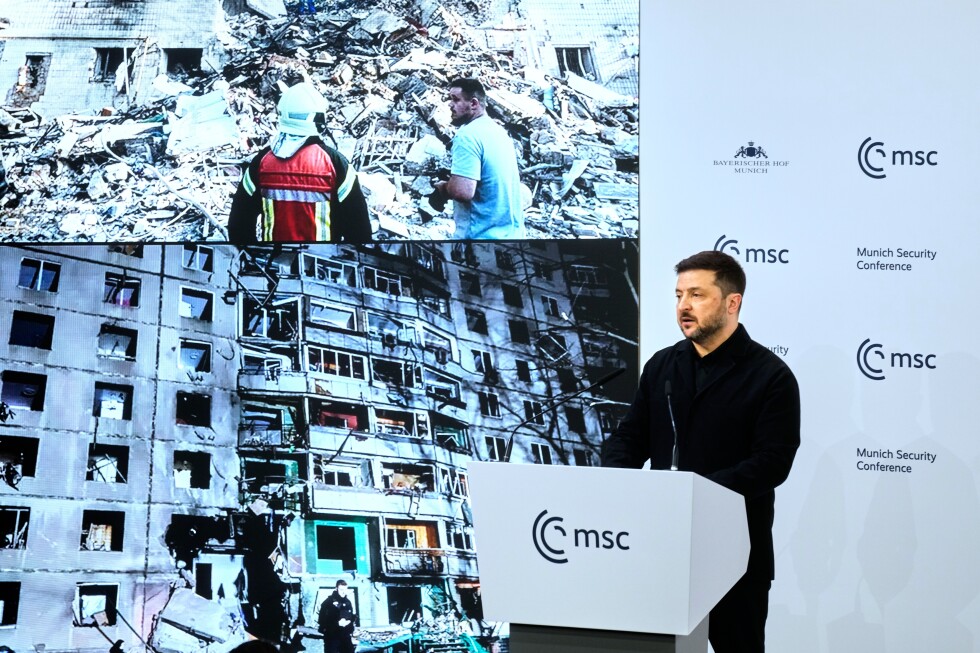
    Ukrainian President Volodymyr Zelensky has categorically refuted Russian allegations that Ukraine targeted one of President Vladimir Putin’s residences with drone strikes. The denial comes after Russian Foreign Minister Sergei Lavrov asserted that Kyiv had deployed 91 long-range unmanned aerial vehicles (UAVs) against Putin’s state residence in the Novgorod region overnight.

    Lavrov stated through official channels that Russian air defense systems successfully intercepted and eliminated all purported drones, resulting in no casualties or structural damage. However, he declared that Russia would reassess its negotiating stance in peace talks, citing what he termed the ‘final degeneration of the criminal Kyiv regime’ into ‘state terrorism.’

    The allegations emerge amidst heightened diplomatic activity, following substantial US-Ukraine discussions in Florida where President Trump and Zelensky advanced revised peace terms. Zelensky characterized the security guarantees offered by the United States—spanning 15 years—as nearly finalized, with Trump indicating approximately 95% completion. Outstanding issues reportedly include territorial disputes and the status of the Russian-occupied Zaporizhzhia nuclear facility, while the Donbas region remains a point of contention.

    Zelensky dismissed Moscow’s claims as ‘typical Russian lies’ designed to justify continued aggression against Ukraine and undermine recent diplomatic progress. He emphasized the critical importance of international vigilance, urging global leaders not to remain silent amid what he described as Russian attempts to sabotage peace efforts.

    The White House confirmed that President Trump subsequently held a ‘positive call’ with Putin, adding complexity to the evolving diplomatic landscape as all parties navigate accusations and counter-accusations.

  • Russia opens rebuilt Mariupol theater more than 3 years after Moscow airstrike killed hundreds there

    Russia opens rebuilt Mariupol theater more than 3 years after Moscow airstrike killed hundreds there

    The Donetsk Academic Regional Drama Theater in Russian-occupied Mariupol has officially reopened with a gala concert, more than three years after its destruction by a Russian airstrike that killed approximately 600 civilians. The March 2022 bombing occurred while hundreds of residents sought shelter within the building, which had been visibly marked with the word “children” to alert aircraft.

    Russian state media showcased the renovated theater’s marble pillars and staircases, with performers in traditional kokoshnik headdresses celebrating the reconstruction. Moscow-installed authorities, including Denis Pushilin of the Donetsk region and St. Petersburg Governor Alexander Beglov, attended the opening ceremony. Workers from St. Petersburg, which became Mariupol’s twin city after Russia’s complete capture in May 2022, participated in the rebuilding effort.

    This reopening occurs amidst ongoing controversy regarding the theater’s destruction. Moscow previously claimed Ukrainian forces demolished the building, but an Associated Press investigation confirmed Russian responsibility for the attack that killed nearly twice the initial government estimates. The city’s Ukrainian council, now operating from exile, condemned the reconstruction as “singing and dancing on bones” and accused Russia of using cultural restoration to conceal war crimes and advance Russification policies.

    The Donetsk region remains a critical battleground in the ongoing conflict, with its status representing a major obstacle in peace negotiations. Russia’s illegal annexation of the region in 2022 continues to be internationally contested as fighting persists across the territory.