标签: Europe

欧洲

  • Hungarian opposition leader Magyar vows to pull Hungary back toward the West in campaign launch

    Hungarian opposition leader Magyar vows to pull Hungary back toward the West in campaign launch

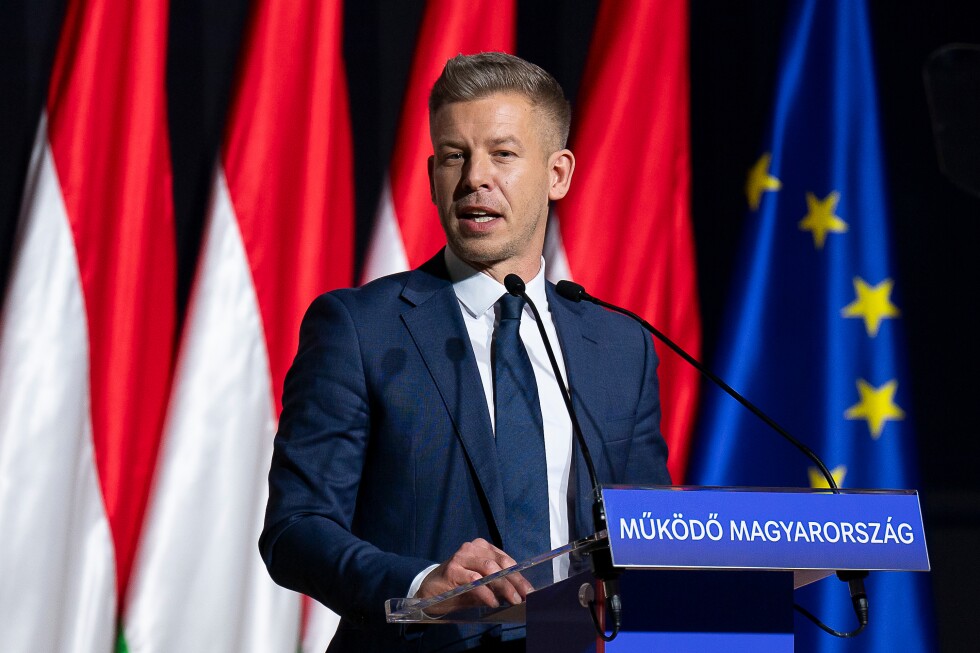
    BUDAPEST, Hungary — In a dramatic shift within Hungarian politics, opposition leader Péter Magyar has launched an ambitious campaign to unseat Prime Minister Viktor Orbán’s longstanding government. Speaking before supporters at a Budapest exposition center on Sunday, Magyar declared his center-right Tisza party stands “ready to govern” just 56 days before the crucial April 12 parliamentary elections.

    Magyar, a former insider within Orbán’s nationalist Fidesz party, has rapidly emerged as the most formidable political challenge to Orbán’s 16-year administration. Following an impressive performance in June’s European Parliament elections where Tisza captured approximately 30% of the vote, the party has maintained a consistent lead in independent polls for over a year.

    The opposition leader has conducted an intensive grassroots campaign across Hungary’s traditionally conservative rural heartlands—regions that have historically supported Orbán. Magyar’s platform centers on economic grievances, highlighting Hungary’s status as one of the EU’s poorest nations despite EU membership. He emphasizes stagnant wages, soaring living costs, and systemic corruption that he claims has enriched a small circle of government-connected oligarchs while ordinary Hungarians struggle.

    Foreign policy represents another critical dividing line. While Orbán recently stated that the European Union—not Russian aggression—poses the primary threat to Hungary, Magyar has positioned himself as pro-European. Following meetings with European leaders at the Munich Security Conference, Magyar pledged to end Hungary’s “drifting out of the European Union” and restore Western alliances, though he maintains certain Fidesz policies including border security measures and opposition to Ukraine’s accelerated EU accession.

    Tisza’s comprehensive 239-page governing program outlines ambitious reforms, including recovering billions in suspended EU funds by addressing democratic backsliding concerns, adopting the euro by 2030, and revitalizing Hungary’s deteriorating healthcare and public transportation systems. The party has recruited political newcomers from professional sectors—entrepreneurs, doctors, economists—with international energy expert Anita Orbán (no relation to the prime minister) slated as prospective foreign policy chief and former Shell executive István Kapitány as senior economy official.

    Magyar concluded his campaign launch with a promise of service-oriented governance: “We don’t plan to dominate this country, but to serve it.”
  • Ukraine’s ex-energy minister detained while attempting to leave country

    Ukraine’s ex-energy minister detained while attempting to leave country

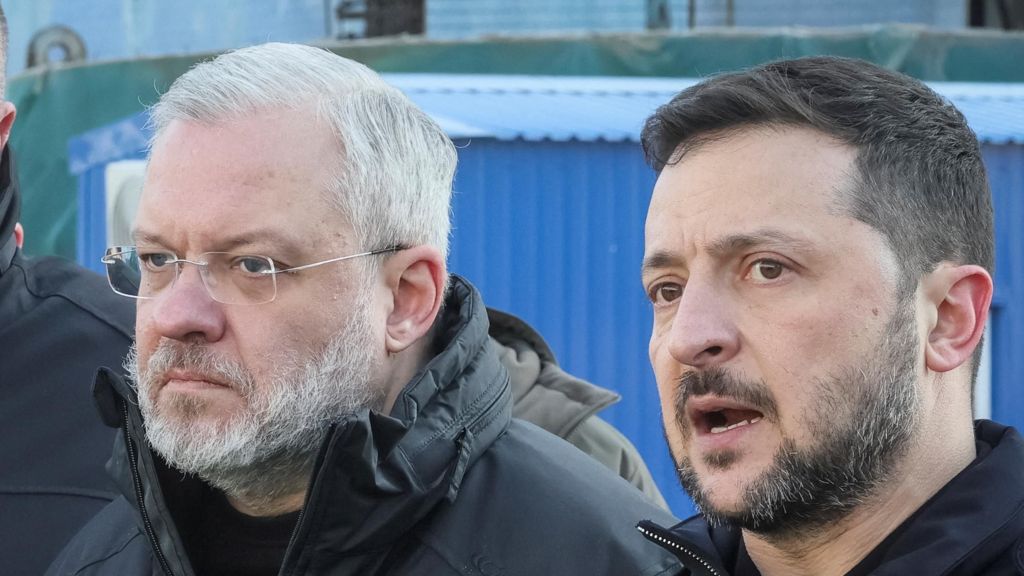
    Ukrainian authorities have apprehended former Energy Minister German Galushchenko while attempting to exit the country, marking the latest development in a sweeping corruption investigation that has shaken President Volodymyr Zelensky’s administration. The detention occurred at a border crossing point as Galushchenko reportedly sought to flee via train, though his intended destination remains unspecified.

    The arrest connects directly to Operation Midas, an extensive 15-month anti-corruption probe conducted by Ukraine’s National Anti-Corruption Bureau (NABU) and the Specialised Anti-Corruption Prosecutor’s Office (SAP). Investigators allege Galushchenko participated in a sophisticated $100 million embezzlement scheme within Ukraine’s energy sector, specifically targeting the state nuclear operator Energoatom. The operation uncovered systematic kickbacks ranging from 10-15% of contract values collected from energy contractors.

    This scandal emerges at a particularly sensitive time for Ukraine, as Russia intensifies attacks on energy infrastructure during winter months. The involvement of high-ranking officials in corrupt practices within the vital energy sector has generated substantial domestic outrage.

    The investigation has already produced significant political consequences, including the resignation of Zelensky’s chief-of-staff Andriy Yermak after his residence was searched, though neither he nor the president face direct allegations. Former Deputy Prime Minister Oleksiy Chernyshov was arrested in November on illicit enrichment charges, while businessman Timur Mindich, co-owner of Zelensky’s former TV studio Kvartal95, reportedly fled Ukraine after being named a suspect.

    International observers note that Ukraine’s persistent corruption problems present major obstacles to European Union integration, with anti-graft measures representing a key requirement for membership talks. The scandal has additionally increased pressure from the United States to resume elections, currently suspended under martial law provisions since Russia’s full-scale invasion began in 2022.

    NABU officials indicate Galushchenko is being transported to Kyiv for intensive questioning, with further updates on the Midas case expected shortly. The former minister, who previously served as justice minister before leading the energy portfolio for three years, has consistently denied wrongdoing and pledged to defend himself against all allegations.

  • Cold gold! Britain wins its first Olympics title on snow

    Cold gold! Britain wins its first Olympics title on snow

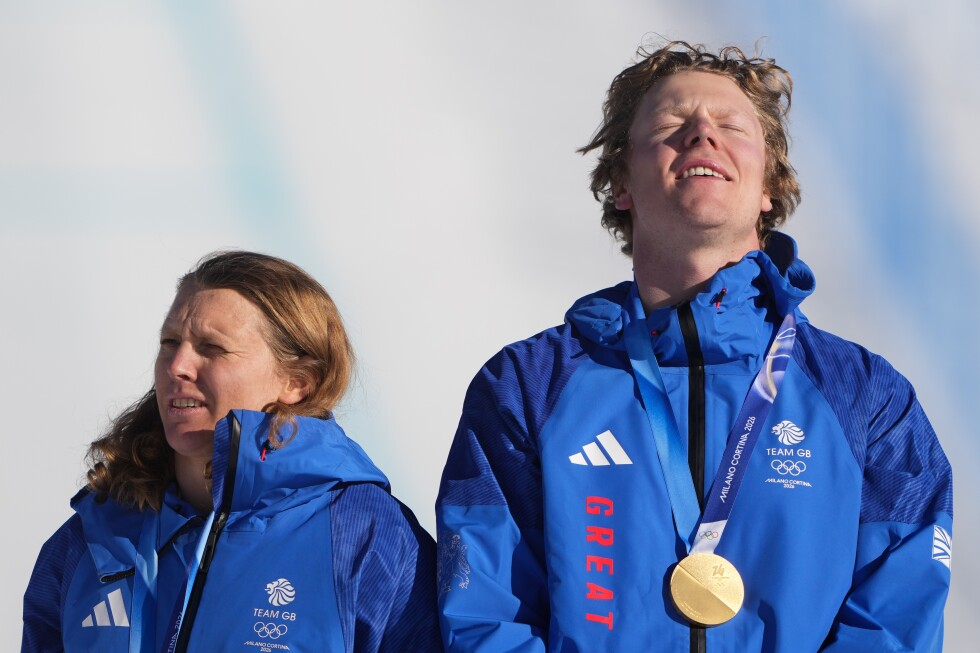
    LIVIGNO, Italy — In a stunning upset that rewrites British Winter Olympics history, Charlotte Bankes and Huw Nightingale captured gold in the mixed snowboardcross event on Sunday. This victory represents Britain’s first-ever gold medal won on snow in the 102-year history of the nation’s Winter Games participation.

    The breakthrough performance marks multiple historic milestones: not only is this Britain’s inaugural snow-surface gold, but it also represents the first time the nation has won multiple titles at a single Winter Olympics. The gold adds to the skeleton title secured by Matt Weston just two days earlier, bringing Britain’s total Winter Games gold count to just 15 in over a century of competition.

    What makes this victory particularly remarkable is the underdog status of the British pair. Seeded 13th out of 16 qualifying teams, Bankes and Nightingale had posted disappointing individual results just days earlier—13th and 26th place finishes in their respective events. Yet in the team format, everything coalesced perfectly on the Livigno course under sunny Italian skies.

    The mixed snowboardcross event, introduced just four years ago, features a unique relay-style format where four teams race simultaneously down the mountain. The first team to cross the finish line in the four-team final claims gold after three elimination rounds.

    Nightingale, emotional after the victory, stated: ‘The singles were tough but now there are tears of joy. GB on a whole is doing great on the snowboard side. We want to keep it going and inspire little kids to do it as well, and maybe one day they can get a gold medal.’

    The achievement shifts attention from Britain’s most famous Winter Olympians—ice dancers Jayne Torvill and Christopher Dean who won gold in 1984—to a new generation of snow sports athletes making history on different terrain.

  • Off-trail avalanche kills 2 skiers and injures 1 in northern Italy

    Off-trail avalanche kills 2 skiers and injures 1 in northern Italy

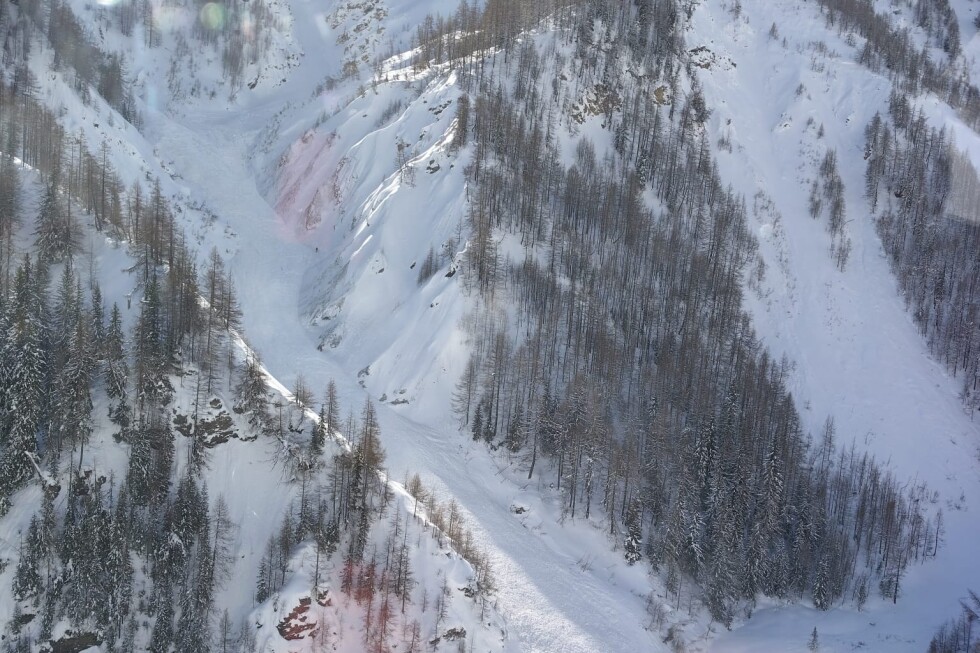
    A deadly off-piste avalanche struck the Mont Blanc massif near the Italy-France-Switzerland border on Sunday, resulting in two fatalities and one critical injury. The incident occurred in the renowned Couloir Vesses freeride zone within Courmayeur’s upper Val Veny region, according to official reports from Italy’s Alpine Rescue service.

    Emergency responders mobilized fifteen rescue specialists, three dog units, and two helicopter teams in a comprehensive search operation. Despite being transported to a medical facility in serious condition, one of the initially injured skiers succumbed to injuries sustained in the avalanche.

    This tragedy coincides with a separate avalanche event in Trentino where another skier experienced partial burial but was successfully extricated by fellow group members. These incidents follow a disturbing pattern of mountain accidents, with Alpine Rescue reporting thirteen fatalities among backcountry enthusiasts during the first week of February alone.

    Meteorological conditions have created particularly hazardous circumstances across the Alpine region. Recent storm systems have deposited fresh snow atop weak foundational layers, while powerful winds have formed unstable snowcaps along the mountain crescent spanning France, Switzerland, and Austria. Courmayeur, the picturesque Olympic venue town of approximately 2,900 residents located 200 kilometers northwest of Milan, now faces renewed scrutiny regarding mountain safety protocols during high-risk periods.

  • ‘Adopt a Statue’ program for Milan’s iconic Duomo restores centuries-old marbles

    ‘Adopt a Statue’ program for Milan’s iconic Duomo restores centuries-old marbles

    MILAN — A remarkable cultural preservation initiative has brought a 15th-century marble sculpture from storage into public view through an innovative adoption scheme. The ‘Bearded Saint with Book,’ originally crafted for Milan’s iconic Duomo cathedral, now stands proudly displayed behind protective glass at Piazzale Cadorna, headquarters of Lombardy transport company FNM.

    The sculpture’s restoration and relocation mark the success of the ‘Adopt a Statue’ program launched in 2020 by Veneranda Fabbrica del Duomo, the centuries-old institution overseeing the cathedral’s conservation. This visionary program connects corporate and individual donors with historical artworks requiring restoration, creating a sustainable model for cultural preservation.

    Elisa Mantia, the program’s project manager, explained the significance: ‘This project’s uniqueness lies in restoring statues that would otherwise remain in our deposits, bringing them back to their original beauty. They can continue telling the Duomo’s story even in locations distant from the monument itself.’

    The adoption process involves formal loan agreements, typically beginning with one-year terms that may be renewed. Each restoration requires authorization from Italy’s cultural heritage authorities, with strict adherence to conservation, insurance, and transport regulations.

    The Duomo’s construction history reveals why such programs are necessary. Beginning in 1386 under Gian Galeazzo Visconti’s rule, the cathedral took over five centuries to complete, with artists from different regions and periods contributing statues that now represent a timeline of evolving artistic styles.

    FNM President Andrea Gibelli emphasized the broader mission during the February 13 unveiling: ‘Culture can save the world. We want to spread the cultural riches we are fortunate to have, which are often overlooked or not fully appreciated.’

    Other successfully adopted sculptures include a 16th-century David, a depiction of Samson and the Lion, and a statue of Saint Matthew the Apostle. The program has preselected approximately thirty additional sculptures eligible for restoration, each chosen for both artistic merit and structural integrity.

    The ‘Bearded Saint with Book’ required primarily surface cleaning to remove pollution-based black crust, having sustained no structural damage during its centuries outdoors. All Duomo sculptures originate from Candoglia quarries in Piedmont, with the same marble used consistently since the late 14th century.

    As Mantia reflects, ‘Beyond being Milan’s symbol, the Duomo represents its history—a monument that grew with the city, telling its entire story through statues and decorative styles.’

  • Canada cruises into the quarterfinals at the Olympics by routing France

    Canada cruises into the quarterfinals at the Olympics by routing France

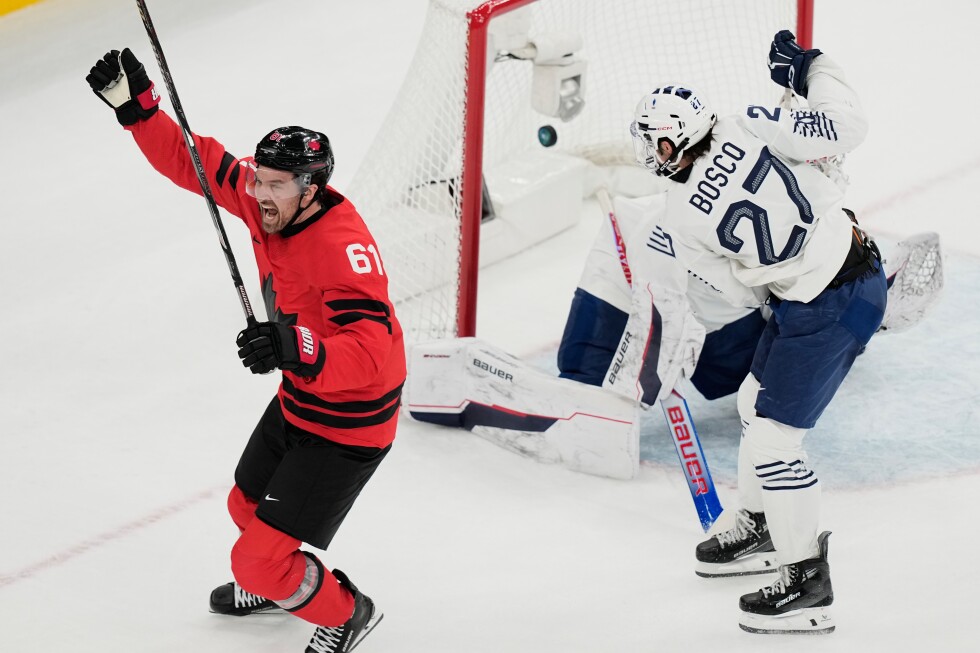
    MILAN — Team Canada has concluded the Olympic preliminary round with an unblemished record, establishing themselves as the tournament’s dominant force heading into the knockout phase. Their commanding 10-2 victory over France on Sunday showcased both offensive firepower and team resilience, cementing their position as top seed.

    The Canadian squad demonstrated exceptional skill and coordination with Sidney Crosby and Connor McDavid each contributing one goal and two assists. The game, however, featured a moment of controversy when Tom Wilson engaged in a fight with the French player responsible for a forearm hit to Nathan MacKinnon’s face. Under international ice hockey regulations, Wilson received a game misconduct for fighting, while MacKinnon later returned to the ice.

    Canada’s statistical dominance throughout the group stage has been remarkable, outscoring opponents by 17 goals across three matches. Their performance places them securely in the top seeding position, with the United States requiring an improbable 10-goal victory against Germany to claim the top spot.

    Young talent Macklin Celebrini, Canada’s youngest player at 19, continued his impressive Olympic debut with two goals against France, bringing his tournament total to four goals. Mark Stone contributed a shorthanded goal with mere seconds remaining in the first period, adding two assists to his performance.

    In other Olympic hockey action, Switzerland secured a critical 4-3 overtime victory against Czechia despite the absence of injured winger Kevin Fiala. Captain Roman Josi led the Swiss team with an opening goal, while Dean Kukan scored the overtime winner. The emotional victory, achieved amid concerns about Fiala’s lower left leg injury that required surgical intervention, positions Switzerland favorably for the qualification playoffs.

    Team Canada now looks ahead to quarterfinal competition, likely facing either Czechia or Germany, with Jordan Binnington expected to maintain his position in goal despite conceding two goals against France.

  • Lisa Vittozzi secures Italy’s first Olympic gold medal in biathlon with pursuit win

    Lisa Vittozzi secures Italy’s first Olympic gold medal in biathlon with pursuit win

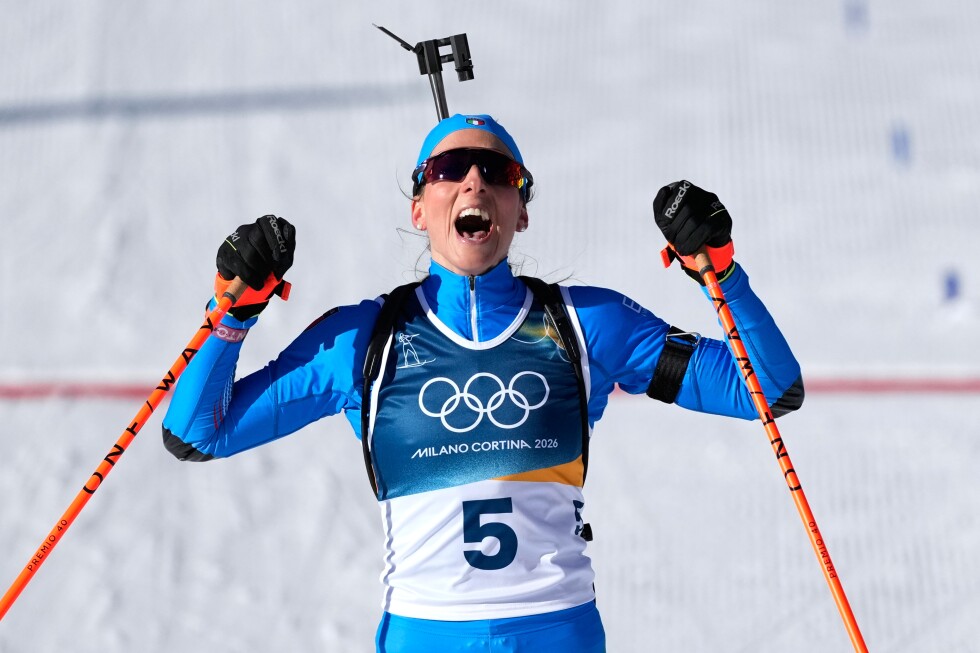
    In a stunning display of precision and athleticism, Italian biathlete Lisa Vittozzi captured the nation’s first-ever Olympic gold medal in the sport at the Milan Cortina Winter Games. The historic moment unfolded Sunday in the women’s 10-kilometer pursuit event, where Vittozzi delivered a flawless shooting performance, hitting all 20 targets with remarkable composure.

    Vittozzi crossed the finish line with a commanding time of 30 minutes and 11.8 seconds, triggering an emotional celebration before a roaring crowd of 20,000 spectators. The champion bowed, pumped her arms triumphantly, and collapsed into the snow in a moment of pure exhilaration, marking the culmination of an extraordinary personal journey.

    The victory represents a spectacular comeback for Vittozzi, who battled through a challenging previous season marred by a back injury and inconsistent shooting performances. Her path to Olympic glory required overcoming significant physical and mental hurdles, making her perfect performance particularly noteworthy.

    Norway’s Maren Kirkeeide claimed the silver medal, finishing 28.8 seconds behind the champion, while Finland’s Suvi Minkkinen secured bronze with a 34.3-second deficit. Notably, Minkkinen matched Vittozzi’s perfect shooting accuracy, hitting all 20 targets in her own impressive display.

    The event marked a significant shift in the Olympic biathlon landscape, breaking France’s previously unbroken podium streak. French contenders Oceane Michelon and Lou Jeanmonnot, who started in second and third positions respectively based on their sprint race results, fell out of medal contention due to shooting errors. Jeanmonnot missed three targets to finish fourth, while Michelon’s four misses placed her fifth overall.

    Biathlon pursuit competitions feature a unique format where athletes start according to their finishing times from the preceding sprint race, creating dynamic head-to-head competition. The sport’s distinctive penalty system requires competitors to ski a 150-meter penalty lap for each missed shot, adding strategic complexity to the physically demanding event.

  • Italy’s Winter Olympics dream: A record 22nd medal seals its best-ever Games

    Italy’s Winter Olympics dream: A record 22nd medal seals its best-ever Games

    MILAN — Italy has officially achieved its most successful Winter Olympics performance in history, surpassing all previous records with seven days of competition still remaining. The host nation’s extraordinary medal haul reached 22 on Sunday, eclipsing its previous benchmark of 20 medals established at the 1994 Lillehammer Games.

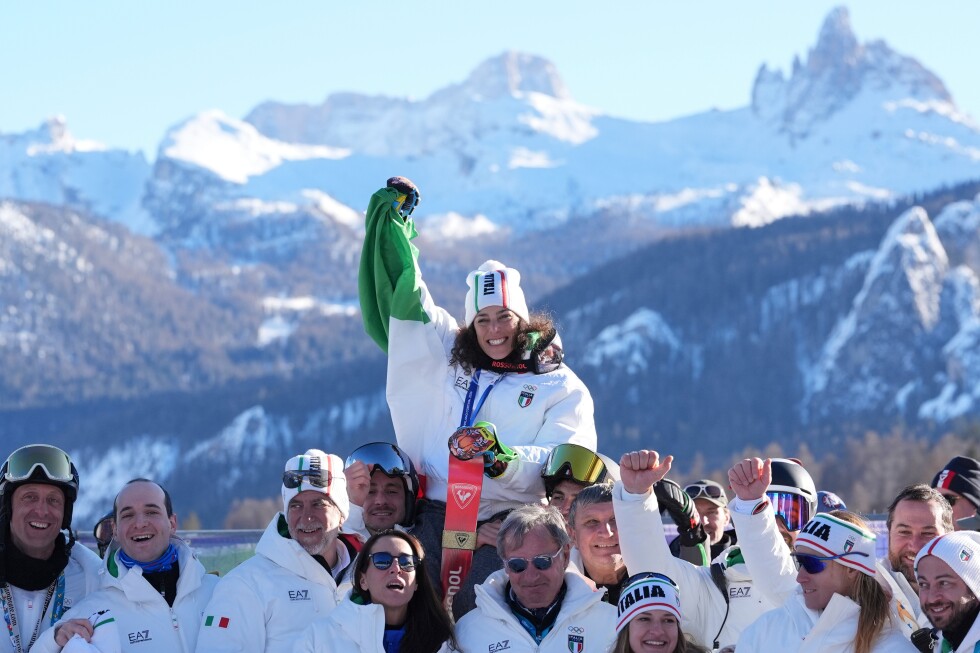
    The record-breaking day began with Italy’s cross-country team securing bronze in the men’s 4 x 7.5-kilometer relay. Shortly thereafter, Federica Brignone captured her second gold medal of the Games with a stunning victory in the giant slalom—a particularly remarkable achievement given her recent return to competition after recovering from a severe leg injury that involved multiple fractures.

    Within the hour, Michela Moioli and Lorenzo Sommariva contributed to the historic moment by earning silver in the mixed team snowboard cross, delivering Italy’s 21st medal and officially breaking the national record. The celebration continued as Lisa Vittozzi claimed gold in the 10-kilometer pursuit biathlon race shortly afterward.

    Italy’s current medal distribution stands at eight gold, four silver, and ten bronze medals—exceeding the pre-Games target of 19 medals set by Italian Olympic Committee president Luciano Buonfiglio.

    The nation’s performance represents a significant improvement over recent Olympic appearances. At the 2022 Beijing Winter Games, Italy won 17 medals, while the 2006 Turin Olympics as hosts yielded only 11 medals. Italy currently ranks among the top two nations in the medal table, a dramatic improvement from its fourth-place finish in Lillehammer behind Russia, Norway, and Germany.

    Early indications of Italy’s exceptional performance emerged on Day 3 of competition when the team collected six medals in 24 hours—a single-day national record. Local organizing committee president Giovanni Malagò emphasized the significance of Italy’s multidisciplinary success across sports where the nation had not traditionally been competitive.

    The emotional resonance of these achievements has been amplified by compelling athlete narratives. Brignone’s gold medal came after extensive rehabilitation, while short track speedskater Arianna Fontana earned her 12th and 13th Olympic medals, matching fencer Edoardo Mangiarotti’s longstanding record for most Olympic medals by an Italian athlete.

    International Olympic Committee President Kirsty Coventry praised Italy’s performance, noting: “Their stories of resilience and fight and everything good in humanity was really showcased. To do that at home, it’s so cool.”

  • Curling controversy widens amid higher surveillance as Britain accused of same infraction as Canada

    Curling controversy widens amid higher surveillance as Britain accused of same infraction as Canada

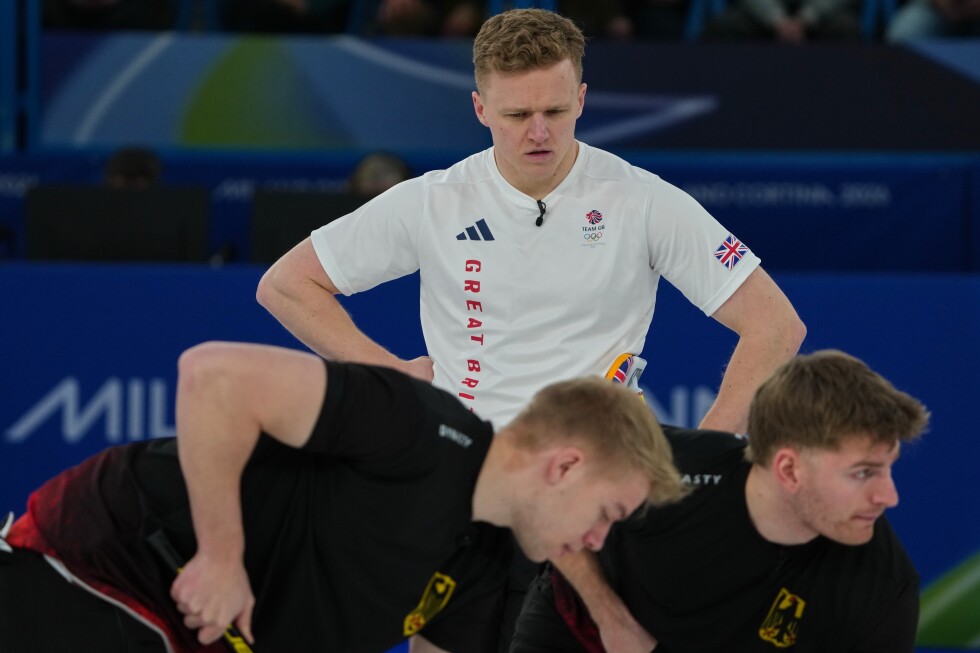
    CORTINA D’AMPEZZO — The ongoing officiating dispute in Olympic curling intensified Sunday when British curler Bobby Lammie became the latest athlete penalized for alleged rule violations during competition. During the ninth end of Britain’s round-robin match against Germany, officials determined Lammie had made illegal contact with his stone after release—a violation known as “double-touching”—resulting in the stone’s removal from play. Despite the controversy, the British team secured a decisive 9-4 victory.

    This incident marks the third such ruling in three days, following consecutive penalties against Canadian teams on Friday and Saturday. The initial controversy emerged when Swedish opponents raised allegations against the Canadian men’s team, with similar infractions called against the Canadian women’s team during their match against Switzerland the following day.

    In response to the growing dispute, World Curling announced enhanced monitoring measures beginning Saturday. The governing body assigned two dedicated officials to oversee the four simultaneous curling matches during each round, though acknowledged the impracticality of stationing umpires at every hog line—the critical zone where stones must be released.

    The organization maintains its position against utilizing video replay technology for officiating decisions, despite social media circulation of footage that appears to show the alleged violations. Questions regarding potential disproportionate surveillance of specific teams remain unanswered by tournament authorities.

    Until Sunday’s incident, the controversy had primarily involved Canadian athletes, who represent one of curling’s most passionate international fan bases. The repeated penalties have sparked debate about consistency in officiating and the need for technological assistance in determining infractions at the highest level of competition.

  • UK wants action taken on Russia after Navalny frog poisoning, Cooper says

    UK wants action taken on Russia after Navalny frog poisoning, Cooper says

    British Foreign Secretary Yvette Cooper has declared that the United Kingdom will pursue coordinated international action following conclusive evidence that Russian dissident Alexei Navalny was murdered using an exotic frog-based toxin. The announcement came during the Munich Security Conference where Cooper emphasized that European laboratories from five nations have definitively identified the poison responsible for Navalny’s death two years ago in a Siberian penal colony.

    Speaking from a snow-covered Munich rooftop on the BBC’s Sunday with Laura Kuenssberg programme, Cooper stated that the Russian government alone possessed the “means, motive and opportunity” to deploy the obscure biological agent derived from Ecuadorian dart frogs. The confirmation, obtained through analysis of smuggled biological samples, represents a “clear breach” of international chemical weapons conventions according to the Foreign Secretary.

    Cooper outlined Britain’s intention to escalate pressure on Moscow through continued sanctions coordination and formal reporting to the Organisation for the Prohibition of Chemical Weapons. She framed the poisoning as part of broader Russian aggression that requires united Western response, particularly noting the approaching fourth anniversary of Ukraine’s invasion.

    The diplomatic offensive occurs alongside Prime Minister Keir Starmer’s participation at the security conference, where both British leaders have emphasized European preparedness against Russian threats. Cooper characterized these efforts as continuing Navalny’s mission to “tell the truth, spread the truth” about Putin’s regime, which she described as “the most dangerous weapon of all.”

    Moscow’s London embassy issued a scathing rebuttal, dismissing the findings as “feeble-mindedness of Western fabulists” and accusing critics of engaging in “necro-propaganda.” Russian officials repeatedly questioned the scientific plausibility of the frog poison narrative while maintaining Navalny died of natural causes.

    The emerging divide was further highlighted by Conservative shadow foreign secretary Dame Priti Patel, who separately warned of an expanding “axis of authoritarianism” comprising Russia, China, North Korea and Iran. Despite these challenges, Patel reaffirmed America’s status as Europe’s “natural ally” in confronting global threats.