标签: Europe

欧洲

  • Drone strike kills 1 in Russian border region ahead of Ukraine peace talks

    Drone strike kills 1 in Russian border region ahead of Ukraine peace talks

    Amid preparations for critical diplomatic negotiations in Paris, cross-border hostilities between Ukraine and Russia have escalated, resulting in fresh casualties on both sides. Regional authorities reported that a Ukrainian drone strike on Russia’s Belgorod border region killed one individual and wounded two others, including a young child, on Sunday.

    Concurrently, Ukrainian emergency services confirmed three civilians sustained injuries from overnight drone attacks in the Kharkiv region. The aftermath of Friday’s Russian missile bombardment in Kharkiv turned more tragic as recovery teams discovered two additional bodies beneath the rubble of a devastated building, raising the death toll to four.

    These developments occurred just one day after national security advisers from numerous allied nations convened in Kyiv to deliberate on security assurances and economic assistance for Ukraine. The meetings form part of an intensified diplomatic initiative spearheaded by the United States to resolve the prolonged conflict.

    Ukrainian President Volodymyr Zelenskyy, anticipating his departure for Paris, announced Saturday that peace proposal discussions are poised to accelerate following Ukraine’s dissemination of all relevant documents to representatives from 18 nations. The upcoming diplomatic schedule includes technical consultations between Ukrainian General Staff and military sector delegates on Monday, followed by a summit of European leaders on Tuesday where security guarantee agreements are expected to be finalized. Additional meetings with U.S. officials are also scheduled in the French capital.

  • Portugal’s presidential election draws 11 candidates, making a later runoff vote likely

    Portugal’s presidential election draws 11 candidates, making a later runoff vote likely

    LISBON, Portugal — Portugal’s political landscape has entered a critical phase as an unprecedented field of 11 presidential candidates officially commenced their campaigns on Sunday, marking the start of a fiercely contested two-week campaign period ahead of the January 18 election. Political analysts predict that the exceptionally crowded field will likely prevent any single candidate from securing an outright majority, necessitating a runoff election between the top two contenders on February 8.

    Recent opinion polls indicate that the frontrunners include representatives from Portugal’s two dominant political forces that have governed the nation for the past half-century: Luís Marques Mendes of the ruling center-right Social Democratic Party and António José Seguro from the opposition center-left Socialist Party. However, these established political figures face formidable challenges from emerging forces, notably André Ventura, whose populist anti-immigration Chega party achieved a remarkable political breakthrough last year by becoming Portugal’s second-largest parliamentary party. Another significant contender is retired Rear Admiral Henrique Gouveia e Melo, an independent candidate who gained widespread public admiration for his exceptional management of Portugal’s COVID-19 vaccination program.

    While the Portuguese presidency is primarily a ceremonial position without executive authority, the head of state plays a crucial constitutional role as an arbiter of political disputes and possesses substantial powers including legislative veto authority (subject to parliamentary override) and the ability to dissolve parliament and trigger snap elections. This election occurs against the backdrop of Portugal’s most severe political instability in decades, following three general elections within three years that concluded last May.

    The incoming president will immediately confront several contentious legislative matters, including a controversial citizenship bill that would establish new limitations on obtaining Portuguese citizenship and conditions for its revocation—legislation previously rejected by the Constitutional Court but returned to Parliament for reconsideration. Additional pressing issues awaiting presidential action include a package of labor reforms that has already provoked significant street protests and nationwide strikes, plus legislation permitting euthanasia and physician-assisted suicide that Parliament approved in 2022 but has been delayed due to constitutional challenges.

    Approximately 10.9 million registered voters are eligible to participate in this pivotal election that will determine Portugal’s political direction for the coming years.

  • Dreading going back to work? How to ease the post-Christmas return

    Dreading going back to work? How to ease the post-Christmas return

    As the final weekend of Christmas break concludes, millions face the psychological challenge of transitioning back to workplace routines after extended time off. This period often triggers what psychologists term ‘Sunday blues’—a phenomenon characterized by anticipatory stress, reluctance, and low energy despite official time off ending.

    Executive coach Beth Hope explains this response stems from the brain’s tendency to predict Monday’s demands and activate stress responses prematurely. ‘The key isn’t finding motivation but constructing a gentle bridge between weekend and work modes,’ Hope emphasizes. Her evidence-based strategies include planning Monday’s priorities on Friday afternoon to create clear starting points, maintaining screen-free Sunday evenings to reduce overstimulation, and avoiding the temptation of ‘soft launches’ into work through email checking.

    Wellness coach Denise Byrne identifies January as a critical reset period for addressing deeper workplace integration challenges. ‘The core issue often isn’t motivation but systemic overload,’ Byrne notes. Her three-part framework recommends: time auditing to identify productivity leaks and unproductive patterns; energy mapping to recognize draining tasks and conversations; and intentional structuring through time-blocking and task batching to reduce decision fatigue.

    Practical implementation comes from Lesley Cooper, a consultancy CEO who acknowledges the inevitability of post-holiday reluctance. Her approach combines deliberate rituals—consistent sleep schedules, proper nutrition, and hydration—with strategic work re-entry techniques. These include setting meaningfully small, achievable initial tasks to generate accomplishment momentum and scheduling human connection time before diving into task-oriented work.

    Neuroscience supports these methods: writing down circulating thoughts and worries before bed helps externalize mental clutter, reducing the brain’s need for repetitive rehearsal and improving sleep quality. For those struggling beyond Monday morning, experts reframe January as a transitional reset period rather than a productivity failure, emphasizing structured systems that create freedom rather than restriction.

  • Littler masterclass seals back-to-back world titles

    Littler masterclass seals back-to-back world titles

    English darts prodigy Luke Littler has cemented his status as a sporting phenomenon with a spectacular 7-1 triumph over Dutch contender Gian van Veen, claiming his second consecutive PDC World Championship title at Alexandra Palace. The 18-year-old sensation delivered a masterclass performance that places him among the most elite company in professional darts history.

    Littler’s dominant victory makes him only the fourth player ever to achieve consecutive world championships, joining the legendary trio of Phil Taylor, Adrian Lewis and Gary Anderson. This remarkable second title in just his third appearance at the prestigious tournament positions Littler behind only Taylor (14 titles) and Michael van Gerwen (3 titles) in the all-time PDC championship rankings.

    The young champion demonstrated extraordinary precision throughout the final match, maintaining an average exceeding 107 for extended periods and finishing with an impressive 106.02 average. His clinical performance left Van Veen, who managed a respectable but insufficient 100 average, struggling to compete. Littler capped his victory with a spectacular 147 checkout before unleashing an emotional roar to the capacity crowd that had supported him throughout the contest.

    Emotions overflowed as Littler secured the £1 million prize and received the Sid Waddell Trophy from Olympic cycling legend Sir Chris Hoy. The teenager’s immediate declaration that ‘we’ve got to keep adding more titles’ signals his ambition to pursue Taylor’s seemingly insurmountable record of 14 championships.

    Van Veen, who will rise to world number three and make his Premier League debut following his final appearance, started strongly with a 116 checkout to claim the opening set. However, Littler’s response was devastating – answering with checkouts of 145, 127 and a spectacular maximum 170 ‘big fish’ checkout that shifted momentum irrevocably in his favor.

    The Dutchman acknowledged Littler’s superiority, stating: ‘Luke wasn’t in the mood to give me any more chances. He played phenomenally. That’s why he’s world number one by a margin now and back-to-back world champion.’ Littler’s tournament statistics further underscore his dominance, with a championship-high 73 maximum 180s, including 16 during the final match.

  • Syria begins circulating new post-Assad currency bills

    Syria begins circulating new post-Assad currency bills

    DAMASCUS, Syria — Syrian authorities initiated a comprehensive currency overhaul on Saturday, marking a pivotal step in the nation’s economic recovery strategy following the collapse of the Assad regime. The monetary reform involves the introduction of new banknotes while systematically withdrawing existing currency from circulation.

    President Ahmad al-Sharaa’s administration issued an official decree earlier this week outlining the structured transition process. The central bank will oversee the gradual phase-out of old Syrian pounds through designated exchange centers according to a predetermined timetable.

    Central Bank Governor Mokhles Nazer announced via social media platform X that the currency exchange operation commenced Saturday morning after months of meticulous preparation. The presidential decree, published by the state-run SANA news agency, specifies that the redenomination removes two zeros from nominal values, effectively making every 100 old Syrian pounds equivalent to one new pound.

    This monetary restructuring significantly alters currency denominations. The previous highest-value note of 5,000 Syrian pounds has been replaced by a new 500-pound bill, representing a substantial reduction in numerical value while maintaining equivalent purchasing power.

    Market observations revealed the U.S. dollar trading at approximately 11,800 old pounds in Damascus exchange shops on Saturday. Many of the outgoing banknotes feature images of former leader Bashar Assad and his father Hafez Assad, whose 54-year family rule ended when insurgent groups entered Damascus in December 2024.

    The currency overhaul represents the latest effort by Syria’s new leadership to address an economy devastated by prolonged conflict and international sanctions. The economic deterioration is starkly illustrated by the currency’s collapse: at the conflict’s inception in March 2011, the U.S. dollar traded at just 47 Syrian pounds.

    Recent months have seen significant diplomatic developments, with the United States and European Union removing most sanctions previously imposed during Assad’s administration, potentially facilitating economic recovery efforts.

  • European security advisors discuss peace proposals in Kyiv ahead of leaders’ summit

    European security advisors discuss peace proposals in Kyiv ahead of leaders’ summit

    KYIV, Ukraine — In a significant diplomatic development, high-level European national security advisors convened in the Ukrainian capital on Saturday to deliberate on emerging peace initiatives. This gathering represents a crucial phase in the escalating U.S.-orchestrated diplomatic campaign aimed at resolving the protracted four-year conflict in Ukraine.

    The high-stakes discussions preceded an anticipated summit between Ukrainian President Volodymyr Zelenskyy and European leadership scheduled for the coming week. Ukraine’s chief negotiator, Rustem Umerov, characterized the agenda as encompassing “security and economic issues, work on framework documents, coordination of further steps with partners” in a social media statement. The meeting included representation from Canada, NATO, and multiple European nations and institutions.

    According to Ukrainian negotiator Oleksandr Bevz, the security guarantee proposals under discussion involve a sophisticated multilateral framework. This structure would position Ukrainian armed forces as the primary defense line, supplemented by European-deployed troops within Ukraine, with American forces providing strategic “backstop” support.

    President Zelenskyy previously announced comprehensive meetings with officials from approximately thirty nations—collectively termed the Coalition of the Willing—that endorse Kyiv’s objective to conclude hostilities with Russia under conditions favorable to Ukrainian sovereignty.

    The security advisors’ meeting on Saturday will be followed by a leaders’ summit in Paris on Tuesday. These diplomatic efforts coincide with Zelenskyy’s Friday appointment of General Kyrylo Budanov, head of Ukraine’s military intelligence, as his new chief of staff. The president described this strategic personnel change as enhancing focus on security priorities, defense development, and diplomatic channels.

    Meanwhile, regional officials reported escalating violence, with the Kharkiv regional governor confirming the death toll from Friday’s Russian missile attack had risen to two, including a three-year-old child. Separately, an overnight drone assault on the Mykolaiv region targeted critical infrastructure, causing electricity disruptions that engineers worked through the night to restore, though no casualties were reported from this incident.

  • Police identify first four victims of Swiss ski resort fire

    Police identify first four victims of Swiss ski resort fire

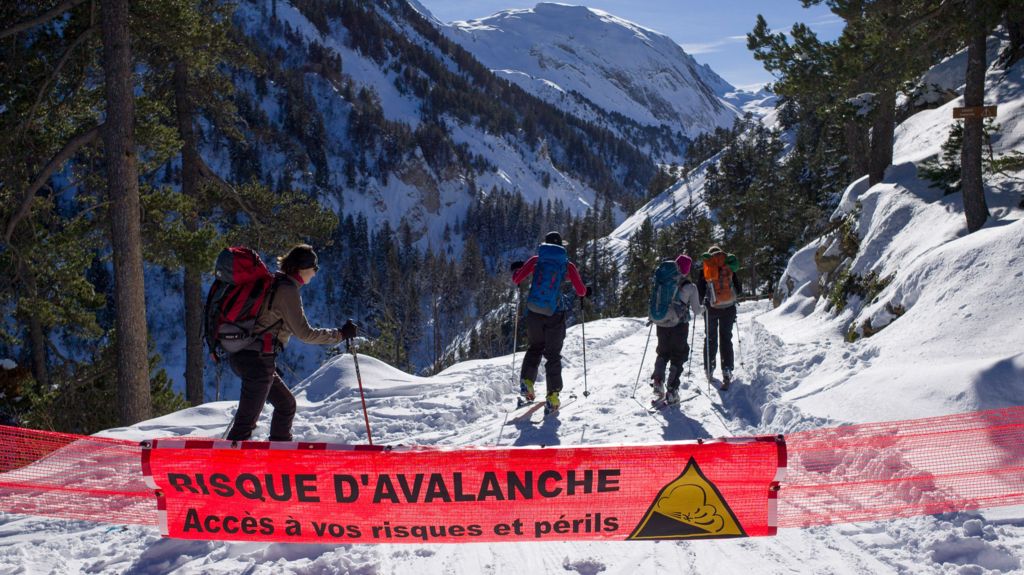
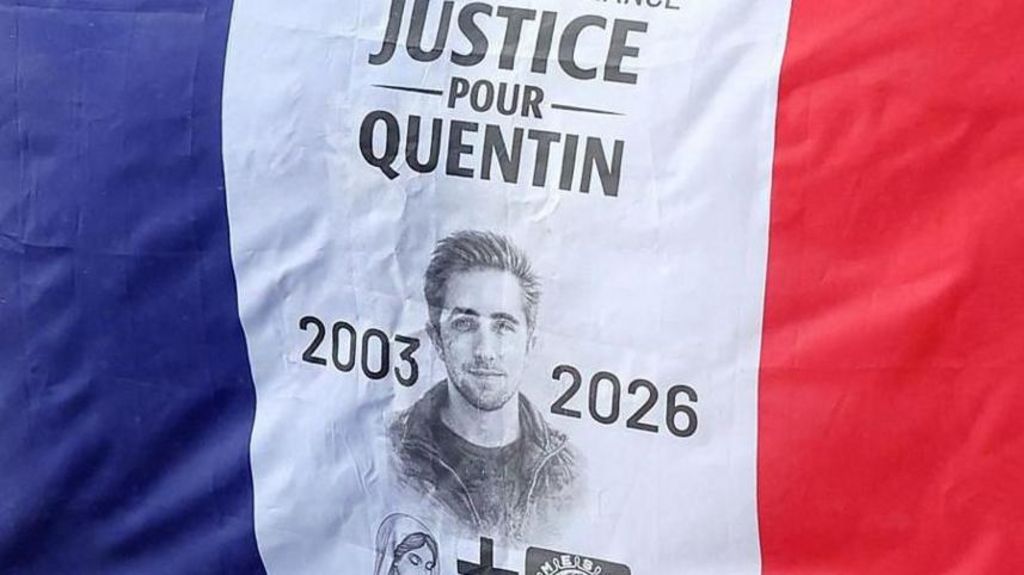
    Swiss authorities have successfully identified the first four victims of the devastating New Year’s Eve fire that ravaged Le Constellation bar in the popular Crans-Montana ski resort. The deceased include two Swiss women aged 21 and 16, along with two Swiss men aged 18 and 16, whose remains have been returned to their grieving families following extensive forensic examination.

    Valais cantonal police confirmed that meticulous work by officers and the Institute of Forensic Medicine enabled these initial identifications, while efforts continue to identify the remaining victims of the tragedy that claimed 40 lives and left 119 injured. Many families now endure an agonizing wait for information about those still unaccounted for.

    Preliminary investigation findings indicate the blaze likely originated from sparklers on champagne bottles being carried excessively close to the ceiling. Swiss President Guy Parmelin has characterized the incident as “one of the worst tragedies” in the nation’s recent history.

    The establishment was particularly popular with younger visitors in the resort town where the legal drinking age is 16, explaining why many teenagers are among the casualties. Police have confirmed that 113 injured individuals have been identified, comprising 71 Swiss nationals, 14 French citizens, and 11 Italian nationals.

    While an Italian teenage golfer has been informally reported as the first named victim, both Swiss and Italian officials have yet to officially confirm this identification. Authorities have established a dedicated helpline (+41 848 112 117) for concerned families seeking information about the incident.

  • Teenager who studied in UK missing after Swiss bar fire

    Teenager who studied in UK missing after Swiss bar fire

    A British teenager who attended two Jewish schools in England is now among those missing following a catastrophic New Year’s fire at a Swiss alpine resort that claimed at least 40 lives and left 119 injured. Charlotte Niddam, previously a student at Immanuel College in Hertfordshire and the Jewish Free School (JFS) in northwest London, remains unaccounted for after flames engulfed Le Constellation bar in Crans-Montana during early Thursday celebrations.

    Swiss prosecutors revealed preliminary investigations indicate sparklers on champagne bottles carried ‘too close to the ceiling’ likely ignited the basement blaze. The popular bar was crowded with Swiss nationals and international tourists ringing in the new year when the disaster struck.

    Both educational institutions Charlotte attended issued emotional statements. JFS described her as ‘loved by so many’ during her two-year enrollment, while Immanuel College shared her family’s request for prayers ‘during this extremely difficult time,’ adding ‘We are all praying for a miracle.’ Crans-Montana’s tourism website lists Charlotte as a holiday babysitter in the resort.

    Swiss President Guy Parmelin characterized the incident as ‘one of the worst tragedies’ in the nation’s history. Valais Attorney General Beatrice Pilloud confirmed the criminal investigation will examine construction materials, fire safety protocols, and occupancy levels at the time of the incident.

    Authorities caution that victim identification may require ‘days if not weeks,’ with 113 injured persons already identified and six remaining unnamed. The international community continues to monitor developments as search operations progress.

  • In their words: Survivors and others talk about fatal Swiss Alpine bar fire

    In their words: Survivors and others talk about fatal Swiss Alpine bar fire

    CRANS-MONTANA, Switzerland — A catastrophic fire that erupted during New Year’s celebrations at a popular Alpine bar has claimed 40 lives, marking one of Switzerland’s deadliest tragedies in modern history. The blaze, which tore through the crowded Le Constellation bar in the ski resort of Crans-Montana early Thursday, also left 119 people injured, according to official reports.

    Investigators revealed Friday that sparkling candles atop Champagne bottles ignited the fatal inferno when flames made contact with the ceiling decor of the packed establishment. The tragedy has united this multilingual nation in grief, with condolences expressed across French, Italian, German, and English languages reflecting Switzerland’s cultural diversity.

    Heartbreaking accounts emerged from survivors and responders who described scenes of chaos and heroism. Fourteen-year-old Marc-Antoine Chavanon recounted to The Associated Press how he rushed to assist victims: “We were bringing people out, people were collapsing. We saw people screaming, running. There was one of our friends: She was struggling to get out, she was all burned. You can’t imagine the pain I saw.”

    The search for missing loved ones continued through Friday as distraught mother Laetitia Brodard pleaded for information about her 16-year-old son Arthur: “I’m looking everywhere. The body of my son is somewhere. I want to know where is my child, and be by his side.”

    Regional hospital director Eric Bonvin described the psychological impact on the community: “This place was very well known as somewhere to celebrate the new year. Seeing young people arrive — that’s always traumatic.”

    Swiss President Guy Parmelin, speaking on his first day in the annually rotating position, acknowledged the nation’s resilience: “Switzerland is a strong country not because it is sheltered from drama, but because it knows how to face them with courage and a spirit of mutual help.”

    The Valais region’s attorney general Beatrice Pilloud emphasized that identification of victims remains the priority to allow families to begin mourning. Pope Leo expressed condolences through a telegram to the bishop of Sion, praying for the deceased to be “welcomed into His abode of peace and light.”

  • Missile attack on Kharkiv kills two including child, authorities say

    Missile attack on Kharkiv kills two including child, authorities say

    A Russian missile attack on the northeastern Ukrainian city of Kharkiv has resulted in multiple casualties, including the deaths of a woman and her three-year-old child, according to Ukrainian authorities. The strike, which occurred on Friday afternoon, targeted a multi-story residential apartment block that was nearly completely destroyed in the dual missile assault.

    Ukrainian President Volodymyr Zelensky condemned what he described as a ‘heinous’ attack that killed civilians even as diplomatic efforts intensify. Preliminary reports indicate that the victims found in the rubble were likely a mother and her young son. Among the approximately 28 injured victims was a six-month-old infant, with 16 requiring hospitalization for their wounds.

    Search and rescue operations continue at the devastated site, with over 80 emergency personnel and volunteers working to locate potential survivors beneath the wreckage. Regional Governor Oleh Syniehubov is overseeing the ongoing recovery efforts.

    The Russian Defense Ministry has categorically denied responsibility for the attack, asserting in an official Telegram statement that Russian forces ‘neither planned nor launched attacks using missile weapons or aircraft weapons within the city of Kharkiv.’ Russian officials instead suggested the destruction resulted from Ukrainian ammunition detonating, citing pre-attack footage showing ‘heavy smoke of unknown origin.’

    The attack comes at a diplomatically sensitive moment, with crucial peace talks brokered by the United States scheduled to take place in Kyiv on Saturday. President Zelensky indicated that approximately 15 countries are expected to participate in the discussions, along with representatives from the EU and NATO, with a US delegation joining via video link. This meeting will be followed by a gathering of the ‘coalition of the willing’ in France on January 6th.

    In a related development, Russian authorities have accused Ukraine of conducting a drone strike on a New Year’s Eve celebration in the village of Khorly in the Russian-occupied Kherson region, claiming at least 27 fatalities and over 30 injuries. Ukraine has declined to directly address these allegations, maintaining that it adheres to international humanitarian law by exclusively targeting military installations.

    The BBC has been unable to independently verify casualty figures from either incident amid the ongoing conflict and information warfare between the two nations.