标签: Europe

欧洲

  • Self-proclaimed hypnotherapist on trial in France for drugging and raping women

    Self-proclaimed hypnotherapist on trial in France for drugging and raping women

    A landmark criminal trial is underway in southern France involving Cyril Zattara, a dance instructor and self-proclaimed hypnotherapist accused of systematically drugging and sexually assaulting numerous women over a ten-year period. The defendant faces charges of raping 14 women and secretly recording approximately 20 additional victims without their consent.

    Judicial authorities reveal that Zattara employed a consistent methodology: he would surreptitiously administer potent sedatives into beverages before initiating sexual assaults. Forensic analysis confirmed the presence of powerful sleep-inducing pharmaceuticals in victims’ systems, while DNA evidence conclusively linked Zattara to multiple attacks.

    The trial proceedings in Aix-en-Provence are being conducted behind closed doors following a request from one victim, though other survivors had advocated for public proceedings to amplify awareness about sexual violence. Zattara, who has been in pretrial detention since 2021, has reportedly admitted to ten counts of rape while maintaining innocence regarding other charges.

    Investigators discovered extensive digital evidence on Zattara’s computer systems, including photographs and videos depicting victims in visibly sedated states during sexual acts. Court documents indicate the perpetrator predominantly targeted women within his social circle, exploiting established relationships and trust.

    One victim’s testimony describes attending a hypnosis session with Zattara in 2019, after which she consumed wine provided by the defendant. She reported experiencing fragmented memories of assault followed by violent illness, with forensic evidence corroborating her account.

    This case follows another high-profile prosecution in France involving drug-facilitated sexual crimes, highlighting growing judicial attention to complex sexual violence cases involving chemical submission.

  • Snow and ice wreak havoc across Europe, causing deadly accidents and travel chaos

    Snow and ice wreak havoc across Europe, causing deadly accidents and travel chaos

    A severe winter storm system has engulfed Europe, triggering widespread transportation chaos and resulting in multiple fatalities. The deep freeze, characterized by heavy snowfall and subzero temperatures, has created hazardous conditions across the continent.

    In France, the winter onslaught proved deadly with at least five weather-related fatalities reported. Three casualties occurred in the southwestern Les Landes region while two additional deaths were confirmed in the Île-de-France territory surrounding Paris. French authorities implemented emergency measures, including prohibiting truck traffic on roadways as snowfall generated massive traffic congestion on Monday.

    The French capital awoke Tuesday to a picturesque coating of snow covering its iconic landmarks, granting schoolchildren unexpected holidays but creating aviation nightmares. Six airports across northern and western France suspended operations due to severe weather conditions.

    The Netherlands experienced similar disruptions as Amsterdam’s Schiphol Airport, among Europe’s busiest aviation hubs, canceled approximately 400 flights. Ground crews worked tirelessly to clear frozen runways and de-ice aircraft. The Dutch rail network descended into chaos due to frozen switching points and an early morning software malfunction, with services around Amsterdam remaining largely suspended throughout the morning.

    Britain recorded temperatures plunging to -12.5°C (9.5°F), causing widespread cancellations of rail, road, and air transportation. Northern regions reported hundreds of school closures, while sporting events including horse races and football matches were postponed due to hazardous conditions. Scotland faced particularly critical circumstances with up to 15 centimeters (6 inches) of snowfall predicted, prompting calls for military assistance to deliver essential supplies to snowbound communities.

    The Balkan region confronted dual challenges of heavy precipitation, with both snow and rain causing river swelling and infrastructure damage. Sarajevo reported one fatality when a snow-laden tree branch struck a woman, while Serbian authorities implemented emergency measures and warned travelers ahead of Orthodox Christmas celebrations.

    Meanwhile, Italy’s extended period of rainfall has elevated Tiber River levels, affecting traditional gatherings in Rome where Pope Leo XIV delivered his Epiphany blessing to a reduced crowd under colorful umbrellas. Municipal authorities restricted access to parks and flood-risk areas throughout the city.

  • European leaders push back on Trump’s comments about a US takeover of Greenland

    European leaders push back on Trump’s comments about a US takeover of Greenland

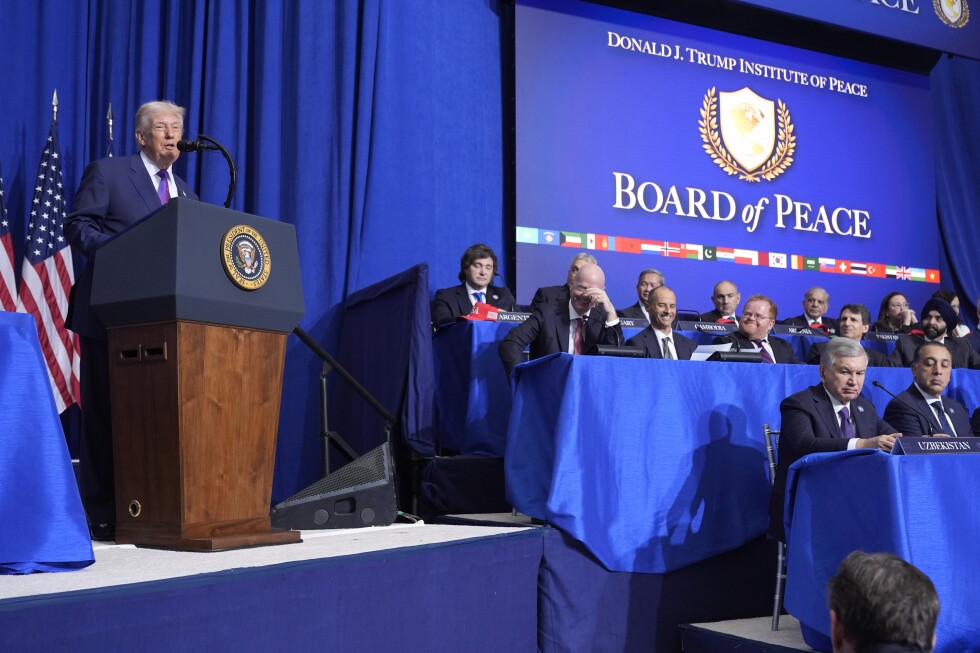
    BERLIN — A coalition of European leaders issued a firm collective response on Tuesday to U.S. President Donald Trump’s controversial remarks regarding American acquisition of Greenland, explicitly affirming the Arctic territory’s right to self-determination. The leaders of France, Germany, Italy, Poland, Spain, and the United Kingdom joined Danish Prime Minister Mette Frederiksen in a strong statement of solidarity that emphasized Greenland’s status as belonging exclusively to its people.

    The joint declaration came as a direct rebuttal to comments from White House Deputy Chief of Staff Stephen Miller, who asserted on Monday that Greenland should become part of the United States despite warnings from Danish leadership that such a move would effectively signal the demise of NATO. Miller characterized Greenland as essential to American security infrastructure during a CNN interview, stating the president had been ‘clear for months’ about this position.

    President Trump justified his interest in the mineral-rich territory by citing escalating Russian and Chinese presence in the Arctic region, telling reporters on Sunday that ‘Greenland is covered with Russian and Chinese ships all over the place’ and emphasizing its strategic importance for national security. He questioned Denmark’s capacity to maintain control over the vast Arctic territory.

    Miller further challenged the basis of Denmark’s territorial claim, referring to Greenland as a ‘colony of Denmark’ and questioning the legitimacy of Copenhagen’s sovereignty. However, he dismissed speculation about potential military intervention, asserting that no nation would confront the United States militarily over Greenland’s future.

    The European leaders’ statement left no room for interpretation: ‘Greenland belongs to its people. It is for Denmark and Greenland, and them only, to decide on matters concerning Denmark and Greenland.’ This unified European position highlights growing transatlantic tensions over sovereignty issues and strategic territories in the rapidly changing Arctic landscape.

  • Trump says the US ‘needs’ Greenland for Arctic security. Here’s why

    Trump says the US ‘needs’ Greenland for Arctic security. Here’s why

    The strategic significance of Greenland, the world’s largest island situated predominantly above the Arctic Circle, has catapulted it into the center of international geopolitical discourse. This mineral-rich autonomous Danish territory finds itself at the confluence of climate change, global security concerns, and economic competition among world powers.

    Greenland’s geographical positioning northeast of Canada, with over two-thirds within the Arctic Circle, has made it strategically vital since World War II when U.S. forces occupied it to prevent Nazi control. The ongoing thinning of Arctic ice due to climate change is opening new shipping routes and access to previously inaccessible resources, reigniting international competition.

    The island contains substantial deposits of rare earth minerals essential for modern technology, from smartphones to renewable energy infrastructure. This resource wealth has attracted significant attention from Western nations seeking to counter China’s market dominance in these critical materials.

    U.S. military presence remains established through the Pituffik Space Base, operating under the 1951 Defense of Greenland Treaty with Denmark. This facility supports missile warning systems and space surveillance operations for both U.S. and NATO forces. Greenland also serves as a critical monitoring point in the GIUK Gap, where NATO tracks Russian naval movements in the North Atlantic.

    In response to growing regional tensions, Denmark has announced a substantial $2.3 billion investment to enhance surveillance and sovereignty capabilities in Greenland and the Faroe Islands. This includes deploying new Arctic naval vessels, long-range drones, and satellite capacity. The Danish Joint Arctic Command, headquartered in Nuuk, maintains sovereignty operations alongside the elite Sirius Dog Sled Patrol that conducts reconnaissance missions.

    Recent years have seen increased geopolitical maneuvering, with China declaring itself a ‘near-Arctic state’ and proposing a ‘Polar Silk Road’ as part of its Belt and Road Initiative. Meanwhile, Russia has expressed concerns about NATO’s Arctic activities and pledged to strengthen its military capabilities in the region, particularly following its 2022 invasion of Ukraine.

    The local population of approximately 56,000 predominantly Inuit people maintain their right to self-determination, with both the Greenlandic and Danish governments having rejected external acquisition attempts. Environmental challenges and strict regulations continue to complicate mineral development despite the island’s resource potential.

  • Slovenia will hold parliamentary election on March 22

    Slovenia will hold parliamentary election on March 22

    Slovenia will hold parliamentary elections on March 22, 2024, as announced by President Natasa Pirc Musar on Tuesday. The upcoming vote represents a critical political test for Prime Minister Robert Golob’s liberal coalition government, which faces significant opposition from right-wing populist factions.

    President Musar emphasized the importance of electoral integrity, stating she would actively monitor disinformation campaigns and potential foreign manipulation attempts. “I want the election to be conducted fairly, and I will pay attention to disinformation and manipulation, including from abroad,” she declared, while simultaneously advocating for “respectful, responsible and tolerant communication during the election campaign.”

    The election will determine the composition of Slovenia’s 90-seat National Assembly, with the outcome potentially reshaping the nation’s political trajectory. The Alpine EU member state, which gained independence from Yugoslavia in 1991 and joined both NATO and the European Union in 2004, has approximately 2 million citizens.

    Prime Minister Golob’s administration, which assumed power in 2022 after defeating populist predecessor Janez Jansa, has pursued several controversial policies. These include Slovenia’s official recognition of Palestinian statehood, a move that drew both international attention and domestic criticism. Opposition parties have additionally accused the government of economic mismanagement and slowing economic growth.

    The government recently suffered a political setback when Slovenian voters rejected assisted dying legislation in a November referendum. The proposed bill would have permitted terminally ill patients to legally end their lives under specific circumstances.

    According to constitutional procedures, the newly elected parliament must convene within 20 days following the election. President Musar will then have an additional 30 days to appoint a prime minister-designate capable of securing parliamentary majority support.

  • Swiss ski bar not inspected for five years before deadly fire, mayor says

    Swiss ski bar not inspected for five years before deadly fire, mayor says

    Authorities in the Swiss alpine resort of Crans-Montana have revealed that a nightclub where a catastrophic fire claimed 40 lives and injured 116 people had not undergone mandatory safety inspections for five years. The devastating blaze, believed to have been ignited by sparklers during a celebration, has exposed critical gaps in the region’s safety enforcement system.

    Mayor Nicolas Feraud addressed journalists during a emotionally charged press conference on Tuesday, expressing profound regret over the institutional failure. “We regret that – we owe it to the families and we will accept the responsibility,” Feraud stated, though he conceded he could provide no immediate explanation for the five-year inspection gap at La Constellation bar.

    The tragedy has prompted immediate regulatory changes, with local authorities announcing a complete ban on sparklers in all entertainment venues. Additionally, the municipality has commissioned an external contractor to conduct comprehensive safety audits across all 128 entertainment establishments in the region.

    Feraud contextualized the oversight by explaining administrative challenges following a 2016 merger of four village councils into the larger Crans-Montana authority. The current five-person inspection team remains responsible for monitoring over 10,000 buildings across the expanded jurisdiction.

    Despite mounting pressure, the mayor confirmed he has no intention of resigning, stating “I’m not resigning, no, and I don’t want to.” The matter now moves to the judicial realm, with Swiss prosecutors having opened a criminal investigation into the circumstances surrounding the deadly fire.

  • Macron hosts Ukraine and allies to try to cement security guarantees

    Macron hosts Ukraine and allies to try to cement security guarantees

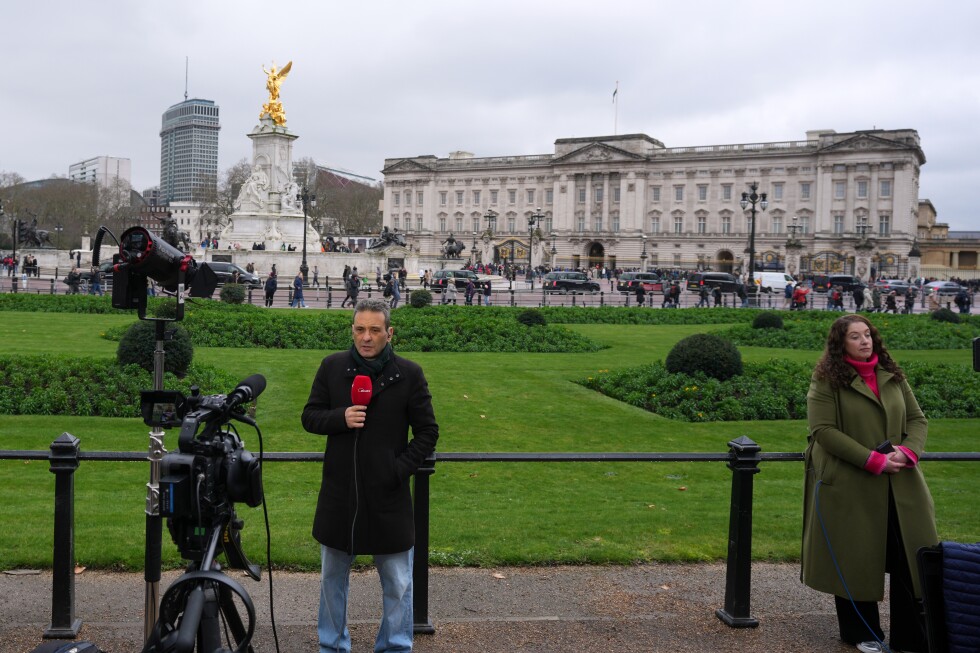
    PARIS – French President Emmanuel Macron is convening a critical summit with Ukrainian President Volodymyr Zelensky and leaders from over 30 allied nations to solidify long-term security guarantees for Kyiv. The high-stakes Paris meeting, involving the ‘Coalition of the Willing,’ aims to establish a framework for Ukraine’s defense in the event of a future ceasefire with Russia, even as Moscow escalates its offensive against Ukrainian energy infrastructure.

    The discussions are anchored in a peace proposal reportedly 90% finalized following Zelensky’s recent engagement with former U.S. President Donald Trump. The outstanding 10% of the agreement, which remains highly contentious, centers on potential territorial concessions. Russia currently occupies approximately 75% of the Donetsk region and 99% of Luhansk, collectively known as the Donbas industrial heartland—a primary objective of the Kremlin’s ongoing invasion launched in February 2022.

    Despite diplomatic efforts, Russia has consistently rejected temporary ceasefire notions and intensified military strikes, deliberately targeting Ukraine’s power grid during severe winter conditions. In response, Ukrainian forces have conducted drone operations against Russian infrastructure, including a recent attack on an oil depot in Lipetsk.

    The Paris agenda includes forming a multinational force to deter future aggression, defining concrete security pledges should Russia violate any peace deal, and outlining sustained support for Ukraine’s military and economy. A central element, termed the ‘backstop,’ involves securing a definitive U.S. commitment to lead a collective response against any Russian violations. While Zelensky indicated Washington offered 15-year security guarantees after his Florida talks, implementation details remain unspecified.

    The Ukraine-focused dialogue is occurring against a backdrop of heightened global tensions triggered by recent U.S. actions. The military operation in Venezuela, which resulted in the capture of President Nicolás Maduro, and subsequent statements by Trump regarding U.S. supremacy in the Western Hemisphere have raised concerns among European allies. Further complicating the summit is Trump’s reiterated interest in annexing Greenland, a semi-autonomous Danish territory. Danish Prime Minister Mette Frederiksen warned such a move would effectively terminate the trans-Atlantic alliance.

    European leaders, including UK Prime Minister Keir Starmer and NATO Secretary General Mark Rutte—both present in Paris—have expressed support for Denmark regarding Greenland while remaining measured in their criticism of U.S. actions in Venezuela. President Macron, as host, is tasked with maintaining the coalition’s focus on Ukraine amidst these divergent geopolitical challenges.

  • Swiss bar where fatal New Year’s blaze broke out had last fire safety inspection in 2019

    Swiss bar where fatal New Year’s blaze broke out had last fire safety inspection in 2019

    A devastating fire that erupted during New Year’s celebrations at Le Constellation bar in the Swiss resort town of Crans-Montana has revealed alarming safety inspection failures, with authorities confirming no fire safety assessments had been conducted since 2019. The tragedy claimed 40 lives and left 116 injured, making it one of Switzerland’s deadliest nightclub disasters in recent history.

    Investigative findings indicate the blaze originated from festive sparkling candles positioned atop Champagne bottles that ignited when they came into proximity with the ceiling. The criminal investigation now focuses on whether soundproofing materials complied with safety regulations and if the candles were legally permitted for indoor use. Valais regional prosecutors have opened a criminal case against the bar managers for suspected involuntary homicide, involuntary bodily harm, and negligently causing a fire.

    Municipal authorities acknowledged with profound regret that mandatory periodic safety inspections lapsed for five consecutive years (2020-2025), despite previous assessments in 2016, 2018, and 2019 that had requested modifications. Nicolas Féraud, head of Crans-Montana’s municipal government, expressed bitter regret over the oversight but could not immediately explain the inspection gap. The identification process proved particularly challenging due to the severity of burns, requiring DNA sampling from families to confirm victims.

    In response to the catastrophe, local authorities have implemented immediate safety reforms including an indoor fireworks ban and commissioned an external agency to conduct future establishment inspections. The investigation continues to determine exact attendance numbers during the incident and whether previous modifications, including a 2015 veranda construction permit and interior work, contributed to the tragedy.

  • Pope Leo XIV closes 2025 Holy Year with critique of consumerism and xenophobia

    Pope Leo XIV closes 2025 Holy Year with critique of consumerism and xenophobia

    VATICAN CITY — In a ceremony rich with symbolism, Pope Leo XIV formally concluded the Vatican’s 2025 Holy Year on Tuesday, delivering a powerful homily that criticized contemporary consumerist culture and anti-immigrant attitudes. The event marked the culmination of an extraordinary Jubilee that witnessed approximately 33 million pilgrims journey to Rome and featured the unprecedented transition between two pontiffs—the late Pope Francis and his successor.

    Kneeling in prayer on the stone floor at the threshold of St. Peter’s Holy Door before sealing it shut, Pope Leo completed a rare historical parallel: only once before, in 1700, has a Holy Year been opened by one pope and closed by another. This Jubilee had commenced under a frail Pope Francis in December 2024, continued through his funeral and the subsequent conclave, and concluded under new leadership a year later.

    With the ceremonial closure accomplished, Pope Leo immediately signaled the beginning of his substantive pontificate by summoning cardinals worldwide for a two-day Vatican meeting starting Wednesday. The agenda prominently features discussions on church governance and liturgical matters, particularly addressing divisions within the 1.4-billion-member Catholic Church regarding the traditional Latin Mass.

    In his Epiphany homily, Pope Leo challenged Christians to reflect on biblical teachings of hospitality, asking: ‘Has the Jubilee taught us to flee from this type of efficiency that reduces everything to a product and human beings to consumers? After this year, will we be better able to recognize a pilgrim in the visitor, a seeker in the stranger, a neighbor in the foreigner?’

    The Vatican reported substantial participation with over 33 million pilgrims, though organizers acknowledged this figure represents a rough estimate potentially including duplicate counts. The Holy Year tradition, dating to 1300, brings faithful to Rome seeking indulgences while providing the city opportunities for major infrastructure projects. For the 2025 Jubilee, Rome utilized approximately €4 billion in public funds to complete long-delayed modernization efforts, including a significant pedestrian piazza linking St. Peter’s Square to Castel St. Angelo.

    Pope Leo has already announced the next Jubilee will occur in 2033, commemorating the traditional year of Christ’s death and resurrection.

  • Nestle issues global recall of some baby formula products over toxin fears

    Nestle issues global recall of some baby formula products over toxin fears

    In a significant product safety move, multinational food conglomerate Nestlé has announced a worldwide voluntary recall of multiple infant formula brands following the potential detection of cereulide toxin. This hazardous substance, produced by specific strains of Bacillus cereus bacteria, can induce acute food poisoning symptoms including severe nausea, vomiting, and abdominal cramps upon consumption.

    The comprehensive recall affects specific batch numbers across Nestlé’s SMA infant formula and follow-on formula products distributed globally. The company has confirmed impacted products reached markets throughout Europe, including France, Germany, Austria, Denmark, Italy, and Sweden, with varying product names such as Guigoz and Nidal in France, and Beba and Alfamino in Germany.

    Nestlé emphasized that this precautionary measure follows internal quality control checks that identified potential contamination in ingredients supplied by a third-party provider. Crucially, the company stated no illness cases have been formally reported in connection with the affected batches to date.

    “The safety and wellbeing of babies remains our absolute priority,” a Nestlé representative stated. “We extend our sincere apologies for any concern or inconvenience caused to parents, caregivers, and customers worldwide.”

    The Food Standards Agency (FSA) has issued complementary guidance, warning that cereulide toxin cannot be neutralized through conventional preparation methods including boiling water or standard cooking procedures. Jane Rawling, Head of Incidents at the FSA, advised consumers to immediately discontinue use of the identified products and seek medical consultation if concerned about potential health impacts.

    Nestlé has established refund protocols for affected customers and maintains that all non-recalled products and batches remain safe for consumption. Consumers can verify batch numbers through Nestlé’s regional websites or national food safety portals, with identification codes typically located on container bases or packaging surfaces.