标签: Europe

欧洲

  • Bishops and Spanish government agree on a plan to compensate sexual abuse victims

    Bishops and Spanish government agree on a plan to compensate sexual abuse victims

    In a historic reconciliation between state and religious authorities, Spain’s government and Catholic bishops have established a groundbreaking compensation framework for victims of clergy sexual abuse. The agreement, announced Thursday, creates an independent pathway for survivors to seek reparations through government channels rather than confronting church institutions directly.

    The collaborative plan addresses long-standing disputes between Spain’s left-wing administration and ecclesiastical leadership regarding appropriate victim compensation in a nation that has undergone significant secularization. Under the new system, survivors may submit petitions to Spain’s Justice Ministry, which will forward cases to the national ombudsman for evaluation and compensation recommendations. The church’s specially formed committee will subsequently review these proposals.

    Justice Minister Félix Bolaños emphasized that this mechanism finally acknowledges hundreds of cases where abusers have died or become elderly, making criminal prosecution impossible due to statute of limitations. “Today, we have paid a debt to the victims,” Bolaños stated. “While the State has acted late, we are acting now.”

    The agreement establishes a tiered dispute resolution process. If the church’s committee and victims cannot reach consensus, cases progress to a joint committee comprising church representatives, ombudsman officials, and victim advocacy groups. The ombudsman retains ultimate decision-making authority when deadlocks occur.

    This development follows Spain’s delayed confrontation with clerical abuse, initially exposed through investigative journalism by El País newspaper. The 2023 ombudsman’s report documented 487 confirmed cases and suggested potential victims might number in the hundreds of thousands—a estimate the bishops contested, citing their internal investigation identifying 728 abusers since 1945.

    The compensation window will remain open for one year, extendable for an additional year if necessary. Archbishop Luis Argüello acknowledged that many survivors feel uncomfortable approaching church authorities directly, making this state-facilitated process essential. The church has already distributed €2 million in compensation to over 100 victims through its earlier initiative, with new payments being tax-exempt under the current agreement.

    This Spanish model emerges amidst global variations in abuse compensation approaches. While the U.S. church has paid billions through litigation and bankruptcy proceedings, European programs often combine financial reparations with therapeutic and spiritual support services. The Vatican’s child protection board has emphasized financial compensation and stronger abuser sanctions as essential components of institutional accountability.

  • Denmark sees talks with the US as a chance for ‘the dialogue that is needed’ over Greenland

    Denmark sees talks with the US as a chance for ‘the dialogue that is needed’ over Greenland

    Diplomatic channels are activating as Denmark confirms an upcoming high-level meeting with United States officials to address President Donald Trump’s renewed interest in establishing American control over Greenland. The strategic Arctic territory, rich in mineral resources and occupying a crucial geopolitical position, has become the focal point of international discussions.

    Danish Defense Minister Troels Lund Poulsen characterized the dialogue as both necessary and requested, telling national broadcaster DR that the Greenlandic government would participate directly. This confirmation follows statements from U.S. Secretary of State Marco Rubio, who announced the meeting would occur next week without disclosing specific details regarding participants or location.

    The principle of “Nothing about Greenland without Greenland” has emerged as a guiding tenet, with Greenland’s Foreign Minister Vivian Motzfeldt emphasizing their requested involvement. This comes amid heightened rhetoric from U.S. Vice President JD Vance, who asserted on Fox News that Denmark has inadequately secured the territory that hosts critical missile defense infrastructure partially dependent on Greenland’s strategic location.

    Vance maintained that historical military alliances, including Denmark’s support during World War Two and recent counterterrorism operations, don’t preclude current security concerns. “Just because you did something smart 25 years ago doesn’t mean you can’t do something dumb now,” Vance stated, framing Trump’s position as a clear assessment that Denmark is “not doing a good job with respect to Greenland.”

    European leaders have rallied behind Greenland’s sovereignty, with European Council President Antonio Costa declaring “Greenland belongs to its people” and affirming the European Union’s full solidarity. The leaders of Canada, France, Germany, Italy, Poland, Spain, and the United Kingdom joined Danish Prime Minister Mette Frederiksen in defending Greenland’s territorial integrity within the NATO alliance.

    The diplomatic exchange occurs against the backdrop of existing defense agreements. Danish Foreign Minister Lars Løkke Rasmussen referenced the 1951 defense pact between Denmark and the U.S., noting it offers “ample opportunity for the United States to have a much stronger military presence in Greenland” if desired. Rasmussen documented how the American military footprint has diminished from thousands across 17 bases to approximately 200 personnel at the remote Pituffik Space Base, which supports missile warning and space surveillance operations.

    Denmark is simultaneously enhancing its Arctic capabilities through a substantial 14.6 billion-kroner ($2.3 billion) agreement with Greenland and the Faroe Islands to improve regional surveillance and sovereignty maintenance. This initiative includes three new Arctic naval vessels, additional long-range surveillance drones, and enhanced satellite capacity, complementing the existing Joint Arctic Command headquartered in Nuuk and the elite Sirius Dog Sled Patrol that enforces Danish sovereignty in the Arctic wilderness.

  • Vance criticises Denmark and Europe’s handling of ‘critical’ Greenland

    Vance criticises Denmark and Europe’s handling of ‘critical’ Greenland

    A significant geopolitical confrontation is unfolding across the Atlantic as the United States administration renews its strategic interest in Greenland, triggering a firm diplomatic response from European allies. The situation escalated when US Vice-President JD Vance declared the semi-autonomous Danish territory “critical” for global missile defense systems during a Fox News interview, criticizing European nations for their perceived failure to adequately secure the region.

    Vance articulated concerns about Greenland’s pivotal role in early warning systems against potential Russian or Chinese missile attacks, stating that European partners “have not done a good job” in maintaining the territory’s defensive capabilities. His comments came alongside White House confirmation that officials are “actively” discussing potential acquisition options for Greenland, including military annexation as a viable alternative.

    The Trump administration’s position marks a revival of similar attempts made during the former president’s first term in 2019, though with notably heightened rhetoric following recent military actions in Venezuela. This renewed interest has been met with unequivocal rejection from both Danish and Greenlandic authorities, who have consistently maintained that the island is not available for purchase or transfer.

    In a powerful show of European solidarity, leaders from France, the UK, Germany, Italy, Poland, and Spain joined Denmark in issuing a joint statement affirming that “Greenland belongs to its people, and only Denmark and Greenland can decide on matters concerning their relations.” The European leaders emphasized their commitment to Arctic security through NATO collaboration while explicitly invoking the principles of the UN Charter regarding sovereignty and territorial integrity.

    Greenland’s political representatives expressed alarm at the American position, with Danish parliament member Aaja Chemnitz characterizing the administration’s comments as “a clear threat” and “completely disrespectful” toward a NATO ally. Meanwhile, local residents like Inuit hunter Aleqatsiaq Peary conveyed indifference toward potential ownership changes, noting that transition from Danish to American control would simply represent “switching from one master to another” for the historically colonial territory.

    Beyond military considerations, Greenland’s significance extends to substantial natural resources including rare earth minerals, uranium, and potential oil and gas reserves—assets becoming increasingly accessible due to climate-induced ice melt. The strategic Pituffik Space Base (formerly Thule Air Base), operational under US control since World War II, further underscores the territory’s enduring importance in global defense architecture.

    With US Secretary of State Marco Rubio scheduled to hold talks with Danish officials next week, the diplomatic resolution of this emerging crisis remains uncertain, potentially testing the resilience of transatlantic alliances and established international norms regarding territorial sovereignty.

  • UK braced for heavy snow as cold weather snap in Europe persists

    UK braced for heavy snow as cold weather snap in Europe persists

    The United Kingdom is bracing for an escalation of its prolonged cold spell as Storm Goretti approaches with potentially life-threatening conditions. Meteorological authorities have issued severe weather alerts anticipating heavy snowfall and powerful winds throughout Thursday, particularly impacting central England regions.

    According to the Met Office, Britain’s national weather service, certain areas could experience up to 30 centimeters (12 inches) of snow accumulation within mere hours. Chief Forecaster Neil Armstrong characterized the approaching system as a “multi-hazard event” combining substantial precipitation, gale-force winds, and significant snowfall.

    The French meteorological service, France Meteo, which officially named the storm, indicates the weather system will depart British territory by late Friday before progressing toward northwest European nations already grappling with freezing temperatures.

    Amber-level warnings have been activated across multiple UK regions, indicating substantially increased risks compared to standard yellow alerts. These advisories warn of probable transportation disruptions including road closures, rail service suspensions, and flight cancellations. Additional concerns include widespread power outages, communication network failures, and potential isolation of rural communities.

    The UK Health Security Agency has concurrently extended cold weather health alerts throughout England until January 12th. Health officials anticipate severe strain on medical and social care systems, with particular concern for mortality rates among senior citizens and individuals with preexisting health conditions.

    Neighboring nations are similarly experiencing weather-related challenges. Amsterdam’s Schiphol Airport attempted to resume normal operations Thursday following several days of substantial flight cancellations, though morning power outages created additional complications. KLM Royal Dutch Airlines reported persistent passenger congestion despite efforts to maintain departure schedules.

  • Farmers block highways across Greece in protest over rising costs and EU trade deal

    Farmers block highways across Greece in protest over rising costs and EU trade deal

    KASTRO, Greece — Greek agricultural workers intensified their nationwide demonstrations on Thursday by initiating a comprehensive 48-hour blockade of critical highways, major intersections, and toll collection points. This dramatic escalation responds to mounting production expenses and a controversial European Union trade agreement with South American countries under the Mercosur bloc.

    Agricultural machinery formed impenetrable barriers along primary transportation corridors, bringing all vehicular movement to a complete standstill while permitting exclusive passage for emergency services. Law enforcement personnel redirected civilian traffic to alternative roadways without attempting to dismantle the protest formations.

    The conservative administration in Athens has issued formal warnings against prolonged disruptions of public infrastructure. Multiple segments of Greece’s principal north-south highway linking the capital Athens with Thessaloniki experienced complete bilateral closure as cultivators demanded enhanced governmental assistance and outright rejection of the EU-Mercosur pact.

    Yiannis Baritas, a cabbage producer supporting five children, articulated the collective desperation at a southern Greek blockade point: “We’ve encountered an absolute breaking threshold. Our presence here will persist indefinitely to secure our families’ survival. Official policies have driven us to utter despair.”

    These agricultural demonstrations originating in November initially focused on inflated operational costs exacerbated by sequential crises: a fraudulent subsidy scheme delaying legitimate compensations and a contagious outbreak of sheep and goat pox.

    The government proposed eleventh-hour concessions on Wednesday including reduced electricity tariffs for agricultural consumers and fuel tax reimbursements. Nevertheless, producers deemed these measures insufficient to address structural challenges.

    The contested trade agreement would establish an extensive free commerce zone between European and South American economies including Brazil and Argentina. European agriculturalists anticipate market inundation with cheaper imported commodities, sparking parallel protests across multiple EU nations including concurrent demonstrations in France.

    Vangelis Roubis, a protest coordinator near Halkida, warned The Associated Press: “Greek agriculture faces extinction if this ratification proceeds. Our national economy relies fundamentally on cultivation and tourism, lacking the industrial capacity of Germany or France. Our production expenditures exceed Latin American costs by 300%.”

    Roubis cited potato cultivation as representative: Greek producers require 35-40 cents per kilogram for breakeven operations compared to approximately 10 cents in Brazil. The coordinator concluded: “We demand Greece align with EU member states opposing this agreement.”

  • US sighting of rare whale first recorded off Donegal ‘extraordinary’

    US sighting of rare whale first recorded off Donegal ‘extraordinary’

    In a groundbreaking discovery that has captivated marine biologists, an endangered North Atlantic right whale initially documented off Ireland’s County Donegal coast in 2024 has been resighted over 3,000 miles away in Massachusetts Bay. This remarkable transatlantic journey represents the first scientifically confirmed case of an individual whale being identified in both eastern and western North Atlantic waters.

    The identification was made possible through sophisticated photographic matching technology managed by the New England Aquarium, which maintains the comprehensive North Atlantic Right Whale Photo ID catalogue. Researchers from the US Center for Coastal Studies (CCS) initially spotted the whale during aerial surveillance operations in November 2025, with subsequent analysis confirming it was the same individual recorded near Slieve League, Ireland eighteen months earlier.

    Dr. Daniel Palacios of CCS described the finding as “extraordinary,” emphasizing how such encounters demonstrate both the species’ resilience and the critical importance of international scientific collaboration. With an estimated global population of merely 380 individuals, North Atlantic right whales rank among the planet’s most critically endangered marine mammals.

    This discovery challenges previous assumptions about the species’ migratory patterns and habitat utilization. Ryan Schosberg, the CCS researcher who co-spotted the whale, noted that the considerable distance between sightings underscores both the animals’ impressive mobility and significant gaps in scientific understanding of their behavior.

    Historical context reveals these whales were once prized targets for whalers due to their substantial blubber content, which fueled industrial machinery during the Revolution era. Today, they navigate heavily industrialized waters from Florida to Newfoundland, facing modern threats including ship strikes and fishing gear entanglements.

    Pádraig Whooley of the Irish Whale and Dolphin Group emphasized the exceptional rarity of such cross-basin identifications, noting that Ireland remains one of only four eastern North Atlantic nations with confirmed right whale sightings. This pioneering individual’s journey may potentially indicate new habitat opportunities that could offer crucial reprieve for this struggling population.

  • Oligarch linked to bribery paid Andrew £15m for mansion

    Oligarch linked to bribery paid Andrew £15m for mansion

    A BBC investigation has uncovered troubling connections between a royal property transaction and funds originating from criminal corruption schemes. Prince Andrew, Duke of York, received £15 million in 2007 for the sale of his Sunninghill Park mansion to Timur Kulibayev, the influential son-in-law of Kazakhstan’s then-president Nursultan Nazarbayev.

    Financial records reveal that Kulibayev utilized a loan from Enviro Pacific Investments, a company subsequently implicated in bribery schemes by Italian prosecutors, to facilitate the purchase. Court documents from 2016-2017 Italian cases demonstrate that Enviro Pacific received millions from corruption networks, with the final payment occurring merely weeks before the Berkshire property transaction was finalized.

    Kulibayev, who held commanding positions in Kazakhstan’s oil and gas sector through the sovereign wealth fund Samruk-Kazyna, maintained through legal representatives that the funds were entirely legitimate and that he had no involvement in corruption. His attorneys confirmed the commercial loan from Enviro Pacific but declined to disclose the company’s ownership, citing confidentiality.

    The transaction exhibited multiple concerning characteristics, including a purchase price £7 million above market value, utilization of opaque offshore structures through Unity Assets Corporation, and the buyer’s status as a public official in a nation where the UK government had expressed concerns about ‘systematic corruption.’

    Money laundering expert Tom Keatinge, Director of the Centre for Finance and Security, identified ‘blatant red flags’ that should have triggered enhanced due diligence. Margaret Hodge, the government’s anti-corruption champion, expressed being ‘utterly shocked’ and called for parliamentary investigation.

    Despite his role as UK trade envoy and proximity to the throne, Prince Andrew’s legal representatives at Farrer & Co did not identify the ultimate purchaser until media reports revealed Kulibayev’s involvement three years post-transaction. The former prince previously stated he wouldn’t ‘look a gift horse in the mouth’ regarding the inflated price.

    The property remained vacant following purchase and was ultimately demolished in 2016. Recent developments indicate Kazakhstan’s current government is pursuing corruption cases related to the Nazarbayev era, though Kulibayev maintains his wealth was legitimately acquired through decades of business activity.

  • Volcano guides at Mount Etna are protesting over new safety rules

    Volcano guides at Mount Etna are protesting over new safety rules

    SICILY, Italy — Mount Etna’s volcanic guides have initiated their first strike in decades following stringent new safety measures imposed by Catania authorities after recent eruptions. The conflict has created turmoil for tourists seeking to witness Europe’s most active volcano’s spectacular lava displays.

    The dispute centers on regulations that prohibit excursions after dusk and mandate a 200-meter (660-foot) minimum distance from lava flows. Authorities have intensified enforcement of pre-existing group size limitations, restricting parties to no more than 10 individuals using drone surveillance.

    Professional guides assembled Wednesday at the volcano’s lava flow gate, denouncing the restrictions as excessive and professionally damaging. Their regional board issued a statement asserting these measures ‘effectively nullify the role of guides, stripping them of their skills, function, and professional responsibility.’

    Volcanologists confirm the current eruption phase, which commenced on Christmas Eve, presents minimal danger to surrounding communities. The advancing lava front reached 1,360 meters (4,460 feet) elevation before stabilizing and entering a cooling phase after traversing approximately 3.4 kilometers (2 miles).

    Dario Teri, a 43-year-old member of Sicily’s alpine and volcano guides association, explained: ‘This is a lava flow that is descending very slowly on an area that is now also flat or semi-flat.’

    The strike action has left visitors like Claudia Mancini, a 32-year-old tourist from Palermo, disappointed after her planned excursion was canceled. ‘Unfortunately, we got the bad news of the cancelling of all activity,’ Mancini stated, expressing sympathy for the guides’ predicament.

    Measuring 3,350 meters (10,990 feet) tall and 35 kilometers (21.7 miles) wide, Mount Etna consistently draws adventure seekers and casual observers alike. While the current eruption continues according to Italy’s National Institute of Geophysics and Volcanology, the lava fronts are cooling without further advancement.

    Guides anticipate continuing their strike in coming days while seeking compromise solutions that balance tourist safety with professional viability.

  • Russian attacks leave two regions with widespread blackouts, Ukraine says

    Russian attacks leave two regions with widespread blackouts, Ukraine says

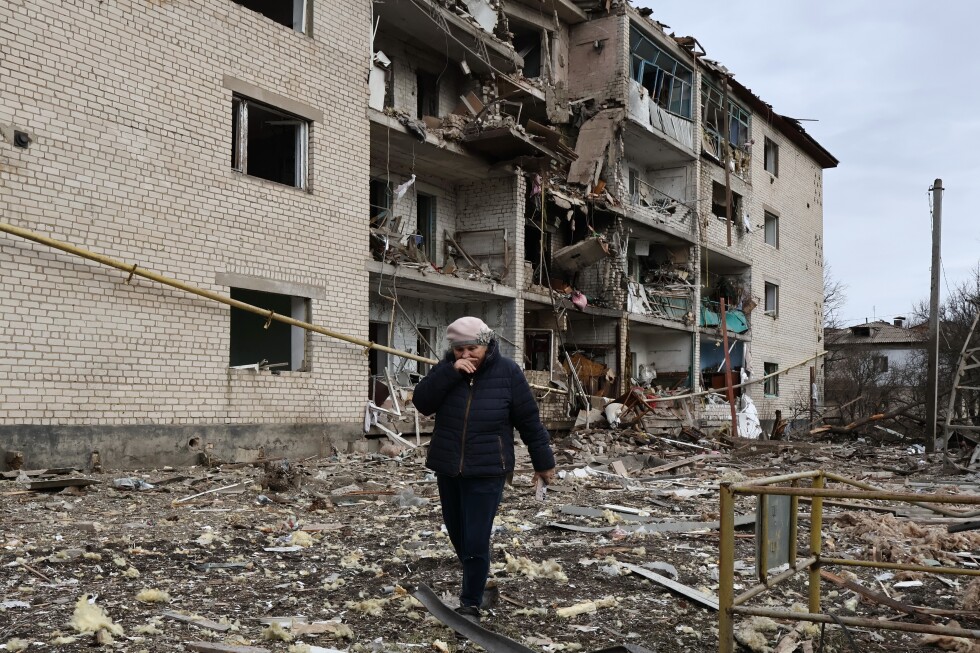
    Ukrainian energy infrastructure faced devastating attacks from Russian forces on Wednesday, leaving the southeastern regions of Dnipropetrovsk and Zaporizhzhia in near-total darkness. The assault has triggered widespread power outages, water supply disruptions, and internet failures during one of the harshest winter periods.

    According to Ukraine’s energy ministry, critical infrastructure facilities are now operating on emergency backup power. Prime Minister Yulia Svyrydenko confirmed that energy workers are battling extremely challenging conditions to maintain basic services. ‘Ukraine’s energy system is under enemy attacks every day,’ she stated on Telegram, emphasizing the additional strain from deteriorating weather conditions.

    Temperatures have plunged across affected regions, compounding the humanitarian crisis. State energy company Ukrenergo announced that restoration efforts would commence immediately once security conditions permit, with priority given to critical infrastructure. Dnipro city hospitals have been completely transitioned to generator power, while water drainage systems rely on alternative energy sources.

    The educational sector has also been impacted, with school holidays extended until January 9 due to the power crisis. Regional officials including Zaporizhzhia administration head Ivan Fedorov reported that utility workers are making maximum efforts to restore services despite the complete blackout.

    DTEK, Ukraine’s largest private energy provider serving 5.6 million citizens, operates in permanent crisis mode according to CEO Maxim Timchenko. In recent BBC comments, he revealed that attack intensity has reached unprecedented levels: ‘We just don’t have time to recover.’ The company has faced repeated assaults using drones, cruise missiles, and ballistic missiles as the fourth anniversary of Russia’s full-scale invasion approaches.

    The energy crisis unfolds alongside diplomatic developments, with Ukrainian President Volodymyr Zelensky expressing concerns about inadequate security guarantees from European allies. Recent talks in Paris resulted in the UK and France signing a declaration of intent regarding potential troop deployments if a peace agreement with Russia materializes—a move Moscow has warned would make foreign forces ‘legitimate targets.’

  • Crowds line Saint-Tropez streets for Bardot funeral

    Crowds line Saint-Tropez streets for Bardot funeral

    The picturesque French Riviera town of Saint-Tropez witnessed an emotional farewell to cinematic legend Brigitte Bardot on Wednesday, as crowds lined the streets to honor the actress who revolutionized 1950s French cinema. Despite Bardot’s explicit instructions for a modest ceremony, admirers gathered in significant numbers to applaud her flower-draped coffin during its procession through the transformed fishing village.

    The funeral service at a local church attracted notable figures including far-right politician Marine Le Pen and Equality Minister Aurore Bergé, both sharing Bardot’s passion for animal rights advocacy. The actress was laid to rest at a hillside cemetery overlooking the Mediterranean, joining her parents and first husband Roger Vadim, with her only son Nicolas-Jacques Charrier among the pallbearers.

    Bardot’s passing at age 91 on December 28th marked the end of an era for French cinema. Known affectionately as ‘BB’ in her homeland, she appeared in nearly 50 films including the groundbreaking ‘And God Created Woman’ before abruptly retiring from acting in 1973 to dedicate her life to animal welfare through her foundation.

    While President Emmanuel Macron eulogized her as ‘a legend of the century,’ Bardot’s later years were marked by controversy surrounding homophobic remarks and multiple convictions for inciting racial hatred, which complicated her legacy and alienated her from mainstream political circles. The ceremony balanced celebration of her artistic achievements with acknowledgment of her complex public persona.