标签: Europe

欧洲

  • Swiss court orders 3 months of pretrial detention for bar manager over fatal fire

    Swiss court orders 3 months of pretrial detention for bar manager over fatal fire

    A Swiss court has mandated three months of pretrial custody for Jacques Moretti, a manager of Le Constellation bar in Crans-Montana, following a catastrophic fire that erupted during New Year’s Eve celebrations. The blaze resulted in 40 fatalities—predominantly young attendees—and left 116 individuals injured, many with severe wounds.

    The Court of Compulsory Measures in the Valais canton issued the detention order citing concerns over potential flight risk, as emphasized by prosecutors. However, the court indicated readiness to reconsider the detention if adequate security measures, potentially including bail arrangements, are established. The manager will remain incarcerated until such conditions are finalized.

    According to Swiss business records, Jacques and Jessica Moretti are registered as the bar’s proprietors. Legal representatives for Jessica Moretti released a statement expressing optimism that the court’s decision could pave the way for her husband’s eventual release upon meeting stipulated conditions.

    Swiss authorities have initiated a criminal probe targeting the owners, who face allegations of involuntary homicide, involuntary bodily harm, and negligently causing a fire. Preliminary investigations suggest that sparkling candles ignited the inferno upon contact with soundproofing materials installed on the ceiling. Officials are examining whether these materials complied with safety standards and if the candles were authorized for indoor use. Notably, no fire safety inspections had been conducted at the establishment since 2019.

    Swiss President Guy Parmelin characterized the incident as a national tragedy, stating that the nation was ‘appalled’ by the devastating outcomes.

  • London’s homicide rate is at a record low as mayor says it disproves Trump’s ‘dystopian’ claims

    London’s homicide rate is at a record low as mayor says it disproves Trump’s ‘dystopian’ claims

    LONDON — Defying international perceptions of a crime-ridden metropolis, London has achieved its lowest homicide rate in decades according to official 2025 data released Monday. The British capital recorded just 97 murders throughout the year, marking a significant decline from 109 in 2024 and representing the most favorable statistics since 2014.

    Mayor Sadiq Khan seized upon the figures to directly challenge what he characterized as “distortions and untruths” propagated by former U.S. President Donald Trump and conservative commentators. “There are some politicians and commentators who’ve been spamming social media with an endless stream of distortions, painting an image of a dystopian London,” Khan stated in an interview with The Associated Press. “Nothing could be further from the truth.”

    The Metropolitan Police confirmed that when adjusted for population, London’s homicide rate stands at 1.1 per 100,000 residents—the lowest since comparable record-keeping began in 1997. This performance compares favorably with other major global cities: Paris records 1.6 homicides per 100,000, New York maintains 2.8, while Berlin reports 3.2.

    The decade-long feud between Khan and Trump resurfaced prominently in the context of these crime statistics. Trump had asserted in September that London’s crime was “through the roof” while personally attacking Khan as a “stone-cold loser” and “terrible mayor” during a U.N. General Assembly address. The former president had also baselessly claimed that Khan sought to implement Sharia law in London.

    City officials attributed the improved safety metrics to targeted policing strategies focusing on organized crime networks and a specialized violence reduction unit designed to prevent youth involvement in gang activities.

    However, the declining murder rate represents only one dimension of London’s crime landscape. The Office for National Statistics indicates surging incidents of phone-snatching and shoplifting, while the Crime Survey for England and Wales—which measures public experiences rather than police reports—showed a 7% overall crime increase in the year ending March 2025 compared to the previous period, though remaining substantially below 2017 levels.

    The political dimension of crime reporting has intensified on social media platforms, particularly Elon Musk’s X (formerly Twitter), where narratives of London as a crime-plagued dystopia under Labour leadership have gained traction, often intertwined with anti-immigrant sentiment.

    Khan positioned London’s progress as a rebuke to nationalist politics, proclaiming: “We are liberal, we are progressive, we are diverse. And we are incredibly successful. We’re the antithesis to everything these nativists believe in.” The mayor highlighted London’s status as the world’s top tourist destination, sporting and cultural capital, and leading hub for international students and foreign investment.

    “If you’re President Trump, Vice President JD Vance, or an imitator in Europe or indeed in the UK,” Khan concluded, “I can see why this is a problem to you.”

  • How NATO works at a time of Trump’s Greenland threats

    How NATO works at a time of Trump’s Greenland threats

    BRUSSELS — The North Atlantic Treaty Organization (NATO) faces unprecedented internal strain as former U.S. President Donald Trump’s persistent assertions regarding Greenland’s acquisition challenge the alliance’s core principles. This geopolitical tension has escalated to the point where Danish leadership explicitly warns that military action against Greenland would fundamentally rupture NATO’s framework.

    Greenland, a semi-autonomous territory within the Kingdom of Denmark, has become an unexpected flashpoint in transatlantic relations. Trump’s reaffirmed stance that “we’re going to have Greenland one way or another,” coupled with the White House’s refusal to dismiss military options, has created diplomatic alarm across European capitals. The administration justified its position as preventive measures against Russian and Chinese expansion in the Arctic.

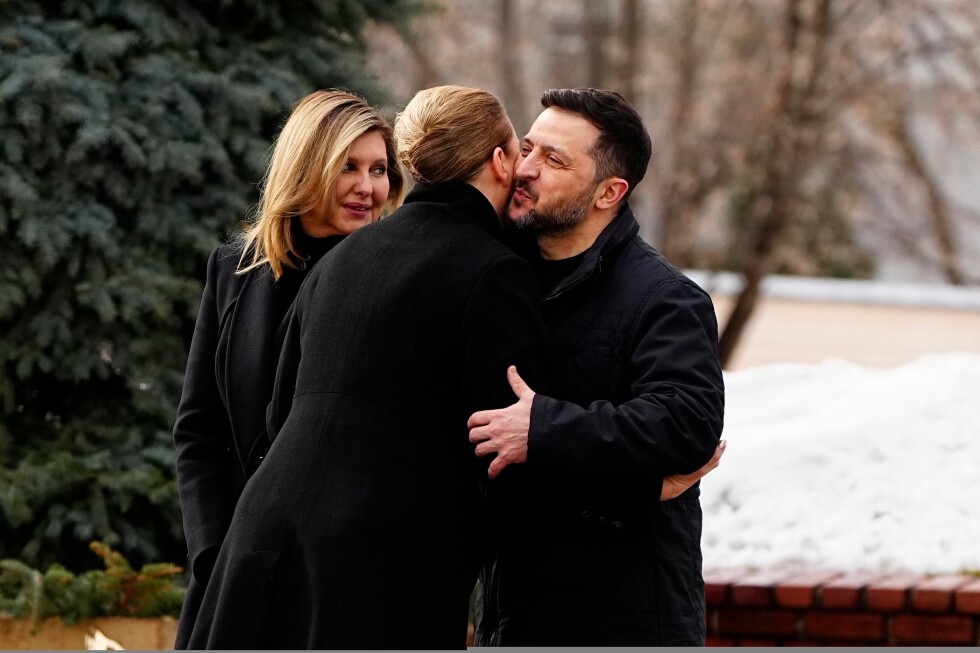
    Danish Prime Minister Mette Frederiksen delivered a stark warning: “Should the United States militarily attack another NATO nation, everything ceases—including our NATO membership.” This declaration underscores the grave implications of intra-alliance aggression.

    NATO’s historical context reveals why this situation proves particularly volatile. Established in 1949 by twelve nations to counter Soviet threats, the alliance has expanded to thirty-two members following Sweden’s 2024 accession. Its fundamental operating principle remains consensus decision-making, where each member holds veto power. The organization’s credibility rests upon Article 5’s collective defense pledge, invoked only once following the 9/11 attacks.

    Legal analysts note that Article 5 would prove ineffective in a U.S.-Denmark conflict due to required unanimity. Instead, Denmark could trigger Article 4 consultations for sovereignty threats, though such talks don’t mandate military response. The alliance lacks established mechanisms for resolving armed conflict between members.

    This scenario echoes the 2003 Iraq War division, where NATO members split between supporters and opponents of U.S. action. Current uncertainty surrounds which nations would endorse Trump’s Greenland position, highlighting the alliance’s fragility when confronted with internal power disparities.

    The United States remains NATO’s dominant military and financial contributor, making coherent opposition challenging without American leadership. Daily operations continue under former Dutch Prime Minister Mark Rutte’s diplomatic management, who maintains public neutrality while working to preserve U.S. engagement.

    Rutte recently emphasized Arctic security consensus while denying NATO crisis over Greenland: “All allies agree on Arctic importance due to increased Russian and Chinese activity risks.” The organization’s military command, always led by a senior U.S. officer based in Mons, Belgium, continues standard operations amid these political tensions.

  • Hungary grants asylum to Polish ex-justice minister

    Hungary grants asylum to Polish ex-justice minister

    Hungary has extended political asylum to Zbigniew Ziobro, Poland’s former Justice Minister, marking a significant escalation in diplomatic tensions within the European Union. Ziobro faces 26 criminal charges in his home country, primarily centered on allegations of embezzling approximately 25 million zloty ($7 million) from the state-controlled Foundation for Justice. These funds, intended for crime victim support and criminal rehabilitation programs, were allegedly diverted to purchase Israeli-made Pegasus spyware, which was then used to surveil political opponents.

    Ziobro, who served as Justice Minister from 2015 to 2023 under Poland’s right-wing Law and Justice (PiS) party, maintains his innocence, characterizing the charges as politically motivated persecution by the current government led by Prime Minister Donald Tusk. In a statement on social media platform X, Ziobro declared he accepted Hungary’s protection to ‘fight against political banditry and lawlessness,’ accusing Tusk of conducting a personal vendetta.

    This case represents the second instance of Hungary offering asylum to a former PiS official, following the 2023 grant to Ziobro’s former deputy, Michal Romanowski. Both cases involve allegations of corruption and abuse of power during their tenure.

    The asylum grant challenges fundamental EU principles regarding judicial cooperation and mutual trust among member states. Hungary’s decision aligns with Prime Minister Viktor Orban’s political strategy of positioning himself as a defender of national sovereignty against what he perceives as EU overreach. Orban’s government has faced similar criticism from Brussels regarding rule-of-law standards and judicial independence.

    The Pegasus spyware scandal has had profound implications for Polish politics. Current Foreign Minister Radoslaw Sikorski and members of Prime Minister Tusk’s family were among those allegedly targeted by the surveillance program. Additionally, Ziobro’s controversial judicial reforms during his ministry triggered prolonged conflict with EU institutions, resulting in the freezing of EU funds for Poland and multiple rulings against the country by the European Court of Justice.

    Legal experts note that if convicted in Poland, Ziobro could face up to 25 years imprisonment. His asylum status in Hungary effectively shields him from extradition, creating a complex legal and diplomatic standoff between the two EU member states.

  • Pope Leo XIV meets with Venezuelan opposition leader María Corina Machado in a surprise audience

    Pope Leo XIV meets with Venezuelan opposition leader María Corina Machado in a surprise audience

    In an unannounced diplomatic engagement, Pope Leo XIV convened with Venezuelan Nobel Peace Prize recipient María Corina Machado during a private audience at the Vatican on Monday. The meeting, absent from the pontiff’s originally published schedule, was subsequently documented in the Holy See’s official daily bulletin without elaboration.

    Machado’s appearance at the Vatican forms part of her extensive international tour across Europe and the United States, following her December reappearance to accept the Nobel Peace Prize in Oslo. The opposition leader, like many of her political allies, has operated primarily from exile or under detention amid Venezuela’s prolonged political crisis.

    The American-born Pope has maintained consistent diplomatic interest in Venezuela’s sovereignty following the controversial extraction of former President Nicolas Maduro by U.S. forces from Caracas. Maduro currently faces federal narcotics trafficking charges in New York courts. Pope Leo previously expressed profound concern regarding these developments while advocating for the preservation of human and civil rights throughout the Latin American nation.

    Venezuela’s opposition movement, historically supported by both Republican and Democratic U.S. administrations, had committed to restoring democratic governance to the oil-rich nation by displacing Maduro’s regime. This objective suffered a significant setback when U.S. President Donald Trump permitted Maduro’s vice president, Delcy Rodríguez, to assume executive control.

    Machado, upon receiving the 2025 Nobel Peace Prize, proposed dedicating the honor to Trump alongside the Venezuelan people. The American president has publicly expressed personal ambition for the prestigious award since returning to office.

  • Former Polish justice minister who faces prosecution at home says he’s received asylum in Hungary

    Former Polish justice minister who faces prosecution at home says he’s received asylum in Hungary

    WARSAW, Poland — In a significant development highlighting East European political tensions, former Polish Justice Minister Zbigniew Ziobro announced Monday that Hungary has granted him political asylum. Ziobro faces prosecution in Poland for alleged abuse of power during his tenure in the previous nationalist conservative government.

    Ziobro served as a central figure in the Law and Justice (PiS) party administration that governed Poland from 2015 to 2023. That government systematically consolidated political control over judicial institutions through strategic judicial appointments and punitive measures against critics, including disciplinary actions and remote reassignments.

    The current administration under Prime Minister Donald Tusk, which assumed power over two years ago, has attempted to reverse these judicial reforms. However, these efforts have been consistently obstructed by two consecutive presidents aligned with the national right wing.

    Prosecutors sought to lift Ziobro’s parliamentary immunity in October to pursue charges including alleged misuse of a violence victim support fund. Authorities claim these resources were improperly diverted to acquire Israeli Pegasus surveillance technology. Tusk’s government alleges PiS employed this sophisticated spyware to conduct illegal surveillance on political opponents—an accusation Ziobro denies, maintaining his actions were lawful.

    Hungary, under the leadership of nationalist Prime Minister Viktor Orbán, has provided sanctuary to multiple politicians affiliated with Law and Justice who face legal proceedings in Poland. In an extensive social media statement, Ziobro declared he had ‘decided to accept the asylum granted to me by the government of Hungary due to the political persecution in Poland.’

    The former minister further stated his intention to ‘remain abroad until genuine guarantees of the rule of law are restored in Poland,’ arguing that this approach allows him to more effectively combat what he describes as ‘mounting lawlessness’ in his homeland.

    Hungarian Foreign Minister Péter Szijjártó confirmed in Budapest that authorities had granted asylum to ‘several’ individuals facing political persecution in Poland, though he declined to provide specific names.

  • Oscar glory next for Irish star Jessie Buckley and NI-born author of Hamnet?

    Oscar glory next for Irish star Jessie Buckley and NI-born author of Hamnet?

    Irish actress Jessie Buckley has emerged as a formidable Oscar contender following her triumphant win for Best Actress in a Drama at the Golden Globes. Her captivating portrayal of Agnes Hathaway, William Shakespeare’s wife, in the critically acclaimed film ‘Hamnet’ has positioned her as a frontrunner in the upcoming awards season. The historical drama, co-produced by legendary filmmaker Steven Spielberg, also secured the coveted Best Film award, marking a significant milestone for the international production team.

    The victory represents a potential dual recognition for Irish talent, with Northern Ireland-born author Maggie O’Farrell potentially earning recognition as co-writer of the adapted screenplay. O’Farrell’s award-winning novel of the same name serves as the foundation for the cinematic interpretation, which explores the tragic story of Shakespeare’s son Hamnet and its potential influence on the creation of the playwright’s masterpiece ‘Hamlet’.

    During her acceptance speech, Buckley emphasized the collaborative nature of the production, noting the diverse international team that included a Chinese director, predominantly Irish cast, Polish crew members, and British collaborators. The actress, who first gained public attention 18 years ago as a contestant on the BBC talent show ‘I’d Do Anything,’ has steadily built an impressive career across theater, television, and film.

    Buckley’s journey from teenage talent show contestant to award-winning actress has been marked by both challenges and achievements. She recently reflected on her early television experience, describing instances of ‘body shaming’ and being sent to ‘femininity school’ during the production. Despite finishing as runner-up in the competition, Buckley declined the understudy position and instead pursued formal training at the prestigious Royal Academy of Dramatic Art, graduating in 2013.

    Her career has since flourished with notable roles in television series including ‘Taboo,’ ‘Fargo,’ and ‘Chernobyl,’ alongside acclaimed theatrical performances in productions of ‘Henry V’ and ‘Cabaret,’ for which she won an Olivier Award. The Golden Globe win positions Buckley to potentially become only the fifth Irish actor to win an Oscar, following in the footsteps of Daniel Day-Lewis and recent winner Cillian Murphy.

    The awards ceremony, occurring just weeks before Oscar nominations are announced on January 22nd, serves as a crucial indicator of industry recognition and could signal a landmark moment for Irish representation in Hollywood’s most prestigious awards ceremony.

  • Watch: Moment skier and dog swept along by avalanche

    Watch: Moment skier and dog swept along by avalanche

    A harrowing incident on the slopes of Pic de l’Hortell in Andorra was captured on camera when Spanish skier Ares Masip and his dog were unexpectedly caught in a powerful avalanche. The footage, recorded by Masip himself, documents the terrifying moment when the snowpack gave way, sweeping both skier and animal down the mountain in a torrent of snow and debris.\n\nThe video evidence reveals the rapid onset of the avalanche, demonstrating how quickly stable conditions can transform into life-threatening situations in alpine environments. Masip’s recording provides valuable firsthand perspective of the avalanche’s force and the challenges of maintaining orientation while being carried downhill.\n\nSafety experts analyzing the footage have noted the importance of avalanche preparedness equipment and training. The incident serves as a stark reminder of the inherent dangers of backcountry skiing, even for experienced practitioners. Andorran mountain rescue services have used the opportunity to reinforce awareness about checking avalanche forecasts and traveling with proper safety gear including transceivers, probes, and shovels.\n\nThe footage has garnered significant attention within the winter sports community, sparking discussions about risk assessment and companion safety in avalanche terrain. Remarkably, both Masip and his canine partner emerged from the incident without serious injuries, providing a fortunate outcome to what could have been a tragic event.

  • Huge Roman villa found under popular park dubbed town’s ‘Pompeii’

    Huge Roman villa found under popular park dubbed town’s ‘Pompeii’

    Archaeologists have made an unprecedented discovery in South Wales, unearthing the largest Roman villa ever found in the country through advanced ground-penetrating radar technology. The monumental structure, located less than one meter beneath the surface of Margam Country Park, represents what experts are calling “Port Talbot’s Pompeii” due to its exceptional preservation state.

    Dr. Alex Langlands, project lead from Swansea University’s Centre for Heritage Research and Training, described his astonishment at the discovery: “My eyes nearly popped out of my skull when the radar revealed this huge structure.” The villa spans an impressive 572 square meters within a defensive enclosure and features a sophisticated corridor design with two wings, a front veranda, six main rooms, and eight rear chambers accessible through dual corridors.

    The significance of the find is magnified by its location within a historical deer park that has never been plowed or developed, creating conditions comparable to the famous preservation at Pompeii. Sophisticated scanning equipment from Welsh firm TerraDat Geophysics produced remarkably clear 3D mappings that identified not only the main villa but also a substantial 354-square-meter aisled building to the southeast, potentially serving as a barn or meeting hall.

    This discovery challenges previous understandings of Roman influence in Wales, demonstrating that the region contained architectural sophistication equal to that found in southern England’s agricultural heartlands. The villa likely served as the center of a major agricultural estate operated by a local dignitary, complete with decorative elements such as statues and mosaic floors.

    The research team, comprising experts from Swansea University, Neath Port Talbot council, and Margam Abbey Church, emphasizes that this find provides unparalleled insight into Wales’ national story. Further survey work and potential excavations could reveal extensive information about daily life from the first through fifth centuries.

    Local community members have expressed excitement about the discovery, with retired teacher Margaret Jones noting the particular significance for Port Talbot following recent economic challenges at the local steelworks. The find promises to attract increased tourism while filling critical gaps in knowledge about Roman presence in western Britain.

  • Avalanche kills British skier in French Alps

    Avalanche kills British skier in French Alps

    A tragic incident in the French Alps has claimed the life of a British skier during off-piste activities at the renowned La Plagne resort. The victim, reportedly in his fifties, was engulfed by an avalanche while skiing without essential safety equipment or professional guidance.

    Emergency responders received the alert at 13:57 local time (12:57 GMT) on Sunday, immediately deploying a comprehensive rescue operation. The search team, comprising over 50 specialized personnel including medical experts, ski instructors, and a helicopter-assisted canine unit, located the buried skier after an intensive 50-minute operation. He was discovered beneath 2.5 meters (8 feet) of compacted snow.

    Critical investigation revealed the skier had ventured into unpatrolled terrain without an avalanche transceiver—a standard safety device that emits signals to rescuers—and without accompaniment by certified mountain professionals. La Plagne resort management expressed profound condolences to the victim’s family while emphasizing the inherent dangers of backcountry skiing.

    The resort’s official safety protocols explicitly advise visitors engaging in off-piste activities to consult daily Avalanche Risk Bulletins and carry avalanche detection equipment. This incident occurs during the Northern Hemisphere’s peak avalanche season, which typically runs from December through February, when snowpack instability increases dramatically.

    This tragedy echoes similar recent mountain accidents across European ski destinations, including last month’s fatal avalanche in Italy’s Dolomite mountains that claimed five German climbers, among them a teenage girl and her father.