标签: Europe

欧洲

  • Ireland launches world first scheme to provide basic income for artists

    Ireland launches world first scheme to provide basic income for artists

    Ireland has established itself as an international pioneer in cultural policy by launching the world’s first permanent basic income program specifically designed for artists. The groundbreaking Basic Income for the Arts (BIA) initiative will provide selected artists with a weekly payment of €325 (£283) over a three-year period to support their creative endeavors.

    The permanent program follows a highly successful pilot scheme initiated in 2022 to assist the arts and culture sector’s recovery from the devastating impact of the COVID-19 pandemic. According to Ireland’s Culture Minister Patrick O’Donovan, the country now stands as a “global leader in the area of artist support” through this innovative approach.

    Economic impact assessments have demonstrated the program’s remarkable effectiveness. Minister O’Donovan revealed that every €1 invested in the pilot generated an impressive €1.39 in economic return, while simultaneously enabling artists to dedicate more time to their creative practices and significantly improving their overall quality of life.

    The selection process will identify 2,000 eligible artists through an “anonymous randomised selection process” to ensure equitable opportunities for all applicants. The Department of Culture has established specific eligibility criteria requiring applicants to be Irish residents, professional artists with established creative practices, and maintaining primary creative operations within Ireland.

    Application guidelines will be published in April, with the selection process opening in May 2026. The department anticipates receiving a “high volume” of applications and acknowledges that funding cannot be extended to all eligible candidates. Those not selected in the current cycle will have another opportunity to apply when the program reopens in 2029.

    Minister O’Donovan emphasized that this permanent initiative represents a “major milestone” that will fundamentally “sustain the careers” of participating artists and help “retain their talent in the arts sector.” The program directly addresses the income instability that has historically made artistic careers particularly challenging in Ireland, as demonstrated by comprehensive research from the pilot phase.
  • Gisèle Pelicot publicly recounts harrowing discovery of her husband’s rape crimes

    Gisèle Pelicot publicly recounts harrowing discovery of her husband’s rape crimes

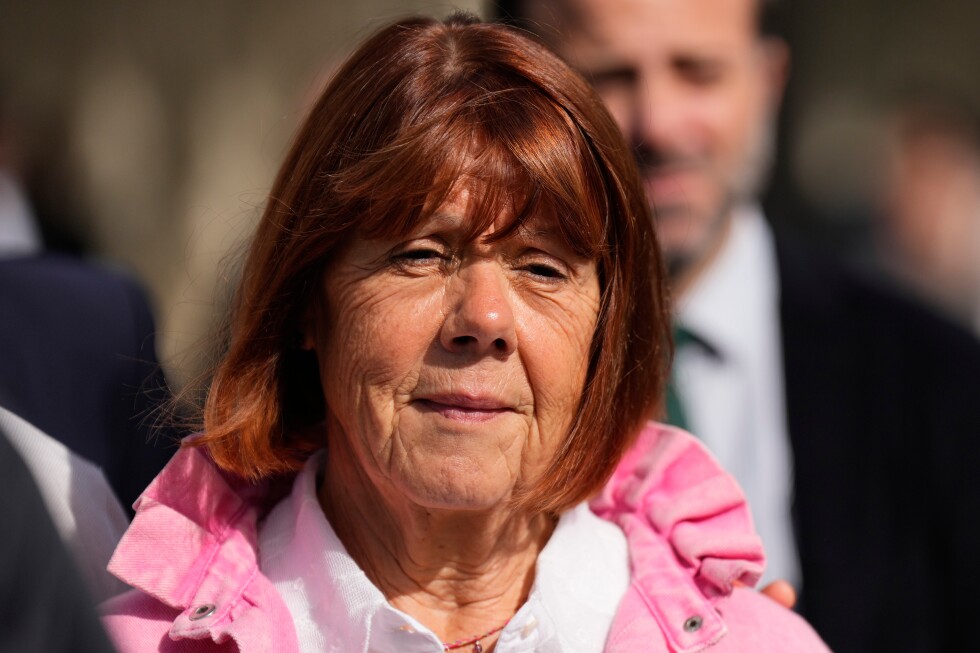
    In a courageous act of breaking her silence, French survivor Gisèle Pelicot has publicly detailed her traumatic ordeal of systematic sexual exploitation by her husband and dozens of accomplices. Her revelations come through a powerful new memoir and subsequent interviews, marking her first public discourse since the landmark 2024 trial that transformed her into an international symbol against sexual violence.

    The horrific saga began unfolding on November 2, 2020, when Pelicot accompanied her then-husband, Dominique Pelicot, to a police station after his arrest for secretly filming up women’s skirts in a supermarket. It was there that Officer Laurent Perret delivered the devastating truth: her husband had been drugging her unconscious for years and orchestrating rape sessions involving at least 53 men who paid to assault her inert body.

    According to Pelicot’s account in her memoir “A Hymn to Life, Shame Has to Change Sides,” the police presentation included photographic evidence showing her in various states of unconsciousness while being violated by strangers. The images depicted a woman she failed to recognize—her face slack, her body limp like a rag doll—as multiple perpetrators committed atrocities against her without consent or awareness.

    Investigations revealed Dominique Pelicot’s sophisticated operation: he regularly adulterated his wife’s food and beverages with sedatives, rendering her unconscious before inviting paying participants to sexually assault her while he documented the crimes. This systematic exploitation continued for nearly a decade before the shocking discovery.

    The subsequent trial culminated in December 2024 with unanimous guilty verdicts against all 51 defendants. Dominique Pelicot received the maximum sentence of 20 years imprisonment, while 49 other men were convicted of rape and sexual assault charges. An additional defendant was found guilty of collaborating with Pelicot to drug and assault his own wife.

    Pelicot’s decision to share her story has ignited national conversations about rape culture in France and inspired global movements supporting survivors of sexual violence. Her transformation from victim to advocate represents a significant milestone in the ongoing fight against gender-based violence and institutional complacency.

  • As far-right leader Marine Le Pen’s appeal trial ends, her presidential bid is at stake

    As far-right leader Marine Le Pen’s appeal trial ends, her presidential bid is at stake

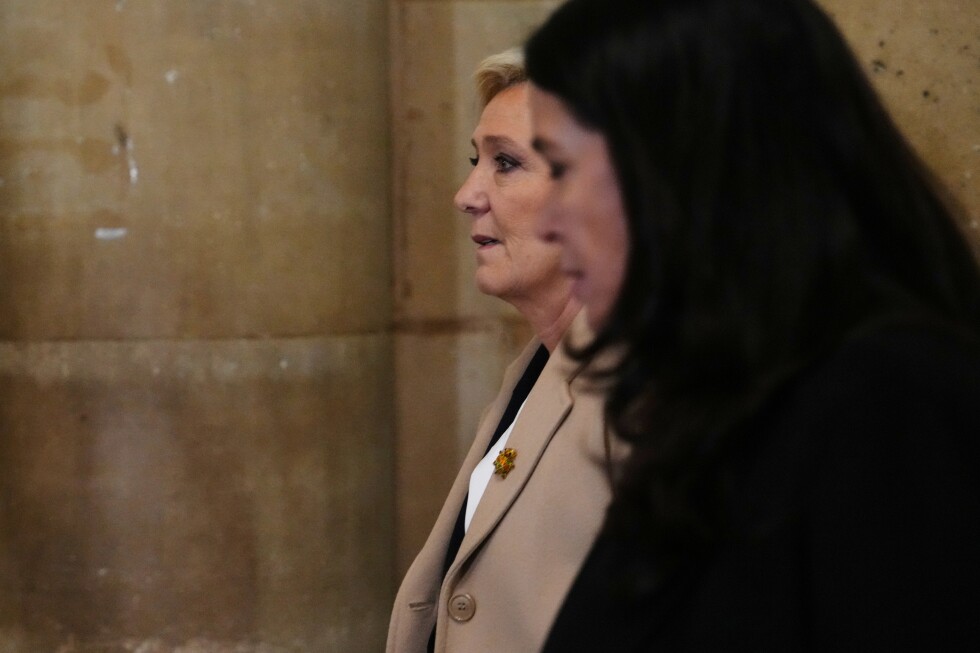
    PARIS — The political destiny of French far-right leader Marine Le Pen now rests with the Paris appeals court as her high-stakes trial concerning alleged misuse of European Parliament funds concluded Wednesday. The 57-year-old politician is challenging a March 2025 conviction that found her and numerous National Rally party members guilty of systematically diverting EU funds between 2004 and 2016.

    The original verdict imposed a five-year ban from elected office, two years of house arrest with electronic monitoring, and an additional two-year suspended sentence. This legal barrier could potentially derail Le Pen’s anticipated bid for the 2027 presidential election, where she was widely considered a frontrunner to challenge President Emmanuel Macron’s centrist leadership.

    Prosecutors allege Le Pen orchestrated a sophisticated scheme where European Parliament aides were formally hired but actually performed work exclusively for her political party. The investigation revealed some employees had zero contact with EU parliamentary duties, with one individual reportedly serving as Le Pen’s personal security detail—a clear violation of parliamentary regulations.

    During the appeal proceedings, Le Pen acknowledged some aides performed party work but maintained she believed such arrangements were permissible under parliamentary rules. ‘We have never concealed anything,’ she told the three-judge panel, characterizing the situation as an administrative ‘mistake’ rather than criminal conduct.

    Prosecutors countered that Le Pen, trained as a lawyer, must have recognized the illegality of the system. They described ‘public money siphoned off drop by drop until it formed a river’ and requested a five-year office ban plus one year of electronic monitoring.

    The court’s decision, expected before summer, will determine whether Le Pen can pursue the presidency or transfer her ambitions to protégé Jordan Bardella, whose rising popularity contrasts with concerns about his limited experience in international and economic affairs.

  • Russian drone kills a father and 3 children in Ukraine, pregnant mother badly injured

    Russian drone kills a father and 3 children in Ukraine, pregnant mother badly injured

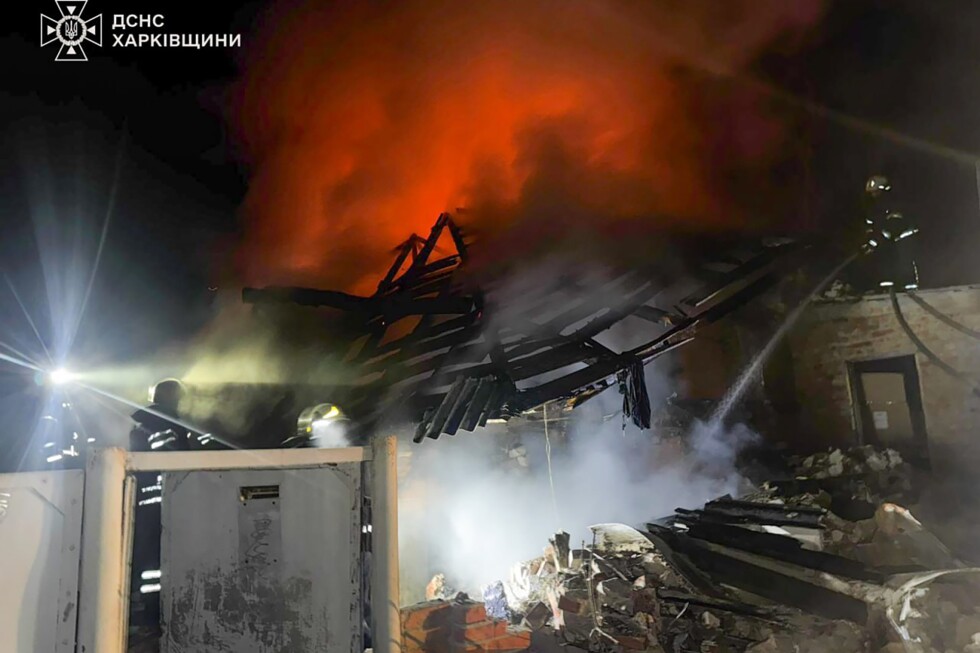
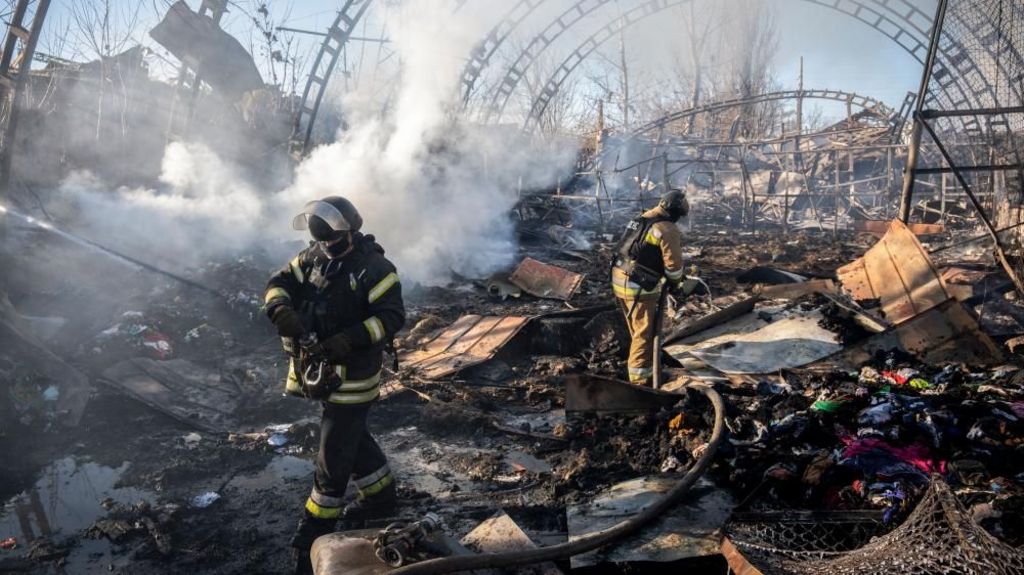
    A devastating Russian drone attack has obliterated a residential home in northeastern Ukraine’s Kharkiv region, resulting in the tragic deaths of a father and his three young children while leaving their pregnant wife critically injured. The overnight strike in the border town of Bohodukhiv completely destroyed the brick residence and ignited a fierce fire, trapping the entire family beneath collapsed rubble according to regional prosecutors.

    The victims include a 34-year-old father and his three small children—twin boys aged two and their one-year-old sister. Rescue teams managed to extract the 35-week pregnant mother alive from the wreckage, though she sustained severe injuries including blast trauma, traumatic brain injury, extensive burns, and significant hearing loss. Medical personnel are currently fighting to save both her life and that of her unborn child.

    Bohodukhiv Mayor Volodymyr Bielyi declared three days of mourning following the catastrophe, describing the incident as the loss of ‘our future’ in an emotional social media statement. The town of 15,000 inhabitants lies merely 22 kilometers from the Russian border, though officials have not confirmed whether any military infrastructure was located near the targeted property.

    The attack utilized a Geran-2 drone, a Russian-manufactured variant of the Iranian-designed Shahed unmanned aerial vehicle. This tragedy occurs amid escalating civilian casualties throughout Ukraine, with UN monitoring missions reporting 2025 as the deadliest year for non-combatants since the conflict’s initiation in 2022. Official figures indicate 2,514 civilian fatalities and 12,142 injuries last year—representing a 31% increase from 2024 statistics.

    Ukrainian President Volodymyr Zelenskyy condemned the strike as undermining diplomatic peace efforts, emphasizing that such attacks ‘again and again prove that only strong pressure on Russia and clear security guarantees for Ukraine are the real key to stopping the killings.’ Zelenskyy simultaneously acknowledged ongoing revisions to Ukraine’s aerial defense strategies, particularly regarding short-range air protection systems.

    The incident adds to growing allegations of Russian war crimes documented by European institutions and the International Criminal Court, which maintains outstanding arrest warrants for multiple Russian officials including President Vladimir Putin for alleged child abductions from Ukraine.

    Meanwhile, military assistance dynamics continue shifting as U.S. weapons shipments declined by 13% last year under the Trump administration according to Germany’s Kiel Institute. European nations have partially compensated with a 67% increase in military aid, though overall foreign humanitarian and financial support dropped by 5% compared to 2022-2024 averages.

    Overnight warfare intensified reciprocally, with Ukrainian drone attacks triggering a fire at a Volgograd industrial plant and damaging residential structures, while eight Russian airports temporarily suspended operations due to aerial threats. Both nations continue employing long-range drones, with Ukraine’s Air Force reporting 129 Russian drones launched overnight.

  • Turkey’s Erdogan replaces justice and interior ministers in reshuffle

    Turkey’s Erdogan replaces justice and interior ministers in reshuffle

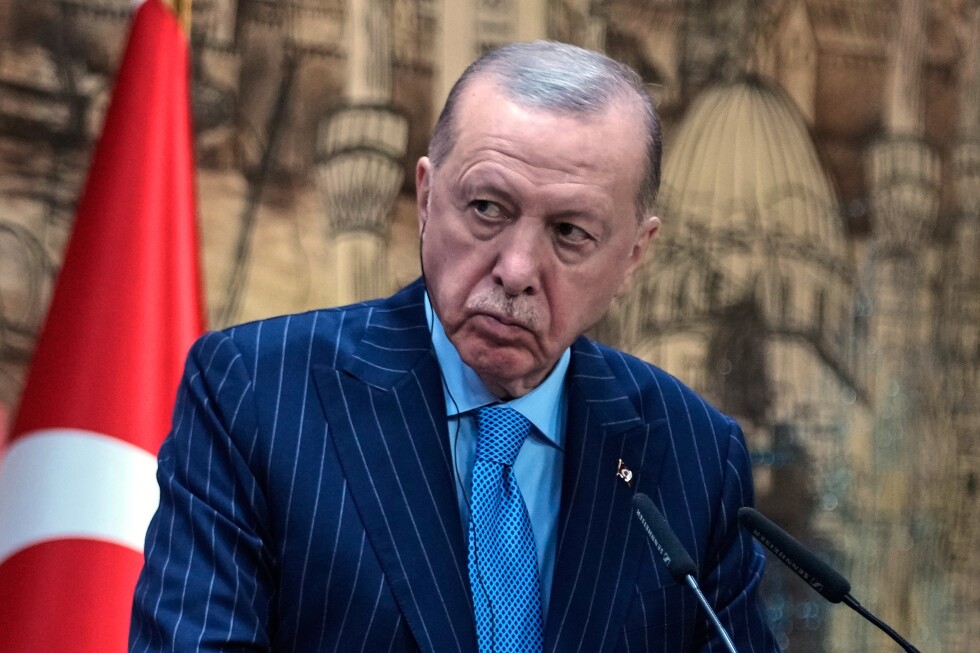
    In an unexpected political maneuver, Turkish President Recep Tayyip Erdogan executed a significant ministerial overhaul on Wednesday, replacing both his justice and interior ministers without prior public indication. The reshuffle places Istanbul Chief Prosecutor Akin Gurlek at the helm of the justice ministry, succeeding Yilmaz Tunc, while Mustafa Ciftci, previously governing the eastern province of Erzurum, assumes control of the interior ministry from Ali Yerlikaya.

    According to the Official Gazette publication, both outgoing ministers had formally requested to be relieved of their governmental responsibilities, though no detailed explanation was provided for their simultaneous departures. This administrative reorganization occurs during a critical period for Turkish politics, with ongoing parliamentary discussions concerning potential constitutional amendments and continued efforts to establish peaceful relations with the Kurdistan Workers’ Party (PKK) to resolve longstanding conflicts.

    The appointment of Prosecutor Gurlek has generated substantial controversy due to his professional background. Gurlek previously directed several prominent legal proceedings against members of the Republican People’s Party (CHP), Turkey’s primary opposition group. His prosecutorial record includes high-profile corruption investigations that resulted in the arrest of numerous officials from CHP-administered municipalities, most notably Istanbul Mayor Ekrem Imamoglu—widely perceived as Erdogan’s principal political competitor—who faced detention last year.

    Opposition figures and government critics maintain that these judicial actions demonstrate political motivation rather than impartial law enforcement, while administration officials consistently assert the complete independence of Turkey’s judicial system. The cabinet changes arrive as parliament prepares to consider legislative measures intended to support the government’s peace initiative with Kurdish representatives, potentially signaling a strategic realignment of Turkey’s domestic security and judicial approaches.

  • De Zerbi leaves Marseille by mutual consent

    De Zerbi leaves Marseille by mutual consent

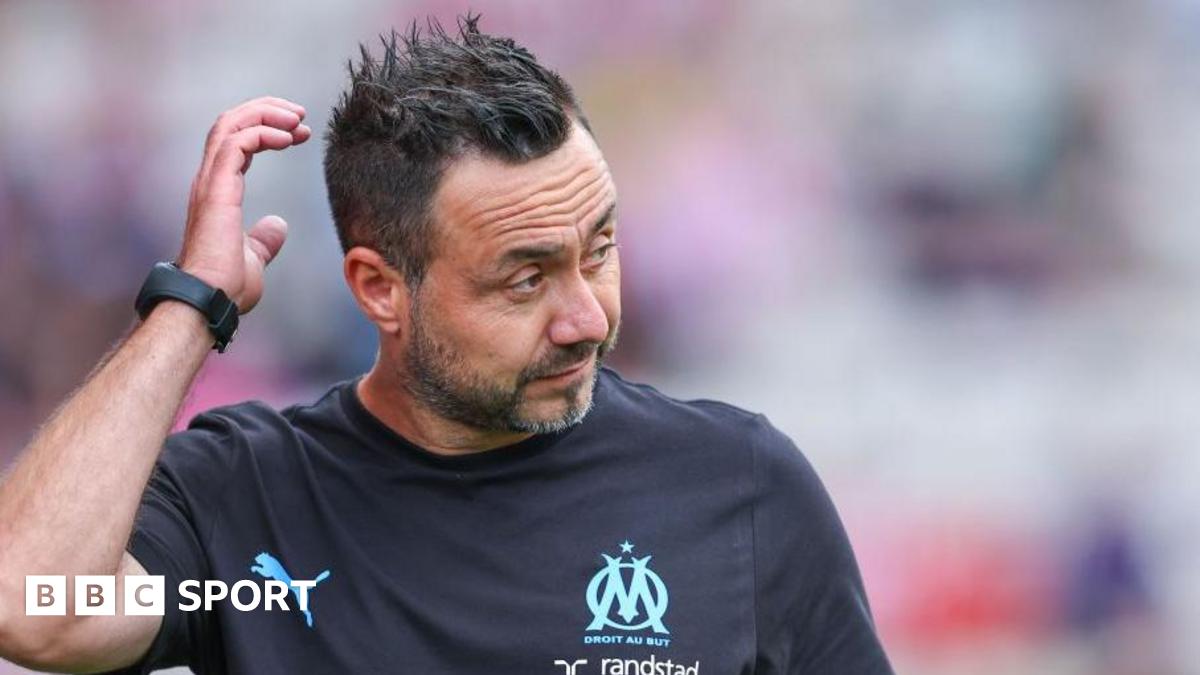
    Olympique de Marseille has officially severed ties with first-team coach Roberto De Zerbi through a mutual separation agreement. This decisive move follows a period of significant sporting setbacks for the French club, including a devastating 5-0 defeat to arch-rivals Paris Saint-Germain and a recent elimination from the Champions League after a 3-0 loss to Club Brugge.

    The Italian manager, who previously managed Brighton & Hove Albion for nearly two years, assumed leadership at Marseille in the summer of 2024. Under his guidance last season, the team achieved a respectable second-place finish in Ligue 1. At the time of his departure, Marseille occupies fourth position in the league table, trailing leaders PSG by a substantial 12-point margin.

    In an official communiqué, the club’s administration detailed that this conclusion resulted from extensive deliberations among key stakeholders, including the owner, president, director of football, and the coach himself. The statement characterized the decision as collectively challenging but necessary, emphasizing it was reached after thorough consideration to address the critical sporting objectives remaining in the current season. The leadership affirmed the move was executed with the club’s best interests at heart to navigate upcoming challenges effectively.

  • Russian strike near Kharkiv kills four, including children, official says

    Russian strike near Kharkiv kills four, including children, official says

    A Russian drone strike on the town of Bohodukhiv, located west of Kharkiv, has resulted in the deaths of at least four individuals, tragically including three very young children, according to a statement from a senior Ukrainian official. Oleg Synegubov, head of the Kharkiv Regional Military Administration, identified the victims as two one-year-old boys, a two-year-old girl, and a 34-year-old man who were inside a residential house at the time of the attack. A 35-year-old pregnant woman and a 76-year-old woman sustained injuries and are receiving medical treatment.

    This devastating incident occurred on Tuesday night, marking a severe escalation as Russian forces resume widespread offensive operations across Ukraine. The renewed strikes follow the expiration of a brief, week-long pause in hostilities. This pause had been reportedly initiated at the request of U.S. President Donald Trump to Russian President Vladimir Putin, intended to provide a humanitarian reprieve for Ukrainians enduring a severe cold snap with temperatures plummeting to -20°C.

    In a separate and simultaneous attack on Tuesday, Russian forces deployed seven bombs on the city of Slovyansk in the Donetsk region around noon, as confirmed by Regional Governor Vadym Filashkin via Telegram. That assault claimed two more lives, including an 11-year-old girl.

    The town of Bohodukhiv has been subjected to repeated attacks. Just a day prior, on Monday, overnight drone strikes nationwide resulted in the deaths of at least four other people, including a mother and her 10-year-old son in the same town, and left tens of thousands without power.

    Ukrainian President Volodymyr Zelensky has stated that Russian forces are intensifying pressure on the Kharkiv region, specifically targeting critical transport and energy infrastructure with a record number of ballistic missiles. This sustained campaign has prompted local authorities to declare a state of emergency over the dire energy situation. The recent attacks signify a brutal end to the temporary ‘energy truce’ that had offered a short-lived respite to Ukraine’s beleaguered energy grid.

    Amid the violence, President Zelensky has revealed that the United States is seeking an end to the war by June and has extended invitations to both sides for talks in the U.S. next week. In a related development, Russian authorities reported a massive Ukrainian drone attack on the town of Volzhsky in the Volgograd region on Wednesday night. Andrei Bocharov, the regional governor, reported damage to an apartment building and a fire at an industrial facility.

  • Anti-drug activist campaigns in French election despite threats, 2 brothers lost to gang violence

    Anti-drug activist campaigns in French election despite threats, 2 brothers lost to gang violence

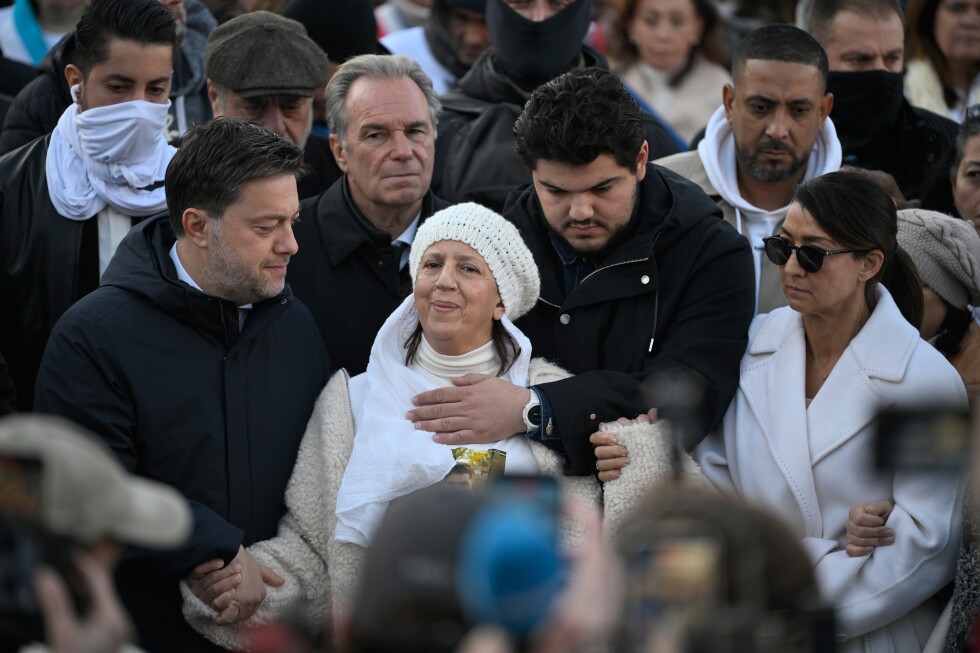
    In the gritty housing projects of Marseille, a 22-year-old activist is challenging the narcotics empires that control his community while mourning the loss of two brothers to drug-related violence. Amine Kessaci, son of Algerian immigrants, has become the face of resistance against organized crime in France’s second-largest city, where he’s running in municipal elections on an uncompromising anti-drug platform.

    Kessaci’s personal tragedy fuels his political mission: his older brother Brahim was found burned in a car in 2020, and his younger brother Mehdi was killed just three months ago in what authorities believe was a targeted hit to intimidate the activist. Despite receiving death threats and requiring constant police protection—including wearing a bulletproof vest at his brother’s funeral—Kessaci refuses to be silenced.

    The Frais Vallon housing project where Kessaci grew up exemplifies Marseille’s struggle: 6,000 residents living in 1960s-era concrete towers controlled by drug gangs, representing some of France’s most crime-ridden neighborhoods. Here, Kessaci founded the nonprofit ‘Conscience’ at age 17 to support families affected by drug violence.

    France faces escalating narcotics problems, with cocaine trafficking at historic highs and 110 drug-related homicides recorded in 2024 alone. Particularly alarming is the recruitment of minors—19% of drug trafficking suspects were teenagers in 2023, some as young as 12. The Interior Ministry reports teenagers constituted a quarter of murder and attempted murder arrests in 2024.

    Kessaci, now a law student, advocates a dual approach: strengthening police presence while addressing root causes through education, job training, and urban renewal. He proposes doubling Marseille’s police force to 1,600 officers and establishing local precincts in every district. His platform also includes practical improvements like replacing mobile dumpsters with fixed bins to eliminate barriers drug gangs use to block access.

    Running on outgoing left-wing mayor Benoît Payan’s ticket, Kessaci distinguishes his grassroots approach from far-right solutions, focusing on community empowerment rather than mere enforcement. He aims to dismantle what he calls ‘narcocracy’—the systemic power drug traffickers wield over neighborhoods through intimidation and economic coercion.

    Despite recent security improvements (homicides dropped from 49 to 24 between 2023-2024), Kessaci remains determined: ‘In this campaign, my only enemy is drug trafficking.’ His candidacy represents a new generation’s attempt to reclaim their communities from the violent grip of organized crime.

  • US stocks flirt with a record after the unemployment rate unexpectedly improves

    US stocks flirt with a record after the unemployment rate unexpectedly improves

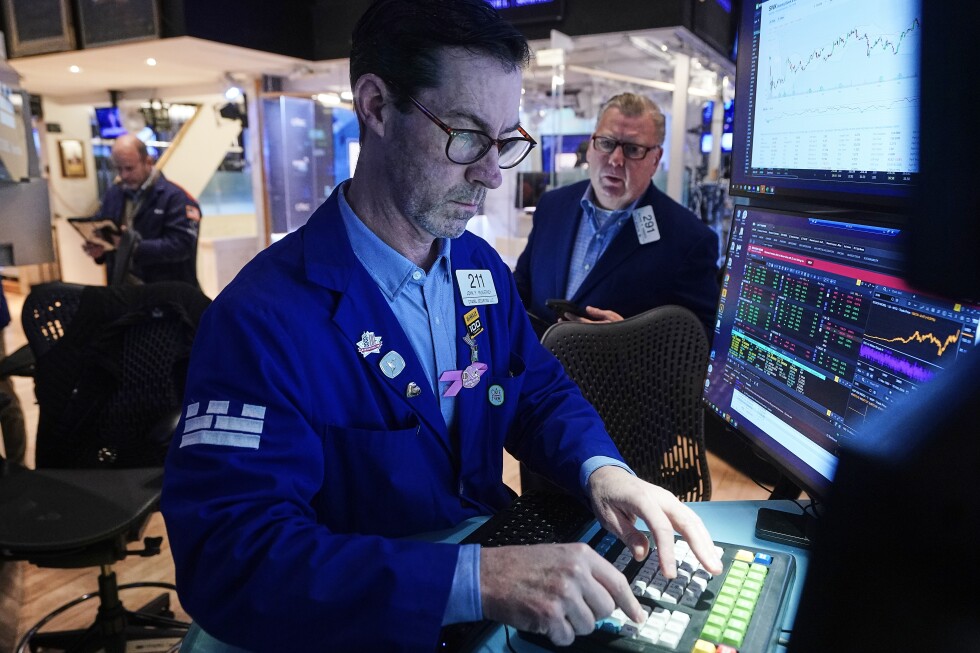
    Wall Street witnessed a significant rally on Wednesday as major indices climbed toward record territory, propelled by unexpectedly robust employment figures that alleviated concerns about economic momentum. The S&P 500 advanced 0.5%, hovering near its all-time peak established late last month, while the Dow Jones Industrial Average gained 222 points (0.4%) and the Nasdaq composite rose 0.5% during morning trading.

    The market upswing followed a Labor Department report revealing U.S. employers added 130,000 positions in the previous month—substantially exceeding economists’ projections of 75,000 jobs. This development helped counterbalance prior anxieties triggered by disappointing consumer spending data that had suggested potential economic stagnation.

    However, the economic landscape revealed complexities upon deeper examination. The report contained significant downward revisions indicating employers created merely 181,000 jobs throughout the entire previous year, dramatically lower than the initially reported 584,000. This represents the weakest annual job growth since 2020, when COVID-19 pandemic restrictions paralyzed economic activity.

    Sector performance reflected economic sensitivities, with energy and industrial stocks leading gains. Caterpillar surged 3.9% and Exxon Mobil climbed 2.4%, both companies whose profitability correlates closely with economic health.

    The session witnessed several notable decliners. Moderna plummeted 10.5% after the FDA declined to review its application for a novel mRNA-based flu vaccine. Robinhood Markets dropped 11% despite exceeding profit expectations, as revenue shortfalls and concerns about sustained cryptocurrency trading declines weighed on investor sentiment. Kraft Heinz fell 4.1% as CEO Steve Cahillane announced a pause in planned business separation plans alongside a $600 million strategic investment.

    Bond markets responded to the strengthened employment picture, with the 10-year Treasury yield rising to 4.17% and the more Fed-sensitive 2-year yield jumping to 3.51%. The data prompted traders to scale back expectations for Federal Reserve interest rate cuts this year, though markets still anticipate at least two reductions according to CME Group data.

    Internationally, stock indexes demonstrated broad strength across Asian and European markets, with South Korea’s Kospi gaining 1% and the UK’s FTSE 100 advancing 0.9%.

  • UK doubles troops in Norway to counter Russian ‘threat to Arctic’

    UK doubles troops in Norway to counter Russian ‘threat to Arctic’

    In a significant strategic shift, the United Kingdom will double its military footprint in Norway over the next three years, elevating troop numbers from approximately 1,000 to 2,000 personnel. This decision comes amid growing NATO apprehension regarding Russia’s escalating military activities in the High North region.

    Defence Secretary John Healey characterized the move as a direct response to mounting security concerns, stating, ‘Demands on defence are rising and Russia poses the greatest threat to Arctic and High North security that we have witnessed since the Cold War.’ The announcement follows observations of Russia reopening Cold War-era installations and substantially increasing its military presence throughout the Arctic sphere.

    The enhanced deployment forms part of the newly proposed ‘Arctic Sentry’ initiative championed by Foreign Secretary Yvette Cooper, who recently conducted diplomatic visits to Norway. This security framework, inspired by existing NATO alliances including the Baltic Sentry and Eastern Sentry programs, aims to strengthen regional surveillance capabilities and collective defense mechanisms.

    Operational enhancements will feature prominently in upcoming multinational exercises. In March, 1,500 Royal Marine Commandos will participate in NATO’s Exercise Cold Response, a large-scale drill spanning Norway, Finland, and Sweden designed to test allied forces in extreme Arctic conditions. Subsequently, September will see the UK-led Joint Expeditionary Force execute Operation Lion Protector, integrating air, land, and naval components from multiple European nations to practice critical infrastructure defense strategies across Norway, Iceland, and the Danish straits.

    These developments reflect deepening concerns among NATO members regarding Russia’s potential threat to subsea infrastructure, particularly underwater cables and pipelines. Tensions have remained elevated since Russia’s invasion of Ukraine, prompting enhanced cooperative measures. Last year, the UK and Norway formalized a defensive pact specifically addressing undersea security, establishing a combined naval fleet to monitor Russian submarine activities.

    According to Ministry of Defence statistics, Russian submarine presence in UK waters has surged by 30% over the past two years, with current activity levels in the North Atlantic matching those recorded during the Cold War period. Defence Secretary Healey is scheduled to discuss these strategic proposals with NATO counterparts at the alliance’s Brussels headquarters on Thursday.