标签: Europe

欧洲

  • What’s next for Greenland and Denmark after difficult meeting with Trump administration

    What’s next for Greenland and Denmark after difficult meeting with Trump administration

    High-level diplomatic discussions between American, Danish, and Greenlandic officials have concluded with acknowledged disagreements regarding President Trump’s aspirations to acquire Greenland. The meetings, which included Danish Foreign Minister Lars Løkke Rasmussen, Greenlandic representatives, and U.S. officials JD Vance and Marco Rubio, revealed persistent tensions over the Arctic territory’s future.

    Despite the stalemate, the parties agreed to establish a high-level working group to explore potential compromise solutions. This diplomatic channel aims to address U.S. national security concerns while respecting Denmark’s established boundaries as a NATO ally. The initiative represents an effort to de-escalate tensions through continued dialogue rather than unilateral action.

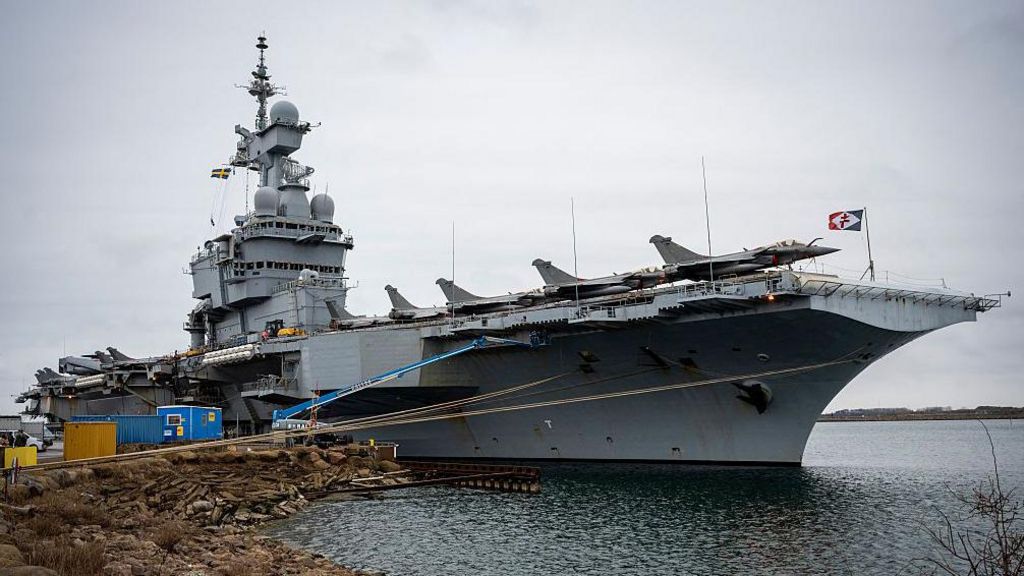
    Concurrently, Denmark has orchestrated a strategic military mobilization in Greenland with several European partners. France, Germany, Norway, Sweden, and the United Kingdom have contributed symbolic troop deployments in a demonstration of solidarity with Copenhagen. Though numerically small, these forces represent a coordinated response to Arctic security concerns and a clear signal to Washington.

    Danish Defense Minister Troels Lund Poulsen characterized these developments as steps toward establishing a more permanent allied military presence in the region. The European deployment, while Danish-led, aligns with broader NATO security assessments of the Arctic amid growing Russian and Chinese interest in the region’s untapped mineral resources and strategic positioning.

    Analysts interpret these parallel diplomatic and military movements as complementary strategies to reinforce Arctic security through multinational cooperation rather than unilateral territorial acquisition. The situation remains fluid with NATO Secretary General Mark Rutte scheduled to discuss Arctic security with Danish and Greenlandic officials in the coming days.

  • UK’s Conservative Party leader sacks chief rival after apparent plot to defect

    UK’s Conservative Party leader sacks chief rival after apparent plot to defect

    Britain’s Conservative Party has been thrown into renewed internal crisis following the dramatic dismissal of a prominent senior figure accused of orchestrating a secret defection plot. Party leader Kemi Badenoch announced the immediate removal of Justice spokesperson Robert Jenrick from both his parliamentary role and party membership on Thursday, citing compelling evidence of his planned departure from Conservative ranks.

    In a decisive statement posted on social media platform X, Badenoch declared she had obtained undeniable proof that Jenrick was covertly planning to abandon the party. The Conservative leader expressed frustration with ongoing political theatrics, stating: The British public are tired of political psychodrama and so am I. They saw too much of it in the last government, they’re seeing too much of it in this government. I will not repeat those mistakes.

    While Badenoch refrained from identifying Jenrick’s intended destination, Reform UK leader Nigel Farage confirmed he had engaged in discussions with the ousted parliamentarian. However, during a press conference coinciding with Badenoch’s announcement, Farage emphatically denied any imminent defection arrangement, stating he couldn’t in good conscience present Jenrick as another Conservative convert.

    The Conservatives currently face a critical political challenge, squeezed between the governing Labour Party on the left and the surging Reform UK on the right. Reform has consistently outperformed the Conservatives in recent opinion polls, delivered a crushing blow during May’s local elections, and attracted a steady stream of defecting Tory members and officials, compounding the party’s existential crisis.

  • European troops arrive in Greenland as talks with US highlight ‘disagreement’ over island’s future

    European troops arrive in Greenland as talks with US highlight ‘disagreement’ over island’s future

    NUUK, Greenland — A strategic European military deployment is underway in Greenland as NATO allies demonstrate solidarity with Denmark following contentious diplomatic talks with the Trump administration regarding the Arctic territory’s future. French, German, British, Norwegian, and Swedish forces have begun arriving in what defense officials characterize as a symbolic show of force against potential U.S. expansionist ambitions.

    The development coincides with Wednesday’s high-level meeting in Washington between Danish Foreign Minister Lars Løkke Rasmussen, Greenlandic counterpart Vivian Motzfeldt, and White House representatives including Vice President JD Vance and Secretary of State Marco Rubio. Rasmussen subsequently acknowledged “fundamental disagreement” persists regarding President Trump’s expressed interest in acquiring Greenland.

    Danish Defense Minister Troels Lund Poulsen confirmed plans to establish “a more permanent military presence with a larger Danish contribution,” with NATO partners participating through a rotational troop system. The enhanced security measures include increased aerial patrols, naval vessels, and ground personnel operating across Greenland’s strategic territories.

    French President Emmanuel Macron confirmed initial military elements were already en route, with approximately 15 mountain infantry soldiers arriving in Nuuk for exercises. Germany’s Defense Ministry announced plans to deploy a 13-member reconnaissance team on Thursday, characterizing the movement as defensive coordination among European partners.

    Greenlandic residents expressed mixed reactions to the geopolitical developments. While some welcomed European military support as protection against potential U.S. action, others questioned the underlying motivations. Local resident Maya Martinsen, 21, observed the dispute centered primarily on “the oils and minerals that we have that are untouched” rather than genuine security concerns.

    Diplomatic channels remain active despite tensions, with Rasmussen announcing creation of a bilateral working group to address American security concerns while respecting Denmark’s territorial sovereignty. Greenlandic MP Aki-Matilda Høegh-Dam acknowledged the necessity of continued dialogue while expressing concerns about military operations occurring near civilian infrastructure.

    The situation reflects broader transformations in the international rules-based order, with Greenland emerging as a pivotal point in Arctic geopolitics. While Rasmussen dismissed speculation about U.S. military invasion as “the end of NATO,” the Trump administration maintained ambiguous positioning, with the president remarking “We’ll see how it all works out” regarding future developments.

  • Russia expels British diplomat over allegations of spying

    Russia expels British diplomat over allegations of spying

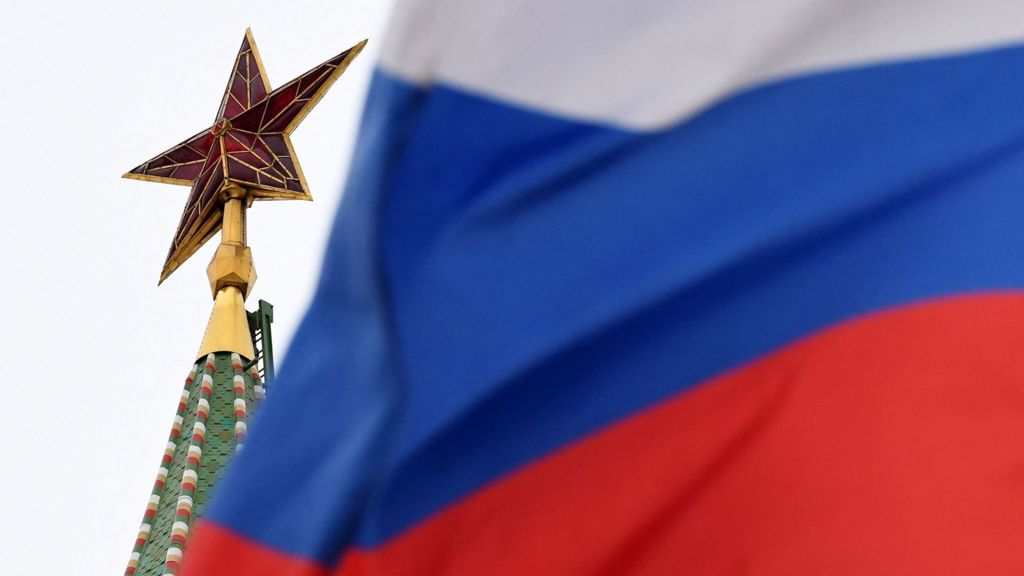
    Russia has declared a British diplomat persona non grata, ordering his immediate expulsion from the country on allegations of operating as an undeclared intelligence operative. The Russian Foreign Ministry announced Thursday that the unidentified individual had his diplomatic accreditation revoked and must depart Russian territory within two weeks.

    The escalating diplomatic confrontation prompted Moscow to summon Britain’s charge d’affaires, Danae Dholakia, to formally deliver the expulsion notice. Russian authorities issued a stern warning that they would not tolerate covert intelligence activities within their borders and threatened further retaliatory measures should London choose to escalate the situation.

    The British government has maintained official silence regarding the specific allegations, with the Foreign Office declining to comment when approached by media outlets. This incident marks the latest deterioration in Russo-British relations, which have been severely strained since Russia’s full-scale invasion of Ukraine in 2022.

    This diplomatic expulsion continues a pattern of reciprocal diplomatic removals between the two nations. In March 2023, Russia expelled two British officials over similar espionage allegations, which the UK Foreign Office denounced at the time as “malicious and baseless accusations.” Britain responded to that previous incident by revoking accreditation for a Russian diplomat and a diplomatic spouse, vowing to protect embassy staff from intimidation tactics.

    The ongoing tit-for-tat diplomatic warfare reflects the profoundly damaged relationship between Moscow and London, with intelligence operations becoming increasingly central to their confrontational dynamic. This latest expulsion further reduces diplomatic presence between the two nations and suggests intelligence networks are actively being disrupted on both sides.

  • Ailing astronaut returns to Earth early in NASA’s first medical evacuation

    Ailing astronaut returns to Earth early in NASA’s first medical evacuation

    CAPE CANAVERAL, Fla. — NASA executed its inaugural medical evacuation from the International Space Station on Thursday, returning four astronauts to Earth over a month ahead of schedule. The SpaceX Crew Dragon capsule completed a precision splashdown in the Pacific Ocean near San Diego during nighttime hours, concluding an 11-hour journey from the orbiting laboratory.

    NASA astronauts Zena Cardman and Mike Fincke, alongside Japan’s Kimiya Yui and Russia’s Oleg Platonov, safely returned to Earth following the unprecedented medical decision. While officials maintained medical privacy regarding the affected crew member’s identity and condition, they confirmed the astronaut remained stable throughout the mission but required Earth-based medical evaluation and care.

    The early return created an unusual staffing situation aboard the ISS, leaving just one American and two Russian astronauts to maintain operations. NASA and SpaceX announced accelerated plans for the next crew launch, currently targeted for mid-February, which will include two Americans, one French, and one Russian astronaut.

    Notably, NASA emphasized this did not constitute an emergency situation despite being the agency’s first medical-related mission truncation. The health concern emerged on January 7, prompting cancellation of a scheduled spacewalk and ultimately leading to the decision for early return. Historical precedent exists with Russia having conducted similar medical evacuations decades earlier.

    The reduced three-person crew will maintain essential station operations but cannot perform spacewalks, even for emergency repairs, until the arrival of the replacement crew. Recovery operations proceeded normally with standard medical support available, though transfer timelines to the astronauts’ home bases in Houston and Moscow remained undetermined immediately after splashdown.

  • Russia expels British diplomat from Moscow embassy over spying claims

    Russia expels British diplomat from Moscow embassy over spying claims

    In a significant diplomatic escalation, Russian authorities have declared a British embassy official persona non grata, ordering their expulsion from the country within a two-week timeframe. The Federal Security Service (FSB) asserted that the individual had been operating as an undeclared intelligence operative for the United Kingdom, though no substantiating evidence was presented to support these claims.

    Russia’s Foreign Ministry formally summoned the UK’s charge d’affaires in Moscow, Danae Dholakia, to deliver the expulsion notice. In an official statement, the Ministry delivered a stern warning: ‘Moscow will not tolerate the covert activities of British intelligence officers on Russian soil.’ The statement further indicated that any retaliatory measures from London would be met with a ‘symmetrical response.’

    This incident marks the latest chapter in the rapidly deteriorating relationship between Russia and Western nations. The diplomatic climate has reached its most frigid state since the Cold War era, largely triggered by Russia’s full-scale invasion of Ukraine in February 2022. This pattern of mutual diplomatic expulsions has become increasingly commonplace. Notably, in March 2025, Moscow ousted two British diplomats based on similar espionage allegations, which the UK government at the time dismissed as ‘completely unfounded and deliberately malicious.’

    As of Thursday, the British government had not issued an official response to the latest expulsion, leaving the diplomatic community awaiting London’s next move in this ongoing confrontation.

  • Forget tariff wars: The EU and Mercosur build one of the world’s biggest free-trade zones

    Forget tariff wars: The EU and Mercosur build one of the world’s biggest free-trade zones

    After a quarter-century of complex negotiations, the European Union and the South American Mercosur bloc are poised to formally sign one of the most significant trade agreements in modern history. The landmark deal, set for formalization at a ceremony in Paraguay, represents a profound shift in global trade dynamics and a powerful endorsement of multilateralism.

    The agreement between the EU and Mercosur—comprising Argentina, Brazil, Paraguay, and Uruguay—will create a free-trade zone encompassing over 700 million people and accounting for approximately 25% of global GDP. The pact eliminates tariffs on a wide range of products, from Argentine beef and Brazilian agricultural goods to European automobiles and machinery.

    The timing carries particular geopolitical significance as it emerges against a backdrop of rising protectionism and great power competition. European Commission President Ursula von der Leyen characterized the agreement as a robust defense of rules-based international trade “in the face of an increasingly hostile and transactional world.”

    For South American nations, the deal represents both economic opportunity and strategic positioning. Brazilian President Luiz Inácio Lula da Silva hailed it as a “victory for dialogue, negotiation and the bet on cooperation.” Experts note the agreement provides South American economies with crucial diversification away from the intensifying U.S.-China rivalry, allowing the region to “flex its muscles in the international sphere,” according to Lee Schlenker of the Quincy Institute.

    The accord marks a dramatic policy reversal for Argentina, which maintained protectionist policies for decades. President Javier Milei, despite his libertarian skepticism of international organizations, has embraced the agreement as a mechanism to revitalize Mercosur and open Argentina’s economy to global markets.

    The path to agreement faced significant obstacles, particularly from European agricultural interests concerned about competition. Widespread farmer protests across Europe prompted the EU to add environmental safeguards, animal welfare protections, and strict export quotas to the final agreement. The bloc further allocated approximately $52 billion in subsidies to ease farmer concerns, a move some analysts characterized as a “sizable bribe” necessary to secure the deal’s passage.

    The automotive sector emerges as another major beneficiary, with the elimination of 35% tariffs on European vehicles and parts providing manufacturers like Volkswagen and BMW opportunities to regain market share from Chinese competitors in South America.

    Despite the impending signing, the agreement still requires ratification by the European Parliament, leaving some participants cautiously optimistic about its ultimate implementation.

  • Zelensky declares energy emergency as biting cold persists

    Zelensky declares energy emergency as biting cold persists

    The Ukrainian government has officially declared a state of emergency within its energy sector as relentless Russian strikes continue to cripple critical infrastructure, leaving thousands of residents in the capital Kyiv without electricity, heating, or running water during dangerously frigid winter conditions. President Volodymyr Zelensky has accused Moscow of weaponizing winter temperatures, which have recently plunged to -20°C (-4°F), as a deliberate strategy in the ongoing conflict.

    The emergency declaration coincided with controversial remarks from former U.S. President Donald Trump, who identified President Zelensky as the primary obstacle to peace negotiations. In an interview with Reuters, Trump claimed Ukraine appears ‘less ready to make a deal’ than Russian President Vladimir Putin, suggesting diplomatic efforts remain stalled primarily due to Zelensky’s position.

    With both leaders scheduled to attend the World Economic Forum in Switzerland next week, Trump indicated no formal bilateral meeting has been arranged. The geopolitical tensions unfold against a backdrop of severe humanitarian challenges in Ukraine, where recent missile and drone attacks left 70% of Kyiv without power for extended periods.

    In response to the crisis, President Zelensky announced the establishment of a 24/7 task force dedicated to repairing energy infrastructure damaged by both military strikes and deteriorating weather conditions. The government’s emergency measures include international procurement of vital energy equipment, increased humanitarian aid points providing heat and power throughout Kyiv, and potential adjustments to the capital’s midnight curfew to facilitate access to these facilities.

    Beyond the capital, the energy crisis extends nationwide. Ukrainian officials report over one million residents in southeastern regions experienced prolonged outages last week. Maxim Timchenko, CEO of DTEK—Ukraine’s largest private energy provider serving 5.6 million customers—described operating in ‘permanent crisis mode’ due to relentless attacks employing ‘waves of drones, cruise and ballistic missiles’ that outpace recovery efforts.

    As the four-year anniversary of Russia’s full-scale invasion approaches, the systematic targeting of energy infrastructure has created a compounded humanitarian emergency, testing Ukraine’s resilience during the harshest winter months.

  • Greenland biathlete pursues Olympic dream while anxious about ‘terrrifying’ threats to her homeland

    Greenland biathlete pursues Olympic dream while anxious about ‘terrrifying’ threats to her homeland

    Ukaleq Slettemark, a 25-year-old biathlete from Greenland, faces unprecedented psychological challenges while competing in the Biathlon World Cup in Ruhpolding, Germany. Beyond the typical pressures of Olympic qualification for Milan Cortina 2026, Slettemark contends with growing anxiety stemming from former U.S. President Donald Trump’s repeated assertions about acquiring her homeland.

    The athlete described the profound emotional toll on her family, revealing her mother broke down crying at the competition venue and her aunt experiences sleepless nights. “We are imagining the worst-case scenario,” Slettemark confessed to The Associated Press, emphasizing the collective fear permeating Greenland’s community. Some residents reportedly consider relocating due to safety concerns.

    Despite competing under Greenland’s banner in World Cup events, the Slettemark siblings would represent Denmark at the Olympics since Greenland lacks sovereign nation status with its own Olympic committee. This complex political reality now intersects with geopolitical tensions as Trump recently reaffirmed his territorial ambitions on social media, citing national security requirements.

    The situation creates a peculiar dynamic for Slettemark, who maintains friendships with American athletes while condemning the political rhetoric. She draws parallels between Trump’s statements and Russian aggression in Ukraine, suggesting similar Olympic consequences should apply if the U.S. pursued forceful acquisition. Both her parents being accomplished biathletes—her father competed in the 2010 Olympics and her mother established Greenland’s Biathlon Federation—adds layers to this intersection of athletic pursuit and geopolitical anxiety.

  • Italian influencer Chiara Ferragni cleared of cake fraud

    Italian influencer Chiara Ferragni cleared of cake fraud

    In a landmark verdict concluding Italy’s high-profile “PandoroGate” scandal, fashion influencer Chiara Ferragni has been fully acquitted of aggravated fraud charges by a Milan court. The ruling brings to a close a two-year legal battle that captivated the nation and prompted widespread scrutiny of influencer marketing practices.

    The case centered on Ferragni’s promotion of specialty holiday products—a pink pandoro Christmas cake and Easter eggs—that consumers believed would generate charitable donations. While packaging suggested proceeds would benefit Turin’s Regina Margherita children’s hospital, investigators discovered manufacturer Balocco had made a single €50,000 donation prior to product launch, with Ferragni’s companies ultimately earning approximately €1 million from the campaign.

    Judge Beatrice Giulia Elizabeth Marzi dismissed prosecutors’ request for a 20-month prison sentence, determining the fraud lacked aggravating circumstances. This assessment was influenced by consumer group Codacons withdrawing their complaint after Ferragni committed to compensating misled customers and donating to a gender violence charity.

    Outside the courthouse, an emotional Ferragni described the judgment as “the end of a nightmare,” adding: “The last two years have been very hard. I had faith in justice, and justice has been done.” Despite her legal victory, the scandal has exacted significant personal and professional tolls, including the dissolution of her marriage to rapper Fedez last year.

    The controversy has catalyzed regulatory reforms in Italy’s influencer industry, prompting authorities to implement stricter transparency requirements for commercial partnerships with charitable components. While Ferragni avoids criminal conviction, she previously paid €1 million in fines to Italy’s competition authority and €1.2 million to settle separate complaints regarding the Easter egg promotion.