标签: Europe

欧洲

  • German court jails man for drugging, raping and filming wife for years

    German court jails man for drugging, raping and filming wife for years

    A regional court in Aachen, Germany has delivered a landmark verdict against a 61-year-old Spanish national, identified only as Fernando P under German privacy protections, sentencing him to eight-and-a-half years imprisonment for systematic spousal abuse. The defendant was convicted on multiple charges including aggravated rape, grievous bodily harm, and severe privacy violations spanning from 2018 to 2024.

    Judicial authorities confirmed that the perpetrator repeatedly administered sedatives to his wife without consent, committing sexual assaults while she was incapacitated. Beyond the physical violations, the criminal engaged in digital exploitation by recording the abusive acts and distributing the footage through online platforms and chat groups, effectively commodifying his spouse’s victimization for public consumption.

    The trial proceedings were predominantly conducted in camera to safeguard the identity and dignity of the survivor. Court spokesperson Katharina Effert emphasized the deliberate nature of the privacy breaches, noting the accused “uploaded videos of these acts to chat groups and internet platforms, making them available to other users.”

    Legal representative Nicole Servaty affirmed her client’s active participation in the judicial process, stating the survivor “had a voice in this proceeding” through comprehensive testimony that articulated her emotional trauma. While acknowledging that no verdict could fully rectify the suffering endured, Servaty indicated the judgment might provide some measure of closure for processing the psychological aftermath.

    The case draws parallel to France’s recent high-profile prosecution of Dominique Pelicot, who similarly drugged and facilitated the rape of his unconscious wife. Germany’s Federal Criminal Police Office (BKA) reports that victims of drug-facilitated sexual abuse are predominantly female, with perpetrators typically exploiting trusted relationships within marital, familial, or acquaintance circles.

    The conviction remains subject to potential appeal through Germany’s judicial review system.

  • Putin vows no more wars if West treats Russia with respect

    Putin vows no more wars if West treats Russia with respect

    Russian President Vladimir Putin utilized his marathon annual “Direct Line” forum to deliver a stark message to Western nations: Russia would cease military operations against Ukraine and refrain from future conflicts only if treated with “respect” by the international community. During the nearly four-and-a-half-hour televised event, Putin dismissed claims that Moscow plans to attack European nations as “nonsense,” while simultaneously asserting Russia’s readiness for immediate warfare if provoked.

    The Russian leader framed his conditions for peace around historical grievances, particularly referencing NATO’s eastward expansion which he characterized as Western “deception.” His demands for ending the Ukraine conflict remain unchanged from his June 2024 principles: complete Ukrainian withdrawal from four partially occupied regions and Kyiv’s abandonment of NATO aspirations. Central to Moscow’s objectives is securing full control over Ukraine’s eastern Donbas region, including approximately 23% of Donetsk that remains beyond Russian control.

    While expressing willingness to engage in peace negotiations, Putin offered minimal signs of compromise. He praised former President Donald Trump’s “sincere” mediation efforts but placed responsibility for diplomatic progress squarely on Western powers and their “Kyiv regime” allies. The Russian president accused the West of waging war “through Ukrainian neo-Nazis,” recycling familiar propaganda tropes about Ukraine’s democratically elected leadership.

    The event, which organizers claimed received over three million submissions, primarily featured softball questions though some critical public comments surfaced. Citizens complained about internet outages blamed on Ukrainian drone attacks, skyrocketing prices, and poor infrastructure. Putin addressed economic concerns as Russia’s central bank announced interest rate cuts to 16% amid rising VAT and inflation.

    International context continues to develop with a Ukrainian delegation engaging Trump representatives in Miami, while European intelligence agencies warn of potential NATO-Russia conflict within years. Despite the diplomatic movements, Putin’s rhetoric suggests Moscow remains prepared for prolonged confrontation, maintaining that Western respect for Russian interests represents the only path to de-escalation.

  • French court rejects Shein website suspension over childlike sex dolls

    French court rejects Shein website suspension over childlike sex dolls

    A Parisian court has delivered a significant ruling in the high-profile case between the French government and global fast-fashion retailer Shein, rejecting the state’s petition to temporarily shutter the company’s website. The legal action stemmed from discoveries that Shein’s platform had been offering childlike sex dolls and weapons through third-party vendors.

    The judicial panel acknowledged the grave nature of these product listings but determined that a complete three-month website suspension would constitute a ‘disproportionate’ response. The court emphasized that these violations represented isolated incidents within Shein’s vast inventory of hundreds of thousands of products and noted the company’s prompt remediation efforts upon discovery.

    Instead of imposing a full suspension, the court mandated stringent age verification protocols for all adult product sales on Shein’s French platform. The ruling establishes substantial financial penalties of €10,000 per violation for any breaches of these new requirements.

    The court additionally rejected a secondary government request that would have forced Shein to suspend all third-party sales, which was identified as the source of the controversial items.

    This legal development coincides with Shein’s ongoing physical retail expansion in France, including the recent inauguration of its flagship Paris store in early November. The store opening attracted both enthusiastic shoppers and demonstrators protesting both the controversial products and the company’s fast-fashion business model.

    In an official statement, Shein reaffirmed its ‘commitment to continuously improving our control processes, in close collaboration with the French authorities, with the aim of establishing some of the most stringent standards in the industry.’ The company emphasized that ‘protecting French consumers and ensuring compliance with local laws and regulations’ remains its paramount priority.

    Prior to the court ruling, Shein had proactively announced a global ban on all sex doll sales across its platforms in response to the initial controversy.

  • Norway’s crown princess likely needs lung transplant, palace says

    Norway’s crown princess likely needs lung transplant, palace says

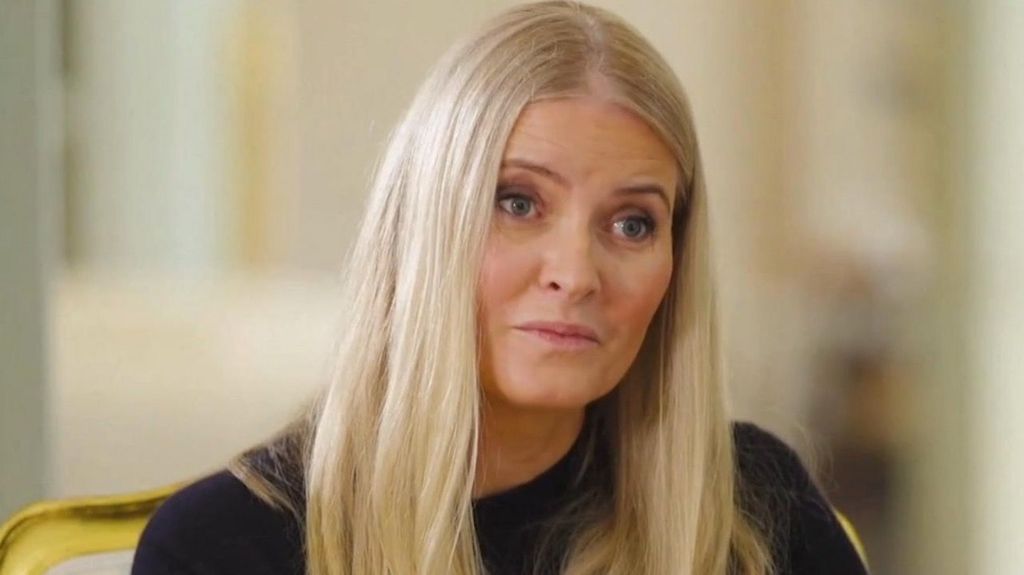
    The Norwegian Royal Household has announced a significant deterioration in Crown Princess Mette-Marit’s health, indicating that a lung transplant will likely become necessary for the 52-year-old royal. The princess, diagnosed with pulmonary fibrosis in 2018, faces a degenerative condition that creates scar tissue within the lungs, progressively stiffening them and impairing both breathing capacity and oxygen absorption into the bloodstream.

    Recent medical evaluations conducted during autumn revealed what palace officials described as “a clear worsening” of her condition. Dr. Are Martin Holm, head of respiratory medicine at Oslo University Hospital, confirmed that medical teams are approaching the threshold where transplantation becomes imperative. While no formal decision has been made regarding her placement on the transplant waiting list, physicians have initiated the comprehensive evaluation process required for such procedures.

    The Crown Princess acknowledged the accelerated progression of her illness in an interview with Norwegian public broadcaster NRK, stating it has developed “faster than I’d hoped.” Her husband, Crown Prince Haakon, Norway’s future monarch, provided poignant context during the joint interview, explaining that while his wife might appear “perfectly fine” when stationary, her breathing difficulties become apparent during physical exertion.

    Medical protocols in Norway ensure no preferential treatment for royal patients, with typically 20-40 patients awaiting lung transplants at any given time. Dr. Holm emphasized that transplantation represents a last-resort intervention, reserved for cases where patients face significant illness and limited life expectancy. The procedure carries substantial risks, including organ rejection and the challenge of finding suitable donor matches.

    Despite her health challenges, the palace confirmed Princess Mette-Marit’s “strong interest in continuing to carry out her duties,” though her official engagements will be adapted to accommodate her medical needs. The royal couple has already abandoned cherished activities like hiking and skiing together due to her respiratory limitations.

    This health update emerges months after separate legal proceedings involving the princess’s eldest son, Marius Borg Høiby, who faces multiple criminal charges including rape allegations—a matter unrelated to the princess’s medical condition but adding to the royal family’s complex public circumstances.

  • What to know about the EU’s new $106 billion loan to Ukraine

    What to know about the EU’s new $106 billion loan to Ukraine

    BRUSSELS — In a critical overnight summit that stretched into Friday morning, European Union leaders reached a landmark agreement to extend a massive $106 billion interest-free loan to Ukraine, providing vital financial stability for the war-torn nation’s military and economic needs through 2027. The decision came after intense negotiations failed to secure Belgian support for an alternative plan that would have utilized frozen Russian assets.

    The original proposal, championed by European Commission President Ursula von der Leyen and supported by German Chancellor Friedrich Merz and French President Emmanuel Macron, sought to leverage approximately $246 billion in Russian assets frozen across Europe, predominantly in Belgium. This approach would have required only a two-thirds majority among the 27 member states. However, Belgian Prime Minister Bart de Wever maintained firm opposition throughout the night, citing legal vulnerabilities and potential retaliation from Moscow following Russia’s Central Bank filing a lawsuit against Euroclear, the Brussels-based financial institution holding the majority of these assets.

    Facing political impasse, leaders pivoted to Article 20 of the Treaty of Europe, enabling the EU to borrow directly from capital markets—a mechanism previously deployed during the COVID-19 pandemic for the bloc’s $750 billion recovery fund. This alternative required unanimous approval, achieved through strategic concessions to Hungary, Slovakia, and the Czech Republic, which opposed assuming additional debt but agreed not to block the package in exchange for financial liability protections.

    Hungarian Prime Minister Viktor Orbán, Russian President Vladimir Putin’s closest EU ally, declared a dual victory on social media, claiming he prevented “a declaration of war on Russia” through asset seizure and protected Hungarian families from approximately $3 billion in potential financial burdens.

    Despite the setback on immediate asset utilization, EU leaders emphasized that frozen Russian funds remain a prospective repayment mechanism. The official statement clarified that Ukraine’s repayment obligation would only trigger after Russia compensates for war damages, estimated by Ukrainian President Volodymyr Zelenskyy at over $700 billion. Pending reparations, the EU reserves the right to apply frozen assets toward loan repayment in accordance with international law.

    President Zelenskyy, speaking from Warsaw, hailed the agreement as providing “financial certainty for the coming years,” indicating funds would prioritize defense if conflict persists or reconstruction should peace emerge. The International Monetary Fund estimates Ukraine requires $161 billion through 2027 to avert governmental collapse and address urgent needs from ammunition to infrastructure.

  • Pope names new archbishop of Westminster as part of generational shift in English-speaking hierarchy

    Pope names new archbishop of Westminster as part of generational shift in English-speaking hierarchy

    In a significant restructuring of English-speaking Catholic leadership, Pope Leo XIV announced the appointment of Bishop Richard Moth as the new Archbishop of Westminster on Friday. The 67-year-old prelate will succeed Cardinal Vincent Nichols, who is retiring at 80 after leading the largest British diocese in terms of Catholic population and clerical numbers.

    This appointment follows closely on the heels of another major leadership change: Bishop Ronald Hicks, 58, was named yesterday to replace Cardinal Timothy Dolan as Archbishop of New York, one of America’s most prominent archdioceses. Both outgoing cardinals had held their influential positions since 2009, appointed during Pope Benedict XVI’s papacy.

    The transitions signal a deliberate generational shift within the Church hierarchy. Pope Leo has emphasized his commitment to enforcing the standard retirement age of 75 for bishops more consistently, viewing this as essential for revitalizing Church leadership. While acknowledging possible two-year extensions in exceptional cases, the Pontiff stated last month that the Church must “constantly renew itself” to address contemporary challenges and prevent “inertia from slowing necessary change.”

    Bishop Moth brings a diverse background to his new role. Born in Chingola, Zambia, he previously served as bishop of Arundel and Brighton since 2015 and as bishop to the British armed forces. He now assumes leadership of Westminster Cathedral, considered the mother church for Catholics in England and Wales.

    In related developments, Pope Leo accepted the resignation of 75-year-old Bishop Gerald Barbarito of Palm Beach, Florida, appointing Reverend Manuel de Jesus Rodriguez as his successor. Father Rodriguez currently pastors Our Lady of Sorrows church in Queens, New York—the largest parish in the Diocese of Brooklyn with 17,000 congregants in a predominantly Hispanic community that suffered devastating losses during the COVID-19 pandemic.

    Cardinal Dolan’s retirement concluded his tenure shortly after he finalized a $300 million settlement fund for victims of clergy sexual abuse, addressing one of the Church’s most pressing challenges.

  • Zelenskyy signals good will to Polish president with Warsaw visit

    Zelenskyy signals good will to Polish president with Warsaw visit

    WARSAW, Poland — Ukrainian President Volodymyr Zelenskyy met with Polish President Karol Nawrocki at the Presidential Palace in Warsaw on Friday, marking their first official encounter since Nawrocki’s inauguration four months prior. The strategically timed diplomatic engagement seeks to reinforce bilateral cooperation between the two nations as Poland faces potential political transitions.

    The meeting holds profound significance given the deeply interconnected security interests that have defined Polish-Ukrainian relations since Russia’s full-scale invasion in 2022. Poland relies on Ukraine as a critical buffer against Russian expansionism, while Ukraine depends on Polish corridors for military assistance and humanitarian support. Furthermore, Poland is positioned to play an indispensable role in facilitating Western security guarantees for Ukraine should peace negotiations materialize.

    Although Poland’s current government under Prime Minister Donald Tusk remains a steadfast advocate for Ukraine, upcoming presidential elections in 2027 could see the return of the nationalist Law and Justice party. Nawrocki, who ascended to the presidency with their backing, has adopted a more assertive diplomatic stance, emphasizing national interests and demanding reciprocal gestures from Kyiv.

    In remarks reminiscent of former U.S. President Donald Trump, Nawrocki recently stated that he expects Zelenskyy to ‘express gratitude’ for Poland’s extensive military and humanitarian contributions. He has also criticized Ukraine’s delayed permission for exhumations of Polish victims from World War II-era mass graves in Volhynia—a longstanding point of contention between the nations.

    Despite a January agreement that permitted initial exhumations, uncovering remains of at least 42 individuals, Nawrocki continues to press for additional concessions. Historical tensions from the Volhynia massacres, where tens of thousands of Poles were killed amid interethnic violence, remain a sensitive issue in bilateral relations.

    As both leaders navigate complex historical legacies and contemporary geopolitical imperatives, Zelenskyy’s visit underscores Ukraine’s effort to maintain stability with a key ally amid Poland’s evolving political landscape.

  • Louvre reopens fully after staff vote to suspend strike

    Louvre reopens fully after staff vote to suspend strike

    PARIS — The Louvre Museum has resumed full operations following a unanimous decision by staff to temporarily suspend strike action that had severely disrupted access to the world’s most visited cultural institution. The resolution emerged from a general assembly of museum employees who voted to pause their labor mobilization, enabling the iconic Paris museum to welcome visitors without restrictions.

    The reopening concludes a period of significant disruption that saw complete closure earlier in the week and only partial accessibility on Wednesday. The decision to suspend strikes came after five negotiation sessions with French Culture Ministry officials, though union representatives emphasized that progress on key issues remains inadequate.

    Critical concerns highlighted by workers include chronic understaffing, inadequate compensation structures, and insufficient long-term security planning. Additional grievances center on deteriorating infrastructure within the historic building complex and suboptimal working conditions for staff.

    Union leadership expressed particular dissatisfaction with Louvre President Laurence des Cars’ response during the strike period, noting her absence from direct dialogue with staff throughout the labor action. The museum’s administration has yet to comprehensively address the systemic issues raised by employees.

    The truce remains temporary, with workers scheduling another general assembly for January 5 to evaluate progress on their demands and determine whether to resume strike activities. The outcome of upcoming discussions with museum management and cultural ministry officials will likely determine the institution’s operational stability in the new year.

  • Fraught EU summit backs Ukraine but divisions are clear

    Fraught EU summit backs Ukraine but divisions are clear

    In a marathon 17-hour negotiation session marked by intense deliberations, European Union leaders reached a landmark agreement in the early hours of Friday to provide Ukraine with €90 billion in zero-interest loans. This financial package, designed to sustain Ukraine’s economy through the next two years, comes at a critical juncture as American military support wavers under the Trump administration.

    Ukrainian President Volodymyr Zelensky had previously emphasized the existential necessity of these funds, warning EU leadership that without immediate financial assistance, Ukraine would lack the resources to compensate military personnel or procure essential weaponry against Russian aggression.

    The loan mechanism will be backed by the EU’s collective budget, though the agreement revealed significant fractures within the bloc. Hungary, Slovakia, and the Czech Republic only consented to the measure—which required unanimous approval—after securing individual exemptions from direct financial contributions. This development underscores the deepening geopolitical schisms between nations maintaining closer Kremlin ties and those like Poland and the Baltic states, which perceive Ukraine’s defense as fundamental to European security.

    Polish Prime Minister Donald Tusk framed the decision in stark terms during the summit’s outset, declaring that European leaders faced a choice between ‘financial commitment today or bloodshed tomorrow’—a statement he clarified pertained to Europe’s own security imperative rather than Ukraine’s alone.

    The newly approved joint-loan arrangement supersedes a previously contested proposal to utilize €210 billion in frozen Russian assets held within the EU, predominantly in Belgium. While Kyiv had advocated for this approach as morally justified compensation for Russia’s devastation, multiple member states expressed concerns about potential legal repercussions and damage to the eurozone’s reputation as a secure repository for global assets.

    EU officials indicated Friday that repurposing frozen Russian assets to repay the Ukrainian loan remains a future possibility, contingent upon the establishment of a formal peace agreement. Meanwhile, Brussels estimates Ukraine will require an additional €45 billion for 2026-2027, potentially sourced from non-EU allies including the UK, Japan, and Canada. The immediate financial stabilization also enables Kyiv to pursue lending opportunities through international financial institutions like the IMF.

  • Putin tells his annual news conference that the Kremlin’s military goals will be achieved in Ukraine

    Putin tells his annual news conference that the Kremlin’s military goals will be achieved in Ukraine

    Russian President Vladimir Putin asserted during his annual year-end press conference that Moscow’s military forces have gained complete strategic initiative in the ongoing Ukraine conflict. Addressing the nation in a carefully orchestrated event that combined a live news conference with a nationwide call-in program, the Russian leader expressed unwavering confidence that the Kremlin’s military objectives would ultimately be achieved.

    Putin emphasized that Russian troops are consistently advancing across the entire line of contact, though he acknowledged the pace varies across different sectors. ‘Our troops are progressing throughout the combat zone, with some areas witnessing faster advancement than others, but the enemy continues to retreat across all fronts,’ the Russian president stated.

    The conflict, which approaches its fourth anniversary since Putin initially ordered troops into Ukraine, has evolved significantly from its initial phase when Ukrainian forces successfully repelled Russia’s attempt to capture Kyiv. The warfare has since transformed into a grueling battle of attrition, with Moscow’s military making gradual but persistent territorial gains despite failing to achieve the rapid victory many analysts had anticipated.

    Regarding potential peace negotiations, Putin reaffirmed Moscow’s readiness for a diplomatic settlement that would address what he termed the ‘root causes’ of the conflict. However, the Russian leader’s conditions remain extensive and largely unacceptable to Kyiv. These demands include international recognition of Russia’s claimed annexation of four Ukrainian regions and Crimea, which Moscow illegally seized in 2014. Additionally, Putin insists Ukraine must withdraw its forces from certain eastern territories not currently under Russian control.

    The Kremlin further demands that Ukraine abandon its aspirations to join the NATO alliance and cease all military cooperation with Western nations. Putin has repeatedly stated that any NATO troop deployments would be considered ‘legitimate targets.’ Other conditions include mandatory limitations on the size of Ukraine’s military forces and granting official status to the Russian language within Ukraine’s governmental and administrative structures.

    Earlier this week, Putin warned that Moscow would continue expanding its territorial control if Kyiv and its Western allies reject these demands. The statement comes as international observers closely monitor Putin’s response to peace proposals reportedly put forward by the United States, though diplomatic efforts have encountered significant obstacles due to the fundamentally incompatible positions of both warring parties.