标签: Europe

欧洲

  • Stigma of Ukraine’s forgotten soldiers who ‘died the wrong way’

    Stigma of Ukraine’s forgotten soldiers who ‘died the wrong way’

    Beneath Ukraine’s official death toll of over 45,000 soldiers since Russia’s 2022 invasion lies a silent epidemic of military suicides that remains undocumented in state statistics. While officials describe these cases as isolated incidents, human rights advocates and grieving families estimate the numbers reach into the hundreds, creating a secondary tragedy shrouded in stigma and institutional neglect.

    Kateryna (name changed) embodies this hidden crisis. Her son Orest, a bookish 25-year-old with academic aspirations, was deemed unfit for service initially due to poor eyesight. In 2023, a recruitment patrol re-evaluated and deployed him as a communications specialist. Shortly after arriving near Chasiv Yar in Donetsk, he died from what the army classified as a ‘self-inflicted wound’—a designation his mother finds implausible.

    The classification carries severe consequences: families receive no compensation, military honors, or public recognition. ‘In Ukraine, it’s as if we’ve been divided,’ Kateryna explains. ‘Some died the right way, and others died the wrong way.’ She continues writing daily letters to her deceased son, now exceeding 650, her grief compounded by the official stigma.

    Mariyana from Kyiv shares a parallel tragedy. Her husband Anatoliy volunteered repeatedly until accepted despite lacking military experience. Deployed as a machine-gunner in the brutal Bakhmut sector, he returned from missions psychologically transformed. After losing part of his arm and hospitalized, he took his own life following a phone call with his wife. Denied a military burial, Anatoliy joined the growing ranks of unacknowledged casualties. ‘The war broke him,’ Mariyana states. ‘He couldn’t live with what he’d seen.’

    An online support community now connects approximately 200 families bereaved by military suicides. Oksana Borkun, who runs the network, notes widespread discrimination: ‘If it’s suicide, then he’s not a hero—that’s what people think. Some churches refuse to hold funerals. Some towns won’t put up their photos on memorial walls.’ Many families report inconsistencies in death investigations, with some mothers discovering unexplained bruises on bodies.

    Military chaplain Father Borys Kutovyi has witnessed at least three suicides within his command, emphasizing that ‘every suicide means we failed somewhere.’ He notes that recruited soldiers, unlike career servicemen, often lack psychological preparedness for combat trauma.

    Ukraine’s Commissioner for Veterans’ Rights Olha Reshetylova receives reports of three to four military suicides monthly, acknowledging systemic failures: ‘They’ve seen hell. Even the strongest minds can break.’ She confirms some investigations may conceal murders under the guise of suicide and advocates for comprehensive reform of military psychological services, though acknowledges this requires years to implement.

    As these families fight for truth and recognition, Reshetylova offers a forward-looking perspective: ‘These people were your neighbors, your colleagues. They’ve walked through hell. The warmer we welcome them, there will be fewer tragedies.’

  • Wiz Khalifa sentenced to nine months jail in Romania for smoking cannabis on stage

    Wiz Khalifa sentenced to nine months jail in Romania for smoking cannabis on stage

    A Romanian appellate court has delivered a custodial sentence against American rapper Wiz Khalifa for cannabis consumption during a live performance, overturning an earlier financial penalty. The artist, legally named Thomaz Cameron Jibril, acknowledged smoking a marijuana joint while performing at the Beach, Please! festival in Costinesti during July 2024.

    The Constanța Court of Appeal justified its decision to replace the initial 3,600 lei (approximately $829) fine with a nine-month prison term by citing the performer’s influential status. Judicial authorities characterized his actions as an “ostentatious act” that promoted drug normalization among youth audiences. Court documents specified that Jibril possessed over 18 grams of cannabis and consumed additional quantities during his performance before a predominantly young audience.

    Despite the conviction, the rapper was sentenced in absentia and his current whereabouts remain uncertain. Following his recent appearance with collaborator Gunna in California, legal experts indicate minimal likelihood of actual imprisonment. Romanian criminologist Vlad Zaha noted the extreme improbability of extradition from the United States, citing jurisdictional limitations and contrasting cannabis policies between the nations.

    In response to the incident, Jibril previously expressed on social media platform X that no offense toward Romania was intended, humorously noting future visits would occur “without a big ass joint.” The Grammy-nominated artist, renowned for cannabis-themed branding and lyrical content, established his own marijuana brand in 2016. While recreational cannabis enjoys legal status in numerous American states, it remains prohibited under federal law and within Romanian jurisdiction.

  • Bulgarians protest widespread graft and call for a fair election

    Bulgarians protest widespread graft and call for a fair election

    SOFIA, Bulgaria — Bulgaria has been plunged into a political crisis following the resignation of its government amid escalating public demonstrations. Tens of thousands of citizens flooded the streets of Sofia and other major urban centers on Thursday, demanding electoral integrity and an independent judiciary capable of confronting systemic corruption.

    The widespread civic mobilization represents an extension of protests initially triggered by the government’s controversial budget proposal, which included plans for elevated taxes and increased public expenditures. Although authorities subsequently retracted the contentious 2026 fiscal blueprint, mounting public pressure ultimately compelled the coalition government to relinquish power.

    This political upheaval has created a governance vacuum in the Eastern European nation, leaving it without an approved budget for the upcoming fiscal year and without a functioning administration. The crisis emerges at a particularly sensitive juncture as Bulgaria prepares to transition to the euro currency on January 1, 2023.

    Protesters have articulated deep concerns regarding electoral malpractice, specifically highlighting vulnerabilities including vote manipulation, financial inducements for voters, and result falsification that allegedly compromised previous electoral processes.

    Central to the public’s discontent is the influential role of Delyan Peevski, a sanctioned oligarch whose political entity, the MRF New Beginning party, provided crucial parliamentary support to the outgoing coalition government led by former Prime Minister Boyko Borissov’s GERB party. Both the United States and United Kingdom have imposed sanctions on Peevski for corruption allegations.

    Constitutional protocols now require President Rumen Radev to appoint an interim administration and schedule early parliamentary elections—which would mark the country’s eighth snap vote since 2021. This persistent political instability threatens to complicate Bulgaria’s imminent adoption of the euro, despite its established timeline for integration into the Eurozone as its 21st member state.

  • Romanian court sentences US rapper Wiz Khalifa to 9 months for drug possession

    Romanian court sentences US rapper Wiz Khalifa to 9 months for drug possession

    In a landmark judicial ruling that highlights Romania’s stringent drug enforcement policies, American hip-hop artist Wiz Khalifa (legal name Cameron Jibril Thomaz) has been sentenced to nine months imprisonment by the Constanta Court of Appeal. The conviction stems from an incident during the Beach, Please! Festival in Costinesti in July 2024, where the performer was allegedly witnessed consuming cannabis during his live performance.

    Romanian law enforcement authorities detained the 38-year-old Pittsburgh native after he purportedly smoked a hand-rolled cannabis cigarette while performing his hit single ‘Young, Wild & Free.’ Subsequent investigation revealed the artist possessed approximately 18 grams of cannabis, constituting criminal possession under Romanian narcotics legislation.

    The appellate court’s decision overturns a prior ruling from April that had imposed only a financial penalty of 3,600 lei (approximately $830). Prosecutors successfully challenged the initial sentence as insufficient, arguing for stricter punishment in accordance with national drug laws.

    Romania maintains some of Europe’s most rigorous anti-drug statutes, where personal-use cannabis possession carries potential incarceration periods ranging from three months to two years alongside monetary penalties. The judicial outcome represents the final ruling in this case with no further appeals possible.

    International legal complexities now emerge regarding potential extradition proceedings, as Khalifa remains a U.S. citizen without Romanian residency. The rapper gained mainstream recognition through his breakthrough mixtape ‘Kush + Orange Juice’ and has consistently incorporated cannabis culture into his artistic persona.

  • Under pressure at home, Belgium’s leader treads a tight rope with EU partners over funds for Ukraine

    Under pressure at home, Belgium’s leader treads a tight rope with EU partners over funds for Ukraine

    BRUSSELS — The European Union faces an unprecedented internal crisis as Belgium, traditionally the bloc’s administrative heartland, emerges as the primary obstacle to a landmark plan utilizing frozen Russian assets for Ukrainian reconstruction. The contentious proposal, which would channel €193 billion ($226 billion) from Moscow’s immobilized funds through Brussels-based clearinghouse Euroclear, has exposed deep fissures within the 27-nation alliance.

    Prime Minister Bart De Wever, leading a fragile coalition government, has positioned Belgium as the lone dissenter against what he terms the “reparations loan” mechanism. His administration argues that concentrating the financial risk exclusively within Belgian territory invites disproportionate retaliation from Russia—both through legal challenges and potential asymmetric threats. The scale of frozen assets equals nearly one-third of Belgium’s GDP, creating existential exposure for a nation already grappling with substantial public debt.

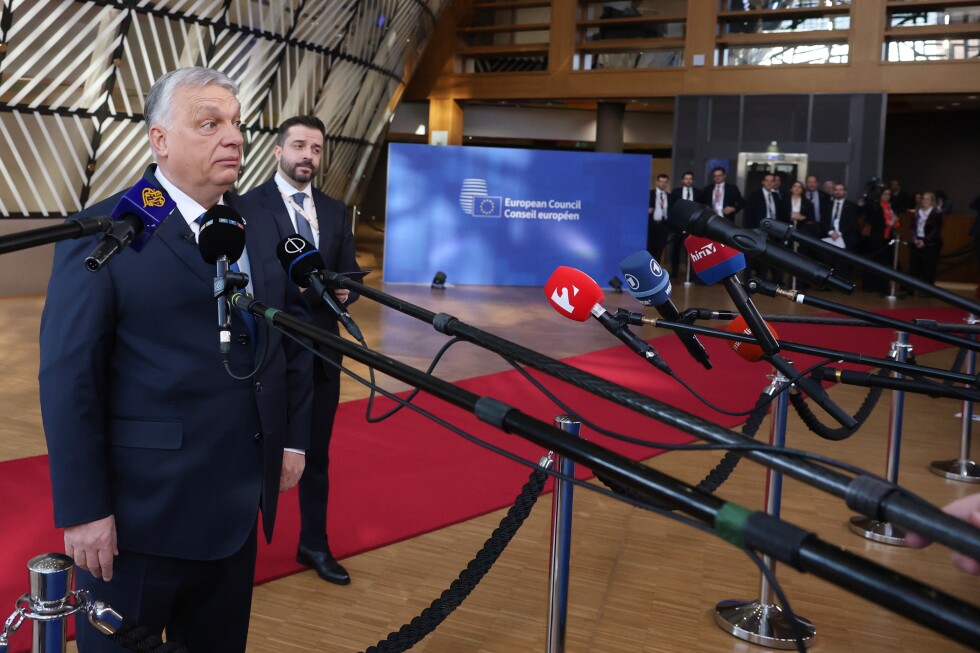
    Diplomatic tensions escalated during Thursday’s EU summit where De Wever demanded collective risk-sharing, declaring: “If we jump, we jump together.” His stance reflects broader anxieties following unexplained drone incidents at Belgian military facilities and airports, which Defense Minister Theo Francken characterized as possible Russian destabilization attempts.

    While Ukrainian President Volodymyr Zelenskyy acknowledges Belgian concerns, he emphasizes that “Ukraine has the right to this money because Russia is destroying us.” The impasse threatens EU decision-making credibility, with German Chancellor Friedrich Merz warning that failure could “severely damage the European Union’s ability to act for years.”

    With Ukraine requiring funding by early 2025, EU Council President António Costa has committed to continuous negotiations until resolution. The outcome hinges on whether De Wever prioritizes national financial security or European solidarity—a decision that could redefine EU power dynamics and establish precedents for future crises.

  • Restorers swap brushes for lasers in the first restoration of an iconic Roman monument in 40 years

    Restorers swap brushes for lasers in the first restoration of an iconic Roman monument in 40 years

    In an extraordinary fusion of ancient history and modern technology, restorers in Rome are employing advanced laser systems to cleanse the nearly two-millennia-old Column of Marcus Aurelius. The monumental restoration project, situated in the heart of the Italian capital adjacent to the prime minister’s office, represents a significant advancement in archaeological preservation techniques.

    The 47-meter (154-foot) marble pillar, constructed between 180 and 193 AD, features an intricate spiral relief documenting the military campaigns of Emperor Marcus Aurelius. Unlike previous restoration efforts in the 1980s that utilized manual brushing methods, contemporary experts are implementing short-pulse laser technology that selectively removes centuries of accumulated pollution and biological growth while preserving the original marble surface.

    Marta Baumgartner, director of restoration works, emphasized the technological superiority of the new approach: “The laser provides exceptional results with increased efficiency and, most importantly, demonstrates profound respect for the historical material and its surface layers.”

    The elaborate bas-reliefs depict unflinching scenes from ancient warfare, including soldiers capturing women and children by their hair, decapitated enemies, and terrified prisoners with bound necks. These artistic representations have suffered from environmental damage including erosion, pollution from urban smog, and water infiltration that has compromised some facial features of the carved figures.

    A team of 18 specialists employs a multifaceted approach combining laser technology with chemical applications, specialized sponges, and resin injections to address structural vulnerabilities. The sophisticated scaffolding system encircling the column provides unprecedented access to the upper sections, where figures gradually increase in size—an intentional artistic technique to enhance visibility from ground level.

    Valentin Nitu, a project restorer, noted the narrative power of the column: “The artistic composition actively engages the viewer, compelling them to experience the story phase by phase with remarkably detailed scenes.”

    Funded by a 2-million-euro allocation from the post-pandemic European recovery fund, the project includes the installation of new nocturnal illumination systems. Commencing in April, the comprehensive restoration is scheduled for completion in June, promising renewed visibility for one of Rome’s most significant historical monuments.

  • EU to slash asylum cases from 7 nations deemed safe

    EU to slash asylum cases from 7 nations deemed safe

    BRUSSELS — In a landmark decision marking International Migrants’ Day, European Union institutions have jointly approved a contentious policy designating seven nations as ‘safe countries of origin,’ triggering immediate condemnation from human rights organizations across the continent.

    The European Parliament and European Council reached a comprehensive agreement enabling accelerated processing of asylum applications from Bangladesh, Colombia, Egypt, Kosovo, India, Morocco, and Tunisia. Under the new framework, applicants from these nations will bear the burden of proving why the safe country designation should not apply to their specific circumstances.

    This policy forms part of the broader Pact on Migration and Asylum, scheduled for implementation in June 2026, which represents the EU’s most significant asylum system overhaul since the 2015 migration crisis that saw over one million arrivals, primarily from conflict zones in Syria and Iraq.

    The agreement stipulates that countries may be deemed safe when they demonstrate absence of ‘relevant circumstances, such as indiscriminate violence in the context of an armed conflict.’ The policy framework permits individual member states to designate additional nations as safe according to their national immigration requirements.

    Human rights advocates responded with vehement opposition. Amnesty International EU advocate Olivia Sundberg Diez condemned the measures as ‘a shameless attempt to sidestep international legal obligations’ that would potentially endanger vulnerable migrants.

    French MEP Mélissa Camara expressed grave concerns about the establishment of ‘return hubs outside EU borders’ where third-country nationals might face ‘inhumane treatment with almost no monitoring.’ Similarly, Céline Mias of the Danish Refugee Council warned that the fast-track system could fail to protect journalists, activists, and marginalized groups from nations where human rights are systematically violated.

    Conversely, Alessandro Ciriani, an Italian MEP representing the European Conservatives and Reformists group, applauded the decision as a firm border reinforcement measure that provides ‘clear delineations of safe and unsafe nations’ to eliminate ‘excessive interpretative uncertainty’ that previously hampered border control decisions.

    The EU maintains that the list of designated safe countries remains subject to expansion through the bloc’s ordinary legislative procedures, indicating potential future additions to the current seven-nation roster.

  • Pope blasts ‘irrationality’ of military deterrence in first annual peace message

    Pope blasts ‘irrationality’ of military deterrence in first annual peace message

    In his inaugural annual peace message, Pope Leo XIV delivered a powerful condemnation of contemporary global conflicts, labeling nuclear deterrence strategies as fundamentally irrational and criticizing the exploitation of religious rhetoric for political violence. The pontiff’s address, presented during an emotionally charged Vatican press conference, marked the Catholic Church’s preparation for its World Day of Peace observance on January 1st.

    Reflecting on his first words as pontiff—”Peace be with you”—delivered from St. Peter’s Basilica on May 8, Pope Leo challenged the normalization of fear and conflict in modern society. He asserted that treating peace as a distant ideal creates dangerous complacency when violence erupts. “When we treat peace as a distant ideal, we cease to be scandalized when it is denied, or even when war is waged in its name,” he declared in the document.

    The Pope specifically targeted the intersection of private economic interests with military technological advancement, noting how artificial intelligence is being leveraged to develop increasingly sophisticated weaponry. This convergence, he argued, accelerates the irrational logic of military deterrence that threatens global stability.

    In a significant ecumenical appeal, Pope Leo urged all religious communities to resist the temptation to weaponize faith language for violent purposes. “Unfortunately, it has become increasingly common to drag the language of faith into political battles, to bless nationalism, and to justify violence and armed struggle in the name of religion,” he wrote.

    The Vatican underscored the message’s urgency by translating it into Russian and Ukrainian alongside its usual eight languages, directly referencing Moscow’s ongoing conflict. The press conference featured poignant testimonies from survivors of European conflicts, including Maria Agnese Moro, daughter of assassinated Italian Premier Aldo Moro, who shared her experience with restorative justice through dialogue with former Red Brigades members. Croatian Catholic priest Rev. Pero Miličević provided a harrowing account of the Bosnian war, describing how his faith enabled him to overcome the trauma of losing 39 family members and surviving imprisonment.

    Both witnesses emphasized the transformative power of mutual recognition and forgiveness, with Moro noting that “true listening is a mutual recognition of humanity”—a principle that aligns with the Pope’s vision of achievable peace through genuine dialogue and moral courage.

  • French police capture teen who escaped prison using bed sheets

    French police capture teen who escaped prison using bed sheets

    French law enforcement has successfully apprehended 19-year-old Yanik Touoibati Chaduli, ending a month-long manhunt for the escaped prisoner who fled custody in November. The teenager was captured Thursday in Marseille’s Cité des Rosiers district following an extensive international search operation.

    Chaduli and his 32-year-old accomplice executed a daring escape from Dijon prison in eastern France through an elaborate scheme involving sawing through cell bars and descending prison walls using knotted bed sheets. While the older inmate was recaptured within 24 hours of their breakout, Chaduli remained at large until this week’s operation.

    The arrest came after Interpol issued a red notice for Chaduli, who was being held in pretrial detention on serious charges including attempted murder and criminal conspiracy. French Interior Minister Laurent Nuñez publicly commended the National Fugitive Search Brigade and the BRI special intervention force for their successful tracking and apprehension of the escapee.

    This incident highlights ongoing security challenges within France’s correctional system, which has experienced multiple high-profile escapes in recent years. In July, another inmate escaped by concealing himself in a released prisoner’s belongings, while notorious gangster Rédoine Faid famously escaped via helicopter from a Paris-region prison in 2018—his second successful prison break in five years before being recaptured months later.

    The repeated security breaches have raised questions about prison infrastructure and protocols across French correctional facilities, with authorities now facing increased pressure to address systemic vulnerabilities in the nation’s detention system.

  • Belarusian leader says Russia deployed its latest nuclear-capable Oreshnik missile to the country

    Belarusian leader says Russia deployed its latest nuclear-capable Oreshnik missile to the country

    In a significant escalation of military posturing, Belarusian President Alexander Lukashenko confirmed on Thursday the deployment of Russia’s state-of-the-art Oreshnik intermediate-range ballistic missile system to Belarusian territory. The nuclear-capable system reportedly entered combat duty on Wednesday, though specific numbers and deployment details remain undisclosed.

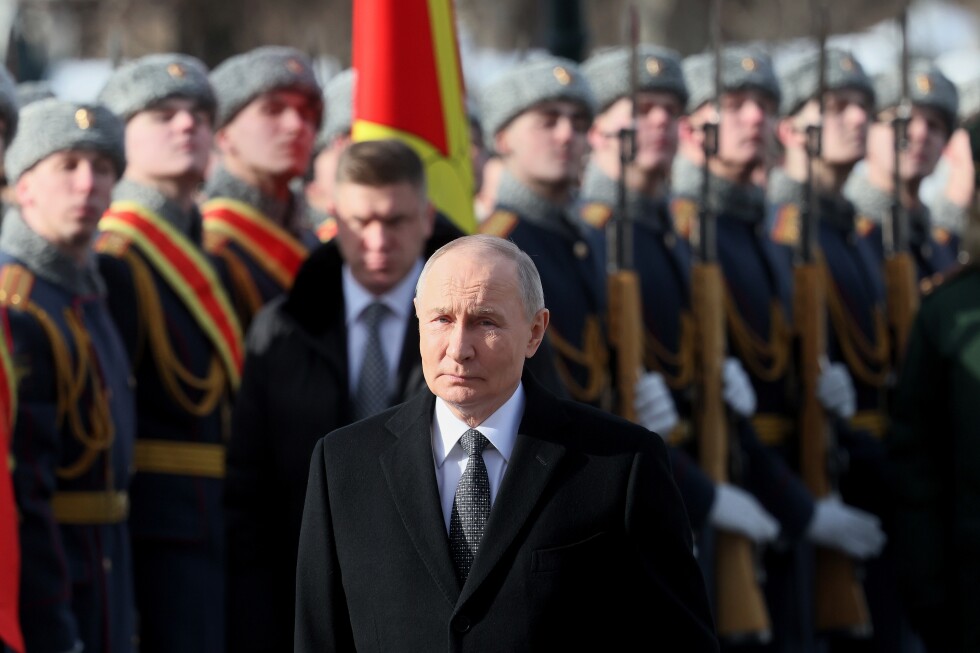
    The announcement coincides with delicate peace negotiations to resolve the ongoing conflict in Ukraine, now entering a pivotal phase. Russian President Vladimir Putin had previously declared the system’s operational status during military consultations, explicitly linking its deployment to Moscow’s strategic demands in diplomatic talks. Putin cautioned that rejection of Kremlin terms by Kyiv and Western allies would prompt expanded Russian offensive operations in Ukraine.

    This deployment represents the latest in a series of Russian nuclear advancements in Belarus, which previously hosted tactical nuclear weapons and served as a staging ground for the February 2022 invasion. Lukashenko acknowledged possessing several dozen Russian tactical nuclear weapons, further complicating regional security dynamics.

    The Oreshnik system (named for the hazelnut tree) boasts formidable technical capabilities, including multiple warheads reaching hypersonic velocities up to Mach 10. Russian state media claims the missile could strike Polish airfields within 11 minutes and NATO headquarters in Brussels within 17 minutes. Notably, warhead type (conventional or nuclear) remains undetectable until impact.

    This development occurs against a backdrop of intensified U.S. diplomatic efforts under President Trump to broker a settlement to the conflict, though Washington faces fundamentally incompatible demands from Moscow and Kyiv. The missile deployment coincides with Lukashenko’s simultaneous overtures toward Western reconciliation, including Saturday’s release of 123 political prisoners that prompted U.S. sanctions relief on Belarusian potash exports.

    Strategic implications are profound: Intermediate-range missiles (500-5,500 km capability) had been prohibited under the now-defunct INF Treaty until 2019. Putin and Lukashenko previously committed to deploying Oreshnik before year’s end, with December 2024 agreements granting Minsk target selection authority for missions closer to Belarusian territory.

    Russia’s revised nuclear doctrine further escalates tensions by considering conventional attacks supported by nuclear powers as joint nuclear aggression, effectively lowering the threshold for potential nuclear response. The doctrine explicitly extends Russia’s nuclear umbrella over Belarus, cementing military integration between the two nations despite Lukashenko’s occasional diplomatic maneuvering.