标签: Europe

欧洲

  • US and Ukraine call Miami talks productive despite no breakthrough

    US and Ukraine call Miami talks productive despite no breakthrough

    High-level diplomatic negotiations between United States, Ukrainian, and Russian representatives concluded in Miami with participants characterizing the discussions as “productive and constructive,” though significant obstacles to ending the nearly four-year conflict remain unresolved.

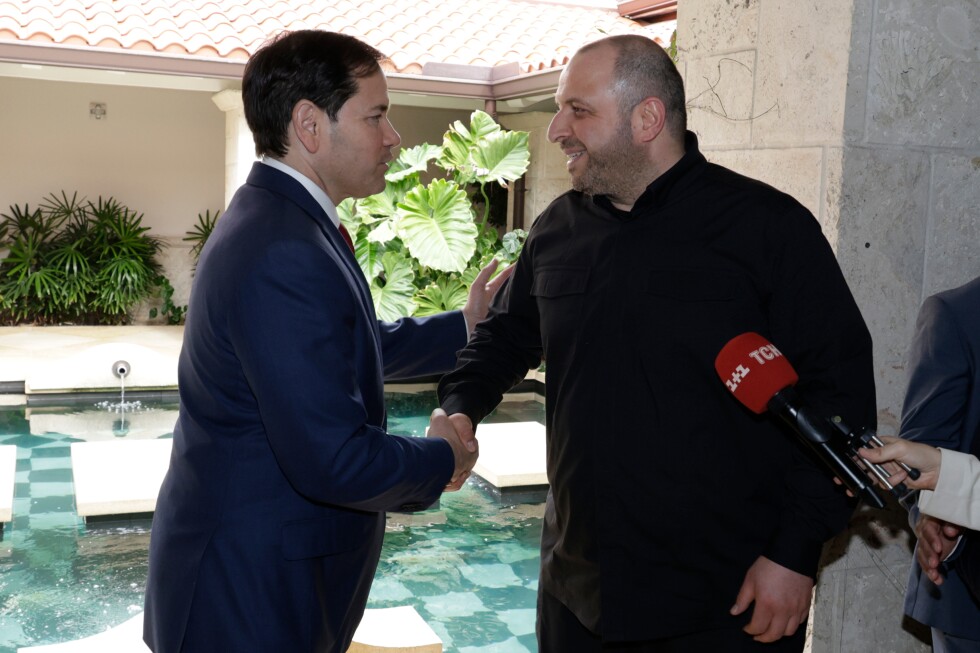
    Special Envoy Steve Witkoff, appointed by former President Donald Trump, and Ukrainian lead negotiator Rustem Umerov issued a joint statement following three days of intensive meetings with European allies. The discussions centered on aligning positions regarding a comprehensive 20-point peace framework, multilateral security guarantees, a specific US security assurance package for Ukraine, and an economic recovery plan aimed at ensuring long-term stability.

    Concurrently, separate negotiations occurred between American officials and Russian envoy Kirill Dmitriev in southern Florida. Witkoff confirmed these parallel discussions with Russian representatives, including Trump’s son-in-law Jared Kushner, were similarly constructive, noting that “Russia remains fully committed to achieving peace in Ukraine.”

    The Miami meetings represent the latest development in intensified diplomatic efforts triggered by the recent leak of a 28-point US peace proposal that initially alarmed Ukrainian and European officials due to perceived concessions favoring Russia. Despite the positive rhetoric, fundamental disagreements persist, particularly regarding Moscow’s insistence on retaining control of captured Ukrainian territories.

    This diplomatic activity unfolds against a backdrop of continued military operations. Russian authorities reported Ukrainian drone attacks damaging two vessels and port infrastructure in the Krasnodar region, resulting in significant fires though without crew casualties.

    Meanwhile, US intelligence assessments, corroborated by six sources familiar with the matter, indicate Russian President Vladimir Putin maintains ambitions to control all of Ukraine and potentially reclaim former Soviet territories in Europe. This contrasts with Putin’s recent BBC interview statements suggesting Russia seeks peaceful relations if treated with “respect and recognition of our interests.”

  • Why Croatia’s capital wants to hold Europe’s best Christmas market

    Why Croatia’s capital wants to hold Europe’s best Christmas market

    Zagreb’s acclaimed Christmas market has emerged as a transformative economic engine for Croatia, strategically repositioning the Balkan nation from a seasonal summer destination to a year-round tourism hub. The capital’s Zagreb Advent event, recognized as Europe’s best Christmas market for three consecutive years (2015-2017), has become the centerpiece of Croatia’s ambitious tourism diversification strategy.

    Croatia’s tourism sector, accounting for over 20% of the national economy, has historically relied heavily on summer visitors drawn to the Adriatic coast. Tourism Minister Tonci Glavina emphasizes the strategic shift: ‘We are developing as a year-round tourism destination – we are not a summer destination anymore. Croatia has achieved significant development beyond just sun and sea.’

    Zagreb Advent represents a multi-venue urban transformation that engulfs the city center throughout December. Unlike single-location markets elsewhere, Zagreb’s offering features distinct thematic areas with unique decorations and content. The experience encompasses traditional seasonal staples like sausages and mulled wine alongside multiple music stages, craft stalls, traditional Croatian food vendors, art installations, and a massive ice rink.

    The economic impact has been substantial. Overnight stays in December more than doubled from 100,198 in 2014 to 245,352 in 2024, generating approximately €100 million in economic activity. Marketing efforts have expanded from neighboring countries to international campaigns in London tube stations and Milan buses, with special trains bringing visitors from Slovenia and Hungary.

    Despite its success, Zagreb remains a newcomer compared to European Christmas market heavyweights. Cologne’s market anticipates four million visitors with €229 million economic impact, while Vienna attracts 2.8 million and Strasbourg two million. Dresden’s market, dating to 1434, highlights Zagreb’s relatively brief 11-year history.

    Academic experts like Marko Peric, Dean of Tourism at the University of Rijeka, acknowledge the ‘unusually high’ December arrivals but caution that Croatia must further develop its off-season offerings. Minister Glavina points to promising trends, including 5% growth in June and September arrivals and a 10% year-on-year increase in early December visitors, indicating successful shoulder season development.

    The strategy exemplifies sustainable tourism transformation, balancing peak season stability with expanded shoulder season offerings while promoting lesser-known destinations across Croatia.

  • France will build a new aircraft carrier as it increases defense spending

    France will build a new aircraft carrier as it increases defense spending

    French President Emmanuel Macron has unveiled ambitious plans for a next-generation nuclear aircraft carrier during his address to French troops stationed in Abu Dhabi on Sunday. The monumental defense project represents France’s strategic response to evolving global security challenges and reinforces its commitment to maritime superiority.

    The new vessel, scheduled for completion by 2038, will serve as the replacement for France’s current flagship, the Charles de Gaulle aircraft carrier that entered service in 2001. With specifications showcasing significant technological advancement, the future carrier will displace approximately 78,000 tons and extend 310 meters (1,017 feet) in length—marking a substantial increase from the Charles de Gaulle’s 42,000-ton displacement and 261-meter frame.

    While the French carrier will remain smaller than the United States’ USS Gerald Ford—the world’s largest warship at over 100,000 tons—it will maintain France’s distinctive nuclear propulsion capability and deploy advanced Rafale M fighter jets. The vessel is designed to accommodate up to 30 aircraft and support a crew of 2,000 personnel, enabling extended operational deployments with enhanced combat readiness.

    President Macron characterized the initiative as ‘the display of our nation’s power in the service of freedom on the seas,’ emphasizing that ‘in an age of predators, we must be strong in order to be feared, and especially strong at sea.’ The project aligns with France’s broader military modernization strategy, which includes increasing defense spending to 64 billion euros by 2027—doubling the budget from Macron’s initial term in 2017.

    The defense ministry confirms the carrier will provide rapid response capabilities for heavily armed, long-range missions with minimal preparation time. Economically, the program is expected to benefit hundreds of suppliers, predominantly small- and medium-sized enterprises, with Macron personally committing to oversee industrial partnerships during a scheduled shipyard visit in February.

    Financial projections from former Defense Minister Sébastien Lecornu (now Prime Minister) estimated the project cost at approximately 10 billion euros ($11.7 billion). This investment occurs alongside Macron’s announcement of an additional 6.5 billion euros ($7.6 billion) in military expenditures over the next two years, reinforcing France’s position as the European Union’s second-largest military force behind Poland.

  • Prince William brings his son to the same homeless shelter he first visited with Princess Diana

    Prince William brings his son to the same homeless shelter he first visited with Princess Diana

    In a poignant display of intergenerational service, the Prince of Wales and his heir, Prince George, participated in Christmas preparations at The Passage homeless shelter in central London. The royal duo engaged in various charitable activities, including decorating festive trees and assisting with culinary preparations for holiday meals.

    The visit carried profound historical significance, marking Prince George’s inaugural volunteering experience at the same institution where his father first accompanied Princess Diana over three decades ago. Notably, the young royal signed the charity’s visitor book on the very page containing signatures from both his grandmother and father dated December 1993.

    Footage released through official channels captured the heir to the throne handling Brussels sprouts preparation while his son arranged Yorkshire puddings and organized dining arrangements for shelter attendees. The royal family’s social media accounts characterized the event as featuring ‘another pair of helping hands,’ emphasizing the continuity of their commitment to homelessness advocacy.

    This engagement aligns with Prince William’s broader Homewards initiative, launched earlier this year to develop innovative solutions for addressing homelessness across the United Kingdom. The Passage maintains its special status as one of the Prince’s longest-standing patronages, representing a tangible connection to his mother’s philanthropic legacy.

  • Thousands cheer as the sun rises on winter solstice at Stonehenge

    Thousands cheer as the sun rises on winter solstice at Stonehenge

    Under the pale glow of dawn on the winter solstice, Stonehenge’s ancient stones once again served as the backdrop for one of humanity’s most enduring celestial celebrations. Thousands of pilgrims and revelers converged upon the prehistoric monument in southwest England, transforming the typically tranquil landscape into a vibrant tapestry of spiritual observance and communal festivity.

    As the shortest day of the year commenced north of the equator, participants braved the pre-dawn chill with remarkable patience. The gathering presented a striking visual spectacle—many attendees adorned in elaborate ceremonial costumes while others maintained contemplative silence among the massive stone pillars. The air resonated with rhythmic drumming and spontaneous singing, creating an auditory landscape as rich as the visual one.

    This biannual pilgrimage, occurring during both summer and winter solstices, represents far more than mere tradition. For countless participants, the experience carries profound spiritual significance, connecting modern seekers with ancient agricultural rhythms. The monument itself, constructed between 5,000 and 3,500 years ago, demonstrates remarkable astronomical precision—its stones meticulously aligned to capture the sun’s movement during these pivotal celestial events.

    While Northern Hemisphere observers marked the beginning of astronomical winter and celebrated the promise of lengthening days, simultaneous celebrations across the Southern Hemisphere honored the summer solstice—the year’s longest day. The winter solstice represents the sun’s lowest arc across the sky, yet participants universally embrace it as a moment of renewal and cosmic rebirth, anticipating the daily incremental increase of sunlight until the June solstice.

  • Élysée Palace silver steward arrested for stealing thousands of euros’ worth of silverware

    Élysée Palace silver steward arrested for stealing thousands of euros’ worth of silverware

    PARIS — Three individuals will face trial next February following a sophisticated investigation into the theft of valuable silverware and table service items from the official residence of French President Emmanuel Macron. The Paris prosecutor’s office confirmed the case involves a silver steward employed at the Élysée Palace who allegedly orchestrated the theft of heritage items valued between €15,000-€40,000 ($17,500-$47,000).

    The investigation commenced when the palace’s head steward reported numerous missing items from the presidential collection. Authorities from the Sèvres Manufactory, the official supplier of Élysée tableware, subsequently identified several distinctive pieces being offered on online auction platforms. This discovery prompted an internal review that revealed suspicious inventory records maintained by one silver steward, suggesting premeditation for additional thefts.

    Forensic examination of the suspect’s digital footprint uncovered a relationship with the manager of an online tableware sales company. On the steward’s Vinted account, investigators discovered a plate marked “French Air Force” and exclusive Sèvres Manufactory ashtrays not available commercially. A comprehensive search of the primary suspect’s personal locker, vehicle, and residence yielded approximately 100 stolen objects, including copper saucepans, Sèvres porcelain, a René Lalique statuette, and Baccarat champagne coupes.

    The steward and their accomplice were apprehended on Tuesday, while authorities identified a third individual as the exclusive receiver of the stolen goods. All recovered items have been returned to the Élysée Palace collection.

    The three defendants appeared before court on Thursday facing charges of jointly stealing movable property classified as national heritage—an offense carrying penalties of up to 10 years imprisonment and €150,000 fines—along with aggravated handling of stolen goods. The court postponed the trial to February 26 and imposed strict judicial supervision measures, including contact bans between defendants, prohibition from auction venues, and suspension from professional activities.

  • Russia says talks on US peace plan for Ukraine ‘are proceeding constructively’

    Russia says talks on US peace plan for Ukraine ‘are proceeding constructively’

    Diplomatic efforts to resolve the protracted conflict in Ukraine are advancing constructively, according to a senior Kremlin envoy participating in U.S.-brokered peace negotiations. Kirill Dmitriev, representing Russian interests, confirmed that discussions with Trump administration officials—including presidential envoy Steve Witkoff and senior advisor Jared Kushner—are ongoing in Florida, following earlier consultations with Ukrainian and European representatives in Berlin.

    Ukrainian President Volodymyr Zelenskyy emphasized the critical importance of the United States’ diplomatic stance following these engagements with Russian counterparts. This development comes shortly after Ukraine’s negotiation team concluded parallel meetings with American and European partners in the United States.

    Despite the Trump administration’s intensive diplomatic campaign to broker peace, significant obstacles remain due to fundamentally incompatible positions between Moscow and Kyiv. Russian President Vladimir Putin has recently reinforced his maximalist demands regarding Ukraine, even as Russian forces continue incremental territorial advances despite substantial military casualties.

    Putin reiterated confidence on Friday that the Kremlin would ultimately accomplish its military objectives should Ukraine refuse to accept Russia’s terms in peace negotiations. Meanwhile, European Union leaders demonstrated continued support for Ukraine by approving €90 billion ($106 billion) in funding to address the nation’s military and economic requirements over the next two years. While initially considering utilizing frozen Russian assets, the EU ultimately secured these funds through capital market borrowing after failing to resolve legal complications with Belgium.

  • Brazil’s Lula hopes EU-Mercosur trade deal will be signed in January

    Brazil’s Lula hopes EU-Mercosur trade deal will be signed in January

    Brazilian President Luiz Inácio Lula da Silva expressed cautious optimism on Saturday that the landmark free-trade agreement between South America’s Mercosur bloc and the European Union could be finalized by January. This development follows a significant postponement announced by European Commission President Ursula von der Leyen, who cited the need for additional weeks to resolve outstanding concerns among member states.

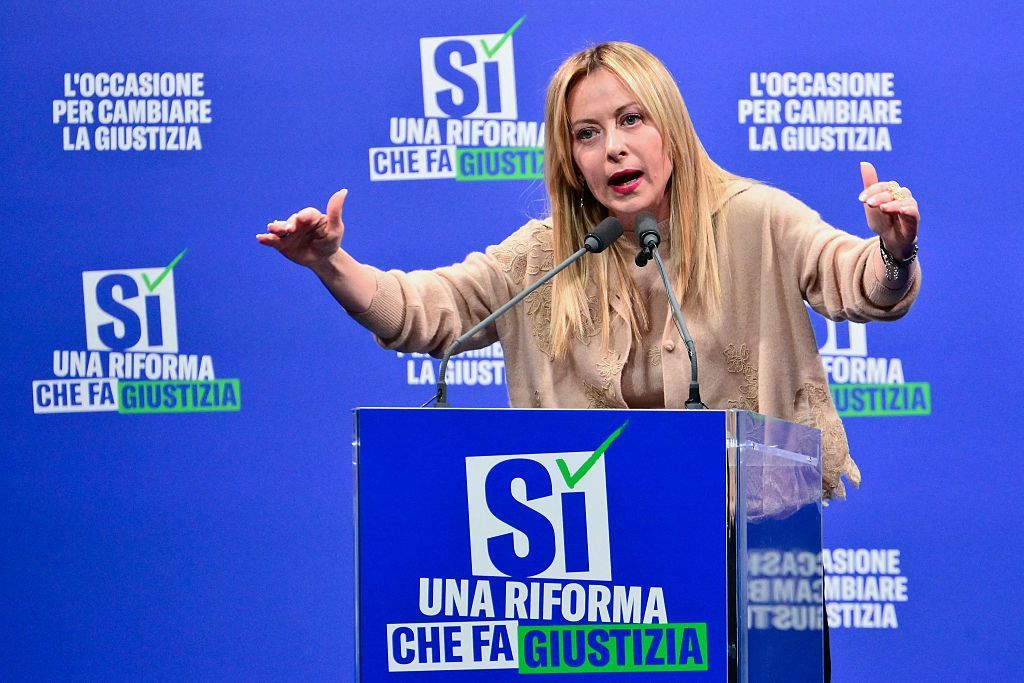
    The delay emerged amidst substantial opposition from France and Italy, compounded by widespread protests from European farmers who fear market disruption. President Lula revealed that Italian Premier Giorgia Meloni specifically requested additional time for consideration, contributing to the stalled negotiations during what was anticipated to be a signing ceremony at the EU summit.

    Von der Leyen requires approval from at least two-thirds of EU nations to ratify the agreement. Italy’s opposition provides France with sufficient voting power to potentially veto the deal, creating a significant diplomatic hurdle for the European Commission president.

    President Lula emphasized the critical need for political determination to conclude negotiations that have spanned 26 years. Speaking at a Mercosur summit in Foz do Iguacu, Brazil, the president noted that while European negotiators had previously indicated willingness to sign, the anticipated completion did not materialize. He confirmed receiving communication from EU leadership targeting January for finalization.

    The Brazilian leader maintained that Mercosur would continue pursuing alternative international partnerships regardless of the EU outcome. “The world is eager to make deals with Mercosur,” Lula stated, highlighting the bloc’s attractiveness to global trading partners.

    French President Emmanuel Macron has emerged as a primary opponent of the agreement, expressing reservations about supporting the pact next month. Macron has coordinated with counterparts from Italy, Poland, Belgium, Austria, and Ireland to address agricultural sector concerns. However, Lula countered that France alone cannot obstruct the agreement’s progression.

    The prospective trade deal would create one of the world’s largest free-trade zones, encompassing 780 million consumers and representing a quarter of global GDP. The agreement would progressively eliminate tariffs on nearly all goods exchanged between the economic blocs, fundamentally reshaping transatlantic trade dynamics.

  • Chair of leading Turkish sports club Fenerbahce questioned in a drugs probe

    Chair of leading Turkish sports club Fenerbahce questioned in a drugs probe

    ISTANBUL — Sadettin Saran, the high-profile chairman of Turkish sports giant Fenerbahce, underwent police interrogation Saturday as part of a sweeping narcotics investigation that has ensnared numerous celebrities and media personalities. The state-operated Anadolu Agency confirmed that Saran, who possesses dual Turkish-American citizenship, provided an official statement to authorities upon returning from international travel. Following his deposition, he was escorted to a medical facility for compulsory blood and hair sample collection to screen for illicit substances.

    This development represents the latest escalation in an extensive probe initiated by the Istanbul Chief Prosecutor’s Office earlier this December. The investigation has already resulted in the detention of over a dozen prominent figures from television journalism, music, acting, and social media influencing circles. Charges range from narcotics production and distribution to involvement in organized prostitution activities.

    According to judicial sources, Saran faced specific allegations related to enabling and supplying controlled substances. After completing forensic testing at the Caglayan Courthouse complex, the sports executive was released subject to ongoing judicial supervision requirements. The case continues to develop as prosecutors examine potential connections between entertainment industry elites and underground narcotics networks.

    Fenerbahce’s institutional history adds contextual significance to these developments. The club previously endured governance challenges when former president Aziz Yildirim served prison time between 2012-2013 regarding match-fixing allegations. Those convictions were ultimately overturned due to judicial corruption affecting the original proceedings. Separately, the organization remains connected to an ongoing inquiry into systemic match-fixing within Turkish professional football.

  • Pope Leo summons world’s cardinals for a key assembly to help him govern the church

    Pope Leo summons world’s cardinals for a key assembly to help him govern the church

    In a significant move signaling the formal commencement of his leadership era, Pope Leo XIV has called for an extraordinary assembly of all cardinals worldwide. The Vatican announced on Saturday that this pivotal gathering, known as a consistory, will take place January 7-8, 2025, immediately following the conclusion of the quarter-century Holy Year celebrations.

    The upcoming summit represents a strategic shift in papal governance approaches. Unlike his predecessor Francis, who predominantly relied on a select group of eight to nine cardinal advisors, Leo XIV is embracing a more collaborative leadership model. The January meeting will focus exclusively on consultative dialogue rather than ceremonial functions, with no new cardinals to be appointed during the sessions.

    Vatican officials clarified that the consistory aims to “foster common discernment and offer support and advice to the Holy Father in the exercise of his high and grave responsibility in the governance of the universal Church.” This gathering marks a definitive transition from the initial months of Leo’s papacy, which were largely devoted to fulfilling Holy Year obligations and concluding outstanding matters from Pope Francis’s tenure.

    The January summit holds particular historical significance as it will be the first opportunity for the first American pontiff, elected on May 8, to articulate and advance his own agenda for the global Catholic community. The convocation of all cardinals to Rome demonstrates Pope Leo’s commitment to collective ecclesiastical governance and signals a new chapter in modern papal leadership.