标签: Europe

欧洲

  • European diplomats visit Ukraine on anniversary of Russia’s Bucha atrocities

    European diplomats visit Ukraine on anniversary of Russia’s Bucha atrocities

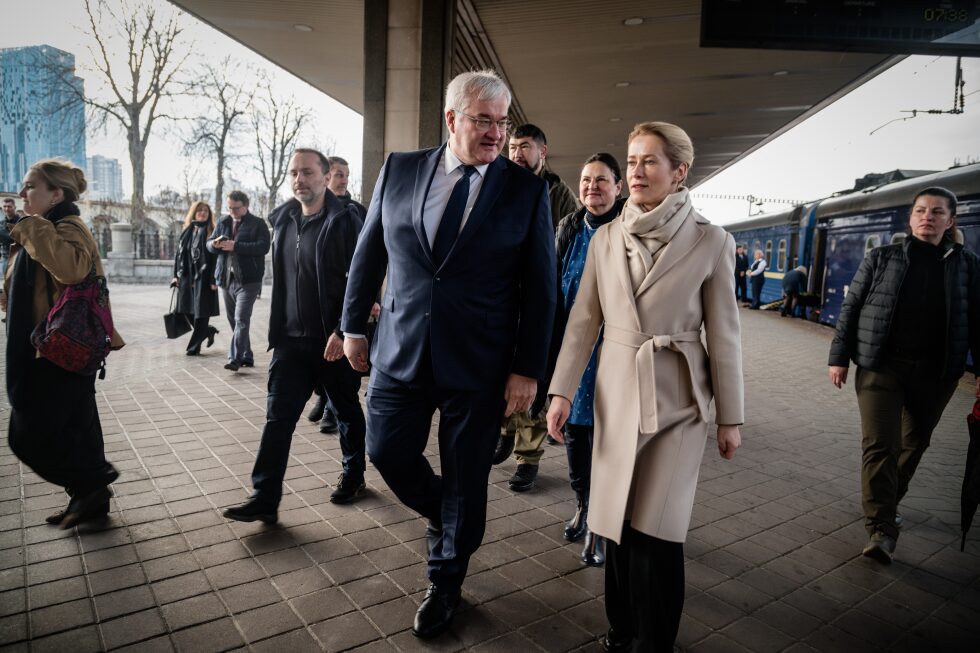
    European diplomatic leaders converged in Kyiv on Tuesday to commemorate the four-year anniversary of the Bucha atrocities, delivering a powerful message of continued support for Ukraine amid stalled peace negotiations and shifting global priorities.

    A delegation comprising 12 European foreign ministers and numerous officials arrived via train to the Ukrainian capital, where they were greeted by Ukrainian Foreign Minister Andrii Sybiha. The somber occasion marked the grim anniversary of the shocking discoveries made when Ukrainian forces liberated Bucha from Russian occupation in spring 2022, uncovering evidence of mass civilian executions during what Russian forces had termed a ‘cleansing operation.’

    With U.S.-mediated peace talks currently suspended and Washington’s attention diverted by Middle East conflicts, European nations are intensifying their focus on what has become Europe’s most significant land warfare in decades. The high-level European presence served as both a symbolic gesture of solidarity and a substantive commitment to pursuing accountability for Russian military actions.

    European Union foreign policy chief Kaja Kallas emphasized the critical importance of establishing comprehensive accountability mechanisms during the visit. “One of the things that is really necessary is accountability. Otherwise, you have revenge and retaliation,” Kallas stated en route to Kyiv. “If you don’t see people doing this to your family held accountable, you will want revenge.”

    The diplomatic mission included discussions focused on reassuring Ukrainian officials of Europe’s unwavering determination to maintain pressure on Russia through both judicial channels and continued military support. Foreign Minister Sybiha characterized the strong European presence as demonstrating that “justice for this and other Russian atrocities is inevitable,” noting that “comprehensive accountability for Russian crimes is vital to restore justice in Europe.”

    With the conflict now entering its fifth year and peace negotiations effectively stalled, European leaders acknowledged their particular responsibility in sustaining international attention on Ukraine’s plight. “We can’t let it slip off the table,” Kallas emphasized. “We are the ones who have to keep this up because nobody else does.”

  • Kosovo in euphoria as they dream of World Cup history

    Kosovo in euphoria as they dream of World Cup history

    In what would represent one of international football’s most remarkable ascents, Kosovo stands on the precipice of qualifying for the 2026 FIFA World Cup merely a decade after gaining official recognition from global football authorities. The nascent national team, ranked 78th globally, will host 23rd-ranked Turkey in a decisive play-off final at Pristina’s sold-out Fadil Vokrri Stadium on Tuesday evening.

    The journey to this pivotal moment has been extraordinary. Following a 4-0 opening defeat to Switzerland in qualification, Kosovo demonstrated remarkable resilience by remaining unbeaten in their subsequent five group matches. This impressive streak included decisive victories over Sweden and strategic draws against Slovenia, ultimately securing their place in the play-offs where they triumphed 4-3 against Slovakia in a thrilling semi-final encounter.

    Head coach Franco Foda emphasized the significance of the occasion while advocating for composure: “We are in euphoria, but we need to play the last game with calm. In that case everything is possible. We have emotional fans, but we must be careful and not allow ourselves to make mistakes.”

    The geopolitical context amplifies the match’s importance. Since declaring independence from Serbia in 2008 and receiving FIFA/UEFA recognition in 2016, Kosovo has pursued international legitimacy through sporting achievement. Qualification would represent not just athletic success but a profound national statement, potentially ranking alongside liberation day (1999) and independence declaration (2008) as historic milestones.

    Kosovo’s squad boasts considerable talent despite its brief international history. Record goalscorer Vedat Muriqi (32 international goals) brings extensive experience from Turkey’s Süper Lig, while players like Fisnik Asllani (Hoffenheim), Arijanet Muric (Sassuolo), and Edon Zhegrova (Juventus) contribute top-flight European experience.

    Turkey presents formidable opposition, having not qualified for the World Cup since their third-place finish in 2002. However, Kosovo has developed a reputation for overcoming expectations, with commentator Arben Berisha noting: “When the draw came out and we saw the opponents, we weren’t very hopeful. Then everything changed and we did something that was unbelievable and unexpected.”

    The potential World Cup group stage would see Kosovo face Australia, Paraguay, and co-hosts United States in North American venues next summer. Beyond sporting considerations, qualification would deliver immense psychological impact to a nation that has endured conflict and continues facing economic challenges, providing what captain Anel Rashkaj described as “the feeling we are strong, that we can make a name in Europe.”

  • Oil prices hold above $100 and Wall Street rebounds as US exchanges strikes with Iran

    Oil prices hold above $100 and Wall Street rebounds as US exchanges strikes with Iran

    Financial markets exhibited a mixed response Tuesday amid escalating military exchanges between the U.S. and Iran, now entering their fifth week of conflict. Wall Street futures indicated a strong opening rebound with S&P 500 and Dow Jones Industrial Average futures both advancing 0.9%, while Nasdaq futures climbed 0.8% in premarket trading.

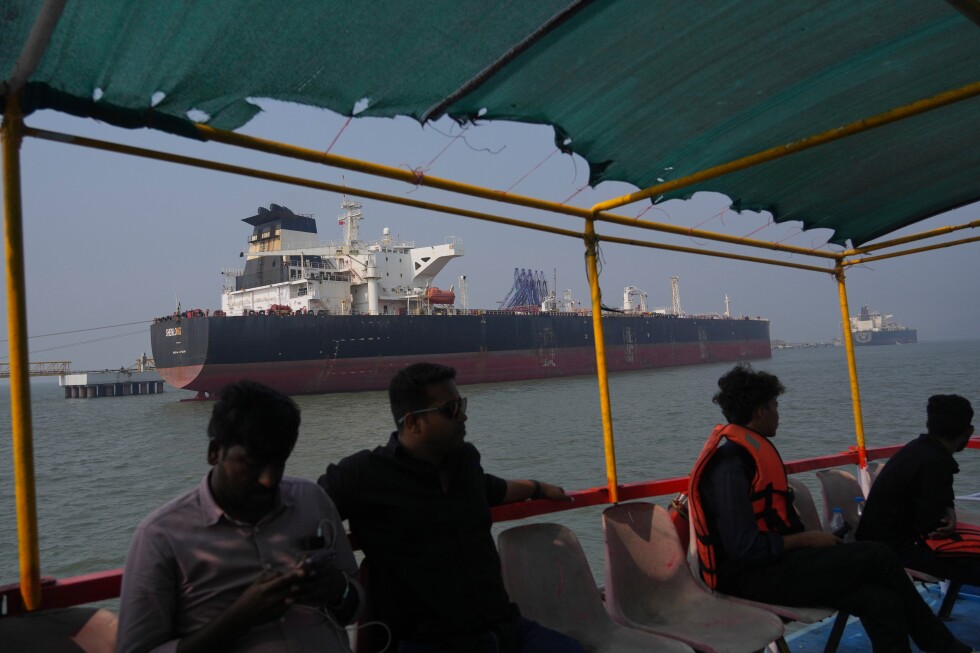
    The geopolitical tensions reached new heights as U.S. strikes targeted a city housing critical Iranian nuclear facilities, generating massive fireballs, while Tehran retaliated with attacks on a fully-loaded Kuwaiti oil tanker in the Persian Gulf. These developments have maintained Brent crude futures at $107.56 per barrel and benchmark U.S. crude at $103.71, sustaining the energy market’s heightened volatility.

    March has witnessed extraordinary energy price inflation with Brent crude surging over 40% since the conflict’s inception on February 28. This has propelled U.S. average gasoline prices beyond $4 per gallon for the first time since 2022, while European inflation accelerated to 2.5% in March from February’s 1.9%.

    The Strait of Hormuz emerges as a critical flashpoint, with approximately 20% of global oil shipments transiting through this strategic waterway. U.S. Secretary of State Marco Rubio confirmed the administration has ‘options available’ regarding Iran’s threats to control the strait, where Tehran has effectively established a ‘toll booth’ operation.

    Global equity markets presented a fragmented picture: European indices showed resilience with Britain’s FTSE 100 gaining 0.9%, France’s CAC 40 rising 0.5%, and Germany’s DAX advancing 0.6%. Conversely, Asian markets struggled as Tokyo’s Nikkei 225 declined 1.6%, effectively erasing its year-to-date gains, while South Korea’s Kospi plummeted 4.3%.

    Corporate developments included McCormick shares jumping 3% on acquisition speculation regarding Unilever’s food division, while Sysco announced a monumental $29 billion acquisition of Jetro Restaurant Depot. Precious metals strengthened with gold rising 0.6% to $4,584.10 per ounce and silver surging 3.7% to $73.17 per ounce, reflecting ongoing safe-haven demand.

  • Huge fires at Russian oil facilities following Ukraine strikes, satellite images show

    Huge fires at Russian oil facilities following Ukraine strikes, satellite images show

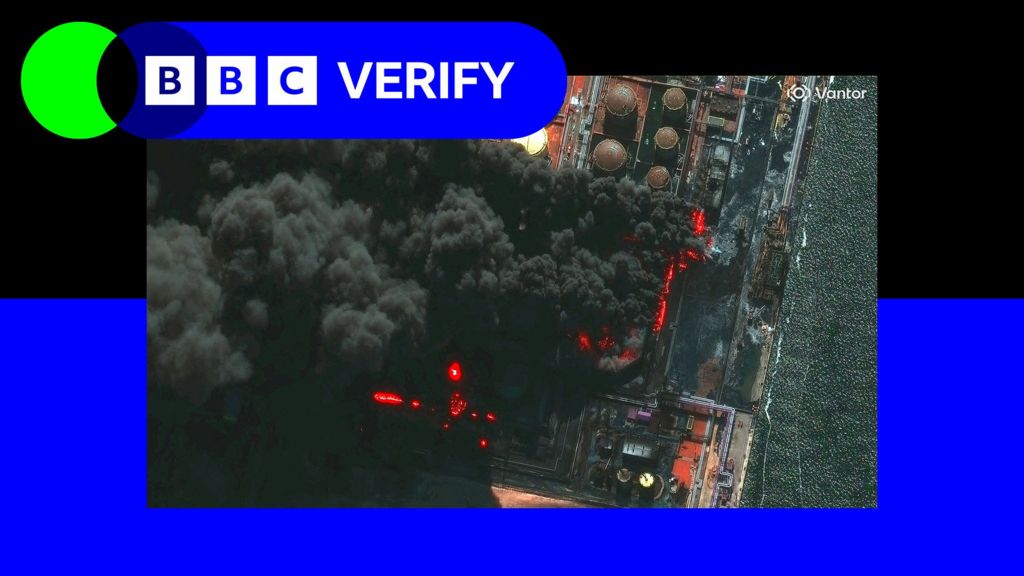
    Ukraine has executed a sophisticated series of drone strikes against Russia’s critical oil export infrastructure in the Baltic Sea region, inflicting significant damage to facilities responsible for nearly half of Russia’s maritime oil exports. Satellite imagery and verified visual evidence confirm coordinated attacks between March 23-28 targeting three strategic locations in Russia’s Leningrad region: the ports of Ust-Luga and Primorsk, along with the inland Kirishi oil refinery.

    The precision strikes, confirmed by BBC Verify through multiple intelligence sources, have resulted in extensive damage to at least eighteen storage tanks across the three facilities. Intelligence firm Vantor captured substantial smoke plumes emanating from Ust-Luga on March 27, while subsequent imagery revealed continuing fires at Primorsk as recently as Monday, contradicting Russian officials’ claims that blazes had been contained.

    According to analysis by the Finland-based Centre for Research on Energy and Clean Air (Crea), the targeted facilities handled 42% of Russia’s total oil exports in 2025, with Primorsk accounting for 22% and Ust-Luga for 20%. The disruption has been severe enough to halt all oil loading operations at Russia’s three Baltic ports for two consecutive days—the first such occurrence since Russia’s full-scale invasion began in 2022.

    Commander Robert Brovdi of Ukraine’s military drone forces stated the operation specifically targeted Russia’s ‘oil arteries, refining capacity and crude export infrastructure’ with the objective of ‘demilitarizing’ resources that support Russia’s military operations. Ukrainian officials emphasize that the Kirishi refinery produces fuels directly supporting Russian armed forces.

    The financial impact has been substantial. Reuters calculations indicate at least 40% of Russia’s oil export capacity was halted following initial attacks, while Crea estimates Russia earned approximately £7.1 billion from oil exports during the final three weeks of March as prices surged due to broader Middle East tensions.

    Ukrainian President Volodymyr Zelensky acknowledged international pressure to scale back energy sector attacks amid global market concerns, but maintained that such operations would continue until Russia ceases targeting Ukraine’s energy infrastructure. Analysts suggest Ukraine’s strategy aims to offset revenue advantages Russia gains from elevated global oil prices, though continued operations may face increasing diplomatic pressure as the conflict persists.

  • Inside the cockpit of RAF tanker during defensive mission against Iranian drones

    Inside the cockpit of RAF tanker during defensive mission against Iranian drones

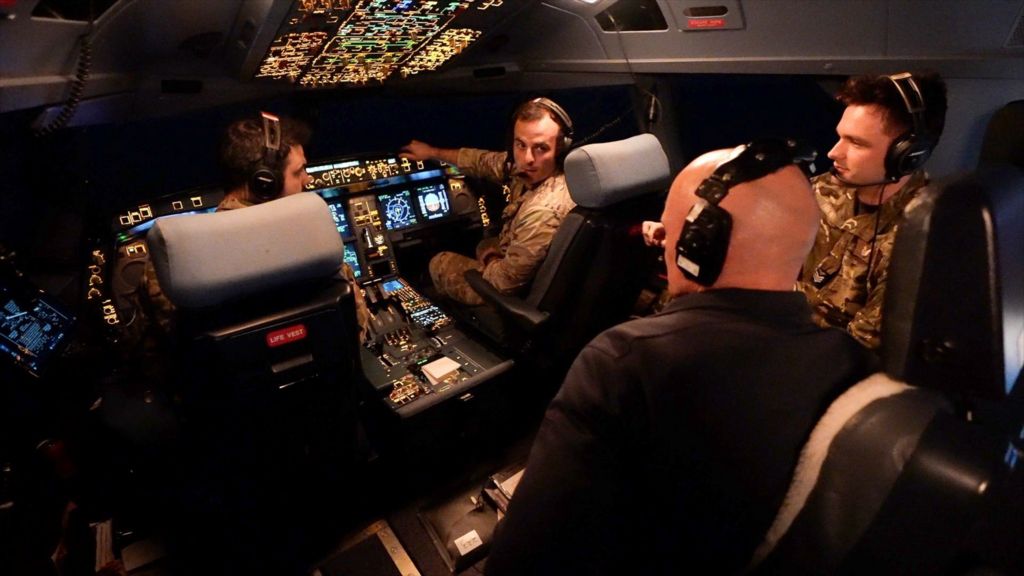
    Under the cover of darkness at RAF Akrotiri in Cyprus, the roar of Typhoon and F-35 fighter jets pierces the night sky, followed by the heavy rumble of their aerial refueling partner—the Voyager tanker aircraft. These sophisticated warplanes have maintained continuous patrols over Cyprus and Jordan for the past month, conducting critical defensive operations against Iranian drone incursions.

    The BBC obtained exclusive aerial access to witness these complex missions firsthand. From the Voyager’s cockpit, journalists observed the shimmering lights of Cyprus fading into the distance as the aircraft approached the coasts of Israel and Lebanon. The crew pointed out brief orange flashes on the horizon—potential evidence of incoming Iranian missiles or Israeli countermeasures, including the Iron Dome defense system.

    During these extended nine-hour missions, fighter jets refuel up to seven times, consuming approximately 30 tonnes of aviation fuel. The delicate mid-air refueling procedure requires precision flying as pilots connect to fuel hoses trailing from the tanker’s wings. While refueling has become routine, the primary challenge remains detecting and neutralizing Iranian drones.

    British jets operating from Cyprus and Qatar have successfully intercepted multiple Iranian drones using advanced ASRAAM missiles, though officials remain discreet about exact engagement numbers. The cost-effectiveness of employing sophisticated missiles against relatively inexpensive fibreglass drones presents ongoing tactical considerations.

    Squadron Leader ‘Bally’, an RAF F-35 pilot, detailed the operational complexities: ‘Operating fast jets is inherently dangerous, particularly when targeting low-flying drones near the surface. Risks include terrain collision and coordinating with multiple aircraft in contested airspace.’

    Despite government assurances about sufficient pre-conflict preparations, the base experienced a drone strike during the war’s second night. A small drone with a two-meter wingspan—likely launched from Lebanon—struck a hangar on the American sector of the base. Base commander Maj Gen Tom Bewick acknowledged the incident but noted minimal damage, suggesting defenders had adequate warning to implement protective measures.

    In response, Akrotiri’s defenses have been significantly enhanced with eight Typhoons, eight F-35s, Wildcat helicopters equipped with short-range air defense missiles, and Merlin helicopters featuring early warning radar systems. The Royal Navy destroyer HMS Dragon now provides additional coastal defense capabilities.

    Gen Bewick publicly acknowledges Iran’s declared targeting of RAF Akrotiri and states the base remains vulnerable to future attacks despite strengthened defenses. Most military families evacuated after the initial attack have now returned, with air raid warnings becoming less frequent due to improved intelligence and detection systems.

    The UK maintains its sovereign control over the base despite diplomatic discussions with Cypriot authorities. The prolonged defensive posture strains British armed forces, diverting resources from other missions including counter-ISIS operations and naval deployments. Military leaders anticipate extended defensive operations, reflecting the region’s historical pattern of prolonged conflicts.

  • Deniz Undav makes his World Cup case for Germany with winning goal in Ghana friendly

    Deniz Undav makes his World Cup case for Germany with winning goal in Ghana friendly

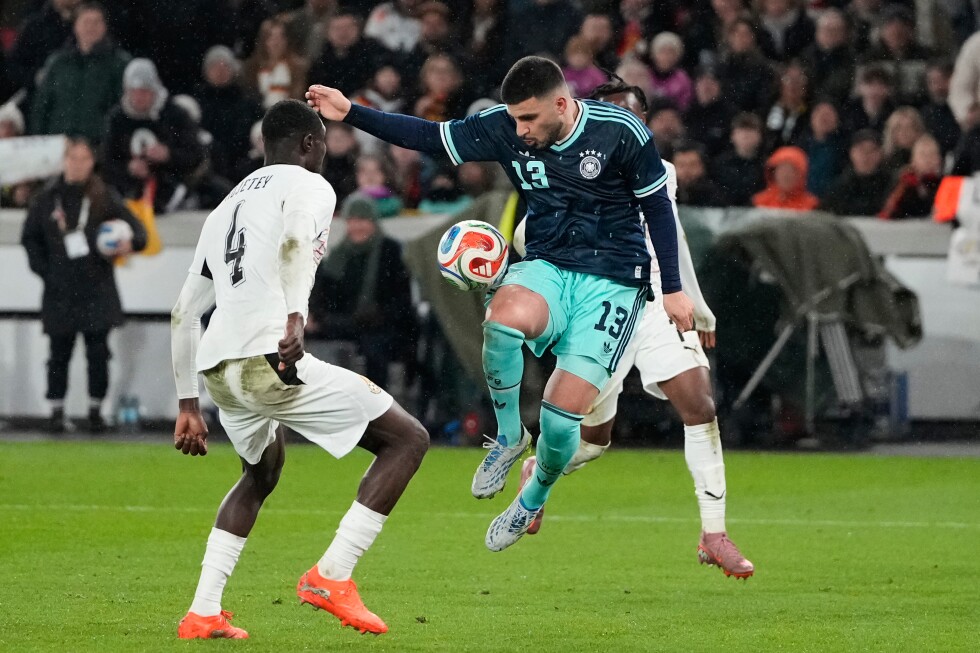
    In a rain-soaked friendly match in Stuttgart, substitute Deniz Undav delivered a dramatic 88th-minute winner to secure Germany a 2-1 victory over Ghana, intensifying pressure on coach Julian Nagelsmann to include him in the upcoming World Cup squad. The match, played at Undav’s home club stadium, saw the Stuttgart forward rewarded for his exceptional club form with a clever chipped finish over Ghana’s goalkeeper just as the game appeared destined for a draw.

    The German lineup featured four changes from their previous outing, including starter Nick Woltemade who struck the crossbar with a second-half header. The hosts initially took the lead just before halftime when Kai Havertz converted a penalty after Jonas Adjetey’s handball offense. Ghana equalized in the 70th minute through a swift counterattack finished by Abdul Fatuwu, with Germany-born Derrick Köhn providing the assist after beating defender Josha Vagnoman.

    The victory extends Germany’s winning streak to seven consecutive matches, though the performance fell short of expectations following their impressive 4-3 victory against Switzerland. The match was marred by an injury to Ghana defender Kojo Peprah Oppong, who required assistance leaving the pitch after challenging Woltemade.

    Both teams continue their World Cup preparations with additional friendlies scheduled. Germany will face Finland in May and co-host the United States in June before competing in Group E against Curacao, Ivory Coast, and Ecuador. Ghana, meanwhile, has now suffered four consecutive friendly defeats and will compete in Group L alongside Panama, England, and Croatia.

  • Most Syrian refugees in Germany expected to return home in three years, Merz says

    Most Syrian refugees in Germany expected to return home in three years, Merz says

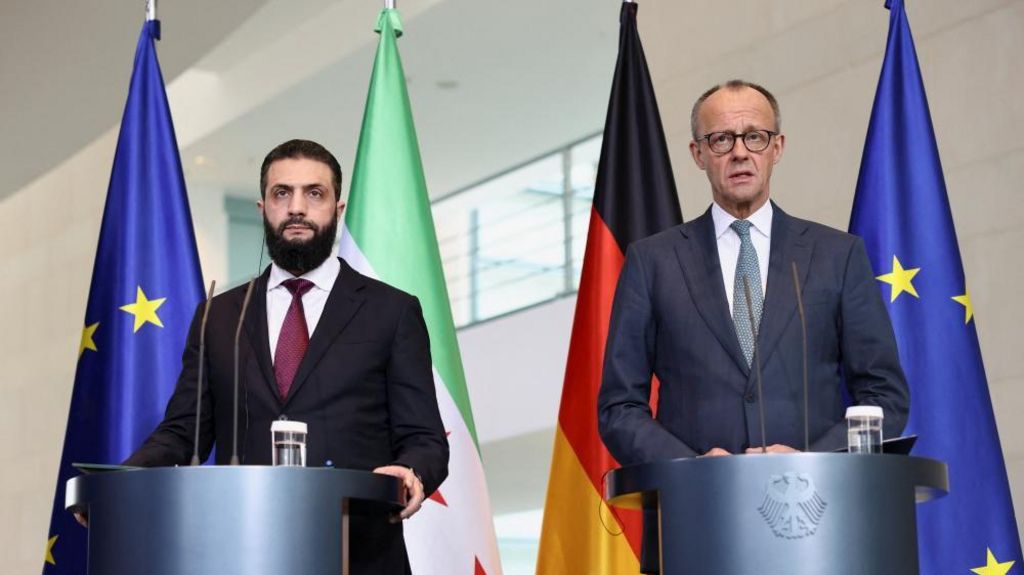
    In a landmark meeting that signals shifting European migration policies, German Chancellor Friedrich Merz and Syrian President Ahmed al-Sharaa convened in Berlin on Monday to announce a comprehensive framework for the repatriation of Syrian refugees. The two leaders revealed an ambitious target: facilitating the return of approximately 80% of Syrians currently residing in Germany within the next three years.

    Chancellor Merz emphasized that Syria’s post-conflict transformation necessitates a fundamental reassessment of protection needs. “The situation in Syria has now changed fundamentally following the conclusion of the civil war,” Merz stated during a joint press conference. “Our initial priority will be returning those who no longer have valid residence rights, particularly criminal offenders, but this will extend to broader populations in subsequent phases.”

    The German leader acknowledged the significant contributions made by Syrian refugees while simultaneously asserting that most express desire to return home and participate in national reconstruction efforts. Merz clarified that exceptions would be made for certain professionals, noting that “it is in our country’s interest that Syrian doctors and carers would be able to remain if they wanted to.”

    President Sharaa expressed profound gratitude for Germany’s hospitality during Syria’s conflict, stating that his nation “would never forget how Germany had opened its doors to refugees during the civil war.” The Syrian leader proposed establishing a circular migration model that would enable Syrians to contribute to reconstruction “without giving up the stability and lives they have built here, for those who wish to stay.”

    The announcement occurs against a backdrop of rising anti-immigration sentiment in Germany, where support for the AfD party has surged significantly. Merz’s government has consequently adopted increasingly stringent refugee policies amid broader European concerns regarding migration management.

    However, the proposal faces substantial opposition from German political factions and human rights organizations. Franziska Brantner of the opposition Green Party challenged the feasibility of large-scale returns, citing Syria’s compromised infrastructure and unstable security situation. “Many Syrians were deeply anchored in Germany,” Brantner noted, “holding systemically important jobs and with children in school.”

    The Kurdish Community in Germany (KGD organized protests during Sharaa’s visit, demanding binding commitments regarding minority protections in Syria. The group has accused the Syrian president of human rights violations and war crimes during the Islamist rebel offensive that toppled former leader Bashar al-Assad in December 2024.

    Despite the official conclusion of Syria’s decade-long civil war, the country remains deeply divided and has experienced recurrent sectarian violence, particularly between government-aligned forces and Kurdish groups in the northeast. Recent attempts at constitutional reform through an interim parliamentary body have faced criticism from Kurdish representatives who allege exclusion from meaningful negotiations and insufficient guarantees for minority rights.

    This development represents a significant evolution from Germany’s 2015 refugee crisis response, when then-Chancellor Angela Merkel declared “Wir schaffen das” (We’ll manage this) while keeping borders open to those fleeing conflict. That policy decision, once viewed as pragmatic, ultimately became a political liability that fueled the rise of anti-immigration parties across Europe.

  • International observers urge violence-free elections after clashes at Serbia vote

    International observers urge violence-free elections after clashes at Serbia vote

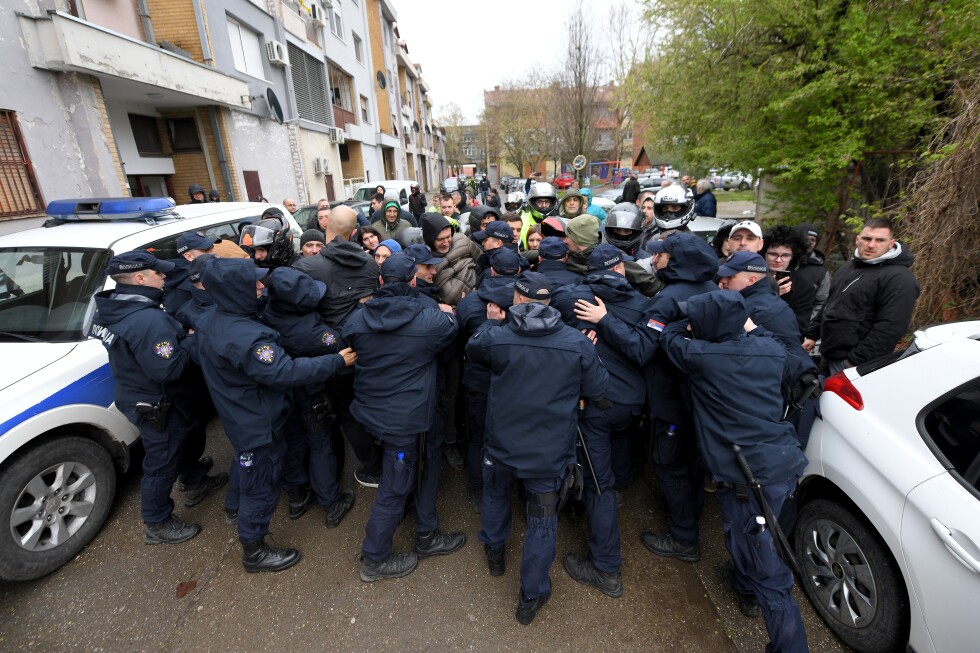
    BELGRADE, Serbia — International election monitors have issued a damning assessment of Serbia’s municipal elections, documenting widespread violence, voter intimidation, and procedural irregularities that marred the democratic process. The Congress of Local and Regional Authorities of the Council of Europe reported that while voting procedures inside polling stations were largely compliant, the environment outside was characterized by alarming acts of aggression and coercion.

    According to the official observer statement, monitors witnessed ‘acts of violence’ and ‘the threatening presence of large groups of people, often unidentified and sometimes masked’ in nearly all visited municipalities. The elections, held across 10 Serbian towns on Sunday, represented a critical test for President Aleksandar Vucic’s administration following over a year of youth-led protests challenging his authoritarian governance.

    Despite the turbulent circumstances, Vucic has claimed comprehensive victory for his right-wing populist Serbian Progressive Party in all contested municipalities. The president personally led the campaign effort, seeking to reassert his political dominance after protests triggered by a November 2024 train station tragedy in northern Serbia.

    Violent incidents erupted in at least three towns, with student activists and independent observers reporting attacks by masked supporters of Vucic. The president’s party conversely accused opposition groups of instigating conflicts. International monitors emphasized that ‘violence and coercion are unacceptable barriers to the free expression of the will of all voters’ and that ‘no voter should feel threatened when exercising his or her democratic right.’

    Additional concerns included serious breaches of voting secrecy, with numerous voters photographing their ballots—a practice that monitors described as ‘highly worrying.’ The pre-election period was characterized by extreme polarization and focus on national rather than local issues.

    Serbian independent monitoring organization CRTA (Center for Research, Transparency and Accountability) corroborated the international assessment, documenting scores of violent incidents and voting irregularities. The group stated that the proceedings ‘can hardly be called an election,’ citing organized voting violations, physical altercations involving state institution employees, and the deployment of riot police in several locations.

    Jovana Djurbabic of CRTA told The Associated Press: ‘The whole atmosphere was marked with high intensity of tensions, violence, pressures. I would not call these elections free, they are not free at all.’

    The electoral controversy has further strained regional relations, with Vucic alleging ‘logistical support’ to his opponents from neighboring Croatia. In response, Croatian President Zoran Milanovic canceled an upcoming regional meeting scheduled for May, stating that hosting Vucic would be ‘impossible’ following his inflammatory comments. Milanovic’s office stated that Vucic’s ‘political statements and actions…inflict damage on relations between the states and jeopardize peace and stability in southeastern Europe.’

    The tensions reflect historical animosities dating to the 1991-95 Croatian War of Independence, during which Serbia backed a Croatian Serb rebellion that resulted in over 10,000 casualties.

  • Zelensky says allies asked him to scale back attacks on Russian energy

    Zelensky says allies asked him to scale back attacks on Russian energy

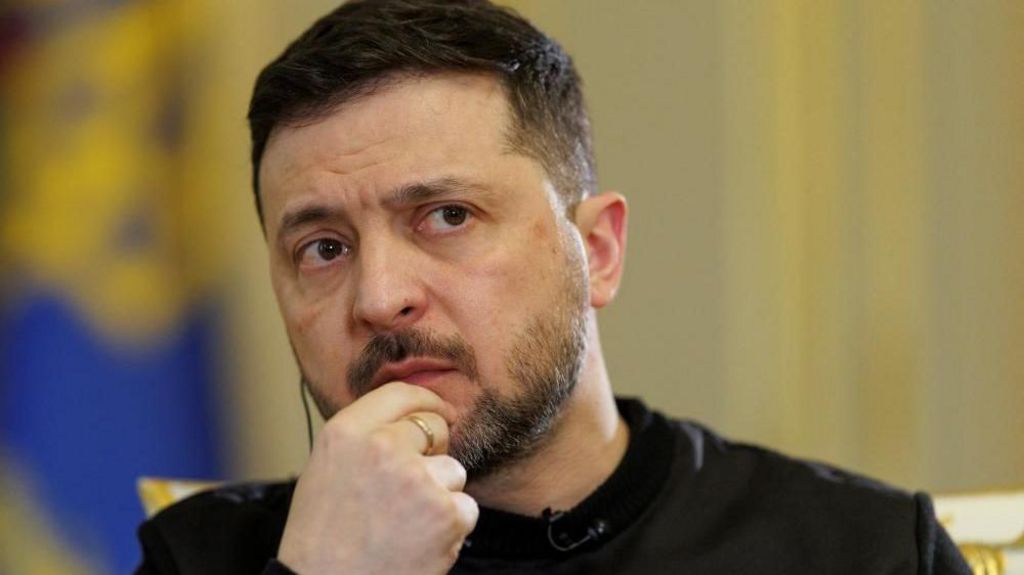
    Ukrainian President Volodymyr Zelensky has revealed that international partners have privately urged Kyiv to reduce its targeted strikes on Russian energy infrastructure amid growing global fuel concerns. In a WhatsApp voice message to journalists, Zelensky stated these appeals would only be honored if Moscow reciprocally ceased attacks on Ukraine’s energy facilities.

    The president framed Ukraine’s ongoing campaign against Russian oil terminals and refineries as proportional retaliation, emphasizing that ‘if Russia is ready not to strike Ukraine’s energy, then we’ll respond by not attacking theirs.’ This declaration follows Ukraine’s successful long-range drone operations against critical Russian energy assets, including the significant Ust-Luga export terminal near St. Petersburg, which reportedly lost 60% of its operational capacity.

    While Zelensky didn’t identify specific nations requesting de-escalation, global energy dependencies reveal potential stakeholders. According to CREA research, China and India collectively purchased 85% of Russia’s crude oil exports in February, while the European Union remains the primary consumer of Russian gas (34%) and liquefied natural gas (49%).

    The global energy landscape has grown increasingly volatile following Iran’s effective closure of the Strait of Hormuz and subsequent U.S. sanctions adjustments on Russian oil. These developments have driven price surges that simultaneously fund Russia’s war economy while threatening Ukraine’s military capabilities.

    During his recent diplomatic tour of Saudi Arabia, UAE, Qatar, and Jordan, Zelensky offered Ukraine’s drone technology expertise in exchange for enhanced air defense support. He also highlighted Ukraine’s successful grain corridor experience as potential leverage for resolving Hormuz shipping disruptions.

    Meanwhile, Ukraine’s energy infrastructure suffers catastrophic damage from Russian attacks, with over one million citizens experiencing winter power and heating outages. The nation now depends heavily on fuel imports through Poland, Greece, Lithuania, and Turkey after Hungarian supplies were suspended amid pipeline dispute allegations.

  • Spanish bishops and government sign deal for compensation of church sexual abuse victims

    Spanish bishops and government sign deal for compensation of church sexual abuse victims

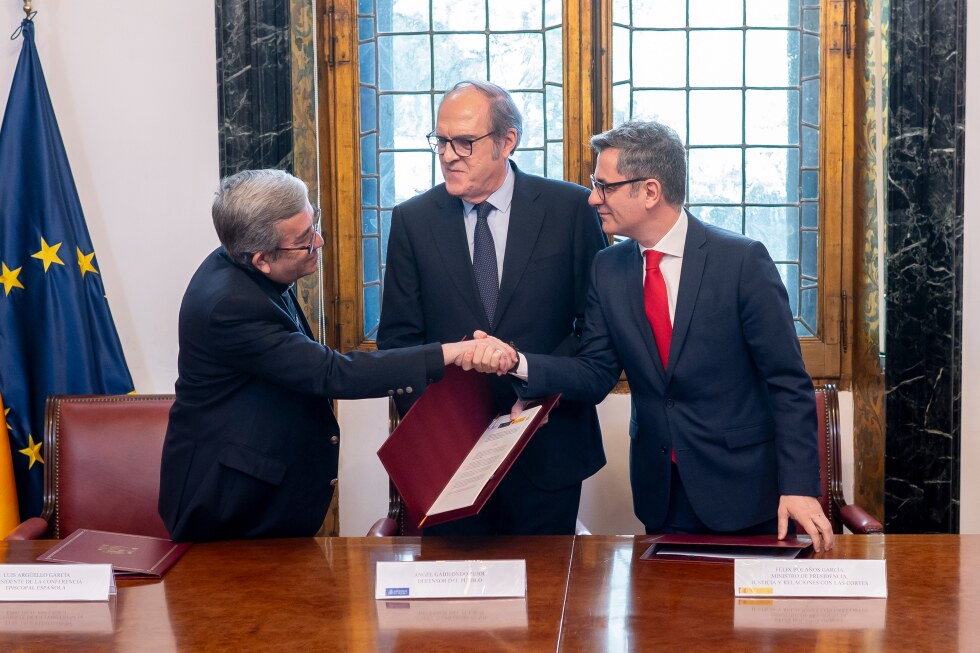
    In a landmark development for victim compensation, Spanish authorities and Catholic bishops have formalized an unprecedented agreement establishing a state-supervised reparations system for clergy sexual abuse cases. The agreement, signed Monday, creates a unique framework where Spain’s ombudsman holds ultimate authority in determining compensation for victims whose cases fall outside statutory limitations or involve deceased perpetrators.

    The innovative system, set to commence operations on April 15th, represents a significant concession by Spain’s Catholic hierarchy following criticism of the church’s initial internal compensation proposal. Unlike conventional compensation programs in other Western European nations, Spain’s approach notably incorporates direct state involvement through the Justice Ministry and ombudsman’s office.

    Archbishop Luis Argüello, president of the Spanish Episcopal Conference, emphasized the deliberate exclusion of predetermined compensation scales from the agreement. “We’ve intentionally omitted references to specific amounts or ranges,” Argüello stated. “The focus remains on establishing appropriate evaluation mechanisms rather than fixed monetary values.”

    Justice Minister Félix Bolaños characterized the agreement as a world-first model where “the state maintains final authority while the church bears financial responsibility for victim reparations.” The system will assess compensation on case-by-case basis, considering factors including abuse severity, victim age at time of abuse, and recurrence patterns.

    This development marks Spain’s ongoing confrontation with historical clergy abuse patterns, accelerated by El País newspaper’s investigative reporting and a comprehensive 2023 ombudsman’s report that documented 487 cases while estimating potential victims might number in hundreds of thousands. Church authorities have contested these figures, maintaining their internal investigation identified 728 abusive clergy since 1945, with 60% now deceased and most incidents occurring pre-1990.

    The operational protocol enables victims to submit petitions through the Justice Ministry, which forwards cases to the ombudsman for evaluation and compensation recommendations. A church committee then reviews these proposals, with disputed cases advancing to a joint committee comprising church representatives, ombudsman officials, and victim association delegates. The ombudsman’s determination becomes binding if consensus cannot be reached.