标签: Europe

欧洲

  • Hungary’s MOL to buy Serbia’s Russia-owned NIS oil company if US approves

    Hungary’s MOL to buy Serbia’s Russia-owned NIS oil company if US approves

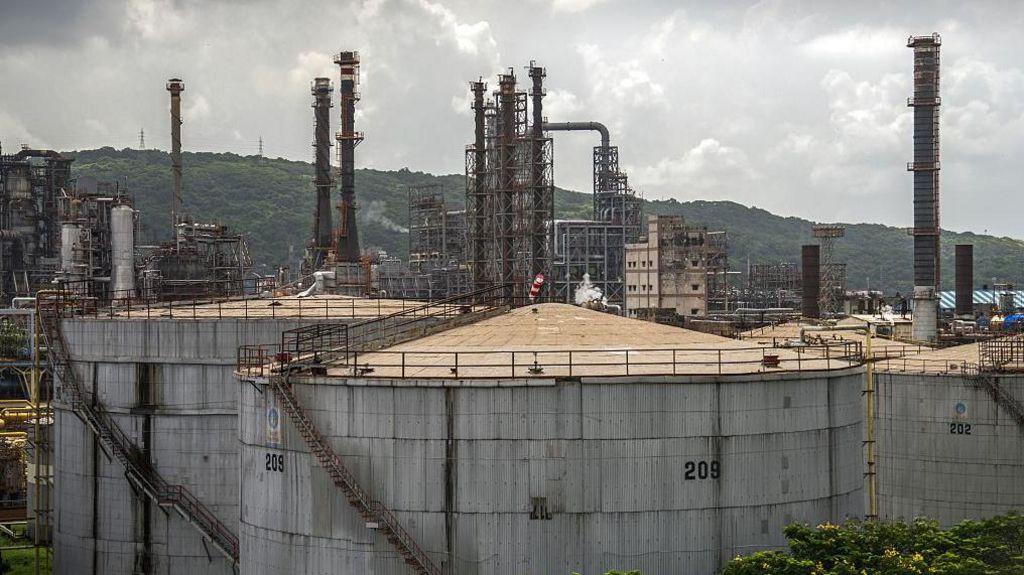
    In a significant development for Central European energy markets, Hungary’s MOL Group has announced a preliminary agreement to purchase a controlling 56.15% stake in Serbia’s primary oil supplier, Naftna Industrija Srbije (NIS), currently owned by Russia’s Gazprom Neft. The transaction, disclosed on Monday, requires explicit approval from the U.S. Office of Foreign Assets Control (OFAC) due to existing American sanctions against the Russian-owned company.

    The acquisition would substantially expand MOL Group’s regional footprint, granting control over Serbia’s sole oil refinery and nearly its entire petroleum market. Company Chairman and CEO Zsolt Hernadi emphasized the strategic importance, stating, “As a reliable regional energy provider, we would like to contribute to the development of Central and Southeastern Europe.”

    Concurrently, MOL is negotiating with Abu Dhabi National Oil Company (ADNOC) of the United Arab Emirates regarding potential minority shareholder participation. Serbian Energy Minister Dubravka Djedovic Handanovic confirmed the arrangement would increase Serbia’s stake in NIS by 5%, elevating its ownership from 29.87% to 34.87%.

    The proposed deal occurs against a complex geopolitical backdrop. Washington imposed sanctions on NIS in 2022 as part of broader measures targeting Russia’s energy sector, with these restrictions taking effect last October. OFAC has granted NIS a license to negotiate the sale until March 24, with the parties aiming to finalize the purchase agreement by March 31.

    Serbia’s position remains diplomatically delicate as the nation pursues European Union membership while maintaining strong ties with Moscow and refusing to implement Western sanctions against Russia following its invasion of Ukraine. Serbia originally sold the majority stake in NIS to Russia in 2008.

  • Italian fashion designer Valentino dies aged 93

    Italian fashion designer Valentino dies aged 93

    The fashion world mourns the passing of Italian design maestro Valentino Garavani, who died peacefully at his Roman residence on January 20th at age 93. Surrounded by family members, the legendary couturier’s departure marks the end of an era for haute couture. The Valentino Garavani and Giancarlo Giammetti Foundation confirmed the news through an official Instagram statement, announcing public viewings would be held at Piazza Mignanelli on January 21-22, followed by a funeral service at the Basilica of Saint Mary of the Angels and Martyrs.

    Born in Lombardy during May 1932, Valentino revolutionized twentieth-century fashion with his distinctive vision of luxury and opulence. His designs became synonymous with aristocratic elegance, characterized by lavish fabrics, meticulous craftsmanship, and his signature ‘Valentino red’—a vibrant crimson hue inspired by Spanish cultural aesthetics. The iconic fiesta dress, debuted in his groundbreaking collection, propelled the Valentino fashion house to international acclaim following its 1960 co-founding.

    Throughout his illustrious career, Valentino dressed generations of style icons from Jacqueline Kennedy Onassis and Elizabeth Taylor to contemporary Hollywood stars including Julia Roberts, Gwyneth Paltrow, and Jennifer Lopez. His designs consistently embodied red-carpet glamour rather than utilitarian fashion, with former British Vogue editor Alexandra Shulman noting his creations represented ‘fabulous gowns’ rather than office attire.

    Valentino’s recent recognition with the Outstanding Achievement Award at the December 2023 British Fashion Awards underscored his enduring influence. Despite evolving fashion trends, the designer maintained his commitment to classical beauty and refined elegance, cultivating lifelong relationships with celebrity clients. His final 2007 collection featured an all-red finale, paying homage to the color that defined his six-decade legacy.

  • Bulgaria’s left-leaning president Rumen Radev says he is stepping down

    Bulgaria’s left-leaning president Rumen Radev says he is stepping down

    In an unprecedented move that reshapes Bulgaria’s political landscape, President Rumen Radev declared his resignation during a nationally televised address on Monday. The left-leaning head of state announced his intention to formally submit his resignation to the Constitutional Court on Tuesday, marking the first presidential resignation in Bulgaria’s post-communist history.

    Under constitutional provisions, Vice President Iliana Yotova is poised to assume presidential duties following parliamentary confirmation, serving through the remainder of the government’s mandate. Radev’s dramatic departure occurs against the backdrop of escalating political instability within the European Union and NATO member nation, which has been grappling with persistent governance challenges.

    The resignation follows massive anti-corruption demonstrations that recently toppled the governing coalition led by the center-right GERB party. Subsequent attempts to establish a new administration within the existing parliament have proven unsuccessful, pushing the country toward its eighth parliamentary election since 2021.

    Radev, a 62-year-old former Air Force general whose second term was scheduled through 2026, has consistently positioned himself as a vocal adversary of GERB leader Boyko Borissov and sanctioned oligarch Delyan Peevski. While not explicitly detailing his future plans during Monday’s address, Radev has previously hinted at potential electoral participation and advocated for a new political entity that would ‘unite all democrats—left and right’ in pursuit of fair elections and democratic development.

    In his emotionally charged farewell, Radev proclaimed: ‘The battle for the future of our homeland lies ahead, and I believe we will face it together with all of you—the worthy, the inspired, and the unyielding! We are ready. We can, and we will succeed!’

  • Valentino, fashion designer to the jet set, dies aged 93 in Rome

    Valentino, fashion designer to the jet set, dies aged 93 in Rome

    ROME — The fashion world mourns the passing of Valentino Garavani, the legendary Italian couturier whose iconic ‘Valentino red’ gowns defined high glamour for nearly five decades. The Valentino Foundation confirmed his peaceful passing at his Rome residence on Monday at age 93.

    In an official statement, the foundation celebrated his enduring legacy: “Valentino Garavani served not merely as a guiding force and inspiration, but as a genuine beacon of creativity, vision, and luminous artistry.”

    Public visitation will be held at the foundation’s Roman headquarters Wednesday and Thursday, followed by Friday’s funeral service at the historic Basilica Santa Maria degli Angeli e dei Martiri in Piazza della Repubblica.

    Known universally by his first name, Valentino cultivated an unparalleled clientele spanning generations of royalty, first ladies, and Hollywood elite. From Jacqueline Kennedy Onassis to Julia Roberts and Jordan’s Queen Rania, his creations became synonymous with red-carpet perfection. “I understand what women desire,” he famously noted. “They wish to feel beautiful.”

    Throughout his career from 1960s Rome to his 2008 retirement, Valentino eschewed transient trends in favor of timeless elegance. His design philosophy centered on feminine sophistication through signature elements: exquisite bows, delicate ruffles, intricate lacework, and lavish embroidery.

    His sartorial mastery made Valentino the undisputed champion of awards season fashion. Memorable moments include Julia Roberts’ vintage black-and-white column dress at the 2001 Oscars and Cate Blanchett’s butter-yellow silk gown at the 2004 Academy Awards. He also designed Jacqueline Kennedy’s iconic lace wedding dress for her 1968 marriage to Aristotle Onassis.

    Beyond his fashion empire, Valentino embodied the jet-set lifestyle he dressed—maintaining homes across four countries, a 46-meter yacht, and an impressive art collection featuring Picasso and Miró. His 17th-century French château boasted gardens containing over a million roses.

    Born May 11, 1932, in Voghera, Italy, Valentino credited early cinema exposure for inspiring his fashion journey. After formal training in Milan and Paris, he apprenticed under Jean Desses and Guy Laroche before establishing his eponymous label on Rome’s Via Condotti in 1959.

    Business partner Giancarlo Giammetti managed commercial operations while Valentino charmed an international clientele. Despite initial financial challenges due to extravagant tastes, the brand rapidly gained traction among icons including Sophia Loren, Elizabeth Taylor, and Audrey Hepburn.

    The fashion house evolved to include ready-to-wear, menswear, and accessories before Valentino and Giammetti sold it for approximately $300 million in 1998. Valentino remained creative director until his spectacular 45th-anniversary celebration in 2007—a three-day Roman extravaganza culminating in a gala at Villa Borghese.

    Following his 2008 retirement, creative direction passed through several hands before current ownership by Qatar’s Mayhoola (70%) and Kering (30%). The brand continues to honor his legacy while evolving under new leadership.

    Valentino’s contributions have been honored through major retrospectives, including exhibitions at Paris’ Musée des Arts Décoratifs and the acclaimed 2008 documentary “Valentino: The Last Emperor.” In 2011, he launched a digital archive allowing virtual access to 300 signature designs.

  • ‘Europe is at a total loss’: Russia gloats over Greenland tensions

    ‘Europe is at a total loss’: Russia gloats over Greenland tensions

    In a remarkable geopolitical alignment, Russian state media has emerged as an unexpected champion of former President Donald Trump’s controversial pursuit of Greenland. The official government newspaper Rossiyskaya Gazeta has published extensive praise for Trump’s territorial ambitions while simultaneously criticizing European allies who oppose the potential annexation.

    The publication characterizes Trump’s push for Greenland as a “historic breakthrough” that would cement American greatness. The article suggests that acquiring the autonomous Danish territory would represent Trump’s “greatest deal” and elevate him to the status of historic figures like Abraham Lincoln. According to their analysis, US control of Greenland would expand American territory to become the world’s second-largest nation after Russia, surpassing Canada in total area.

    Russian commentary explicitly encourages Trump to pursue rapid annexation before the 2026 midterm elections, warning that backtracking would weaken Republican political standing. This endorsement comes despite Trump’s own rhetoric portraying Russia and China as aggressive actors in the Arctic region, claiming their military presence necessitates US control of Greenland.

    Analysts observe that Moscow’s support stems from strategic calculations rather than genuine admiration. The Greenland controversy has created significant strain within NATO and the transatlantic alliance, with Trump threatening tariffs against European nations that oppose his territorial ambitions. Russian tabloid Moskovsky Komsomolets openly expressed satisfaction with European disarray, noting “it’s a pleasure to watch this” development.

    Furthermore, pro-Kremlin commentators are leveraging the Greenland situation to justify Russia’s ongoing war in Ukraine. Moscow perceives that maintaining positive relations with the Trump administration supports its primary objective of achieving victory in Ukraine. This calculated endorsement reflects Russia’s broader strategy of exploiting divisions within Western alliances to advance its geopolitical interests.

  • As faith in the US fades a year into Trump 2.0, Europe breaks with reliance on American security

    As faith in the US fades a year into Trump 2.0, Europe breaks with reliance on American security

    BRUSSELS — European leaders are confronting an unprecedented crisis in transatlantic relations as the Trump administration’s second term accelerates a dramatic recalibration of NATO alliances. The diplomatic rupture has intensified following President Trump’s threat to impose tariffs against nations opposing U.S. control over Greenland, with EU officials characterizing the move as “intimidation,” “threats,” and “blackmail.”

    The geopolitical landscape has fundamentally shifted since Trump’s return to power twelve months ago, with European confidence in American partnership deteriorating rapidly. The previously inconceivable notion that NATO’s most powerful member would threaten territorial seizure from an ally has triggered profound strategic reassessments across European capitals.

    Former NATO Secretary-General Jens Stoltenberg’s memoir reveals the alliance nearly reached collapse during Trump’s first term, noting: “I feared that NATO was about to stop functioning” after the 2018 summit crisis. This fragility has resurfaced with greater intensity, as Danish Prime Minister Mette Frederiksen explicitly warned that any attempted annexation of semiautonomous Greenland would terminate bilateral relations, including NATO cooperation.

    Maria Martisiute, European Policy Centre analyst, states: “We are at the very early stage of a rather deep political-military crisis. There is greater realization, even though political leaders will not like to admit it, that America has abandoned NATO.”

    The transformation became evident in early 2025 when U.S. Defense Secretary Pete Hegseth delivered a stark ultimatum at NATO headquarters: European allies must assume primary responsibility for regional security without expecting American assistance. The policy shift included halting Ukraine’s NATO membership prospects, accepting Russian territorial gains, and withdrawing security guarantees for European forces operating in Ukraine.

    Concurrently, the Trump administration has embraced a new national security strategy that characterizes European allies as weak, offers tacit support to far-right political movements, and criticizes European policies on free speech and migration. This approach has accelerated European moves toward strategic autonomy.

    The EU has established a multibillion-euro defense fund prioritizing European arms manufacturers, relaxed debt constraints for security spending, and committed to funding Ukraine’s military and economic needs for the next two years. Last week’s deployment of French, German, British, Norwegian, Swedish, and Dutch troops to Greenland—though small in scale—carried significant symbolic weight as a demonstration of European resolve.

    French President Emmanuel Macron articulated the shifting paradigm: “Europe is being shaken from some of its certainties. It sometimes has allies that we thought were predictable, fearless, always by our side, who are now causing us to doubt a lot, or are even turning against those who expected it the least.”

    As European leaders work to develop an independent security strategy, German Chancellor Friedrich Merz acknowledges the necessity for Europe to become “much more independent” from the United States in response to escalating global threats. This strategic decoupling, driven by American unpredictability and renewed Russian hostility, marks the most significant transformation in transatlantic relations since NATO’s founding.

  • Diplomacy or retaliation? The EU mulls its options as tensions with U.S. rise over Greenland

    Diplomacy or retaliation? The EU mulls its options as tensions with U.S. rise over Greenland

    European leaders are coordinating emergency response strategies following President Donald Trump’s unexpected announcement of punitive tariffs targeting eight European nations. The unprecedented measure, tied explicitly to U.S. ambitions to acquire Greenland, has triggered the most significant transatlantic trade crisis in recent years.

    During a weekend statement from his Florida golf club, President Trump declared impending 10% tariffs on imports from Denmark, Norway, Sweden, France, Germany, the United Kingdom, Netherlands, and Finland. These tariffs would escalate to 25% by June 1st absent a negotiated agreement for the “Complete and Total purchase of Greenland” by the United States.

    The European Commission convened emergency diplomatic sessions in Brussels, with representatives condemning the move as economic coercion. European Commission spokesperson Olof Gill stated while emphasizing restraint: “Our priority is to engage, not escalate. The EU has tools at its disposal and is prepared to respond should the threatened tariffs be imposed.”

    Analysts identify three primary countermeasures available to the EU: symmetrical tariff implementation, suspension of the nascent EU-U.S. trade agreement framework, and deployment of the recently established Anti-Coercion Instrument (ACI) – a mechanism designed specifically to address economic pressure campaigns. The ACI, created following China’s trade restrictions against Lithuania, represents the bloc’s most powerful trade defense capability, though its implementation remains contentious among member states.

    The timing coincides with critical diplomatic gatherings, including the World Economic Forum in Davos and an emergency EU summit on transatlantic relations scheduled for Thursday. European leaders have unanimously declared that tariff implementation would violate existing trade agreements and undermine diplomatic relations.

    Concurrently, the EU is accelerating trade diversification efforts, finalizing agreements with Mercosur nations, Indonesia, and Japan while advancing negotiations with the United Arab Emirates and India. Commission officials characterize these developments as strategic victories amid global economic uncertainty, with the India agreement alone potentially encompassing nearly two billion people.

    French President Emmanuel Macron captured the European consensus, stating: “Tariff threats are unacceptable and have no place in this context. Europeans will respond in a united and coordinated manner should they be confirmed. We will ensure that European sovereignty is upheld.”

  • Swiss deadly fire bar owners’ lawyers condemn ‘vindictiveness’

    Swiss deadly fire bar owners’ lawyers condemn ‘vindictiveness’

    The legal representatives for proprietors of a Swiss nightclub where a catastrophic New Year’s Eve blaze claimed 40 lives and left 116 injured have publicly addressed allegations, denouncing what they characterize as widespread misinformation about their clients. Jacques and Jessica Moretti, owners of Le Constellation bar in the upscale ski destination Crans-Montana, are reportedly ‘devastated’ by the incident but maintain they were unaware of any potential hazards within their establishment.

    Preliminary investigative reports indicate the fire originated from sparklers attached to champagne bottles that ignited highly flammable acoustic foam installed in the basement ceiling. Swiss authorities have confirmed the venue had not been subjected to mandatory safety inspections for half a decade.

    The tragedy predominantly affected young patrons, with eight victims being under 16 years of age. Many survivors continue to receive hospital treatment for severe burn injuries.

    Legal counsel Yaël Hayat condemned what she described as ‘public vindictiveness’ against the Morettis, specifically refuting claims that Jessica abandoned the scene with cash proceeds. ‘She remained onsite providing assistance to the injured,’ Hayat asserted during media briefings.

    Co-defense attorney Patrick Michod distinguished between emotional responsibility and legal culpability, noting his client sourced the acoustic foam from a major retailer without being informed of its combustible properties. ‘The intention was to install acoustic treatment, not highly flammable material,’ Michod emphasized.

    Contradicting these statements, representatives for deceased staff member Cyane Panine revealed she had received no safety training and was unaware of the ceiling’s fire hazard. Hayat subsequently characterized Panine as a close family friend, presenting a heartfelt postcard expressing her affection for the couple.

    The Morettis currently face charges including negligent manslaughter, negligent bodily harm, and negligent arson. Judicial authorities have imposed travel restrictions on Jessica Moretti and detained Jacques Moretti for 90 days pending investigation, citing flight risk concerns with proposed bail set at 400,000 Swiss francs.

  • How could Europe respond to Trump’s Greenland tariffs?

    How could Europe respond to Trump’s Greenland tariffs?

    A fresh transatlantic trade confrontation has erupted following former President Donald Trump’s unexpected ultimatum to eight European nations regarding Greenland. On Saturday, Trump threatened to impose escalating tariffs—starting at 10% on February 1st and potentially rising to 25% by summer—unless these countries support his administration’s initiative to purchase Greenland.

    The targeted nations include major EU economies France and Germany, alongside the UK, Denmark, Norway, Sweden, Netherlands, and Finland. European leaders have responded with firm opposition, with the European Commission vowing to protect the bloc’s economic interests through available mechanisms.

    This development jeopardizes the fragile trade détente established less than six months ago when European Commission President Ursula von der Leyen negotiated a reduction of threatened US tariffs from 30% to 15% on EU exports. That agreement, which was scheduled for European Parliament ratification next week, now faces suspension according to influential German MEP Manfred Weber.

    Without formal approval or extension of the current suspension, previously prepared EU counter-tariffs totaling €93 billion on American goods—ranging from livestock to aircraft parts and whiskey—will automatically activate on February 7th. This would create significant political pressure on Trump from US exporters facing European market restrictions.

    The EU’s most powerful trade weapon, the Anti-Coercion Instrument (ACI), represents a potential nuclear option. This mechanism allows the bloc to impose comprehensive trade and financial restrictions while bypassing international treaties, effectively blocking access to the single market. However, deploying the ACI involves a lengthy process—potentially exceeding one year—and risks substantial economic collateral damage to EU members themselves.

    Meanwhile, UK Prime Minister Keir Starmer has adopted a conciliatory stance, explicitly rejecting immediate retaliatory measures and emphasizing that “a tariff war is in nobody’s interests.” Alternative options under consideration include expanding the Digital Services Tax, which could impact major US tech corporations like Amazon and Meta.

    The legal foundation of Trump’s tariff strategy remains uncertain, with the US Supreme Court poised to rule on whether the former president overstepped his authority by implementing taxes through the International Emergency Economic Powers Act.

  • Pro-Greenland protesters mock Trump’s MAGA slogan with ‘Make America Go Away’ caps

    Pro-Greenland protesters mock Trump’s MAGA slogan with ‘Make America Go Away’ caps

    COPENHAGEN, Denmark — A wave of creative resistance has swept through Denmark as citizens respond to U.S. President Donald Trump’s expressed interest in acquiring Greenland. The movement has found its symbol in parody baseball caps that transform Trump’s iconic “Make America Great Again” slogan into “Make America Go Away.”

    These satirical accessories, created by Copenhagen vintage store owner Jesper Rabe Tonnesen, have evolved from commercial failure to cultural phenomenon following the Trump administration’s serious overtures toward the autonomous Danish territory. What began as a limited run last year has exploded into a nationwide statement, with thousands of caps now in production to meet surging demand.

    The headwear has appeared at public demonstrations, including a weekend protest in freezing temperatures outside Copenhagen City Hall, where participants waved Danish and Greenlandic flags while carrying signs with messages like “No Means No” and “Make America Smart Again.”

    European governments have formally rallied behind Denmark, emphasizing Arctic security concerns and the importance of respecting territorial sovereignty. Meanwhile, Danish citizens have adopted a more direct approach to expressing their disapproval. “I want to show my support to Greenland and also show that I don’t like the president of the United States,” stated 76-year-old Copenhagen resident Lars Hermansen, who participated in the weekend demonstration.

    Tonnesen, 58, described his motivation: “When a delegation from America went up to Greenland, we started to realize this probably wasn’t a joke—it’s not reality TV, it’s actually reality. So I said, OK, what can I do? Can I communicate in a funny way with a good message and unite the Danes?”

    The movement has also produced linguistic creativity with an alternative design featuring the phrase “Nu det NUUK!”—a clever play on words that replaces the Danish expression “Nu det nok” (meaning “Now it’s enough”) with the name of Greenland’s capital city.

    Protesters maintained a balance between serious messaging and lighthearted expression. Kristian Boye, 49, who attended the Copenhagen rally, captured this dual approach: “I’m here to support the Greenlanders, who are going through a very hard time right now. They are being threatened with having their country invaded. I think it’s totally unacceptable.”