标签: Europe

欧洲

  • As faith in the US fades a year into Trump 2.0, Europe breaks with reliance on American security

    As faith in the US fades a year into Trump 2.0, Europe breaks with reliance on American security

    BRUSSELS — European leaders are confronting an unprecedented crisis in transatlantic relations as the Trump administration’s second term accelerates a dramatic recalibration of NATO alliances. The diplomatic rupture has intensified following President Trump’s threat to impose tariffs against nations opposing U.S. control over Greenland, with EU officials characterizing the move as “intimidation,” “threats,” and “blackmail.”

    The geopolitical landscape has fundamentally shifted since Trump’s return to power twelve months ago, with European confidence in American partnership deteriorating rapidly. The previously inconceivable notion that NATO’s most powerful member would threaten territorial seizure from an ally has triggered profound strategic reassessments across European capitals.

    Former NATO Secretary-General Jens Stoltenberg’s memoir reveals the alliance nearly reached collapse during Trump’s first term, noting: “I feared that NATO was about to stop functioning” after the 2018 summit crisis. This fragility has resurfaced with greater intensity, as Danish Prime Minister Mette Frederiksen explicitly warned that any attempted annexation of semiautonomous Greenland would terminate bilateral relations, including NATO cooperation.

    Maria Martisiute, European Policy Centre analyst, states: “We are at the very early stage of a rather deep political-military crisis. There is greater realization, even though political leaders will not like to admit it, that America has abandoned NATO.”

    The transformation became evident in early 2025 when U.S. Defense Secretary Pete Hegseth delivered a stark ultimatum at NATO headquarters: European allies must assume primary responsibility for regional security without expecting American assistance. The policy shift included halting Ukraine’s NATO membership prospects, accepting Russian territorial gains, and withdrawing security guarantees for European forces operating in Ukraine.

    Concurrently, the Trump administration has embraced a new national security strategy that characterizes European allies as weak, offers tacit support to far-right political movements, and criticizes European policies on free speech and migration. This approach has accelerated European moves toward strategic autonomy.

    The EU has established a multibillion-euro defense fund prioritizing European arms manufacturers, relaxed debt constraints for security spending, and committed to funding Ukraine’s military and economic needs for the next two years. Last week’s deployment of French, German, British, Norwegian, Swedish, and Dutch troops to Greenland—though small in scale—carried significant symbolic weight as a demonstration of European resolve.

    French President Emmanuel Macron articulated the shifting paradigm: “Europe is being shaken from some of its certainties. It sometimes has allies that we thought were predictable, fearless, always by our side, who are now causing us to doubt a lot, or are even turning against those who expected it the least.”

    As European leaders work to develop an independent security strategy, German Chancellor Friedrich Merz acknowledges the necessity for Europe to become “much more independent” from the United States in response to escalating global threats. This strategic decoupling, driven by American unpredictability and renewed Russian hostility, marks the most significant transformation in transatlantic relations since NATO’s founding.

  • Diplomacy or retaliation? The EU mulls its options as tensions with U.S. rise over Greenland

    Diplomacy or retaliation? The EU mulls its options as tensions with U.S. rise over Greenland

    European leaders are coordinating emergency response strategies following President Donald Trump’s unexpected announcement of punitive tariffs targeting eight European nations. The unprecedented measure, tied explicitly to U.S. ambitions to acquire Greenland, has triggered the most significant transatlantic trade crisis in recent years.

    During a weekend statement from his Florida golf club, President Trump declared impending 10% tariffs on imports from Denmark, Norway, Sweden, France, Germany, the United Kingdom, Netherlands, and Finland. These tariffs would escalate to 25% by June 1st absent a negotiated agreement for the “Complete and Total purchase of Greenland” by the United States.

    The European Commission convened emergency diplomatic sessions in Brussels, with representatives condemning the move as economic coercion. European Commission spokesperson Olof Gill stated while emphasizing restraint: “Our priority is to engage, not escalate. The EU has tools at its disposal and is prepared to respond should the threatened tariffs be imposed.”

    Analysts identify three primary countermeasures available to the EU: symmetrical tariff implementation, suspension of the nascent EU-U.S. trade agreement framework, and deployment of the recently established Anti-Coercion Instrument (ACI) – a mechanism designed specifically to address economic pressure campaigns. The ACI, created following China’s trade restrictions against Lithuania, represents the bloc’s most powerful trade defense capability, though its implementation remains contentious among member states.

    The timing coincides with critical diplomatic gatherings, including the World Economic Forum in Davos and an emergency EU summit on transatlantic relations scheduled for Thursday. European leaders have unanimously declared that tariff implementation would violate existing trade agreements and undermine diplomatic relations.

    Concurrently, the EU is accelerating trade diversification efforts, finalizing agreements with Mercosur nations, Indonesia, and Japan while advancing negotiations with the United Arab Emirates and India. Commission officials characterize these developments as strategic victories amid global economic uncertainty, with the India agreement alone potentially encompassing nearly two billion people.

    French President Emmanuel Macron captured the European consensus, stating: “Tariff threats are unacceptable and have no place in this context. Europeans will respond in a united and coordinated manner should they be confirmed. We will ensure that European sovereignty is upheld.”

  • Swiss deadly fire bar owners’ lawyers condemn ‘vindictiveness’

    Swiss deadly fire bar owners’ lawyers condemn ‘vindictiveness’

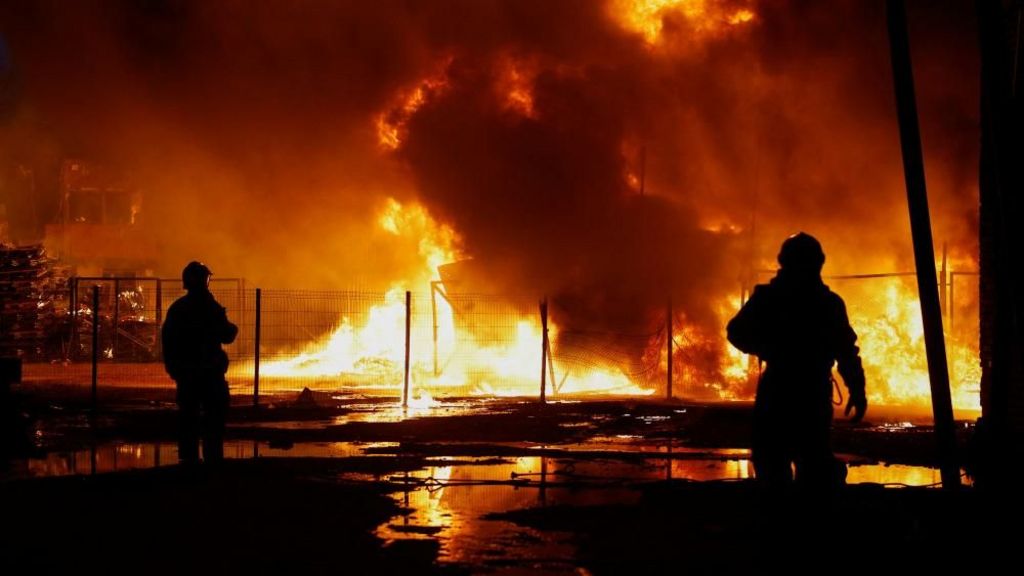
    The legal representatives for proprietors of a Swiss nightclub where a catastrophic New Year’s Eve blaze claimed 40 lives and left 116 injured have publicly addressed allegations, denouncing what they characterize as widespread misinformation about their clients. Jacques and Jessica Moretti, owners of Le Constellation bar in the upscale ski destination Crans-Montana, are reportedly ‘devastated’ by the incident but maintain they were unaware of any potential hazards within their establishment.

    Preliminary investigative reports indicate the fire originated from sparklers attached to champagne bottles that ignited highly flammable acoustic foam installed in the basement ceiling. Swiss authorities have confirmed the venue had not been subjected to mandatory safety inspections for half a decade.

    The tragedy predominantly affected young patrons, with eight victims being under 16 years of age. Many survivors continue to receive hospital treatment for severe burn injuries.

    Legal counsel Yaël Hayat condemned what she described as ‘public vindictiveness’ against the Morettis, specifically refuting claims that Jessica abandoned the scene with cash proceeds. ‘She remained onsite providing assistance to the injured,’ Hayat asserted during media briefings.

    Co-defense attorney Patrick Michod distinguished between emotional responsibility and legal culpability, noting his client sourced the acoustic foam from a major retailer without being informed of its combustible properties. ‘The intention was to install acoustic treatment, not highly flammable material,’ Michod emphasized.

    Contradicting these statements, representatives for deceased staff member Cyane Panine revealed she had received no safety training and was unaware of the ceiling’s fire hazard. Hayat subsequently characterized Panine as a close family friend, presenting a heartfelt postcard expressing her affection for the couple.

    The Morettis currently face charges including negligent manslaughter, negligent bodily harm, and negligent arson. Judicial authorities have imposed travel restrictions on Jessica Moretti and detained Jacques Moretti for 90 days pending investigation, citing flight risk concerns with proposed bail set at 400,000 Swiss francs.

  • How could Europe respond to Trump’s Greenland tariffs?

    How could Europe respond to Trump’s Greenland tariffs?

    A fresh transatlantic trade confrontation has erupted following former President Donald Trump’s unexpected ultimatum to eight European nations regarding Greenland. On Saturday, Trump threatened to impose escalating tariffs—starting at 10% on February 1st and potentially rising to 25% by summer—unless these countries support his administration’s initiative to purchase Greenland.

    The targeted nations include major EU economies France and Germany, alongside the UK, Denmark, Norway, Sweden, Netherlands, and Finland. European leaders have responded with firm opposition, with the European Commission vowing to protect the bloc’s economic interests through available mechanisms.

    This development jeopardizes the fragile trade détente established less than six months ago when European Commission President Ursula von der Leyen negotiated a reduction of threatened US tariffs from 30% to 15% on EU exports. That agreement, which was scheduled for European Parliament ratification next week, now faces suspension according to influential German MEP Manfred Weber.

    Without formal approval or extension of the current suspension, previously prepared EU counter-tariffs totaling €93 billion on American goods—ranging from livestock to aircraft parts and whiskey—will automatically activate on February 7th. This would create significant political pressure on Trump from US exporters facing European market restrictions.

    The EU’s most powerful trade weapon, the Anti-Coercion Instrument (ACI), represents a potential nuclear option. This mechanism allows the bloc to impose comprehensive trade and financial restrictions while bypassing international treaties, effectively blocking access to the single market. However, deploying the ACI involves a lengthy process—potentially exceeding one year—and risks substantial economic collateral damage to EU members themselves.

    Meanwhile, UK Prime Minister Keir Starmer has adopted a conciliatory stance, explicitly rejecting immediate retaliatory measures and emphasizing that “a tariff war is in nobody’s interests.” Alternative options under consideration include expanding the Digital Services Tax, which could impact major US tech corporations like Amazon and Meta.

    The legal foundation of Trump’s tariff strategy remains uncertain, with the US Supreme Court poised to rule on whether the former president overstepped his authority by implementing taxes through the International Emergency Economic Powers Act.

  • Pro-Greenland protesters mock Trump’s MAGA slogan with ‘Make America Go Away’ caps

    Pro-Greenland protesters mock Trump’s MAGA slogan with ‘Make America Go Away’ caps

    COPENHAGEN, Denmark — A wave of creative resistance has swept through Denmark as citizens respond to U.S. President Donald Trump’s expressed interest in acquiring Greenland. The movement has found its symbol in parody baseball caps that transform Trump’s iconic “Make America Great Again” slogan into “Make America Go Away.”

    These satirical accessories, created by Copenhagen vintage store owner Jesper Rabe Tonnesen, have evolved from commercial failure to cultural phenomenon following the Trump administration’s serious overtures toward the autonomous Danish territory. What began as a limited run last year has exploded into a nationwide statement, with thousands of caps now in production to meet surging demand.

    The headwear has appeared at public demonstrations, including a weekend protest in freezing temperatures outside Copenhagen City Hall, where participants waved Danish and Greenlandic flags while carrying signs with messages like “No Means No” and “Make America Smart Again.”

    European governments have formally rallied behind Denmark, emphasizing Arctic security concerns and the importance of respecting territorial sovereignty. Meanwhile, Danish citizens have adopted a more direct approach to expressing their disapproval. “I want to show my support to Greenland and also show that I don’t like the president of the United States,” stated 76-year-old Copenhagen resident Lars Hermansen, who participated in the weekend demonstration.

    Tonnesen, 58, described his motivation: “When a delegation from America went up to Greenland, we started to realize this probably wasn’t a joke—it’s not reality TV, it’s actually reality. So I said, OK, what can I do? Can I communicate in a funny way with a good message and unite the Danes?”

    The movement has also produced linguistic creativity with an alternative design featuring the phrase “Nu det NUUK!”—a clever play on words that replaces the Danish expression “Nu det nok” (meaning “Now it’s enough”) with the name of Greenland’s capital city.

    Protesters maintained a balance between serious messaging and lighthearted expression. Kristian Boye, 49, who attended the Copenhagen rally, captured this dual approach: “I’m here to support the Greenlanders, who are going through a very hard time right now. They are being threatened with having their country invaded. I think it’s totally unacceptable.”

  • Djokovic registers 100th Australian Open win

    Djokovic registers 100th Australian Open win

    In a breathtaking display of serving precision, Novak Djokovic achieved a monumental milestone at the Australian Open, securing his 100th career victory at Melbourne Park while delivering what commentators described as one of the most dominant serving performances in recent tennis history.

    The Serbian champion, currently ranked world number four and pursuing an unprecedented 25th Grand Slam singles title, dismantled Spain’s Pedro Martínez with surgical efficiency. Djokovic’s service statistics bordered on the supernatural: he dropped merely five points out of 57 on serve throughout the two-hour contest, maintained a 77% first-serve accuracy rate, and won a staggering 93% of points behind his first delivery. The match concluded fittingly with Djokovic’s 14th ace of the evening, sealing a 6-3, 6-2, 6-2 triumph.

    Tennis legend Mark Woodforde, a 17-time Grand Slam doubles champion, characterized Djokovic’s performance as “supreme” and “exceptional” during BBC Radio 5 Sports Extra commentary. Djokovic himself offered a characteristically measured assessment: “Tonight’s performance was great, I can’t complain about anything. I served very well. It’s always a challenge to kick-start the tournament on the right note and send the right signal not only to yourself but your opponents watching you play.”

    The victory places Djokovic in an exclusive club of players who have achieved 100 wins at multiple Grand Slam events, having previously reached this milestone at Wimbledon (102 wins) and Roland Garros (101 wins). During his post-match interview, tournament organizers commemorated the achievement with video highlights from his 2005 main-draw debut, though Djokovic remained focused on the present, quipping that he would only reflect on his accomplishments when “putting the racquet aside [and] sipping some nice cocktail on the beach.”

    Looking ahead, Djokovic will face Italian qualifier Francesco Maestrelli in the second round, using the intervening days to recover and prepare. Beyond immediate tournament objectives, Djokovic revealed that “history-making is great motivation,” particularly in the latter stages of his career. He credited early mentors for guiding him “to play the long shot with my career, not to burn out too quickly, and take care of my body and my mind.”

    Elsewhere in the draw, Australian hope Alex de Minaur launched his campaign with a commanding straight-sets victory, declaring his ambition to become the first home men’s champion since 1976. Higher seeds Andrey Rublev, Casper Ruud, Alejandro Davidovich Fokina, and Tommy Paul all advanced comfortably, while Czech 17th seed Jiří Lehečka suffered an unexpected early exit against French qualifier Arthur Gea.

  • EU executive arm, Russia and Thailand asked to join Trump’s Board of Peace for Gaza

    EU executive arm, Russia and Thailand asked to join Trump’s Board of Peace for Gaza

    The United States has extended invitations to multiple nations to participate in President Donald Trump’s newly proposed ‘Board of Peace,’ intended to oversee the implementation of the next phase of the Gaza peace plan. The European Commission, Russia, and Thailand have confirmed receipt of invitations, with each expressing cautious interest while undertaking detailed reviews of the proposal.

    Kremlin spokesman Dmitry Peskov stated that President Vladimir Putin is examining the invitation’s specifics, while Thai authorities similarly acknowledged they are assessing the details. European Commission President Ursula von der Leyen will consult with EU leadership regarding potential participation, though no formal acceptance has been declared.

    The initiative faces significant opposition from Israeli officials, with Finance Minister Bezalel Smotrich denouncing the plan as ‘bad for the State of Israel’ and calling for its cancellation. Smotrich asserted Israeli sovereignty over Gaza during a ceremony inaugurating a new West Bank settlement, advocating for military administration rather than international oversight.

    Prime Minister Benjamin Netanyahu’s office previously stated that the board’s formation occurred without Israeli coordination and contradicts official government policy. The United States is expected to announce formal board membership during the upcoming World Economic Forum in Davos.

    According to undisclosed charter details obtained by AP, a $1 billion contribution would secure permanent membership dedicated to Gaza reconstruction efforts, while three-year appointments require no financial commitment. The board’s potential scope suggests it could function as an alternative to established international bodies like the UN Security Council.

    Concurrently, Egypt has expressed support for the newly appointed committee of Palestinian technocrats tasked with managing Gaza’s daily affairs during the peace plan’s implementation. Meanwhile, UN agencies report improved but still fragile humanitarian conditions, with over three-quarters of Gaza’s population experiencing crisis-level food insecurity despite expanded aid operations.

  • What to know about the train crash in Spain

    What to know about the train crash in Spain

    A devastating high-speed rail collision in southern Spain has resulted in at least 39 fatalities and over 150 injuries, marking the country’s deadliest train accident in a decade. The catastrophe occurred Sunday evening near Adamuz, Córdoba province, approximately 370 kilometers south of Madrid, when the rear section of a Malaga-to-Madrid train derailed and collided with an oncoming Madrid-to-Huelva service.

    The impact proved particularly catastrophic for the second train, whose first two carriages were violently thrown from the tracks and plunged down a 4-meter embankment. Transport Minister Óscar Puente described the collision as exceptionally severe, with rescue teams continuing search operations Monday amid concerns the death toll could rise further.

    Andalusia’s regional president Juan Manuel Moreno revealed the extreme force of impact scattered human remains hundreds of meters from the crash site, complicating recovery efforts. The incident represents the first fatal accident on Spain’s high-speed network since its inauguration in 1992.

    Authorities have launched a comprehensive investigation into what Minister Puente characterized as a ‘truly strange’ accident. Both trains were operating significantly below the 250 kph speed limit on a recently renovated flat section of track. The derailed train, manufactured in 2022 and operated by private company Iryo, had passed its latest safety inspection on January 15. The struck train belonged to Spain’s national rail operator Renfe.

    Rail executives have preliminary ruled out human error as a contributing factor. The tragedy occurs despite Spain maintaining Europe’s most extensive high-speed rail infrastructure, with over 3,100 kilometers of dedicated track capable of supporting speeds exceeding 250 kph.

  • Spain train crash survivors describe ‘absolutely terrifying’ scene

    Spain train crash survivors describe ‘absolutely terrifying’ scene

    Passengers aboard a regional commuter service in Andalusia are sharing chilling accounts of survival following a violent rail collision near the southern coast of Spain. The incident occurred shortly after dusk on Sunday along the corridor connecting Málaga and the national capital Madrid, resulting in numerous injuries though miraculously no fatalities.

    Eyewitness testimony describes a scene of sudden impact and chaos as the two trains made contact outside Málaga. ‘It was absolutely terrifying—a deafening crash followed by screams and the smell of burning,’ recounted one passenger still shaken hours after the emergency. ‘The carriage jerked violently sideways, and for one horrible moment we thought we might derail completely.’

    Emergency response teams from multiple municipalities mobilized rapidly to the accident site, establishing a coordinated rescue operation that extended well into the night. Medical personnel triaged passengers along the trackside while structural engineers worked to secure the damaged rolling stock. Spanish rail authorities have initiated a full investigation into the circumstances surrounding the collision, with preliminary reports suggesting signaling issues may have contributed to the accident.

    The affected line serves as a critical transportation artery for both local commuters and tourists traveling between Costa del Sol beaches and central Spain. Service disruptions continued through Monday as infrastructure repairs commenced, with alternative transportation arrangements implemented for stranded travelers.

  • What to know about the annual World Economic Forum meeting in Davos

    What to know about the annual World Economic Forum meeting in Davos

    DAVOS, Switzerland — The Alpine town of Davos transforms this week into the epicenter of global power and influence as nearly 3,000 distinguished participants from governmental, corporate, and institutional sectors assemble for the World Economic Forum’s 54th annual gathering. This exclusive congregation, set against the pristine snowscapes of eastern Switzerland, represents one of the most significant diplomatic and economic convenings on the international calendar.

    Established in 1971 by visionary economist Klaus Schwab, the forum has evolved dramatically from its origins as a modest gathering of business executives. Today, it addresses an expansive agenda encompassing economic disparity, climate change, technological transformation, and global governance challenges. The 2024 edition features over 200 sessions examining critical issues shaping our collective future.

    The attendee roster reflects unprecedented geopolitical weight, with a record nearly 400 top political leaders including more than 60 heads of state and government. The American delegation commands particular attention, featuring President Donald Trump’s scheduled address alongside key Cabinet members including Secretary of State Marco Rubio and Treasury Secretary Scott Bessent.

    European representation remains robust with French President Emmanuel Macron and European Commission President Ursula von der Leyen, while global perspectives are represented by figures including Syrian President Ahmad al-Sharaa, Canadian Prime Minister Mark Carney, Congolese President Felix Tshisekedi, Chinese Vice Premier He Lifeng, and Ukrainian President Volodymyr Zelenskyy. The assembly further includes 55 finance ministers, 33 foreign ministers, 34 trade ministers, and 11 central bank governors.

    Technology leadership forms another critical pillar of the conference, with NVIDIA’s Jensen Huang, Microsoft’s Satya Nadella, Google DeepMind’s Demis Hassabis, and Mistral AI’s Arthur Mensch contributing to discussions about artificial intelligence’s transformative potential. International institutions are represented by figures including NATO Secretary-General Mark Rutte and WTO Director-General Ngozi Okonjo-Iweala.

    This year’s forum occurs against an exceptionally complex geopolitical backdrop, with Trump’s unconventional approaches to Venezuela, Greenland, and Iran—coupled with aggressive tariff policies—creating unprecedented uncertainty about America’s global role. Simultaneously, artificial intelligence emerges as both tremendous opportunity and existential concern, with business leaders examining efficiency applications while labor advocates warn of employment disruptions and policymakers seek balance between innovation and regulation.

    Under the thematic banner ‘A Spirit of Dialogue,’ organizers have structured conversations around five pillars: cooperation, growth, human investment, innovation, and prosperity building. Despite this ambitious framework, critics maintain that the forum prioritizes discussion over concrete action to address pressing global inequalities and environmental challenges.