标签: Europe

欧洲

  • Driver killed and several injured after train derails near Barcelona, local media report

    Driver killed and several injured after train derails near Barcelona, local media report

    Emergency responders in Catalonia are dealing with the aftermath of a fatal train derailment that occurred during severe weather conditions on Tuesday evening. A Rodalies commuter train veered off the tracks and collided with a collapsed retaining wall between the towns of Gelida and Sant Sadurní, approximately 35 kilometers west of Barcelona.

    The incident resulted in the tragic death of the train driver and left at least 14 passengers injured. Emergency medical services deployed eleven ambulances to the scene, where they conducted triage and assessed the severity of injuries. Those requiring hospitalization were evacuated to multiple medical facilities including Moisès Broggi, Bellvitge, and Vila Franca hospitals.

    Catalonia’s fire service mobilized 35 specialized crews to the accident site, where they successfully rescued one passenger who had been trapped inside the wreckage. Following extensive search operations, authorities confirmed that no remaining passengers were trapped inside the derailed cars, though crews continued area sweeps to ensure no additional victims were present.

    The derailment occurred as northeastern Spain experienced intense storm activity that has placed many coastal regions on high alert. The severe weather system has generated multiple-meter-high waves along the Menorcan coastline and produced snowstorms in the Pyrenees mountain region.

    This tragic incident follows another major rail accident that occurred just two days prior in Adamuz, Andalusia, where a collision between high-speed trains resulted in one of Spain’s worst rail disasters in over a decade.

  • Aurora lights up Alaska skies with stunning green and red display

    Aurora lights up Alaska skies with stunning green and red display

    A dramatic celestial phenomenon illuminated skies across multiple continents this week as an intense geomagnetic storm triggered spectacular auroral displays. Early morning observers in Anchorage, Alaska, were treated to a breathtaking natural light show featuring vibrant bands of emerald green and crimson red dancing across the night sky.

    The astronomical event extended far beyond Alaska’s boundaries, with the aurora borealis visible from unprecedented locations including the urban skyline of San Francisco, the Great Lakes region near Chicago, throughout Canada, and across numerous European nations. Social media platforms became digital galleries as enthusiasts shared captivating photographs of the shimmering atmospheric phenomenon.

    According to experts at the National Oceanic and Atmospheric Administration’s Space Weather Prediction Center, these intense visual displays resulted from a significant disturbance in Earth’s magnetic field coupled with powerful solar radiation storms. This event continues a pattern of heightened solar activity that previously produced remarkable auroral sightings in November, when the phenomenon reached as far south as Texas in the United States and created dazzling displays across European nations including Hungary and the United Kingdom.

    The widespread visibility of this typically polar phenomenon demonstrates the exceptional strength of current solar cycles, providing rare opportunities for populations at lower latitudes to witness one of nature’s most magnificent atmospheric performances.

  • Shock and confusion as Spain struggles for answers after deadly train crash

    Shock and confusion as Spain struggles for answers after deadly train crash

    Spain confronts its most severe railway catastrophe in over a decade following a devastating collision between two high-speed trains near Adamuz in southern Andalusia. The incident, occurring on a straight segment of track this past Sunday, resulted in a confirmed death toll of 42 individuals, sending shockwaves across the nation and prompting urgent safety reassessments of Europe’s admired rail infrastructure.

    King Felipe VI and Queen Letizia personally visited the grim crash site on Tuesday, underscoring the tragedy’s profound national impact. As recovery teams extracted the final victims from the tangled wreckage, the nation observed three official days of mourning declared by Prime Minister Pedro Sánchez, who pledged absolute transparency in the investigation.

    The CIAF rail investigatory commission has launched a comprehensive probe into the derailment of an Italian-manufactured Iryo train traveling from Málaga, which subsequently collided with an oncoming service. Government officials have characterized the accident as ‘extremely strange,’ with early indications ruling out both excessive speed and sabotage as probable causes according to Interior Minister Fernando Grande-Marlaska.

    Investigative attention has focused on multiple potential factors, including the structural integrity of the specific train involved—particularly carriage number six, which initiated the derailment—and the condition of the tracks themselves. The discovery of broken track sections at the accident site has fueled speculation, though authorities caution this damage may have resulted from the collision’s impact rather than causing it.

    Emerging evidence suggests underlying infrastructure concerns may have preceded the tragedy. Rail infrastructure administrator Adif had documented eight technical issues on social media within the past year along the vicinity of the accident route, predominantly related to signaling systems. Furthermore, the train drivers’ union Semaf had issued explicit warnings in August 2025 regarding deteriorating conditions on certain AVE lines that were creating ‘a lack of comfort and reliability,’ advocating for reduced speed limits to ensure passenger and worker safety.

    Social media users have subsequently surfaced historical posts documenting concerning vibrations and uncomfortable movements during AVE journeys, with one December video showing intense cabin shaking that prompted fears for personal safety.

    In response to growing concerns, Adif has preemptively implemented reduced speed limits of 160km/h along a 150-kilometer stretch between Madrid and Barcelona—approximately half the previous maximum—as a precautionary measure. The government simultaneously emphasizes its substantial investment in network modernization, noting the accident site had recently undergone a €49 million renovation as part of a broader €700 million upgrade program for the Madrid-Andalusia corridor.

    The investigation’s findings carry significant implications for the future operational standards and public confidence in Spain’s high-speed rail system, once hailed as a symbol of national modernization and technological prowess upon its 1992 inauguration with EU support.

  • EU plans phase out of high risk telecom suppliers, in proposals seen as targeting China

    EU plans phase out of high risk telecom suppliers, in proposals seen as targeting China

    The European Union has unveiled stringent cybersecurity legislation requiring the systematic removal of telecommunications equipment from suppliers deemed ‘high-risk’ within critical infrastructure networks. This decisive move, announced by the European Commission on Tuesday, specifically targets technology originating from certain non-EU countries without explicitly naming China or its leading tech corporations.

    The proposed regulations mandate that EU member states eliminate such equipment from high-speed telecom networks within a three-year timeframe. While previous cybersecurity guidelines for 5G networks remained voluntary, resulting in inconsistent implementation across the bloc, these new measures establish legally binding requirements for all 27 member nations.

    European Commission Vice President Henna Virkkunen emphasized the proposal’s objective to ‘protect EU citizens and businesses by securing the ICT supply chains that support critical sectors of our economy and society.’ The legislation extends beyond telecommunications to encompass security scanners at border checkpoints, water supply systems, and medical devices.

    The development follows the EU’s 2023 assessment that justified restrictions against Chinese technology giants Huawei and ZTE based on security concerns. Huawei responded to the proposal by asserting its status as a ‘legally operating company in Europe’ and reserving the right to protect its legitimate interests. The company criticized the approach as violating fundamental EU legal principles of fairness and non-discrimination, as well as World Trade Organization obligations.

    The legislation now requires approval from the European Parliament in Strasbourg, marking a significant shift in the EU’s strategy to safeguard its digital infrastructure against perceived geopolitical risks and technological dependencies.

  • In their words: Trump’s threats over Greenland draw warnings and profanities at global forum

    In their words: Trump’s threats over Greenland draw warnings and profanities at global forum

    DAVOS, Switzerland — The World Economic Forum became an arena of diplomatic confrontation on Tuesday as international leaders delivered stark warnings against U.S. President Donald Trump’s pursuit of Greenland and escalating trade measures. The annual gathering of global elites witnessed unusually blunt language and grave concerns about the erosion of international norms.

    California Governor Gavin Newsom, a prominent Democratic figure, unleashed a profanity-laden critique of global leadership, accusing world diplomats of excessive compliance with Trump’s policies. “I can’t take this complicity. People rolling over,” Newsom declared. “I hope people understand how pathetic they look on the world stage. At least from an American perspective, it’s embarrassing.” The governor employed visceral metaphors, comparing diplomacy with Trump to interacting with a Tyrannosaurus Rex: “You mate with him or he devours you.”

    European Commission President Ursula von der Leyen addressed the trade tensions with measured diplomacy but firm resolution. She characterized the proposed additional tariffs as “a mistake, especially between long-standing allies” and emphasized that “in politics, as in business, a deal is a deal.” Von der Leyen warned against a diplomatic “downward spiral” that would ultimately benefit adversaries of Western nations, while signaling Europe’s readiness to pursue greater independence in response to persistent international pressure.

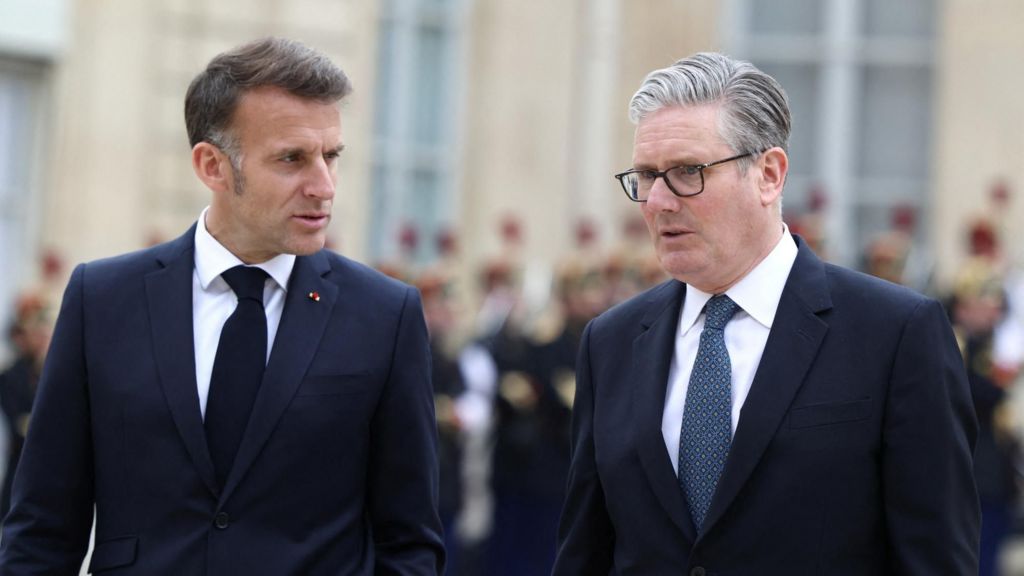
    French President Emmanuel Macron, appearing with aviator sunglasses due to an eye infection, delivered a sophisticated critique of what he termed a “new colonial approach” in international relations. The president cautioned against a emerging global framework where “international law is trampled underfoot and where the only law that seems to matter is that of the strongest.” Macron specifically condemned American trade practices that “undermine our export interests, demand maximum concessions, and openly aim to weaken and subordinate Europe,” particularly when combined with “an endless accumulation of new tariffs that are fundamentally unacceptable.”

    The collective responses from European leadership and American state governance revealed deepening transatlantic tensions and growing resistance to Trump’s unconventional diplomatic methods. The Davos discussions highlighted a critical juncture in international relations, with traditional alliances being tested and global power dynamics undergoing significant transformation.

  • Turkey’s pro-Kurdish party warns Syria violence threatens peace efforts

    Turkey’s pro-Kurdish party warns Syria violence threatens peace efforts

    ANKARA, Turkey — Turkey’s fragile peace initiative with Kurdish militants faces imminent jeopardy following renewed violence in northeastern Syria, according to warnings from the pro-Kurdish Peoples’ Equality and Democracy Party (DEM). The cautionary statement emerged as a recently brokered ceasefire between Syrian authorities and Kurdish-led forces unraveled merely days after its signing.

    DEM Party co-chair Tulay Hatimogullari raised pointed questions about reconciliation prospects during a gathering in the border town of Nusaybin, situated opposite Syria’s predominantly Kurdish Qamishli. “How can we genuinely discuss internal peace and stability,” she challenged, “while Kurds face massacres in Syria and the sentiments of Turkish Kurds remain disregarded?”

    The disputed agreement, finalized Sunday under Turkish mediation, mandated the Syrian Democratic Forces (SDF) relinquish control over most northeastern territories and dismantle military infrastructure. The framework provided for case-by-case integration of SDF fighters into Syrian national security forces. Despite these provisions, combat resumed Monday, prompting Kurdish forces to mobilize resistance efforts.

    Concurrent with political warnings, dozens of DEM supporters demonstrated in Nusaybin, condemning what they characterized as Syrian atrocities against Kurds and criticizing President Recep Tayyip Erdogan’s backing of Damascus. Tensions escalated when protesters removed a Turkish flag from a military observation post, triggering police intervention and official denouncements from presidential aides who labeled the act a deliberate provocation.

    Turkish authorities had initially celebrated the Syrian agreement as a historic breakthrough following intense combat. Parliamentarian Feti Yıldız, engaged in drafting peace proposals with the Kurdistan Workers’ Party (PKK), suggested the accord might positively influence Turkey’s domestic reconciliation process.

    The geopolitical complexity stems from Turkey’s perception of the SDF as intrinsically linked to the PKK, which has waged a four-decade insurgency within Turkish borders. In a significant development last May, the PKK announced disarmament and dissolution following directives from imprisoned leader Abdullah Ocalan. The group conducted symbolic disarmament ceremonies in northern Iraq and withdrew remaining fighters from Turkey.

    However, the SDF has resisted pressure to emulate the PKK’s actions, maintaining that Ocalan’s instructions applied exclusively to Turkey-based militants. President Erdogan issued stern warnings in a Monday address, cautioning against delays or obstructions in implementing the Syrian agreement. “Procrastination and resistance through fabricated excuses will benefit no one,” he declared. “Terrorism’s era in our region has concluded. The ceasefire and integration requirements must be fulfilled without delay.”

    Historical context looms large over current developments, with previous peace initiatives between Turkey and the PKK collapsing—most notably in 2015—generating widespread skepticism regarding the sustainability of present efforts.

  • Russia’s top diplomat says NATO faces a deep crisis over Greenland

    Russia’s top diplomat says NATO faces a deep crisis over Greenland

    Russian Foreign Minister Sergey Lavrov declared Tuesday that former U.S. President Donald Trump’s attempt to acquire Greenland signals a “deep crisis” within NATO that threatens the alliance’s fundamental cohesion. Speaking at his annual foreign policy briefing in Moscow, Lavrov characterized the episode as evidence of deteriorating unity among Western nations.

    Lavrov expressed astonishment at the geopolitical implications, noting that “it was hard to imagine before that such a thing could happen” within the military alliance. He suggested the move could theoretically create scenarios where “one NATO member is going to attack another NATO member,” fundamentally undermining the bloc’s security foundations.

    The Russian diplomat framed Trump’s actions as upending the Western-established “rule-based global order” that Moscow has consistently criticized. “Now it’s not the Collective West writing the rules but just one its representative,” Lavrov stated sardonically, adding that “the Euro-Atlantic concept of ensuring security and cooperation has discredited itself.”

    Regarding Greenland’s status, Lavrov described Denmark’s control as “a vestige of the colonial past,” asserting that “Greenland isn’t a natural part of Denmark.” However, he firmly denied Trump’s suggestions that Russia or China pose threats to the Arctic territory, stating “We have no relation to that.”

    Lavrov offered measured support for Trump’s proposed ‘Board of Peace,’ noting the Kremlin is studying the invitation. He praised this initiative as reflecting “the U.S. understanding that even with the foreign policy philosophy it has it considers necessary to rally a group of nations that would cooperate with them.”

    The Foreign Minister particularly commended Trump’s approach to Ukraine negotiations, describing the U.S. as the only Western country that has “expressed understanding of the need to take Russian interests into account.” He criticized European allies for attempting to modify proposals that initially included protections for Russian speakers and the Moscow-affiliated Ukrainian Orthodox Church.

    Lavrov warned that Moscow “won’t allow the luxury of once again letting the Kyiv regime to take a break and rearm,” while expressing pessimism about agreements with European leaders who “drove themselves too deeply into hating Russia.”

    The diplomat also addressed broader tensions, condemning the U.S. capture of Venezuelan leader Nicolás Maduro as “crude military intervention” and criticizing Washington’s rejection of extending New START nuclear arms limits. Despite these tensions, Lavrov expressed openness to continued dialogue with the U.S. based on “mutual respect for national interests,” recalling productive discussions with Secretary of State Marco Rubio in Riyadh.

  • Cow astonishes scientists with rare use of tools

    Cow astonishes scientists with rare use of tools

    In an extraordinary challenge to conventional understanding of bovine cognition, an Austrian cow named Veronika has demonstrated sophisticated tool-using capabilities previously undocumented in cattle. This remarkable discovery, documented by researchers from the University of Veterinary Medicine Vienna, emerged from the mountainous Austrian countryside where Veronika perfected her scratching techniques over several years.

    The Swiss brown cow exhibited exceptional discrimination in her tool selection, utilizing both ends of implements for different purposes. When addressing tougher areas like her back, Veronika consistently chose the bristled end of brooms for effective scratching. For more sensitive regions such as her underbelly, she deliberately selected the smooth handle end, demonstrating contextual awareness and adaptive problem-solving skills.

    Dr. Antonio Osuna-Mascaró, lead researcher on the study published in Current Biology, expressed profound surprise at the findings: ‘We encountered two unexpected dimensions—first that cattle could utilize tools at all, and second that an individual cow would employ tools with multipurpose functionality. Until this documentation, such sophisticated tool use had only been consistently observed in chimpanzees.’

    This discovery gains additional significance when considering the evolutionary context. While chimpanzees—humanity’s closest genetic relatives—demonstrate varied tool use including stick manipulation for insect gathering and stone usage for nut cracking, cattle have coexisted with humans for approximately 10,000 years without previously documented tool application.

    Veronika’s owner, organic farmer Witgar Wiegele, sees broader implications beyond scientific interest. He emphasizes that her unexpected cognitive abilities should inspire greater appreciation for nature’s complexity: ‘Preserving nature ultimately means protecting ourselves. Biological diversity represents the fundamental key to planetary survival.’

    The research team suggests that given appropriate environmental conditions and opportunities, other cattle might develop comparable skills, potentially revolutionizing how we perceive and interact with these domesticated animals.

  • ‘The miracle’: 6-year-old girl is the sole survivor of a family that perished in Spanish train wreck

    ‘The miracle’: 6-year-old girl is the sole survivor of a family that perished in Spanish train wreck

    BARCELONA, Spain — A catastrophic train collision in southern Spain has claimed at least 41 lives while producing a remarkable story of survival amid overwhelming tragedy. The incident, which occurred near Adamuz on Monday, January 19, 2026, resulted in one of Spain’s deadliest rail accidents in recent history.

    Eyewitness accounts describe terrifying moments as carriages derailed and tumbled down a steep embankment, their structural integrity compromised by the violent impact. Amid the twisted wreckage and heartbreaking scenes of casualties, rescue workers discovered a miraculous survivor—a six-year-old girl who emerged virtually unharmed from the devastation.

    According to La Vanguardia newspaper, Civil Guard officers located the child walking barefoot along the tracks after she apparently escaped through a shattered window. Medical personnel confirmed her remarkably good condition, requiring only three stitches for a minor head injury despite the severity of the crash.

    The young survivor’s family experienced unimaginable loss, with both parents, her brother, and a cousin among those killed in the front carriages that absorbed the worst of the impact. The Zamorano Álvarez family, residents of Punta Umbria village located near the ill-fated rail line, were returning home when the tragedy struck.

    Punta Umbria Mayor José Carlos Hernández expressed both profound grief and measured relief regarding the girl’s survival. “There are many people who are very sad for the victims of this terrible accident,” he stated during a press conference Tuesday, “but there were also many who survived, like the miracle of the girl who is safe.”

    The municipality has declared three days of official mourning as investigation continues into the cause of the derailment. Meanwhile, the orphaned child has been placed in the care of her grandparents at a hotel in Córdoba, the nearest major city to the crash site. Mayor Hernández emphasized the family’s commitment, noting “She has a tremendous family who will do what it takes for her to have a happy life.”

  • In their words: What France’s Macron and head of NATO wrote to Trump

    In their words: What France’s Macron and head of NATO wrote to Trump

    In an unprecedented diplomatic disclosure, U.S. President Donald Trump publicly shared private text messages from French President Emmanuel Macron and NATO Secretary General Mark Rutte on Tuesday. The messages reveal behind-the-scenes coordination efforts regarding Syria policy and ongoing discussions about Greenland’s status.

    President Macron’s message demonstrated strong alignment with Trump on Syrian affairs while expressing confusion about U.S. interest in Greenland. The French leader proposed concrete diplomatic initiatives, including organizing a special G7 meeting in Paris following the Davos summit. Macron suggested inviting Ukrainian, Danish, Syrian, and Russian representatives for marginal discussions and offered to host a private dinner with Trump before his return to the United States.

    NATO chief Mark Rutte’s communication struck a notably congratulatory tone, praising Trump’s accomplishments in Syria as “incredible” and committing to highlight these achievements during his media appearances at Davos. Rutte specifically mentioned Trump’s work in Gaza and Ukraine alongside the Syrian developments. The NATO leader also referenced continued discussions about Greenland, indicating his dedication to “finding a way forward” on the matter while expressing anticipation for their upcoming meeting.

    The publication of these private diplomatic exchanges provides rare insight into the personal dynamics between world leaders and their behind-the-scenes negotiation styles. The messages reveal both cooperation and tension points within international alliances, particularly regarding European concerns about U.S. interests in Arctic territories.