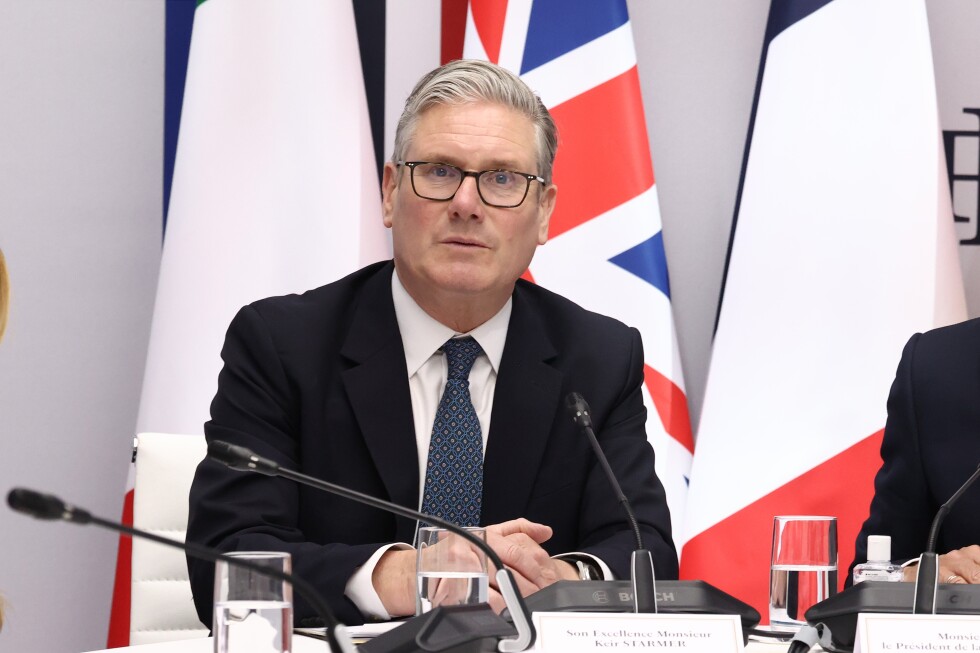
LONDON — For British Prime Minister Keir Starmer, the name Peter Mandelson has become a political albatross that threatens to end his tenure in Downing Street, just eight months after he swept to power on a promise of clean governance after years of Conservative Party scandal. The deepening controversy around Starmer’s fateful decision to appoint Mandelson, a veteran Labour figure with long-documented ties to convicted sex offender Jeffrey Epstein, as Britain’s ambassador to the United States has reignited urgent questions about the prime minister’s judgment and credibility.
Two months ago, Starmer already survived a wave of internal pressure over the 2024 appointment, with senior Labour figures including the party’s Scottish leader calling for his resignation. This time, the crisis is far more severe: Starmer now stands accused of misleading the UK Parliament over whether Mandelson cleared mandatory official vetting to take the sensitive diplomatic post.
The bombshell dropped earlier this week, when The Guardian revealed that Mandelson had originally been denied formal security clearance for the ambassador role — a position Starmer once described as the most coveted posting in UK diplomacy. This directly contradicts Starmer’s previous statement to Parliament that “full due process” was followed during the appointment process. The UK government has confirmed that Starmer and senior cabinet ministers only learned this week that the Foreign Office had issued a negative initial assessment of Mandelson’s eligibility. The fallout has already forced the resignation of Olly Robbins, the Foreign Office’s top civil servant.
Vetting for the ambassador role would have included a full review of Mandelson’s financial history, professional connections, and personal associations, with his long-standing links to Epstein a core point of scrutiny. Starmer has pushed back against claims that he pressured officials to bypass red flags about the 72-year-old appointee, saying he is “absolutely furious” that details of the blocked initial clearance were hidden from him, calling the omission “staggering” and “unforgivable.” The prime minister is set to address Parliament and the public on the scandal Monday.
This controversy is far from an unexpected crisis. Mandelson was always a high-risk pick for the critical US ambassador role: he resigned twice from previous Labour governments over early 2000s ethical and financial missteps, and his association with Epstein, the disgraced financier who died in prison in 2019 while serving a sentence for sex trafficking, was well documented ahead of the appointment. Starmer’s original calculation was clear: he gambled that Mandelson’s well-honed lobbying skills and deep trade expertise would help the UK secure favorable terms with a second Trump administration, avoiding the most punishing tariffs on British exports. For a time, that gambit appeared to pay off.
The narrative shifted dramatically in September 2025, when newly released private emails proved Mandelson had publicly supported Epstein even after the financier was convicted and jailed for sex offenses. Starmer moved quickly to fire Mandelson, hoping to close the chapter on the embarrassment. But a new wave of disclosures followed in January, when the US Department of Justice released millions of pages of court documents tied to the Epstein case. Files included emails showing that while Mandelson served in the Labour government between 2009 and 2010, he passed sensitive, potentially market-moving government information to Epstein.
Starmer has repeatedly apologized to the British public and to Epstein’s victims for trusting what he calls “Mandelson’s lies.” British police have since launched a formal criminal investigation into Mandelson’s conduct: officers searched his two properties in London and western England, and arrested him on February 23 on suspicion of misconduct in public office. He was released on bail after more than nine hours of questioning, and has denied all wrongdoing; he does not face any accusations of sexual misconduct tied to the Epstein case.
Before the latest vetting revelations, political fervor around Starmer’s leadership had cooled. The prime minister had earned moderate public support for his decision to avoid direct British involvement in the Iran conflict, and he had hoped to weather expected heavy Labour losses in May’s local elections, the UK equivalent of US midterms. That calm has evaporated entirely.
“Starmer positioned himself as the leader who always followed the rules, a stark contrast to figures like Boris Johnson, and he won office on a promise to ‘drain the swamp’ of the scandal that marred the previous Conservative government,” explained Tim Bale, a politics professor at Queen Mary University of London. “Because he built his entire electoral platform on integrity, the latest revelations from this mess mean many voters now see him as both a liar and a hypocrite — and hypocrisy is one of the most unforgivable sins for any British politician.”
Opposition Conservative leader Kemi Badenoch has doubled down on calls for Starmer’s resignation, saying “This scandal is not ending. He has run out of people to sack, he has run out of places to hide, he has run out of authority. The buck stops with him. His position is untenable and he must go.”
The ultimate fate of Starmer’s leadership now hinges on the mood of his own Labour Party lawmakers. So far, only a small handful of senior party figures have openly called for him to step down. But ahead of Starmer’s Monday parliamentary address, political observers are watching closely to see if more Labour representatives break ranks after this weekend’s local campaign events with voters. Should more party members publicly withdraw their confidence, Starmer’s position could become unsustainable almost overnight. Confidence in political leaders can evaporate in an instant, a lesson Britain learned just a few years ago: Boris Johnson won a landslide parliamentary majority in 2019, only to resign as prime minister and lawmaker three years later amid a cascade of overlapping scandals.