
A vibrant and long-hidden portrait by Pablo Picasso, titled ‘Bust of a Woman with a Flowered Hat (Dora Maar)’, was auctioned in Paris for a staggering €27 million ($31.3 million) on Friday. Painted in July 1943, the artwork captures Dora Maar, Picasso’s muse and partner for nearly seven years, during a tumultuous period in their relationship. The painting, part of Picasso’s ‘Woman in a Hat’ series, had been privately held since its purchase in 1944 and had never before been publicly displayed. The auction took place at the prestigious Drouot auction house, which hailed the event as a moment of rare significance, unveiling the full brilliance of a masterpiece kept secret for over eight decades. Picasso specialist Agnes Sevestre-Barbé praised the portrait’s vividness, noting its raw, unvarnished state preserved the artist’s original chromatic range and expressive genius. Previously, the work was only known through a black-and-white photograph, leaving its vibrant colors a mystery. Auctioneer Christophe Lucien highlighted the global interest in the piece, with art markets from the United States to Asia and Europe eagerly anticipating its sale.
标签: Europe
欧洲
-

Men sentenced over London arson attack masterminded by Russia as part of a wider sabotage campaign
A British court has handed down significant prison sentences to five men involved in an arson attack orchestrated by Russian intelligence, marking a critical moment in the fight against foreign sabotage. The attack, which targeted a London warehouse storing satellite communication devices destined for Ukraine, was part of a broader campaign of terrorism and disruption linked to the Wagner paramilitary group. Sentences ranged from seven to 17 years, with Dylan Earl, the mastermind, receiving the harshest penalty. The court revealed that the arson was part of a coordinated European-wide sabotage effort, with similar attacks documented across the continent since Russia’s full-scale invasion of Ukraine in February 2022. The judge emphasized that the case underscores Russia’s attempts to exert global influence through covert operations and online recruitment. This is the first instance of sentencing under the UK’s National Security Act of 2023, designed to counter espionage and sabotage by foreign states. The attack caused £1 million in damages and was linked to a subsequent arson in Spain, highlighting the transnational nature of the plot. European intelligence officials warn of escalating risks as Russian-directed saboteurs target civilian infrastructure, aiming to destabilize societies and drain law enforcement resources. The case serves as a stark warning against engaging in activities that undermine national security.
-

Colombian man to serve minimum 42 years in UK prison for grisly double murder
A 35-year-old Colombian man, Yostin Andres Mosquera, has been sentenced to life imprisonment with a minimum term of 42 years for the brutal murder of two men in their London apartment. The victims, Albert Alfonso, 62, and Paul Longworth, 71, were killed in July last year using a hammer and a knife. Mosquera then dismembered their bodies, froze some parts, and transported the remains in suitcases to Bristol, where they were discovered on the Clifton Suspension Bridge. The case has been described by London police as one of the “most harrowing” they have encountered. At Woolwich Crown Court, Judge Joel Bennathan emphasized the premeditated and “thoroughly wicked” nature of the crimes but stopped short of imposing a whole-life order, citing Mosquera’s lack of prior convictions and possible childhood trauma. Mosquera, who was staying with the couple, also pleaded guilty to three counts of possessing child pornography. Police revealed that the murders occurred during an extreme sex session, with footage of the crime leaving a lasting impact on investigators. Mosquera attempted to steal money from the victims’ bank accounts post-murder, and the judge concluded that the killings were “undoubtedly murders committed for gain.”
-
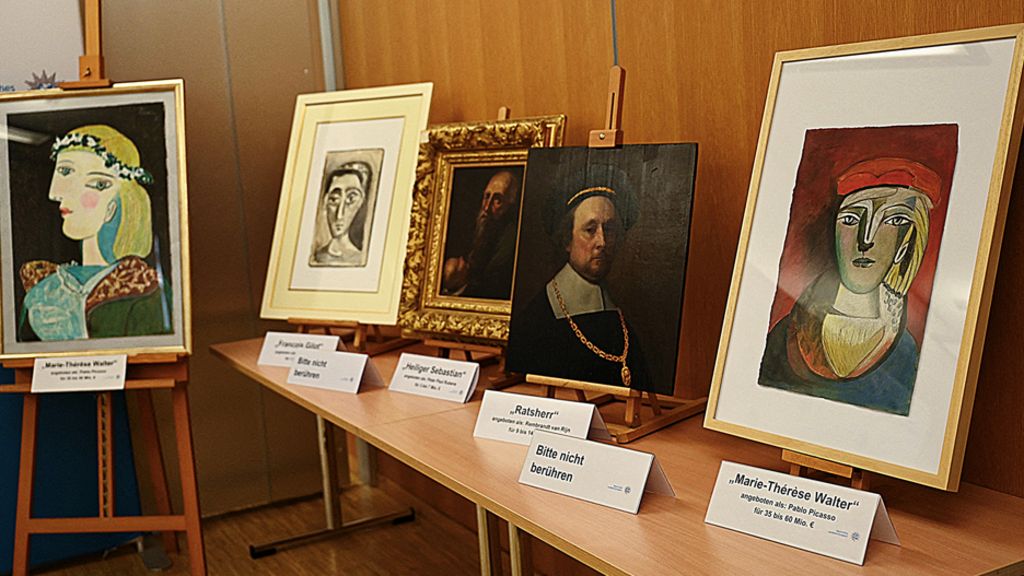
German police seize fake Picassos in multi-million euro forgery raid
In a sweeping international operation, Bavarian police have uncovered a sophisticated art forgery ring, seizing counterfeit works falsely attributed to legendary artists such as Pablo Picasso, Rembrandt, and Frida Kahlo. The operation, spanning Germany, Switzerland, and Liechtenstein, led to the confiscation of artworks valued at millions of euros. The alleged mastermind, a 77-year-old German man, along with 10 accomplices, faces charges of conspiracy and fraud. Authorities became suspicious when the suspect attempted to sell two purported Picasso originals and a forged version of Rembrandt’s ‘De Staalmeesters’ for a staggering 120 million Swiss francs (£113m), despite the original being housed in Amsterdam’s Rijksmuseum. The counterfeit ‘De Staalmeesters’ was owned by an 84-year-old Swiss woman, who is now under investigation. During coordinated raids on October 15, police seized numerous suspected forgeries, along with documents, electronic devices, and cloud data. The suspect allegedly attempted to sell 19 additional counterfeit works by renowned artists, including Frida Kahlo, Peter Paul Rubens, Amedeo Modigliani, and Joan Miró, with prices ranging from €400,000 (£349,000) to €14 million (£12.2m). A 74-year-old accomplice was accused of fabricating expert reports to authenticate the forgeries. Both suspects were arrested but later conditionally released as the investigation continues. All seized artworks will undergo detailed examination by experts in the coming weeks.
-

Croatia reintroduces military conscription as Europe worries about Russia-Ukraine war
In a significant move reflecting the current geopolitical climate, Croatia’s parliament has voted to reintroduce compulsory military service, a decision that underscores the nation’s response to escalating tensions in Europe. The vote, which passed with 84 in favor, 11 against, and 30 abstentions in the 151-member parliament, marks a return to conscription after it was suspended in 2008 in favor of a volunteer-based system. The new policy mandates a two-month service focused on providing basic military training, as reported by the public broadcaster HRT. This initiative is part of Croatia’s broader strategy to enhance national security and prepare its youth for potential crisis situations, according to the Defense Ministry. The decision comes against the backdrop of heightened concerns over Russian aggression in Ukraine and an ongoing military buildup in the Balkans, a region still scarred by the conflicts of the 1990s. Authorities plan to begin medical checkups for conscripts born in 2007 by the end of the year, with provisions for conscientious objectors to opt for civilian service. This move aligns with Croatia’s recent efforts to strengthen its armed forces, including a large military parade in July commemorating a key victory from the 1991-95 war. Relations with Serbia, a former adversary, remain strained, adding to the regional security challenges.
-

Israeli man sentenced to 5 years for illegally selling Greek Cypriot land in breakaway north
A court in Cyprus has sentenced Israeli businessman Shimon Mistriel Aykout to five years in prison for illegally developing and selling luxury apartment complexes in the breakaway northern part of the island. The 75-year-old, who also holds Portuguese and Turkish citizenship, pleaded guilty to 40 counts of constructing and selling properties on land owned by Greek Cypriots without their consent. The case highlights the ongoing property rights dispute in Cyprus, which has been divided since Turkey’s 1974 invasion following a coup attempt to unite the island with Greece. Approximately 160,000 Greek Cypriots fled the north, while 45,000 Turkish Cypriots moved from the south to the north. The internationally recognized government in the south has no control over the Turkish-backed north, and Greek Cypriots continue to demand their property rights through UN-mediated talks. Aykout’s company, Afik Group, developed 400,000 square meters of Greek Cypriot-owned land between 2014 and 2024, with an estimated value exceeding €38 million. Despite appeals for his release on health grounds, the court upheld the sentence, emphasizing the severity of the crime. Prosecutors hailed the ruling as a clear message against exploiting stolen property, while Turkish Cypriot leaders warned of potential economic repercussions. The case is part of a broader crackdown on illegal property exploitation in the north, with several other foreign nationals facing similar charges.
-

EU accuses Meta and TikTok of breaching transparency rules
The European Union has announced that Meta and TikTok have failed to meet their transparency obligations under the Digital Services Act (DSA), potentially exposing both companies to substantial fines. The investigation, launched in 2024, revealed that the platforms did not provide adequate access to data for researchers and made it difficult for users to report illegal content or challenge moderation decisions. The EU’s executive vice president for tech sovereignty, Henna Virkunnen, emphasized the importance of accountability, stating that platforms must empower users, respect their rights, and allow public scrutiny. The inquiry also found that Meta’s Instagram and Facebook employed ‘dark patterns’—deceptive interface designs—that hindered the reporting of harmful content, such as child exploitation or terrorist material. The European Commission described these practices as ‘confusing and dissuading,’ potentially rendering them ineffective. Meta and TikTok have been given the opportunity to respond to the findings, but if found guilty, they could face fines of up to 6% of their annual global revenue, amounting to billions of dollars. Meta has disputed the findings but expressed willingness to continue discussions with the EU, while TikTok has called for clarity on reconciling the DSA’s transparency requirements with the EU’s stringent privacy regulations under the General Data Protection Regulation (GDPR).
-

Defective block grant scheme firm hit by cyber attack
A significant cyber attack has targeted Jennings O’Donovan, an engineering firm collaborating with Ireland’s Housing Agency on a scheme to assist homeowners affected by defective concrete blocks. The breach, described as ‘concerning’ by officials, potentially exposed sensitive personal data, including addresses, contact details, and photographs of affected properties. The Housing Agency confirmed the incident was isolated to the firm and is actively working to notify impacted applicants. Charles Ward TD, a representative of the 100% Redress Party, emphasized the need for transparency, urging affected families to receive clear information about the compromised data and protective measures being implemented. The defective block issue has plagued thousands of homes, primarily in Clare, Donegal, Limerick, Mayo, and Sligo, where water-absorbing minerals in bricks have caused structural failures, necessitating demolition. The Housing Agency is coordinating with Jennings O’Donovan to investigate the breach and has informed the Data Protection Commissioner and local authorities. Affected individuals are being advised to await direct communication from the agency, as those not contacted are not impacted by the incident.
-
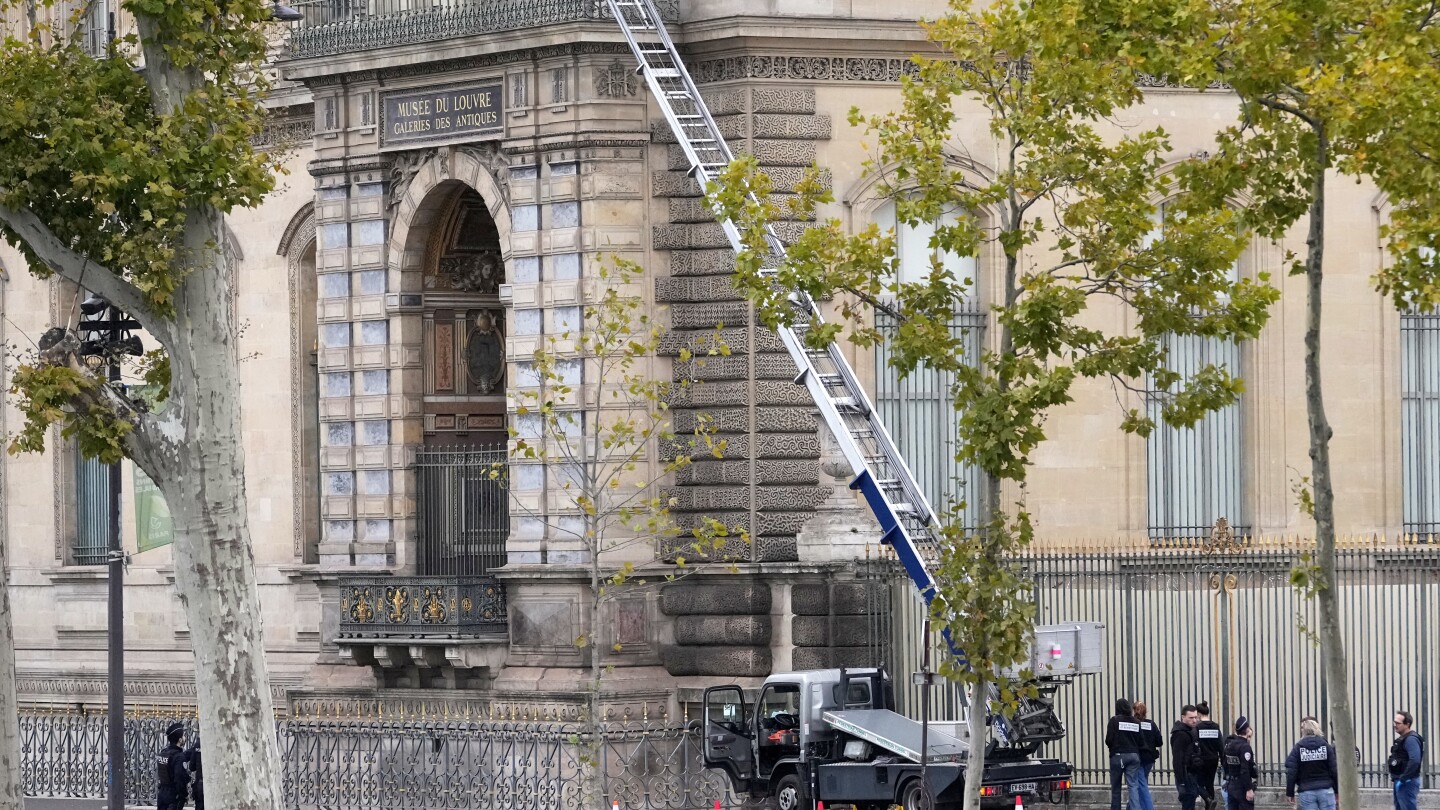
How a German freight lift became an unexpected social media star in the Louvre heist
In a daring daylight robbery at the Louvre Museum, thieves demonstrated a surprising level of German efficiency, utilizing a German-made freight lift to execute their plan. The incident, which unfolded in less than four minutes, saw the criminals wheel the lift to the museum, ascend the façade, force open a window, and make off with priceless Napoleonic jewels before escaping on motorbikes through central Paris. Photos of the freight lift, manufactured by Böcker Maschinenwerke GmbH, quickly went viral, turning the spotlight on the company. Alexander Böcker, the managing director and third-generation owner, expressed initial shock at the misuse of their product but soon embraced the situation with a sense of humor. By Monday morning, the company had launched a social media campaign featuring the lift, highlighting its capabilities with a slogan that translates to ‘when something needs to be done quickly.’ The post emphasized the lift’s ability to transport up to 400 kilograms of ‘your treasures’ at a speed of 42 meters per minute, powered by a whisper-quiet 230 Volt E-Motor. Böcker acknowledged the overwhelming positive feedback, though he clarified that the lift is not designed to transport humans. The incident has inadvertently turned into a marketing coup for the company, showcasing the unexpected intersection of crime and commerce.
-

Huge noise then I yelled to get out – Louvre attendant recalls shock of heist
In a brazen daylight robbery at the Louvre Museum in Paris, thieves made off with eight priceless crown jewels, including treasures once belonging to Empress Marie-Louise and Empress Eugenie, with an estimated total value of €88 million. The heist unfolded on Sunday morning as visitors began to arrive, leaving staff and tourists in shock. An unnamed gallery attendant recounted the moment the thieves used an angle grinder to break through a reinforced window into the Gallery of Apollo, where the historic jewelry is housed. ‘No-one could have been prepared for this,’ she said, describing the chaos that ensued. The gang, equipped with a mechanical ladder mounted on a lorry, accessed the first-floor balcony and swiftly seized the treasures within eight minutes. Two tourists reportedly fled in panic as one of the criminals brandished what appeared to be a chainsaw. The attendant and her colleagues evacuated visitors and secured neighboring galleries, but the thieves escaped on scooters, leaving behind a trail of evidence, including a damaged crown. The museum’s director, Laurence des Cars, revealed that years of underfunding and inadequate security measures, such as a single misaligned external camera, contributed to the breach. While French ministers defended the museum’s security protocols, staff expressed concerns about a declining ‘culture of security’ at the iconic institution.