标签: Europe

欧洲

  • Russian cargo ship captain is found guilty over North Sea tanker crash death

    Russian cargo ship captain is found guilty over North Sea tanker crash death

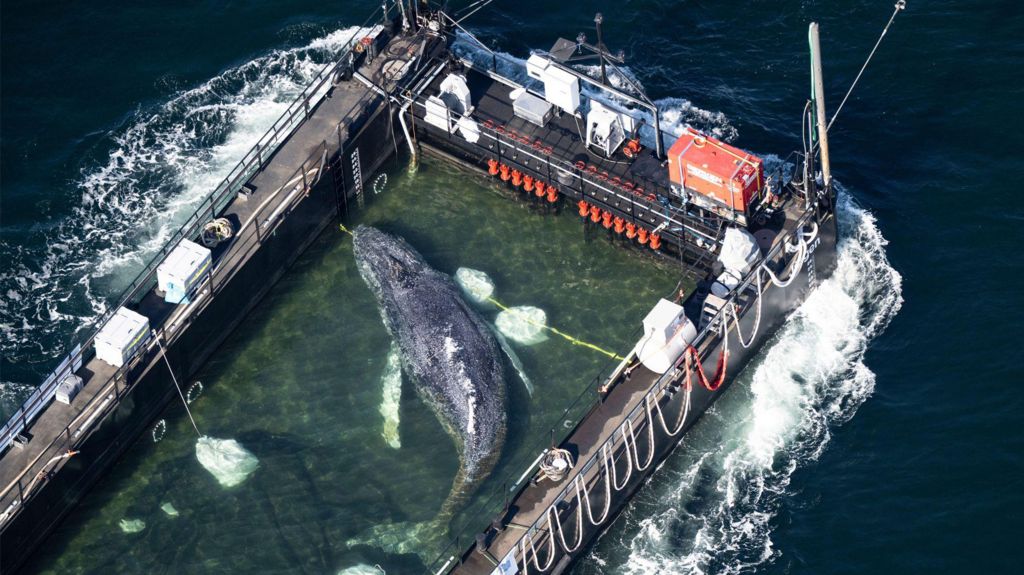
    In a landmark maritime trial concluding Monday, Russian captain Vladimir Motin was convicted of gross negligence manslaughter for his role in a catastrophic collision between cargo vessel Solong and U.S. oil tanker Stena Immaculate. The incident occurred March 10, 2025, in the North Sea off northeast England while both ships carried highly flammable cargo.

    The court heard how Motin, 59, from St. Petersburg, was serving as sole watch officer aboard the 130-meter Solong when it struck the anchored 183-meter U.S. military jet fuel tanker at 15.2 knots. The impact triggered an enormous blaze that burned relentlessly for eight days, consuming both vessels in a fireball visible for miles.

    Tragically, 38-year-old Filipino crew member Mark Angelo Pernia, who was working on the Solong’s bow at the moment of impact, perished instantly. His remains were never recovered from the wreckage.

    Prosecutors presented compelling evidence demonstrating Motin’s failure to execute basic safety protocols during the crisis. The Russian captain neglected to summon assistance, reduce speed, sound collision alarms, or initiate emergency stopping procedures. CCTV footage and audio recordings revealed a startling minute of silence from the bridge before impact, followed by panicked transmissions from the U.S. tanker crew reporting ‘fire, fire, fire.’

    Senior specialist prosecutor Michael Gregory characterized the incident as ‘a tragic and entirely avoidable death caused by truly, exceptionally bad negligence,’ noting it was ‘extremely fortunate that no one else was killed.’

    Rescue teams successfully evacuated 36 personnel from both vessels following the collision. The Solong was transporting alcoholic spirits and hazardous materials destined for Rotterdam, while the Stena Immaculate carried jet fuel for U.S. military operations.

    Motin, who prosecutors allege falsified accounts of the incident, will face sentencing on Thursday.

  • Crown Princess’s son arrested for alleged assault before rape trial in Norway

    Crown Princess’s son arrested for alleged assault before rape trial in Norway

    The Norwegian royal family faces mounting scrutiny as Crown Princess Mette-Marit’s son, Marius Borg Høiby, has been arrested for the fourth time in 18 months ahead of his trial on 38 criminal charges. The 29-year-old stepson of Crown Prince Haakon was remanded in custody for four weeks following Sunday’s arrest on allegations involving weapon possession and violation of a restraining order.

    Høiby’s legal troubles began in August 2024 with accusations of assaulting a former partner. He now faces charges spanning multiple serious offenses including the alleged rape of four women, drug transportation of 3.5kg marijuana, and repeated traffic violations. While admitting to some minor charges, Høiby has denied the most severe allegations against him.

    Simultaneously, Norwegians are confronting revelations about Crown Princess Mette-Marit’s extensive three-year correspondence with convicted sex offender Jeffrey Epstein between 2011-2014. The future queen acknowledged “poor judgment” after it emerged she maintained contact through official royal channels, including a four-night stay at Epstein’s Florida residence and discussions about inappropriate wall art for her teenage son.

    Prime Minister Jonas Gahr Støre has implicitly criticized the crown princess’s actions, while royal commentators question the advisory failure surrounding her communications. Historian Ole-Jørgen Schulsrud-Hansen notes the fundamental distinction: “She’s never a private citizen, she’s always the crown princess.”

    The royal household has attempted to distance itself from Høiby’s case, emphasizing his status as a private citizen. Crown Prince Haakon expressed sympathy for affected women and families, calling it “a difficult time for many.” The case continues amid concerns about Høiby’s mental health and substance abuse issues, with the Oslo District Court approving extended custody to prevent reoffending during proceedings.

  • Catholic Church and Italy investigate sacred and profane cherub seemingly modeled on Meloni

    Catholic Church and Italy investigate sacred and profane cherub seemingly modeled on Meloni

    A centuries-old tradition of incorporating contemporary figures into religious artwork has ignited an unprecedented controversy in Rome, where a recently restored cherub bearing remarkable resemblance to Prime Minister Giorgia Meloni has triggered dual investigations by both ecclesiastical and state authorities.

    The Basilica of San Lorenzo in Lucina, one of Rome’s most ancient churches consecrated in 440 AD, has become the epicenter of this unusual scandal. The problematic artwork appears in a side chapel near the main altar, depicting a cherub holding a map of Italy in a position of deference before a bust of Italy’s last king, Umberto II. This particular chapel underwent renovation in 2000 and required restoration in 2023 due to water damage.

    Both the Diocese of Rome and the Italian Culture Ministry have launched formal inquiries into the restoration work. Their swift response demonstrates institutional intolerance for perceived profanity within sacred spaces. The basilica, though historically significant, has gained newfound celebrity status as curiosity-seekers flock to photograph the controversial angel, sometimes disrupting religious services.

    Prime Minister Meloni herself addressed the controversy with humor, writing on social media: ‘No, I definitely don’t look like an angel,’ accompanied by a laughing/crying emoji. Her lighthearted response contrasts with the seriousness of the institutional investigations.

    The controversy carries historical weight given Italy’s complex relationship with its monarchical past. Italians rejected the monarchy after World War II due to its support for Fascist dictator Benito Mussolini. Meloni’s right-wing party traces its roots to the neo-fascist movement that succeeded Mussolini, adding political sensitivity to the artwork’s perceived deference to royalty.

    Restorer Bruno Valentinetti has denied using Meloni as a model, asserting that any resemblance exists ‘in the eye of the beholder’ and that he merely restored his original 2000 painting. Parish priest Rev. Daniele Micheletti acknowledged the resemblance but dismissed its significance, noting artistic precedent for depicting real people in religious contexts, such as Caravaggio’s use of a prostitute as model for the Virgin Mary.

    Cardinal Baldassare Reina, vicar of Rome, has taken a firmer stance, criticizing Micheletti’s blasé attitude and emphasizing that sacred art must not be ‘misused or exploited’ but should exclusively support liturgical life and prayer. The Culture Ministry has deployed special delegate Daniela Porro to ascertain the nature of the work and determine appropriate actions.

    The investigations now focus on determining the original appearance of the 2000 cherub and whether the restoration improperly altered its features. The basilica, currently property of Italy’s Interior Ministry, remains open to visitors while authorities determine the appropriate resolution to this intersection of art, religion, and politics.

  • Snowboard begins as curling continues – Thursday’s Winter Olympics guide

    Snowboard begins as curling continues – Thursday’s Winter Olympics guide

    The 25th Winter Olympic Games in Milan-Cortina are poised to captivate global audiences with nearly 3,000 athletes from 90 nations competing across 116 medal events. Team GB arrives with a contingent of 53 athletes demonstrating significant podium potential across multiple disciplines.

    The sporting action commences prior to the official opening ceremony, featuring early competitions in curling’s mixed doubles event. British duo Bruce Mouat and Jen Dodds, childhood friends and 2021 world champions, seek redemption after their narrow bronze medal miss at the 2022 Games. Their campaign begins against Norwegian rivals Magnus Nedregotten and Kristin Skaslien, who defeated them in the previous Olympic semifinals.

    Snowboarding’s big air qualification showcases athletic evolution, with competitors attempting increasingly complex aerial maneuvers. Japan’s Hiroto Ogiwara recently landed the sport’s first-ever 2340 mute grab (6½ rotations) at the 2025 X Games, pushing the boundaries of what’s possible in the event.

    The figure skating team event returns with heightened scrutiny following the doping controversy involving Russian skater Kamila Valieva at the last Winter Olympics. With Russia excluded from team competitions, the United States and Japan emerge as favorites while Great Britain aims for a strong showing.

    Alpine skiing features compelling storylines across multiple events. Swiss sensation Marco Odermatt enters as the slight favorite in men’s downhill, while American legend Lindsey Vonn makes her competitive return at age 41 following retirement. The women’s downhill also features host nation hopefuls Federica Brignone and Sofia Goggia, both overcoming significant injuries.

    British prospects appear promising across multiple disciplines. Skeleton racer Matt Weston, the two-time reigning world champion, seeks to become Britain’s first male Olympic champion in the sport. Teen snowboarding sensation Mia Brookes aims to become Britain’s youngest Winter Olympic medalist in 78 years, while Kirsty Muir returns from ACL surgery to compete in freestyle skiing events.

    The ice hockey tournaments feature the return of NHL players to Olympic competition for the first time since 2014, significantly elevating the level of competition. The women’s tournament continues the historic rivalry between Canada and the United States, who have met in six of the seven Olympic gold medal matches.

    New events debut at these Games, including ski mountaineering and dual moguls, while traditional sports like curling and bobsleigh maintain their popular appeal. The closing ceremony will take place in Verona’s historic Roman amphitheater, concluding the Games before the focus shifts to the French Alps for the 2030 Winter Olympics.

  • Ukraine hails ‘real results’ after Musk restricts Russian Starlink use

    Ukraine hails ‘real results’ after Musk restricts Russian Starlink use

    SpaceX’s decisive intervention has effectively neutralized Russia’s illicit utilization of Starlink satellite technology for combat operations in Ukraine, according to official statements from Kyiv. Ukrainian Defense Minister Mykhailo Fedorov publicly acknowledged Elon Musk’s pivotal role in addressing this critical security vulnerability, hailing the SpaceX founder as “a true champion of freedom and a genuine friend of the Ukrainian people.”

    The breakthrough came after Ukrainian authorities alerted SpaceX to confirmed instances of Russian forces employing Starlink-connected drones to conduct precision attacks. These kamikaze drones, specifically the low-cost Molniya-2 models equipped with Starlink terminals, had demonstrated dramatically enhanced battlefield capabilities according to analyses from the Institute for the Study of War.

    While neither Fedorov nor Musk disclosed specific technical details, defense ministry reports indicate SpaceX implemented a strategic speed restriction limiting terminal functionality to 75 kilometers per hour within Ukrainian territory. This calculated measure effectively neutralizes Russian drone operations since their aircraft exceed this velocity threshold, preventing real-time operator control essential for combat effectiveness.

    Beyond immediate drone countermeasures, Ukraine is collaborating with SpaceX to establish a comprehensive white list system that will exclusively authorize registered Starlink terminals operating within national borders. All unauthorized devices will be systematically disconnected from the satellite network, creating an additional layer of security against technological appropriation.

    The development marks a significant chapter in the complex relationship between Musk and Ukraine. Despite previous tensions regarding Starlink access restrictions in Crimea and Musk’s criticisms of Western military aid to Ukraine, the technology magnate has consistently maintained that Starlink would remain operational for Ukrainian defense purposes. Fedorov recently reaffirmed the system’s critical importance, noting that Starlink constitutes “the backbone of the Ukrainian army” and remains essential for national stability.

    This cybersecurity success story exemplifies Ukraine’s data-driven defense strategy under Fedorov’s leadership, highlighting increased collaboration with Silicon Valley entities to strengthen national security infrastructure through technological innovation.

  • ‘Pay and smile’ – Rome visitors face Trevi Fountain charge

    ‘Pay and smile’ – Rome visitors face Trevi Fountain charge

    Visitors to the Eternal City will now encounter a revised experience at one of its most celebrated landmarks. The municipal government of Rome has officially instituted a €2 admission charge for entry to the primary viewing platform of the Trevi Fountain, marking a significant shift in accessibility policy for the monument. This Baroque masterpiece, immortalized in cinematic history and renowned for its coin-tossing tradition, had previously remained freely accessible to the public throughout its history.

    The implementation follows growing concerns regarding overcrowding, maintenance costs, and site preservation. Municipal authorities indicate the nominal fee will serve dual purposes: regulating visitor flow during peak hours and generating dedicated funds for the fountain’s ongoing conservation and security operations. The measure represents part of a broader municipal strategy to manage tourism infrastructure more sustainably while protecting cultural heritage sites from excessive wear.

    Tourist reactions have been mixed, with some visitors acknowledging the necessity of preservation efforts while others express disappointment at the monetization of previously public spaces. Local business operators near the monument are monitoring potential impacts on foot traffic and commerce. The city has established clear signage and designated payment stations to facilitate the new system, which operates during daytime visiting hours.

    This policy aligns Rome with other European cities implementing similar tourist management measures at cultural sites. The initiative reflects ongoing global conversations about balancing open access to cultural treasures with the practical realities of their maintenance and preservation in high-tourism environments.

  • British politician Peter Mandelson faces pressure to quit House of Lords over Jeffrey Epstein ties

    British politician Peter Mandelson faces pressure to quit House of Lords over Jeffrey Epstein ties

    LONDON — Peter Mandelson, the former British ambassador to Washington and prominent Labour Party figure, has resigned from his political affiliations following explosive new revelations about his connections to convicted sex offender Jeffrey Epstein. The development marks another dramatic turn in the career of one of Britain’s most skilled yet controversial political operators.

    Mandelson’s resignation from the governing Labour Party on Sunday came in response to allegations contained within over 3 million documents recently released by the U.S. Department of Justice. These documents reportedly indicate that Mandelson received substantial payments totaling $75,000 from Epstein accounts two decades ago. While Mandelson has questioned the authenticity of bank records and denies recollection of receiving these funds, he stated he was stepping aside to prevent “further embarrassment” to the party.

    The released correspondence reveals extensive communication between Mandelson and Epstein, including emails from 2009 suggesting Mandelson, then a UK government minister, offered to lobby officials regarding banking bonus taxes. One particularly compromising photograph shows Mandelson in his underwear near an unidentified woman in a bathrobe.

    Prime Minister Keir Starmer, who previously dismissed Mandelson from his ambassadorial position over earlier Epstein revelations, now faces mounting pressure to ensure Mandelson testifies in U.S. investigations. Starmer has additionally called for Mandelson’s resignation from the House of Lords, Parliament’s unelected upper chamber where Mandelson holds lifetime membership and the title Lord Mandelson since 2008.

    Cabinet minister Steve Reed emphasized that Mandelson, like Prince Andrew, bears a “moral obligation” to assist Epstein’s victims. “If anybody has information or evidence that they can share that might help to understand what’s gone on and bring justice for those victims, then they should share it,” Reed stated.

    The situation presents complex constitutional challenges, as removing Mandelson from the Lords would require parliamentary legislation—a process last undertaken over a century ago. A spokesman for Starmer acknowledged that while the Prime Minister believes Mandelson should not remain in the Lords, he lacks the direct authority to remove him.

    This development represents the latest chapter in Mandelson’s turbulent political journey. The architect of Labour’s centrist “New Labour” transformation under Tony Blair, Mandelson previously resigned twice from government over financial and ethical allegations before remarkably returning to high office. His recent appointment as Washington ambassador capitalized on his trade expertise and connections with wealth circles, but ultimately proved unsustainable as Epstein connections continued to surface.

    Epstein died by suicide in 2019 while awaiting trial on federal charges of sexually abusing dozens of girls, having previously avoided prosecution through a controversial plea deal in Florida.

  • Trevi Fountain fee goes into effect as Rome seeks to manage tourist flow at celebrated water feature

    Trevi Fountain fee goes into effect as Rome seeks to manage tourist flow at celebrated water feature

    ROME — The Eternal City has initiated a new €2 ($2.35) access fee for tourists seeking close proximity to the iconic Trevi Fountain, marking a significant shift in urban tourism management. Implemented on Monday, this measure aims to generate essential revenue while regulating visitor density at one of the world’s most celebrated Baroque monuments.

    The innovative pricing strategy emerged from successful crowd management experiments conducted throughout the previous year. Visitors now experience structured pathways and controlled entry systems, fundamentally transforming the accessibility dynamics around the fountain’s basin. Initial reactions from international tourists have been overwhelmingly positive, with many acknowledging the nominal fee as reasonable compensation for enhanced visitation quality.

    Simultaneously, Rome introduced a complementary €5 museum access ticket for specific cultural institutions. Both initiatives exempt registered city residents, with additional revenue streams designated to expand free museum access for locals. Municipal authorities project approximately €6.5 million in annual revenue that will directly support preservation efforts for Rome’s extensive cultural heritage.

    Tourism Assessor Alessandro Onorato emphasized the symbolic value of the modest charge: ‘Considering the Trevi Fountain’s global significance, this token amount demonstrates Rome’s commitment to balancing accessibility with conservation.’ The system permits advanced online bookings for prime daylight access, while maintaining free viewing from the surrounding piazza and during non-ticketed hours.

    This approach aligns with broader Italian tourism management strategies, including Venice’s day-tripper tax and the Pantheon’s ticketing system. However, it contrasts sharply with recent Louvre Museum price increases reaching €32 for non-European visitors. The Trevi Fountain continues to captivate visitors with its mythological grandeur—featuring Oceanus surrounded by cascading waters—and enduring cinematic legacy from Fellini’s ‘La Dolce Vita.’ While recreational bathing remains prohibited, the tradition of coin-tossing for ensured return to Rome persists under the new managed access system.

  • Germany detains 5 men accused of illegally exporting goods to Russian defense companies

    Germany detains 5 men accused of illegally exporting goods to Russian defense companies

    German federal prosecutors have executed a major operation against an illicit procurement network allegedly supplying Russian defense companies, resulting in five arrests across northern Germany. The operation targeted individuals accused of systematically violating EU sanctions imposed following Russia’s full-scale invasion of Ukraine in 2022.

    The detained suspects, all German nationals with two holding dual Russian citizenship and one additional Ukrainian citizenship, face charges of criminal organization membership and breaching Germany’s Foreign Trade and Payments Act. Law enforcement conducted simultaneous raids in Lübeck and Lauenburg district, with additional searches executed at multiple properties nationwide. Five additional suspects remain at large according to official statements.

    At the center of the investigation is Nikita S. (identified under German privacy conventions), a German-Russian dual national who operates a trading company based in Lübeck. Prosecutors allege this enterprise served as the primary vehicle for procuring and exporting goods to Russian defense industries. The sophisticated operation employed fabricated companies within Lübeck and established fictitious clients both inside and outside the EU to conceal transactions and circumvent sanctions.

    Evidence indicates Russian state agencies orchestrated the network, which supplied at least 24 Russian defense contractors. The scale of operations involved approximately 16,000 separate shipments to Russia with an estimated value exceeding €30 million ($35.5 million). While prosecutors have not disclosed the specific nature of the exported goods, the investigation highlights ongoing challenges in enforcing sanctions against Russia’s military-industrial complex.

  • EU’s foreign policy chief says a Europe-wide army could be ‘extremely dangerous’

    EU’s foreign policy chief says a Europe-wide army could be ‘extremely dangerous’

    BRUSSELS — European Union Foreign Policy Chief Kaja Kallas has issued a stark warning against proposals for a European army, characterizing the concept as “extremely dangerous” during a security conference in Norway on Monday. Her remarks come amid intensified discussions about European security autonomy following shifting U.S. geopolitical priorities.

    Kallas systematically dismantled the European army proposition, emphasizing practical military command structures as her primary concern. “Those advocating for a European army may not have thoroughly considered the practical implications,” she stated. “When already integrated within NATO, establishing a separate military force becomes fundamentally unworkable.”

    The Estonian diplomat highlighted the critical importance of clear command hierarchies during security crises. “The paramount military asset in any emergency situation remains the chain of command—establishing unequivocally who issues orders to whom,” Kallas explained. “Creating parallel structures between a European army and NATO would result in catastrophic coordination failures, with critical decisions falling between institutional gaps.”

    Norwegian Prime Minister Jonas Gahr Støre echoed Kallas’ position despite Norway’s non-EU membership status. “NATO maintains an established decision-making process among allies that, while complex, undergoes continuous operational training,” Støre noted, unequivocally rejecting European army proposals as “not a road we should travel.”

    The debate resurged following recent NATO tensions triggered by former President Donald Trump’s controversial suggestions regarding Greenland’s status. Adding strategic perspective, NATO Secretary-General Mark Rutte recently asserted that European self-defense without U.S. support remains currently unachievable. Rutte told EU lawmakers that Europe would need to more than double existing military spending targets to approach autonomous defense capabilities, bluntly stating that those believing otherwise should “keep on dreaming.”