标签: Europe

欧洲

  • Son of Norway’s crown princess chokes back tears giving evidence at rape trial

    Son of Norway’s crown princess chokes back tears giving evidence at rape trial

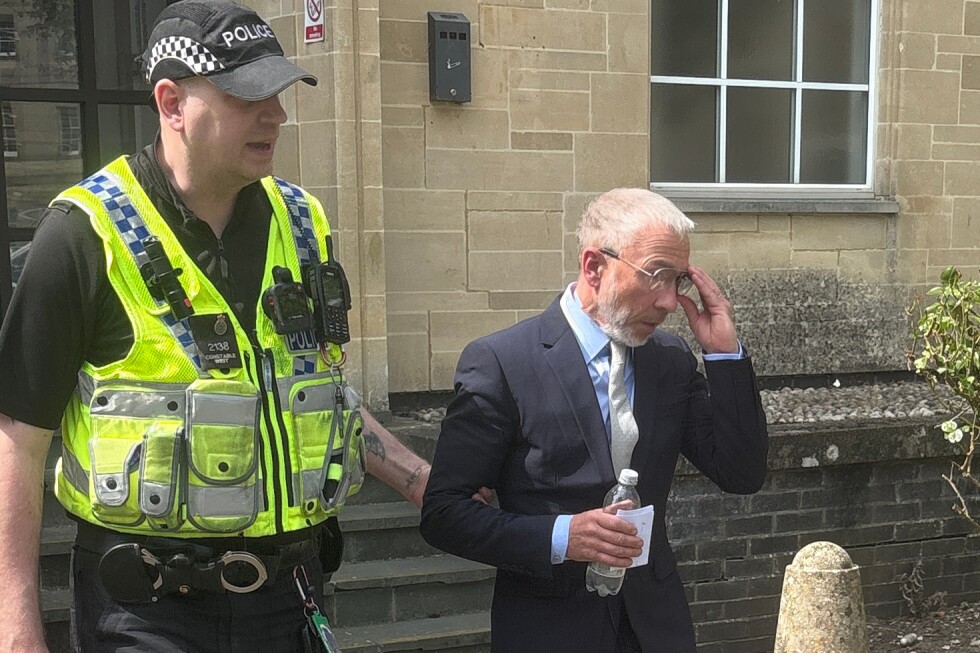
    In a tense Oslo courtroom, Marius Borg Høiby, the 29-year-old son of Norway’s Crown Princess Mette-Marit, delivered emotional testimony at his trial facing four rape charges and approximately thirty additional criminal allegations. The defendant appeared visibly overwhelmed throughout the proceedings, frequently pausing to remove his glasses and wipe tears from his eyes while describing the intense media scrutiny he has endured since childhood.

    Høiby’s testimony followed earlier statements from his first alleged rape victim, who testified under protection of anonymity about experiencing complete memory loss after what she believes was being drugged at a December 2018 gathering in the basement of his parents’ residence. The woman described profound feelings of ‘betrayal and shock’ upon later viewing police evidence containing videos allegedly showing sexual assault occurring shortly after initial consensual contact.

    During his half-hour uninterrupted statement, Høiby acknowledged extensive involvement with drugs and alcohol while articulating what he characterized as an ‘extreme need for validation’ stemming from his public identification primarily as ‘his mother’s son.’ The defendant detailed meeting his first accuser at a social event where he reportedly used cocaine for the initial time, though he maintains innocence regarding all criminal charges.

    The trial unfolds amid simultaneous royal controversy involving Crown Princess Mette-Marit, who recently postponed private travels indefinitely following revelations of her extensive three-year correspondence with convicted American sex offender Jeffrey Epstein. Palace officials confirmed the postponement without elaboration while the royal household faces mounting criticism over the informal tone of these communications.

    Although born prior to his mother’s marriage into royalty, Høiby holds no formal royal status or public position. His court appearance followed overnight hospitalization rather than return to detention facilities, with observers noting visible trembling during earlier proceedings. The three-judge panel heard testimony while two alleged victims observed from the courtroom’s left section, though Høiby avoided visual contact with them throughout his statement.

  • Serbian government official faces forgery trial over withdrawn Kushner-linked project

    Serbian government official faces forgery trial over withdrawn Kushner-linked project

    A high-profile corruption trial commenced in Belgrade on Wednesday, targeting Serbian Culture Minister Nikola Selaković and three government officials charged with document forgery and abuse of office. The case centers on their alleged manipulation of protected cultural status to facilitate a major real estate development previously backed by Jared Kushner, son-in-law of former U.S. President Donald Trump.

    The controversial project envisioned transforming Belgrade’s bombed-out military complex—a protected modernist architectural site—into a luxury commercial hub featuring high-rise hotels, premium apartments, and retail spaces. Kushner’s investment firm subsequently withdrew from the multi-million dollar initiative following public outcry and international condemnation.

    Designed by renowned Yugoslav architect Nikola Dobrović, the damaged building holds significant historical value and became a symbol of NATO’s 1999 bombing campaign against Serbia during the Kosovo conflict. Heritage preservation groups strongly opposed the commercialization of the culturally protected zone, which had received endorsement from President Aleksandar Vučić’s administration.

    The trial unfolds amidst growing political tensions as Vučić’s government faces widespread protests over judicial reforms perceived as undermining legal independence. The Serbian parliament recently passed legislation restricting the authority of organized crime prosecutors, prompting criticism from EU Enlargement Commissioner Marta Kos who called the measures ‘a serious setback’ for Serbia’s European integration prospects.

    Prosecutors staged silent demonstrations against these reforms, while anti-government protesters gathered outside the courthouse chanting ‘thieves!’ as defendants arrived. This case represents the latest challenge to Vučić’s increasingly authoritarian rule, which has included crackdowns on dissent and strengthening control over state institutions despite formal commitments to EU membership.

  • The former Prince Andrew moves to King Charles III’s private estate after Epstein document uproar

    The former Prince Andrew moves to King Charles III’s private estate after Epstein document uproar

    In a dramatic acceleration of royal restructuring, Andrew Mountbatten-Windsor has abruptly vacated his Windsor residence following renewed scrutiny from recently unsealed Epstein investigation documents. The brother of King Charles III departed Royal Lodge on Monday, relocating to the monarch’s private Sandringham estate in eastern England rather than awaiting his previously announced spring timeline.

    The sudden relocation coincides with Thames Valley Police confirming an investigation into fresh allegations that Epstein facilitated another woman’s travel to Britain for sexual encounters with the former prince. Legal representatives disclosed to BBC that the alleged incident occurred in 2010 within the very premises Andrew has now vacated.

    These developments emerge alongside the U.S. Department of Justice’s release of 3 million pages of case documents, wherein Andrew features prominently. One disclosed email from March 2011 reveals an exotic dancer’s legal counsel alleging Epstein and Andrew coerced her into sexual acts during a 2006 gathering in Florida, subsequently compensating her merely $2,000 of the promised $10,000. Separate correspondence shows Epstein offering to arrange a date between Andrew and a 26-year-old Russian woman.

    The Royal Lodge residence had become a focal point of contention between the monarch and his brother since Charles’s ascension in 2022. Despite Andrew’s insistence on honoring a lease extending to 2078, public and parliamentary pressure mounted regarding his favorable occupancy terms for the 30-room crown-managed property. Sandringham Estate, conversely, remains the king’s personal property rather than crown estate, providing a more discreet retreat.

    While the documents showcase Epstein’s extensive network without implying wrongdoing by all named individuals, they have intensified scrutiny on Andrew’s associations. The former prince maintains his consistent denial of any misconduct regarding his relationship with Epstein.

  • UK will release files related to Mandelson’s ambassador appointment in more Epstein fallout

    UK will release files related to Mandelson’s ambassador appointment in more Epstein fallout

    LONDON — In a significant political development, the British government has capitulated to parliamentary pressure by agreeing to disclose emails and official documents pertaining to the controversial appointment of Peter Mandelson as ambassador to the United States. This decision follows the Conservative Party’s threat to force a parliamentary vote demanding transparency regarding Mandelson’s 2024 diplomatic assignment, despite known associations with convicted sex offender Jeffrey Epstein.

    The government has committed to releasing all requested materials, reserving only those documents that could potentially compromise national security or international relations. The exact scope and timeline for this disclosure remain unspecified.

    Mandelson’s diplomatic career unraveled dramatically when he was terminated from his Washington post in September following revelations of his sustained friendship with Epstein after the financier’s conviction for sex crimes involving minors. The situation escalated further this week when Mandelson resigned from the House of Lords amid an ongoing police investigation into allegations of misconduct in public office.

    Newly unveiled documents from the U.S. Department of Justice suggest potentially serious breaches of official conduct. Evidence indicates that during his tenure as government minister approximately fifteen years ago, Mandelson may have shared sensitive information with Epstein, including attempts to lobby against banker bonus taxes, disclosure of internal government reports discussing asset sales, and advance warning of European currency bailout measures.

    Financial records reveal three separate payments totaling $75,000 from Epstein to accounts associated with Mandelson or his partner between 2003-2004. The offense of misconduct in public office carries a maximum penalty of life imprisonment, though investigation initiation does not presuppose guilt.

    Epstein died in custody in 2019 while awaiting trial on federal charges related to the sexual abuse of numerous minors. Attempts to reach Mandelson for comment through House of Lords channels remained unanswered.

  • Russia and Ukraine envoys are due to meet in Abu Dhabi for US-brokered talks

    Russia and Ukraine envoys are due to meet in Abu Dhabi for US-brokered talks

    Diplomatic efforts to resolve the ongoing conflict between Russia and Ukraine are set to continue as representatives from both nations prepare for another round of U.S.-mediated negotiations in Abu Dhabi on Wednesday. The talks, which include U.S. Special Envoy Steve Witkoff and Jared Kushner, son-in-law of former President Donald Trump, follow previous discussions that yielded limited progress without achieving major breakthroughs.

    The renewed diplomatic initiative unfolds against a backdrop of intensified military aggression. Russian forces launched a massive overnight bombardment from Monday to Tuesday, deploying hundreds of drones and a record 32 ballistic missiles that injured at least ten civilians. These attacks specifically targeted Ukraine’s energy infrastructure, exacerbating the humanitarian crisis during one of the coldest winters in recent years, with temperatures plummeting to minus 20 degrees Celsius (-4°F).

    The timing of these strikes appears particularly significant given previous assurances. According to Trump, Russian President Vladimir Putin had committed to a temporary cessation of attacks on Ukraine’s power grid—a claim contradicted by the recent escalation. Ukrainian President Volodymyr Zelenskyy accused Moscow of duplicity, noting that barely four days had passed before renewed assaults on critical energy infrastructure.

    Analysts from the Institute for the Study of War suggest these developments represent a calculated negotiating strategy by the Kremlin. “The Kremlin will likely attempt to portray its adherence to this short-term energy strikes moratorium as a significant concession to gain leverage in the upcoming peace talks, even though the Kremlin used these few days to stockpile missiles for a larger strike package,” the Washington-based think tank reported.

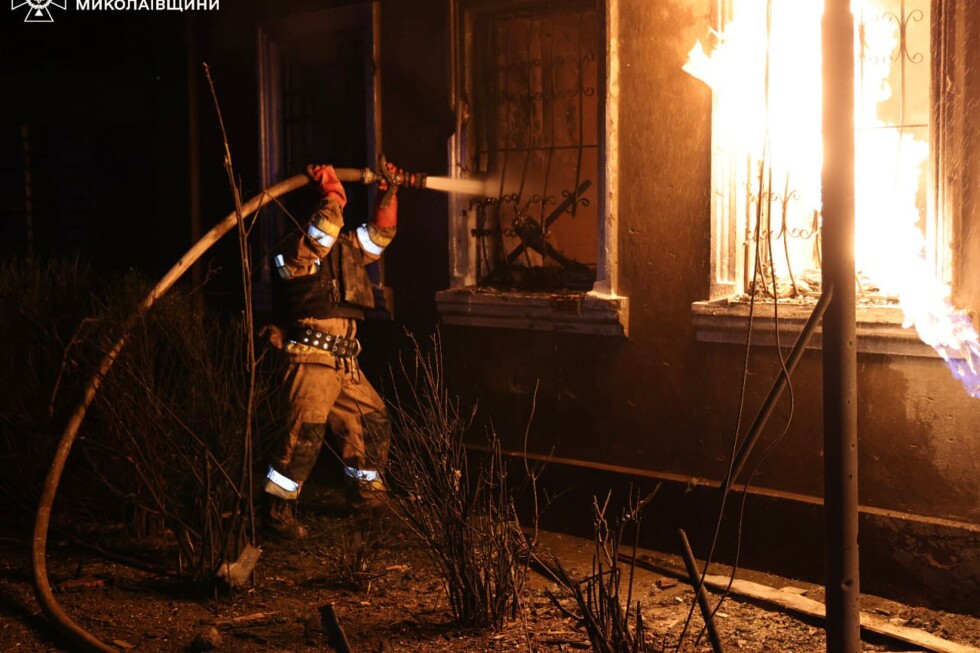
    The human cost of the conflict continues to mount. In the central Dnipropetrovsk region, a Russian strike on a residential area killed a 68-year-old woman and a 38-year-old man. The southern city of Odesa also endured large-scale attacks that damaged approximately 20 residential buildings, requiring the rescue of four individuals from beneath rubble.

    These diplomatic efforts coincide with the impending expiration of the last remaining nuclear arms control treaty between Russia and the United States on Thursday, adding another layer of complexity to the already tense international landscape. The simultaneous occurrence of these events raises stakes for all parties involved in the negotiations.

  • European Union citizens want more unified and bold leadership, survey suggests

    European Union citizens want more unified and bold leadership, survey suggests

    BRUSSELS (AP) — A comprehensive European Union survey reveals overwhelming public support for enhanced EU leadership capabilities as the bloc confronts mounting geopolitical, economic, and environmental challenges. The Eurobarometer study, conducted through extensive face-to-face interviews with over 2,600 citizens across all 27 member states, demonstrates a clear mandate for more robust collective action.

    The research, completed in November prior to recent international developments, indicates exceptionally strong backing for expanded EU security responsibilities (69%), more assertive diplomatic engagement (87%), and deeper unification to address critical issues (90%). The survey carries a margin of error of just 2 percentage points, reflecting its statistical reliability.

    Citizens expressed profound concern about multiple threat vectors, including military conflicts near EU borders, climate-induced natural disasters, and sophisticated cyber warfare operations. Defense priorities have surged to the forefront, emerging as the primary concern in 18 member nations.

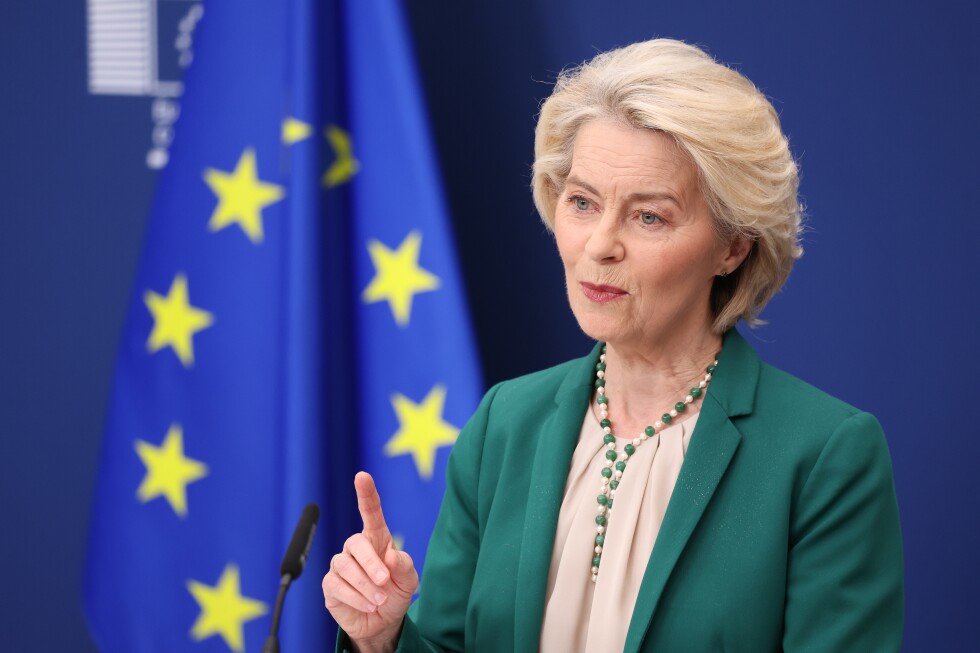
    The findings align strategically with European Commission President Ursula von der Leyen’s agenda for strengthening Brussels’ authority in trade and defense matters. Her administration has pursued numerous international trade agreements responding to global economic pressures, including tariff threats from the United States and China’s restrictions on vital mineral exports.

    Notably, the poll suggests that external attempts to fragment EU cohesion—whether from Russia, the United States, or far-right movements—have largely failed to undermine public support for European integration. However, respondents identified serious anxieties about hybrid threats including drone incursions, disinformation campaigns, artificial intelligence manipulation, social polarization, election interference, and defense supply chain dependencies.

    A striking paradox emerged between personal optimism and global pessimism: while citizens feel positive about their individual circumstances and the EU collectively, they maintain deep concerns about worldwide stability. This divergence between personal confidence and broader uncertainty significantly influences civic priorities, governance expectations, and demands for multinational cooperation at various administrative levels.

  • N’Golo Kanté joins Turkish club Fenerbahce after transfer delay

    N’Golo Kanté joins Turkish club Fenerbahce after transfer delay

    In a dramatic turn of events, Turkish football club Fenerbahce has successfully finalized the acquisition of French midfield maestro and 2018 World Cup winner N’Golo Kanté. The transfer, which appeared to have collapsed just days earlier, was ultimately rescued through high-level diplomatic intervention.

    The completion of the deal followed significant administrative complications that temporarily jeopardized the entire process. Fenerbahce had initially placed blame on Saudi Pro League side Al-Ittihad, Kanté’s former club, citing administrative errors as the primary obstacle. The situation reached such an impasse that by Tuesday, the transfer seemed destined to fail.

    However, in a remarkable reversal, the clubs reached an agreement after Fenerbahce president Sadettin Saran acknowledged receiving “significant support” from Turkish President Recep Tayyip Erdogan in facilitating the positive resolution. Al-Ittihad subsequently confirmed the departure of the veteran midfielder through an official farewell message on social media platform X.

    The 34-year-old Kanté, who recently made his 65th appearance for the French national team in their 4-0 victory against Ukraine last November, joins Fenerbahce after a single season with the Saudi club. His signing represents a major coup for the Istanbul-based team, which is pursuing its first Turkish Süper Lig championship in over a decade.

    Fenerbahce has been strategically strengthening its squad during the transfer window, having also secured another French international, midfielder Mattéo Guendouzi, as part of their ambitious campaign to reclaim domestic supremacy and enhance their European prospects.

  • Israel strikes Gaza, killing 21 including women and children, after saying Hamas violated deal

    Israel strikes Gaza, killing 21 including women and children, after saying Hamas violated deal

    Israeli military operations resumed with intensity across Gaza on Wednesday, resulting in at least 21 Palestinian fatalities including five children and seven women, according to hospital authorities. The strikes targeted multiple locations including the Tuffah neighborhood and Khan Younis, where residential structures and temporary shelters were hit.

    The violence represents the most significant breach of the October ceasefire agreement to date, with Palestinian health officials reporting 556 deaths since the truce began. Among the casualties were two infants from the Khabbaz family—10-day-old Wateen and 5-month-old Mira—killed alongside their grandmother in a single strike. Hussein Hassan Hussein al-Semieri, an on-duty paramedic, also perished in the attacks.

    Israeli military officials, speaking anonymously, justified the operations as responses to militant gunfire that seriously wounded one reservist soldier earlier Wednesday. This pattern of response has characterized the fragile ceasefire period, with both sides accusing the other of violations.

    The humanitarian situation at the Rafah border crossing remains problematic despite its recent reopening. Only 40 Palestinians managed to cross into Gaza throughout Tuesday, with three women reporting being blindfolded, handcuffed, and interrogated by Israeli forces for several hours. European Union officials monitoring the crossing acknowledged operational challenges but denied knowledge of specific mistreatment incidents.

    While some ceasefire provisions have advanced—including hostage exchanges and increased aid delivery—key elements like international security deployment and reconstruction efforts have stalled. The United States has provided no timeline for implementing these critical components, leaving Gaza’s future governance uncertain amid continuing violence.

  • Russian attacks on Ukraine energy sites ‘particularly depraved’, UK PM Starmer says

    Russian attacks on Ukraine energy sites ‘particularly depraved’, UK PM Starmer says

    As temperatures plummeted to -20°C (-4°F), Russia resumed its devastating assault on Ukraine’s energy infrastructure Monday night, ending a brief week-long humanitarian pause. The attacks targeted power plants and critical facilities across Kyiv and other regions, creating what UK Prime Minister Sir Keir Starmer described as ‘barbaric’ and ‘particularly depraved’ acts.

    The renewed offensive came despite diplomatic efforts by former US President Donald Trump, who had previously secured a temporary cessation of hostilities from Russian President Vladimir Putin. Trump acknowledged that Putin had technically ‘kept his word’ by observing a seven-day pause before resuming attacks, noting ‘we’ll take anything, because it’s really, really cold over there.’

    Kyiv now faces an unprecedented humanitarian crisis with over 1,000 apartment blocks without heating and extensive damage to energy facilities, including a power plant in Kharkiv rendered beyond repair. Residents have been forced to seek refuge in metro stations, with some erecting tents on platforms for protection against the freezing conditions.

    Municipal authorities are responding by establishing communal heating centers and importing additional generators to manage prolonged blackout periods while engineers attempt repairs. Ukraine continues to highlight critical shortages in missile defense systems, with NATO Secretary-General Mark Rutte urging member states to ‘dig deep in their stockpiles’ during his emergency visit to Kyiv.

    Parallel diplomatic efforts continue as US envoys Steve Witkoff and Jared Kushner meet with Russian and Ukrainian negotiators in Abu Dhabi to discuss a US-proposed peace deal. The most contentious issue remains Russia’s demand for Ukraine to cede remaining territories in the Donbas region not currently under Moscow’s control.

  • The last US-Russian nuclear pact is about to expire, ending a half-century of arms control

    The last US-Russian nuclear pact is about to expire, ending a half-century of arms control

    The expiration of the New START Treaty on Thursday marks a pivotal moment in nuclear arms control, eliminating all constraints on the world’s two largest atomic arsenals for the first time in over fifty years. This development raises profound concerns about potential uncontrolled nuclear proliferation and heightened global instability.

    Russian President Vladimir Putin has expressed willingness to maintain the treaty’s limitations for an additional year, contingent on reciprocal action from Washington. However, the Trump administration has remained noncommittal regarding extension. A White House official, speaking anonymously, indicated President Trump’s interest in maintaining nuclear limits while involving China in future arms control negotiations, though emphasizing any decision would be made on “his own timeline.”

    Beijing has consistently rejected limitations on its expanding nuclear arsenal. Kremlin spokesman Dmitry Peskov warned Tuesday that a world without U.S.-Russian nuclear restrictions would become “more dangerous.”

    Arms control experts universally express alarm about the treaty’s expiration. Daryl Kimball, executive director of the Arms Control Association, warned this could enable both nations to increase deployed nuclear weapons for the first time in approximately 35 years, potentially triggering “an unconstrained, dangerous three-way arms race” involving China.

    The New START Treaty, originally signed in 2010 by Presidents Obama and Medvedev, limited each side to 1,550 deployed warheads on 700 missiles and bombers. Although inspections ceased in 2020 due to COVID-19, Putin formally suspended Russia’s participation in February 2023, citing NATO’s opposition to Russian interests in Ukraine while maintaining commitment to the arsenal caps.

    This situation occurs against a backdrop of deteriorating arms control agreements. The Intermediate-range Nuclear Forces Treaty terminated in 2019, while the Anti-Ballistic Missile Treaty was abandoned by the U.S. in 2001. Recent developments, including Trump’s proposed “Golden Dome” missile defense system and potential resumption of nuclear testing, have further complicated strategic stability. Kimball concluded that the world faces “a potential turning point into a much more dangerous period of global nuclear competition.”