标签: Europe

欧洲

  • Germany arrests woman accused of supplying war-related information to Russian agent

    Germany arrests woman accused of supplying war-related information to Russian agent

    BERLIN — German federal prosecutors have taken into custody a dual German-Ukrainian citizen suspected of conducting espionage operations on behalf of Russian intelligence services. The individual, identified under German privacy regulations as Ilona W., was apprehended in Berlin following an extensive investigation into her activities.

    According to official statements, Ilona W. established contact with a known Russian intelligence operative stationed at the Russian Embassy in Berlin as early as November 2023. Prosecutors allege she systematically provided sensitive information regarding Ukraine’s military capabilities, including detailed intelligence on defense industry locations, experimental drone testing protocols, and scheduled weapon deliveries to Ukrainian forces.

    The suspect reportedly leveraged her personal connections with former German Defense Ministry personnel to acquire classified information. Additionally, she facilitated her Russian contact’s access to high-level political events in Berlin using fabricated identities, enabling the intelligence officer to establish networks and gather information for Russian interests.

    Concurrent with the arrest, German authorities executed search warrants at multiple locations, including the primary suspect’s residence and properties belonging to two additional individuals under investigation. Defense Ministry spokesperson Mitko Müller confirmed the investigation involves two former military employees—one recently retired officer and a civilian employee who departed over fifteen years ago. Both are suspected of unlawfully sharing information with Ilona W., though investigators are determining whether they were aware the intelligence would ultimately reach foreign agents.

    The case emerges amid heightened security concerns across Europe regarding Russian espionage activities, particularly those related to the ongoing conflict in Ukraine. German authorities have intensified counter-intelligence operations to prevent sensitive military information from reaching hostile foreign entities.

  • EU lawmakers vote to hold up Mercosur trade agreement over legal concerns

    EU lawmakers vote to hold up Mercosur trade agreement over legal concerns

    BRUSSELS — In a dramatic legislative move, the European Parliament has suspended ratification of the landmark EU-Mercosur trade agreement, demanding judicial review from Europe’s highest court regarding its treaty compliance. Lawmakers in Strasbourg narrowly passed the resolution with 334 votes in favor versus 324 against, effectively postponing final approval until the European Court of Justice delivers its legal assessment—a process expected to span several months.

    This decision creates significant uncertainty for the comprehensive trade pact signed just days ago following 25 years of negotiations. The agreement, championed by European Commission President Ursula von der Leyen as a strategic response to global protectionism, aimed to establish one of the world’s largest free trade zones covering over 700 million consumers. It proposed eliminating over 90% of tariffs between the economic blocs, benefiting South American agricultural exports and European industrial goods alike.

    The parliamentary vote revealed deep divisions within the EU, with France emerging as a leading opponent. French Foreign Minister Jean-Noel Barrot welcomed the delay, asserting that Parliament had aligned with France’s long-standing position demanding stronger protections for European farmers. Meanwhile, the European Commission expressed strong regret over the decision, while Germany’s Chancellor Friedrich Merz condemned it as “geopolitically misguided” and urged immediate provisional application of the agreement.

    Trade Committee Chair Bernd Lange criticized the move as “absolutely irresponsible” and damaging to European economic interests. Despite the EU’s internal divisions, ratification appears certain within Mercosur nations (Argentina, Brazil, Paraguay, and Uruguay), where the pact enjoys broad support. The development comes ahead of an emergency EU summit focused on transatlantic relations, where trade strategies are expected to dominate discussions.

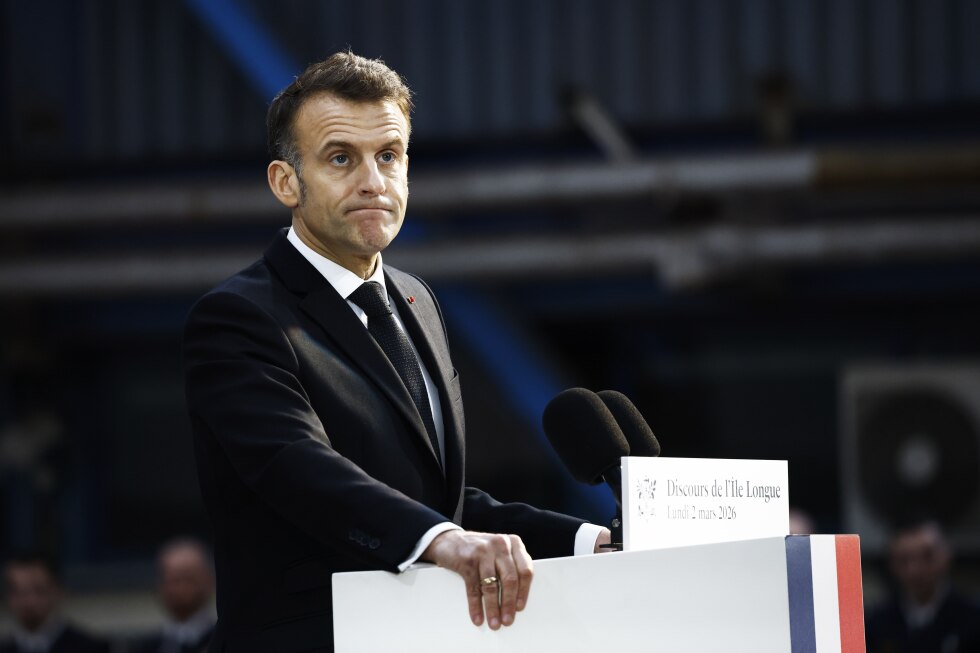
  • Macron urges EU to consider trade ‘bazooka’ in response to US tariffs threat

    Macron urges EU to consider trade ‘bazooka’ in response to US tariffs threat

    BRUSSELS — The European Union is mobilizing its substantial economic defenses in response to escalating tensions with the United States, particularly concerning President Donald Trump’s aggressive posture toward Greenland. As a primarily trade-oriented bloc of 27 nations, the EU’s countermeasures center on powerful financial instruments that could potentially cost American companies billions.

    The centerpiece of Europe’s defensive strategy is the Anti-Coercion Instrument (ACI), colloquially termed the ‘trade bazooka’ by French President Emmanuel Macron. This mechanism, established in 2021 following China’s trade restrictions against Lithuania over Taiwan relations, enables the EU to sanction individuals or institutions exerting undue pressure on member states.

    Speaking at the Davos forum on Tuesday, Macron issued a stark warning that additional U.S. tariffs could compel the EU to deploy its anti-coercion mechanism for the first time against its American allies. ‘The crazy thing is that we could find ourselves in a situation where we use the anti-coercion mechanism for the very first time against the United States,’ Macron stated, expressing regret over what he termed ‘unnecessary aggressiveness.’

    The potential sanctions under the ACI framework include restrictive market access measures, exclusion from EU public procurement contracts, limitations on foreign direct investment, and constraints on goods and services trade. Despite the powerful nature of these tools, significant hesitation exists among EU members, with France currently standing as the primary advocate for their potential deployment.

    EU leaders are convening an emergency summit in Brussels on Thursday to address the growing tensions. The timing is particularly sensitive as the bloc emphasizes the need for allied cooperation in addressing the conflict in Ukraine.

    The economic stakes are enormous: EU-U.S. trade in goods and services reached €1.7 trillion ($2 trillion) in 2024, averaging €4.6 billion daily. Europe’s major exports to the American market include pharmaceuticals, automobiles, aircraft, chemicals, medical instruments, and premium alcoholic beverages.

    According to European Commission documentation, the ACI requires at least six months to activate, with its primary objective being deterrence rather than punishment. As the commission previously stated, ‘The instrument will, therefore, be most successful if there is no need to use it.’

  • Olympic visitors to Milan get a rare chance to glimpse restoration of a long-hidden Leonardo gem

    Olympic visitors to Milan get a rare chance to glimpse restoration of a long-hidden Leonardo gem

    MILAN — In an extraordinary cultural initiative timed with the Milan Cortina Olympics, heritage authorities are granting public access to a long-concealed Leonardo da Vinci masterpiece during its ongoing restoration. The monumental wall and ceiling painting, hidden for centuries within Milan’s historic Sforza Castle, will be visible to visitors through a unique scaffolding viewing platform from February 7 to March 14.

    The artistic treasure, depicting an intricate pergola adorned with flowering branches, occupies the Sala delle Asse in Sforza Castle—located within the same Sempione Park that will host the Olympic flame during the Winter Games. Historical records confirm Leonardo initiated this work in 1498 but abandoned it unfinished when French forces invaded Milan, forcing the artist to flee. Subsequently, the castle was converted into military barracks, and the painting was concealed beneath layers of plaster for centuries.

    Early 20th-century restorers rediscovered the work by removing the plaster but unfortunately overpainted substantial sections, compromising its authenticity. “Leonardo scholars consequently dismissed it as a repainted version rather than a genuine work—essentially a fabrication using popular terminology,” explained Luca Tosi, heritage curator at Sforza Castle.

    Current restoration employs sophisticated techniques using Japanese rice paper and demineralized water to extract salts that have penetrated the walls. Conservators are meticulously cleaning the surface centimeter by centimeter due to the extreme fragility of Leonardo’s original brushwork. “The painting exhibits some liftings and vulnerable areas requiring utmost precision and care,” Tosi noted.

    According to Tomasso Sacchi, Milan’s cultural director, the artwork represents a botanical study reflecting Leonardo’s scientific curiosity, showcasing various plant species with remarkable accuracy. “This experience reveals another dimension of Leonardo’s genius and his extraordinary dedication to multidisciplinary knowledge,” Sacchi stated.

    Following the brief viewing window, the site will close for an additional 18 months to complete restoration. This temporary access provides a once-in-a-generation opportunity to witness both a Renaissance masterpiece and the painstaking process of art conservation.

  • Social media mobilize to find Boro, a dog who survived Spain’s train crash

    Social media mobilize to find Boro, a dog who survived Spain’s train crash

    MADRID — In the devastating aftermath of Spain’s catastrophic rail collision that claimed 42 lives and injured over 150 passengers, an unexpected story of hope and compassion has captured the nation’s attention. Ana García, a 26-year-old survivor bearing visible injuries from the tragedy, has ignited a massive search effort for her missing dog Boro, who vanished during the chaos of the rescue operation.

    The tragedy unfolded when the high-speed train from Malaga to Madrid derailed under unclear circumstances, resulting in a catastrophic collision with an oncoming train that sent cars tumbling down an embankment. García, who was traveling with her pregnant sister, managed to escape the wreckage with rescue crews’ assistance but lost sight of her canine companion during the evacuation.

    Following medical treatment, García immediately returned to the disaster perimeter, delivering an emotional public appeal while visibly fighting back tears. “Please, if you can help, look for the animals,” she implored, emphasizing that Boro was “family, too” after their family weekend trip.

    Spanish citizens have responded with extraordinary solidarity, transforming social media platforms into a nationwide search network. Videos of García’s heartfelt plea have been shared thousands of times, while photos of Boro—a medium-sized black dog with distinctive white eyebrows and chest markings—have gone viral across multiple platforms.

    The search gained significant momentum when television broadcaster TVE captured footage of a dog resembling Boro running through a field near the crash site during their Monday afternoon coverage. Although the sighting provided a moment of hope, the elusive dog remained unlocated despite extensive efforts.

    In a remarkable demonstration of institutional support, Spain’s animal rights political party secured official permission from the Interior Ministry to deploy specialized animal rescue teams within the investigation perimeter. Party president Javier Luna announced in a video statement that rescue patrols would commence on Wednesday, expressing confidence that the operation would successfully locate the missing dog.

    This extraordinary display of collective empathy highlights how personal stories of loss and hope can emerge even from the most devastating tragedies, uniting a nation in support of survivors grappling with multiple layers of trauma.

  • EU chief says Trump’s threats challenge Europe’s security and prosperity, ahead of emergency summit

    EU chief says Trump’s threats challenge Europe’s security and prosperity, ahead of emergency summit

    BRUSSELS — European Council President António Costa issued a stark warning on Wednesday that President Donald Trump’s dual threats of annexing Greenland and imposing tariffs on European allies represent a fundamental challenge to European security, principles, and economic prosperity.

    The escalating transatlantic tensions have prompted Costa to convene an emergency summit of the EU’s 27 national leaders in Brussels, where they will formulate a unified response to what they perceive as unprecedented provocations from Washington.

    Trump’s expressed determination to acquire mineral-rich Greenland, justified under questionable security pretexts, has severely eroded trust among traditional allies in Europe and Canada. The situation intensified when Denmark deployed military reconnaissance forces to Greenland—a semi-autonomous Danish territory—prompting Trump’s ire. Several European nations contributed small troop contingents to this operation, with Denmark considering a more permanent military presence in the Arctic region.

    Costa emphasized that EU leaders remain steadfast in their commitment to international law, territorial integrity, and national sovereignty—principles previously invoked in defending Ukraine against Russian invasion and now relevant to Greenland’s status. In an address to EU lawmakers in Strasbourg, France, Costa unequivocally stated that only “Denmark and Greenland can decide their future.”

    The European Council President further warned that additional tariffs would fundamentally undermine transatlantic relations and violate the EU-US trade agreement negotiated last July. European lawmakers, who must ratify this agreement, have threatened to withhold approval in response to Trump’s tariff threats.

    European Commission President Ursula von der Leyen announced developing plans for a “massive European investment surge in Greenland” to strengthen its economy and infrastructure, alongside a new European security strategy. She proposed enhancing security around the island through partnerships with the UK, Canada, Norway, and Iceland.

    Polish Prime Minister Donald Tusk, historically a strong advocate for transatlantic cooperation, declared on social media that “appeasement is always a sign of weakness,” emphasizing that “European assertiveness and self-confidence have become the need of the moment.” Von der Leyen echoed this sentiment, stating the EU stands “fully prepared to act, if necessary, with unity, urgency and determination.”

  • Rome pays its last tribute to fashion ‘Emperor’ Valentino in a two-day public viewing

    Rome pays its last tribute to fashion ‘Emperor’ Valentino in a two-day public viewing

    The city of Rome is preparing to bid its final farewell to Valentino Garavani, the legendary fashion designer who passed away at age 93 on Monday. The iconic creator, known universally by his first name, will lie in state at his foundation in Piazza Mignanelli on Wednesday and Thursday, situated mere steps from the renowned Spanish Steps—a symbolic location reflecting his deep connection to the Italian capital.

    Valentino’s funeral services will be conducted on Friday at the Basilica di Santa Maria degli Angeli e dei Martiri in central Rome, drawing international attention from the fashion world and beyond. The designer, often referred to as Italian fashion’s ‘last emperor,’ maintained his atelier in Rome throughout his career while predominantly presenting his collections in Paris.

    Throughout his nearly half-century career, Valentino became synonymous with high-glamour elegance and his signature shade of red, dressing generations of royalty, first ladies, and Hollywood celebrities. His clientele included style icons from Jackie Kennedy Onassis to Julia Roberts and Queen Rania of Jordan, all of whom praised his ability to make them appear and feel their absolute best.

    Rome Mayor Roberto Gualtieri honored Valentino as one of ‘Italy’s most luminous and beloved figures,’ emphasizing the designer’s profound ties to the Eternal City. The public viewing is expected to attract hundreds of fashion luminaries, government officials, and ordinary citizens wishing to pay their respects.

    Valentino established his fashion house on Rome’s prestigious Via Condotti in 1959, and his fail-safe designs eventually made him the undisputed king of red carpet fashion. His sumptuous gowns graced numerous Academy Awards ceremonies, most memorably when Julia Roberts accepted her Best Actress Oscar in 2001 wearing a vintage black and white column dress, and when Cate Blanchett won Best Supporting Actress in 2005 in a butter-yellow silk creation.

    Alessandro Michele, the current creative director of the Valentino fashion house, posted on Instagram that he continues to feel Valentino’s ‘gaze’ as he prepares the next collection, which will be presented in Rome on March 12—a departure from the traditional Paris venue, further cementing the designer’s enduring legacy in the city he called home.

  • Danish veterans of US wars feel betrayed by Trump’s threats against Greenland

    Danish veterans of US wars feel betrayed by Trump’s threats against Greenland

    COPENHAGEN, Denmark — The profound bond forged between American and Danish soldiers on the battlefields of Afghanistan now stands in stark contrast to the diplomatic crisis unfolding over U.S. threats to acquire Greenland. Danish veterans who fought alongside U.S. troops express deep feelings of betrayal as the Trump administration escalates its campaign to seize the strategic Arctic territory.

    Martin Tamm Andersen, a 46-year-old former platoon commander, vividly recalls the moment in 2010 when his armored vehicle struck an improvised explosive device in Helmand Province. Amid the chaos and dust, American Marines immediately halted their firefight with Taliban forces to secure the area and evacuate the wounded Danish soldiers. “When America needed us after 9/11 we were there,” Andersen stated in an interview at the Danish War Museum, where his destroyed vehicle is now displayed.

    The current diplomatic tension stems from President Trump’s repeated assertions that the United States must take control of mineral-rich Greenland, even suggesting military force as a viable option. This stance has generated widespread shock across Europe, particularly among Danish military personnel who sacrificed greatly in joint operations with American forces.

    Denmark, a NATO member since 1949, suffered the highest per capita casualties among coalition forces in Afghanistan, with 44 soldiers killed. An additional eight died during operations in Iraq. Søren Knudsen, a 65-year-old veteran who served two tours in Afghanistan, described the situation as “surreal” and “like a bad joke.” The deputy president of the Danish Veterans Association has personally packed away his U.S. Bronze Star medal and American flag—gifts from his service alongside U.S. troops—until the alliance is restored.

    Both veterans emphasized that Denmark remains committed to regional security through existing agreements, including the 1951 defense pact that already grants the U.S. military access to Greenland’s Pituffik Space Base. They assert that their wartime experiences created unbreakable bonds with American comrades, whom they believe do not share the administration’s confrontational approach toward Denmark.

    The potential seizure of Greenland would represent, in Knudsen’s words, “the final moments of the NATO alliance” and the end of his “admiration and love of what has been the American experiment for 250 years.”

  • Barcelona commuter rail crash disrupts service days after deadly Spanish train collision

    Barcelona commuter rail crash disrupts service days after deadly Spanish train collision

    Spain’s transportation infrastructure faces unprecedented scrutiny following two separate rail incidents that have resulted in significant casualties and nationwide disruption. In the latest development, Catalonia’s commuter rail services experienced a complete suspension on Wednesday after a Barcelona-area train collided with a collapsed retaining wall on Tuesday evening.

    The northeastern incident near Gelida, approximately 37 kilometers from Barcelona, resulted in one confirmed fatality and 37 injuries according to emergency services. Five victims sustained serious injuries while six others received treatment for less severe conditions. Regional firefighters confirmed that the majority of casualties occurred in the train’s foremost carriage, with all passengers successfully evacuated from the wreckage.

    This tragedy occurs simultaneously with ongoing recovery operations from Sunday’s devastating high-speed rail accident in southern Spain, approximately 800 kilometers from the Barcelona incident. That collision has claimed at least 42 lives, with emergency crews continuing search operations for potential additional victims. The Spanish government has declared three days of national mourning in response to the dual tragedies.

    Prime Minister Pedro Sánchez addressed the recent accident via social media, expressing “all my affection and solidarity with the victims and their families” in the wake of the Barcelona-area crash.

    Initial investigations by Spain’s railway operator ADIF suggest that heavy rainfall across northeastern Spain likely caused the structural failure of the containment wall that ultimately fell onto the tracks. While Spain’s high-speed rail network has historically maintained an excellent safety record, these incidents have raised questions about the reliability of commuter rail infrastructure and the impact of extreme weather events on transportation systems.

  • Trump is on his way to Davos, where his quest to own Greenland could overshadow his other goals

    Trump is on his way to Davos, where his quest to own Greenland could overshadow his other goals

    President Donald Trump’s arrival at the World Economic Forum in Davos, Switzerland, has been overshadowed by escalating tensions with European allies over his unprecedented territorial ambitions. The American leader’s push to acquire Greenland from Denmark through coercive tariff threats has fundamentally altered the diplomatic atmosphere at this gathering of global elites.

    Trump departed for the Swiss Alps just hours after imposing a 10% tariff on Denmark and seven other NATO allies, with plans to escalate these punitive measures to 25% by June unless negotiations regarding Greenland’s transfer commence. This aggressive economic stance directly contradicts the administration’s stated objective of addressing domestic affordability concerns during the forum.

    European leaders responded with remarkable unity against what they perceive as economic blackmail. French President Emmanuel Macron, without directly naming Trump, denounced the acceptance of “the law of the strongest” in international relations. European Commission President Ursula von der Leyen delivered a more pointed warning, emphasizing that the EU’s response would be “unflinching, united and proportional” should the tariffs proceed.

    The controversy has already reverberated through financial markets, with Wall Street experiencing significant declines as investors weighed the potential collapse of the US-EU trade framework established just months earlier. The S&P 500 recorded its largest single-day drop since October, falling 2.1% amid the uncertainty.

    Complicating matters further, Trump’s travel to Davos encountered operational difficulties when Air Force One experienced electrical problems shortly after departure, forcing the aircraft to return and delaying the president’s arrival in Switzerland.

    The administration’s planned focus on housing affordability and economic issues appears increasingly disconnected from both the forum’s elite setting and the brewing diplomatic crisis. Economic analysts warn that undermining investor confidence through trade wars could ultimately increase interest rates, contradicting Trump’s stated goal of making homeownership more accessible.

    Additionally, Trump plans to promote his controversial “Board of Peace” initiative during the forum, though the proposal has garnered limited international support, with several key European allies declining participation in the alternative to United Nations diplomacy.