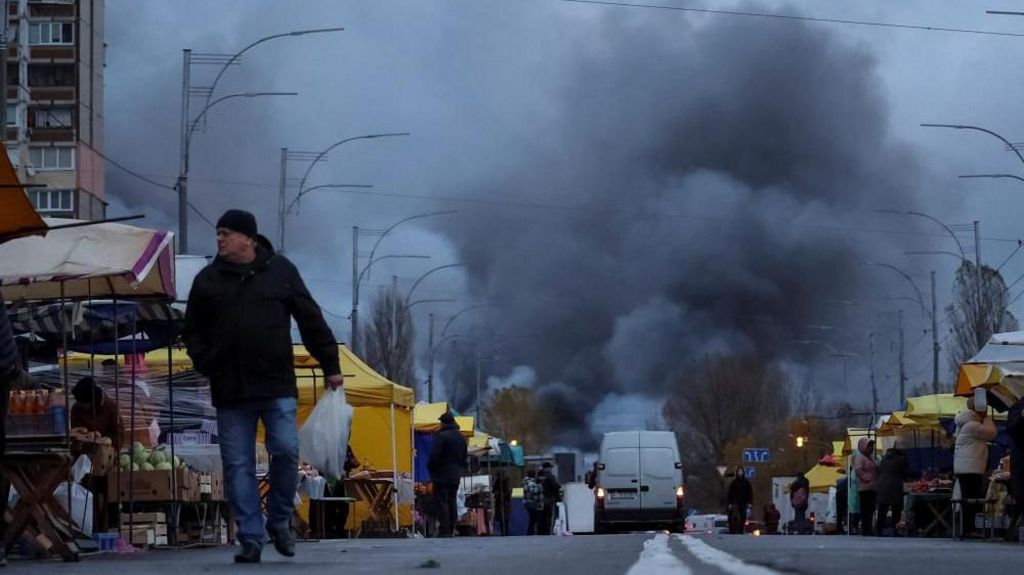
In the aftermath of yet another week of relentless Russian airstrikes on Ukrainian cities, a poignant image has circulated on Ukrainian social media. The composite photo juxtaposes a black-and-white image of Londoners during the Blitz with a contemporary shot of Kyiv residents shopping at a market, black smoke billowing in the background. The caption, ‘Bombs can’t stop markets,’ underscores the resilience of Ukrainians in the face of adversity. However, beneath this spirit of fortitude lies palpable fear and uncertainty. Halyna, a market vendor, expressed grim pessimism, stating, ‘This war hasn’t even started yet. It will get worse.’ The recent escalation in Russian attacks, targeting civilian infrastructure and causing significant casualties, has intensified the conflict. Ukrainian President Volodymyr Zelensky’s recent diplomatic efforts, including a challenging meeting with U.S. President Donald Trump, have yielded little progress. Trump’s strategy, criticized as ‘weakness through appeasement,’ has further complicated the situation. Meanwhile, European leaders have pledged support for Ukraine, including sanctions and military aid. As the war enters a new phase, the question of whether to fight or negotiate with Russia remains central. The lessons of history, particularly the failures of appeasement, loom large as Ukraine continues to resist Russian aggression.
标签: Europe
欧洲
-
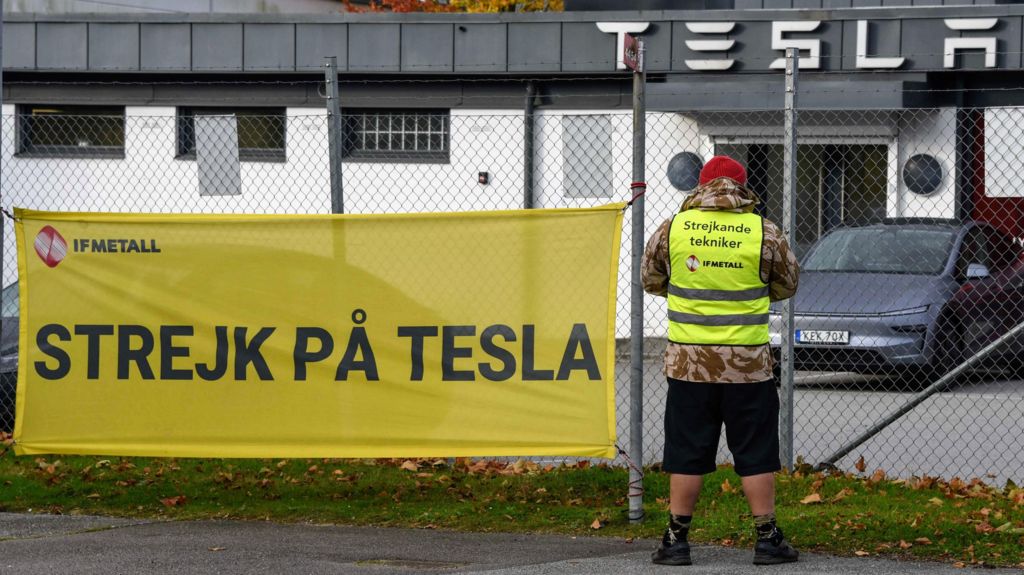
The striking Swedish workers taking on carmaker Tesla
In Sweden, a protracted labor dispute between Tesla and its workforce has reached a critical juncture. For two years, 70 car mechanics, represented by the Swedish union IF Metall, have been on strike at Tesla’s 10 service centers across the country. The strike, which began on October 27, 2023, centers on the union’s demand for a collective agreement to negotiate pay and working conditions on behalf of its members—a cornerstone of Sweden’s industrial culture. Despite the ongoing industrial action, Tesla has continued operations by replacing striking workers, a move unprecedented since the 1930s. Janis Kuzma, a 39-year-old mechanic from Latvia, has been on the picket line since the strike’s inception. He describes the experience as grueling, especially as Sweden’s harsh winter sets in. IF Metall provides basic support, including a mobile van for shelter and refreshments, but the standoff shows no signs of resolution. Tesla’s CEO, Elon Musk, has been vocal in his opposition to unions, describing them as divisive and detrimental to company culture. This stance has put Tesla at odds with Sweden’s labor norms, where 70% of workers are unionized, and 90% are covered by collective agreements. The strike has garnered international attention, with unions in neighboring countries like Denmark, Norway, and Finland refusing to handle Tesla vehicles or provide services. Despite the disruption, Tesla’s popularity in Sweden remains unaffected, with owners still able to purchase, service, and charge their vehicles. Analysts suggest that Tesla’s refusal to concede is driven by Musk’s aversion to external influence and the potential ripple effect of unionization in its U.S. and German facilities. With both sides entrenched, the conflict shows no signs of abating, raising concerns about the future of labor relations in Sweden and beyond.
-
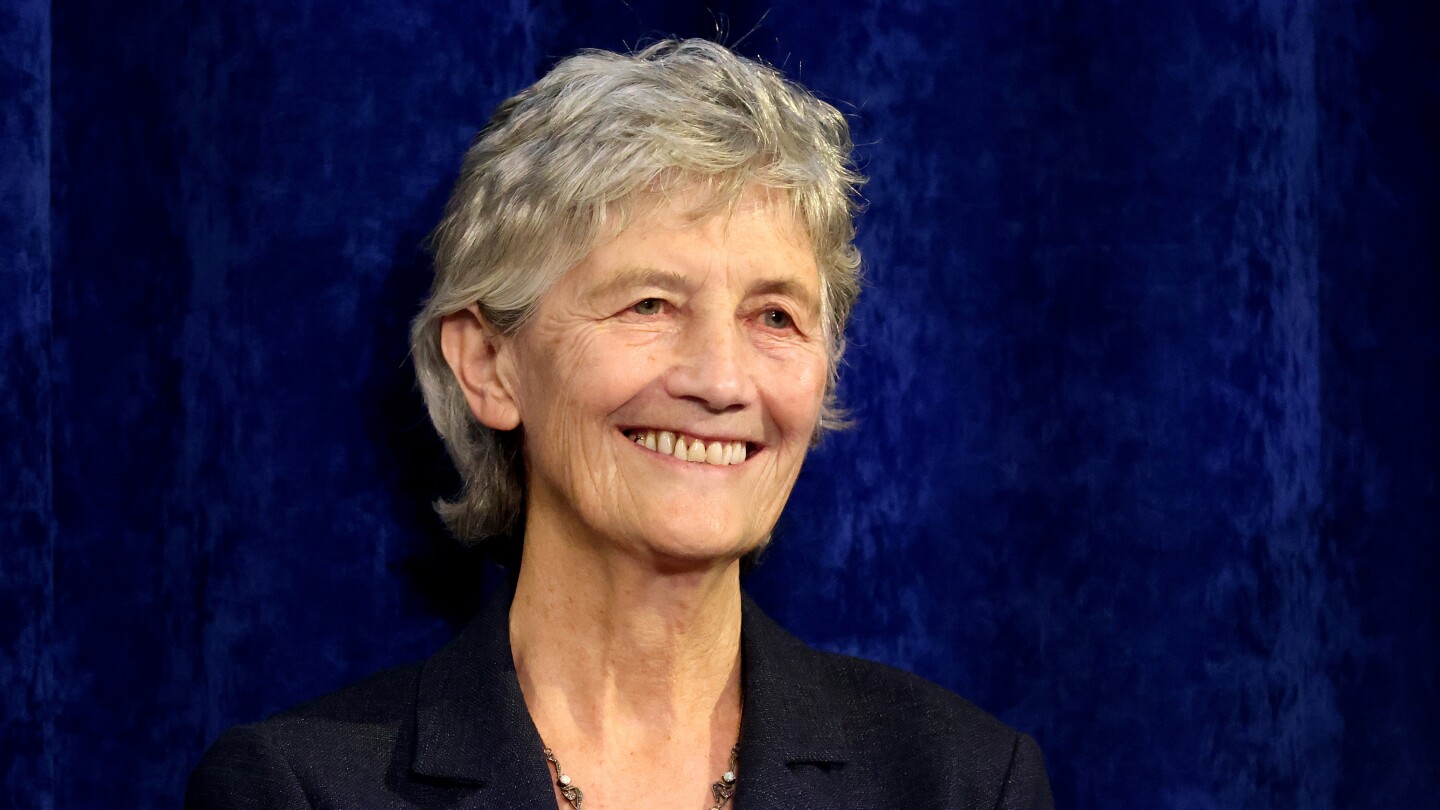
Ireland’s president elect is a left-wing, anti-establishment figure who is outspoken on Gaza
In a decisive electoral victory, independent lawmaker Catherine Connolly has been elected as Ireland’s president for the next seven years. The 68-year-old left-wing politician secured 63% of the votes in Saturday’s election, defeating her center-right opponent, former Cabinet minister Heather Humphreys. Connolly’s win was bolstered by the unified support of Ireland’s left-leaning opposition parties, including Sinn Féin, positioning her as a vocal challenger to the country’s center-right government. Although the Irish presidency is largely ceremonial, it holds significant symbolic power on the global stage, and Connolly is expected to continue the tradition of being a unifying voice on major issues. She succeeds Michael D. Higgins, a popular president known for his outspoken views on international matters such as the Gaza conflict and NATO spending. Connolly, a mother of two, has a rich political and personal background. She grew up in social housing in Galway, one of 14 children, and has degrees in clinical psychology and law. Her political career began in 1999 as a Labour Party member of Galway City Council, and she later became the city’s mayor in 2004. Connolly has been an independent lawmaker since 2007 and made history in 2020 as the first woman to serve as deputy speaker of Parliament’s lower house. Known for her outspoken views, Connolly has been a vocal critic of Israel’s actions in Gaza and the European Union’s growing militarization. She has also defended Ireland’s tradition of military neutrality, calling for a referendum on government plans to alter the conditions for deploying Irish soldiers abroad. Connolly’s campaign emphasized social equality, inclusivity, and diversity, resonating strongly with younger voters. In her acceptance speech, she vowed to be an inclusive president and a voice for peace, pledging to champion diversity and Ireland’s unique identity.
-
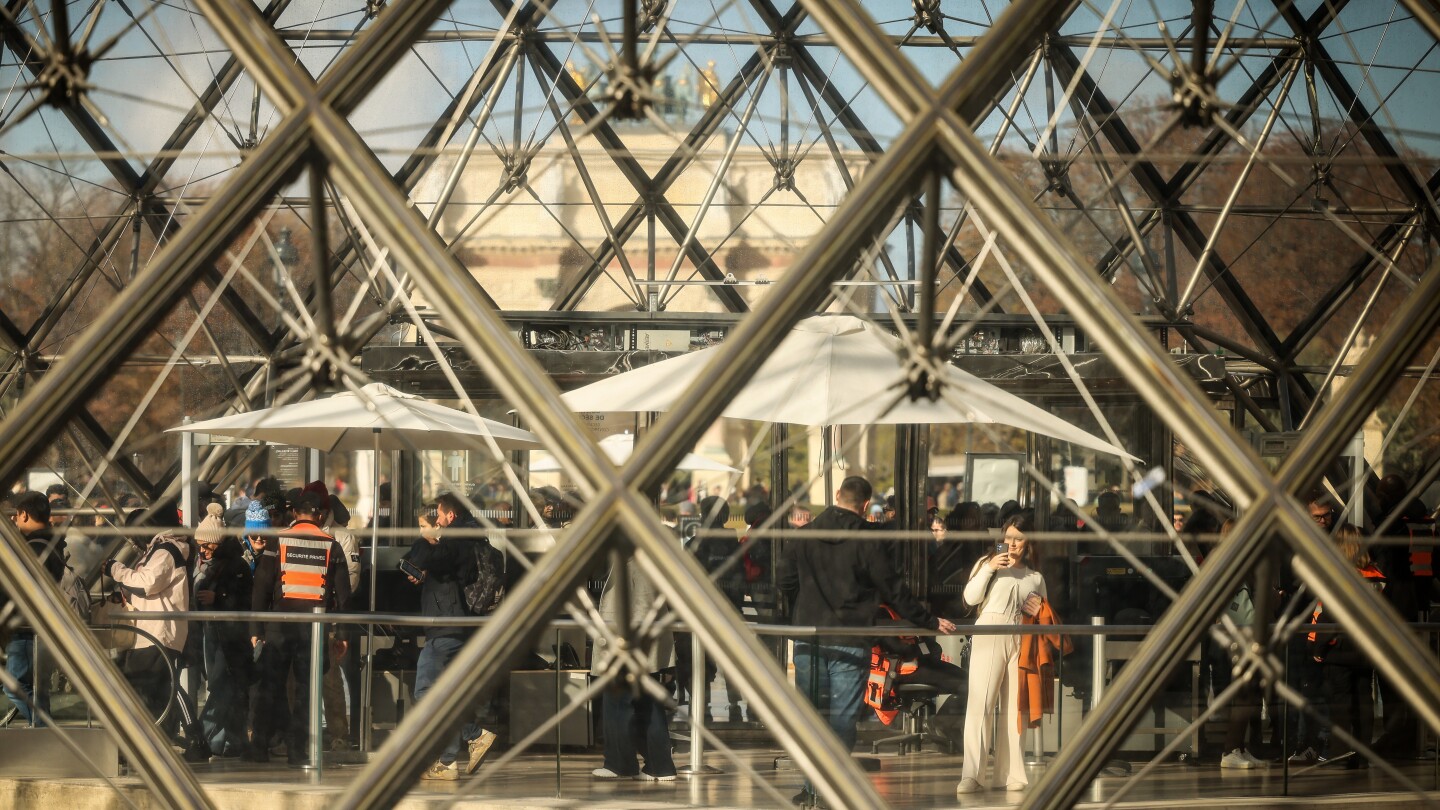
A timeline of the jewel heist at the Louvre in Paris
Paris prosecutors have announced the first arrests in connection with the high-profile theft of crown jewels from the Louvre Museum, a week after the daring heist at the world-renowned institution. The suspects were apprehended on Saturday evening, marking a significant breakthrough in the investigation. The timeline of events reveals a meticulously planned operation. On October 10, thieves used a false pretext to steal a basket lift, employing threats but no violence. The company owning the truck filed a complaint in Louvres, a town north of Paris. On October 19, the thieves, disguised as renovation workers, parked the truck equipped with a freight lift near the Louvre. They used traffic cones to simulate maintenance and gained entry through a window. At 9:34 a.m., they entered the Apollo Gallery, triggering an alarm. Security officers evacuated visitors, and the museum manager alerted the police. The thieves used disc cutters to break into display cases and stole the jewels. They fled on scooters, leaving behind equipment. Later that day, the imperial crown of Empress Eugénie was found outside the museum, but eight other invaluable objects remained missing. On October 22, the museum reopened, with 100 investigators and forensics experts analyzing evidence. On October 26, arrests were made, with one suspect preparing to leave the country. The investigation continues, with no confirmation on whether any jewels have been recovered.
-
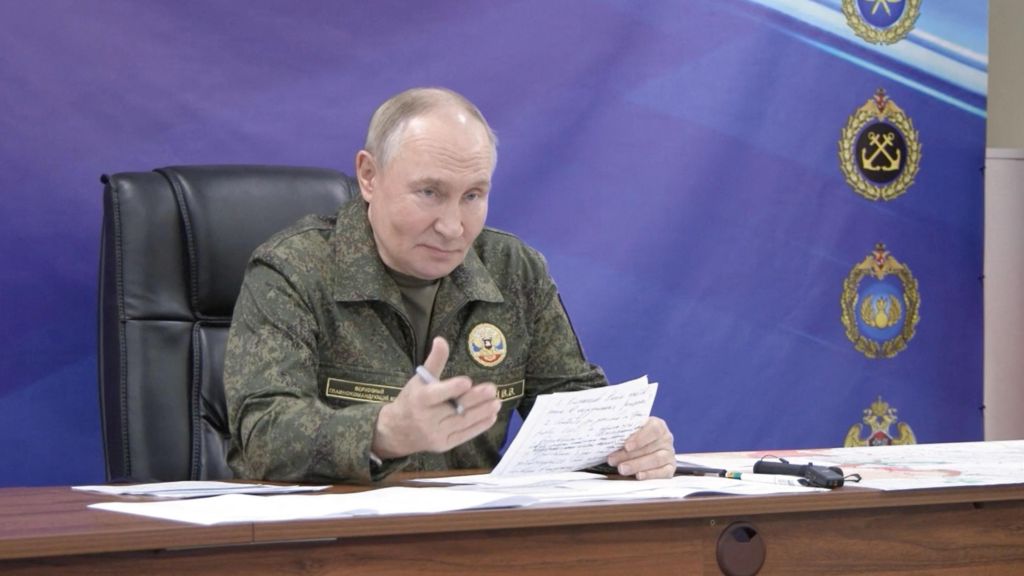
Russia says it has tested nuclear-powered Burevestnik missile
Russia has conducted a successful test of its nuclear-powered Burevestnik cruise missile, according to Chief of General Staff Valery Gerasimov. In a televised meeting with President Vladimir Putin, Gerasimov revealed that the missile completed a multi-hour flight, covering a distance of 14,000 kilometers (8,700 miles), with the potential for even greater range. The low-flying experimental weapon, first unveiled in 2018, is designed to evade missile defense systems and boasts a theoretically unlimited range. The test, conducted on October 21, lasted 15 hours and reportedly demonstrated the missile’s ability to maneuver both vertically and horizontally, meeting all specifications. Gerasimov emphasized its capability to bypass existing air and missile defense systems. Despite these claims, Western experts remain skeptical about the missile’s strategic value and the accuracy of Russia’s testing claims. Putin previously announced a ‘final successful test’ in 2023, but this has not been independently verified. According to an arms control campaign group, only two of at least 13 known tests since 2016 have been partially successful. The missile, dubbed ‘Skyfall’ by NATO, is believed to be powered by a nuclear reactor activated after initial solid fuel rocket boosters. A 2021 U.S. Air Force report acknowledged its potential as a unique intercontinental weapon, but the International Institute for Strategic Studies (IISS) highlighted significant technical challenges, including numerous flight-test failures and a fatal accident. Satellite imagery from August 2024 suggests ongoing construction of launch facilities north of Moscow, further indicating Russia’s commitment to the project.
-
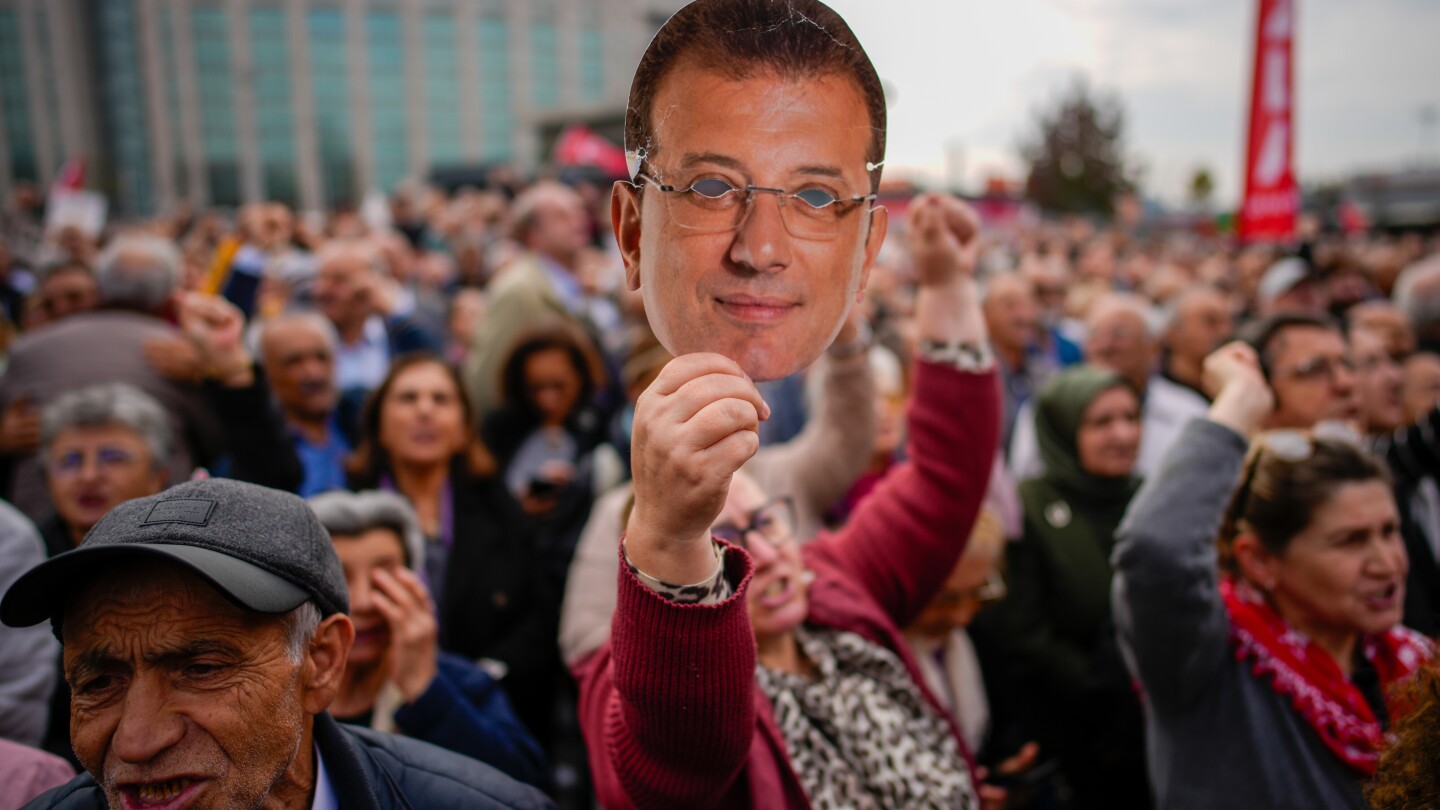
Imprisoned mayor of Istanbul is to be questioned over espionage charges
Istanbul Mayor Ekrem Imamoglu, currently imprisoned on corruption charges, was transported to the city’s main courthouse on Sunday for questioning in a newly initiated espionage investigation. The probe, launched two days prior, focuses on alleged connections between Imamoglu’s political campaign and an individual arrested in July for suspected intelligence activities on behalf of foreign states. Imamoglu’s former campaign manager, Necati Ozkan, and journalist Merdan Yanardag are also under scrutiny as part of the investigation. This marks the first time Imamoglu has left Istanbul’s Marmara Prison, where he has been held in pretrial detention since March, in seven months. Hundreds of supporters gathered outside the courthouse to demonstrate solidarity with the opposition leader, who is widely seen as a political rival to President Recep Tayyip Erdogan. Critics argue that the investigation is part of a broader crackdown on opposition figures, particularly following significant gains by the Republican People’s Party (CHP) in last year’s local elections. CHP Chairman Ozgur Ozel addressed the crowd, vowing to continue democratic resistance against what he described as oppression and injustice. Faruk Kılıç, a 26-year-old electrician, expressed his determination to support Imamoglu, stating, ‘I believe these injustices will never cease, so I will offer my support till the very end.’ Erdogan’s government maintains that the judiciary operates independently and that the investigations are solely focused on corruption.
-
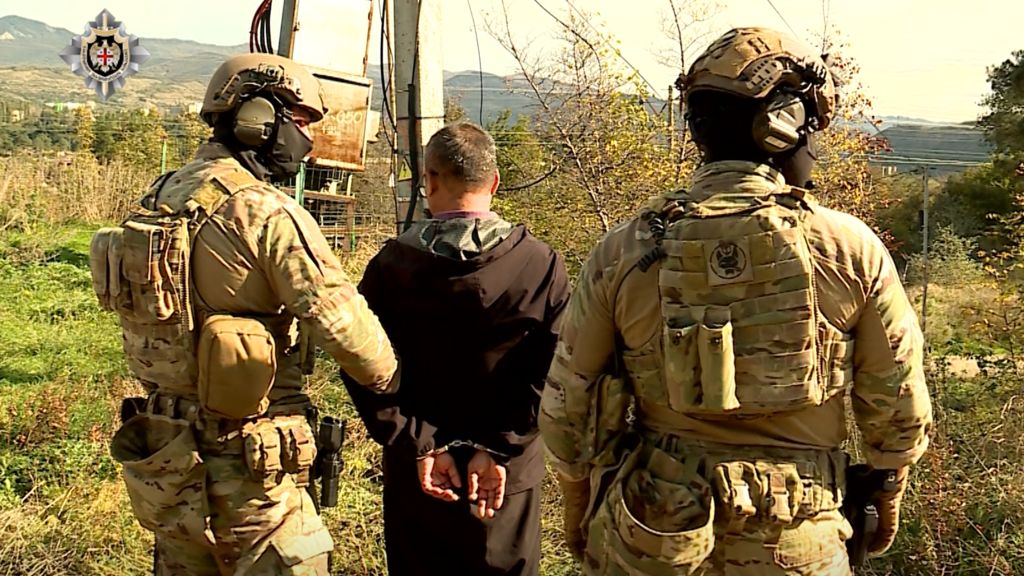
Georgia arrests three for trying to illegally buy 2kg of uranium
Three Chinese nationals have been apprehended in Georgia on charges of attempting to illegally acquire 2 kilograms of uranium, according to the country’s State Security Service (SSG). The suspects allegedly planned to pay $400,000 for the nuclear material in Tbilisi, the capital, with intentions to transport it to China via Russia. The operation was uncovered by intelligence agents when one of the individuals attempted to purchase the radioactive substance on the black market. The trio pleaded not guilty in a Tbilisi court and have been detained to prevent their escape. If convicted, they could face up to five years in prison under Georgian law, which prohibits the purchase of nuclear materials. Lasha Maghradze, deputy head of the SSG, revealed that the operation was allegedly coordinated by other members of the group in China. Footage released by the SSG shows armed soldiers detaining the suspects and discovering two glass jars containing a yellow substance in a car boot, later identified as uranium. The specific isotope of uranium involved remains unclear, as does the intended purpose of the material. Georgia, a former Soviet nation, has faced ongoing challenges in securing its nuclear materials since the Soviet Union’s collapse in 1991. This incident follows a similar case in July, where the SSG arrested a Georgian and a Turkish national for attempting to trade $3 million worth of uranium.
-
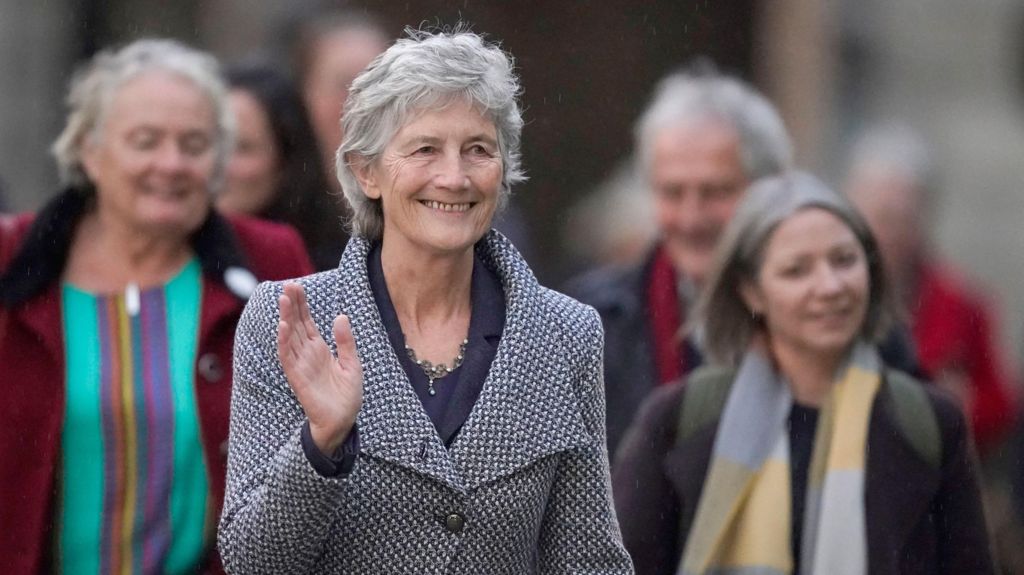
Irish President Higgins congratulates his successor Connolly
Catherine Connolly, an independent member of the Irish parliament (TD), has been elected as the 10th President of the Republic of Ireland following a historic landslide victory. Connolly secured an unprecedented 914,143 first preference votes, accounting for 63% of the total votes cast, the highest in Irish presidential election history. Her triumph was officially announced on Saturday evening at Dublin Castle, where she defeated Fine Gael’s Heather Humphreys. Outgoing President Michael D. Higgins congratulated Connolly, describing the day as “momentous” and pledging his office’s “full support” ahead of her inauguration on November 11. However, the election also saw a record 213,738 spoiled votes, nearly 13% of the total, prompting calls for reflection on voter dissatisfaction and the limited candidate choices. Humphreys garnered 29% of first preference votes, while Fianna Fáil’s Jim Gavin, who withdrew from the race but remained on the ballot, secured 7%. BBC NI’s Dublin correspondent, Gabija Gataveckaite, noted that the high number of spoiled ballots sends a clear message to the government about the electorate’s discontent. Tánaiste Simon Harris acknowledged the issue, emphasizing the need for “soul searching” after a 46% voter turnout. Connolly, a TD since 2016, was supported by major left-wing parties, including Sinn Féin, Labour, the Social Democrats, People Before Profit, and the Greens. Sinn Féin president Mary Lou McDonald expressed confidence that Connolly’s victory could pave the way for a left-wing coalition in the next general election. During her campaign, Connolly positioned herself as a proponent of a united Ireland, advocating for a border poll during her seven-year presidency. McDonald echoed this sentiment, expressing optimism that Connolly’s tenure would see significant progress toward this goal.
-
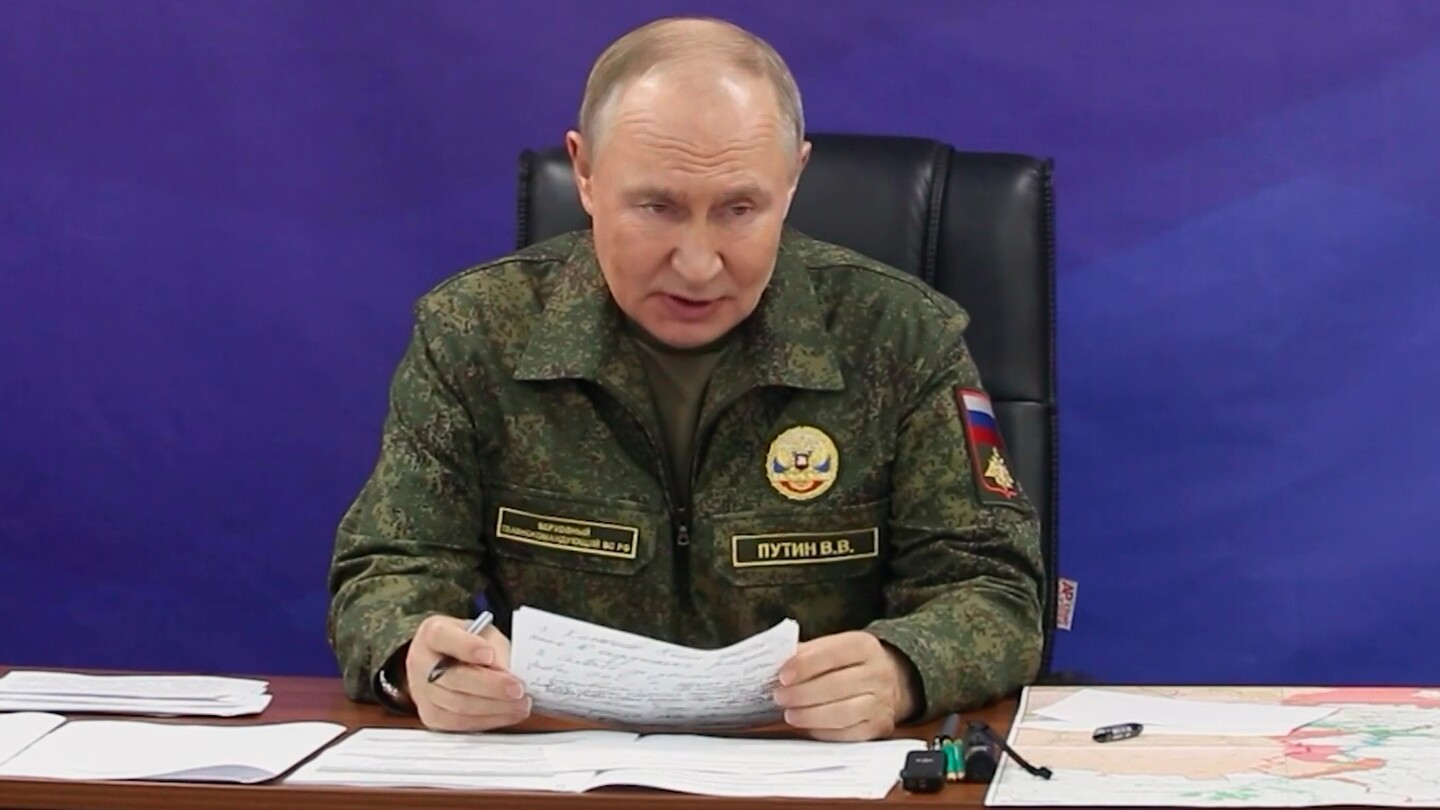
Russia has tested a new nuclear-capable missile, Putin and top general say
MOSCOW, Russia — In a significant development for Russia’s military capabilities, President Vladimir Putin announced the successful testing of a new nuclear-capable cruise missile, the Burevestnik, which is designed to evade existing defense systems. The announcement was made during a meeting with senior military officials, as shown in a Kremlin-released video on Sunday. Dressed in camouflage fatigues, Putin was briefed by General Valery Gerasimov, Russia’s Chief of General Staff, who revealed that the missile had traveled 14,000 kilometers (8,700 miles) during a critical test on Tuesday. The Burevestnik, also known as the Storm Petrel, remained airborne for 15 hours, with Gerasimov noting that this was not its maximum capability. Putin emphasized the need to finalize the missile’s testing and prepare the necessary infrastructure for its deployment, asserting that its nearly unlimited range and unpredictable flight path render it invulnerable to current and future missile defenses. The announcement coincided with Russia’s strategic nuclear forces conducting drills on Wednesday, which included practice launches of intercontinental ballistic missiles from northwestern Russia and a submarine in the Barents Sea, as well as long-range cruise missile firings by Tu-95 strategic bombers. The Kremlin stated that the exercises aimed to evaluate the proficiency of military command structures.
-
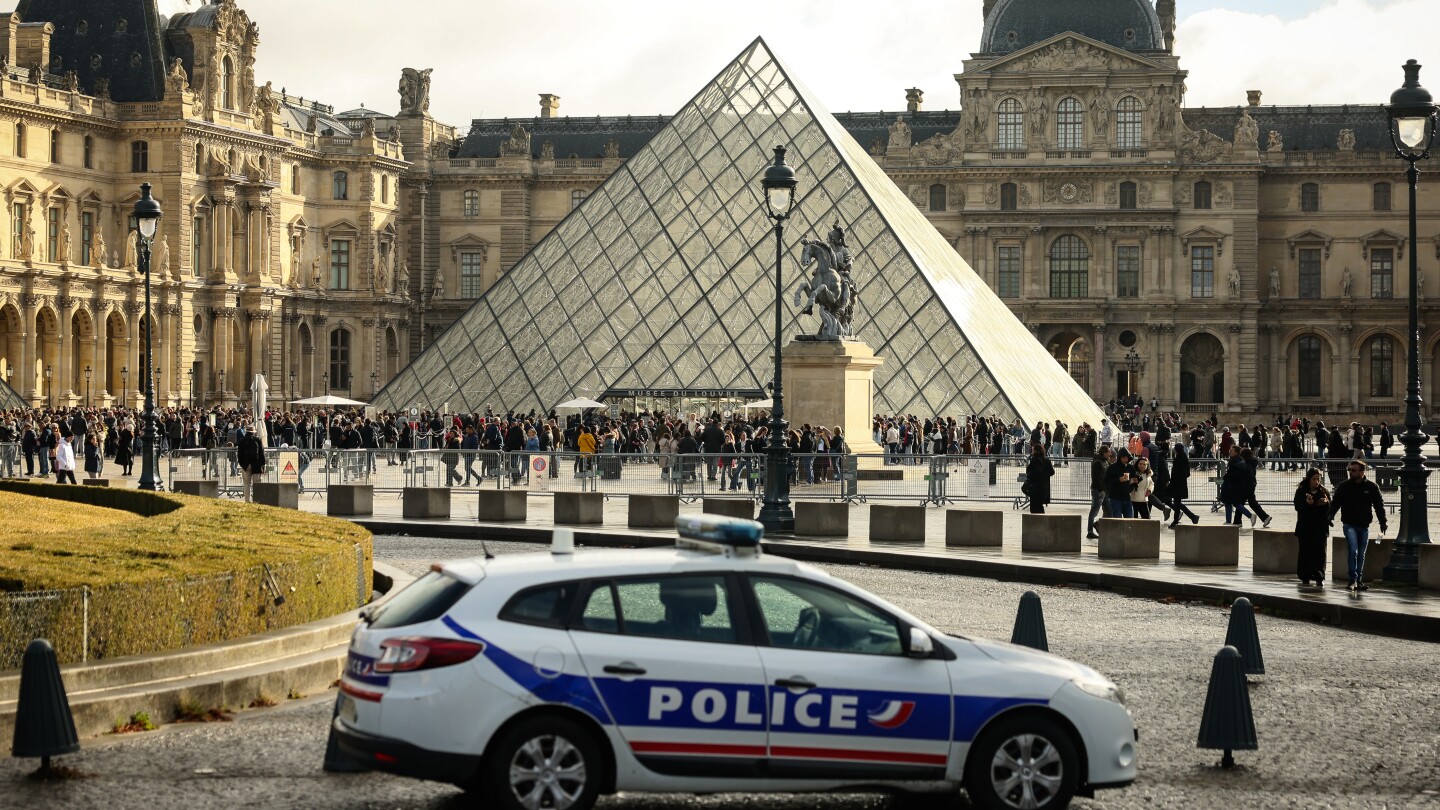
Suspects arrested over the theft of crown jewels from Paris’ Louvre museum
Paris authorities have apprehended suspects linked to the audacious theft of crown jewels from the Louvre Museum, as confirmed by the Paris prosecutor on Sunday. The arrests, made on Saturday evening, included one individual attempting to depart from Paris Charles de Gaulle Airport. While French media outlets BFM TV and Le Parisien reported two arrests, the prosecutor, Laure Beccuau, refrained from confirming the exact number or disclosing whether any stolen jewels had been recovered. The heist, which occurred last Sunday morning, saw thieves execute a meticulously planned operation in under eight minutes, making off with jewels valued at €88 million ($102 million). Utilizing a basket lift to scale the museum’s façade, the intruders forced open a window, shattered display cases, and fled with priceless Napoleonic-era treasures. The Louvre’s director lamented the incident as a “terrible failure.” Investigators from a specialized police unit dedicated to armed robberies, serious burglaries, and art thefts spearheaded the arrests. Beccuau expressed concern over premature information leaks, which could impede the efforts of over 100 investigators working to recover the stolen artifacts and apprehend all perpetrators. The Louvre has since reopened, but the theft has left a cultural wound likened to the 2019 Notre Dame Cathedral fire. Among the stolen items were a sapphire diadem, necklaces, earrings, and a reliquary brooch tied to 19th-century French royalty. One piece, Empress Eugénie’s emerald-set imperial crown, was discovered damaged but repairable outside the museum. The arrests have brought a sense of relief to Louvre visitors, though concerns remain about the recovery of the stolen jewels.