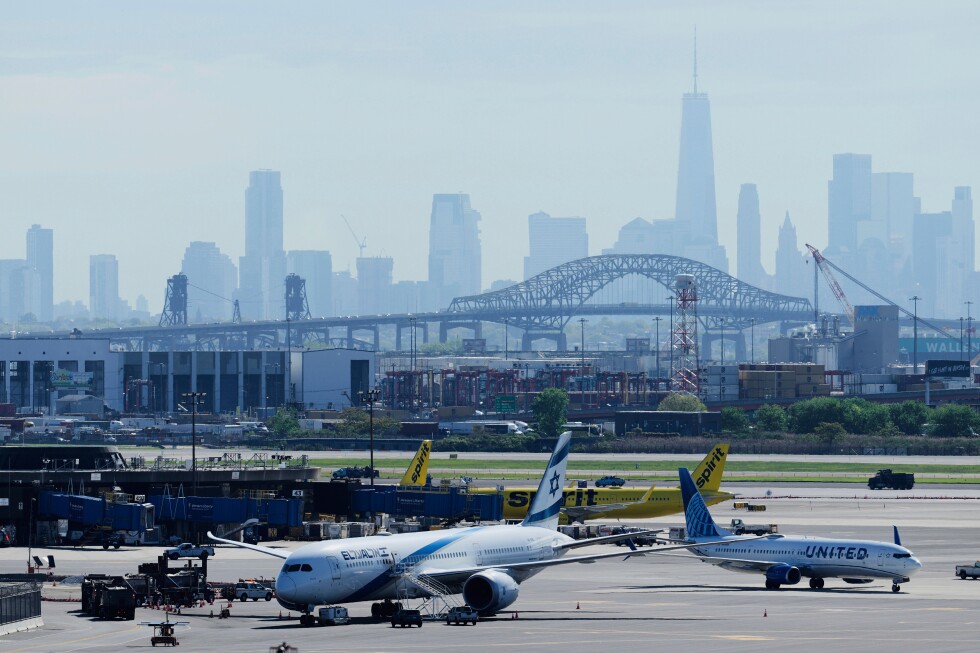
A routine commercial flight landing at one of the busiest air hubs on the U.S. East Coast took an unexpected turn on Sunday afternoon, when a United Airlines passenger jet made contact with a light pole along the adjacent New Jersey Turnpike before touching down at Newark Liberty International Airport. Federal transportation officials have since launched a full investigation into the collision, which surprisingly resulted in no injuries to anyone on board the aircraft.
标签: Europe
欧洲
-

Irish actor and Banshees of Inisherin star dies aged 61
Renowned Irish stage and screen actor Gary Lydon, widely celebrated for his standout roles in beloved films including *Calvary*, *The Guard*, and *The Banshees of Inisherin*, has passed away at the age of 61. Tributes from across Ireland’s arts community and local circles have honored his decades-long career and warm personal legacy.
Born Gary O’Brien in London in 1964 to Irish parents, Lydon moved with his family to Wexford in childhood, where he grew up and developed his connection to the local arts scene. For his professional acting career, he adopted his mother’s maiden name, Lydon, launching a multi-decade journey that saw him perform across both theater and major film productions.
Lydon first rose to public and critical acclaim in the mid-1980s, when he took the stage in Billy Roche’s iconic *Wexford Trilogy* of plays, a production that cemented his reputation as a rising talent in Irish theater. Over the following decades, he would go on to build a resume that included memorable on-screen performances alongside some of Ireland’s most celebrated actors.
In a statement released Sunday on behalf of Wexford Arts Centre, executive director Elizabeth Whyte expressed profound shock and sorrow at the news of Lydon’s passing. “Gary honed his craft as one of Ireland’s finest actors right here on the Wexford Arts Centre stage, in many of Billy Roche’s most beloved works,” Whyte said. “He built an extraordinary career performing across Ireland and the United Kingdom, leaving an indelible mark on every production he joined.”
Notably, Whyte shared that Lydon’s final performance at the Wexford venue was a particularly meaningful moment: he shared the stage alongside his son, James Doherty O’Brien. “The lights of the global theater community burn dimmer with Gary’s passing, but we will forever hold the memory of his extraordinary performances in reverence,” she added.
Beyond his acting career, Lydon maintained close ties to his local community in Wexford, including his former Gaelic Athletic Association club, St Michael’s. The club paid tribute to Lydon on social media, noting that he often joined the team to play when his busy acting schedule allowed, and remained a dedicated supporter in later years. “In the years after his playing days, he was a constant presence on the sidelines cheering on the club, especially when his son James was competing,” the club’s statement read. “May he rest in peace.”
Irish national broadcaster RTÉ confirmed that James Doherty O’Brien released a formal statement on behalf of the Lydon family, describing the actor’s passing as a sudden and devastating loss. “The loss of our dad is a huge shock and a deep grief for all of our family,” the statement said. “He will be sorely missed by me, my brother Seanluke, our mother Kara, his beloved partner Paula and her daughter Aoife, all of his brothers, and our entire extended family.”
The statement added that despite Lydon’s widespread acclaim and numerous professional achievements, his greatest source of joy and pride was his role as a father. “We will miss the countless ways he loved and protected us. All of our wonderful memories with him will stay in our hearts forever,” the family shared.
-
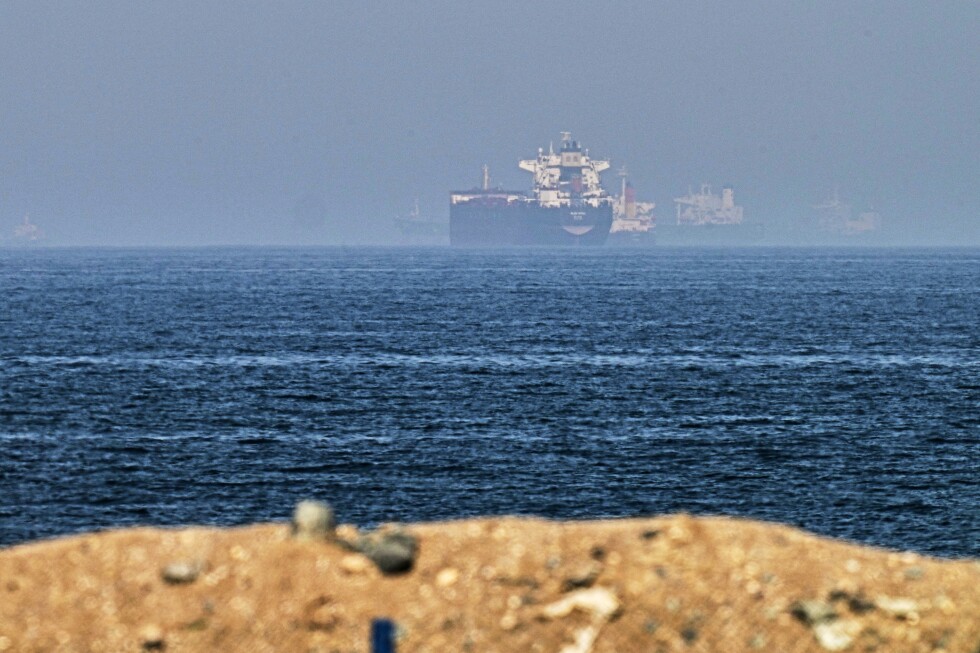
OPEC+ countries agree modest rise in production as Iran retains chokehold on key Strait of Hormuz
VIENNA — In a move that underscores ongoing efforts to balance volatile global energy markets, seven key OPEC+ oil-producing nations, including heavyweights Saudi Arabia and Russia, have greenlit a small, incremental production increase set to launch in June, framing the step as a deliberate contribution to sustained market stability. The coalition, which also counts Algeria, Iraq, Kazakhstan, Kuwait and Oman among its members, formalized the decision to add 188,000 barrels of crude per day to global supplies following a virtual negotiating session held on Sunday. Energy analysts widely characterize the output increase as largely symbolic, given the severe supply disruptions currently roiling the Persian Gulf. Amid escalating regional tensions tied to the ongoing U.S.-Israeli conflict, Iran has imposed restrictions on vessel traffic through the Strait of Hormuz — the strategic waterway that carries roughly one-fifth of the world’s total oil and natural gas trade. The blockage has sidelined the bulk of seaborne oil exports from Gulf producing states, removing millions of barrels of daily supply from the global market far outweighing the small planned output increase from OPEC+. The decision comes on the heels of a seismic shift in the global oil order: the United Arab Emirates’ historic announcement that it will exit OPEC, the 65-year-old oil cartel that commands roughly 40% of the world’s total crude production and holds outsized sway over global energy pricing. The departure has thrown long-standing alliance dynamics into uncertainty, forcing member and partner states to reassess their coordinated production strategies. Institutional context clarifies OPEC+’s structure: Iran holds a seat as one of OPEC’s 12 current core members, while Russia is not a formal cartel participant, instead collaborating with the Vienna-headquartered alliance through the broader OPEC+ partnership framework. Moving forward, the seven nations that approved the production hike say they will convene monthly review sessions to assess evolving market conditions, monitor member compliance with production quotas, and address any necessary production adjustments to offset past deviations. The next full review meeting is scheduled for June 7, when leaders will revisit market outlooks and adjust plans as needed in response to shifting global supply and demand dynamics.
-

A cargo ship near Strait of Hormuz reports being attacked as Iran makes new peace proposal
DUBAI, United Arab Emirates – A new suspected attack targeting an unidentified northbound cargo ship has been documented off the coast of Sirik, Iran, east of the strategic Strait of Hormuz, the United Kingdom Maritime Trade Operations (UKMTO), Britain’s leading maritime security monitoring agency, announced Sunday. This incident brings the total number of maritime attacks recorded in and around the world’s most critical energy chokepoint to at least two dozen since the outbreak of the ongoing Iran war, and marks the first reported assault in the region after a lull that began April 22, when another cargo vessel came under fire. All crew members aboard the targeted ship emerged unharmed, UKMTO confirmed, though no group has yet stepped forward to claim responsibility for the attack. The overall threat rating for commercial shipping transiting the area remains classified as critical, as Tehran has effectively disrupted normal traffic through the strait through a campaign of targeted attacks and threats against passing vessels. For months, Iranian officials have maintained that any non-U.S. and non-Israeli flagged vessels may safely pass the waterway only upon payment of a transit toll. The small assault craft used in these attacks, many operated by Iranian forces and outfitted only with twin outboard motors, are notoriously agile, difficult for international naval forces to detect, and have been linked to multiple assaults on commercial shipping in recent months. Tensions in the region remain high even as a fragile three-week ceasefire between U.S.-led forces and Iran has largely held. U.S. President Donald Trump told reporters Saturday that additional military strikes against Iranian targets remain on the table should diplomacy fail to resolve the standoff. Parallel to the maritime security escalation, Iran has submitted a new 14-point peace proposal to the United States through diplomatic intermediary Pakistan, which hosted direct, face-to-face negotiations between the two countries last month. The proposal, reported by Iranian state-linked security outlets Nour News and Tasnim, aims to reach a full end to hostilities within a 30-day timeline rather than just extend the current ceasefire. It calls for the U.S. to lift all sweeping economic sanctions on Iran, end the ongoing American naval blockade of Iranian ports, withdraw all U.S. military forces from the broader Middle East region, and force an end to Israeli military operations in Lebanon. Notably absent from the proposal is any mention of Iran’s controversial nuclear program and its stockpiles of enriched uranium – the core longstanding point of contention between Tehran and Western powers, which Iran has indicated it prefers to address in later negotiations. Pakistan continues to serve as a key go-between for the two adversaries, with the country’s prime minister, foreign minister and army chief all pushing for sustained direct dialogue between Washington and Tehran, according to two unnamed Pakistani officials authorized to discuss the sensitive diplomacy. On Sunday, Iranian Foreign Minister Abbas Abbas Araghchi also held talks with his Omani counterpart Badr al-Busaidi, whose government oversaw previous rounds of pre-war negotiations between the two sides. The strategic Strait of Hormuz, located at the mouth of the Persian Gulf, normally carries roughly 20% of the world’s daily traded oil and natural gas, alongside critical fertilizer shipments that global food markets depend on. Since the outbreak of war on February 28, Iran’s tightening grip on the waterway has sent shockwaves through global energy and commodity markets. During a visit to the strategically vital Larak Island port facilities Sunday, Iranian deputy parliament speaker Ali Nikzad reaffirmed Tehran’s uncompromising stance, saying, “Iran will not back down from our position on the Strait of Hormuz, and it will not return to its prewar conditions.” Nikzad does not hold formal decision-making authority in the Iranian legislature, but his comments signal the hardline position popular among Iranian political elites. The U.S. has responded by warning global shipping companies that any form of payment to Iran for safe transit – including digital assets – could expose them to harsh U.S. sanctions. Compounding pressure on Tehran, the U.S. naval blockade implemented April 13 has cut off most of Iran’s oil export revenue, a critical lifeline for the country’s already ailing economy. U.S. Central Command announced Saturday that 48 commercial tankers have already been ordered to turn back from Iranian ports. U.S. Treasury Secretary Scott Bessent told Fox News Sunday that Iran has collected less than $1.3 million in total transit tolls to date – a tiny fraction of the country’s pre-war daily oil export earnings. “They’re going to have to start shutting in wells, which we think could happen in the next week,” Bessent said, noting that Iran’s onshore oil storage facilities are rapidly filling to capacity. Iran’s domestic economic situation continues to deteriorate rapidly, with the national currency the rial hitting new record lows against the U.S. dollar Sunday. On the second day of Iran’s working week, the dollar traded at 1,840,000 rials in Tehran’s central Ferdowsi Street currency exchange, a sharp drop from the already record low of 1.3 million rials per dollar recorded last December. At that time, the currency collapse sparked widespread nationwide protests over the soaring cost of living. Iranian markets remain deeply unstable, with prices for basic consumer goods rising on a daily basis, and local media reports indicate that dozens of factories have failed to renew worker contracts after the Iranian new year in March, leaving thousands unemployed. Yousef Pezeshkian, son and senior adviser to Iranian President Masoud Pezeshkian, acknowledged the stalemate in a Telegram post over the weekend, writing that both the United States and Iran continue to view themselves as the war’s victor and remain unwilling to make concessions. In a separate development Saturday, the Norwegian Nobel Committee issued an urgent public appeal for Iran to immediately allow imprisoned 2023 Nobel Peace Prize laureate Narges Mohammadi to transfer to Tehran to receive specialized care from her personal medical team, after a sharp deterioration in the human rights lawyer’s health. The committee confirmed it is in regular contact with Mohammadi’s family and legal team, and warned that the activist’s life remains in imminent danger. Mohammadi, who is imprisoned in Zanjan prison in northwestern Iran, fainted twice in custody Friday, and was admitted to a local hospital, according to her personal foundation. Her legal team has said she is suspected to have suffered a heart attack in late March. This report included contributions from Associated Press correspondent Melanie Lidman in Tel Aviv, Israel, with additional reporting from Amir Vahdat in Tehran, Iran, and Munir Ahmed in Islamabad, Pakistan.
-
Russian strikes kill 10 as Zelensky says Ukraine hits oil tankers and terminal
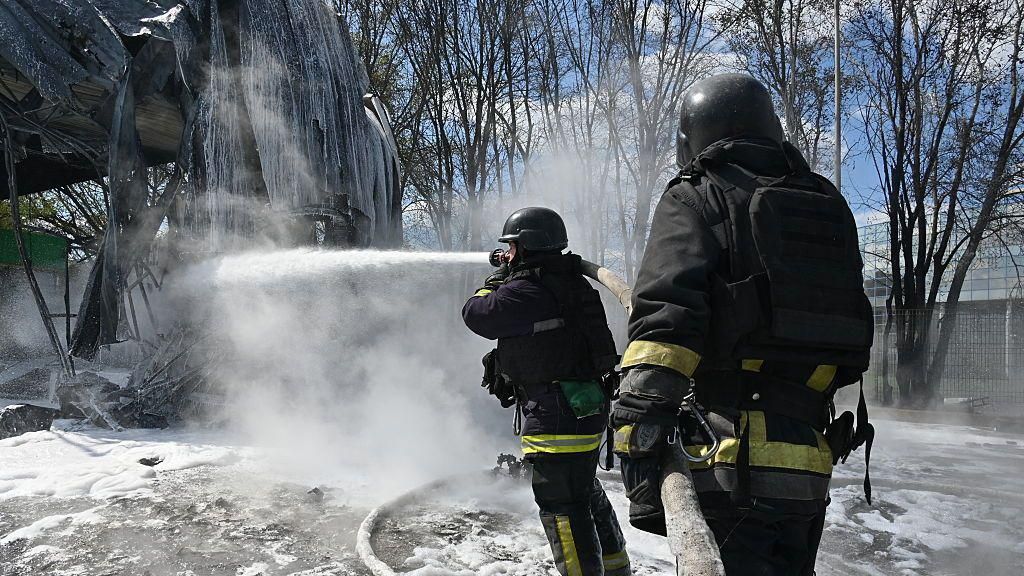
Over a 24-hour period, a fresh wave of Russian drone and missile assaults across multiple Ukrainian regions has left at least 10 civilians dead and 76 others injured, marking another escalation in the ongoing aerial campaign targeting Ukrainian populated areas. Fatalities were confirmed across five Ukrainian administrative regions, consistent with Russia’s sustained pattern of regular strikes on urban and civilian infrastructure throughout the country. Three fatalities were recorded in separate incidents in the southern Kherson region, according to the region’s governor. Two deaths each were reported in Odesa, Donetsk, and Zaporizhzhia, while one additional fatality was confirmed in the northeastern Sumy region. Ukrainian air defense forces reported they intercepted the vast majority of incoming Russian weapons, which included one ballistic missile and close to 270 attack drones launched in the assault.
Parallel to these defensive operations against Russian strikes, Ukrainian authorities have confirmed a series of successful cross-border attacks targeting key Russian energy infrastructure and maritime assets. Ukrainian President Volodymyr Zelenskyy announced that a major oil terminal in northwestern Russia sustained extensive damage, while two Russian oil tankers were hit in strikes near the key Black Sea port of Novorossiysk. Zelenskyy confirmed the two damaged tankers were part of Russia’s so-called ‘shadow fleet’ of vessels operated to bypass Western price caps and sanctions on Russian crude oil exports. No official details on the extent of damage to the ships have been released by Russian authorities as of yet.
Zelenskyy added in a Telegram post accompanying black-and-white footage that appeared to show a naval drone approaching one of the targeted tankers: ‘These tankers were actively used for transporting oil. Now they will not be.’ In recent weeks, Ukrainian forces have ramped up a coordinated campaign of long-range drone strikes on Russian oil export infrastructure spread across the country’s western and southern regions. Kyiv officials confirm these strikes have taken out billions of dollars in Russian oil export capacity. Over the weekend, Zelenskyy added that infrastructure at the Primorsk export terminal in Russia’s Leningrad region, located near the Finnish border, was also heavily damaged, alongside three vessels stationed at the facility.
Russian officials reported that in total, Ukraine launched at least 334 drones in cross-border attacks over the same 24-hour period, with the Leningrad region facing the heaviest assault. While Moscow has largely sought to downplay the impact of Ukrainian long-range strikes on its territory, the Kremlin has openly acknowledged growing security concerns over the deep strike range of Ukrainian drones. Most notably, this security anxiety prompted the Kremlin to announce this week it would scale back its annual Victory Day military parade, scheduled for May 9 to mark the Soviet defeat of Nazi Germany in World War II, citing what officials described as an elevated ‘terrorist threat’ from Ukraine.
-
Ukraine hits key Russian oil-loading port and 3 ‘shadow fleet’ tankers
On Sunday, Ukraine escalated its long-range targeting campaign against Russian energy assets, launching a coordinated wave of drone strikes that hit a major Baltic Sea oil export terminal and multiple vessels Kyiv links to Russia’s sanctions-evading shadow crude fleet. The cross-border attacks came amid a wave of reciprocal strikes that left civilian casualties on both sides, deepening the ongoing military escalation in the third year of Russia’s full-scale invasion.
The first and highest-profile strike targeted Primorsk, Russia’s largest Baltic Sea oil export terminal operated by state-owned energy giant Transneft. Located more than 1,000 kilometers from Ukrainian territory, between the Russian-Finnish border and St. Petersburg, the facility is capable of processing hundreds of thousands of barrels of crude daily and has been targeted by Ukrainian drones multiple times since March. Russian regional governor Alexander Drozdenko confirmed that a nighttime drone attack sparked a fire at the port, but noted no oil spill occurred. He offered no immediate details on potential casualties or the extent of infrastructure damage.
Ukrainian President Volodymyr Zelenskyy claimed the operation delivered significant damage to Russian assets in a post on the Telegram messaging platform Sunday. He confirmed the strike, adding that one more Russian Kalibr missile-carrying vessel had been put out of action, alongside destruction of key port infrastructure. Zelenskyy also said Ukrainian drones hit a Karakurt-class missile ship, a Russian patrol boat, and one tanker belonging to Russia’s notorious shadow oil fleet — a network of unregistered or loosely registered vessels used to bypass Western price caps and sanctions on Russian crude exports.
In an earlier separate statement Sunday, Zelenskyy announced a second strike targeting two additional shadow fleet tankers near the entrance to Novorossiysk, Russia’s major Black Sea port. “These tankers were actively used to transport oil. Now they won’t,” he said, confirming the operation was directed by the chief of Ukraine’s general staff, Andrii Hnatov. The Kremlin has not issued any official confirmation of Zelenskyy’s claims regarding the two tanker strikes as of Sunday evening.
Sunday’s attacks mark the latest acceleration of Ukraine’s recent campaign against Russian energy export infrastructure. Ukrainian officials have repeatedly justified the targeting, noting that oil and gas revenue forms a core pillar of funding for Russia’s full-scale invasion, which entered its third year in February 2024.
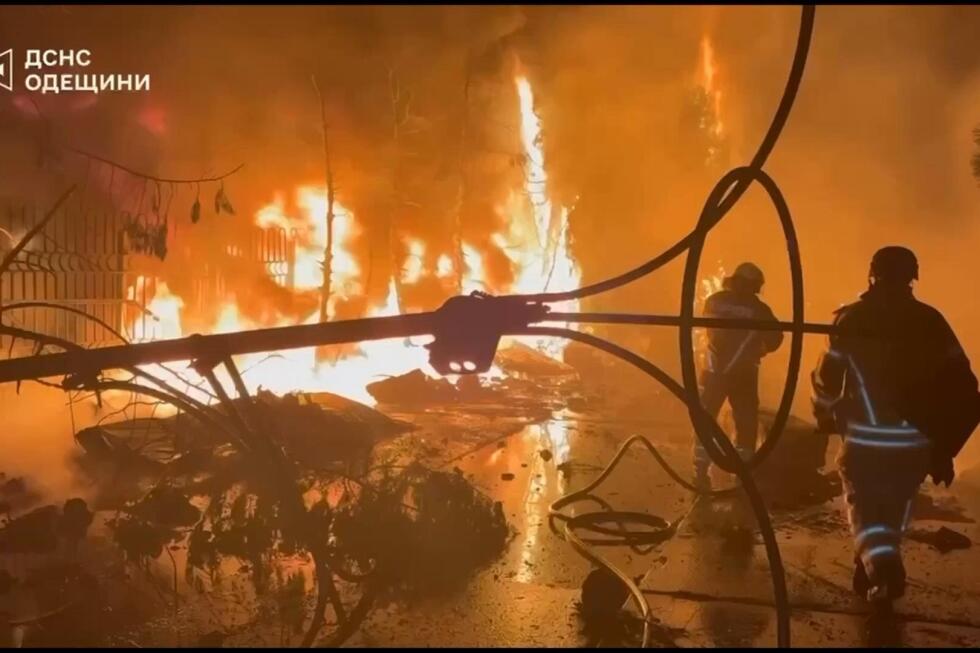
The coordinated Ukrainian strikes were matched by a large-scale Russian air assault across Ukraine overnight into Sunday, which left multiple civilians dead and injured. Ukraine’s Emergency Service confirmed that a Russian drone strike on the southern Odesa region killed two people and wounded three more, damaging three residential buildings and port infrastructure before emergency crews extinguished a resulting fire. In central Ukraine’s Dnipropetrovsk region, six people were wounded in overnight strikes. A passenger bus carrying 40 children was damaged in the attack, though no children onboard were injured.
Reciprocal strikes also caused civilian casualties inside Russian territory. A 77-year-old man was killed in a Ukrainian drone strike west of Moscow near the town of Volokolamsk, 120 kilometers from central Moscow, regional governor Andrei Vorobyov confirmed via Telegram. Russian officials said six drones were intercepted and downed in the Moscow region, which surrounds the capital, and Moscow mayor Sergei Sobyanin confirmed an additional five drones were shot down while approaching the city itself. In western Russia’s Smolensk region, three people — a man, woman and child — were injured after debris from a shot-down Ukrainian drone crashed into an apartment block, local governor Vasiliy Anokhin reported.
Russian Defense Ministry figures released Sunday show that Russian air defenses intercepted and downed a total of 334 Ukrainian unmanned aerial vehicles overnight across Russia and occupied Crimea. For its part, Ukraine’s Air Force reported that Russia launched a total of 269 drones and ballistic missiles against Ukrainian targets overnight. Ukrainian forces shot down 249 of the incoming drones, the service said in a Facebook update, while 19 drones and multiple ballistic missiles successfully hit targets in 15 separate locations across the country.
-

A Serbian bird-watching group uses crowdfunding to buy and preserve a woodland habitat
Nestled in the rolling farmlands of northeastern Serbia, a 2-hectare patch of dense old woodland called Nightingale’s Forest stands as a quiet triumph for grassroots environmental action. Today, bird song drifts through its towering tree canopies, and animal tracks wind across damp, mossy grass — a landscape that very nearly was cleared for timber.
Last year, Serbia’s Bird Protection and Study Society stepped in to purchase the private plot via a public crowdfunding campaign, saving it from being felled by a commercial buyer. Uros Stojiljkovic, a representative for the society, told the Associated Press that the market value of the forest’s timber already exceeded the land’s asking price, meaning logging was all but guaranteed if the group had not acted. “We protected it this way,” Stojiljkovic said.
The rapid success of the crowdfunding drive — which raised the full 8,000 euro ($9,500) purchase price in less than a month — has emerged as a telling indicator of shifting public attitudes toward conservation in Serbia, a nation grappling with a cascade of environmental threats. From widespread air and river pollution and failing waste management systems to unregulated profit-driven development that erases green spaces in urban centers, the country’s natural habitats face growing pressure.
While Serbian authorities have promised to strengthen environmental protections as a requirement for the country’s ongoing European Union membership bid, local conservation groups argue that tangible action has been almost nonexistent. Against this policy gap, the successful campaign for Nightingale’s Forest fills a void, led by ordinary citizens rather than state institutions.
Natasa Jancic, one of the organizers of the crowdfunding effort, noted that hundreds of donors have continued to contribute even after the purchase goal was met. Extra funds will be put toward ongoing maintenance of the existing forest and future purchases of at-risk green land. “Individually, we can’t do much, but as an active and stable community, we can achieve a lot,” Jancic said.
Founded three decades ago as a small group of specialized wildlife researchers, the Bird Protection and Study Society has grown dramatically into a broad community of casual and dedicated nature lovers, a shift Jancic says reflects rising public concern for the environment. “We have many families who are members, many nature lovers who may not be that active in the field but they want to contribute somehow,” she explained.
Nightingale’s Forest now supports a diverse array of native bird and mammal species, sustained by its unique moist undergrowth that is rare in Serbia’s predominantly agricultural northeastern lowlands. Conservationists next plan to conduct a full biodiversity survey to catalog all plant and wildlife species on the land, while leaving the woodland itself untouched.
Stojiljkovic acknowledges that protecting just 2 hectares of land will not reverse widespread environmental degradation across Serbia on its own. But he frames the project as a critical first step that can be replicated across the country. “Every village or town should have a Nightingale’s Forest of its own for a cumulative effect,” he said. “It is important to start somewhere.”
-

The Iran war has strengthened Ukraine in surprising ways. Could a ceasefire with Russia be closer?
When Ukrainian President Volodymyr Zelensky walked across a lilac carpet at a high-profile event in Saudi Arabia earlier this year, the moment caught many international observers off guard. What seemed like an unlikely detour for a leader mired in a full-scale war with Russia actually marked the start of a shrewd strategic gambit: leveraging the ongoing Iran conflict to turn an initially bad situation for Kyiv into a series of tangible gains.
When the conflict in Iran escalated, early forecasts painted a grim picture for Ukraine. The crisis threatened to pull U.S. attention away from Russian-Ukrainian peace talks, and the disruption to global oil markets handed Moscow an unexpected financial windfall. As shipping through the Strait of Hormuz, a critical global energy chokepoint bordering Iran, was disrupted, Russia was able to sell its oil at elevated prices to more buyers. The Trump administration, facing soaring global energy costs, even renewed a waiver that allowed nations to purchase sanctioned Russian crude, further padding Russia’s war budget. More revenue for Moscow meant a longer, more brutal war in Ukraine, a reality that spelled disaster for Kyiv’s position.
But since Russia’s full-scale invasion in February 2022, Ukraine has repeatedly defied gloomy international projections, and this moment proved no exception. Zelensky quickly moved to capitalize on the shared threat Gulf states faced from Iranian drone and missile attacks – the same type of assault Russia has pounded Ukraine with for years. Today, Kyiv confirms it has signed new agreements with Saudi Arabia, the United Arab Emirates, and Qatar to share battlefield-honed drone defense expertise and technology. The partnerships deepen Kyiv’s alliances with wealthy U.S.-aligned Gulf nations, open new business opportunities, and lay the groundwork for future defense deals Zelensky hopes will follow.
“We want to help [Gulf states] defend themselves. And we will continue building such partnerships with other countries,” Zelensky said of the new agreements. He has emphasized that Ukraine’s hard-won knowledge of countering low-cost Iranian-designed attack drones, like the Russian-used Shahed-136, fills a critical gap for nations targeted by Tehran. Zelensky points out that Ukraine has developed interception methods that cost as little as $10,000 per drone, a fraction of the multi-million-dollar price tag of traditional air defense missiles – a value proposition that has drawn attention not just from Gulf states, but from NATO members facing growing Russian drone threats across Europe.
The benefits of this outreach run both ways. Zelensky has made clear he is seeking reciprocal support from Gulf nations to bolster Ukraine’s own air defenses, at a moment when U.S. military stockpiles are strained by commitments to the Middle East. The Trump administration has openly acknowledged it is reallocating defense supplies between regions, leaving Ukraine scrambling to secure alternative sources of critical air defense missiles that Kyiv already lacks.
Beyond diplomatic and defense gains, the Iran conflict has also let Ukraine apply a key lesson on its own soil: targeting Russia’s critical energy export infrastructure. Using domestically produced long-range drones, Kyiv has made Russian energy facilities a top priority. While higher oil prices and eased sanctions boosted Russian export revenues to 2.3 times their pre-conflict levels in the third week of the Iran crisis, Ukrainian strikes in the following week erased roughly two-thirds of those gains, cutting $1 billion from Moscow’s earnings in a single week. Zelensky says Russia is already suffering billions of dollars in critical losses to its energy sector as a result of the campaign.
One of the most significant wins to come out of the crisis for Ukraine is the long-stalled release of a €90 billion EU-backed loan, which Kyiv says it urgently needs to purchase and manufacture military equipment over the next year. The loan had been blocked for months by Hungary’s pro-Kremlin former prime minister Viktor Orbán, a close ally of Donald Trump. But growing public anger over energy price hikes driven by the Iran conflict contributed to Orbán’s resounding election defeat last month, and his successor has adopted a far less Russia-friendly stance. The path is now clear for the funds to flow to Kyiv.
These cumulative gains have shifted Kyiv’s negotiating position ahead of any potential future peace talks with Russia. For months, Ukraine was forced onto the back foot as the Trump administration’s promised peace efforts stalled. Before his re-election, Trump pledged to end the war in 24 hours; since taking office, his administration’s focus has shifted entirely to the Middle East, and the president’s designated peace envoys – Jared Kushner and Steve Witkoff – have repeatedly postponed planned trips to Kyiv. The pair have made multiple trips to Moscow, however, and Witkoff, who has a long history of private business in Russia, has met Putin on multiple occasions.
Trump has recently claimed he remains confident a solution for Ukraine can be reached “relatively quickly” following a “very good” conversation with Putin, adding that “some people” have made a deal difficult for the Russian leader – comments widely interpreted as implicit criticism of Zelensky. Ukraine’s president has called the repeated absence of Trump’s envoys from Kyiv “disrespectful,” noting that only low-level technical talks are ongoing, and no real progress can be expected until the Iran conflict is resolved – a timeline that remains entirely unclear.
Compounding Kyiv’s concerns is the Trump administration’s broader policy shift toward Russia. The recent U.S. National Security Strategy notably declined to label Russia a security threat, a position that stands in direct contrast to the view of Washington’s NATO allies, and drew public praise from the Kremlin. The document frames ending the war not as a push for a durable, fair peace for Ukraine, but as a step toward achieving “strategic stability” and a potential future partnership with Moscow that would free up U.S. resources for other priorities. Under Trump, harsh new sanctions that could force Russia to the negotiating table on acceptable terms have failed to materialize, and U.S. military and economic assistance for Ukraine has all but dried up.
With the world distracted by events in Iran, Russia has only stepped up its attacks on Ukrainian civilians and civilian infrastructure. European intelligence officials broadly believe the intensified assaults reflect Moscow’s ongoing determination to continue the war, not a last-minute push before negotiations. While Russia’s economy is stagnant under sanctions, it has fully transitioned to a war footing and is not collapsing. Many European leaders and analysts warn that if Russia secures a favorable peace in Ukraine, it will quickly turn to destabilizing other parts of Europe, potentially even targeting a NATO member.
Many international analysts argue that Putin’s imperial ambitions, not just economic considerations, are driving the conflict. “If Russia had a rational government, it would end the war,” explained Luke Cooper, Associate Professorial Research Fellow in International Relations at the London School of Economics and Director of the Ukraine programme at pro-peace consortium PeaceRep. “The economy is stagnant or in recession. Russia is sending enormous numbers of men to die who could be in work, the private commercial civilian economy is suffering by the imposition of the war economy… and what has Russia achieved? A sliver of Ukrainian territory. Surely, a ceasefire would be advantageous, if it included sanctions relief? But Putin isn’t thinking in those terms. This is all about the decisions of one person, with imperial ambitions, running an autocratic system.”
Privately, many Ukrainian officials say they are skeptical that the Trump administration will ever deliver the hard action or ironclad security guarantees Kyiv needs to ensure any peace deal is permanent and lasting. Analysts note that reaching a consensus on reliable security guarantees that satisfies all parties – Ukraine, Russia, the U.S., and European nations – remains an enormous hurdle.
European leaders are under growing pressure to take more decisive action, analysts say. Tom Keatinge, Director of the Finance & Security Centre at the Royal United Services Institute, argues that Trump’s well-documented impatience could lead him to pivot away from the Iran conflict at any moment if a solution there proves elusive, making it critical for Europe to act now. Keatinge criticizes European leaders for timidity in confronting Russia, noting that while the EU is one of the world’s largest trading blocs, it has hesitated to use the full weight of the €210 billion in frozen Russian central bank assets held in EU jurisdictions, instead opting for a €90 billion loan underwritten by European taxpayers. Critics argue Europe has prioritized managing the conflict over aggressively pursuing a just peace.
Despite the many challenges Zelensky and Ukraine face, the recent string of wins has left Kyiv in a far stronger position than it was just months ago. While the Trump administration has reacted coolly to Ukraine’s drone technology deals in the Gulf, declining to take up Zelensky’s offer to share Kyiv’s expertise publicly, Zelensky says he remains undeterred. For him, the visibility of these deals serves a core purpose: keeping Ukraine on the global agenda at a moment when all eyes are on the Middle East, and pushing Washington to turn its attention back to Eastern Europe sooner rather than later.
-

Man arrested in Austria after rat poison found in baby food jars
A major contamination scare that sparked a broad product recall and left public health officials on high alert across Central Europe has led to an arrest in Austria, law enforcement officials confirmed Saturday.
A 39-year-old man was taken into custody in connection with the scheme, which saw rat poison intentionally placed in multiple jars of German baby food manufacturer HiPP’s carrot and potato puree. The first contaminated container was discovered two weeks ago in Austria’s eastern Burgenland state, triggering an immediate recall of an entire product line from the brand.
In total, five poisoned jars have been safely recovered across three Central European countries: Austria, the Czech Republic, and Slovakia. All of these contaminated units were seized before any consumer could eat the product, preventing potential catastrophic harm to infants. But investigators warned that the threat has not been fully contained: at least one additional poisoned jar is believed to still be on store shelves or in homes across the region.
According to local Austrian newspaper Die Presse, the incident was an extortion plot that exploited a gap in the company’s internal monitoring. The perpetrator sent an email on March 27 demanding a €2 million ransom (equivalent to roughly £1.73 million), giving HiPP a six-day deadline to transfer the funds. However, the message was sent to a general company email address that staff only check every two to three weeks, meaning the demand was not discovered until after the deadline had already passed. HiPP CEO Stefan Milz confirmed the details of the missed ransom note in an interview with the outlet.
Burgenland police spokesperson Helmut Marban told the BBC that no additional details about the suspect or the process leading to his arrest could be released to the public at this stage, as the investigation is still active and ongoing.
To help consumers avoid potential exposure, public health authorities have issued clear guidance for identifying tampered jars. Consumers are warned to inspect HiPP glass baby food jars for signs of tampering including damaged or loose lids, missing safety seals, unusual or spoiled odors, and a distinct white sticker with a red circle on the bottom of the container. The Austrian Agency for Health and Food Safety has also advised parents who have already given their babies this batch of HiPP baby food to seek immediate medical attention if their child develops symptoms linked to rat poison exposure, including unexplained bleeding, extreme fatigue, or unusual paleness.
-

Germany focuses on shared interests after US announces troop drawdown
BERLIN – The Pentagon’s recent announcement that it will withdraw roughly 5,000 U.S. troops from Germany over the next 6 to 12 months has been met with measured calm from German defense leadership, even as the move signals a fresh erosion of trust between Washington and its key European allies amid a series of escalating tensions under the second Trump administration.
German Defense Minister Boris Pistorius framed the drawdown as a long-expected development, echoing years of warnings from the White House that it would reduce U.S. military commitments in Europe. In comments Saturday to Germany’s national news agency dpa, Pistorius emphasized that the decades-long U.S. military presence on German soil has long served mutual strategic interests for both nations. “The presence of American soldiers in Europe, and especially in Germany, is in our interest and in the interest of the U.S.,” Pistorius said. He added that European NATO members have already acknowledged and acted on the need to take greater ownership of regional collective defense, with Germany ramping up military spending, accelerating weapons procurement, and expanding defense infrastructure in recent years to meet shifting security demands.
The 5,000-troop pullout accounts for approximately 14% — or one-seventh — of the 36,000 U.S. service members currently stationed in Germany. While the drawdown is sizable enough to shift the trans-Atlantic security dynamic, it is not viewed as a critical cut to U.S. force posture. Pentagon officials have so far released no detailed information about which units, facilities, or operations will be affected by the withdrawal. Across the entire European theater, the U.S. normally maintains between 80,000 and 100,000 military personnel, a number that rose after Russia launched its full-scale invasion of Ukraine in February 2022. European allies have anticipated a post-escalation drawdown of this temporary reinforcement for more than a year.
Pentagon spokesperson Sean Parnell said in an official statement that the decision came after a comprehensive review of U.S. force positioning across Europe, and was made to align with current theater requirements and on-the-ground security conditions. Germany hosts some of the most critical U.S. military infrastructure outside of North America, including the joint headquarters for U.S. European Command and U.S. Africa Command, Ramstein Air Base — a key logistics and command hub for operations across the Middle East and Africa — the Landstuhl Regional Medical Center that treated thousands of casualties from the Afghanistan and Iraq wars, and deployed U.S. nuclear weapons.
NATO spokesperson Allison Hart noted Saturday in a post on X that the alliance is collaborating with U.S. officials to work through the details of the force posture adjustment. “This adjustment underscores the need for Europe to continue to invest more in defense and take on a greater share of the responsibility for our shared security,” Hart said, adding that allies have made steady progress toward the alliance’s new target of each member devoting 5% of gross domestic product to defense spending.
Despite the measured official response from Berlin and NATO, the withdrawal marks a clear new low in U.S.-German relations and ties between Washington and European allies more broadly. For years, Trump has publicly floated the idea of cutting U.S. troop numbers in Germany, and has repeatedly attacked NATO for refusing to back U.S. policy in the conflict with Iran that began with U.S.-Israeli strikes on the country in late February. The president has also openly expressed frustration that NATO allies have declined to join his anti-Iran campaign, and has launched verbal attacks on multiple top European leaders, including German Chancellor Friedrich Merz, Spanish Prime Minister Pedro Sánchez, and British Prime Minister Keir Starmer.
Just last week, Merz publicly criticized U.S. strategy in Iran, saying Washington is being “humiliated” by the Iranian leadership and has no clear policy for the region. The trans-Atlantic rift has spilled over into trade as well: Trump recently accused the European Union of failing to comply with its existing trade agreement with the U.S., and announced plans next week to raise tariffs on all EU-produced cars and trucks to 25%. The new tariffs would hit Germany particularly hard, as the country’s economy relies heavily on automotive exports to the U.S. At least one senior EU lawmaker has already labeled the planned tariff hike “unacceptable,” accusing Trump of breaking yet another major U.S. trade commitment.
NATO allies have been preparing for a U.S. troop drawdown in Europe since Trump began his second term, after repeated warnings from Washington that Europe will need to take full responsibility for its own security in the coming years — including security support for Ukraine. The reporting for this article was contributed by Sarah Burrows from London, with additional reporting from Jamey Keaten in Lyon, France.