标签: Europe

欧洲

  • Canada and France opening consulates in Greenland following tensions over US push for control

    Canada and France opening consulates in Greenland following tensions over US push for control

    In a significant diplomatic move reflecting growing Arctic interest, Canada and France simultaneously inaugurated consulates in Nuuk, Greenland’s capital, on Friday. This strategic establishment reinforces support for NATO ally Denmark while strengthening bilateral ties with the semiautonomous territory.

    Canadian Foreign Minister Anita Anand led her nation’s delegation, accompanied by Indigenous Governor General Mary Simon, highlighting Canada’s commitment to Inuit rights and climate collaboration. The Canadian consulate, initially pledged in 2024 before former U.S. President Trump’s controversial takeover remarks, had its November opening delayed due to adverse weather conditions.

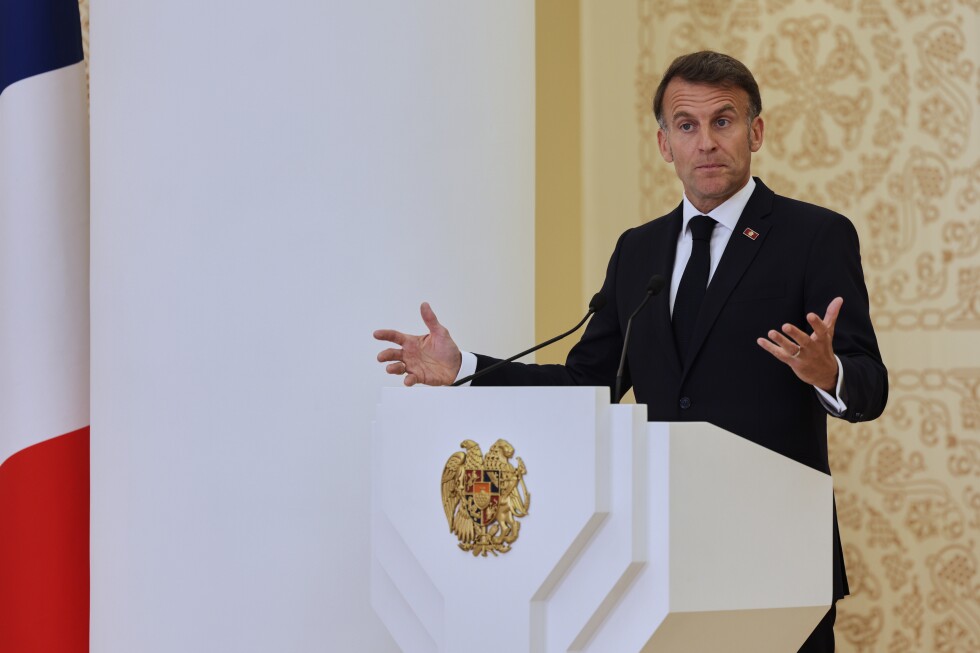
    France made history by becoming the first European Union member to establish a consulate general in Greenland. Jean-Noël Poirier assumed duties as consul general with a mandate to deepen cultural, scientific, and economic cooperation while strengthening political relationships with local authorities. President Emmanuel Macron had approved this diplomatic expansion during his June visit to the region.

    The developments occur against a backdrop of complex Arctic negotiations. Earlier this year, Trump threatened tariffs against Denmark and seven European nations following their opposition to his Greenland control aspirations, though these threats were subsequently withdrawn after NATO-mediated discussions. Recent technical talks between the U.S., Denmark, and Greenland have focused on developing a comprehensive Arctic security agreement, building on preliminary discussions held with U.S. officials before the tariff controversy emerged.

    Foreign Minister Anand emphasized regional cooperation during meetings with Danish counterpart Lars Løkke Rasmussen, noting on social media that “as Arctic nations, Canada and the Kingdom of Denmark are working together to strengthen stability, security, and cooperation across the region.”

  • Spain and Portugal continue to battle Storm Leonardo as new storm approaches

    Spain and Portugal continue to battle Storm Leonardo as new storm approaches

    The Iberian Peninsula remains under siege from severe weather systems as Storm Leonardo continues to unleash destructive forces across Spain and Portugal. Meteorological authorities report worsening conditions with widespread flooding and critically swollen rivers threatening to breach their banks, prompting mass evacuations throughout the region.

    Andalusia in southern Spain faces particularly dire circumstances, with approximately 7,000 residents forced to abandon their homes due to successive atmospheric disturbances. In the mountainous village of Grazalema, some 1,500 individuals received mandatory evacuation orders as regional leader Juan Manuel Moreno warned of aquifers at maximum capacity and imminent collapse risk. ‘Precipitation continues to fall on already saturated terrain with zero drainage capacity,’ Moreno stated, emphasizing that ‘the situation remains critical and demands extreme vigilance.’

    Tragedy struck in Málaga province where police recovered a body believed to be that of a 45-year-old woman who disappeared Wednesday while attempting to rescue her dog from raging floodwaters. The remains were discovered approximately one kilometer from her last known location.

    Meteorological services indicate no respite for the beleaguered region, with Storm Marta expected to arrive Saturday, bringing additional precipitation and powerful winds to areas already overwhelmed by Leonardo’s deluge. Portugal likewise prepares for Marta’s impact, particularly concerning the Tagus River region where rising waters have triggered emergency alerts.

    The Guadalquivir River basin presents another critical concern, with water levels dramatically rising through Córdoba and Seville before emptying into the Atlantic Ocean. Local authorities warn that additional rainfall Saturday could endanger countless more residences in vulnerable areas.

    Portugal’s Alcácer do Sal region already experiences severe inundation after the Sado River overflowed, submerging portions of the city located 90 kilometers south of Lisbon and forcing resident evacuations. This latest weather emergency follows a separate late January storm that caused significant destruction and multiple fatalities according to Portuguese officials.

  • All you need to know about the 2026 Winter Olympics

    All you need to know about the 2026 Winter Olympics

    The grand spectacle of the Milan-Cortina 2026 Winter Olympics has officially launched across northern Italy’s picturesque landscapes, marking the commencement of a 16-day celebration of elite winter sports. With approximately 2,900 athletes representing over 90 nations, the Games unfold across multiple prestigious locations including Milan’s fashion district, the chic Cortina d’Ampezzo, and the Alpine resorts of Livigno and Bormio.

    The opening ceremony at Milan’s legendary San Siro stadium featured spectacular performances by international music icons Mariah Carey and Italian tenor Andrea Bocelli. To accommodate the geographical dispersion of events, parallel ceremonies with their own Olympic cauldrons were simultaneously held in Cortina, Predazzo, and Livigno, ensuring all participants could share the inaugural experience. Team GB’s flag-bearing honors were bestowed upon figure skater Lilah Fear in Milan and bobsleigh pilot Brad Hall in Cortina.

    Great Britain enters these Games with unprecedented optimism regarding medal prospects. UK Sport projects potential record-breaking success with forecasts of up to eight medals, surpassing previous benchmarks of five from Sochi 2014 and Pyeongchang 2018. Strong contenders include world champion skeleton athletes Matt Weston and Marcus Wyatt, who dominated this season’s World Cup circuit. Snowboarding prospects Mia Brookes and Charlotte Bankes, alongside freestyle skiers Kirsty Muir and Zoe Atkin, represent promising opportunities for Britain’s first Olympic gold or silver medals on snow. On ice, figure skating duo Lewis Gibson and Lilah Fear are positioned to potentially secure Britain’s first medal in the discipline since 1994.

    The 2026 Games introduce ski mountaineering (‘skimo’) as the first new Winter Olympic sport since 2002, featuring three medal events in Bormio. The discipline combines uphill skiing with adhesive skins, backpack-carried ski transitions, and downhill racing. Additional new events include dual moguls, luge doubles, team alpine combined, women’s large hill ski jumping, and mixed relay skeleton.

    Despite the celebratory atmosphere, organizational challenges persist. The Cortina Sliding Centre, reconstructed at a cost exceeding £72 million, narrowly achieved operational readiness after significant delays. Conversely, the Milano Santagiulia ice hockey stadium remains incomplete as competitions begin, though organizers guarantee all scheduled matches will proceed. The venue has faced criticism regarding its non-standard ice dimensions and quality concerns, previously prompting boycott warnings from the National Hockey League.

    Further controversy emerged with the dismissal of Italian biathlete Rebecca Passler following a positive doping test. Additionally, the participation of 20 Russian and Belarusian athletes as Individual Neutral Athletes under strict IOC conditions has drawn scrutiny, with BBC Sport reporting that four approved Russian competitors have documented connections to pro-war activities in Ukraine.

  • A deputy chief of Russian military intelligence was shot and wounded in Moscow

    A deputy chief of Russian military intelligence was shot and wounded in Moscow

    A high-ranking official within Russia’s military intelligence apparatus, Lieutenant General Vladimir Alekseyev, sustained gunshot wounds during an ambush in northwest Moscow on Friday. The assault represents the latest in a succession of targeted attacks against Russian military leadership, incidents that Moscow consistently attributes to Ukrainian operatives.

    According to Svetlana Petrenko, spokesperson for Russia’s Investigative Committee, the 64-year-old first deputy head of the GRU (Main Directorate of the General Staff of the Armed Forces) was shot multiple times by an unidentified assailant outside a residential complex. Alekseyev was promptly hospitalized following the attack. Petrenko’s statement refrained from speculating on potential perpetrators.

    General Alekseyev, decorated with the Hero of Russia medal for his contributions to Moscow’s campaign in Syria, has held his prominent intelligence role since 2011. He gained additional public recognition during the June 2023 Wagner Group mutiny when he was filmed in negotiations with mercenary leader Yevgeny Prigozhin in Rostov-on-Don.

    The shooting occurred shortly after multinational negotiations concerning the Ukraine conflict concluded in Abu Dhabi. Notably, Alekseyev’s superior, Military Intelligence Chief Admiral Igor Kostyukov, led the Russian delegation at these talks.

    Kremlin spokesman Dmitry Peskov confirmed that President Vladimir Putin had been briefed on the incident, emphasizing the necessity for enhanced protective measures for military officials during ongoing hostilities.

    This event continues a documented pattern of assaults against Russian military figures since the commencement of the Ukraine conflict nearly four years ago. Previous incidents include the December car bomb assassination of Lieutenant General Fanil Sarvarov, the April killing of Lieutenant General Yaroslav Moskalik via explosive device, and the December 2024 bombing that claimed the life of Lieutenant General Igor Kirillov, chief of Russia’s nuclear, biological, and chemical protection forces. Ukrainian intelligence services have claimed responsibility for several of these operations, though Kyiv has not yet commented on the Alekseyev attack.

  • Russian general shot several times in Moscow

    Russian general shot several times in Moscow

    A high-ranking Russian military official has become the latest target in a series of attacks against senior defense figures in Moscow. Lieutenant General Vladimir Alekseyev, a prominent officer within Russia’s Main Directorate of the General Staff (GRU), sustained multiple gunshot wounds during an assault in a residential complex located in the city’s northwestern periphery.

    Emergency services promptly transported the wounded general to a medical facility, though his current condition remains undisclosed by authorities. This incident marks another in a disturbing pattern of violence against Russia’s military leadership since the commencement of full-scale hostilities in Ukraine nearly four years ago.

    General Alekseyev’s career has been shrouded in international controversy. The European Union imposed direct sanctions against him following allegations that the GRU orchestrated the 2018 nerve agent attack in Salisbury, United Kingdom—an event that significantly heightened tensions between Russia and Western nations.

    The timing and methodology of this assault raise serious questions about security breaches within Russia’s capital, particularly regarding the protection of high-profile military personnel. As investigations continue, observers are analyzing potential connections to ongoing geopolitical conflicts and internal power dynamics within Russian security structures.

    This developing situation underscores the persistent vulnerabilities within Russia’s military establishment despite heightened security measures during ongoing military operations abroad. The attack represents one of the most significant security breaches involving senior Russian defense officials in recent months.

  • The Milan Cortina Olympics’ four-site and two-cauldron opening ceremony begins

    The Milan Cortina Olympics’ four-site and two-cauldron opening ceremony begins

    MILAN — In an unprecedented departure from tradition, the Milan-Cortina 2026 Winter Olympics commenced with a spectacular four-venue opening ceremony that celebrated Italy’s cultural legacy while embracing innovative logistical solutions. The festivities unfolded simultaneously across Milan’s iconic San Siro stadium, Cortina d’Ampezzo in the Dolomites, Livigno in the Alps, and Predazzo in Trento—creating the most geographically dispersed Winter Games in history.

    The ceremony design paid homage to Italy’s extraordinary cultural heritage through planned tributes to Renaissance master Leonardo da Vinci, literary giant Dante Alighieri, opera composer Giacomo Puccini, and late fashion icon Giorgio Armani. American superstar Mariah Carey joined Italian tenor Andrea Bocelli and ballad singer Laura Pausini in a performance lineup that blended international glamour with local artistry.

    Organizers implemented a dual-cauldron concept—one in Milan and another 250 miles away in Cortina—as a geometric tribute to da Vinci’s studies and practical response to the games’ unprecedented geographical spread. The ceremony incorporated classical dancers from Milan’s Teatro alla Scala, fashion showcases featuring Armani’s designs in Italy’s national colors, and symbolic representations of Italian creativity through floating paint tubes and sculptural performances.

    The production, orchestrated by Olympic ceremony veteran Marco Balich, wove together themes of ancient Rome, the Renaissance, Venetian Carnival traditions, and iconic Italian literature including Dante’s ‘Inferno’ and Collodi’s ‘Pinocchio.’ The ceremony emphasized themes of harmony and peace while navigating the unique city-mountain dichotomy of these exceptionally distributed Games.

    With competition venues spanning approximately 8,500 square miles—comparable to New Jersey’s entire land area—the organizers reimagined traditional Olympic protocols. Athletes participated in parallel Parade of Nations ceremonies across multiple locations, allowing Alpine sports representatives to celebrate without traveling to the financial capital. The closing ceremony will further extend the geographical reach with planned festivities in Verona, setting of Shakespeare’s ‘Romeo and Juliet.’

  • Architect aims to rebuild a church and help restore a quake-hit Turkish city’s multicultural past

    Architect aims to rebuild a church and help restore a quake-hit Turkish city’s multicultural past

    In the aftermath of Turkey’s catastrophic 2023 earthquakes, architect Buse Ceren Gul has embarked on an ambitious mission to resurrect St. Paul’s Church, a 166-year-old Greek Orthodox sanctuary that symbolized Antakya’s multicultural heritage. The magnitude 7.8 tremor that struck southern Turkey three years ago—among the nation’s deadliest disasters—reduced much of the historical city center to ruins, including this architectural treasure.

    Gul, a 34-year-old Alevi Muslim, views the church’s restoration as vital for reconnecting residents to their city’s identity. After extensive planning and fundraising efforts, her team recently excavated the structure from rubble piles reaching 5 meters high. The project represents one of few cultural heritage sites with pre-approved architectural drawings, which Gul had ironically been drafting before the disaster under guidance to ‘design as if the church might be demolished.’

    Antakya—known historically as Antioch—boasts biblical origins dating to the sixth century BCE. Throughout its layered history encompassing Hellenistic, Roman, and Ottoman influences, the city has withstood at least five major earthquakes since 115 CE. St. Paul’s Church itself was completely rebuilt in 1900 after an 1872 earthquake destruction, standing as part of the Greek Orthodox Patriarchate of Antioch.

    The reconstruction faces significant challenges beyond engineering. Fadi Hurigil, president of the Greek Orthodox Church Foundation of Antakya, reveals the organization lost 95% of its income post-earthquake. Previously self-sufficient through tourist-facing shops on Saray Avenue—the multicultural hub where Christians, Muslims, and Jews coexisted—the church now depends on dwindling external aid.

    Perhaps the greatest obstacle involves community restoration. Before the quakes, approximately 10,000 Christians inhabited Hatay province, constituting one of Turkey’s largest Christian concentrations outside Istanbul. Now, only about 90 of the 400 Greek Orthodox families have returned to central Antakya, with many displaced due to destroyed homes and absent urban planning.

    Longtime residents like church official Dimitri Dogum, whose family lived in Antakya for four centuries, fear extended displacement may irrevocably damage the city’s intercultural harmony. Without the return of diverse religious and ethnic groups, the very culture of coexistence that defined Antakya risks vanishing alongside its physical structures.

  • Norway investigates former PM Jagland over alleged Epstein links

    Norway investigates former PM Jagland over alleged Epstein links

    Norwegian authorities have launched a formal corruption investigation into Thorbjørn Jagland, the country’s former Prime Minister and esteemed diplomat, following revelations connecting him to the late financier and convicted sex offender Jeffrey Epstein. The National Authority for Investigation and Prosecution of Economic and Environmental Crime (Økokrim) confirmed the investigation centers on suspicions of “aggravated corruption” during Jagland’s tenure in high-profile international positions.

    Police officials disclosed they have formally requested Norway’s foreign ministry to revoke Jagland’s diplomatic immunity, which he maintains from his previous role as Secretary General of the Council of Europe from 2009 to 2019. The investigation stems from newly released Epstein documents in the United States that allegedly contain references to the Norwegian statesman.

    Pål K. Lønseth, head of Økokrim, stated the investigation will examine whether Jagland received “gifts, travel and loans” potentially connected to his official capacities during the period covered by the Epstein documents. Jagland held simultaneous leadership roles from 2009-2015 as both Council of Europe Secretary General and chair of the Norwegian Nobel Committee.

    Norwegian Foreign Minister Espen Barth Eide emphasized the importance of transparency, confirming Oslo would formally request the Council of Europe to waive Jagland’s immunity. Jagland’s legal representative, Anders Brosveet, pledged full cooperation with investigators, expressing confidence in the outcome based on their preliminary findings. The 75-year-old statesman served as Norway’s prime minister from 1996-1997 before assuming his international diplomatic roles.

  • A Muslim-owned thrift shop blends modest fashion, faith and sustainability

    A Muslim-owned thrift shop blends modest fashion, faith and sustainability

    NEW YORK — In the heart of Harlem, Kadjahtou Balde has transformed her father’s struggling gift shop into Modify Thrift, a pioneering sustainable fashion hub that celebrates modest wear while challenging stereotypes about Muslim women’s style. The boutique on Malcolm X Boulevard has emerged as both a retail destination and community space where Islamic values intersect with environmental consciousness.

    Balde, a dedicated thrifter and modest fashion enthusiast, identified a market gap for stylish yet conservative clothing that aligns with her religious values. ‘Muslim women are some of the most fashionable people out there,’ Balde asserts, countering perceptions of oppression or dullness often associated with modest dressing. Her inventory combines streetwear with cultural garments, including hand-embroidered Palestinian pieces and intricately designed abayas.

    The store operates as an antidote to fast-fashion brands that dominate the growing modest wear industry. For Balde, sustainable fashion represents not just a business model but a form of worship—an expression of Islam’s mandate to be stewards of the Earth. ‘We have to be people who care for the planet and for our neighbor,’ says Balde, who also leads Faithfully Sustainable, New York’s first Muslim environmental justice organization.

    Modify Thrift has resonated particularly with Muslim women navigating both style and safety concerns in post-9/11 New York. Balde notes that visibly Muslim women often use fashion strategically to blend in while maintaining their values. Her store empowers them to develop layered, stylish outfits that meet modesty requirements without sacrificing individuality.

    The community has embraced the concept, with most inventory coming from local donations. Assistant Operations Manager Nabiha Ali educates customers that modesty encompasses diverse interpretations: ‘No two Muslim women look the same. It’s really personal and individual.’

    The project also represents a tribute to Balde’s father, who built relationships in Harlem over two decades as a street vendor and shop owner. Their collaboration provided unexpected bonding moments—between DIY renovations, the father-daughter duo shared meals together for the first time. Balde now envisions expanding Modify Thrift into immigrant-run modest thrift stores across all five boroughs, creating businesses that benefit communities rather than simply profiting from them.

  • France begins Six Nations title defense with five-try pounding of Ireland in 36-14 win

    France begins Six Nations title defense with five-try pounding of Ireland in 36-14 win

    In a spectacular display of rugby prowess, France launched their Six Nations championship defense with an emphatic 36-14 victory against Ireland on Thursday evening. The match, played under rainy conditions at Stade de France, saw the French squad demonstrate why they remain tournament favorites with a performance that blended tactical brilliance with raw athletic power.

    The opening half unfolded as a masterclass in offensive execution as France built a commanding 29-0 advantage before halftime. Young sensation Louis Bielle-Biarrey, last year’s tournament MVP, ignited the scoring frenzy in the 12th minute with a spectacular individual effort that saw him break multiple tackles before powering across the try line. Flyhalf Matthieu Jalibert quickly followed with his fourth international try, redeeming himself after previous disappointing performances in the French jersey.

    France’s third try emerged from an unexpected source as forwards Jean-Baptiste Gros and Mickaël Guillard orchestrated a brilliant sequence that culminated with lock Charles Ollivon scoring his 18th international try. The first-half dominance was capped by Bielle-Biarrey’s second score early in the second period, created by a remarkable soccer-style flick pass from Ramos that sent the winger sprinting into the corner.

    Ireland mounted a late resurgence with replacement players Nick Timoney and Michael Milne crossing for consecutive tries, both converted by Sam Prendergast. However, the comeback attempt proved insufficient against France’s overwhelming advantage. The match concluded with controversy as James Ryan delivered a heavy off-the-ball challenge on Jalibert, though the French flyhalf recovered to set up Théo Attissogbe for a final converted try in the closing seconds.