标签: Europe

欧洲

  • From abdication to Diana, Harry and ex-Prince Andrew. A look at major British royal scandals

    From abdication to Diana, Harry and ex-Prince Andrew. A look at major British royal scandals

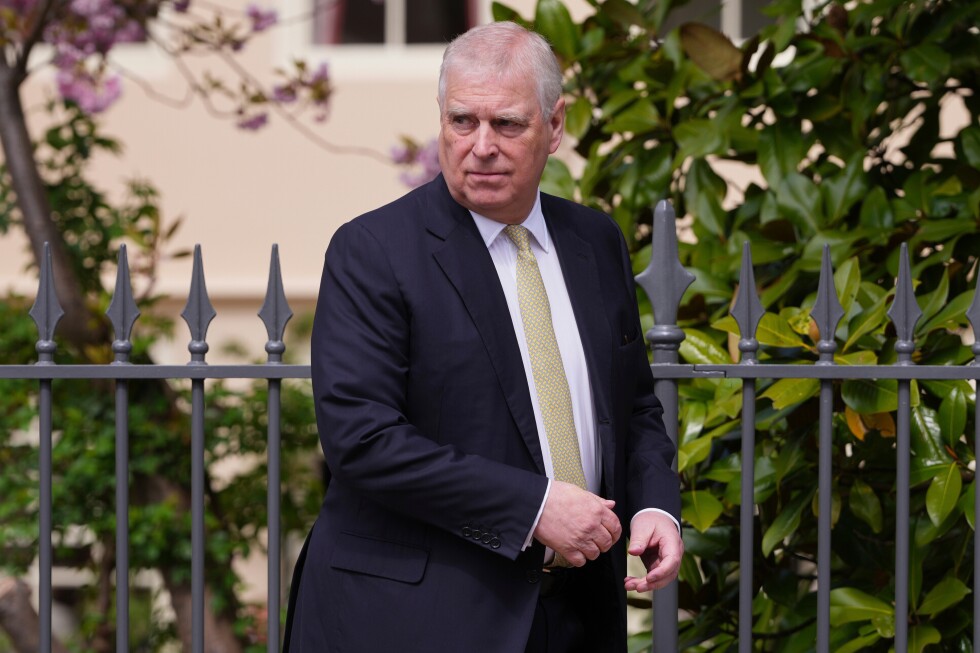
    The British monarchy faces one of its most severe institutional crises in over a century as Prince Andrew’s recent arrest on suspicion of misconduct in public office creates unprecedented challenges for King Charles III’s reign.

    Scotland Yard detained the former Duke of York for nearly eleven hours Thursday following the release of millions of documents from the U.S. Justice Department’s Epstein files investigation. Authorities are examining whether Andrew improperly shared confidential trade information during his tenure as U.K. trade envoy with the late convicted sex offender Jeffrey Epstein. Notably, the arrest relates solely to potential abuse of office rather than Epstein’s sex trafficking allegations.

    While Andrew has consistently denied wrongdoing regarding his association with Epstein, he has remained silent on these latest allegations. The incident represents another devastating blow to the monarchy already grappling with the King’s cancer diagnosis and previous tensions with Prince Harry.

    King Charles III has taken decisive action to protect the institution, stripping his brother of all royal titles and honors while banishing him from his Windsor residence. The monarch maintains that the legal process must run its course, even as the government considers legislation to remove Andrew from the line of succession.

    This crisis evokes historical parallels to other Windsor family challenges: the 1917 name change from Saxe-Coburg and Gotha during World War I anti-German sentiment; Edward VIII’s 1936 abdication over his relationship with Wallis Simpson; and the massive public outcry following Princess Diana’s 1997 death that forced the Queen to address the nation.

    The current situation poses unique dangers as it combines legal proceedings, reputational damage, and constitutional considerations regarding succession. With Andrew remaining eighth in line to the throne despite his diminished status, the monarchy confronts its most significant legitimacy challenge since its modern iteration began over a century ago.

  • After 4 years of war by Russia in Ukraine, peace is still elusive despite a US push for a settlement

    After 4 years of war by Russia in Ukraine, peace is still elusive despite a US push for a settlement

    Russia’s full-scale invasion of Ukraine has now exceeded a sobering historical benchmark, surpassing the 1,418-day duration of Moscow’s World War II campaign against Nazi Germany. Unlike the Red Army’s decisive push to Berlin eight decades ago, today’s conflict has devolved into a grueling stalemate with minimal territorial gains despite catastrophic human costs.

    Current estimates indicate nearly two million soldiers dead, wounded, or missing from both sides in Europe’s most devastating conflict since WWII. NATO Secretary-General Mark Rutte recently characterized Moscow’s advance as moving at “the speed of a garden snail,” with Russian troops gaining merely 50 kilometers in the Donetsk region over two years of brutal fighting.

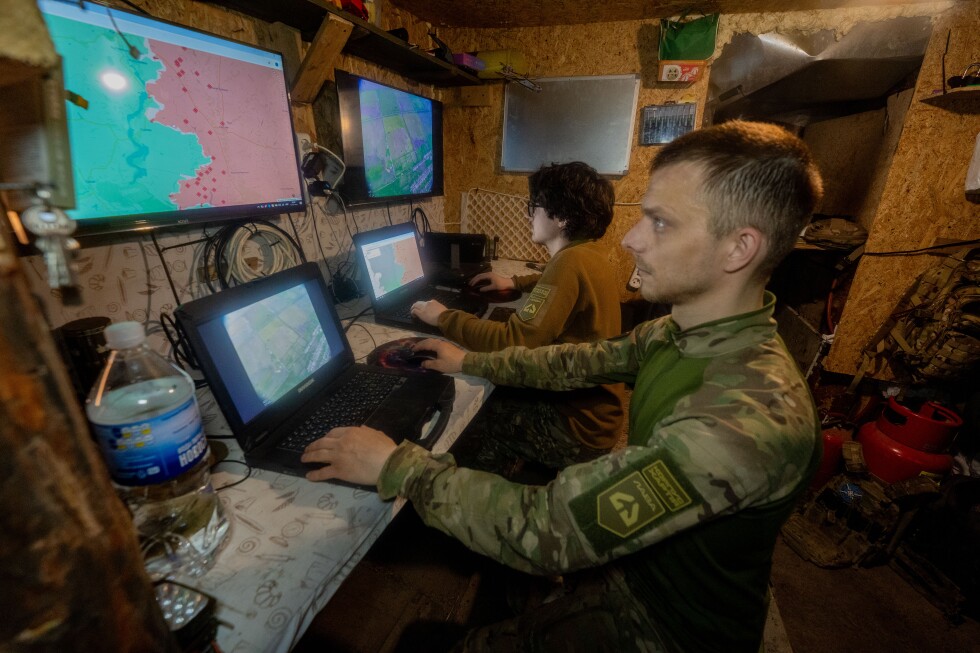
    The warfare has transformed into a peculiar blend of high-tech drone operations and World War I-style trench combat. Drones have become decisive instruments, creating a 50-kilometer kill zone along the 1,200-kilometer front line that prevents troop concentrations and complicates supply movements. Small infantry groups now attempt infiltrations through towns flattened by Russian artillery and glide bombs.

    President Vladimir Putin maintains maximalist demands in U.S.-mediated peace talks, insisting Ukraine withdraw forces from four illegally annexed regions and abandon NATO aspirations. Meanwhile, Ukraine has conducted audacious long-range attacks, including drone strikes on Russian oil refineries and the sinking of several Black Sea warships.

    The conflict has expanded beyond the battlefield, with Russia targeting Ukraine’s energy infrastructure to create widespread blackouts, while Ukraine retaliates with strikes deep inside Russian territory. Economic strains are mounting on both nations, with Western sanctions slowing Russia’s growth though defense production continues unabated.

    Mediation efforts face significant hurdles due to incompatible demands: Putin seeks comprehensive peace agreement rather than ceasefire, while President Volodymyr Zelenskyy requires security guarantees before considering elections or referendums. With the White House reportedly setting a June deadline for resolution and both leaders courting favor with former President Trump, the path to settlement remains elusive amid continued military operations and entrenched diplomatic positions.

  • Stars descend on the BAFTA film awards, with ‘One Battle’ and ‘Sinners’ leading the race

    Stars descend on the BAFTA film awards, with ‘One Battle’ and ‘Sinners’ leading the race

    LONDON — The British Academy Film Awards ceremony on Sunday features a dramatic showdown between two cinematic powerhouses: the politically charged thriller “One Battle After Another” and the blues-infused epic “Sinners.” These films lead the nominations race for the prestigious EE BAFTA Film Awards, setting the stage for an intense competition that could foreshadow outcomes at the upcoming Academy Awards.

    With 14 nominations each, both films dominate categories including Best Picture and multiple acting honors. However, the Shakespearean family tragedy “Hamnet” emerges as a potential dark horse, captivating British film industry voters with its emotionally resonant narrative, authentic English setting, and powerful performances in Chloé Zhao’s adaptation of Maggie O’Farrell’s historical novel.

    The nominations landscape shows Guillermo del Toro’s reimagined “Frankenstein” and Norwegian family drama “Sentimental Value” securing eight nominations each, while the ping-pong odyssey “Marty Supreme” collected 11 nominations alongside “Hamnet.”

    As a reliable predictor of Oscar success, the BAFTAs offer crucial insights into the March 15 Academy Awards race. “Sinners” currently leads Oscar nominations with a record-breaking 16, followed by “One Battle After Another” with 13.

    The ceremony at London’s Royal Festival Hall will feature celebrity attendees including Emma Stone, Cillian Murphy, Glenn Close, and Ethan Hawke. Scottish actor Alan Cumming, host of the U.S. version of “The Traitors,” promises to balance “celebration and mischief” as ceremony host.

    Notable directing contenders include Paul Thomas Anderson (“One Battle”), Josh Safdie (“Marty Supreme”), Ryan Coogler (“Sinners”), Yorgos Lanthimos (“Bugonia”), Joachim Trier (“Sentimental Value”), and Zhao (“Hamnet”). Zhao could make history as the first female director to win two BAFTAs if she triumphs.

    In the acting categories, Timothée Chalamet (“Marty Supreme”) leads the Best Actor field against Leonardo DiCaprio (“One Battle”), Ethan Hawke (“Blue Moon”), Michael B. Jordan (“Sinners”), Jesse Plemons (“Bugonia”), and Robert Aramayo (“I Swear”). Jessie Buckley stands as Best Actress favorite for her portrayal of Agnes Hathaway in “Hamnet,” competing against Rose Byrne, Kate Hudson, Chase Infiniti, Renate Reinsve, and Emma Stone.

    The Associated Press received recognition in the documentary category for Mstyslav Chernov’s harrowing Ukraine war portrait “2000 Meters to Andriivka,” co-produced with Frontline PBS.

    Most awards are determined by 8,500 U.K. academy professionals, while the Rising Star award remains the sole publicly voted category. NBCUniversal Entertainment chairwoman Donna Langley will receive the BAFTA fellowship, the academy’s highest honor.

    The ceremony airs on BBC in the U.K. at 1900GMT and on E! in the U.S. at 2000EST.

  • PSG returns to the top of French league standings with a little help from Monaco

    PSG returns to the top of French league standings with a little help from Monaco

    Paris Saint-Germain ascended to the pinnacle of Ligue 1 on Saturday, capitalizing on a stunning reversal of fortunes orchestrated by their upcoming Champions League rivals, AS Monaco. The Parisians secured a commanding 3-0 victory over bottom-dwellers Metz, with goals from Désiré Doue, Bradley Barcola, and Goncalo Ramos. This result, however, was only half the story in a dramatic day for French football.

    The pivotal shift occurred earlier when Monaco, PSG’s midweek European opponents, staged a remarkable second-half comeback against the previous league leaders, Lens. Despite conceding two early goals, Monaco surged back with three unanswered strikes in a frantic eight-minute period. US international Folarin Balogun ignited the rally in the 62nd minute, followed by equalizer from Denis Zakaria and a decisive winner from Ansu Fati, completing a stunning 3-2 victory.

    This outcome propelled PSG two points clear at the top with eleven matches remaining, a significant psychological boost ahead of their critical Champions League playoff second leg against Monaco on Wednesday. PSG’s performance against Metz was efficient and controlled, with an early goal from Doue setting the tone. The team managed the game effectively, appearing to conserve energy for their European fixture while still comfortably securing all three points.

    The result represents a devastating blow for Lens, who had seized the top spot just a week prior with a 5-0 triumph. Their collapse against Monaco, squandering a two-goal advantage, underscores the volatile nature of the title race as the season enters its final stretch.

  • Ex-UK Prime Minister Johnson calls on allies to send noncombat troops to Ukraine ahead of ceasefire

    Ex-UK Prime Minister Johnson calls on allies to send noncombat troops to Ukraine ahead of ceasefire

    Former UK Prime Minister Boris Johnson has called for Western nations to immediately deploy noncombat military personnel to Ukraine, marking a significant departure from current allied strategy. Speaking ahead of the fourth anniversary of Russia’s full-scale invasion, Johnson advocated for positioning troops in peaceful regions of Ukraine to demonstrate unwavering Western commitment to Ukrainian sovereignty.

    The controversial proposal, outlined in a BBC interview scheduled for broadcast Sunday, challenges the current coalition approach that envisions troop deployment only after a ceasefire agreement. Johnson, who emerged as one of Ukraine’s most vocal supporters during his premiership, argued that delaying military presence effectively cedes initiative to Russian President Vladimir Putin.

    ‘If we are willing to do it in the context of a ceasefire, which of course puts all the initiative, all the power, in Putin’s hands, why not do it now?’ Johnson questioned. ‘There is no logical reason that I can see why we shouldn’t send peaceful ground forces there to show our support.’

    Western military planners have consistently avoided public discussion of such deployments due to concerns about Russian perceptions of escalation. Putin previously declared in September that any international troops entering Ukraine would be considered ‘legitimate targets.’

    In response to Johnson’s remarks, Britain’s Ministry of Defense reaffirmed its current strategy: ‘The multinational force Ukraine under UK leadership will secure peace for the long term, with the Prime Minister being clear that we will put British troops on the ground following the end of hostilities.’

    Johnson contextualized the current conflict within broader Western foreign policy failures, citing inadequate response to the 2014 Crimea invasion, failure to punish Bashar al-Assad for chemical weapons usage in Syria, and the chaotic withdrawal from Afghanistan. He asserted that these events collectively emboldened Putin’s aggressive actions in February 2022.

  • Divers recover bodies of seven Chinese tourists from bottom of Lake Baikal

    Divers recover bodies of seven Chinese tourists from bottom of Lake Baikal

    A devastating incident on Siberia’s Lake Baikal has resulted in the deaths of seven Chinese tourists and their Russian driver after their minibus plunged through the ice into the frigid waters below. The tragedy occurred Friday when the vehicle encountered a three-meter-wide fissure in the ice covering the world’s deepest lake.

    Regional Governor Igor Kobzev confirmed recovery efforts involving divers who worked at depths of 18 meters (59 feet) using specialized underwater camera equipment to locate the victims. One Chinese tourist miraculously survived the accident, managing to escape the submerged vehicle.

    Lake Baikal, renowned as both a UNESCO World Heritage Site and the planet’s deepest freshwater lake reaching depths of 1,642 meters (5,387 feet), transforms into a treacherous landscape during winter months. Despite official warnings, independent travelers continue to risk crossing the unstable frozen surface.

    The victims included a 14-year-old child, all of whom were traveling independently without official tour operators. Governor Kobzev issued stern warnings following the incident, emphasizing that venturing onto Baikal’s ice remains “mortally dangerous” during current conditions.

    Russian authorities have launched a criminal investigation to determine the exact circumstances leading to the tragedy. This incident marks the latest in a series of fatal accidents on the frozen lake, including a January incident that claimed the life of another Chinese tourist.

    Disturbingly, despite this recent tragedy, rescue teams were forced to respond to two additional incidents over the weekend, saving six people trapped in their vehicles on the unstable ice, highlighting ongoing safety concerns regarding unauthorized ice travel.

  • The bones of St. Francis are going on public display, a mixed blessing for Assisi

    The bones of St. Francis are going on public display, a mixed blessing for Assisi

    The medieval Italian town of Assisi is bracing for an extraordinary spiritual event as the skeletal remains of St. Francis of Assisi are being exhibited publicly for the first time in history. This unprecedented month-long display, organized to commemorate the 800th anniversary of the saint’s passing, has already attracted registrations from nearly 400,000 pilgrims, with projections suggesting half a million visitors before the relics return to their crypt on March 22.

    The exhibition presents both a spiritual opportunity and logistical challenge for this Umbrian hilltop community. Mayor Valter Stoppini acknowledges the complex reality facing residents: “We’re accustomed to major events, but typically lasting one to three days. This prolonged month-long exhibition brings concerns, though I remain calm.”

    A dedicated force of 400 volunteers has been mobilized to manage the expected crowds through Assisi’s narrow, souvenir-lined cobblestone streets toward the lower Basilica of St. Francis. There, pilgrims will encounter the saint’s bones secured within a bulletproof glass enclosure.

    The town’s infrastructure faces severe strain from this continuous influx. While Assisi regularly welcomes religious tourists due to its status as a premier Christian pilgrimage destination, the extended duration of this event tests the patience of locals and the capacity of limited urban services.

    Adding to Assisi’s spiritual significance is the recent canonization of Carlo Acutis, the Catholic Church’s first millennial saint. This 15-year-old who died of leukemia in 2006 has become a powerful draw for younger pilgrims, particularly from Latin America, creating what Brother Marco Moroni describes as “an osmosis” between devotion to both saints that further increases visitor numbers.

    Local businesses express enthusiasm for the economic opportunity. Shopkeeper Arianna Catarinelli, whose store sells both St. Francis-themed merchandise and Acutis memorabilia, notes: “For residents, parking isn’t easy. But commercially, the high visitor numbers are positive.”

    The city administration has implemented mitigation measures including new peripheral parking facilities and shuttle services to reduce urban congestion. Bank employee Riccardo Bacconi reflects the pragmatic attitude of many residents: “Economically it’s important. There are more advantages than disadvantages for those of us who choose to live here.”

  • Six races, six golds – Klaebo’s historic Olympics

    Six races, six golds – Klaebo’s historic Olympics

    Norwegian cross-country skiing sensation Johannes Hoesflot Klaebo has etched his name in Winter Olympic history by capturing an unprecedented sixth gold medal at the Milan-Cortina 2026 Games. The 29-year-old phenom achieved this extraordinary feat by dominating the grueling 50km mass start classic event, completing the challenging course in 2 hours, 6 minutes, and 44.8 seconds.

    Klaebo’s victory marked a complete Norwegian podium sweep, with teammates Martin Loewstroem Nyenget securing silver and Emil Iversen claiming bronze. Nyenget finished 8.9 seconds behind the champion, earning his third medal of the competition.

    This historic performance surpasses the previous record of five gold medals set by American speed skater Eric Heiden at the 1980 Lake Placid Olympics. Klaebo now boasts 11 Winter Olympic gold medals overall, establishing himself as the first athlete to win all six cross-country skiing events at a single Games. Among all Olympians, only swimming legend Michael Phelps, with 23 gold medals, stands above Klaebo’s remarkable achievement.

    Reflecting on his accomplishment, Klaebo told BBC Sport: ‘It’s been crazy, it’s a dream come true. I really think this Olympics has been perfect. Being able to crown the Olympics with the 50km was unbelievable.’

    The Norwegian champion’s journey to skiing greatness began when he moved to Trondheim as a child, a region renowned for its cross-country skiing trails. His dominance extends beyond the Olympics, with an incredible 116 World Cup victories and 15 world championship titles to his name.

    Meanwhile, Team GB’s Andrew Musgrave delivered a respectable sixth-place finish, nearly four minutes behind Klaebo, while teammate Joe Davies placed 16th. The 35-year-old Musgrave, competing in his fifth Olympics, humorously remarked about potentially competing in his sixth Games: ‘I’m still young and promising.’

    Despite limited resources, the British cross-country team celebrated their most successful Olympic performance to date, including a fifth-place finish in the team sprint event—the nation’s best result in the sport.

  • Harrop, Anselmet combine to win mixed relay for France as part of ski mountaineering’s Olympic debut

    Harrop, Anselmet combine to win mixed relay for France as part of ski mountaineering’s Olympic debut

    BORMIO, Italy — France’s Emily Harrop and Thibault Anselmet secured a monumental victory in the inaugural Olympic mixed relay ski mountaineering event at the Milan Cortina Games on Saturday. The duo dominated the challenging Stelvio course with a commanding performance, finishing in 26 minutes and 57.44 seconds to claim the sport’s first Olympic mixed relay gold medal.

    The French team established an early advantage that they maintained throughout the four-lap race, with Harrop setting a punishing pace on the initial leg. Their seamless transitions and technical mastery proved decisive on the demanding circuit that combined grueling ascents and technical descents. Anselmet’s confidence was evident as he began celebrating well before the finish line, raising his arms in triumph during the final descent.

    Switzerland’s Marianne Fatton and Jon Kistler mounted a strong challenge, particularly during the final exchange where Fatton narrowed the gap significantly. However, Anselmet responded with exceptional composure on the decisive lap, ultimately securing victory by 11.86 seconds. The Spanish pairing of Ana Alonso Rodriguez and Oriol Cardona Coll captured bronze, adding to Cardona Coll’s individual sprint gold from Thursday’s historic competition.

    American competitors Anna Gibson and Cameron Smith delivered a respectable performance, finishing just off the podium in fourth position. The event showcased ski mountaineering’s unique demands, requiring athletes to navigate multiple transitions between skin-equipped ascents and high-speed descents while carrying their equipment.

    The mixed relay format featured alternating male and female athletes completing two laps each, with a total course length of 1,410 meters including approximately 137 meters of elevation gain. Athletes faced the additional challenge of staircase sections where they carried their skis while running in ski boots—a signature element of ski mountaineering competition.

    This event marks the second medal ceremony for ski mountaineering following its formal inclusion in the Olympic program in 2021, solidifying the sport’s place in winter sports tradition with its blend of endurance, technical skill, and strategic teamwork.

  • UK should send non-combat troops to Ukraine now, former PM Johnson tells BBC

    UK should send non-combat troops to Ukraine now, former PM Johnson tells BBC

    Former British Prime Minister Boris Johnson has called for the immediate deployment of Western non-combat troops to Ukraine, arguing such a move could fundamentally alter Russian President Vladimir Putin’s strategic calculations. In an exclusive interview with BBC’s Sunday with Laura Kuenssberg, Johnson contended that if Western nations plan to station peacekeeping forces after a potential ceasefire, they should consider doing so immediately in peaceful regions of Ukraine.

    Speaking alongside former UK military chief Admiral Sir Tony Radakin, Johnson reflected on the fourth anniversary of Russia’s invasion, suggesting the conflict could have been prevented had Western allies responded more decisively to Putin’s 2014 annexation of Crimea. Both Johnson and Radakin acknowledged that Western support for Ukraine, while substantial, has often been delayed through months of cautious deliberation they described as ‘incrementalism.’

    Johnson characterized this hesitation as needless delay that has ultimately cost Ukrainian lives. ‘We’ve always delayed needlessly,’ he stated. ‘We’ve then ended up giving the Ukrainians what they have been asking for, and actually it’s always served to their advantage and to the disadvantage of Putin. The one person who suffers from escalation is Putin.’

    The former prime minister specifically proposed that UK and allied forces could be deployed to secure areas of Ukraine in non-combat roles, such as training, logistical support, or infrastructure protection. This presence, he argued, would demonstrate constitutional support for Ukrainian sovereignty without directly engaging in combat operations.

    Johnson also offered a critical assessment of Western foreign policy failures that he believes emboldened Putin, including the inadequate response to chemical weapons use in Syria, the chaotic withdrawal from Afghanistan, and what he termed ‘the general ambiguity of the Western position’ regarding Ukraine.

    Admiral Radakin separately addressed defense spending, urging the UK government to clarify its commitment to allocate 3.5% of national income to defense by 2035—a pledge made at last year’s NATO summit. He emphasized that while the UK remains secure as a nuclear power within NATO, sustained investment is essential for long-term security amid a ‘weak but dangerous’ Russia.

    The proposal to deploy troops represents a significant escalation beyond current Western policy, which has consistently ruled out direct military presence. The UK government is reportedly working with allies to plan a ‘coalition of the willing’ that would provide forces only after a formal peace agreement is established.