标签: Europe

欧洲

  • The 102-year-old kitman who left his mark on the World Cup

    The 102-year-old kitman who left his mark on the World Cup

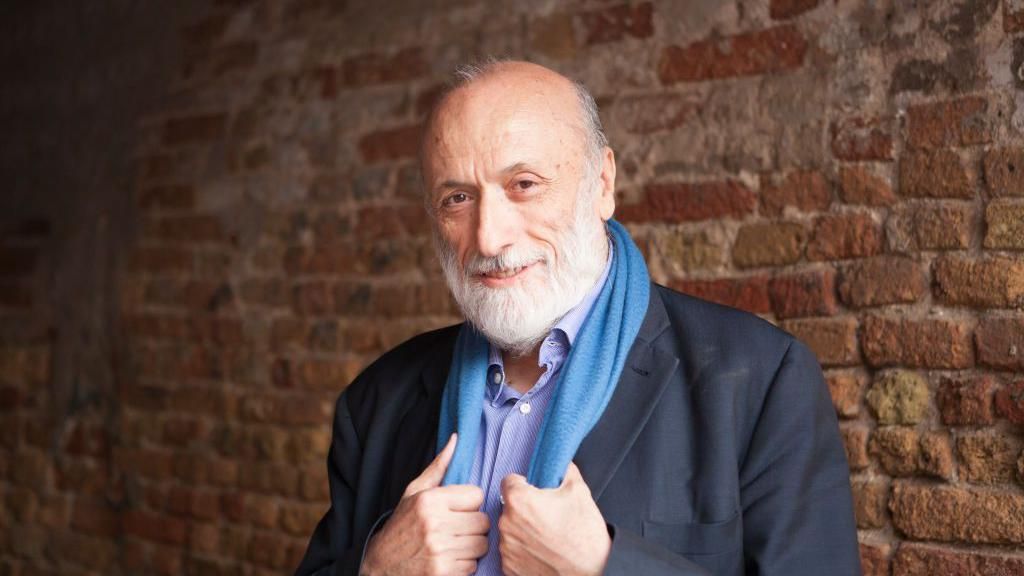
    At 102 years young, Charlie O’Leary stands as a living monument to Irish football history. The Dubliner, who recently celebrated his birthday in February, possesses a legacy that intertwines with the very fabric of the sport across both the Republic and Northern Ireland. His remarkable journey from local innovator to international football figure is now being immortalized in “The Charlie O’Leary Story – From Johnny Cullen’s Hill to the Olympic Stadium Rome,” set to premiere at the Dublin International Film Festival.

    O’Leary’s most enduring contribution remains the revolutionary “street leagues” he established in Dublin’s East Wall neighborhood in 1945. Recognizing the lack of organized football opportunities for teenagers, O’Leary proposed utilizing the parish church’s juvenile sodality as a foundation for competitive play. The leagues organized teams based on residential streets, creating an immediate sense of community pride and belonging.

    The initiative rapidly expanded throughout Dublin during the 1950s before spreading across the island to cities including Belfast. What began as a local solution evolved into a breeding ground for legendary talent. The leagues produced an extraordinary roster of players who would achieve international acclaim, including Manchester United’s European Cup winner Tony Dunn, Arsenal and Juventus star Liam Brady, and Leeds United icon Johnny Giles.

    Northern Ireland similarly benefited from O’Leary’s vision, with three members of their historic 1958 World Cup squad—Harry Gregg, Bertie Peacock, and Jimmy McIlroy—having developed their skills in the street leagues. Later participants included Manchester United’s Sammy McIlroy and current Northern Ireland assistant manager Jimmy Nicholl.

    O’Leary’s influence extended beyond community organizing to direct involvement with the Republic of Ireland national team. Serving as kitman for 16 years during Irish football’s golden era, he witnessed iconic victories including the historic defeat of England at Euro 1988 and the stunning triumph over Italy at the 1994 World Cup.

    Film producer Fergus Dowd emphasizes the cultural significance of O’Leary’s creation: “These kids had a jersey on, they were representing their road and their mothers and fathers were watching. It was a massive community event that grew organically from Charlie’s vision.”

    Reflecting on his extraordinary life in football, which included refereeing behind the Iron Curtain during the Cold War, O’Leary identifies meeting Pope John Paul II during the 1990 World Cup as his most cherished memory. “I was frozen, I couldn’t speak,” he recalls. “That to me was the biggest thrill I ever got in my life.”

    The documentary not only chronicles O’Leary’s personal journey but preserves the story of an innovative community program that transformed Irish football and provided opportunities for generations of young athletes who might otherwise have been overlooked by traditional systems.

  • Four years into its full-scale war in Ukraine, Russia is feeling the effects

    Four years into its full-scale war in Ukraine, Russia is feeling the effects

    The picturesque town of Yelets, located 350km south of Moscow, presents a stark contrast between its traditional charm and the grim realities of Russia’s prolonged military engagement in Ukraine. Beneath the golden domes of Orthodox churches and scenes of ice fishermen on the frozen river, the community grapples with the war’s profound consequences.

    Throughout the town, military recruitment posters offer substantial financial incentives, including one-time payments equivalent to £15,000 for those willing to enlist. These promotional materials feature determined soldiers with Kalashnikovs and slogans proclaiming “We’re there where we need to be.”

    The human cost of the conflict is visibly memorialized in a giant mural covering a nine-story apartment block, depicting five local soldiers killed in combat with the inscription “Glory to the heroes of Russia!” While official casualty figures remain undisclosed by Russian authorities, the proliferation of such memorials across towns and villages indicates significant battlefield losses.

    Local resident Irina, a bus station ticket collector, exemplifies the economic strain affecting ordinary Russians. “Utility bills are suffocating us. Prices are crushing us. It’s very hard to get by,” she explains while acknowledging multiple personal connections to war casualties. Despite financial hardships, she contributes to aid packages for frontline soldiers but expresses confusion about the war’s objectives compared to historical conflicts.

    The security landscape has transformed dramatically since the invasion began in February 2022. With Ukraine’s drone attacks reaching the Lipetsk region, emergency shelters now dot public spaces—a concrete manifestation of conflict that previously didn’t exist. Residents report regular nighttime sirens, prompting makeshift safety measures like moving to windowless corridors.

    Commercial establishments have incorporated war symbolism, with one pancake café displaying the Latin letters V and Z—recognized symbols of the “special military operation”—alongside the provocative slogan “Grab a pancake, then the whole world.”

    Economic pressures continue mounting as Russia’s budget deficit grows. The recent VAT increase from 20% to 22%, officially earmarked for “defence and security” spending, has further strained small businesses. Anastasiya Bykova, a local bakery owner, describes the challenging calculus of rising operational costs: “Imagine we all have to shut down… We try to make our town look good. But if we close, what’s left? Just a dark grey patch.”

    Even among supporters like pensioner Ivan Pavlovich, who declares the operation “excellent,” economic realities temper enthusiasm. “Pensions go up, but then prices go up even more. So, what do I gain? Nothing,” he acknowledges while maintaining support for the military effort.

    As the conflict enters its fifth year, optimism remains scarce among residents who primarily focus on endurance and hope for better times ahead, with many simply hunkering down against continuing economic and social pressures.

  • EU diplomats to meet Board of Peace director over Gaza’s future

    EU diplomats to meet Board of Peace director over Gaza’s future

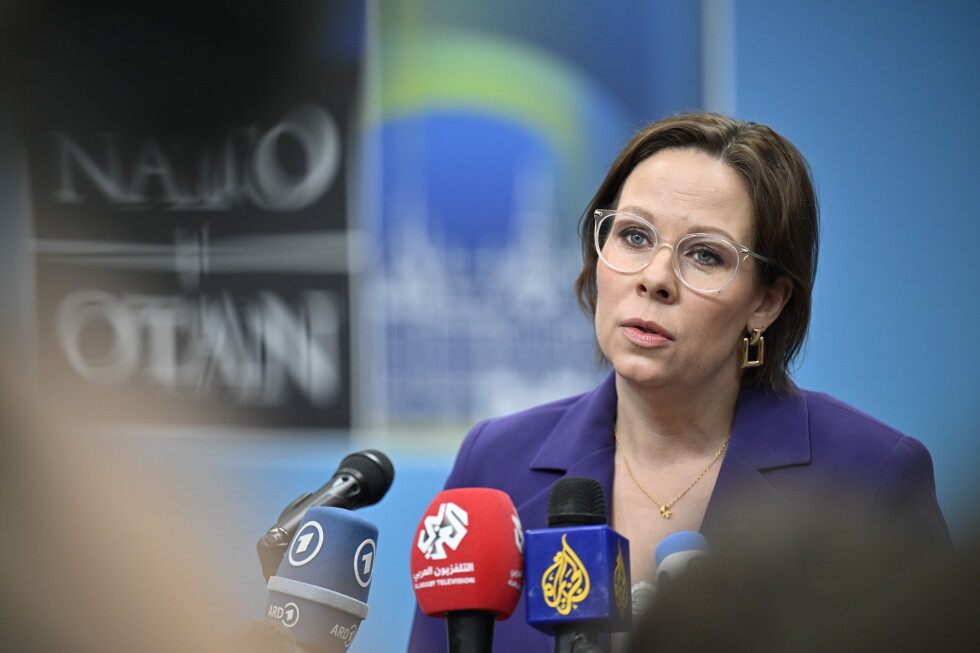
    European Union foreign ministers convened in Brussels on Monday for crucial discussions with Nikolay Mladenov, Director of the U.S.-backed Board of Peace, highlighting deep divisions within the bloc regarding cooperation with President Donald Trump’s initiative for Gaza’s stabilization and reconstruction. The meeting with Mladenov—a former Bulgarian politician and UN diplomat appointed by Trump—comes amid escalating tensions over the EU’s appropriate role in Middle East peacemaking.

    The gathering, attended by EU foreign policy chief Kaja Kallas and ministers from across the 27-nation union, also addressed ongoing concerns about the war in Ukraine and potential new sanctions against Russia. The EU’s substantial geopolitical and economic interests in the Mediterranean region position it as a critical stakeholder, with the bloc currently maintaining oversight operations at the Rafah border crossing and serving as the primary donor to the Palestinian Authority.

    Internal divisions have emerged sharply across European capitals regarding collaboration with the Trump-led board. While EU members Hungary and Bulgaria hold full membership, and candidate countries Turkey, Kosovo, and Albania participate fully, twelve additional EU nations dispatched observers to the Washington inaugural meeting: Austria, Croatia, Cyprus, Czech Republic, Finland, Germany, Greece, Italy, Netherlands, Poland, Romania, and Slovakia.

    Notable absences included French President Emmanuel Macron, European Commission President Ursula von der Leyen, and Pope Leo XIV, who declined invitations. However, von der Leyen’s decision to send European Commissioner for the Mediterranean Dubravka Šuica as an observer without consulting the European Council sparked institutional controversy. French Foreign Minister Jean-Noël Barrot publicly criticized this move as a violation of EU regulations, stating on social media platform X that the Commission ‘must scrupulously respect European law and institutional balance in all circumstances.’

    In response, von der Leyen’s spokesperson Paula Pinho defended the Commission’s prerogative to accept invitations independently, emphasizing that while the executive branch isn’t formally joining the board, it seeks to influence Gaza’s reconstruction and peacekeeping efforts beyond its financial contributions.

    The Trump administration’s expansive vision for the Board of Peace encompasses everything from transforming Gaza into a futuristic metropolis to challenging the UN Security Council’s traditional conflict-resolution role. However, these ambitions face practical constraints given the limited progress achieved thus far in implementing the ceasefire’s fundamental objectives.

  • ICC to hold hearing on charges against former Philippine President Rodrigo Duterte

    ICC to hold hearing on charges against former Philippine President Rodrigo Duterte

    THE HAGUE, Netherlands — International Criminal Court prosecutors commenced proceedings Monday to substantiate charges against former Philippine President Rodrigo Duterte, marking a pivotal moment in one of the court’s most significant cases. The prosecution alleges Duterte orchestrated systematic killings during his anti-drug campaigns, first as mayor of Davao City and later as national leader.

    The evidentiary hearing represents a critical juncture in the years-long investigation into extrajudicial killings that human rights organizations estimate claimed between 6,000 and 30,000 lives during Duterte’s presidency. While not a full trial, the proceedings allow prosecutors to demonstrate sufficient evidence for judges to determine within 60 days whether formal charges should proceed to trial.

    Victims’ families expressed emotional relief at the development. Llore Pasco, whose two sons disappeared in May 2017 and were later found bullet-ridden, stated: ‘We have waited for this for so long, for years we have waited, but we did not relent.’

    Duterte, who waived his right to attend the Hague proceedings, described the charges as an ‘outrageous lie’ in a letter to judges. The octogenarian cited his advanced age and frailty as reasons for non-attendance, claiming he would forget the proceedings ‘within minutes.’

    The case has ignited political tensions in the Philippines, with Duterte’s supporters criticizing current President Ferdinand Marcos Jr.’s administration for cooperating with the court. Vice President Sara Duterte, the former leader’s daughter and recent presidential aspirant for 2028, has emerged as a prominent detractor of the proceedings.

    Human rights advocates note Duterte attempted to evade accountability by withdrawing the Philippines from the ICC’s Rome Statute in 2018 after prosecutors announced their investigation. However, judges rejected jurisdictional challenges, asserting countries cannot abuse withdrawal procedures to shield individuals from justice for crimes already under consideration. An appeal of this decision remains pending.

    For families like Sheerah Escudero, whose 18-year-old brother was found wrapped in packaging tape in 2017, the case represents not just accountability for past crimes but prevention of future violence. ‘We know that the same policy of killings will continue,’ Escudero warned, highlighting concerns about political dynasties perpetuating violent policies.

  • From bakeries to beauty shops, Russian businesses are feeling the pain from a new wartime tax policy

    From bakeries to beauty shops, Russian businesses are feeling the pain from a new wartime tax policy

    As Russia’s full-scale invasion of Ukraine enters its fourth year, mounting economic pressures are forcing the Kremlin to shift financial burdens onto consumers and small enterprises. Recent tax reforms have significantly increased the fiscal strain on Russia’s small business sector, triggering widespread concern and closures across the country.

    The situation gained national attention when Denis Maksimov, owner of Mashenka bakery in suburban Moscow, appealed directly to President Vladimir Putin during his annual call-in show last December. Standing before his bakery named after his eldest daughter, Maksimov articulated the struggles facing small businesses under new tax regulations that have drastically lowered revenue thresholds for value-added tax (VAT) requirements.

    While acknowledging the country’s difficult circumstances, Maksimov expressed grave concerns about the sustainability of many enterprises. The reforms have reduced the VAT payment threshold from 60 million rubles ($783,000) in annual revenue to 20 million rubles ($261,000) this year, with plans to further decrease it to 10 million rubles ($130,500) by 2028. Businesses previously using the patent taxation system—which involved fixed annual payments—now face at least a 6% tax on revenues plus 5% VAT if they exceed the new thresholds.

    Although Maksimov’s televised plea brought temporary increased sales and presidential attention to his bakery, it failed to reverse the policy. While Putin raised the case at a government meeting and Economy Minister Maxim Reshetnikov proposed temporary relief measures, concrete implementation remains uncertain.

    The economic fallout extends far beyond Moscow. Social media videos show vacant commercial spaces along St. Petersburg’s main Nevsky Prospekt, where numerous shops have ceased operations. Darya Demchenko, who owns a chain of beauty salons in Russia’s second-largest city, describes unprecedented anxiety among business owners. She has already closed one salon and sold another to remain operational amid soaring costs and declining demand.

    An online campaign dubbed “We Are Mashenka,” initiated by the Association of Beauty Industry Enterprises, has highlighted similar cases nationwide. Unlike Maksimov, most entrepreneurs lack access to high-level intervention. Industry reports indicate approximately 10% of beauty businesses in St. Petersburg closed in December and January alone, with predictions of further collapses after April tax deadlines.

    According to Chris Weafer, CEO of Macro-Advisory Ltd., this represents a deliberate strategy by the Finance Ministry to create stable revenue sources as oil revenues dwindle and military spending levels off. While small and medium enterprises constitute just over 20% of Russia’s economy, expanding VAT application to these businesses will generate significant budget funds.

    The cumulative pressure—including restrictions on social media platforms that eliminated cheap advertising avenues, supplier price hikes exceeding the 2% VAT increase, and requirement for specialized accounting staff—has created perfect storm conditions for small businesses. Many entrepreneurs who survived previous challenges, including COVID-19 pandemic and sanctions following the annexation of Crimea, now face what they describe as an existential threat without government support.

    As more businesses become subject to increased taxes in 2027 and 2028 under the progressive implementation schedule, the sector most crucial for economic expansion and innovation continues to suffer, potentially hampering Russia’s post-war recovery prospects.

  • Zelensky tells BBC Putin has started WW3 and must be stopped

    Zelensky tells BBC Putin has started WW3 and must be stopped

    In an exclusive interview with the BBC from Kyiv’s heavily fortified government compound, Ukrainian President Volodymyr Zelensky delivered a resolute declaration of defiance against Russian aggression. The wartime leader categorically rejected territorial concessions as a pathway to ceasefire, framing such compromises as both a strategic weakening and moral abandonment of Ukrainian citizens.

    Zelensky characterized Vladimir Putin’s expansionist ambitions as having already triggered a global conflict, asserting that only intensified military and economic pressure could force Russian retreat. When questioned about relinquishing control over Donetsk’s remaining 20% and southern territories, Zelensky countered that land represents people’s lives and national sovereignty rather than mere bargaining chips.

    The president addressed complex geopolitical dynamics, including Donald Trump’s administration pressuring Ukraine for concessions while reducing military aid. Zelensky demonstrated strategic diplomacy in navigating relations with the unpredictable U.S. leader, emphasizing that security guarantees require congressional ratification beyond presidential whims.

    Regarding potential elections, Zelensky outlined substantial practical obstacles including displaced populations and occupied territories, while maintaining that legitimate democratic processes require international security assurances first.

    Despite acknowledging current weaponry limitations and air defense shortages, Zelensky projected unwavering confidence in Ukraine’s ultimate victory. He defined success not merely as territorial restoration but as preventing global authoritarian expansion and preserving Ukraine’s hard-won independence.

    The interview concluded with Zelensky switching to English to emphasize multi-track diplomatic strategies, comparing geopolitical negotiations to complex chess matches requiring parallel approaches toward ultimately constraining Putin’s aggression.

  • Bones of St Francis of Assisi go on public display in Italy

    Bones of St Francis of Assisi go on public display in Italy

    In an unprecedented event marking the 800th anniversary of his death, the skeletal remains of Saint Francis of Assisi have been unveiled for public veneration in the Italian town that bears his name. The historic exhibition, which commenced this Sunday, is taking place within the hallowed walls of the Basilica of St. Francis’s lower church.

    The 13th-century relics, meticulously preserved within a nitrogen-filled plexiglass case positioned before the altar, represent one of the most significant religious exhibitions in modern history. Italian authorities report an overwhelming global response, with approximately 400,000 pilgrims and visitors having secured reservations to witness the sacred remains firsthand.

    This extraordinary viewing opportunity marks only the second time the saint’s bones have been accessible to the public. The previous occasion occurred briefly in 1978 when a select group was permitted a single day of veneration.

    Born Giovanni di Pietro di Bernardone in 1181 or 1182, Saint Francis underwent a profound spiritual transformation that led him to renounce considerable family wealth and embrace a life of poverty and service. His legacy includes founding the Franciscan Order and becoming the recognized patron saint of animals, ecology, and Italy itself.

    The current exhibition holds particular significance given the recent papacy of Pope Francis, who consciously modeled his leadership after the saint’s radical humility and dedication to the poor. The display will remain accessible to the public through March 22nd, providing an extended period for reflection and veneration of one of Christianity’s most beloved figures.

  • Greenland says ‘no thanks’ to Trump US hospital boat

    Greenland says ‘no thanks’ to Trump US hospital boat

    Greenland’s Prime Minister Jens-Frederik Nielsen has issued a diplomatic rebuke to former U.S. President Donald Trump following his unexpected announcement about deploying a U.S. hospital ship to the Arctic territory. The exchange marks the latest development in Trump’s longstanding interest in Greenland, which he previously attempted to purchase during his presidency.

    Trump took to his Truth Social platform to declare he was dispatching ‘a great hospital boat to Greenland to take care of the many people who are sick, and not being taken care of there,’ accompanied by an illustration of the USNS Mercy, one of two hospital ships operated by the U.S. Navy. The post provided no specifics regarding the timing or motivation behind this decision.

    In a firm response, Prime Minister Nielsen declined the offer, stating unequivocally that ‘it’s going to be a no thanks from us.’ He emphasized Greenland’s robust public healthcare system, noting that ‘we have a public healthcare system where treatment is free for citizens,’ drawing an implicit contrast with the United States’ healthcare model. Nielsen further urged more conventional diplomatic channels, suggesting Trump should ‘talk to us instead of just making more or less random outbursts on social media.’

    The unusual exchange occurs against the backdrop of continued U.S. interest in Greenland’s strategic position. Trump previously attempted to purchase the vast Arctic island during his presidency, though he conceded in January that he would not pursue acquisition by force. Subsequently, he announced a ‘framework for a future deal’ regarding U.S.-Greenland relations, though details remain unspecified despite claims from U.S. Vice President JD Vance that European countries were ‘willing to make a lot of accommodations.’

    The timing of Trump’s hospital ship announcement raised questions as it followed closely after Denmark’s Joint Arctic Command reported evacuating a crew member requiring urgent medical attention from a U.S. submarine near Nuuk, though any connection between the events remains unconfirmed.

  • Six Nations favorite France scores 5 tries in 33-8 win against Italy

    Six Nations favorite France scores 5 tries in 33-8 win against Italy

    LILLE, France — The French national rugby team solidified their position as frontrunners for the Six Nations Championship with a hard-fought 33-8 victory against Italy on Sunday. Despite occasional lapses in discipline, Fabien Galthié’s squad secured their third consecutive tournament win while demonstrating both offensive brilliance and defensive resilience.

    The match at Stade Pierre-Mauroy witnessed France establishing early dominance with three first-half tries. Lightning-quick winger Louis Bielle-Biarrey, lock Emmanuel Meafou, and versatile flyhalf Thomas Ramos all crossed the try line before halftime, with star scrumhalf Antoine Dupont orchestrating two of these scoring opportunities.

    After building a commanding 19-0 lead within thirty minutes, France’s performance became somewhat disjointed as tactical indiscipline allowed Italy back into contention. Italian fullback Ange Capuozzo capitalized on this shift in momentum with an opportunistic try, complemented by a Paolo Garbisi penalty, narrowing the deficit to 19-8.

    The scoreboard remained unchanged until the 71st minute when Ramos executed a precision kick to the right corner, enabling debutant winger Gaël Dréan to score his first international try. This crucial score occurred while Italy faced numerical disadvantages, with winger Louis Lynagh—son of Australian rugby legend Michael Lynagh—serving a sin-bin penalty for a deliberate knock-on.

    Controversy emerged as Italy’s substitutes expressed frustration over Dréan’s try, arguing they were effectively reduced to 13 players since Capuozzo remained off-field receiving treatment for a shoulder injury. France sealed their bonus-point victory when center Emilien Gailleton demonstrated impressive physicality by breaking through a tackle to score in the final moments, with Ramos adding the conversion.

    With five tries scored in this match, France continues to showcase their offensive prowess, having accumulated 19 tries throughout the tournament thus far. This positions them favorably to challenge their own championship record of 30 tries established last year.

  • EU says US must honor a trade deal after court blocks Trump tariffs

    EU says US must honor a trade deal after court blocks Trump tariffs

    BRUSSELS — The European Union has formally requested comprehensive clarification from the United States regarding its rapidly evolving tariff policies, urging its transatlantic partner to honor previously established commitments. This diplomatic maneuver comes in response to the U.S. Supreme Court’s recent invalidation of significant portions of former President Donald Trump’s tariff framework, followed by Trump’s subsequent announcement escalating his proposed global tariff rate from 10% to 15%.

    The European Commission, representing the trade interests of the 27 EU member nations, declared the current environment incompatible with achieving the “fair, balanced, and mutually beneficial” trade and investment relationship mutually agreed upon in the EU-U.S. Joint Statement of August 2025. This agreement had established a 15% import tax on approximately 70% of European goods entering American markets.

    Bernd Lange, chair of the European Parliament’s international trade committee, characterized the situation as “pure tariff chaos on the part of the U.S. administration,” noting that the unpredictability has created “only open questions and growing uncertainty” for EU trading partners. In response to the turmoil, Lange announced his intention to propose suspending the ratification process of the existing trade agreement through the European Parliament’s negotiating team.

    The EU emphasized its expectation that U.S. trade policies remain consistent with established agreements, stating unequivocally that “a deal is a deal.” As America’s largest trading partner, with bilateral trade in goods and services reaching €1.7 trillion ($2 trillion) in 2024, the EU maintains that its products should continue receiving the competitive treatment outlined in previous agreements.

    Europe’s primary exports to the U.S. include pharmaceuticals, automobiles, aircraft, chemicals, medical instruments, and alcoholic beverages, while American exports to the EU predominantly feature professional and scientific services, energy products, pharmaceuticals, medical equipment, aerospace technology, and automotive products.

    The Commission warned that unpredictably applied tariffs “undermine confidence and stability across global markets” and create significant uncertainty throughout international supply chains. The EU retains the option to deploy its Anti-Coercion Instrument—a comprehensive trade defense mechanism enabling restrictive measures against nations applying undue pressure on EU members. These measures could potentially restrict goods and services trade, exclude entities from EU public tenders, limit foreign direct investment, or ultimately restrict access to the EU’s 450-million-consumer market, potentially inflicting billions in losses on U.S. companies and the American economy.