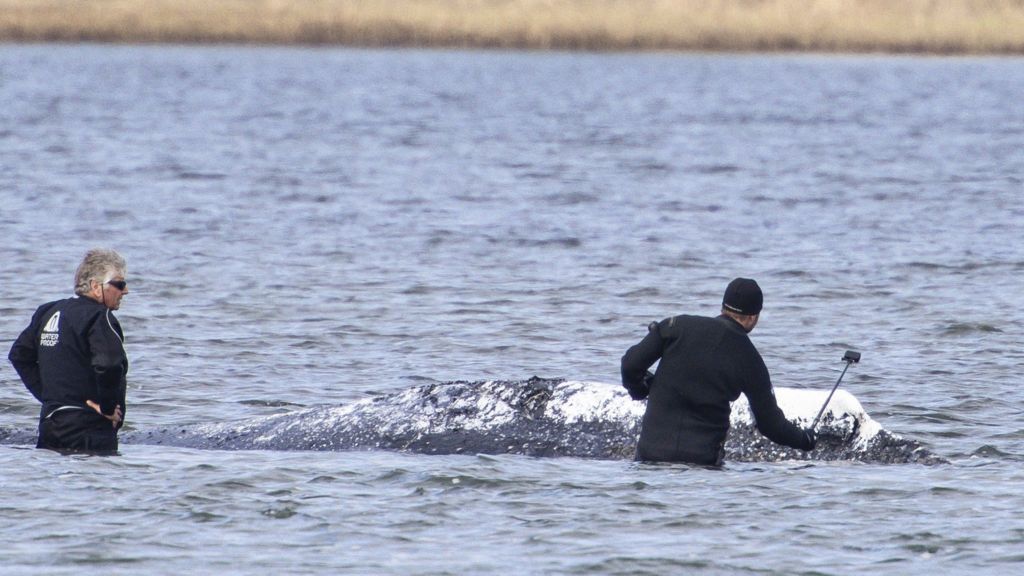
For months, the story of a stranded humpback whale held the attention of communities across Germany and eventually Denmark, turning a routine marine stranding into a widely followed public saga. Now, weeks after the ailing mammal finally died, its decomposing carcass has been successfully pulled onto a Danish beach, paving the way for examination and disposal.
标签: Europe
欧洲
-

A United Airlines flight to Spain turns back to Newark after a possible security threat midair
A transatlantic United Airlines flight traveling from New Jersey’s Newark Liberty International Airport to Palma de Mallorca, Spain, was forced to abort its journey and turn back to its origin airport on Saturday following an unexpected potential security threat that unfolded thousands of feet in the air.
According to official records from the Port Authority of New York and New Jersey, the flight departed Newark just after 6 p.m. local time, but safely touched down back at its departure gate at 9:37 p.m. the same evening. The wide-body Boeing 767 aircraft carried 190 passengers and a 12-member crew, airline officials confirmed.
Records from air traffic control audio reveal the root of the security alert: a passenger’s Bluetooth device was labeled with a provocative four-letter threat term. Multiple onboard reports shared on social media indicate that flight crew repeatedly made announcements asking all passengers to power down their personal Bluetooth connections, yet two devices remained active and detectable throughout the cabin. After coordinating directly with United’s Chicago-based corporate headquarters, the flight crew made the decision to divert back to Newark as a precaution.
Once the jet landed, all passengers and crew were immediately evacuated to allow Port Authority police K-9 and inspection teams to conduct a full sweep of the aircraft for potential hazards. Every traveler was required to go through a complete secondary security screening by the Transportation Security Administration (TSA) and Customs and Border Protection agents before being allowed to board a replacement aircraft. United Airlines initially declined to share detailed specifics about the incident to avoid compromising security protocols.
Passengers eventually boarded a substitute flight operated by an entirely new crew, which departed Newark in the early hours of Sunday and reached its destination in Palma de Mallorca without further incident that same afternoon.
This incident marks the third notable disruption for United Airlines flights originating or landing at Newark Liberty International Airport within a single month. Just one day before the Bluetooth scare, on Friday, a separate domestic United flight was diverted to an alternate airport due to a security risk triggered by an unruly passenger. Earlier in the same month, a United flight landing at Newark collided with a parked semitrailer truck and a runway light pole, though that incident resulted in no reported injuries to passengers or ground crew.
-
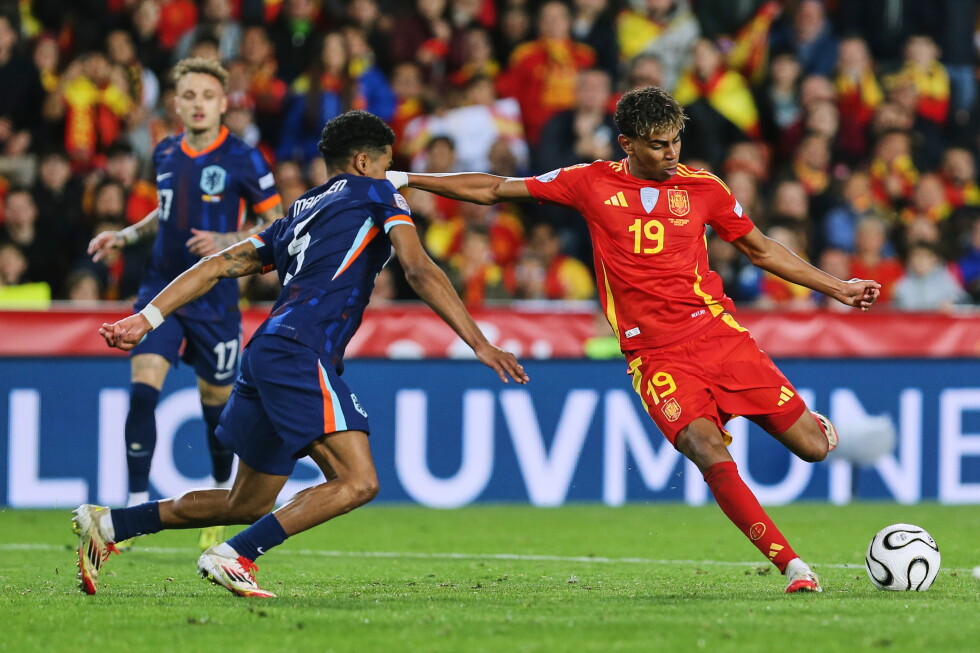
Spain’s Lamine Yamal says he was scared of missing the World Cup after he injured his hamstring
Rising Spanish football prodigy Lamine Yamal has opened up about the terrifying weeks he spent fearing his dream of featuring at the 2026 FIFA World Cup would be shattered by a sudden hamstring injury, revealing he clung to hope through prayer as he worked to beat his recovery timeline. The 18-year-old Barcelona forward, who is widely tipped to be one of the breakout stars of this summer’s tournament in North America, suffered the damaging strain to his left hamstring during a La Liga fixture against Celta Vigo on April 22, just moments after converting a first-half penalty for his club.
In a candid interview published by the Royal Spanish Football Federation on Sunday, Yamal admitted the injury was the most serious setback he has faced in his young career, and that uncertainty about his recovery left him deeply anxious in the immediate aftermath. “I never had a hamstring injury like that but I knew that it wasn’t going to be a short recovery time,” Yamal said. “I was afraid that it was something serious or that it could relapse and that I would miss the World Cup.”
Witnesses to the incident confirmed the moment the teen’s joy at scoring turned to concern: he immediately gestured to the Barcelona bench signalling pain before collapsing to the ground as teammates rushed in to celebrate, clutching the back of his left leg in clear discomfort. Yamal recalled that even in that moment, his first thought was of the upcoming World Cup, saying, “I was praying inside for it not to be serious, for it to be a cramp or something like that, because I knew the World Cup was very close.”
Fortunately for the young star and Spanish football fans, his recovery has proceeded according to plan, and national team head coach Luis de la Fuente gave supporters a positive update last week when he named Yamal to Spain’s final 2026 World Cup squad. De la Fuente confirmed the forward is on track to be fit for selection for either La Roja’s opening group stage match or their second outing of the tournament.
Spain will kick off their 2026 World Cup campaign against debutants Cape Verde on June 15 in Atlanta, before facing Saudi Arabia on June 21 at the same venue, and wrapping up group play against Uruguay on June 26 in Guadalajara, Mexico. As the reigning European champions, Spain enter the tournament with high hopes of claiming their second World Cup title, their first coming in South Africa back in 2010. Yamal, who is expected to be a key attacking leader for the side, says the entire squad has been eagerly anticipating the tournament since their European Championship triumph.
“The moment has finally arrived,” Yamal said. “I think that ever since the European Championship ended, we’ve all been thinking about this day, and we are all very excited. We will enter the tournament as the European champions, and we are going to give it everything we have.”
Spain officially kicked off their pre-World Cup preparations in Madrid on Saturday, with roughly 2,000 passionate supporters turning out to watch the squad’s first public training session on Sunday, eager to catch a glimpse of the team ahead of their North American departure.
-
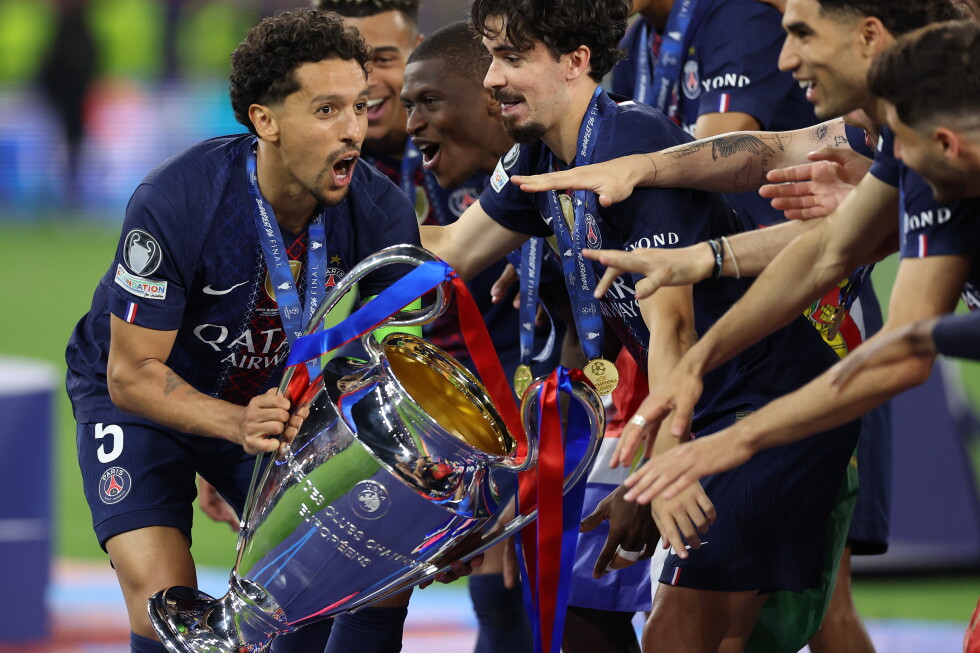
PSG is targeting a Champions League threepeat. So how do you make the best better?
After securing back-to-back UEFA Champions League titles with a tense 4-3 penalty shootout victory over Arsenal in the final, Paris Saint-Germain has its sights fixed on an unprecedented modern threepeat, cementing its status as the most dominant force in contemporary European club football.\n\nConstructed with the deep financial backing of Qatar Sports Investments and masterminded by Spanish perfectionist manager Luis Enrique, the current PSG iteration looks positioned to redefine long-term dominance in Europe’s most prestigious club competition, a feat only Real Madrid has achieved in the 21st century. The club’s president Nasser Al-Khelaifi confirmed plans for further transfer market activity mid-celebration on the Puskas Arena pitch, sending a clear warning to competing sides across the continent that PSG has no intention of loosening its grip on the trophy.\n\nThis current PSG squad marks a strategic evolution from the club’s earlier ‘Galactico era’, when it lured global superstars including Zlatan Ibrahimović, Neymar, Kylian Mbappé and Lionel Messi to Paris. Today, the club focuses its significant resources on identifying and signing elite young talent, building a core that blends immediate success with long-term sustainability. The starting XI that faced Arsenal boasts an average age of just 25.8 years, with 10 of those players retaining their spots from the 2023 Champions League-winning starting line-up.\n\nLuis Enrique has already demonstrated his ruthless commitment to improvement: last season, he dropped veteran starter Gianluigi Donnarumma in favor of promoting promising young back-up Matvey Safonov, a call that has paid dividends for the side. He has also publicly lamented that standout young midfielder Warren Zaire-Emery was unable to start the 2024 final, hinting at a more prominent role for the 20-year-old next season that could shake up the established central midfield trio of Fabian Ruiz, João Neves and Vitinha, the final’s Man of the Match. While the club may seek a long-term replacement for 32-year-old captain Marquinhos, even a below-peak PSG outclassed Arsenal, leaving Gunners manager Mikel Arteta full of praise for the champions’ quality.\n\nEven when Arsenal’s suffocating defense neutralized PSG’s usually lethal attacking trio of Ousmane Dembélé, Khvicha Kvaratskhelia and Désiré Doué, the French champions found a path back from an early Kai Havertz goal. Persistent high pressure forced Arsenal defender Cristhian Mosquera into a reckless box challenge, conceding a penalty that Dembélé converted to force extra time and ultimately penalties. The only clear gap in the squad, observers note, is a more reliable back-up attacking option than Goncalo Ramos, with young winger Bradley Barcola still showing inconsistency in high-stakes moments.\n\nLuis Enrique emphasized that he has no plans for a massive squad overhaul, saying: “We are going to follow the same line. We do not need a lot of players because it is very difficult to find the right players to play in our team. We already have a great squad and we need some players to change some different positions. But we are the champions of Europe the last two years.”\n\nThe Spanish manager’s tactical approach, which blends the possession-based philosophy that defined Spain’s greatest teams with aggressive, high-intensity pressing and risk-taking individual attacking flair, has created a uniquely dominant system that many argue outperforms even Pep Guardiola’s double-winning Barcelona side of the 2000s. PSG’s shift to signing young emerging talent has made it a leader in scouting elite youth prospects, even as the club still pays premium prices to secure its top targets. 20-year-old Doué is already a two-time Champions League winner, while João Neves is 21 and Nuno Mendes is 23, giving the side a young core that is hungry for more silverware. “We are really hungry. We are a young team, and we know we are really ambitious. So next season we have to go again,” Doué said.\n\nThe biggest open question surrounding PSG’s threepeat push is whether the young squad can sustain the physical demands of Luis Enrique’s high-intensity system and a crowded fixture list over multiple seasons. Last year, PSG reached every possible final on its calendar, pushing for a quadruple before running out of energy in the expanded Club World Cup final. The 2024 Champions League final marked PSG’s 56th game of the season, following a 65-game campaign the previous year, and while the French Ligue 1 is less competitive than other top European leagues, the fixture load has already taken a visible toll: Ballon d’Or winner Dembélé has not hit the same heights as last season, and Fabian Ruiz’s injury-disrupted campaign created the opening for Zaire-Emery’s breakthrough, explaining Luis Enrique’s interest in adding depth to the squad.\n\nUnlike other young dominant sides of the past — such as Ajax’s famed academy graduates or Monaco’s 2016 Mbappé-led squad — PSG faces no risk of having its core poached by wealthier suitors. Backed by Qatari ownership since 2011, the club can resist any approach from elite European giants including Real Madrid, Barcelona and Manchester City, a unique advantage that gives it the potential to match or even surpass Real Madrid’s historic three consecutive Champions League titles won between 2016 and 2018. Vitinha, who has emerged as the team’s midfield linchpin, put it plainly: “Today we can say we are the best in the world, the best in Europe and we take a lot of pleasure being here to play in this incredible group.”\n\nPerhaps the biggest priority for PSG’s leadership in the coming transfer window is not signing a new player, but retaining the manager who has already delivered more European success than any of his predecessors. Luis Enrique has now joined the elite ranks of managers including Bob Paisley, Zinedine Zidane and Pep Guardiola to win three European Cups, becoming the first manager to lead PSG to the very summit of European football. Al-Khelaifi made clear just how highly the club rates his manager: “I want to thank all the managers, ex-managers who trained Paris Saint-Germain, but he’s very, very special as a coach, as a human being, as a person. He’s fantastic. He’s the best coach in the world.” Whether PSG can achieve its historic threepeat will likely depend on keeping the Spanish manager in the Paris dugout for years to come.
-
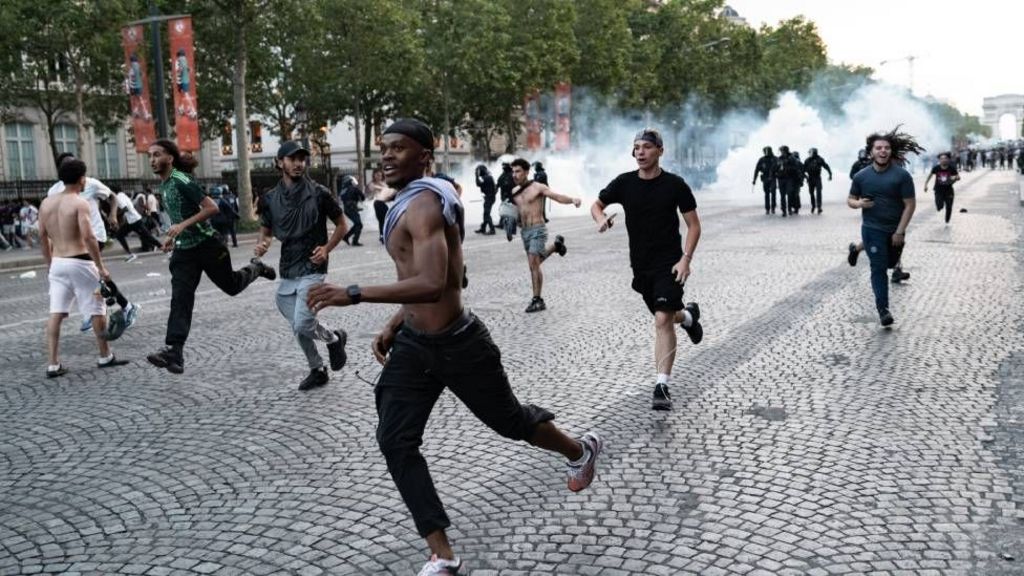
Hundreds arrested and dozens of police injured after Champions League riots in France
Paris Saint-Germain’s historic penalty shootout win over Arsenal in the 2026 Champions League final was overshadowed by widespread violent unrest across France overnight Saturday, leaving one person dead, 219 fans and civilians injured, and 57 police officers hurt in chaotic clashes that forced authorities to deploy thousands of additional security personnel for Sunday’s planned victory parade.
French Interior Minister Laurent Nuñez confirmed that eight of the 219 injured people remain in serious condition following the violence, which erupted within minutes of the final whistle as thousands of fans flooded central Paris’ iconic Champs-Élysées boulevard. Authorities reported that 780 people have been taken into custody in connection with the unrest, with more than 450 still held in detention as of Sunday morning.
Tragedy struck on Paris’ peripheral ring road, where a person was killed during an incident after rioters attempted to block the route. Video footage from the capital captured widespread disorder: fans lit flares and fireworks in city streets, set electric bicycles ablaze, and smashed the glass storefront of at least one retail shop. As crowds became unruly, police were forced to deploy tear gas to disperse violent groups, while public transit services including buses, regional trains, and rail lines were severely disrupted across the capital.
The violent turn of post-match celebrations echoed identical unrest that followed PSG’s Champions League victory in 2025, which also resulted in fatalities. For this year’s match, French authorities had already pre-deployed thousands of officers to prevent a repeat of last year’s chaos, but violence still broke out across the city. In response to the overnight unrest, an additional 6,000 police officers have been mobilized to secure Sunday’s scheduled victory parade, which will pass through the Champ de Mars at the foot of the Eiffel Tower before a formal reception hosted by French President Emmanuel Macron for the team.
In a public address on Sunday, Nuñez emphasized that security forces would maintain a hardline stance against rioters. “We are a great country that upholds public order. We allow freedom of assembly, but we do not tolerate excessive violence and disorder,” he said. The minister drew a clear distinction between peaceful celebrating fans and agitators: “The vast majority of people who came out to cheer on their team did so peacefully, and their celebrations went without incident. But there are other individuals — not PSG supporters, many of whom did not even watch the match — who come only to cause trouble and disrupt public order. We are here to stop them, and our response is very firm.”
The unrest drew swift political criticism from opposition figures, including far-right leader Marine Le Pen, who took to social platform X to denounce the violence. “Only in France does a football club’s victory spark riots,” Le Pen wrote. “Only in France does everyone feel compelled to lock themselves in their homes on the evening of a victory to avoid being confronted with violence.”
As of Sunday morning, the city remains on high alert ahead of the official victory procession, with authorities urging fans to remain peaceful and respect public order rules during the celebration.
-

Scotland’s former leader rejects blame for estranged husband’s embezzlement of party funds
LONDON – In a fiery public address amid growing political pressure, Scotland’s former First Minister Nicola Sturgeon has firmly rejected any responsibility for the embezzlement of hundreds of thousands of Scottish National Party (SNP) funds by her estranged husband Peter Murrell, insisting she will not apologize for crimes she says she had no part in. Murrell, who served as the SNP’s long-serving chief executive, entered a guilty plea last week to charges of stealing more than £400,000 (equivalent to roughly $540,000) from the pro-independence party during his tenure. Prosecutors confirmed the stolen funds were used to fund a luxury personal lifestyle far beyond Murrell’s official compensation. Speaking in an interview with the BBC on Sunday, Sturgeon said she felt deeply betrayed by Murrell’s actions, and again denied any prior knowledge of the ongoing financial fraud that has rocked the nearly 20-year ruling party of Scotland’s devolved government. “I am not responsible for the crimes that my former husband committed,” Sturgeon stated emphatically. “I’m not going to apologize for somebody else’s crimes.” Sturgeon’s interview was a direct response to widespread public and political skepticism that she remained unaware of Murrell’s illicit activities, with critics across the UK political spectrum challenging her long-held claims of ignorance. This high-profile embezzlement case has amplified long-simmering public concerns about political accountability across the United Kingdom, coming on the heels of a string of parliamentary and party scandals that have steadily eroded public trust in governmental institutions at every level. Beyond questions of knowledge, critics have repeatedly challenged Sturgeon’s decision to retain Murrell as SNP chief executive after she took over the party leadership in 2014. In a rare concession, Sturgeon acknowledged that the choice to keep him in the senior role was an error, saying “Of course, with hindsight, I wish that I could go back and take a different decision.” Murrell’s guilty plea brings the first major legal conclusion to a five-year police probe into the SNP’s internal finances. The party, which has led Scotland’s semi-autonomous devolved government for nearly two decades, has centered its political agenda on campaigning for full Scottish independence from the United Kingdom. The SNP was already roiled by internal crisis in 2023, as public reports of unaccounted finances and plummeting party membership numbers split the party’s leadership. Sturgeon, who led Scotland’s devolved government for eight years, announced an abrupt resignation as First Minister in February 2023, a move that left political observers confused. At the time, she said her decision to step down came from a personal conviction that it was the “right time to go,” with no outward signs of the impending scandal that would soon emerge. Just one month after Sturgeon’s resignation, Murrell stepped down from his 20-year post as SNP chief executive, taking blame for intentionally misleading journalists about the severity of the party’s membership decline. Police took Murrell into custody at the couple’s shared Glasgow residence in April 2023. Sturgeon herself was arrested in connection with the investigation in June 2023, but police later cleared her of any wrongdoing related to the embezzlement scheme.
-
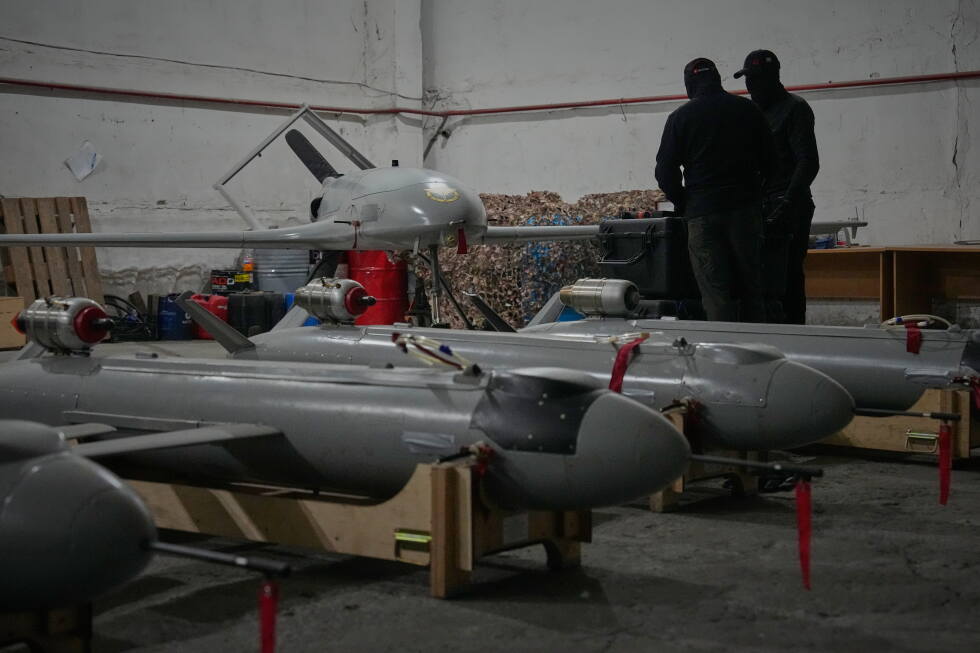
Ukraine hits Russian energy targets and denies striking Kremlin-occupied nuclear plant
Overnight attacks targeting Russian energy infrastructure marked a sharp escalation in cross-border strikes between Russia and Ukraine over the weekend, with Kyiv confirming successful hits on key fuel facilities while firmly rejecting Moscow’s accusations of an attack on Europe’s largest nuclear power station. Russian regional officials confirmed Sunday that descending drone debris sparked an inferno at a fuel storage depot in southwestern Russia’s Rostov Oblast, prompting emergency evacuations of nearby residential neighborhoods. A separate wave of drones inflicted damage to civilian infrastructure in neighboring Saratov Oblast, with independent Russian media outlet Astra reporting large flames engulfing a major oil refinery in the region’s capital city, also named Saratov.
In a rare public confirmation of cross-border action, Ukraine’s General Staff acknowledged Sunday that its unmanned aerial vehicles successfully targeted the Saratov refinery, igniting a large-scale blaze that remains under assessment for total damage. The statement noted the facility, owned by Russian state-owned energy giant Rosneft, produces gasoline and diesel for domestic and military use, and has been a key supplier fueling Moscow’s full-scale invasion of Ukraine that launched in early 2022. Ukrainian officials have repeatedly justified stepped-up attacks on Russian oil, gas and refining infrastructure in recent months, arguing the energy sector generates billions in revenue to fund the war effort while also producing fuel for Russian military vehicles and equipment.
Alongside the confirmed energy strikes, the weekend brought renewed tension over the Russian-occupied Zaporizhzhia Nuclear Power Plant, a facility that has been the site of repeated safety scares since Russian forces seized it in the opening weeks of the 2022 invasion. Russia’s state nuclear operator Rosatom claimed Saturday that a Ukrainian kamikaze drone detonated after piercing the exterior wall of the turbine hall for the plant’s sixth power unit. Rosatom CEO Alexei Likhachev called the incident a deliberate, pre-planned attack by Ukrainian forces, though he stressed no critical core equipment was damaged in the blast.
Ukraine’s military swiftly dismissed the accusation as another disinformation propaganda effort, stating it had not launched any strikes targeting the plant and remains strictly committed to upholding international humanitarian law, which prohibits intentional attacks on civilian nuclear infrastructure. The military added that no offensive operations or weapons fire were conducted along the segment of the front line nearest the plant at the time of the reported incident. The Zaporizhzhia plant, which remains under Russian occupation close to active front lines in southern Ukraine, is one of four Ukrainian regions Russia has attempted to formally annex, a move that has not gained recognition from the global community.
Rafael Grossi, director general of the International Atomic Energy Agency (IAEA), the United Nations’ nuclear watchdog, posted Sunday on social media platform X that he holds serious concern over the reported incident. Ukraine’s state nuclear regulatory agency has called for the damage alleged by Russian authorities to be independently verified by IAEA inspectors, who have maintained a permanent monitoring presence at the plant since 2022 to mitigate nuclear safety risks. Repeated shelling near the plant since the Russian occupation sparked global fears of a catastrophic nuclear accident, with Moscow and Kyiv repeatedly trading blame for deliberate strikes on the site.
In a parallel wave of Russian strikes overnight into Sunday, Russian forces launched nearly 300 drones across Ukrainian territory, according to Ukraine’s Air Force. Air defense crews successfully intercepted and downed 212 of the incoming unmanned aerial vehicles, while 14 managed to reach their intended targets. Falling drone debris was reported in five separate locations across Ukraine. Russian strikes sparked fires at an apartment area in the central Ukrainian city of Dnipro and at an oil refinery in the western Rivne region, local Ukrainian authorities confirmed. Oleksandr Koval, head of Rivne’s regional military administration, reported no casualties at the refinery, with emergency response teams already on site working to contain the blaze.
The cross-border strikes come as Ukraine continues to ramp up pressure on Russian energy supplies amid a grinding war that has stretched into its fourth year, with Kyiv actively lobbying Western allies for additional air defense systems and long-range strike capabilities to counter Russian offensive operations.
-
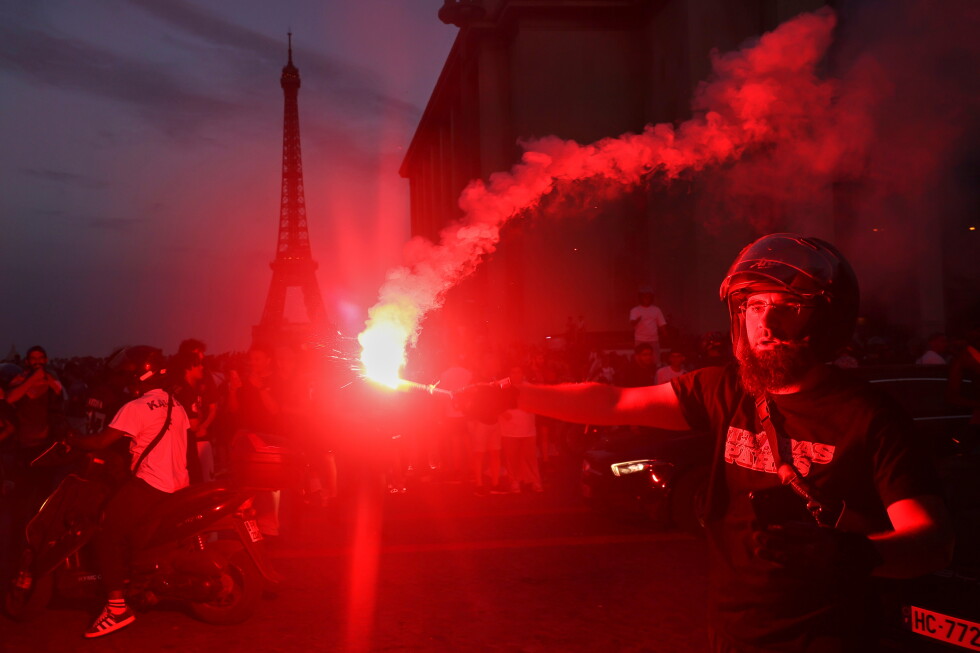
France detains hundreds of rioters after Paris Saint-German wins Champions League
In the wake of Paris Saint-Germain’s dramatic penalty-shot victory over Arsenal in the 2025 UEFA Champions League final in Budapest, celebrations across France quickly devolved into widespread violent unrest Saturday night, leaving seven police officers injured and sparking more than 400 detentions nationwide, French Interior Minister Laurent Nuñez has confirmed.
The chaos unfolded as tens of thousands of fans poured into public spaces across the country immediately after the final whistle. In Paris alone, roughly 20,000 supporters packed the iconic Champs-Élysées near the Arc de Triomphe, where crowds initially marched through tree-lined avenues, setting off celebratory flares and sounding vehicle horns. But the festive atmosphere quickly soured when small splinter groups split off from the main gathering, engaging in targeted vandalism, arson, and clashes with law enforcement.
According to the Paris Police Prefecture, rioters damaged storefronts, set both rubbish bins and private vehicles on fire, and one small faction even attempted to force entry into a police station in Paris’ upscale 8th Arrondissement. The would-be attackers were quickly dispersed by responding officers, authorities confirmed. Nuñez called the outbreak of violence “absolutely unacceptable”, noting that unrest was recorded in roughly 15 French cities in total. As of Sunday morning, law enforcement had taken nearly 400 people into custody across the country, with almost 300 of those detentions occurring in the capital.
Notably, this is not the first time a PSG Champions League victory has been marred by large-scale unrest. After the club claimed its first Champions League title in 2024, more than 500 arrests were made nationwide, and 201 people were injured in Paris alone. Despite the widespread violence that followed Saturday’s final, French officials have confirmed that pre-planned official victory events will proceed as scheduled. Thousands of fans are expected to gather for a public celebration Sunday afternoon at the Champ de Mars, the large public green space located just steps from the Eiffel Tower. Following the public gathering, the entire PSG squad will travel to the Elysee Palace for an official reception hosted by French President Emmanuel Macron.
-
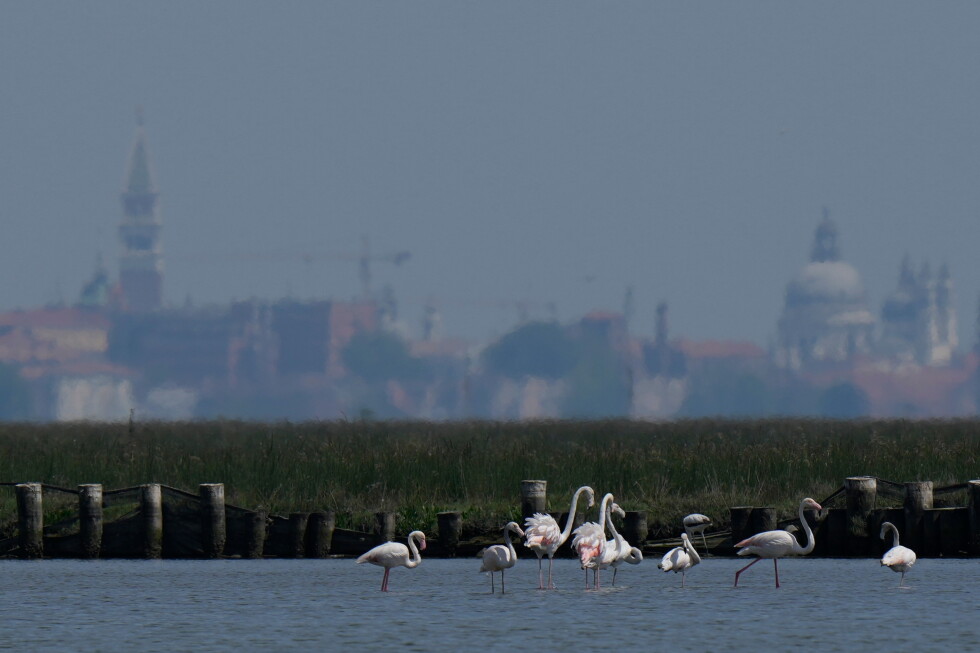
Venice’s growing flamingo population finds refuge in recovering wetlands
VENICE, Italy — For generations, the iconic pale pink flamingo has been absent from local Venetian vocabulary, a quiet reflection of how recently these striking birds have made the Venetian Lagoon their home. Today, that narrative is shifting dramatically: flamingo numbers in this storied coastal ecosystem have hit all-time highs, as large-scale wetland restoration projects create new viable habitats that could soon support the first permanent, self-sustaining nesting colony in the region’s modern history.
Flamingos, which have long established major nesting sites in Spain and France, first began appearing in the 550-square-kilometer Venetian Lagoon in the early 2000s. Initially, sightings were largely limited to remote fishing valleys and tidal mudflats along the lagoon’s outer edges, with almost no encounters in the canal-laced historic center that draws millions of global tourists each year. That pattern has shifted sharply in recent years, however. Last year’s official ornithological census counted nearly 24,000 wintering flamingos in the lagoon — an increase of 8,000 from the previous year’s total.
“This count cements the Venetian Lagoon as one of the most critical wintering grounds for flamingos across their entire European range,” explained Alessandro Sartori, a leading ornithologist who monitors the lagoon’s bird populations weekly by boat. Over 90% of the counted flamingos currently congregate in the northern lagoon, where large expanses of intact natural salt marsh and semi-natural traditional fishing valleys provide abundant food sources. These managed embanked wetlands, however, have also created occasional conflict between the feeding birds and local fishing activity.
Sartori has spent years searching for signs of successful nesting, a milestone that would confirm the establishment of a self-sustaining local colony. Two previous attempts in 2008 and 2013, in northern lagoon fishing valleys, ended in devastating setbacks: a severe hailstorm killed dozens of young birds, halting early colonization efforts. That could change soon, thanks to a landmark EU-backed wetland restoration project focused on rebuilding eroding salt marshes in the isolated southern lagoon, located beyond Venice’s historic center and the Marghera industrial port.
Once, nearly half of the entire Venetian Lagoon consisted of natural salt marshes, known locally as *barene* in the Venetian dialect. Today, salt marshes make up just 7% of the lagoon’s total area, with only half of that remaining habitat naturally formed. Decades of erosion, accelerated by the dredging of shipping channels for the Marghera industrial port in the 1960s, has pushed the lagoon toward a worrying transition: without intervention, it could eventually degrade into an open marine bay, according to conservation leaders.
The 23.6 million euro ($27.5 million) five-year WaterLANDS project, led in part by local conservation group We Are Here Venice, aims to reverse that trend by rebuilding salt marsh habitats at a scalable scale. Beyond creating new feeding and potential nesting grounds for flamingos, restored salt marshes deliver major climate benefits: they trap carbon dioxide, the primary greenhouse gas driving climate change, and buffer the lagoon against the impacts of rising sea levels. “This project is designed to prove that we can reverse centuries of erosion and change the trajectory of the lagoon,” said Jane da Mosto, executive director of We Are Here Venice.
Conservation teams working on the southern lagoon project have already documented clear signs of increasing flamingo activity, from scattered pink feathers to regularly feeding flocks. Sartori has already observed a dramatic jump in flamingo numbers in the restored southern wetlands: over the past three years, counts have grown from just a handful of birds to between 300 and 400 during peak wintering periods. “Our hope is that just as flamingos have established nesting colonies in other parts of the Mediterranean, they will find suitable breeding ground right here on these restored barene,” Sartori said.
Beyond conservation gains, the arrival of Venice’s pink newcomers offers a new opportunity to reframe the city’s ecological identity, adding a layer of natural significance to its already well-known historical and cultural heritage. While casual flamingo sightings remain rare for most tourists — the birds favor remote, shallow tidal reaches that require careful navigation through shifting channels, and they scatter quickly when disturbed by human activity — Sartori predicts that flamingo watching will become an increasingly popular sustainable activity as populations grow, with occasional sightings already possible from the shores of the popular lagoon islands of Murano and Burano. He emphasized that any wildlife viewing must prioritize the birds’ safety, with visitors maintaining a safe distance to avoid disrupting their feeding and resting routines.
The Associated Press’ climate and environmental reporting is supported by funding from private philanthropic foundations, with AP maintaining full editorial control over all content.
-
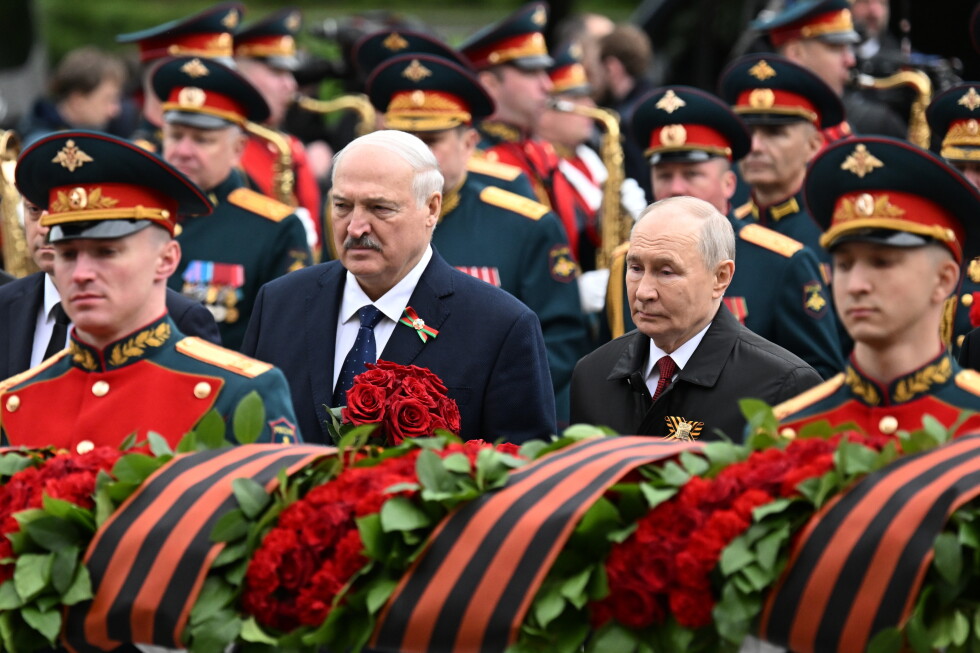
Concerns mount that Belarus could be a launchpad for a new Russian offensive in Ukraine
More than three years after Russian forces launched their full-scale invasion of Ukraine from Belarusian territory, Kyiv and Western capitals are sounding new alarms that Alexander Lukashenko, Belarus’ long-ruling authoritarian leader, could open a new front for the Kremlin by allowing Moscow to again use his country as a launchpad for aggression.
When Putin launched his full-scale invasion on February 24, 2022, tens of thousands of Russian troops massed in northern Belarus under the pretense of joint military drills, then launched a rapid push south toward Kyiv, just 90 kilometers from the Belarusian border. Putin’s bid for a quick capture of the Ukrainian capital crumbled in the face of fierce Ukrainian resistance, with stretched-out Russian armored convoys sitting vulnerable to ambushes along narrow highways. Just over a month into the invasion, heavily damaged Russian forces with crumbling supply lines retreated from northern Ukraine, a move the Kremlin framed as a “goodwill gesture” amid early peace efforts. Those early peace talks were actually hosted on Belarusian territory, bringing Russian and Ukrainian delegates together for the first negotiation before talks shifted to Istanbul, where no breakthrough agreement was ever reached.
Unlike the opening days of the war, Belarus has not deployed its own troops to fight in Ukraine, but Lukashenko’s regime has become an integral, often overlooked pillar of Putin’s war effort. Over nearly three years of conflict, Minsk has opened its borders to host Russian military infrastructure, tactical nuclear weapons, and training grounds for Russian troops, offered its hospitals to treat wounded Russian soldiers, and integrated its domestic manufacturing sector into Russia’s war supply chain.
Ukrainian sanctions envoy Vladyslav Vlasiuk confirmed that fragments of a Russian Oreshnik ballistic missile fired at Ukraine in May contained microchips manufactured in Belarus. The Belarusian opposition military monitoring group BELPOL, made up of former military and law enforcement officers who oppose Lukashenko, estimates more than 500 Belarusian industrial plants are currently involved in producing weapons components, repairing Russian military equipment, and providing logistics support for Moscow’s campaign. The group’s head, Uladzimir Zhyhar, told reporters that “Lukashenko’s regime is quite seriously involved in the war. Lukashenko is helping Russia in every way he can.”
Zhyhar added that new infrastructure construction, including a large-scale firing range and barracks capable of housing thousands of troops, is already underway in Belarus’ Gomel region along the Ukrainian border. This ongoing military buildup has forced Kyiv to divert tens of thousands of troops from the main 1,000-kilometer front line in eastern and southern Ukraine to defend its northern border, stretching Ukrainian defensive resources thin.
Beyond conventional military support, Belarus has become a core part of Russia’s nuclear deterrence posture in Europe. Geographically, Belarus shares borders with three NATO member states — Latvia, Lithuania, and Poland — making it a strategically critical outpost for the Kremlin. In 2024, Moscow updated its nuclear doctrine to place Belarus firmly under Russia’s nuclear umbrella, and announced that it had deployed its new nuclear-capable Oreshnik intermediate-range missile system to Belarusian territory. Russia has already used conventionally armed variants of the Oreshnik to strike targets inside Ukraine three times in the last six months. Earlier this month, Moscow and Minsk held large-scale joint nuclear force drills that simulated delivering nuclear warheads to missile units and preparing for a launch, with a joint Belarusian-Russian crew test-firing a nuclear-capable Iskander missile from a southern Russian range.
“Belarus lacks military sovereignty, and as soon as Moscow sees it as necessary for its strategy, Moscow will naturally use Belarus as a launchpad for a new invasion of Ukraine or some kind of armed conflict with NATO countries,” Zhyhar explained, noting that Belarus offers a “very convenient springboard” for any new northern push toward Kyiv.
Last week, Ukrainian President Volodymyr Zelenskyy confirmed that Kyiv’s intelligence services had detected a sharp increase in Russian efforts to push Belarus into deeper direct involvement in the war, and prepare for new offensive operations launched from Belarusian territory. Zelenskyy said potential targets include the Chernihiv-Kyiv corridor in northern Ukraine, or even a strike against a NATO member state sharing a border with Belarus. In response, Zelenskyy has ordered Ukrainian military and security agencies to strengthen northern border fortifications and prepare a coordinated defensive response.
Both Lukashenko and senior Russian officials have rejected Kyiv’s warnings. Lukashenko has insisted Belarus has no plans to enter the war unless it is directly attacked, while Russian Security Council Secretary Sergei Shoigu dismissed Zelenskyy’s claims as a fearmongering tactic designed to pressure Western allies into sending more military aid to Kyiv.
Even so, the growing risk has prompted unprecedented diplomatic outreach from Western powers. On May 24, French President Emmanuel Macron held his first call with Lukashenko since the 2022 invasion to warn of the severe risks if Belarus is dragged deeper into the conflict. Lukashenko responded by announcing he would host a French envoy the following week to discuss European security and potential easing of European Union sanctions on Minsk.
Ukrainian border guard spokesperson Andrii Demchenko noted that while intelligence confirms Russia is increasing pressure on Lukashenko to enter the war directly, Ukrainian forces have not yet detected a large-scale buildup of Russian or Belarusian troops and equipment along the border. Belarusian opposition leader-in-exile Sviatlana Tsikhanouskaya, who visited Kyiv last week, emphasized that “Belarus must never again become a springboard for aggression. Russian tanks must never again march through Belarus to Chernihiv, Zhitomir, Rivne, or Kyiv. Ukraine is fighting for itself and for all the peoples who have lived in the shadow of empire for too long. It is fighting for the right to live in peace. And the fate of my country, Belarus, also depends on Ukraine’s success.”
Independent military analysts based in Minsk argue that a large-scale offensive launched from Belarus is militarily unlikely at this stage. Belarus has just under 49,000 active-duty troops, a fraction of Russia’s 1.5 million active force, and while Minsk could theoretically mobilize up to 290,000 reservists, those forces lack modern weapons and sufficient training to conduct offensive operations. Minsk-based military analyst Alexander Alesin estimates an offensive would require mobilizing as many as 500,000 personnel — a move that would cripple Belarus’ domestic economy and require massive Russian arms supplies to equip the force.
“Even with a small force, the Ukrainians can easily defend themselves and inflict heavy losses on the Belarusian army,” Alesin said, noting that Ukraine has already built layered heavy fortifications along the entire border and planted extensive minefields that would slow any incursion. Alesin added that Lukashenko has little incentive to pursue direct involvement, pointing out that the Belarusian leader benefits greatly from his current role as a quiet supplier to Russia’s war machine. “The last thing Lukashenko wants is to fight, and he’ll cling to his current position at any cost, so he can avoid fighting while profiting handsomely from the war,” Alesin said.