标签: Europe

欧洲

  • Stella McCartney lets horses steal the show — and makes her point in Paris without saying a word

    Stella McCartney lets horses steal the show — and makes her point in Paris without saying a word

    In a striking departure from conventional fashion presentations, Stella McCartney transformed a riding hall in Paris’s Bois de Boulogne into an ethical fashion manifesto during Winter 2026 Paris Fashion Week. The British-American designer inaugurated her show with ten horses—five black and five white—gracefully choreographed by equestrian artist Jean-François Pignon, establishing an immediate emotional connection between live animals and human creativity.

    The collection served as both a personal chronology and sustainability statement, rigorously excluding leather, fur, and feathers while showcasing material innovations that demanded second glances. Opening with floor-length faux fur coats crafted through advanced techniques using lab-grown yeast and recycled denim, the presentation demonstrated that 93% of its materials met sustainable criteria.

    Autobiographical elements woven throughout the collection included chunky fisherman rib knits reflecting McCartney’s childhood in Scotland, alongside jewel-toned stirrup leggings and bow-adorned dresses paying homage to her formative Parisian internships. The core designs featured McCartney’s signature soft tailoring with defined shoulders, breathable corporate suiting, and satin evening wear that shimmered subtly. Plastic-free sequined dresses with intricate bustles and pleats exemplified the balance between masculine and feminine aesthetics that characterized the entire presentation.

    The show concluded with a model wearing a ‘My Dad Is A Rockstar’ tank top, prompting applause from front-row attendee Paul McCartney. Among the distinguished guests were Oprah Winfrey, Gayle King, and LVMH heir Antoine Arnault with wife Natalia Vodianova—notable given McCartney’s recent acquisition of the conglomerate’s minority stake in her brand. The designer revealed her upcoming receipt of France’s Légion d’honneur while reaffirming her commitment to creating women-centered fashion without planetary harm.

  • Putin hosts Hungary’s foreign minister for energy supply talks as war in Mideast causes disruptions

    Putin hosts Hungary’s foreign minister for energy supply talks as war in Mideast causes disruptions

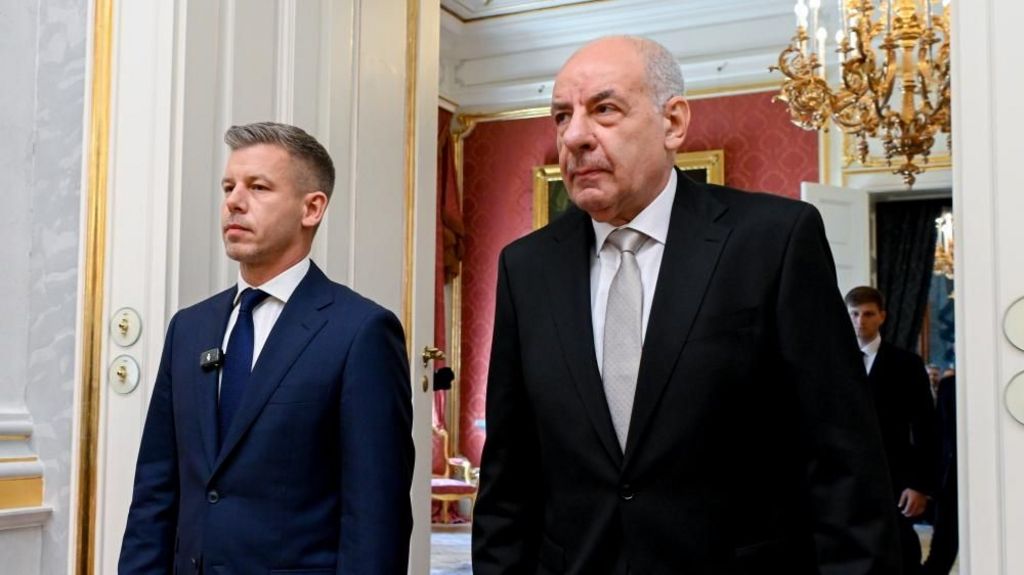
    In a significant diplomatic engagement, Russian President Vladimir Putin met with Hungarian Foreign Minister Péter Szijjártó in Moscow on Wednesday to address critical energy supply issues. The high-stakes discussion centered on maintaining Hungary’s access to Russian fossil fuels despite ongoing regional conflicts and pipeline disruptions.

    Minister Szijjártó arrived in Moscow specifically seeking guarantees from Russian authorities regarding continued oil and gas supplies. This urgency stems from recent interruptions in the Druzhba pipeline, which transports Russian oil through Ukrainian territory to Hungarian and Slovakian refineries. The Hungarian government has attributed these disruptions to political decisions by Kyiv, while Ukrainian officials counter that the pipeline damage resulted from Russian drone attacks.

    President Putin provided reassurances during the meeting, stating: “We have always fulfilled all our obligations, and, of course, we intend and are ready to do so. I understand that this is of concern to you, particularly oil supplies. We see what’s happening in the global and European gas markets.”

    In a notable humanitarian gesture, Putin announced the release of two ethnic Hungarian prisoners of war who had been fighting with Ukrainian armed forces. The Russian leader revealed that Hungarian Prime Minister Viktor Orbán had requested their release during a telephone conversation the previous day. Szijjártó was authorized to transport the prisoners back to Budapest on his return flight.

    The meeting occurs against a backdrop of heightened political tensions as Prime Minister Orbán faces challenging elections next month. Trailing in polls to a center-right opponent, Orbán has intensified an anti-Ukraine campaign, alleging that Kyiv and the European Union are attempting to bankrupt Hungary through forced financial assistance to Ukraine. Last week, Hungary blocked a new EU sanctions package against Russia and vowed to withhold a substantial €90 billion EU loan to Kyiv until oil flows through the Druzhba pipeline resume.

  • Russia blames Ukrainian naval drones as tanker sinks in Mediterranean

    Russia blames Ukrainian naval drones as tanker sinks in Mediterranean

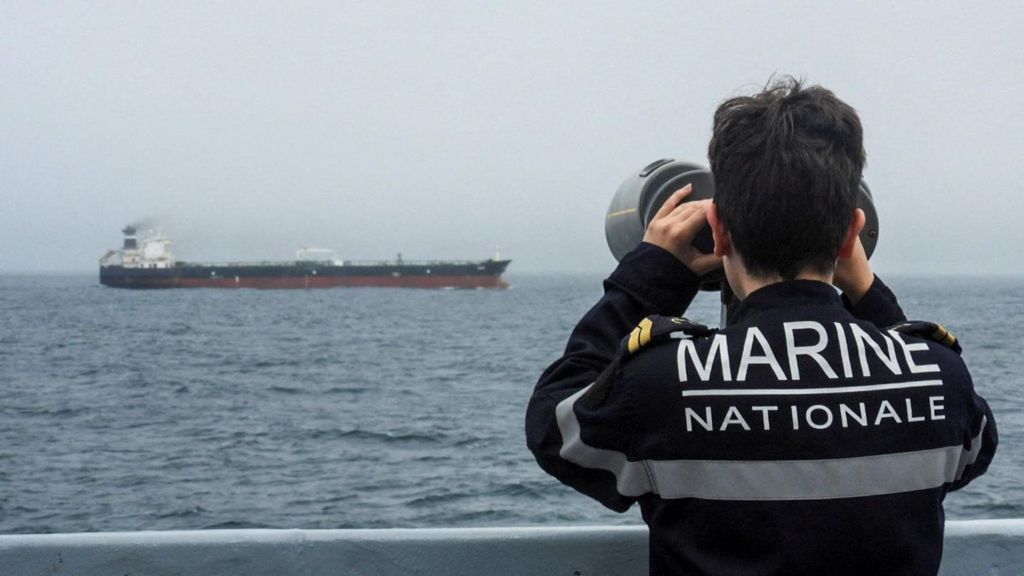
    A Russian liquefied natural gas (LNG) carrier, the Arctic Metagaz, has sunk in the Mediterranean Sea between Libya and Malta following a series of explosions and a major fire, according to Libyan port authorities. The incident has ignited a sharp diplomatic confrontation, with Russia directly accusing Ukraine of orchestrating a maritime drone attack from the Libyan coast.

    The tanker was transporting approximately 62,000 metric tonnes of LNG when the blasts occurred approximately 130 nautical miles north of the Libyan port of Sirte. Russia’s transport ministry confirmed that 30 Russian crew members were aboard. All were successfully rescued by Malta’s armed forces and were reported to be ‘safe and sound’ in a lifeboat by Maltese Home Affairs Minister Byron Camilleri.

    Unverified footage circulating on social media, shared by Serhii Sternenko—an adviser to Ukraine’s defence minister—purportedly shows the vessel engulfed in flames. Sternenko claimed the tanker sustained a ‘serious hole in the engine room compartment’ and was beyond repair, though the images’ origin remains unconfirmed.

    Russian President Vladimir Putin condemned the incident as a ‘terrorist attack,’ while his transport ministry escalated the rhetoric by labeling it ‘an act of international terrorism and maritime piracy.’ The ministry further accused the European Union of complicity but provided no concrete evidence to substantiate its claim that Ukrainian uncrewed sea drones were responsible.

    Ukraine’s State Security Service (SBU) has maintained official silence on the allegations. However, a Ukrainian government-linked social media account, United24, posted a cryptic tease, suggesting the drones were ‘Definitely. Maybe’ not part of its fleet.

    The Arctic Metagaz is considered part of Russia’s ‘shadow fleet’—a network of aging, often obscurely insured tankers deployed to circumvent Western sanctions aimed at crippling the oil and gas revenues funding Moscow’s war effort. The vessel was en route from Murmansk, Russia, to Port Said, Egypt, with cargo reportedly cleared under international rules.

    Marine tracking data indicates the tanker had deactivated its automatic identification system prior to the incident, a common tactic for sanctions evasion. While Kyiv has previously targeted Russian energy shipping in the Black Sea with naval drones, a confirmed strike in the distant Mediterranean would mark a significant and unprecedented escalation in its maritime campaign.

  • Claims of ‘rediscovered’ Michelangelos unsettle Renaissance experts

    Claims of ‘rediscovered’ Michelangelos unsettle Renaissance experts

    A controversial claim regarding a marble bust of Christ housed in Rome’s Basilica of Sant’Agnese fuori le mura has ignited debate within Renaissance art circles. Independent researcher Valentina Salerno asserted on Wednesday that the sculpture represents a previously unrecognized work by Michelangelo, challenging its official classification as an anonymous 16th-century Roman school piece.

    Salerno’s unverified hypothesis, published on the academic networking platform Academia.edu, suggests multiple documentary evidences support her attribution. She proposes the bust was modeled after Michelangelo’s intimate friend Tomaso De’ Cavalieriis and formed part of the artistic inheritance distributed among the master’s students following his death in 1564.

    The timing of this announcement coincides with the 550th anniversary of Michelangelo’s birth, amidst numerous exhibitions and conferences celebrating his legacy. The claims have garnered unusual attention due to initial Vatican interest, though leading institutions including Italy’s culture ministry have maintained distance from the press conference.

    Art historical experts remain notably cautious. Prominent Michelangelo scholar William Wallace acknowledged Salerno’s methodological approach but expressed skepticism regarding her conclusion about a hidden treasure of undiscovered works. He noted that approximately 45 attributions to Michelangelo have emerged since 2000, with none ultimately gaining scholarly acceptance.

    Despite inclusion in a Vatican scientific committee formed to commemorate Michelangelo’s anniversary, Salerno’s research lacks peer review. Committee members, including Vatican Museums director Barbara Jatta and British Museum curator Hugo Chapman, have declined to endorse or discuss her findings publicly.

    The Carabinieri art protection squad has implemented security measures for the bust regardless of attribution, emphasizing its significance as national cultural heritage. Lieutenant Colonel Paolo Salvatori stated their primary concern remains safeguarding the artwork while scholarly debate continues.

  • Watershed moment as Russia’s sporting exile ends

    Watershed moment as Russia’s sporting exile ends

    In a landmark decision reversing years of athletic exile, Russian and Belarusian competitors will participate under their national flags at the Winter Paralympics for the first time since 2014. This development occurs despite Russia’s ongoing military campaign in Ukraine, triggering widespread condemnation and planned boycotts.

    The International Paralympic Committee (IPC) lifted its partial ban on athletes from both nations last year following a majority vote by its members. This allows six Russian and four Belarusian athletes to compete with national symbols, including flags and anthems for gold medalists—a stark contrast to their neutral status at recent Olympic events.

    The path to reinstatement involved a successful legal challenge to the Court of Arbitration for Sport (CAS) against the International Ski and Snowboard Federation (FIS), which had maintained its own competition ban. The IPC justifies its position by claiming reduced evidence of military propaganda in Paralympic sports compared to 2022, when it imposed a full ban to preserve event integrity and participant safety.

    Ukrainian athletes, joined by teams from Czechia, Estonia, Latvia, Lithuania, Poland, and Finland, will boycott Friday’s opening ceremony in protest. German Paralympians will also show solidarity by avoiding the Parade of Nations. European Commissioner for Sport Glenn Micallef has denounced the reinstatement of Russian national symbols while aggression continues.

    The IPC expressed disappointment over the boycotts, hoping attention will shift to athletic performances during the event’s 50th anniversary. Meanwhile, International Olympic Committee (IOC) President Kirsty Coventry recently emphasized keeping sport ‘a neutral ground,’ hinting at potential Olympic reintegration for Russian and Belarusian athletes.

    This Paralympic decision may influence other global sports bodies. FIFA President Gianni Infantino has questioned the effectiveness of Russia’s football ban, while some federations like the International Judo Federation have already readmitted Russian athletes under their flag. Ukraine remains steadfastly opposed, citing the destruction of sports facilities and deaths of hundreds of athletes and coaches since the invasion began.

  • Rising energy prices from the Iran war could help Russia pay for fighting in Ukraine

    Rising energy prices from the Iran war could help Russia pay for fighting in Ukraine

    The escalating conflict in the Middle East has triggered a dramatic reversal of fortunes for Russia’s energy-dependent economy, creating unexpected financial advantages for the Kremlin’s military operations in Ukraine. Following the disruption of nearly all tanker traffic through the critical Strait of Hormuz—which typically handles approximately 20% of global oil consumption—international energy prices have surged dramatically.

    Russia’s benchmark oil exports have climbed from December’s lows of under $40 per barrel to approximately $62, significantly exceeding the $59 per barrel threshold established in the Russian Finance Ministry’s 2026 budget projections. While Russian crude continues to trade at a discount to international benchmark Brent crude (which has risen above $82 from $72.87 before the U.S.-Israel strikes on Iran), the current pricing environment substantially strengthens Moscow’s financial position. Energy tax revenues constitute up to 30% of Russia’s federal budget.

    The economic turnaround follows a period of severe financial strain. In January, Russia recorded its largest monthly budget shortfall on record at 1.7 trillion rubles ($21.8 billion), with oil and gas revenues plummeting to a four-year low of 393 billion rubles ($5 billion). This previous decline resulted from weaker global prices and substantial discounts necessitated by Western sanctions targeting Russia’s “shadow fleet” of tankers with obscure ownership structures used to supply China and India.

    Beyond oil markets, the energy disruption extends to liquefied natural gas (LNG). Qatar’s decision to halt ship-borne LNG production has intensified global competition for available cargoes, positioning Russia as an increasingly attractive supplier. European futures markets have already reflected this tension with skyrocketing natural gas prices, raising serious questions about EU plans to completely cease Russian LNG imports by 2027.

    Energy experts emphasize that the duration of the Strait of Hormuz closure will be decisive. According to Alexandra Prokopenko of the Carnegie Russia Eurasia Center, a quick resolution would return Brent prices to approximately $65 per barrel with minimal impact on Russia’s budget. A medium-term scenario maintaining oil around $80 would provide “some fiscal relief,” while a prolonged closure with damage to Iranian refining infrastructure could drive prices to $108 per barrel—potentially accelerating inflation and pushing Europe toward recession while delivering “the largest windfall to Russia.”

    The evolving situation may force European policy reconsideration. Chris Weafer, CEO of Macro-Advisory Ltd, notes that even several weeks of LNG disruption could generate pressure to suspend plans banning new Russian supply contracts after April 25. EU member states including Hungary, Slovakia, Belgium, France, the Netherlands, and Spain continue significant Russian energy imports, totaling approximately 2 billion cubic meters of LNG monthly plus additional pipeline supplies.

    Russian officials have signaled readiness to capitalize on the situation. Deputy Prime Minister Alexander Novak stated that Russian oil remains “in demand” and that Moscow stands prepared to increase supplies to China and India. The head of Russia’s sovereign wealth fund meanwhile openly questioned whether European Commission leadership had adequately prepared contingency plans for the emerging energy crisis.

    As Simone Tagliapietra of the Bruegel think tank concludes: “Russia is a big winner from the war-related energy turmoil. Higher oil prices mean higher revenues for the government and therefore stronger capability to finance the war in Ukraine.”

  • Enoch Burke’s mother and sister to be arrested and jailed

    Enoch Burke’s mother and sister to be arrested and jailed

    Dublin’s High Court has issued arrest warrants for Martina Burke and her daughter Ammi Burke, mother and sister of controversial teacher Enoch Burke, sentencing both to 14 days imprisonment for contempt of court. The dramatic ruling comes amid an ongoing legal confrontation stemming from Enoch Burke’s refusal to comply with court mandates regarding a transgender student’s pronoun usage at Wilson’s Hospital School.

    Presiding Justice Brian Cregan delivered the stern verdict following the women’s disruptive conduct during February proceedings, where both repeatedly interrupted court operations requiring removal by Irish police forces. The judge emphasized that the rule of law remains binding upon all citizens regardless of personal beliefs, stating Ireland operates as “a democracy governed by the rule of law – not a theocracy, governed by the Burke family.”

    The case has exposed extraordinary security measures, with Justice Cregan noting the unprecedented requirement of deploying ten gardaí officers during Burke family hearings. Particularly concerning to the court was Ammi Burke’s professional status as a solicitor, with the judge referring her conduct to the Law Society’s disciplinary committee for potential investigation.

    In a consequential procedural shift, the court ordered future appearances by Martina, Ammi, and Isaac Burke to occur remotely rather than in physical proceedings. The family has been granted a three-week window to formally contest this virtual appearance mandate. The absent defendants were reportedly at their workplaces during Wednesday’s hearing despite prior notification of the scheduled proceedings.

    This judicial escalation marks the latest development in a protracted legal battle that began with Enoch Burke’s suspension from teaching duties for rejecting a transgender student’s preferred pronouns, subsequently defying court orders to remain away from school premises.

  • Luke Donald to return as Ryder Cup captain for Europe for 2027 competition

    Luke Donald to return as Ryder Cup captain for Europe for 2027 competition

    VIRGINIA WATER, England — European Ryder Cup leadership has made a groundbreaking decision by appointing Luke Donald as captain for the 2027 matches in Ireland, marking the first time in three decades that a captain will lead three consecutive Ryder Cup teams. This historic appointment positions the English golf star to potentially become the first captain to achieve three straight victories in the prestigious biennial competition.

    Donald’s journey to this unprecedented third term followed an unexpected trajectory. Initially overlooked for the 2023 captaincy in favor of Henrik Stenson, Donald assumed leadership when Stenson joined the Saudi-backed LIV Golf circuit. Under Donald’s guidance, Europe secured a decisive victory in Rome in 2023 and followed with a remarkable triumph at Bethpage Black in New York last September, where his team maintained a seven-point lead through Sunday singles despite facing hostile crowds.

    The 48-year-old former world number one admitted to initial hesitation about accepting the role again, contemplating the risks to his already stellar captaincy record. “You obviously question the possibility of losing if you go again,” Donald stated during a video conference. “That is always the possibility in sports. Does that taint anything? I think there were many more pros than cons, and that’s ultimately why I’m sitting here.”

    The 2027 matches at Adare Manor in Ireland will commemorate the 100th anniversary of the Ryder Cup, with Europe seeking to maintain its unbeaten home record since 1993. Meanwhile, Team USA faces its own leadership decision, with Tiger Woods remaining the top candidate despite previously declining the role. The PGA of America has reportedly urged Woods to make his decision within the month.

    Donald’s appointment reflects the ongoing impact of LIV Golf on traditional golf structures, as several potential European captain candidates—including Ian Poulter, Lee Westwood, and Graeme McDowell—are now affiliated with the breakaway tour. Donald becomes the first European captain since Bernard Gallacher (1991-1995) to lead three consecutive teams, with the opportunity to surpass even Tony Jacklin’s legendary three-trophy run by securing three outright victories.

  • Greek court upholds criminal organisation verdict on neo-Nazi Golden Dawn

    Greek court upholds criminal organisation verdict on neo-Nazi Golden Dawn

    In a landmark judicial decision, an Athens appellate court has affirmed the 2020 criminal convictions against 42 individuals associated with the extremist Golden Dawn party, delivering a powerful verdict against one of Europe’s most notorious neo-Nazi organizations. The ruling solidifies the legal classification of Golden Dawn as a criminal enterprise operating under the guise of political activity.

    Founding leader Nikos Mihaloliakos and six senior officials faced upheld convictions for directing a criminal organization, while an additional 24 defendants, including 11 former parliamentarians, were confirmed as participants in the illicit group. The court maintained convictions for the 2013 murder of left-wing musician Pavlos Fyssas and the brutal assault on Egyptian fishermen in Athens, cases that exposed the violent underpinnings of the organization.

    Despite the gravity of the sentences—which extend to 15 years imprisonment—only two defendants were present for the verdict delivery. Outside the courthouse, over 200 demonstrators gathered in support of the judicial outcome, reflecting public endorsement of the court’s decision.

    The appellate process, initiated in 2022, culminated with prosecutor Kyriaki Stefanatou’s December arguments emphasizing that Golden Dawn represented a ‘genuine child of Nazi ideology,’ with actions motivated by hatred toward political opponents and immigrants. The organization initially gained political traction during Greece’s severe economic crisis, securing parliamentary representation in 2012 by capitalizing on public disillusionment with mainstream politics, austerity measures, and immigration concerns.

    The murder of Fyssas in 2013 proved a turning point in the group’s popularity, leading to numerous arrests and eventual electoral collapse. While perpetrator Giorgos Roupakias remains incarcerated for the murder, Mihaloliakos—a known Holocaust denier—was controversially released on health grounds in September 2025, having served less than half of his 13-year sentence.

    The verdict arrives as Greece’s far-right political landscape undergoes transformation. Golden Dawn has failed to secure parliamentary representation since 2019, while the newly emerged Spartans party—endorsed by imprisoned former Golden Dawn spokesman Ilias Kasidiaris—has gained two legislative seats, signaling the persistent appeal of nationalist politics in contemporary Greece.

  • How Trump’s anger with Starmer over Iran may rattle the US-UK ‘special relationship’

    How Trump’s anger with Starmer over Iran may rattle the US-UK ‘special relationship’

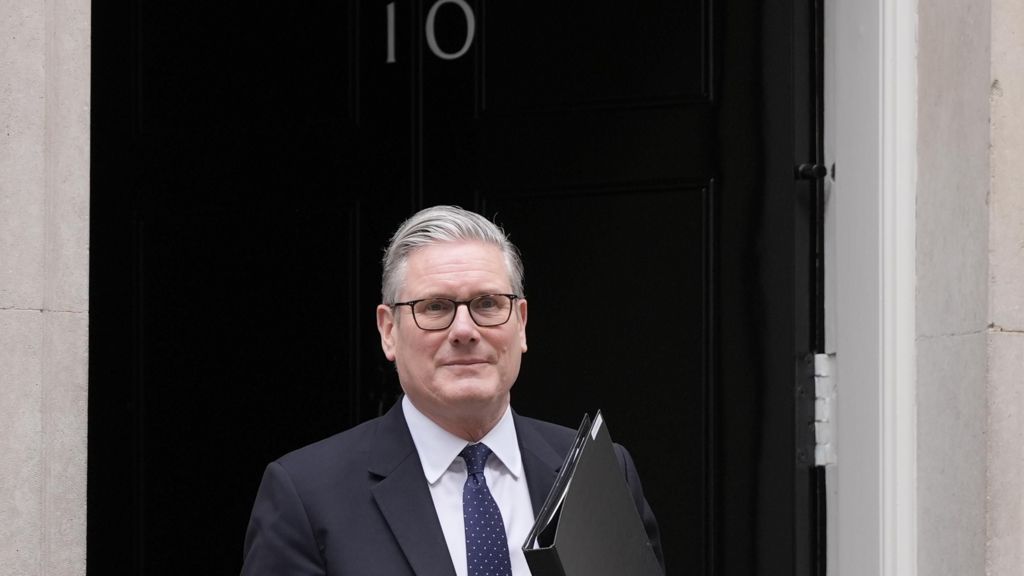
    LONDON — British Prime Minister Keir Starmer faces mounting criticism from opposition lawmakers over his handling of the crucial trans-Atlantic alliance with the United States, following public disagreements with President Donald Trump regarding military strategy toward Iran.

    The diplomatic friction emerged when President Trump openly criticized Britain as “uncooperative” and dismissed Starmer’s leadership credentials by comparing him unfavorably to Winston Churchill. This rebuke came after initial hesitation from the British government regarding U.S. requests to utilize UK military installations—including the strategic Diego Garcia base in the Indian Ocean—for conducting strikes against Iranian missile systems targeting British allies in the Middle East.

    Despite eventually granting operational access to American forces, the Prime Minister’s cautious approach has drawn sustained criticism from Conservative opponents. Cabinet Minister James Murray defended Starmer’s measured response, characterizing it as demonstrating “a cool head” while emphasizing the enduring strength of the UK-US partnership.

    The current tensions recall historical strains in the special relationship, notably during the 1956 Suez Crisis when American opposition forced British withdrawal, and during the Vietnam War era when Prime Minister Harold Wilson resisted U.S. pressure to commit troops. More recently, Tony Blair’s alignment with George W. Bush on the Iraq invasion remains a controversial chapter in bilateral relations.

    Beyond immediate military concerns, the disagreement threatens broader implications. A recently signed trade agreement between the two nations remains in limbo, potentially jeopardized by Trump’s tariff announcements. Additionally, the settlement regarding the future status of the Chagos Islands, crucial for maintaining the Diego Garcia base, awaits American support.

    Former National Security Adviser Peter Ricketts suggested that Trump appears to demand “completely blind loyalty” from allies, while advising British leadership to “keep calm and carry on” through the current diplomatic challenges.