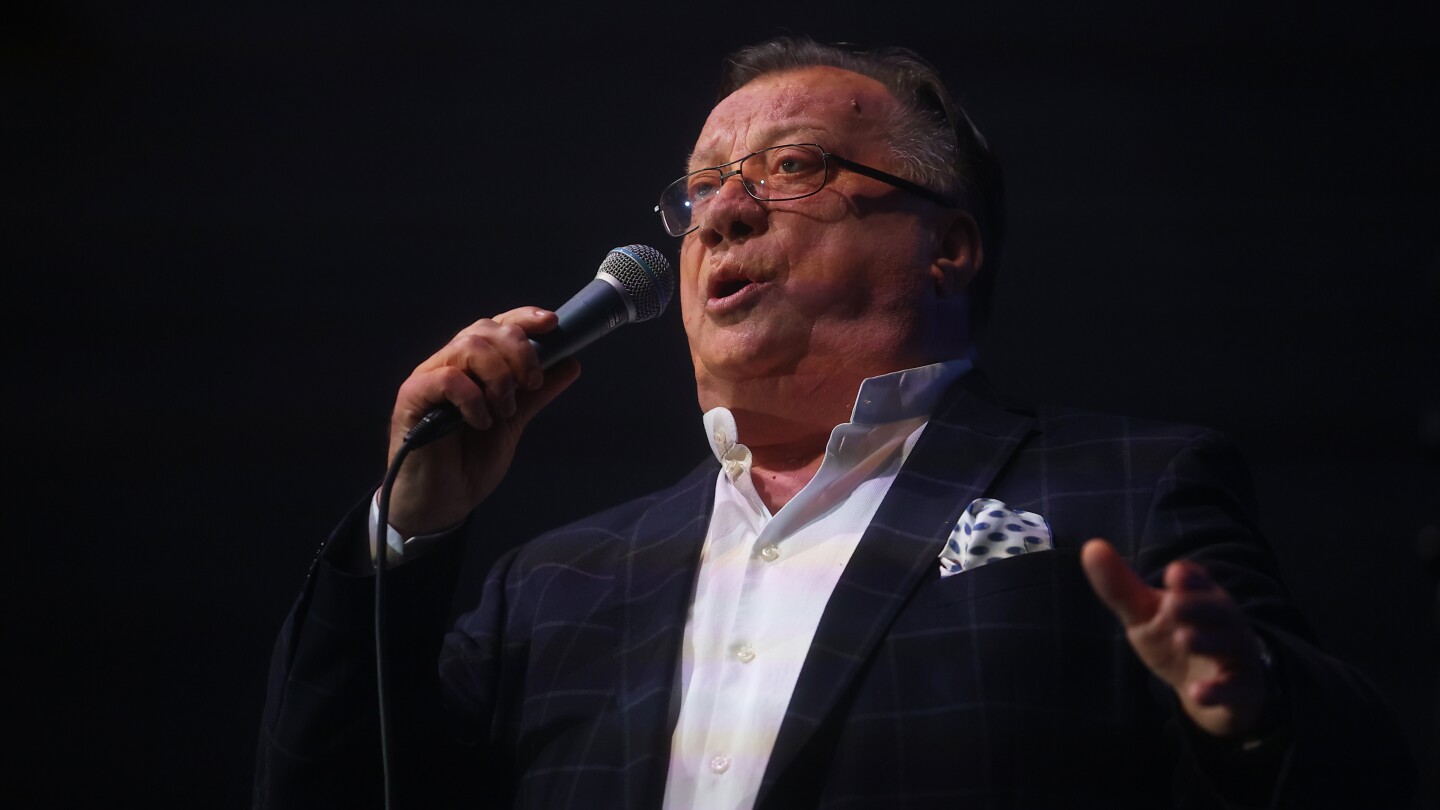
Sarajevo, Bosnia-Herzegovina — The streets of Sarajevo were filled with tens of thousands of mourners on Monday as they gathered to pay their final respects to Halid Beslic, a beloved Bosnian folk singer whose music and humanitarian efforts transcended ethnic divisions in a region historically plagued by conflict. Beslic, who passed away last week at the age of 71 after battling cancer, was celebrated not only for his artistic contributions but also for his unwavering commitment to peace and compassion during the turbulent 1992-95 Bosnian War. His concerts during the war raised critical funds for displaced Bosnians, while his songs about life and love resonated deeply across the Balkans. The funeral procession, led by Muslim cleric Muhamed Velic, saw mourners silently make their way to Sarajevo’s main cemetery, many visibly moved by the loss of a man whose voice and kindness bridged divides. Velic remarked that Beslic’s music “reached people’s hearts and his goodness broke barriers and crossed various borders.” Beslic’s career, which began in the former Yugoslavia, spanned decades, earning him reverence as a symbol of the peaceful prewar era. Over the weekend, tributes poured in from across the region, with thousands gathering in Bosnia, Croatia, Serbia, Slovenia, and Montenegro to sing his songs. Social media also showcased gatherings in Western Europe, Australia, Canada, and the United States, where diaspora communities from the former Yugoslavia honored his legacy. Bosnian actor Emir Hadzihafizbegovic, a close friend of Beslic, described him as the “personification of Bosnia and the former Yugoslavia,” crediting him with teaching “how to live without prejudice.” Beslic’s humanitarian work during the war, including organizing concerts abroad to support war victims, cemented his status as a unifying figure in a region still grappling with the scars of ethnic division. The Bosnian War, which erupted after Bosnian Serb nationalists opposed the country’s independence from Yugoslavia, claimed over 100,000 lives and displaced millions. Nearly three decades later, Bosnia remains ethnically fragmented and economically challenged, a stark reminder of the enduring impact of the conflict.
标签: Europe
欧洲
-

German club condemns fan behaviour after tourists attacked
A distressing incident involving football fans in Dublin has drawn widespread condemnation after two tourists were reportedly assaulted. Carly Clarke, a photographer from Eastbourne, and Stephen Lovell-Davis, a 70-year-old photographer from London, were in Dublin for a photography exhibition when they encountered a group of FC Schalke 04 supporters parading through the city center. The event took a violent turn when one fan attempted to grab Clarke’s camera, leading to a physical altercation. Lovell-Davis intervened but was pushed to the ground and repeatedly kicked in the head. The incident occurred on Abbey Street on Saturday, October 11, as approximately 2,000 Schalke fans traveled to Dublin for a friendly match against Bohemians, which ended in a 3-2 loss for the German club. FC Schalke 04 released a statement condemning the actions of some of its supporters, describing the incidents as ‘completely unjustifiable’ and vowing to investigate rigorously. The club emphasized that such behavior ‘overshadowed’ what was intended to be a positive trip and expressed sympathy for the victims. Lovell-Davis, who sustained bruises and cuts, described the attack as ‘disappointing’ but noted that it was the actions of a ‘small minority.’ He also thanked three Irish women who assisted him after the assault. Both tourists have since returned to England, and the Irish police, An Garda Síochána, are investigating the alleged assault. The club has initiated an internal review and pledged to take appropriate action against those responsible.
-
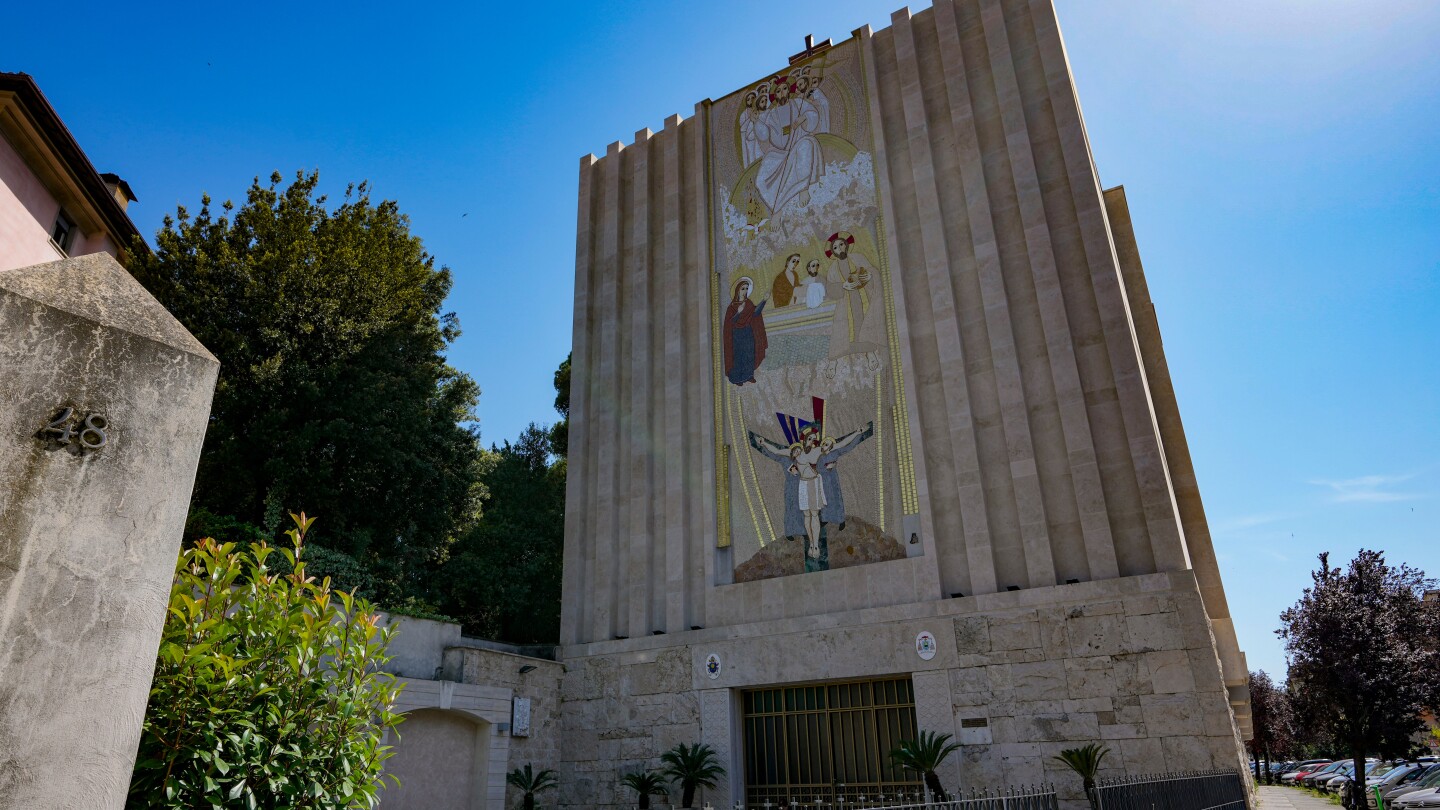
Trial against famous ex-Jesuit artist, accused of abusing women, to start with judges named
In a significant move, the Vatican announced on Monday the appointment of a panel of judges to adjudicate the case of former Jesuit artist Marko Ivan Rupnik, who stands accused of sexual, spiritual, and psychological abuse of women. This decision marks a pivotal moment in a scandal that has cast a shadow over Pope Francis’s legacy, amid allegations that the Vatican’s handling of the case lacked transparency and independence. The Congregation for the Doctrine of the Faith, responsible for overseeing clergy abuse cases, revealed that the five-member judicial panel includes both women and priests external to the Vatican bureaucracy, emphasizing the need for autonomy and impartiality in the proceedings. This development follows years of controversy surrounding Rupnik, whose mosaics adorn some of the Catholic Church’s most revered sites worldwide. The scandal first came to light in late 2022 when Italian blogs published allegations from nuns and adult women who claimed to have been abused by Rupnik during his artistic endeavors. Despite initial reluctance to prosecute due to the age of the claims, the Vatican eventually waived the statute of limitations under public pressure, paving the way for a canonical trial. Rupnik, who was briefly excommunicated in 2020 for exploiting the confessional, has consistently denied the allegations and refused to cooperate with Jesuit authorities. His supporters have decried the media coverage as a ‘lynching,’ while the Vatican’s latest action signals a renewed commitment to addressing the case with due process.
-

Man jailed for attacking tram during Dublin riots
A 20-year-old man, Evan Moore, has been sentenced to three years in prison for his role in the November 2023 Dublin riots, during which he vandalized and set fire to a Luas tram. Moore, from Grangemore Road in Donaghmede, Dublin, shattered the tram’s windows and brought a burning bin onboard, causing extensive damage estimated at €5 million (£4.34 million). The incident forced the suspension of tram services for 24 hours. Moore, who was 18 at the time, ignored a text from his mother urging him to leave the city center before the situation escalated. Six months later, he was identified by gardaí (Irish police) during an anti-immigration protest and admitted to his involvement in the riots. Footage showed him carrying the burning bin onto the tram. Moore, who has no prior convictions, was described by his defense as coming from a respectable family but having brought ‘shame’ upon them. He is currently attending school in prison and has a college placement as an electrician upon release. The riots erupted hours after a stabbing incident near a primary school left a woman and three children injured. During the unrest, rioters set off flares, looted shops, and attacked police. Judge Orla Crowe emphasized the severity of the riots, calling them the most serious incident in Dublin in years. She noted Moore’s remorse, his guilty plea, and his participation in an anti-racism course, ultimately sentencing him to four years with the last 12 months suspended.
-
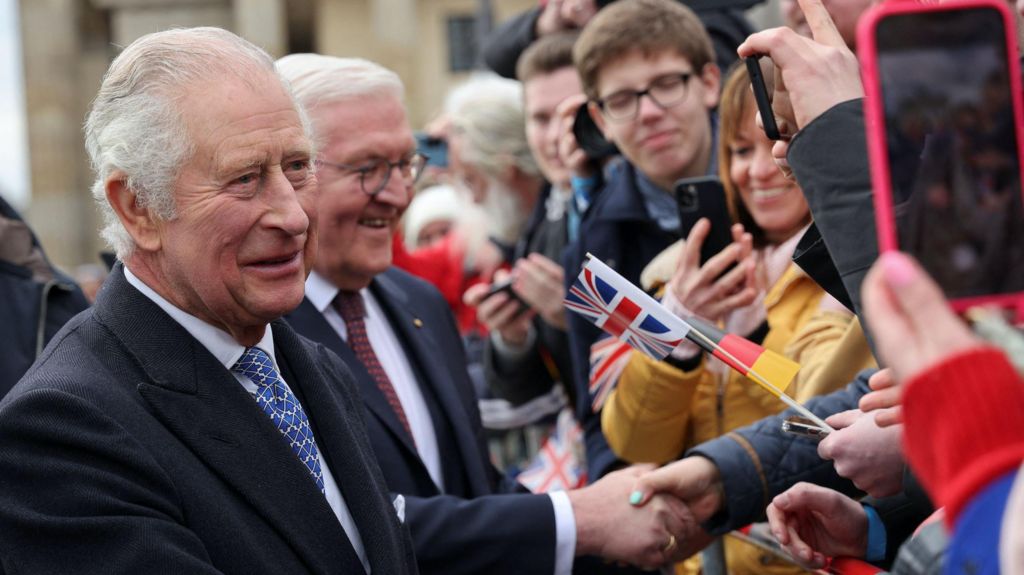
First German state visit to UK for 27 years announced
Buckingham Palace has officially announced that German President Frank-Walter Steinmeier will embark on a state visit to the United Kingdom from December 3 to 5, 2023. This marks the first German state visit to the UK in 27 years, with King Charles III and Queen Camilla hosting the event at Windsor Castle due to ongoing renovations at Buckingham Palace. The visit is poised to reinforce the longstanding alliance between the two nations, foster trade relations, and build upon the recent Kensington Treaty, which aims to establish a direct rail link between London and Berlin. Additionally, the agenda includes discussions on enhancing cultural exchanges, military cooperation, business investments, and joint efforts to combat illegal migration and human trafficking. The visit reciprocates the hospitality extended by President Steinmeier and his wife, Elke Büdenbender, during King Charles’s inaugural overseas state visit to Germany in March 2023. That visit was widely regarded as a diplomatic triumph, highlighted by the King’s impactful speech at the German Bundestag, where he emphasized Germany’s role in supporting Ukraine following Russia’s invasion. The King also paid tribute to the victims of the Allied bombing of Hamburg during World War II, symbolizing reconciliation. The last German state visit to the UK occurred in December 1998, hosted by Queen Elizabeth II, who underscored the importance of international cooperation through organizations like the EU and NATO. The upcoming visit adds to King Charles’s busy schedule, which includes a rescheduled state visit to the Vatican to meet Pope Leo, following the postponement of a previous trip due to the late Pope Francis’s health. This series of engagements underscores the King’s commitment to strengthening global partnerships while balancing his ongoing cancer treatment.
-
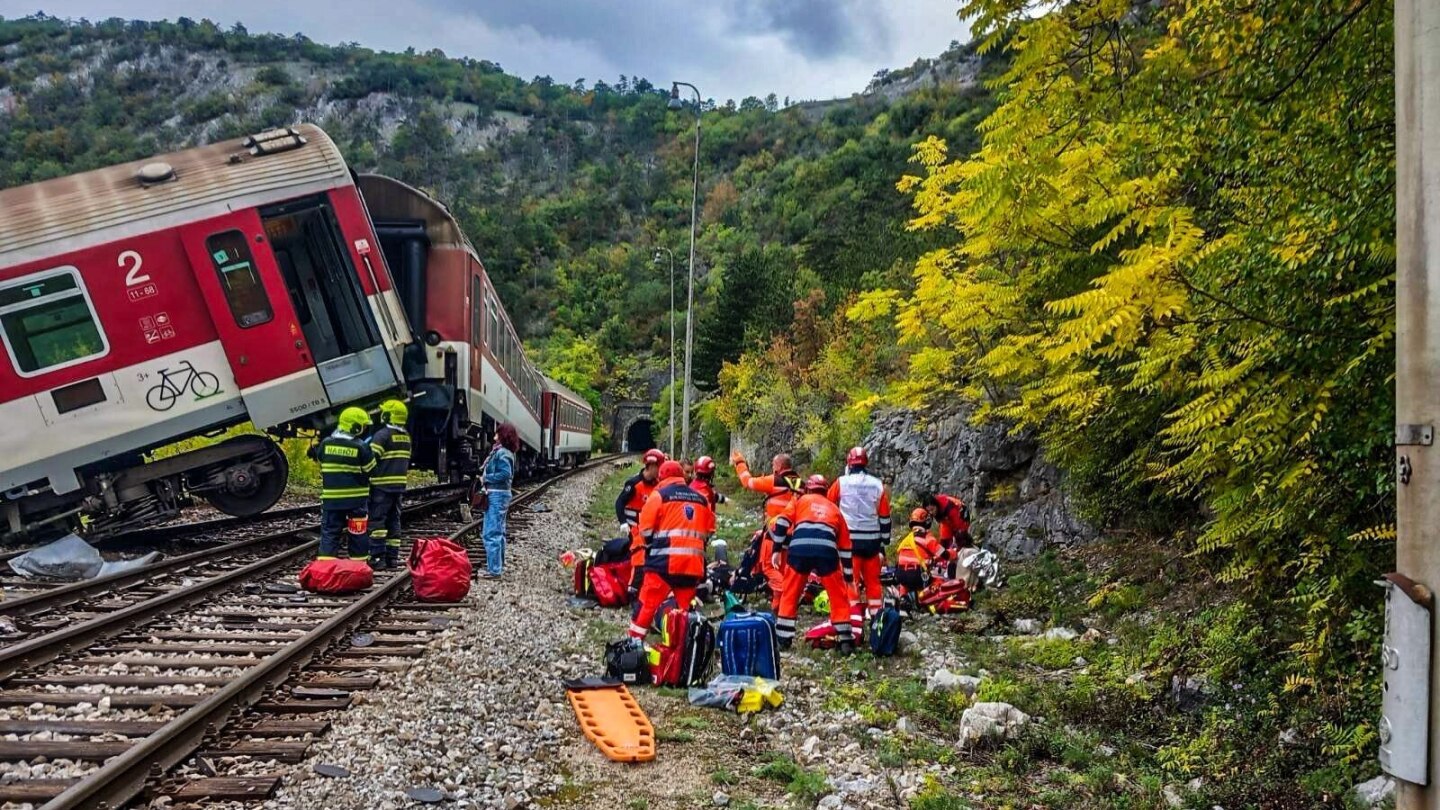
Fast trains collide in Slovakia, injuring dozens, with 2 in critical condition
A severe train collision occurred in eastern Slovakia on Monday, resulting in injuries to dozens of passengers, two of whom are in critical condition, according to officials. The incident took place near Rožňava shortly after 10 a.m. local time (0800 GMT), as reported by Slovak Railways. Approximately 80 passengers were on board at the time of the crash, though further details were not immediately available. Interior Minister Matúš Šutaj Eštok confirmed that two individuals sustained critical injuries, while the remaining injuries were less severe. Visuals from the scene depicted significant damage to the front of one train engine, with the other train derailed. Authorities have launched an investigation into the cause of the accident, with Šutaj Eštok hinting that human error could be a contributing factor.
-
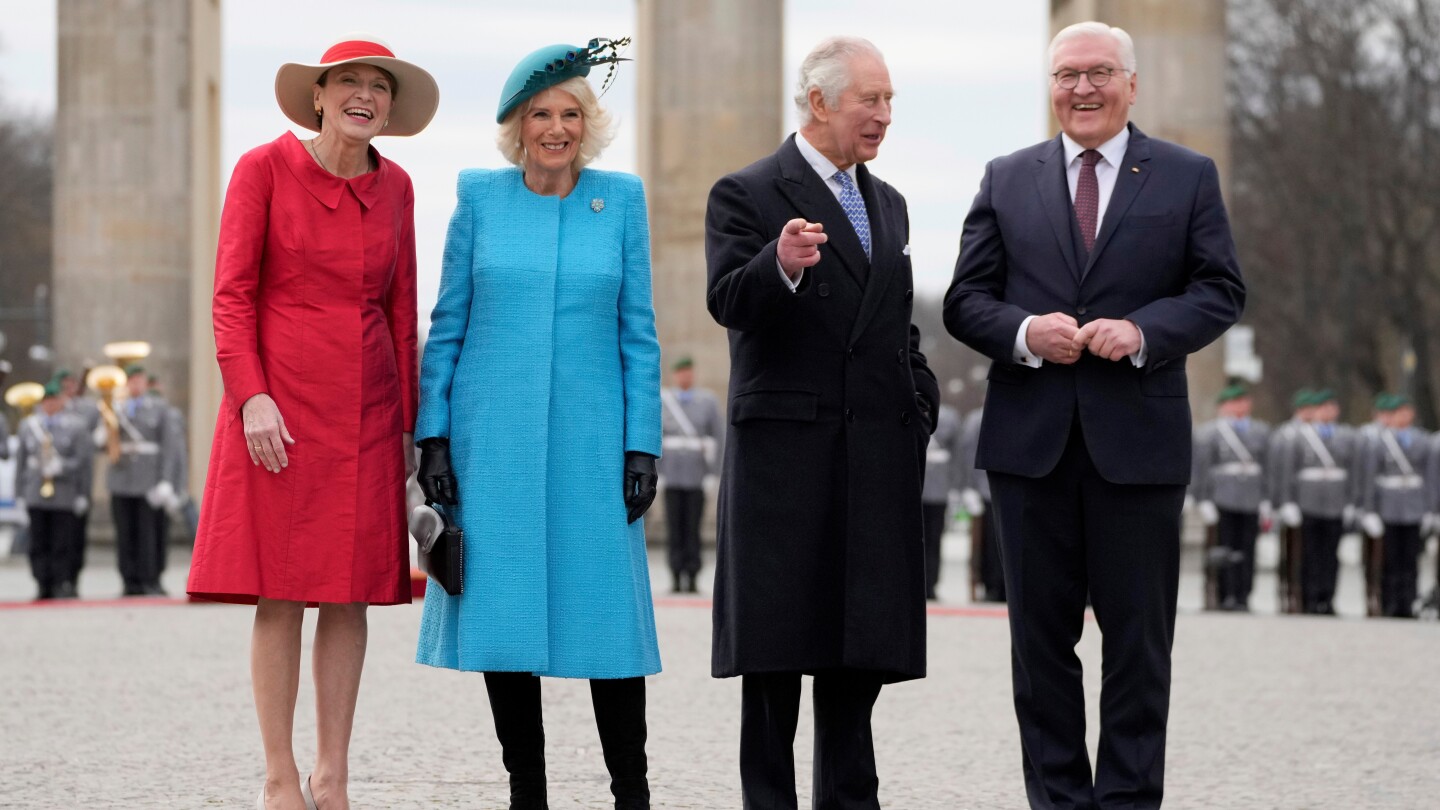
Germany’s president accepts invitation for state visit to UK in December
In a significant diplomatic move, Germany’s President Frank-Walter Steinmeier and First Lady Elke Büdenbender are set to undertake a state visit to the United Kingdom from December 3 to 5. Buckingham Palace confirmed the visit on Monday, announcing that King Charles III and Queen Camilla will host the distinguished guests at Windsor Castle. This marks the first state visit by a German head of state to the UK in 27 years and only the fifth since 1958, underscoring the rarity and importance of such ceremonial occasions. State visits are characterized by elaborate British traditions, including military salutes, carriage processions, and opulent banquets, designed to honor the guest nation and strengthen bilateral ties. These events not only celebrate longstanding alliances but also serve as strategic tools to influence diplomatic relations. The invitation for this visit was extended by King Charles, following the UK government’s recommendation. Earlier this year, Charles made his inaugural foreign trip as monarch to Germany, emphasizing the deep historical, cultural, and economic connections between the two nations. His efforts to foster closer UK-EU relations echo the diplomatic legacy of his mother, Queen Elizabeth II. Steinmeier’s visit is expected to further solidify the partnership between the UK and Germany, highlighting their shared interests in areas such as trade, science, and defense.
-
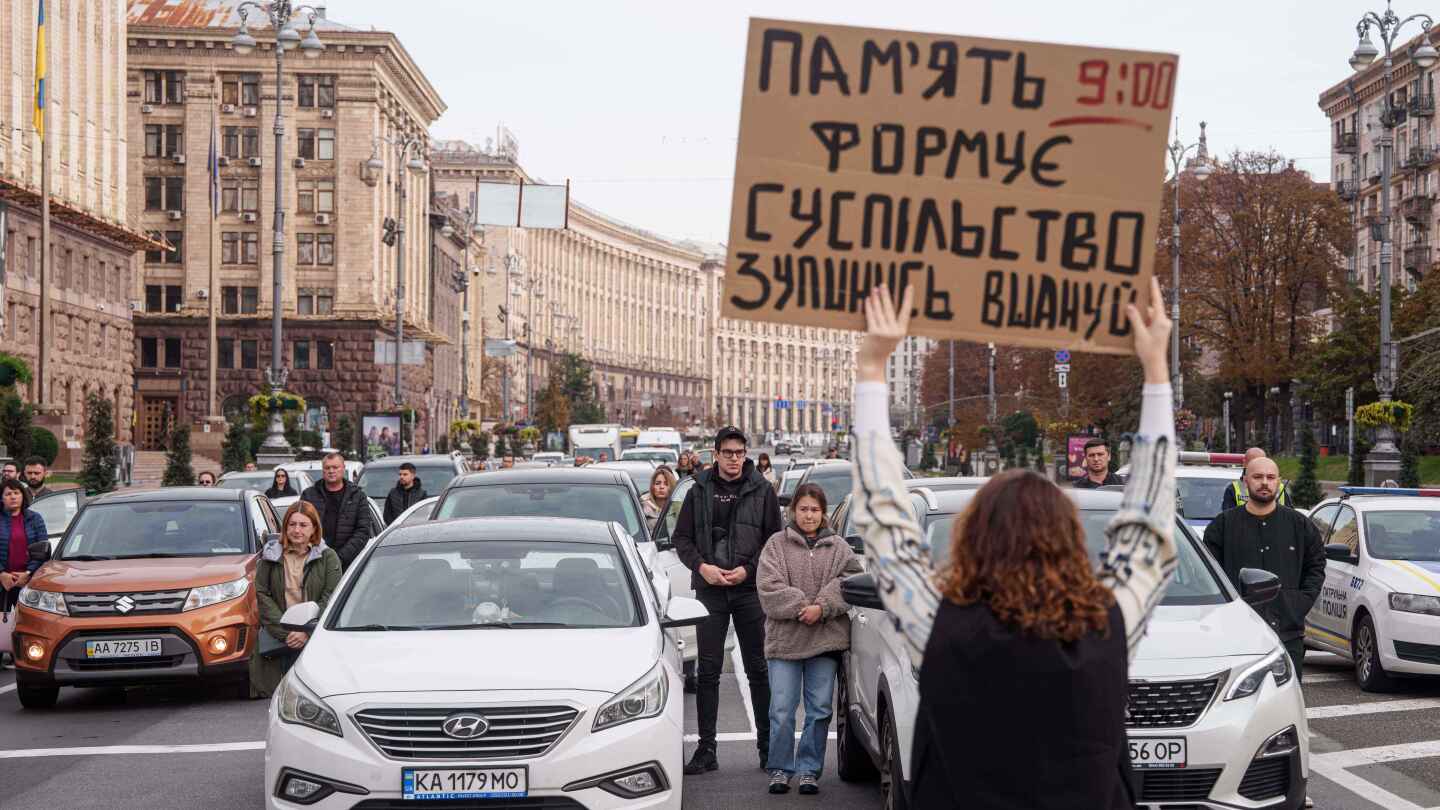
A nation pauses: Ukraine’s daily moment of remembrance endures through intensified Russian attacks
Every morning at 9 a.m., Ukraine comes to a standstill. Traffic lights turn red, and the rhythmic sound of a metronome fills the air, signaling a minute of collective reflection. Drivers step out of their vehicles, bowing their heads in silence. From cafes and schools to the front lines, Ukrainians pause to honor those who have lost their lives in Russia’s full-scale invasion. This daily ritual, initiated by President Volodymyr Zelenskyy in 2022, has become a profound national tradition, uniting the country in grief and resilience. In Kyiv’s Maidan Square, a growing memorial adorned with flags, photos, and candles serves as a poignant reminder of the sacrifices made. Among the mourners are four friends holding signs that read, “Stop. Honor.” Their bond is tied to Iryna Tsybukh, a 25-year-old combat medic killed by a landmine in eastern Ukraine last year. Her death galvanized the nation and deepened the significance of the daily observance. Kateryna Datsenko, co-founder of the civic group Vshanuy, emphasizes that the ritual is not about death but about celebrating the lives and passions of the fallen. Despite escalating Russian missile and drone attacks, Ukrainians continue to gather each morning, finding strength in shared grief and solidarity. City officials have synchronized Kyiv’s traffic lights to ensure the capital joins the nationwide pause. For many, like activist Daria Kolomiec, the moment is both collective and deeply personal, a reminder of the resilience and unity that define Ukraine’s fight for freedom.
-
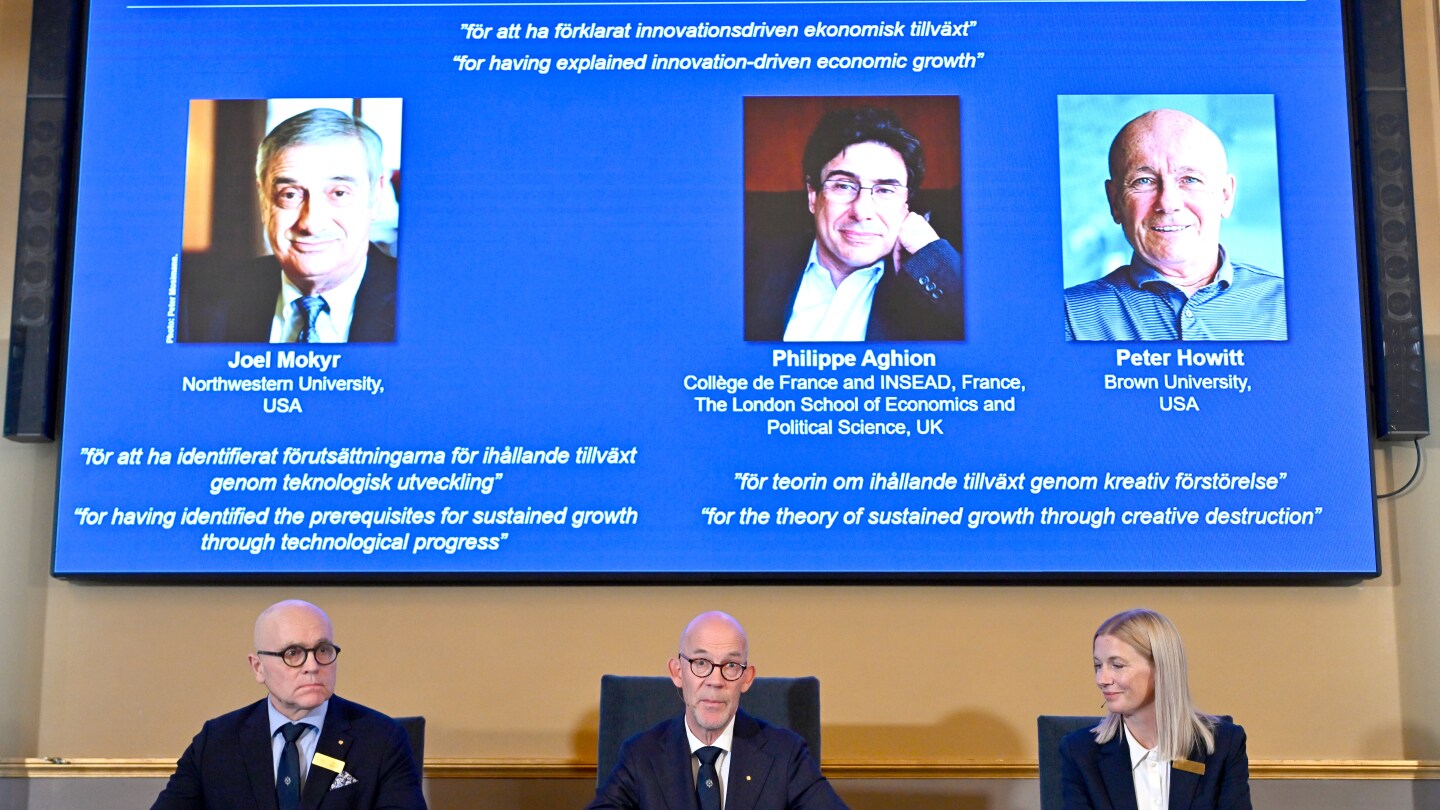
Nobel economics prize goes to 3 researchers for explaining innovation-driven economic growth
STOCKHOLM (AP) — The 2023 Nobel Memorial Prize in Economic Sciences has been awarded to Joel Mokyr, Philippe Aghion, and Peter Howitt for their pioneering contributions to understanding innovation-driven economic growth. The trio’s work has shed light on the mechanisms of ‘creative destruction,’ a concept central to economic progress, where new innovations displace older technologies and businesses. Mokyr, from Northwestern University, Aghion, affiliated with the College de France and the London School of Economics, and Howitt, from Brown University, were recognized for their efforts to quantify and explain this phenomenon. The Nobel Committee highlighted their research as essential for sustaining long-term economic growth and avoiding stagnation. Aghion, expressing his astonishment at the honor, emphasized his commitment to reinvesting the prize money into his research laboratory. He also voiced concerns about protectionist policies, particularly in the U.S., warning that such measures could hinder global growth and innovation. The laureates’ work builds on the foundational ideas of economist Joseph Schumpeter, who first articulated the concept of creative destruction in his 1942 book, ‘Capitalism, Socialism and Democracy.’ Aghion and Howitt’s 1992 mathematical model further advanced the understanding of this process. The prize, valued at 11 million Swedish kronor (approximately $1.2 million), was split equally between Mokyr and the duo of Aghion and Howitt. The award, formally known as the Bank of Sweden Prize in Economic Sciences in Memory of Alfred Nobel, was established in 1968 and has since been awarded to 96 laureates, only three of whom have been women. While technically not one of the original Nobel Prizes, it is presented alongside them on December 10, the anniversary of Alfred Nobel’s death. Last year’s economics prize honored researchers who explored the disparities between rich and poor nations, emphasizing the role of open societies in fostering prosperity. This year’s announcement follows last week’s Nobel honors in medicine, physics, chemistry, literature, and peace.
-
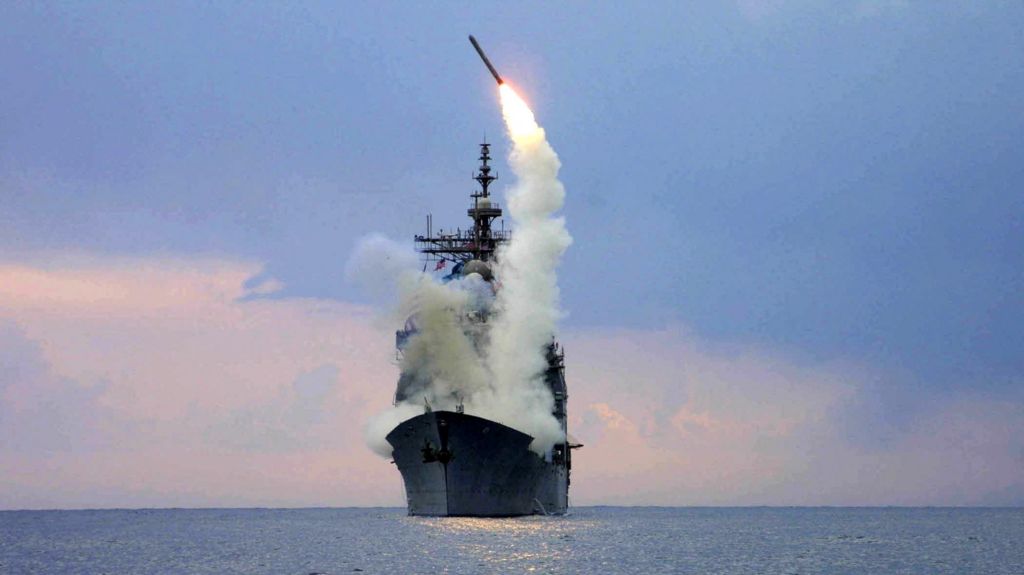
Trump says he may send Tomahawk missiles to Ukraine
In a significant development in the ongoing Russia-Ukraine conflict, U.S. President Donald Trump has hinted at the possibility of supplying Ukraine with Tomahawk long-range cruise missiles. This move, described by Trump as ‘a new step of aggression,’ could dramatically enhance Ukraine’s ability to strike deep into Russian territory. The consideration follows a recent phone conversation between Trump and Ukrainian President Volodymyr Zelensky, during which Zelensky emphasized the need for advanced military capabilities to counter Russian offensives. Tomahawk missiles, with a striking range of 2,500 kilometers (1,500 miles), would place Moscow within Ukraine’s reach, potentially altering the strategic dynamics of the war. However, Moscow has previously cautioned Washington against such actions, warning that it would escalate tensions and further strain U.S.-Russian relations. Trump, speaking to reporters aboard Air Force One en route to Israel, indicated that he might discuss the matter with Russia, stating, ‘Do they [Russia] want Tomahawks going in their direction? I don’t think so.’ The potential deployment of these missiles comes as Ukraine faces relentless Russian attacks on its cities and critical infrastructure, including energy facilities, which have caused widespread power outages. Last month, Trump’s special envoy to Ukraine, Keith Kellogg, suggested that the U.S. president had authorized strikes deep into Russian territory, asserting that ‘there are no such things as sanctuaries’ in this conflict. Despite these developments, the Kremlin has downplayed the impact of Tomahawks, with spokesperson Dmitry Peskov stating that such weapons ‘won’t be able to change the dynamic’ of the war.