标签: Europe

欧洲

  • Pope names veteran Vatican diplomat as ambassador to the US to manage relations with Trump

    Pope names veteran Vatican diplomat as ambassador to the US to manage relations with Trump

    ROME — In a significant diplomatic move, Pope Leo XIV has appointed Archbishop Gabriele Caccia, a seasoned Vatican diplomat, as the new apostolic nuncio to the United States. The 68-year-old Italian prelate, currently serving as the Holy See’s ambassador to the United Nations in New York, will assume one of the Vatican’s most crucial diplomatic posts, replacing Cardinal Christophe Pierre who is retiring at age 80.

    Archbishop Caccia brings extensive diplomatic experience to the position, having previously served as the Holy See’s ambassador to Lebanon and the Philippines before his 2019 UN posting. Ordained in Milan in 1983, he later held the key administrative position of “assessor” in the Vatican secretariat of state, the Holy See’s most important office.

    The appointment comes at a delicate time in Vatican-US relations, which have experienced strain during both Trump administrations. Significant tensions have emerged over immigration policies and the ongoing military engagement in Iran. Pope Leo, the first US-born pontiff in history, has repeatedly emphasized the need to respect human dignity in migration policies while acknowledging national border rights.

    The new ambassador inherits a complex portfolio that includes managing relations with both the US government and the American Catholic hierarchy. The US Conference of Catholic Bishops, which has traditionally leaned conservative, has shown notable friction with the more progressive priorities of Pope Francis’ pontificate, a dynamic that continued into Pope Leo’s leadership.

    Beyond immigration issues, Pope Leo has expressed “profound concern” about the U.S.-Israeli military campaign in Iran, urging both sides to “stop the spiral of violence before it becomes an irreparable abyss.” In recent comments, the pontiff called for renewed diplomatic efforts, stating that weapons only sow “destruction, pain and death.”

    The Holy See maintains its tradition of diplomatic neutrality despite these concerns, though Pope Leo has been vocal about humanitarian crises in Gaza and Ukraine. The relationship with the United States remains vitally important for the Vatican, particularly as American Catholics represent the most significant source of donations to the Holy See’s coffers.

    Archbishop Paul S. Coakley, current president of the U.S. Conference of Catholic Bishops, has already welcomed Caccia’s appointment, offering the hierarchy’s “warmest welcome and our prayerful support.”

  • Russian strike on Kharkiv apartment block kills seven

    Russian strike on Kharkiv apartment block kills seven

    A devastating Russian missile assault struck a residential district in Kharkiv, Ukraine, resulting in a significant loss of life and injuries. Ukrainian President Volodymyr Zelensky confirmed that at least seven individuals, including children, perished in the attack, with a minimum of ten others sustaining injuries.

    The offensive, which occurred on Saturday morning, targeted a five-story apartment building, causing extensive structural damage. Regional Governor Oleg Synegubov reported that rescue teams are actively conducting search and recovery operations amidst the rubble, with concerns that additional victims may be trapped beneath the debris.

    Among the fatalities were a 65-year-old woman, a 40-year-old man, and a 13-year-old girl. Subsequent reports from Synegubov indicated the discovery of four additional bodies, including a nine-year-old boy. The assault also damaged seven apartment complexes, power infrastructure, and an administrative building in the city.

    In a broader context, President Zelensky disclosed that overnight Russian aggression involved 29 missiles and 480 drones targeting critical energy facilities across Kyiv, Khmelnytskyi, and Chernivtsi regions, alongside railway infrastructure in Zhytomyr. The Ukrainian leader urgently appealed for enhanced international support and a decisive response from allied nations.

    Concurrently, the Polish Air Force activated protective measures, scrambling military jets to safeguard its airspace along the Ukrainian border, a standard protocol during large-scale Russian offensive operations.

    Additional regional impacts were reported in the Nikopol district, where one individual was killed and another wounded following approximately twenty separate attacks utilizing drones, artillery, and rockets. Further casualties included an infant injured in Zaporizhzhia and two individuals wounded in a drone attack on a residential property in Chuguiv.

  • At least 7 killed in Ukraine’s Kharkiv as Russian missile hits apartment building

    At least 7 killed in Ukraine’s Kharkiv as Russian missile hits apartment building

    KHARKIV, Ukraine — A Russian missile strike devastated a residential building in Ukraine’s second-largest city on Saturday, killing at least seven civilians and injuring ten others, including three children, according to Ukrainian officials. The attack on the five-story apartment complex in Kharkiv represents one of the deadliest recent assaults on civilian infrastructure.

    President Volodymyr Zelenskyy condemned what he described as ‘savage strikes against life’ and urgently called for enhanced international support. Ukrainian defense systems intercepted the majority of an extensive overnight barrage that included 29 missiles and 480 drones targeting energy facilities across multiple regions. Preliminary data indicates air defenses successfully downed 19 missiles and 453 drones, though nine missiles and 26 strike drones reached their targets at 22 locations nationwide.

    Emergency crews in Kharkiv continued search and rescue operations through the day, meticulously combing through rubble for potential survivors. The attack caused widespread infrastructure damage, with regional authorities reporting significant impacts on transportation networks. Ukraine’s state rail operator confirmed damage to central-western rail infrastructure forced route modifications across the country.

    The southern Odesa region witnessed massive fires at critical infrastructure facilities following drone attacks, requiring deployment of 80 firefighters to contain the blazes. Zelenskyy emphasized Russia’s continued targeting of residential and critical infrastructure necessitates sustained international military support, particularly enhanced air defense capabilities.

    The conflict’s dynamics have evolved with Russia’s domestic production of Iranian-designed Shahed drones, enabling attacks numbering in the hundreds per night—a significant escalation from earlier patterns. Meanwhile, Ukraine has responded to U.S. requests for assistance in Middle East defense against similar drone technology, deploying equipment and experts to support regional security efforts.

    The expanding Middle East conflict has diverted international attention from Ukraine while postponing planned U.S.-brokered negotiations between Moscow and Kyiv, further complicating diplomatic resolution efforts.

  • Schwarber homers and Henderson gets 4 hits to lead United States over Britain 9-1 at WBC

    Schwarber homers and Henderson gets 4 hits to lead United States over Britain 9-1 at WBC

    The World Baseball Classic delivered a spectacle of international competition on Saturday, highlighted by dominant performances and dramatic late-game heroics across multiple venues.

    In Houston’s Pool B action, the United States secured a commanding 9-1 victory over Great Britain, improving to a perfect 2-0 record. Despite Britain’s early lead from Nate Eaton’s first-pitch home run off Tarik Skubal, Team USA’s offense exploded in the fifth inning. The turnaround began when Ernie Clement reached on an error, followed by Pete Crow-Armstrong’s double. Kyle Schwarber then unleashed a monumental 427-foot, two-run homer to right field, shifting momentum permanently in America’s favor. Gunnar Henderson contributed significantly with four hits and two RBIs, while Aaron Judge continued his powerful showing with a scorching RBI single that damaged the scoreboard.

    Meanwhile in Tokyo, defending champion Japan remained undefeated in Pool C with an intense 8-6 victory over South Korea. Shohei Ohtani homered for the second consecutive day, while Seiya Suzuki delivered two home runs and four RBIs. Despite falling behind 3-0 in the first inning, Japan mounted a relentless comeback, with Masataka Yoshida adding a homer and three RBIs to secure the hard-fought win.

    The Netherlands provided the day’s most dramatic moment with Ozzie Albies’ walk-off, three-run homer in the ninth inning to stun Nicaragua 4-3. With two outs and runners on base, Albies connected on the first pitch from reliever Angel Obando, completing an improbable comeback after Nicaragua had taken the lead in the eighth inning on Jeter Downs’ two-run homer.

    Other tournament action saw Puerto Rico remain unbeaten with a 4-3, 10-inning victory over Panama courtesy of Darell Hernaiz’s game-winning homer. Venezuela dominated Israel 11-3 behind Luis Arraez’s two homers, two doubles, and five RBIs. Taiwan recorded a mercy-rule 14-0 win over the Czech Republic, Canada defeated Colombia 8-2, and Italy blanked Brazil 8-0 behind Dante Nori’s two home runs.

  • Swiss to vote on right-wing push to slash licence fee for public broadcaster

    Swiss to vote on right-wing push to slash licence fee for public broadcaster

    Switzerland faces a pivotal moment in its media landscape as citizens head to the polls this weekend to determine the funding future of their national broadcaster. The referendum centers on a proposal to slash the annual license fee for Swiss Broadcasting Corporation (SBC) from 335 Swiss francs (£320; $435) to 200 francs (£190; $260) per household, while completely exempting businesses from the charge.

    The initiative, championed by the right-wing Swiss People’s Party, argues that the current fee represents an unjustified financial burden during a cost-of-living crisis. Party parliamentarian Manfred Bühler contends that modern production technologies enable cheaper programming than decades ago, making the reduced amount sufficient. The proposal has gained traction among younger demographics who increasingly favor streaming services over traditional broadcasting.

    Opposition forces, including all political parties except the People’s Party, warn that funding cuts would devastate Switzerland’s unique multilingual broadcasting model. The SBC maintains separate services in all four national languages—German, French, Italian, and Romansh—which critics say is essential for national cohesion in the linguistically diverse nation. Social Democrat MP Fabian Molina emphasizes that these services ensure equal treatment of all regions and linguistic communities.

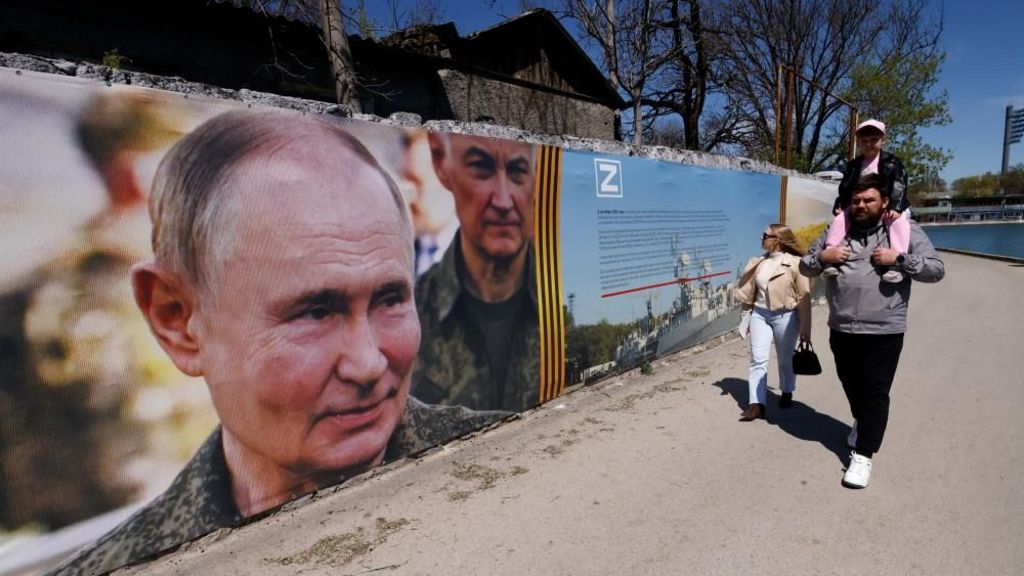
    The debate took an unexpected turn when Russian state-backed outlet RT published an article under a likely pseudonym urging Swiss voters to support the fee reduction while accusing SBC of ‘Russophobia’ and ‘manipulation.’ This intervention backfired dramatically, with many Swiss perceiving it as foreign interference in their direct democracy system. Anti-populist groups responded with posters featuring images of Vladimir Putin, Viktor Orbán, and Donald Trump alongside the message: ‘Don’t do autocrats any favours.’

    The SBC has warned that approval of the measure would result in hundreds of job losses, reduced international coverage from its correspondents worldwide, and diminished sports programming—including the UEFA Champions League and winter sports where Switzerland excels. Recent opinion polls indicate 54-57% of voters now oppose the cut, suggesting the RT intervention may have swayed undecided voters toward preserving the current funding model.

  • Armed robots take to the battlefield in Ukraine war

    Armed robots take to the battlefield in Ukraine war

    The battlefields of Ukraine have transformed into a proving ground for robotic warfare, with armed uncrewed ground vehicles (UGVs) emerging as pivotal assets in the conflict. What began as Russia’s full-scale invasion has rapidly evolved into a high-tech confrontation where autonomous systems are reshaping military strategies and tactics.

    Ukrainian forces have pioneered the world’s first dedicated UGV battalion, demonstrating remarkable success in combat operations. These robotic systems have reportedly repelled Russian assaults, captured enemy soldiers, and even engaged in direct robot-versus-robot confrontations without human presence on the battlefield. Major Oleksandr Afanasiev of Ukraine’s K2 brigade confirms that ‘robot wars are already happening,’ highlighting the unprecedented nature of this technological shift.

    The current generation of UGVs primarily operates with human oversight, mounting weaponry ranging from Kalashnikov machine guns to grenade launchers. Ukrainian units deploy both armed strike vehicles and specialized kamikaze UGVs—silent, battery-powered platforms laden with explosives that can approach enemy positions undetected. Despite their advanced capabilities, ethical considerations and international humanitarian law maintain human operators in the decision-making loop for lethal engagements.

    Beyond offensive operations, UGVs continue to serve critical support functions including supply delivery, medical evacuation, and engineering tasks such as mine-laying and barbed wire deployment. This versatility addresses Ukraine’s severe manpower shortages while minimizing soldier exposure to increasingly dangerous combat environments where aerial drones have expanded kill zones to 20-25 kilometers.

    The future trajectory points toward exponential growth in autonomous warfare. Former Ukrainian Commander-in-Chief Valerii Zaluzhnyi envisions AI-powered swarms of coordinated drones operating across air, ground, and sea domains simultaneously. Ukrainian manufacturers are responding to this vision, with companies like Devdroid and Tencore scaling production to meet anticipated demand for tens of thousands of units in coming years.

    Russian forces are developing comparable systems including the Kuryer combat UGV and Lyagushka kamikaze vehicles, setting the stage for increased autonomous confrontations. As Yuriy Poritsky of Devdroid notes, direct clashes between opposing robotic systems are inevitable given their expanding deployment and capabilities.

    The rapid innovation driven by battlefield necessity is accelerating the transition from science fiction to military reality, with developers already working on enhanced autonomy features including mission execution and automated return protocols. This technological evolution suggests that humanoid combat robots may eventually become standard battlefield assets, fundamentally transforming the nature of armed conflict.

  • Russian athletes march at Paralympic opening ceremony

    Russian athletes march at Paralympic opening ceremony

    The 50th anniversary Winter Paralympics commenced in Milan-Cortina under a cloud of geopolitical tension as Russian and Belarusian athletes paraded under their national flags for the first time since the Ukraine invasion. This symbolic return marked a stark contrast to the 2022 bans, generating both celebration and controversy.

    The opening ceremony at Verona’s ancient Arena di Verona witnessed seven nations, including Ukraine, boycotting the procession in protest. Despite their physical absence, Ukrainian representatives received resounding applause when a volunteer carried their flag into the amphitheater.

    International Paralympic Committee President Andrew Parsons addressed the divided global landscape directly: ‘Four years ago I expressed horror at world events. Unfortunately, the situation has not improved. In these Games, differences become sources of strength rather than separation.’

    Further compounding the geopolitical dimensions, Iran withdrew its sole athlete, cross-country skier Aboulfazl Khatibi Mianaei, citing safety concerns stemming from Middle Eastern conflicts. This development followed recent military exchanges between the US-Israel coalition and Iranian forces.

    Organizing committee president Giovanni Malago acknowledged the challenging backdrop: ‘We cannot ignore that these Games occur in a deeply divided world, torn apart by wars and suffering. The message of peace and solidarity is therefore more crucial than ever.’

    Logistical and political considerations resulted in only 28 of the 55 participating nations attending in person. Great Britain’s team abstained for logistical reasons, with many athletes preparing for Saturday competitions in the Dolomites.

    The ceremony blended Shakespearean themes celebrating Verona’s ‘City of Love’ identity with contemporary electronic music from Italian house artists Meduza. The event culminated with the simultaneous lighting of dual Paralympic cauldrons in Milan and Cortina.

    Parsons concluded with an optimistic vision: ‘Paralympians will redefine possibility through exceptional performances, transforming attitudes and inspiring people worldwide. They demonstrate that disability represents not limitation but an incredible dimension of human diversity.’

    Over 660 athletes from 56 nations will compete across six sports until March 15th, with Great Britain fielding a 25-member team.

  • In Paris fashion, skin is in and celebrities rule the runways

    In Paris fashion, skin is in and celebrities rule the runways

    PARIS — Paris Fashion Week’s Fall 2026 collections have emphatically reinforced the city’s status as the global fashion capital, presenting a compelling fusion of celebrity power, innovative design, and substantive conceptual narratives. The event has become a dynamic platform where designers are exploring profound themes of empowerment, artistry, and bodily expression through their creations.

    Celebrity presence reached extraordinary levels with Oprah Winfrey making notable appearances at both Stella McCartney and Chloé shows, while Sissy Spacek, Julia Garner, and Lil Yachty commanded attention in Loewe’s front row. This star power perfectly complemented the exceptional creative ambition displayed throughout the week.

    Several dominant themes have emerged from the runways at the halfway point: intentional dressing, sartorial pleasure, and fearless self-presentation. These concepts are being expressed through six distinctive trend directions that are defining the season.

    The tuxedo celebrates its 60th anniversary in women’s fashion with particular significance at Saint Laurent. Creative director Anthony Vaccarello, marking his tenth anniversary leading the house, presented a spectacular array of razor-sharp ‘Smokings’—the brand’s term for its iconic women’s tuxedo. These designs featured plunging necklines and elongated silhouettes that captured the same revolutionary spirit Yves Saint Laurent originally unleashed in the 1960s.

    Vaccarello’s vision extended beyond eveningwear, incorporating the same sensual, body-skimming tailoring into daytime suits crafted from fluid pinstripe fabrics with minimal interlining. This approach championed the tuxedo silhouette as appropriate for all aspects of a woman’s daily life. While numerous Milanese brands presented strong black pantsuits this season, Saint Laurent’s interpretation remains uniquely positioned—sleeker, more precise, and richer in symbolic meaning.

    The complementary element in Vaccarello’s collection was latex-stiffened lace, meticulously tailored into structured cardigan-like jackets and straight skirts. This was lace reimagined with structural integrity—assertive rather than delicate. Combined with smoky eye makeup, substantial gold jewelry, and slingback heels, the collection demonstrated the enduring potency of Saint Laurent’s design codes.

    Body consciousness emerged as a major theme across multiple collections. Design collective Vaquera, led by Bryn Taubensee and Patric DiCaprio, staged a provocative presentation within a Paris church featuring strategically exposed skin through hip-cut trousers, leather pieces with intentional zipper placement, and references to fashion’s most boundary-pushing historical moments.

    At Courrèges, Nicolas Di Felice developed his collection around a day-to-night narrative, tracing a woman’s journey from bedroom to nightclub with body-conscious cuts and geometric cutouts on pinafore dresses. Isabel Marant’s designer Kim Bekker embraced brevity and form-fitting silhouettes with micro-shorts, miniskirts, and slim leather pencil skirts.

    Loewe’s creative directors Jack McCollough and Lazaro Hernandez continued their redefinition of luxury craftsmanship with their sophomore collection. The presentation delivered a sensory explosion featuring inflatable channels integrated into outerwear, sculpted shearling resembling prize-winning poodle fur, and latex cast in 3D-printed molds reimagining boudoir essentials. The venue was saturated in taxi yellow accompanied by pounding techno music, while stuffed sea creatures shared front-row space with Hollywood celebrities.

    Inspired by artist Cosima von Bonin, the collection incorporated gingham accents and hand-painted floral prints. McCollough and Hernandez’s approach to craftsmanship deliberately diverges from designers who celebrate imperfection or visible handiwork. Instead, they pursue techniques so refined they eliminate any evidence of human intervention—leather jackets skived to feather-like thinness and fused so seamlessly they appear industrially manufactured. This represents a provocative inversion: exceptional skill masquerading as effortless production.

    Fringe and textural elements emerged as significant trends across multiple presentations. At Carven, designer Mark Thomas established fringe as a signature element in his confident sophomore collection, incorporating fringed gloves, shaggy textures, and delicate mille-feuille panels that added movement and dimensionality to skirts and dresses. He layered gauzy organza with lace in wine and chocolate tones, creating a romantic yet purposeful wardrobe. Fringe manifestations have become one of the season’s most persistent subtle trends.

    Courrèges under Di Felice has established itself as one of the week’s most consistent performers. His fifth-anniversary collection featured slim flared coats, A-line skirts, and vinyl knife-pleated into dresses—presenting a polished Parisian minimalism that has captivated both younger consumers and fashion critics simultaneously, a rare achievement in contemporary fashion.

    Isabel Marant’s Bekker sent models racing down the runway in distressed denim, reversible statement jackets, and sparkling knitted minidresses paired with curved-heel pumps. The collection conveyed a rapid, social, and unabashedly fun atmosphere—evoking a woman moving between shows and parties at full intensity. Rich reds, cobalt blue, and Mondrian-style color blocking punctuated the denim-heavy color palette. Eveningwear incorporated disco influences through fluid sparkling dresses and high-slit satin skirts.

  • Hushed stillness and Japanese craft at Issey Miyake’s Paris show

    Hushed stillness and Japanese craft at Issey Miyake’s Paris show

    PARIS — At the Carrousel du Louvre on Friday, the Issey Miyake fashion house posed a profound question rarely addressed in the industry: When should a designer cease designing? Under creative director Satoshi Kondo’s guidance, the fall-winter collection titled ‘Creating, Allowing’ provided a contemplative answer through garments that balanced structured design with organic freedom.

    The presentation began in atmospheric minimalism, with sparkling dust particles drifting across the runway as models moved with deliberate slowness. The collection explored the essential tension between actively shaping clothing and allowing fabric and body to interact naturally—a philosophical approach deeply rooted in the Japanese concept of ‘ma’ (the significance of space between objects) that founder Issey Miyake championed until his passing in 2022.

    Initial pieces demonstrated restrained elegance with oversized off-white sweaters featuring architecturally sloped shoulders and dark suits adorned with asymmetrical front panels that resembled unfinished thoughts. Voluminous black trench coats were cinched with belts evoking martial arts attire, while fabric headpieces wrapped tightly around models’ skulls created a monastic aesthetic.

    The collection’s color palette remained deliberately muted until carefully orchestrated moments of visual explosion. A vibrant yellow pleated wrap dramatically cut through the monochrome environment, its pleats hand-wrung then machine-set to create dynamic movement. Most striking were the rigid bodices and peplums in solid red, crafted through an innovative technique called Urushi Body. These pieces were constructed from lacquered washi paper—hand-torn sheets layered onto 3D-printed molds by Echizen region craftspeople, then finished with multiple lacquer coats by Kyoto artisans. The resulting forms contouring the body with armor-like authority represented a fusion of ancient Japanese craftsmanship with cutting-edge technology.

    In a Paris Fashion Week season characterized by sensory overload, Issey Miyake delivered a powerful statement through disciplined minimalism. The collection celebrated the confidence to leave designs intentionally unfinished, transforming negative space and silent moments into profound aesthetic statements.

  • Hungary’s top diplomat stokes anger at anti-Ukraine protest with allegation of election meddling

    Hungary’s top diplomat stokes anger at anti-Ukraine protest with allegation of election meddling

    BUDAPEST, Hungary — In a dramatic escalation of diplomatic tensions, Hungary’s Foreign Minister Péter Szijjártó has leveled serious allegations against Ukraine, accusing the neighboring nation of attempting to influence Hungary’s upcoming April elections. The accusations were delivered Friday before hundreds of protesters gathered outside Ukraine’s embassy in Budapest, organized by a pro-government group with ties to Prime Minister Viktor Orbán’s Fidesz party.

    The demonstration coincided with Hungary’s detention of seven Ukrainian state-owned bank employees and seizure of two armored vehicles transporting approximately $80 million in cash—a move condemned by Kyiv as illegal hostage-taking.

    Minister Szijjártó presented multiple unsubstantiated claims, including allegations that Ukraine has been coordinating with the European Union and Orbán’s political opposition to block Russian oil shipments to Hungary via the Druzhba pipeline. “This is something that will not happen in Hungary. There will be no pro-Ukraine government, and Hungary will not have a pro-Ukraine prime minister,” Szijjártó declared to the angry crowd.

    The foreign minister’s rhetoric reflects the increasingly bitter feud between the two nations over Hungary’s access to Russian oil through Ukrainian territory. Oil shipments through the Druzhba pipeline have been suspended since January 27, with Ukraine attributing the interruption to damage from Russian drone strikes and expressing concerns about technician safety and ongoing vulnerability.

    Prime Minister Orbán, who faces an unprecedented electoral challenge next month, has intensified his anti-Ukraine campaign, recently labeling Ukraine as Hungary’s “enemy” and accusing President Volodymyr Zelenskyy of deliberately provoking an energy crisis to influence the Hungarian election. Orbán’s government has already implemented several retaliatory measures, including halting diesel shipments to Ukraine, vetoing new EU sanctions against Russia, and blocking a substantial €90 billion loan package for Kyiv.

    With polls showing Orbán trailing behind a popular center-right challenger, the incumbent leader has framed the election as a defense against existential threats from Ukraine. He has claimed that an opposition victory would result in the EU forcing Hungary into bankruptcy by cutting Russian energy imports and sending Hungarian youth to fight in Ukraine.

    The diplomatic confrontation deepened when Szijjártó traveled to Moscow on Wednesday for a meeting with Russian President Vladimir Putin, seeking guarantees for continued access to Russian oil and gas despite disruptions caused by the Middle East conflict and pipeline interruptions. On Friday, Szijjártó asserted that Ukraine had placed Hungary under an “oil blockade” specifically designed to damage Orbán’s government before the election.