标签: Europe

欧洲

  • Stars hit Paris runways, but fall’s real trend was dressing for hard times — and real life

    Stars hit Paris runways, but fall’s real trend was dressing for hard times — and real life

    PARIS — The autumn-winter 2024 season at Paris Fashion Week transcended its traditional celebrity spectacle to deliver a profound industry reset. While front rows featured Oprah Winfrey, Rooney Mara, and Diane Kruger, the collections themselves addressed a pressing contemporary question: How does one dress for a world characterized by darkness, instability, and constant exposure?

    Three distinct aesthetic movements emerged across major houses, signaling a collective departure from pandemic-era comfort dressing toward more protective and intentional fashion statements.

    The dominant trend featured what critics are calling ‘armor for anxious times.’ At Balenciaga, Creative Director Pierpaolo Piccioli collaborated with ‘Euphoria’ creator Sam Levinson to present a collection exploring darkness and light. This manifested in guarded silhouettes: balloon bombers, cocoon backs, and portrait collars that physically framed models’ faces. Similarly, Sarah Burton’s third Givenchy collection presented multiple visions of strength through exact tailoring, strong coats, and peplum hips, while maintaining connection to real-life contexts. Most radically, Junya Watanabe transformed motorcycle gear and emergency blankets into couture-like forms, and McQueen’s Seán McGirr explored paranoia through slashed leather trousers and chainmail textures that simultaneously suggested exposure and defense.

    The second significant shift occurred in silhouette. After years of oversized dominance, Paris runways embraced sharper, more body-conscious lines. Celine’s Michael Rider led this transition with coats and suits sitting closer to the torso, cropped flare trousers, and crisp narrow overcoats for menswear. This new sharpness wasn’t restrictive but character-driven—classic clothes reimagined with stranger proportions and more exact lines. The trend appeared across other houses: Burton relaxed her previously strict hourglass shapes at Givenchy without abandoning structure, while McQueen’s low-rise minis and neat boots continued the body-aware direction.

    The third trend redefined luxury glamour by embracing imperfection. Designers consciously incorporated friction and raw emotion into their presentations. Andreas Kronthaler at Vivienne Westwood staged a simultaneous exploration of grief, eroticism, and disorder through rough seams, smudged lipstick, and unfinished bridal looks. This appetite for authenticity permeated the week: Rider hinted at complex inner lives beneath beautiful surfaces, Piccioli maintained darkness through strategic shadow, and Burton populated Givenchy with distinct female characters rather than a singular ideal.

    Collectively, these movements indicate fashion’s pivot from escapism toward resilience. The most compelling collections didn’t attempt to make the world disappear but rather to equip women with sartorial armor for navigating contemporary realities.

  • Finnish pair wins a barrel of ale in annual ‘wife-carrying’ contest in England

    Finnish pair wins a barrel of ale in annual ‘wife-carrying’ contest in England

    DORKING, Surrey — An unconventional athletic competition unfolded on the grassy slopes of southern England this weekend as couples participated in the United Kingdom’s annual Wife Carrying Race. The event, characterized by its blend of physical endurance and comedic spectacle, saw Finnish partners Teemu Touvinen and Jatta Leinonen claim victory with a remarkable time of 1 minute and 45 seconds.

    Inspired by 19th-century Finnish folklore about village raids and abductions, the modern interpretation emphasizes lighthearted entertainment above historical accuracy. Participants embraced the absurdity with creative costumes while navigating a 380-meter obstacle course that included hay bale hurdles and water bucket assaults.

    The competition demonstrates remarkable inclusivity in both participant selection and carrying techniques. Contestants must carry partners over 18 years old weighing at least 50 kilograms (110 pounds), with underweight participants requiring weighted rucksacks. The rules explicitly permit carrying ‘someone else’s wife’ or any acquaintance, with organizers humorously recommending ‘they should ideally weigh less than you do.’

    Most competitors employed the traditional ‘Estonian Hold’ method, where the carried person hangs upside-down with legs secured around the carrier’s shoulders. The winning Finnish duo received a barrel of local ale as their championship prize.

    While niche, this Scandinavian export has gained international traction with similar events in the United States, Australia, and Poland. The British event, established in 2008, serves as a qualifying competition for the World Wife Carrying Championships in Finland. This year’s fastest British team—Edward Nash and Kathryn Knight, who finished just four seconds behind the winners—will represent the UK at July’s global championship.

  • Hungarian leader Orbán urges European Union to lift Russian energy sanctions

    Hungarian leader Orbán urges European Union to lift Russian energy sanctions

    BUDAPEST, Hungary — Hungarian Prime Minister Viktor Orbán has formally requested the European Union immediately suspend all sanctions imposed on Russian fossil fuels, citing dramatic energy price increases triggered by ongoing Middle East hostilities. In a social media address on Monday, the Kremlin-aligned leader revealed he had dispatched correspondence to European Commission President Ursula von der Leyen urging comprehensive policy reconsideration.

    The escalating Iran conflict, now entering its second week, has disrupted critical oil and gas transportation routes through the Persian Gulf, generating substantial price volatility across global markets. Orbán convened an emergency governmental session to develop strategies for mitigating gasoline and diesel cost inflation within Hungary.

    This stance aligns with Hungary’s consistent opposition to EU initiatives reducing Russian energy dependence since Moscow’s full-scale invasion of Ukraine in February 2022. Alongside Slovakia, Hungary has preserved and expanded Russian hydrocarbon imports despite continental sanctions. Both nations maintain temporary exemptions from EU prohibitions on Russian oil, historically receiving supplies via the Druzhba pipeline traversing Ukraine.

    However, Druzhba transmissions ceased abruptly on January 27 amid escalating Budapest-Kyiv tensions. Ukrainian authorities attribute the interruption to Russian drone strikes damaging pipeline infrastructure, while Orbán alleges deliberate obstruction by President Volodymyr Zelenskyy’s administration. In retaliation, Hungary has vetoed proposed EU sanctions against Russia and blocked a pivotal €90 billion EU financial assistance package destined for Ukraine.

    With elections approaching in April, Orbán’s government has intensified anti-Ukraine rhetoric, accusing Zelenskyy of engineering energy shortages to influence Hungarian electoral outcomes. Tensions further escalated Thursday when Hungarian authorities detained seven Ukrainian state bank employees and confiscated two armored vehicles transporting substantial cash and gold reserves over alleged money laundering activities. Ukraine maintains the transfers constituted routine interbank operations and denies all financial misconduct allegations.

  • Police release images of Oslo US embassy explosion suspect

    Police release images of Oslo US embassy explosion suspect

    Norwegian authorities have launched a high-priority investigation into an explosive device detonated outside the U.S. Embassy in Oslo, releasing surveillance images of a suspect while exploring potential terrorist motivations behind the incident.

    On Monday, Oslo police disseminated two heavily pixelated photographs extracted from security footage, depicting an individual clad in dark attire with facial features concealed, carrying a backpack. The explosion occurred at approximately 01:00 local time on Sunday at the embassy’s consular section entrance in Morgedalsvegen district, causing minor structural damage but no casualties.

    Law enforcement confirmed the device was improvised and deliberately positioned at the building’s entrance. Investigators are examining multiple angles including a since-deleted Google Maps video featuring Iran’s Supreme Leader Ayatollah Ali Khamenei, who was assassinated last month during joint U.S.-Israeli operations in Tehran. While terrorism remains a possible motive, police stated no definitive conclusions have been reached regarding the perpetrator’s intentions.

    The investigation has employed advanced resources including canine units, drones, and helicopters to process the scene. Social media photographs from the incident reveal shattered glass scattered across snow-covered grounds, fractured door panels, and scorch marks on tiled flooring.

    Norwegian Foreign Minister Espen Barth Eide characterized the attack as ‘unacceptable,’ emphasizing the critical importance of diplomatic mission security. The U.S. State Department has concurrently initiated its own investigation into the explosion. Authorities have appealed for public assistance regarding any unusual activity observed between midnight and 02:00 local time on Sunday.

  • Blast outside Belgium synagogue was ‘antisemitic act’, mayor says

    Blast outside Belgium synagogue was ‘antisemitic act’, mayor says

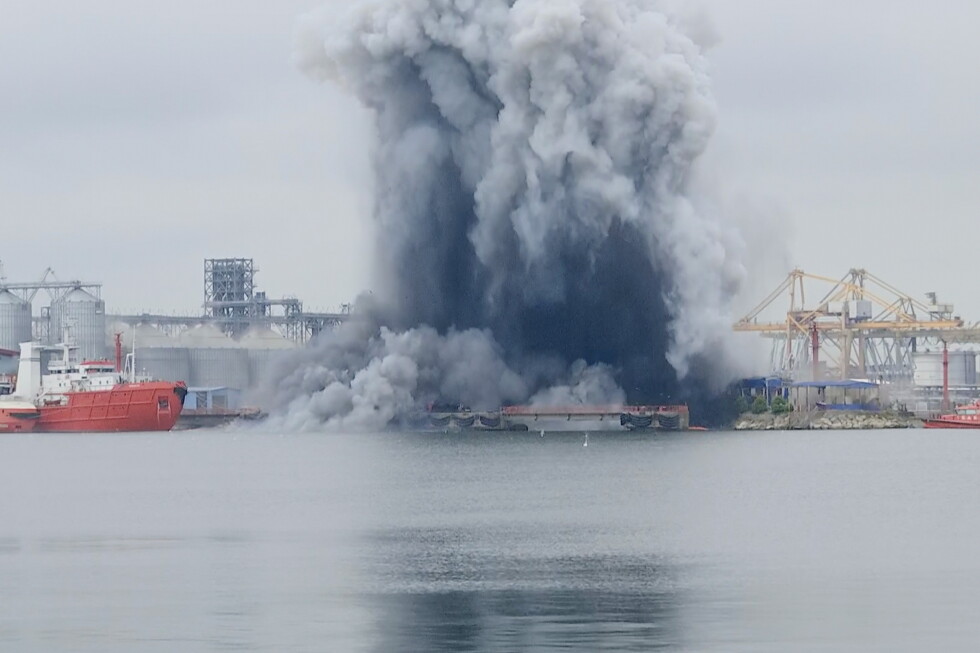
    An explosion rocked the Belgian city of Liège in the early hours of Monday, causing significant damage to a historic synagogue. The blast occurred at approximately 04:00 local time directly in front of the religious building, shattering windows across the street though fortunately resulting in no injuries.

    Local authorities have characterized the incident as a deliberate antisemitic attack. Liège Mayor Willy Demeyer immediately condemned the explosion as targeting the Jewish community, while Prime Minister Bart De Wever expressed solidarity through social media, stating: “Antisemitism is an attack on our values and our society, and we must combat it unequivocally.”

    The Belgian federal prosecutor’s office, which handles terrorism and organized crime cases, has assumed leadership of the investigation. Police established an extensive security perimeter around the site, closing the street throughout Monday morning as forensic experts examined evidence including scorch marks and debris visible in photographs from the scene.

    Local residents reported being awakened by the powerful blast that shook nearby buildings. One woman residing close to the synagogue told RTBF public broadcaster that she initially mistook the explosion for a gas-related incident.

    Interior Minister Bernard Quintin denounced what he called a “despicable antisemitic act that directly targeted Belgium’s Jewish community.” He confirmed that security measures around Jewish institutions would remain heightened, noting that security services had already been on high alert due to concerns about potential threats motivated by the ongoing conflict in the Middle East.

    The Liège synagogue, constructed in 1899, additionally functions as a museum documenting the history of the city’s Jewish community according to its website. This incident follows recent security concerns in Belgium, including the October arrest of three individuals suspected of plotting a jihadist-inspired drone attack against Prime Minister De Wever and other politicians.

  • Belgium describes a blast near a synagogue as a ‘despicable antisemitic attack’

    Belgium describes a blast near a synagogue as a ‘despicable antisemitic attack’

    BRUSSELS — Belgian authorities have launched a federal investigation into an explosive device detonated outside a synagogue in Liege during the early hours of Monday, which Interior Minister Bernard Quintin explicitly condemned as a “despicable antisemitic act.

    The incident occurred in eastern Belgium’s city of Liege, where local police confirmed the blast resulted in structural damage to a building adjacent to the synagogue, shattering windows but causing no injuries. Security personnel immediately cordoned off the affected area for forensic examination.

    In an official statement via social media platform X, Minister Quintin asserted that the attack “directly targeted the Jewish community of Belgium” and pledged enhanced security measures around Jewish institutions nationwide. Notably, Belgian officials made no connection between the explosion and the ongoing U.S.-Israel military operations against Iran.

    The incident coincides with heightened security alerts across multiple European nations including France and Germany, which have announced reinforced protective measures for sensitive locations. While these countries acknowledge increased vigilance in response to Middle Eastern hostilities, they maintain no direct military involvement in the conflict. Belgium’s Transport Ministry has separately called for intensified security protocols around the national railway infrastructure.

  • Ukrainian drone experts to share their knowledge in the Middle East

    Ukrainian drone experts to share their knowledge in the Middle East

    Ukrainian military specialists with extensive combat experience against unmanned aerial systems are preparing to transfer their hard-won knowledge to partners in the Middle East. This development comes as BBC Diplomatic Correspondent James Landale conducts field observations in Ukraine, documenting the nation’s rapidly evolving electronic warfare capabilities and drone interception systems.

    The knowledge exchange initiative represents a significant shift in global defense cooperation, positioning Ukraine as an unexpected exporter of cutting-edge battlefield countermeasures. Ukrainian forces have developed these capabilities under continuous aerial assault since Russia’s full-scale invasion, creating what experts describe as the most concentrated laboratory for drone warfare countermeasures in the world.

    The technology demonstration witnessed by international correspondents includes sophisticated electronic jamming systems, drone detection radar networks, and kinetic interception methods that have proven effective against various unmanned threats. This expertise transfer could potentially reshape regional security dynamics in the Middle East, where drone threats from state and non-state actors have become increasingly prevalent.

    Military analysts note that Ukraine’s real-world testing environment has accelerated anti-drone technology development at an unprecedented pace, creating practical solutions that surpass many theoretical approaches developed in conventional testing environments. The collaboration marks a new phase in international defense partnerships, with war-tested nations emerging as valuable sources of practical combat knowledge.

  • Merz’s party stumbles into a year of German state elections with a narrow defeat

    Merz’s party stumbles into a year of German state elections with a narrow defeat

    In a significant political upset, Germany’s environmentalist Green Party has clinched a narrow victory in the southwestern state of Baden-Württemberg, dealing a substantial blow to Chancellor Friedrich Merz’s Christian Democratic Union (CDU) in the first of several critical state elections this year. Despite initial predictions favoring the center-right CDU, final results revealed the Greens secured 30.2% of the vote, edging past the CDU’s 29.7%. This outcome marks a remarkable comeback for the Greens in Germany’s important industrial heartland, home to automotive giants Mercedes-Benz and Porsche. The victory was largely attributed to the campaign prowess of Cem Özdemir, a seasoned federal lawmaker and former agriculture minister, whose conservative-leaning approach resonated with voters in this traditionally right-leaning region. Meanwhile, the far-right Alternative for Germany (AfD) nearly doubled its support to 18.8%, reflecting its growing influence since last year’s national election. Chancellor Merz’s federal coalition partners, the Social Democrats, suffered an embarrassing collapse, obtaining merely 5.5% of the vote. Political analysts suggest the CDU’s defeat signals voter dissatisfaction with the federal government’s domestic performance, particularly regarding economic stagnation. The two parties are expected to continue their coalition governance in Baden-Württemberg, with Özdemir poised to become Germany’s first state governor of Turkish descent.

  • Glasgow building fire closes Scotland’s busiest train station and disrupts rail services

    Glasgow building fire closes Scotland’s busiest train station and disrupts rail services

    A catastrophic fire has paralyzed Scotland’s railway infrastructure after flames ravaged a historic building adjacent to Glasgow Central Station, the nation’s busiest transport hub. The inferno, which ignited Sunday within a vape shop on Union Street, consumed the four-story structure throughout the night, resulting in partial collapse of the 1851-era edifice.

    National Rail authorities confirmed the complete closure of Glasgow Central Station, warning of severe disruptions to all inbound, outbound, and transit services with no projected reopening timeline. Dramatic overnight footage captured the building’s dome-like roofing structure completely engulfed in flames before ultimately collapsing under the fire’s intensity.

    Despite the scale of destruction, Scottish Fire and Rescue Service officials reported no casualties in the incident. Emergency crews continued containment operations Monday as the blaze’s impact reverberated across Scotland’s transportation network, affecting countless commuters and regional travel connections. The incident represents one of the most significant urban fires in recent Glasgow history, both for its infrastructural impact and the loss of historic architecture.

  • Europe rallies around Cyprus during Iran war as Macron visits to show support for island

    Europe rallies around Cyprus during Iran war as Macron visits to show support for island

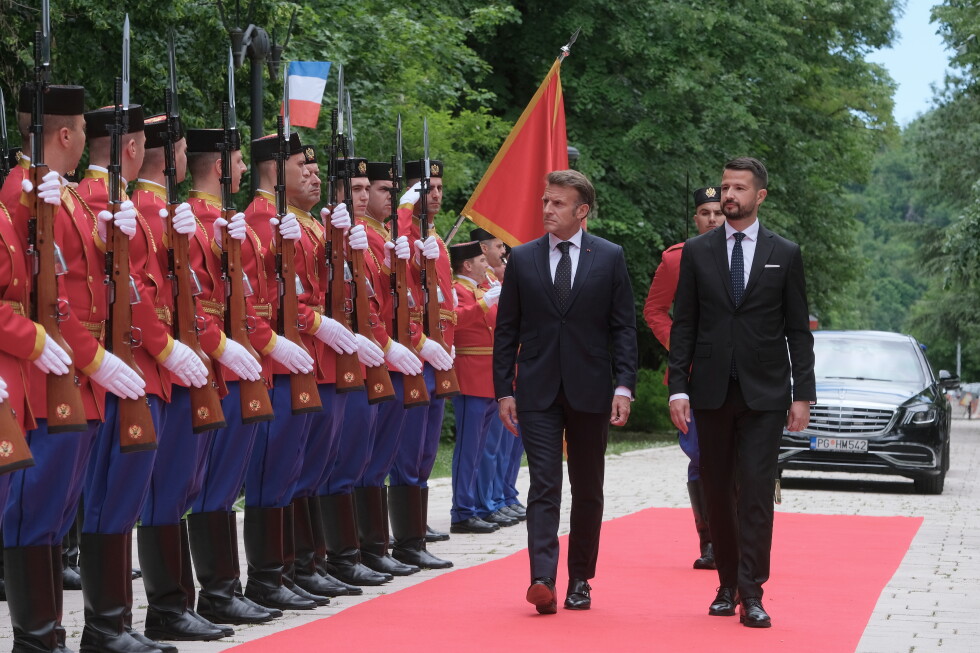
    French President Emmanuel Macron embarked on a diplomatic mission to Cyprus on Monday, following his decision to deploy advanced military assets to the Eastern Mediterranean. This strategic move comes in response to a recent Shahed drone attack on a British air base in Cyprus, marking the first such incident on European territory.

    The French frigate Languedoc has been dispatched to waters surrounding Cyprus to enhance the island nation’s anti-drone and anti-missile capabilities. Additionally, Macron has authorized the deployment of ground-based defense systems to further fortify Cyprus’ security. The nuclear-powered aircraft carrier Charles de Gaulle is expected to join these forces in the coming days.

    During his visit, Macron will convene with Cypriot President Nikos Christodoulides and Greek Prime Minister Kyriakos Mitsotakis at Cyprus’ primary air base, where four Greek F-16 fighter jets have been stationed. The leaders aim to strengthen regional security coordination among European partners.

    Macron has maintained active diplomatic engagement, including discussions with Iranian President Massoud Pezechkian on Sunday, urging restraint to prevent further escalation in the Middle East. Cypriot officials confirmed the intercepted drone originated from Lebanon, with speculation pointing to Hezbollah, Iran’s proxy group, as the likely perpetrator.

    Despite the military reinforcement, all parties have emphasized their commitment to preventing conflict expansion. Christodoulides has repeatedly stated that Cyprus will not participate in any military operations. The Lebanese government has condemned the attack and ordered security agencies to crack down on non-state groups conducting such operations.