标签: Europe

欧洲

  • ‘No dead ends’: What the Dutch can teach us about tackling youth unemployment

    ‘No dead ends’: What the Dutch can teach us about tackling youth unemployment

    A landmark recent report has laid bare a growing crisis across the United Kingdom: nearly one in eight 16 to 24-year-olds are classified as NEET – not in education, employment, or training – and that figure is projected to climb to one in six within five years without urgent systemic reform. That warning, delivered by former UK Health Secretary Alan Milburn, the report’s lead author, has opened a urgent national conversation: what structural changes can Britain make to reverse this worrying trend, and could the Netherlands – which boasts one of the world’s lowest NEET rates – hold the blueprint for success?

    The Netherlands’ youth education and employment policy is built around one simple, foundational philosophy: “no dead ends”. Every stage of a young person’s academic and professional journey is intentionally designed to lead to a next step, rather than leaving vulnerable young people adrift without support or options. This core principle shapes every layer of the nation’s system, starting with compulsory education: all children between 5 and 16 must attend school, and they are required to stay in education or training until they earn a recognized qualification or turn 18, regardless of their path.

    A central policy driving the Netherlands’ success is the kwalificatieplicht, or mandatory qualification requirement, which has cut national school dropout rates dramatically. At around age 12, Dutch students are sorted into one of three secondary education tracks based on primary school performance and teacher input: the practical VMBO track that feeds directly into vocational training, the mid-tier HAVO that prepares students for applied science universities, and the academic VWO track for students bound for traditional research universities. While early streaming remains controversial, with critics arguing it can harm vulnerable students’ confidence and limit social mobility, the system is built to accommodate flexible switches between tracks, eliminating permanent dead ends for young people who change their goals or outgrow their initial placement.

    Compare this framework to the fragmented system across the UK. While all young people can leave school at 16, rules for post-16 participation vary drastically by nation. England requires young people to stay in education or training until 18, whether through full-time study, an apprenticeship, or part-time learning alongside work. Scotland, Wales, and Northern Ireland have no equivalent legal mandate, even as public bodies encourage continued participation. This uneven structure leaves gaps that can push disconnected young people into NEET status.

    The human impact of the Dutch “no dead ends” model is clear in the experience of Amelie, a 20-year-old trainee teaching assistant from The Hague. Assigned to the vocational VMBO track at age 10, Amelie initially saw her confidence shaken by the stigma attached to non-academic paths. By age 12, when she began exploring hands-on training options, she regained optimism, but still hit a setback when she struggled to find an internship and left her fashion course at 17. After six months of working and traveling, she faced a crossroads: if she had lived in the UK, dropping out of education entirely would have been a legal option, and she might have taken it. But under Dutch law, she could not leave education without a qualifying credential, so she was pushed to find a new path.

    Amelie ultimately enrolled in the beroepsbegeleidende leerweg, the Dutch vocational training pathway that lets students over 16 combine part-time coursework – just one to two days per week – with paid part-time work in their chosen field. The Dutch system integrates employers deeply: businesses can partner with colleges to create custom training programs tailored to their staffing needs, and vocational graduates in high-demand trades often find multiple job offers waiting for them upon completion. Asja van der Helm, a secondary school teacher in The Hague, explains that the system frames skilled trades as valuable, aspirational careers: with electricians, carpenters, and technicians earning strong salaries and facing constant labor demand, young people can see clear, rewarding paths forward rather than viewing vocational training as a consolation prize.

    For young people who struggle to fit into formal pathways, the Netherlands has built a layered, proactive safety net to prevent disengagement. State funding allocated to schools for student health and well-being can be used to partner with specialist external organizations that support at-risk youth. One such group is Mooi Jong, a Hague-based non-profit that works with students referred by schools who face a high risk of dropping out and becoming NEET. Founder Alexander Koppelle describes the system as a web: every potential exit point for a struggling young person has a backup intervention, another organization, and another chance to stay engaged. Schools track every absence, intervene early for repeated lateness, and activate support before a young person drops out entirely. Even students who need to step back for mental health reasons remain connected: they are classified as thuis zitters (home-stayers), and schools retain their funding to pay for external support while they wait for specialized care. Unjustified truancy triggers progressive sanctions, from fines to community service, but the system prioritizes re-engagement over punishment.

    Migration to the Netherlands from low-opportunity regions further highlights the model’s strengths. Destiny, who moved to the Netherlands from the Caribbean island of Bonaire, found a clear path through a beauty therapy course, which turned an internship into paid full-time work at a local salon. Her seamless transition from education to full-time work is exactly what Dutch policymakers aim to achieve: keeping young people connected to opportunity before they become disconnected from the workforce entirely. For unemployed young people who do fall out of education, the government operates a one-stop support service through the Dutch Employee Insurance Agency (UWV), which administers benefits, connects job seekers with employers, and provides tailored guidance to help young people return to work or training.

    Even with these successful structures, the Dutch model is not perfect: youth unemployment has begun to rise in recent years, and policymakers continue to tweak the system to address emerging gaps. Still, national data tells a clear story: just 4.9% of 18 to 24-year-olds in the Netherlands are NEET, compared to 15.1% in the UK. That gap has led Milburn and other experts to argue that British policymakers have much to learn from the Dutch approach. For Amelie, who now trains to become a teaching assistant to support other young people facing the same challenges she overcame, the model’s greatest strength is its flexibility and its refusal to write off any young person. “Without the option to change path along the way, I would have dropped out altogether,” she says. For the UK, that lesson could be the key to reversing its growing NEET crisis.
  • Spain’s visitor numbers hit new highs as tourists avoid Middle East

    Spain’s visitor numbers hit new highs as tourists avoid Middle East

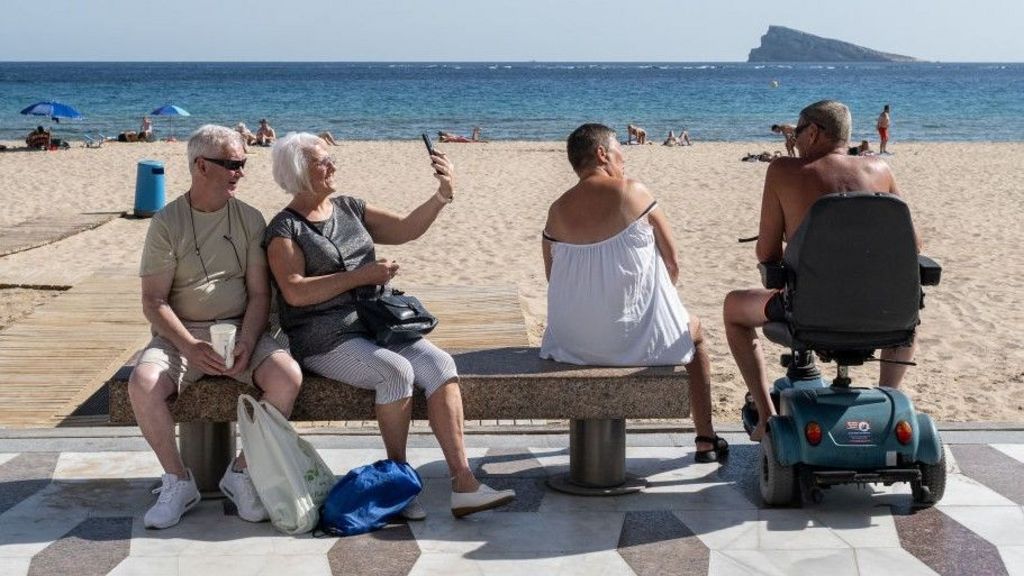
    Standing on a sun-drenched hotel rooftop in Benidorm, Fede Fuster, president of the city’s local tourism association, gazes out over a skyline of high-rises stretching toward the iconic sweeping Mediterranean coastline. A third-generation tourism industry leader – his family was among the first to build a hotel here in the 1950s – Fuster says of the resort, “With all its virtues and its defects this is a place we feel proud of. It’s a place of opportunities.”

    Benidorm, a permanent home to just 77,000 residents, regularly swells to five times that population at the peak of summer, making it one of Spain’s most valuable coastal tourism hubs. Like destinations across the country, it has staged a remarkable comeback since the Covid-19 pandemic left resorts empty and the national tourism industry at a complete standstill. Since borders reopened, annual international visitor arrivals have broken records year after year, hitting 97 million in 2025. Today, Spain ranks as the world’s second most popular tourist destination, trailing only France, and industry leaders are gearing up for an even stronger 2026.

    Fuster is bullish on the coming year, predicting Spain will hit the historic milestone of 100 million international visitors and claim the top global ranking before long. What was originally projected to be a year of modest growth has been boosted by an unexpected tailwind: escalating geopolitical tensions between the U.S.-Israeli coalition and Iran have driven holidaymakers away from traditional Middle Eastern and Eastern Mediterranean destinations, turning Spain into a safe alternative. Fuster notes that this pattern is not new – demand for Spanish holidays jumped during the 2011 Arab Spring uprisings – though he emphasizes he would rather compete on equal footing than gain market share from global instability.

    Francisco Femenia-Serra, a geography lecturer at Madrid’s Complutense University, explains that the safety dividend reshapes tourist flows across the region. “In these moments of crisis, of military strikes or wars, the bookings always increase,” he says, adding that price-sensitive travelers who would normally visit lower-cost destinations like Turkey or Egypt are now diverting to Spain. Official national visitor data backs this up: Spain welcomed 9.1 million international travelers in April 2026, a new all-time high for the month, representing a 5.2% increase (450,000 additional visitors) over April 2025. By contrast, Dubai International Airport reported a 66% drop in passenger numbers in March 2026, as flight cancellations and canceled bookings hammered the emirate’s travel sector in the wake of escalating tensions.

    For Spain’s national economy, the tourism boom could not come at a better time: the sector directly contributes 13% of national GDP, and has driven overall economic growth that has outpaced major European peers including France, Germany, Italy and the United Kingdom in recent years. But despite the record-breaking numbers, two major threats loom on the horizon that could undermine the industry’s momentum. The first is a global risk: rising fuel costs that could push up airfares and discourage Europeans from taking international holidays. The second is a growing domestic crisis: rising public anger among local residents over the negative impacts of mass tourism on daily life.

    Public opinion has shifted dramatically over the past decade. “Tourism was always accepted as a positive economic sector for Spain,” says Femenia-Serra. “That changed from 2016, 2017, with the label of over-tourism being put on some cities, like Barcelona. And now, most young Spaniards under 45 have a different image of tourism. They see it as a sector that obviously has a positive impact but also some negative outcomes in their lives.”

    Since 2024, summer protests against excessive visitor numbers have spread across popular tourist destinations, from Mediterranean coastal hubs to the Balearic and Canary Islands. A 2024 Europe-wide YouGov poll found that 28% of Spaniards hold a negative view of foreign tourism – the highest share of any European country by a wide margin – and two-thirds of respondents sympathized with anti-over-tourism protests.

    Local grievances center on three core issues: chronic congestion in city centers, increased environmental strain, and most critically, the role of short-term tourist accommodation in worsening Spain’s ongoing housing affordability crisis. In recent weeks, a new wave of protests has targeted soaring residential rents, with tourism repeatedly singled out as a key driver of the problem.

    In a central Valencia bookshop, members of the local tenants’ union Sindicat de Llogateres gather regularly to help local residents navigate rental disputes. Many attendees have faced sharp rent hikes when their contracts come up for renewal, as landlords increasingly pivot to higher-yield short-term tourist stays. “When it comes to renewing rental contracts, the owners of properties no longer think about setting rents according to local salaries, but rather the salaries of people visiting from abroad, which might be three or four times higher,” says union representative Jordi Vila. “So local people end up getting pushed out of their homes.”

    Vila points to Barcelona as the clearest example of this displacement, describing the city’s historic center as “a kind of theme park” where the proliferation of short-term tourist rentals has pushed long-term residents out to suburban areas. Even in smaller, northern destinations like Asturias, anger has boiled over into direct action: graffiti targeting holiday rental properties has appeared in recent days, bearing the slogan “Your business, our ruin.”

    Both national and local governments have moved to address public anger, implementing new rules to curb the growth of unregulated short-term accommodation. In 2025, Prime Minister Pedro Sánchez’s left-wing coalition government warned that “there are too many Airbnbs and not enough homes,” and later fined the short-term rental platform €65 million ($75.5 million) for advertising unlicensed properties. Local authorities have gone further: many city councils have halted the issuance of new permits for tourist apartments, and Barcelona has announced plans to revoke licenses for all 10,000 of its existing short-term rental units by 2028, while doubling the city’s tourist tax to €8 for short-stay cruise ship visitors.

    While tenant activists and protest groups have welcomed these measures, they say far more action is needed to protect local communities. But the tourism industry has pushed back against aggressive regulation. Exceltur, Spain’s leading national tourism industry association, has called for “the reparation of the links between the tourism sector and local residents,” warning that overly strict rules will harm both jobs and economic growth. The short-term rental sector has cited a PwC analysis of Barcelona’s license revocation plan, which warns the policy could erode the city’s tourism competitiveness and lead to the loss of thousands of local jobs.

    Femenia-Serra notes that policymakers are still struggling to find a balanced solution that addresses local grievances without damaging the critical tourism economy. “We have measures that try to alleviate the impact that tourism has and that try to distribute tourists in cities in a different way,” he says. “But we still haven’t seen a single measure that is effective in reducing the number of tourists.”

    Back in Benidorm, as Fuster prepares for what is projected to be another record-breaking summer, he acknowledges the legitimacy of local discontent and says the industry must adapt to retain social license. “We say we are the industry of happiness,” he says. “But we also have to realise that we impact the normal life of citizens. The way we welcome people and we care about them and our happiness, the way we live, I think that’s something the tourist really appreciates – that’s the key. That’s why we have to work a lot in these places, mostly in cities, where there is a feeling of not welcoming tourists. It’s very important for us because if we lose that, we’re dead.” To Fuster, making visitors feel welcome while respecting the needs of local communities is not just a social good – it is the foundation of the industry’s long-term survival.

  • Denmark says soccer star Christian Eriksen ‘conscious’ after collapsing on field again in match

    Denmark says soccer star Christian Eriksen ‘conscious’ after collapsing on field again in match

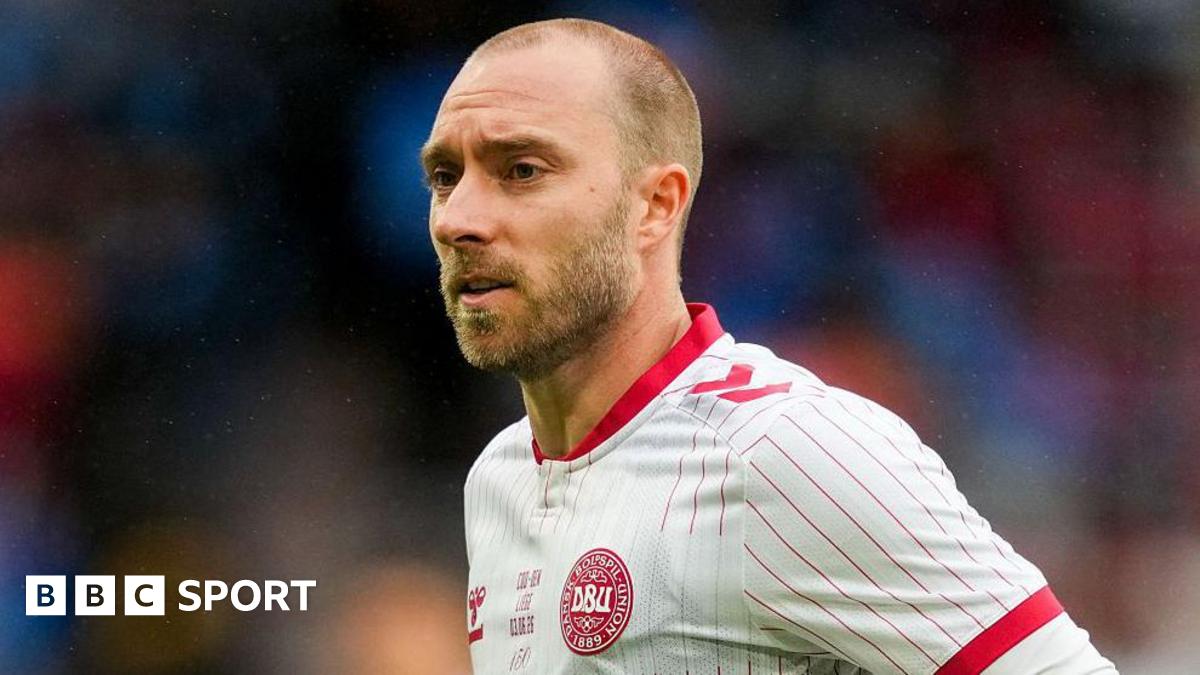
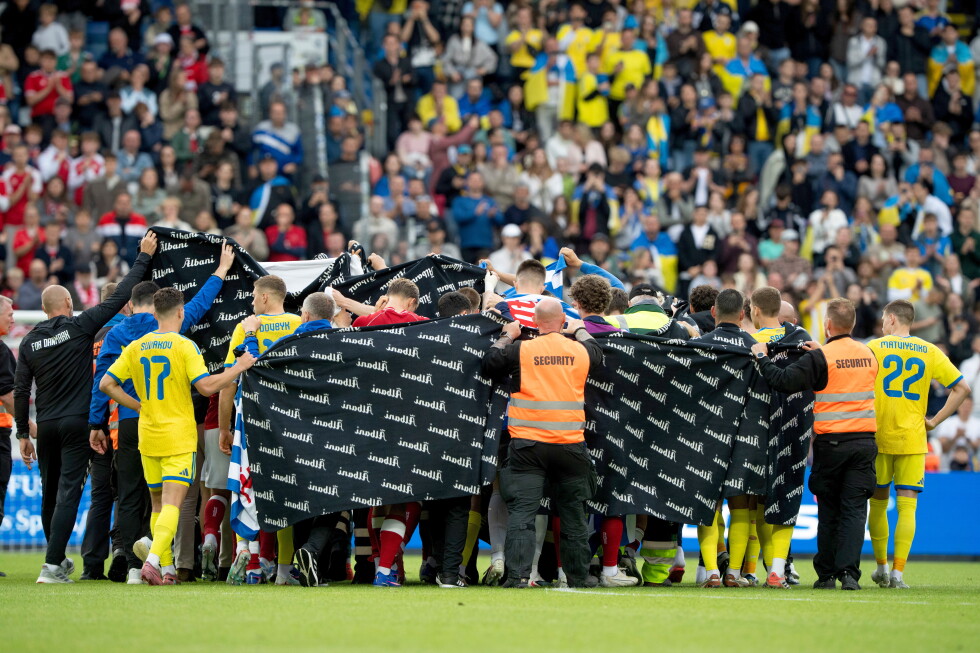
    ODENSE, Denmark — A frightening echo of a 2021 medical emergency unfolded at Odense’s Nature Energy Park on Sunday, as Danish soccer star Christian Eriksen collapsed for the second time on an international pitch during a friendly fixture against Ukraine, leaving the global soccer community holding its breath. The 34-year-old midfielder, who already survived a life-threatening cardiac arrest at the 2020 European Championships, was seen clutching his chest with both hands during an off-the-ball play in the 65th minute of the match. Moments later, he fell to the turf, immediately surrounded by concerned teammates and opponents, with Ukraine’s coaching staff rushing to flag for medical support.

    The Danish Football Association confirmed in an update posted to X shortly after the incident that Eriksen remained conscious and was in stable condition given the circumstances. In a more detailed statement released 10 minutes after the initial alert, Denmark team physician Morten Boesen shared that the player had left the playing field on his own power, and that the pacemaker he has relied on since 2021 was functioning as intended. “He was briefly unconscious, but he regained consciousness very quickly, and we were able to establish contact with him right away,” Boesen explained. “He is now heading to hospital for extensive testing to identify what triggered this latest incident. We are maintaining constant communication with Christian and the hospital’s medical team, and he asked me to pass along a message to all his teammates: he is okay.”

    The referee officially abandoned the match in the 79th minute, when Denmark held a 2-1 lead, following consultations with both national team coaching staff and player groups. As Eriksen received on-site treatment, the stadium fell silent at first before a steady, loud chant of “Eriksen, Eriksen” rose from the stands to support the fan favorite. After the match was called off, players from both Denmark and Ukraine formed a collective circle around the two head coaches in one half of the pitch to discuss the situation, before both squads walked a lap of the field to acknowledge the crowd’s support, with several players visibly emotional.

    Sunday’s incident brings back traumatic memories of Eriksen’s first on-field collapse, which shocked global soccer during Denmark’s opening Euro 2021 group stage match against Finland in Copenhagen. At that time, Eriksen was clinically dead for five minutes before prompt emergency medical intervention saved his life. After being fitted with an implantable cardioverter defibrillator, the midfielder made a remarkable return to professional soccer just 259 days later. He went on to play for English clubs Brentford and Manchester United before signing with German side VfL Wolfsburg in 2025, where he is under contract through the 2026-27 season. Neither Denmark nor Ukraine have secured qualification for the upcoming 2026 FIFA World Cup.

  • Eriksen conscious after collapsing in Denmark game

    Eriksen conscious after collapsing in Denmark game

    In a shocking incident that has sent ripples through the global football community, Danish midfielder Christian Eriksen collapsed during a friendly international match against Ukraine, before quickly regaining consciousness and leaving the pitch under his own power, Denmark’s Football Association has confirmed.

    The 34-year-old experienced the medical event in the 65th minute of the contest, forcing officials to pause play before ultimately calling off the match entirely. This is not the first high-profile cardiac scare for Eriksen, who suffered a life-threatening cardiac arrest on the pitch during Denmark’s Euro 2020 group stage match against Finland in 2021. Following that incident, Eriksen was fitted with an Implantable Cardioverter Defibrillator (ICD), a small pacemaker-like device designed to correct life-threatening abnormal heart rhythms.

    Speaking after the incident, Morten Boesen, the Danish national team’s chief doctor, reassured fans that Eriksen is in stable condition. “Christian is doing well and walked off the pitch by himself,” Boesen stated. “As I see it, the pacemaker responded exactly as it was supposed to. He was briefly unconscious, but regained consciousness very quickly, and we were quickly able to communicate with him. He will now undergo further examinations at the hospital to identify what triggered this latest episode.”

    The ICD implantation allowed Eriksen to make a widely celebrated “miracle” return to professional football in 2022, eight months after his 2021 cardiac arrest. He signed with Brentford to restart his club career, before spending three seasons with Manchester United. Last summer, Eriksen made the move to German Bundesliga side Wolfsburg, where he turned out 34 times for the club through the 2025-26 season. Wednesday’s incident came during what was supposed to be his 151st appearance for the Danish national team.

    Boesen added that team officials remain in constant contact with Eriksen and the hospital team overseeing his care, and that the midfielder has already reached out to reassure his teammates. “But Christian is doing well, and he asked me to send his regards to all the players and tell them that he was OK,” Boesen said. Further updates on Eriksen’s condition are expected as more information from his hospital assessments becomes available.

  • Zverev beats Cobolli in tense Paris final for first Grand Slam

    Zverev beats Cobolli in tense Paris final for first Grand Slam

    After three heartbreaks in major finals and years of near-misses, 29-year-old Alexander Zverev has fulfilled a lifetime of expectation, capturing his maiden Grand Slam singles title at the 2025 French Open with a tense 6-1 4-6 6-4 6-7(5-7) 6-1 victory over first-time finalist Flavio Cobolli on Parisian clay. The landmark win makes Zverev the first German man to lift a Grand Slam singles trophy since Boris Becker claimed the 1996 Australian Open, and ends a two-year streak of major titles being split exclusively between Carlos Alcaraz and Jannik Sinner.

    Entering the final as the overwhelming betting favorite following Sinner’s shocking second-round exit and Alcaraz’s injury-related withdrawal, Zverev carried the heavy weight of expectation into his fourth major championship match. The German got off to a blistering start, dropping just one game in the opening 35 minutes as his powerful baseline groundstrokes exploited a nervous Cobolli, who had never advanced past the French Open third round before this breakout tournament. When Cobolli settled into the match and snatched the second set with a late break of serve, Zverev quickly regained control, breaking the Italian in the tenth game of the third set to move two sets to one.

    The match’s dramatic turning point came in a chaotic fourth set that tested Zverev’s mental and physical stamina to breaking point. The second seed twice dropped his serve, coughed up a string of costly double faults, and required medical attention to treat cramping with electrolyte injections, forcing him to dig deep to stay in the contest. Serving for the set at 5-4, Cobolli failed to close out the win, then wasted his first set point on the tiebreak with a messy forehand volley error before bouncing back to force a deciding fifth set.

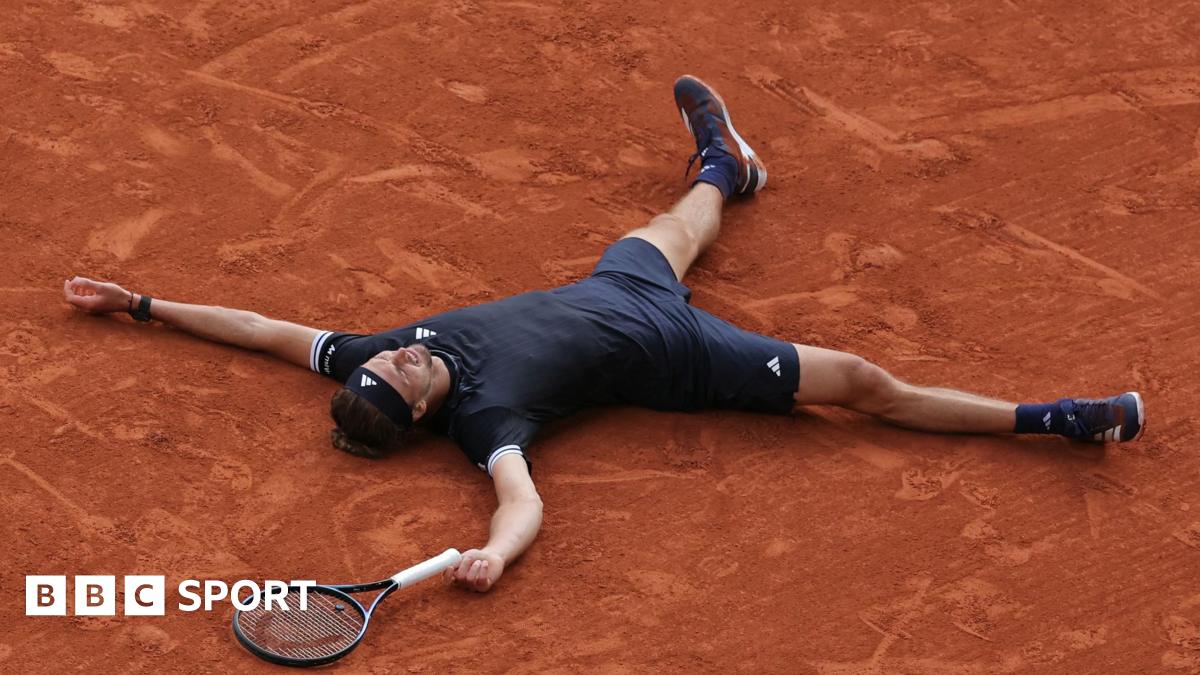
    Both players struggled with nerves in the decider, with the match swinging between thrilling baseline exchanges and tense, error-prone exchanges that left spectators on the edge of their seats. Zverev managed to limit his unforced errors just enough to grab an early double break, jumping out to a 3-0 lead as the 24-year-old Cobolli, playing in the biggest match of his career by far, ran out of competitive gas. When Cobolli sent a closing smash long on Zverev’s second match point, the German collapsed backwards onto the red clay, burying his face in his hands to release years of pent-up emotion after three previous final losses.

    Zverev’s path to tennis stardom was written nearly from birth. Born into a family of professional tennis players, he grew up touring alongside his older brother Mischa, a 2017 Australian Open quarterfinalist, and caught the attention of all-time great Roger Federer as a precocious teen talent. He has ranked consistently inside the world top 10 for nearly a decade, collecting dozens of top ATP Tour titles, but a Grand Slam win always eluded him: early in his career, he was blocked by the enduring dominance of the Big Three of Federer, Rafael Nadal, and Novak Djokovic, before the emergence of Sinner and Alcaraz created a new barrier to major glory. Technical flaws in his second serve and a tendency to play passively against top competition also derailed his previous runs, leaving many analysts questioning whether he would ever break through for his first major.

    For Cobolli, a former Roma football academy prospect who switched full-time to tennis as a youngster, the run to the French Open final marks a stunning breakthrough that few predicted. Despite the tough final loss, the 10th seed framed his run as just the opening chapter of his career, saying, “I started playing when I was young and I never expected this kind of result. Now that I’m here, I just want to make something special possible. For me, it’s not done, it’s only the start.” With a powerful baseline game, deft touch at the net, and elite athleticism, the Italian has already proven he can compete with the best of the men’s game, and his breakout performance in Paris signals the arrival of a new contender in men’s tennis.

  • Australia women and South Africa men win rugby sevens world series

    Australia women and South Africa men win rugby sevens world series

    The final leg of the World Rugby Sevens Series delivered a weekend of dramatic upsets, standout individual performances and historic triumphs at Stade Atlantique in Bordeaux, France, over the weekend.

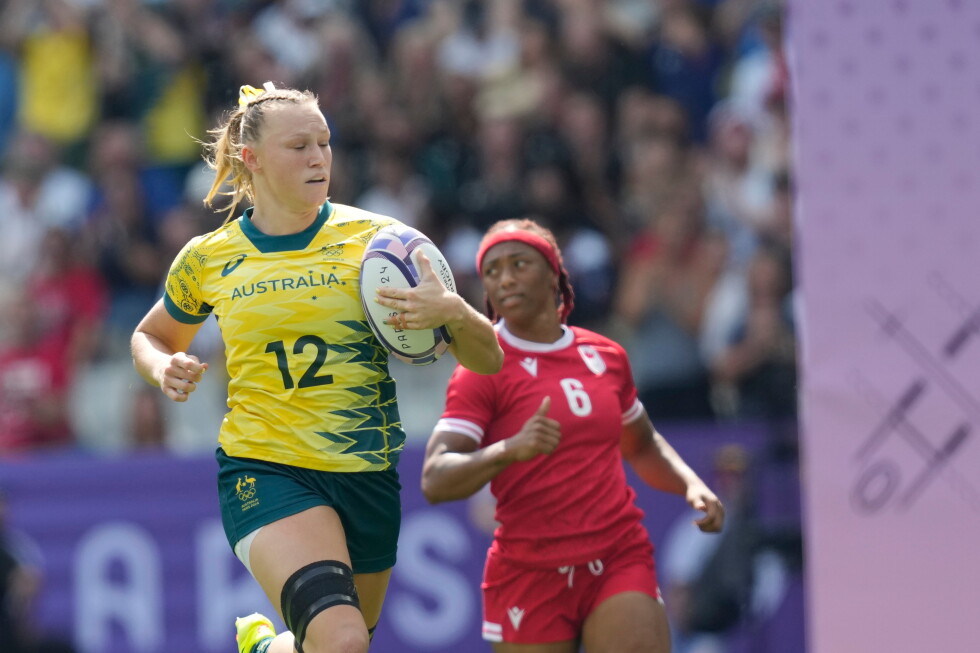
    In the women’s overall title decider, Australia produced a last-gasp turnaround to secure the crown, outlasting the season-long leading New Zealand Black Ferns 26-19 in a high-stakes final. Australian star winger Maddison Levi, who only returned to the pitch for the semifinals after sustaining a left knee injury the previous week in Valladolid, emerged as the match-winner. Levi crossed for two tries to push her season-leading try tally to 64, and delivered two game-changing try-saving tackles from behind on New Zealand’s Katelyn Vaha’akolo to defuse late Black Ferns momentum.

    Levi’s opening first-half try gave Australia a 14-7 halftime advantage. After Vaha’akolo cut Australia’s lead to just two points, tries from Faith Nathan and Levi sealed the victory for Australia, securing the side its fifth women’s World Rugby Sevens Series title across the 13 editions of the competition. New Zealand had dominated the entire regular season, but Australia won the final two legs of the three-stage championship decider to edge out the Black Ferns by four points in the overall standings.

    “It’s been our most consistent season,” Levi said after the match. “We’ve been in every single final. Even win or lose, we’re building as a program, we’re creating depth and trust. Going out there and beating a pretty amazing New Zealand side, they’re always tough, so it’s pretty awesome to help the girls.”

    In the men’s competition, South Africa’s Blitzboks retained their overall men’s World Rugby Sevens Series crown by reaching the semifinal stage, even though they failed to progress to the Bordeaux tournament final after falling to host nation France. France capitalized on their home advantage to make history, claiming their first home World Rugby Sevens tournament title in 21 years with a 14-5 final victory over New Zealand.

    The French side had fallen 21-26 to New Zealand in the pool stage two days earlier, but pulled off a stunning upset in front of a home crowd, with Celian Pouzelgues scoring the match-winning try with just 31 seconds left on the clock. Rayan Rebbadj kicked the conversion after France’s opening try, and the match remained tight through the second half: after Pouzelgues was sin-binned for a high tackle, New Zealand’s Jayden Keelan scored to pull the Kiwis ahead 7-5. A second Pouzelgues try was ruled out early in the second half, but France kept pressing, and when New Zealand playmaker Akuila Rokolisoa was yellow-carded for deliberately kicking the ball away after the final whistle, the host side broke through, with Pouzelgues slipping a tackle near the posts to score the decisive try.

    In the overall men’s standings, South Africa finished first, with New Zealand in second and Spain clinching a best-ever third place finish. Host France ended the tournament seventh overall. To cap off the weekend, World Rugby named South Africa’s Tristan Leyds the men’s World Rugby Sevens Player of the Year, while New Zealand’s Jorja Miller claimed the women’s award for the second consecutive season.

  • British deputy prime minister tells JD Vance he was wrong to blame immigration for teen’s murder

    British deputy prime minister tells JD Vance he was wrong to blame immigration for teen’s murder

    In a sharp diplomatic exchange that highlights growing transatlantic friction over migration rhetoric, Britain’s Deputy Prime Minister and Justice Secretary David Lammy has publicly confirmed he pushed back firmly against U.S. Vice President JD Vance last Saturday, telling Vance his claims tying the fatal stabbing of 18-year-old university student Henry Nowak to mass immigration were factually wrong.

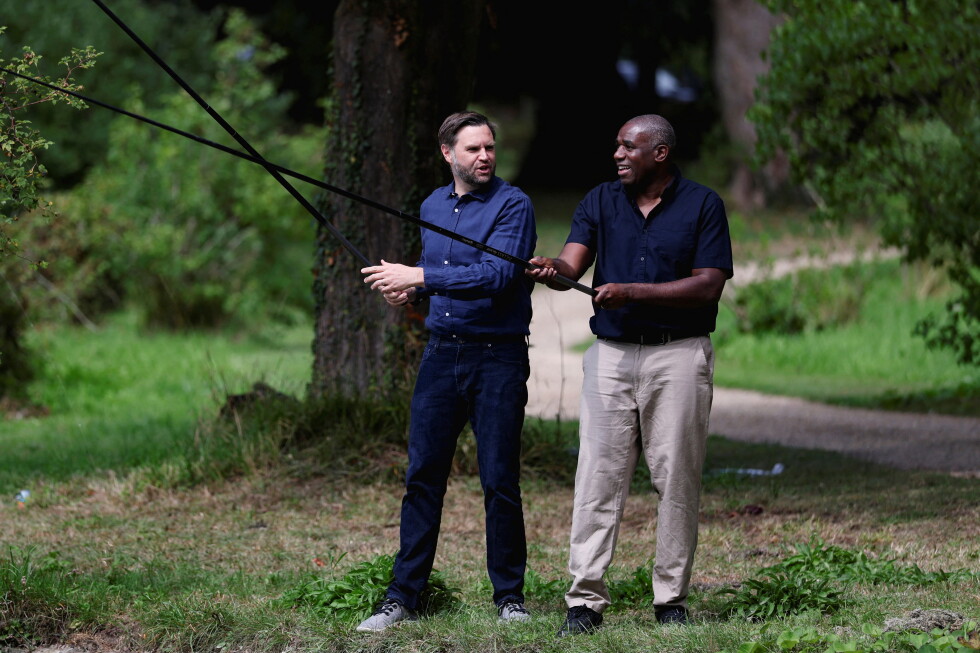
    The confrontation unfolded during what Lammy described as a “robust” but still cordial phone call between the two senior politicians. Despite sitting on opposite ends of the ideological spectrum, Lammy noted that he and Vance have built a personal friendship rooted in shared religious convictions and similar family backgrounds. “We had an agreeable conversation because we have got a relationship, but I wanted to make clear that I disagree with some of the facts that he was asserting and to present the facts to him,” Lammy explained in an interview with Sky News on Sunday.

    Vance’s controversial comments came one day before the call, when the U.S. vice president posted on social platform X claiming there should be “righteous anger” over Nowak’s December 2024 murder in Southampton, and implying the killing was partially a consequence of “the mass invasion of migrants, many of whom despise the West and the people who love it.”

    What Vance’s post failed to acknowledge, however, are core verified facts of the case that undermine the immigration connection: the convicted killer, 23-year-old Vickrum Digwa, is a British citizen who is already serving a life sentence for the crime, with a minimum 21-year term handed down by courts this week. Digwa, who is Sikh, used an 21-centimeter Sikh dagger to carry out the attack, and falsely told responding officers that Nowak — who was white — had assaulted him in a racist attack. This false claim led police to initially misidentify Nowak as the aggressor, leaving the wounded teen handcuffed and untreated as he lay dying. The Independent Office for Police Conduct, the UK’s independent police watchdog, has launched an ongoing probe into the officers’ actions on scene to determine if any misconduct occurred.

    Notably, even the victim’s own family has rejected efforts to politicize the tragedy. Mark Nowak, Henry’s father, has explicitly stated that the killing is not a matter of racism or religious division. He has said he wants his son’s death to spark action for safer public spaces, rather than being exploited to stoke “further division, hatred or tension.”

    Vance’s remarks are not an isolated incident: just days earlier, U.S. Secretary of Defense Pete Hegseth drew widespread criticism for invoking anti-immigration “invasion” rhetoric during a D-Day commemoration speech on French soil, marking another high-profile example of American conservative figures weighing in on European domestic political issues.

    Digwa’s conviction has already been seized upon by anti-immigration activists and far-right groups in the UK to advance their policy agendas. Tensions boiled over earlier this week in Southampton, when a far-right-led protest over the killing devolved into violent disorder: demonstrators pelted local police with chairs, aluminum cans, rocks and flares, and six additional people have since been charged by police in connection with the violence.

    Downing Street has already formally pushed back against Vance’s intervention. In a statement issued Friday, Prime Minister Keir Starmer’s office criticized outside actors “trying to interfere in our democracy and seeking to stir up division on our streets.”

    During his phone call with Vance, Lammy emphasized that the killing had no connection to mass migration whatsoever, and stressed that the killer was already in custody. Lammy added that he reminded Vance of the Nowak family’s explicit wishes, noting that the inflammatory tweet ran counter to the family’s request to avoid turning the tragedy into a tool for division. “It’s not helpful to tweet in this way, partly because of what the Nowak family have asked for, and reminded him about their desire not to make this an issue of division and hatred, but to make this an issue of common sense,” Lammy told Sky News.

  • Zelensky criticises ‘vile’ Chornobyl drone strike ahead of London talks

    Zelensky criticises ‘vile’ Chornobyl drone strike ahead of London talks

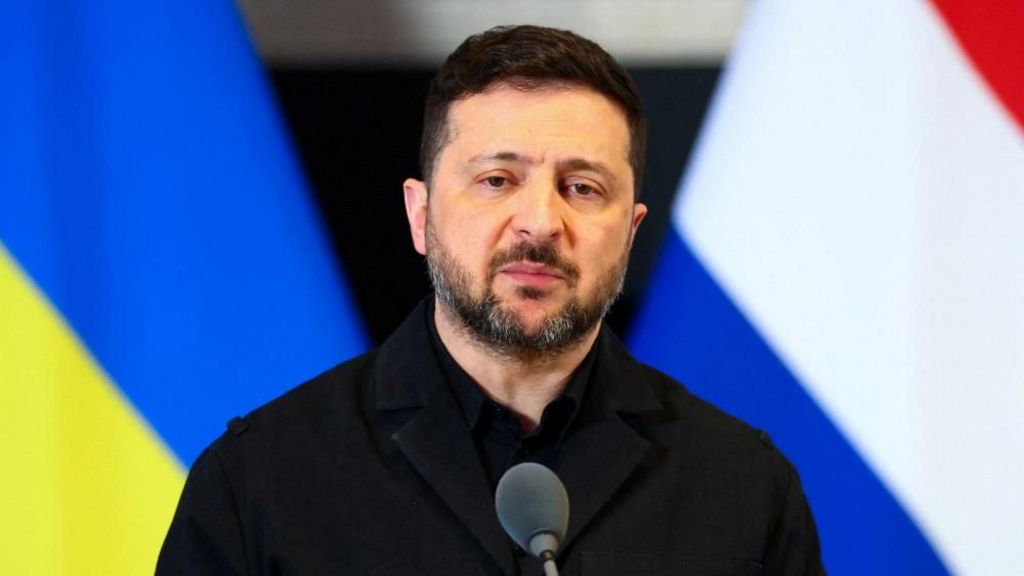
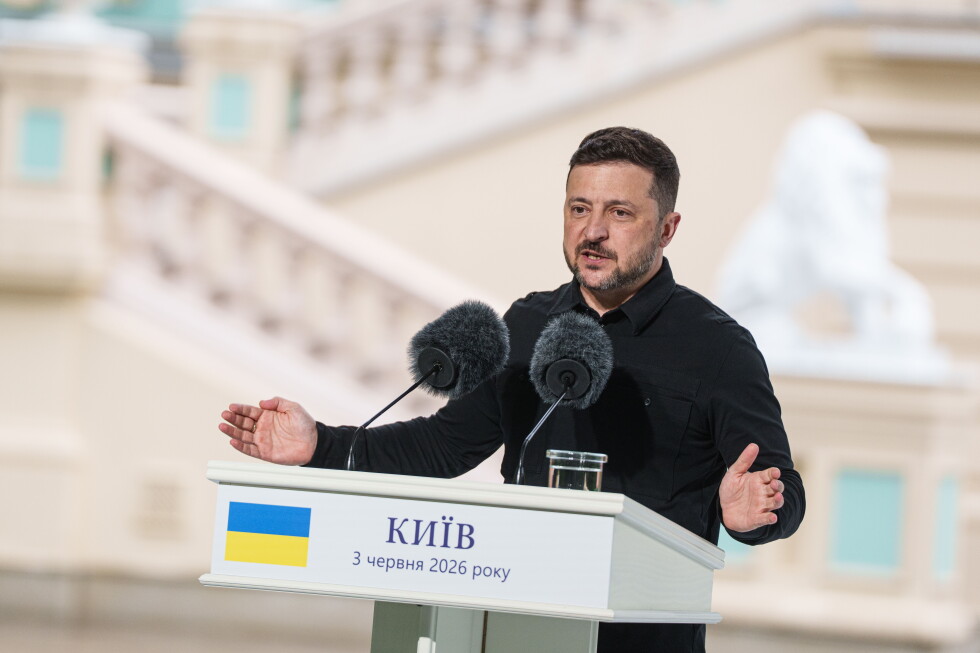
    On Sunday, UK Prime Minister Keir Starmer is set to host a high-stakes meeting at 10 Downing Street, bringing together Ukrainian President Volodymyr Zelensky, French President Emmanuel Macron, and German Chancellor Friedrich Merz to discuss continued European military and political support for Kyiv amid Russia’s ongoing full-scale invasion. The summit marks the second gathering of the three major European powers (known as the E3) with Zelensky since last December, as diplomatic momentum on the conflict shifts back to European capitals following the stall of U.S. mediation efforts.

    Hours before the leaders convened, Ukraine confirmed a new Russian drone attack on a spent nuclear fuel storage facility adjacent to the closed Chornobyl nuclear plant in northern Ukraine. Ukrainian state nuclear operator Energoatom reported that the strike partially damaged the storage building and sparked a fire that was quickly extinguished by emergency crews. No casualties were reported, and official monitoring confirmed radiation levels remain within normal, safe limits. Despite the lack of a radiological incident, both Energoatom and Zelensky condemned the attack as a deliberate violation of nuclear safety norms. Zelensky labeled the strike “vile” in a social media post, emphasizing that the targeted site qualifies as extremely critical energy infrastructure.

    The Chornobyl attack is part of a broader wave of Russian airstrikes across Ukraine that has intensified in recent days. In the southeastern region of Zaporizhzhia, local authorities reported that a separate Russian strike on a rural village killed at least three civilians, marking the second consecutive day of deadly attacks in the area—two civilians were also killed in Russian bombardments there on Saturday. Zelensky added context to the scale of recent Russian aggression, noting that over the past seven days, Moscow has launched 88 missiles, more than 3,200 drones, and 1,800 precision-guided bombs against targets across 13 Ukrainian regions.

    The latest exchange of cross-border strikes follows two consecutive Ukrainian drone attacks on the St. Petersburg region in Russia last week, timed to coincide with Putin’s flagship annual economic forum. Ukrainian strikes hit targets on the opening and final days of the event, with Russian authorities describing the second attack as “unprecedented.” The strikes, which reached more than 1,000 kilometers from Ukrainian territory, demonstrate how far Ukraine’s domestic defense industry has advanced since Russia’s 2022 invasion, allowing Kyiv to regularly strike deep within Russian borders.

    Sunday’s Downing Street meeting comes at a pivotal moment for Western support for Ukraine. The E3 group—comprising the UK, France, and Germany—remains among Kyiv’s most steadfast international backers. The UK and France currently lead the “coalition of the willing” initiative, which aims to craft binding security guarantees for Ukraine as a foundation for any future peace negotiation process. The last E3-Zelensky meeting was held in London last December, at a time when the United States was aggressively pushing for a rapid ceasefire deal between Moscow and Kyiv. Since that gathering, however, U.S. mediation efforts have stalled, and Washington’s foreign policy focus has shifted to escalating conflict in the Middle East.

    Diplomatic progress hit a new roadblock late last week, when Russian President Vladimir Putin rejected Zelensky’s public call for face-to-face peace negotiations. Speaking on the final day of the St. Petersburg economic forum, Putin argued that a ceasefire would only allow Ukraine to rebuild its military forces and strengthen its position for future combat, repeating his longstanding stance that Russia will only end its offensive once it achieves its stated territorial and political goals. In his open letter calling for direct talks, Zelensky had argued that it would be irresponsible for Ukraine to simply wait for the United States to refocus its attention on the war, signaling that Kyiv is looking to European allies to take a leading role in moving the peace process forward in the interim.

  • A raucous Copenhagen crowd cheers Denmark’s 2026 Mullet Championship

    A raucous Copenhagen crowd cheers Denmark’s 2026 Mullet Championship

    On a vibrant outdoor stage in the heart of Copenhagen, more than 1,000 cheering spectators packed together on Saturday to honor one of fashion’s most divisive yet enduring looks: the mullet. The iconic cut, defined by its sharp contrast of cropped strands at the front and flowing length at the back, took center stage at the 2026 Danish Mullet Championship, the fourth iteration of an event born from one enthusiast’s personal passion.

    The competition traces its roots back to organizer Steffen Stiw Weber, a 37-year-old electrician who launched the national contest after a hair transplant left him growing his own mullet. When Weber discovered he was ineligible to enter an existing mullet competition in the United States as a non-U.S. citizen, he took matters into his own hands. “I was like, OK, I have to do it on my own here in Denmark,” he recalled with a grin. For Weber, the celebration of the mullet fills a unique niche in modern digital culture: amid social media pressures to present polished, perfect appearances, the mullet stands out as a deliberate act of breaking the mold. “I think that’s why people have to stand out from the crowd,” he explained.

    Twelve carefully coiffed contestants stepped into the spotlight on Saturday, vying for the top title under the judging criteria that extended far beyond just the cut itself. Judges evaluated each competitor on style, originality, stage presence and what event organizers call “mullet moves” — the personal flair competitors bring to their on-stage showcase. Bobby Agren, a Copenhagen-based salon owner and one of the event’s judges, explained the ethos that guides the competition: “I like the finesse, the twist, the nostalgia. I like it if it looks ridiculous or maybe ugly in a beautiful way.” Each contestant got 60 seconds alone on the stage to show off their cut and their personality, leading to a lineup of over-the-top, memorable performances. The evening featured everything from beer-swilling theatrical bits and sharp body-popping dance routines to an impromptu live saxophone performance. One competitor even crafted their mullet to mimic the pattern of the Danish flag, drawing roars of approval from the crowd.

    The audience’s loud chants and cheers fueled the energy of every performer, with the crowd’s enthusiasm building with each routine. After each set, judges held up handwritten scorecards to tally points, building tension for the final announcement. When the scores were counted, 43-year-old construction worker Thomas Berg claimed the first-place title after a showstopping performance: clad in neon green athletic wear, he wowed judges by bouncing frantically on a trampoline mid-set, finishing off his mullet with a bright orange headband. After accepting his prize, Berg called the event what it is at its core: a lighthearted celebration of self-expression. “I think it’s just funny. It’s just a big party,” he said. “It’s just nice to be a bit outside the box.”

    While the mullet has experienced a sharp resurgence in global popularity in recent years, its history stretches back decades, even centuries. Though the style likely predates modern barbering as we know it, the Oxford English Dictionary credits iconic hip-hop group the Beastie Boys with popularizing the term “mullet” after they released their track “Mullet Head” on the 1994 album *Ill Communication*. The cut rose to mainstream popularity in the 1980s, embraced by professional ice hockey players and rock musicians alike, before falling out of mainstream fashion favor. Famously, fashion bible Vogue once labeled the mullet “history’s most divisive hairstyle.”

    The COVID-19 pandemic sparked a new wave of mullet enthusiasm around the world, when widespread salon closures left lockdown-weary people growing out their hair without professional trims. British culture magazine i-D even declared 2020 “the year of the mullet,” cementing the cut’s comeback. Today, mullet competitions are held across the globe, with Belgium hosting the European Mullet Cup just one month before the Danish event. For Agren, this cycle is nothing new for fashion trends. “It comes back every 20-30 years. There’s always a circular motion in fashion,” he noted, pointing to the mullet’s enduring ability to capture public attention decades after its first moment in the spotlight.

  • UK’s Starmer hosts Zelenskyy, Macron and Merz to discuss support for Ukraine

    UK’s Starmer hosts Zelenskyy, Macron and Merz to discuss support for Ukraine

    LONDON – A high-stakes diplomatic meeting focused on the future of Western backing for Ukraine is set to take place in the British capital this Sunday, where Prime Minister Keir Starmer will host senior leaders from Ukraine, France and Germany to coordinate ongoing support for Kyiv amid the grinding war with Russia.

    The summit brings together Ukrainian President Volodymyr Zelenskyy, French President Emmanuel Macron and newly installed German Chancellor Friedrich Merz, representing the E3 – Europe’s three most prominent heavyweight powers that have stood at the forefront of international support for Ukraine ever since Russia launched its full-scale invasion in February 2022. Both the United Kingdom and France currently lead the ‘coalition of the willing’ initiative, which works to deliver binding security guarantees for Ukraine as part of any future negotiated peace settlement.

    Sunday’s talks come on the heels of a major development on the battlefield: a large-scale Ukrainian drone assault that targeted Saint Petersburg, Russia’s second-largest city, highlighting Kyiv’s steadily improving capacity to strike targets deep within Russian territory. The attack, carried out on Saturday, left three people with minor injuries according to local governor Alexander Beglov, who urged residents across the city to remain indoors for their safety during the incident.

    The strike hit less than 24 hours after Saint Petersburg wrapped up its flagship annual economic forum, a event Russian President Vladimir Putin had used to frame the war in Ukraine as a distant conflict disconnected from everyday life in Russia. The assault delivered a public embarrassment for the Kremlin, undermining that narrative for both domestic and international audiences.

    This exchange of long-range strikes comes as the overall front line in the war remains largely deadlocked, with mass drone deployments blunting any large-scale territorial advances from either side. Both Moscow and Kyiv have increasingly turned to deep strike operations to gain a strategic advantage more than four years after Russia’s full-scale invasion began, with no clear diplomatic or military end to the conflict in sight.

    The meeting also follows a sharp rejection of diplomatic outreach from Putin, who turned down Zelenskyy’s recent public proposal for direct face-to-face negotiations in a neutral third country on Friday. Putin told reporters he saw “no point” in holding such talks at this time.

    Separately, fresh violence was reported on Sunday morning when a Russian strike on the Ukrainian town of Balabyne, located in the southern Zaporizhzhia region, killed three civilians and wounded one more as they waited at a local bus stop. Ivan Fedorov, head of the region’s military administration, confirmed the attack in a post on his official Telegram channel.

    This ongoing coverage of the Russia-Ukraine conflict is tracked by the Associated Press at https://apnews.com/hub/russia-ukraine.