标签: Europe

欧洲

  • Andreeva wins French Open as Chwalinska fairytale ends

    Andreeva wins French Open as Chwalinska fairytale ends

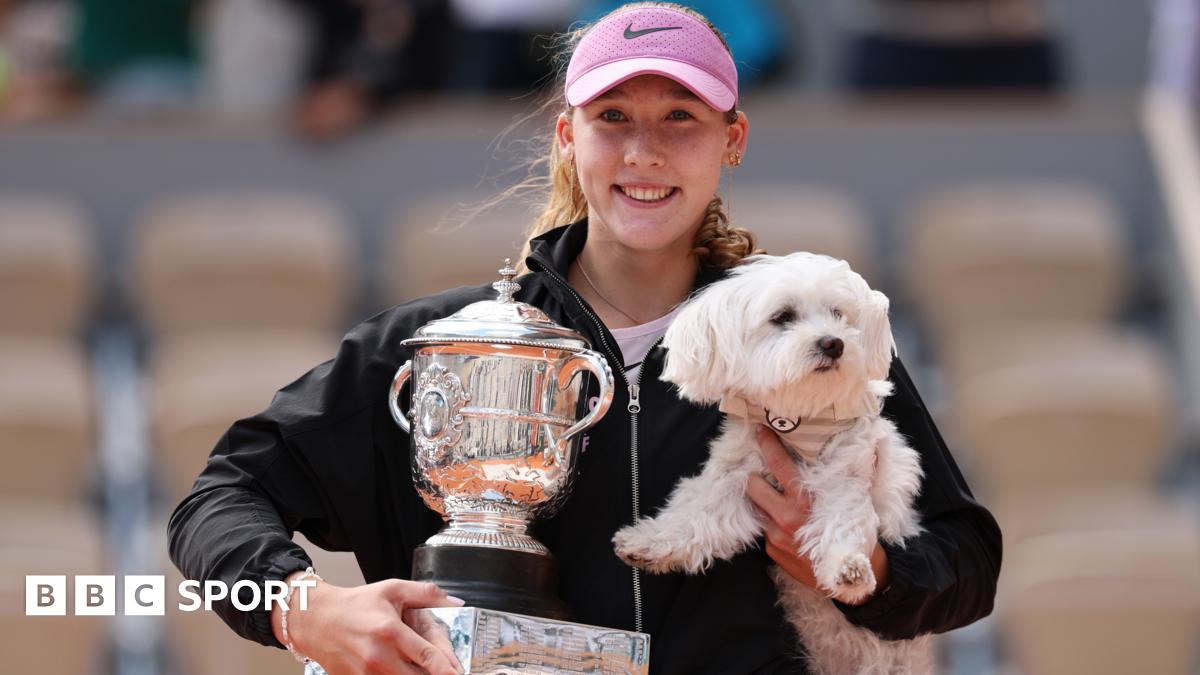
    Paris, France — Nineteen-year-old tennis prodigy Mirra Andreeva has secured her first career Grand Slam championship at the 2026 French Open, overpowering Polish qualifier Maja Chwalinska in a one-sided 6-3, 6-2 final that capped a fairytale fortnight for the young Russian star.

    Entering the tournament as the world No. 8 and a pre-event favorite, Andreeva delivered on the years of hype that have followed her since her breakout 2023 WTA Tour run in Madrid, where her bold playing style and natural talent drew high praise from former British world No. 1 Andy Murray. Her victory on Saturday makes her the youngest women’s singles champion at Roland Garros since Monica Seles claimed the title in 1992, and the first teenager to lift the Coupe Suzanne Lenglen since Iga Swiatek’s 2020 win.

    The final got off to a rocky, tense start: swirling Parisian wind and early nerves from both players produced four consecutive breaks of serve to open the match, with Chwalinska becoming the first to hold her serve, drawing roaring support from the 15,000-strong crowd packed into Court Philippe Chatrier. Thousands of Polish fans turned out to back the world No. 114, who entered the tournament as a 500-to-1 longshot to win the title.

    But once Andreeva found her rhythm, she dominated play. The 19-year-old reeled off nine consecutive games to build a commanding 6-3, 5-0 lead, and though she failed to close out the match on her first serve attempt, she converted her first championship point on Chwalinska’s serve with a clinical backhand winner. After the final point landed in, Andreeva collapsed to the clay in elation, before rushing to the player’s box to embrace her coach, Conchita Martinez — the 1994 Wimbledon singles champion who has guided Andreeva’s development for two years.

    “”I’ve been watching Roland Garros since I was very young and it has always been a dream to win this trophy,” Andreeva told the crowd in her on-court victory speech. She later thanked Martinez for “sharing her experiences and giving me so much advice” throughout their partnership, which has seen Andreeva climb from promising prospect to top-tier Grand Slam champion.

    Born in Siberia and trained in France, Andreeva has been steadily building toward this breakthrough for two years. She reached the Roland Garros semifinals in 2024, claimed two WTA 1000 titles in 2025, cracked the world’s top 5 in the rankings earlier this 2026, and showed new levels of maturity throughout this tournament — most notably in a politically charged semifinal against Ukrainian 15th seed Marta Kostyuk, where she kept her focus to secure a straight-sets win.

    For Chwalinska, the runner-up finish still marks one of the most incredible underdog runs in Grand Slam history. Only the second qualifier ever to reach a major singles final in the Open Era (following Great Britain’s Emma Raducanu, who won the 2021 US Open as a qualifier), Chwalinska entered the final having won nine consecutive matches to reach this stage.

    Before this tournament, Chwalinska had only successfully advanced through Grand Slam qualifying twice in 14 previous attempts, and spent most of her career competing on lower-level tours, struggling to cover travel and training costs. She even told reporters after her second-round win that she had worried she could not afford to extend her hotel stay in Paris.

    That financial stress is now firmly in the past: Chwalinska will take home 1.4 million euros in prize money from Roland Garros, tripling the total career earnings she accumulated before this fortnight. She will also rise to a new career-high ranking of No. 21 in the world next week, and is widely expected to receive a wildcard for the 2026 Wimbledon main draw.

    After the final, Chwalinska joked with reporters, “I wish you could see a better match today, but Mirra was too good for me, I guess it is her fault!” She added, “I will not forget these three weeks. Paris will stay forever with me in my heart.”

    With her first Grand Slam title in hand, Andreeva now carries her new momentum into the grass court season, with her eyes set on becoming the youngest player to win a second major title in nearly 15 years.
  • Scores of Ukrainian drones target St Petersburg in attack Russia calls ‘unprecedented’

    Scores of Ukrainian drones target St Petersburg in attack Russia calls ‘unprecedented’

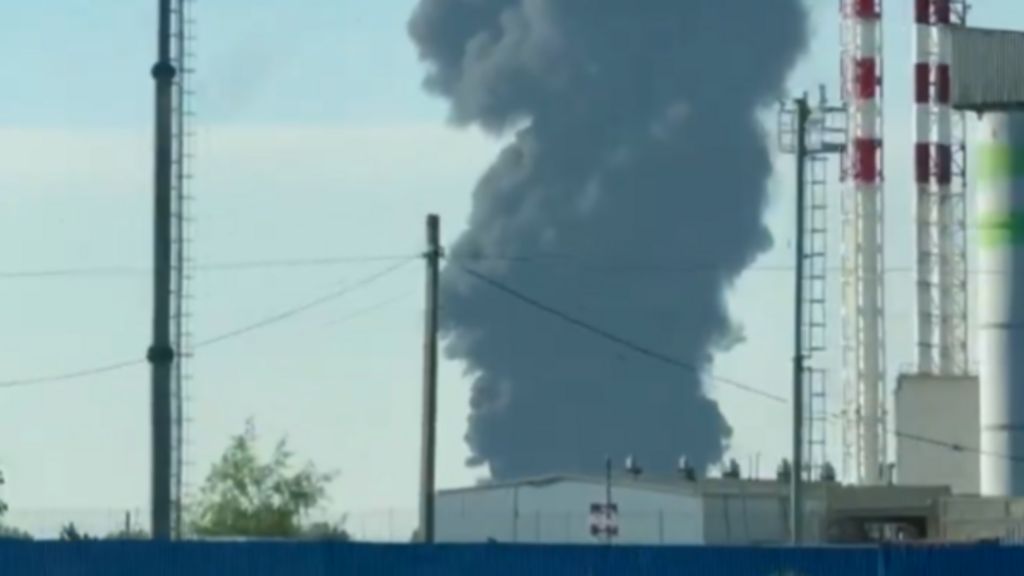
    In a dramatic escalation of the ongoing conflict that has gripped Eastern Europe since 2022, Ukraine launched what Russian authorities have labeled an “unprecedented attack” using drones targeting locations in and around St. Petersburg, timed to coincide with the final day of Russia’s flagship annual international economic forum. This major offensive came just 24 hours after Russian President Vladimir Putin rejected a long-awaited call for direct, face-to-face peace talks with Ukrainian President Volodymyr Zelenskyy, setting off a new cycle of military action amid stalled diplomatic efforts.

    Russian regional officials confirmed that more than 140 unmanned aerial vehicles were intercepted and shot down across the Leningrad Oblast, the administrative region surrounding St. Petersburg. In an extraordinary step not seen since the full-scale invasion began, St. Petersburg Governor Alexander Beglov issued an urgent order for all local residents to stay indoors throughout the attack, a directive that underscored the severity of the incursion deep into Russian territory.

    Shortly after the strikes, Zelenskyy confirmed the operation via a social media video post, framing the action as a proportional and just response to repeated Russian attacks on Ukrainian territory. He detailed that Ukrainian military forces targeted Russian weapons arsenals and a key Russian naval base located in Kronstadt, a strategically significant port just off the St. Petersburg coast. The drone sortie marked an extraordinary 1,000-kilometer deep strike into Russian heartland, demonstrating Ukraine’s expanding long-range strike capabilities. Zelenskyy added that a second target, an oil storage depot in Russia’s southern Krasnodar Krai, roughly 500 kilometers from the Ukrainian border, was also successfully hit in coordinated operations.

    The attack capped off three days of rapid diplomatic developments. On Thursday, Zelenskyy released an open letter formally calling for direct one-on-one negotiations with Putin to end the full-scale war Russia launched in February 2022. He argued that waiting for external intervention, specifically renewed focus from the United States, was a strategic mistake that only prolonged the conflict. A day later, during his keynote address at the St. Petersburg Economic Forum, Putin flatly rejected the overture. He reaffirmed Russia’s longstanding position that formal peace negotiations must precede any ceasefire agreement, and stated that Russia would only end military operations once all of its stated war goals had been achieved. Those goals, Moscow has repeatedly made clear, require Ukraine to cede full control of four partially occupied regions—Donetsk, Luhansk, Kherson, and Zaporizhzhia—and permanently abandon its bid to join the North Atlantic Treaty Organization.

    Alongside the strike on St. Petersburg, Ukrainian drone operations have intensified in Russian-occupied territories of Ukraine in recent weeks, specifically targeting Russian military logistics networks. In occupied Luhansk Oblast, the Moscow-installed puppet administration was forced to suspend intercity bus service along two major motorways, issuing a public warning for locals to avoid the routes “for security reasons” following a string of successful Ukrainian strikes. The administration also suspended regional commuter rail service and implemented a ban on group travel for minors across the occupied region. This disruption comes despite Putin’s prior claims that Russia holds full and complete control over the self-proclaimed “Luhansk People’s Republic.”

    Speaking to the BBC, one regional security analyst noted that the scale of Ukraine’s targeting campaign has been substantial: since the start of May, Ukrainian drones have destroyed or damaged more than 200 military cargo trucks and over 30 fuel tankers supporting Russian frontline operations, severely straining Russian supply lines in occupied areas.

  • Bernadette Chirac, formidable former first lady of France who built power of her own, dies at 93

    Bernadette Chirac, formidable former first lady of France who built power of her own, dies at 93

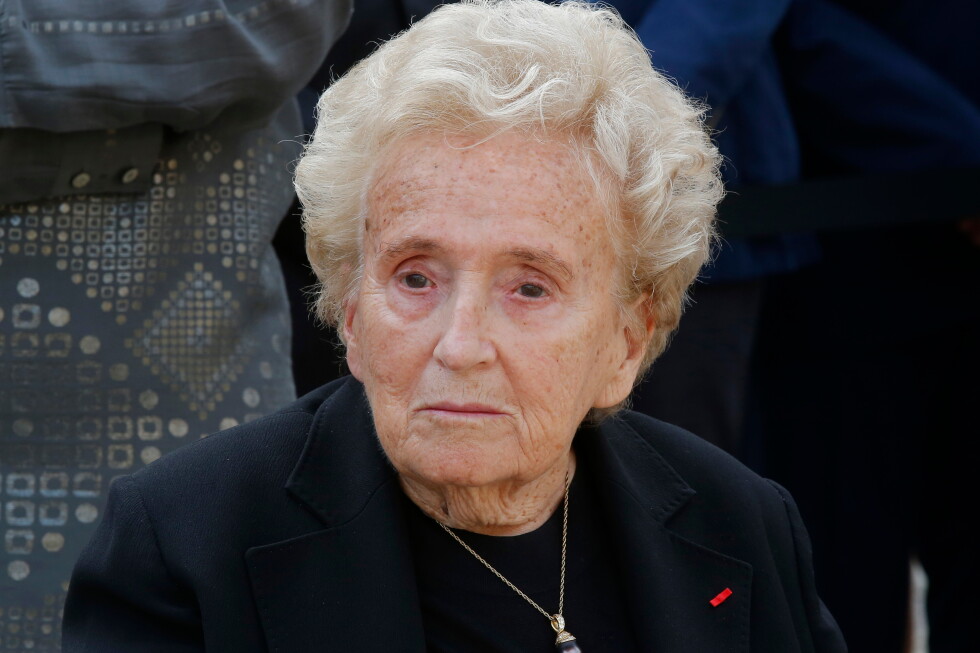
    PARIS – Bernadette Chirac, the unflappable, politically sharp former first lady of France who stood beside President Jacques Chirac throughout his 12-year tenure at the Élysée Palace from 1995 to 2007, has passed away at the age of 93. French President Emmanuel Macron confirmed her death on Saturday, noting that he and First Lady Brigitte Macron learned of her passing with “great sadness,” honoring her as a transformative figure in French history whose decades of charity work touched the lives of millions of citizens. “A great lady of the heart has departed,” Macron stated in his official tribute.

    For over half a century, Bernadette Chirac was the steady anchor of her husband’s decades-long political ascent, which saw him rise through parliamentary ranks, serve two terms as prime minister, hold 18 years as mayor of Paris, and ultimately claim the French presidency in 1995. Far from being limited to the largely ceremonial role of a presidential spouse, Bernadette built an independent political legacy of her own, earning widespread attention both for her quiet influence over her husband’s administration – and for her dry, unapologetic handling of his well-documented reputation as a womanizer, a topic she would later address with unusual candor.

    In 1998, when swarmed by photographers in the rural department of Corrèze amid rumors that Jacques Chirac had been unreachable the night of Princess Diana’s death because he was with a famous actress, Bernadette stepped out of her car and delivered a characteristically sharp quip: “Calm down. I’m not Claudia Cardinale. Or Lollobrigida.” The moment encapsulated the quick wit and unshakable poise that would define her public image for decades.

    To much of the French public, she was long known for her iconic, almost institutional public persona: perfectly coiffed blond hair, a structured handbag slung over her arm, an upright posture in every official photograph, paired with tailored Chanel suits, dark sunglasses, a distinct nasal tone, and biting, memorable judgments. But this popular caricature never captured the full scope of her ambition or skill: beneath the polished exterior was a relentless worker and shrewd political operator, one of the only spouses of French presidents to build an independent base of political power entirely her own.

    Born Bernadette Thérèse Marie Chodron de Courcel in Paris on May 18, 1933, she came from a privileged, devout Catholic family with deep roots in French public life: her paternal lineage included soldiers, industrialists, and diplomats, and one of her uncles served as an aide to Charles de Gaulle during wartime London. The turning point of her life came during her studies at the elite Sciences Po university in Paris, where she met Jacques Chirac, a charming, politically ambitious young man whose hunger for power would shape their shared life for decades.

    The couple married in March 1956, and their 63-year union was, in Bernadette’s own words, a lifelong lesson in endurance. While Jacques was famous for his easy warmth, charisma, and instinctive connection with voter crowds, political observers noted Bernadette’s strengths were far different: she was disciplined, socially formidable, devout, exacting, and often unforgettably witty. Catholic philosopher Jean Guitton once called her “the last queen of France,” a label she did little to push back against.

    Her husband’s well-known reputation as a womanizer was an open secret in French political circles, and after years of heartache, Bernadette chose to address it with characteristic dry humor. “At first, it was hard. I was very heartbroken, and then I got used to it,” she shared in a television documentary years later. “I told myself that was how things were and that I had to accept it with as much dignity as possible.”

    When she was sent to manage her husband’s rural political stronghold in Corrèze while he pursued power in Paris, she far exceeded expectations of merely maintaining the seat. She was elected municipal councilor of the small town of Sarran in 1971, won a seat as a general councilor for Corrèze in 1979, and held that position until 2015, building deep grassroots loyalty over four decades.

    Her influence grew exponentially after Jacques Chirac won the presidency in 1995. While the role of first lady in France holds no formal constitutional power, Bernadette turned her position at the Élysée into a space where her approval carried serious political weight. She was known for being unwaveringly loyal to allies, unforgiving to rivals, and deeply attuned to the unspoken dynamics of political life – understanding that electoral success depends as much on personal debts, grudges, and alliances as it does on speeches and opinion polls. In doing so, she carved out a space for legitimate female authority within a heavily male-dominated political culture that had long refused to share power, quietly refusing to be reduced to nothing more than “the wife of” the president. By 2023, her legacy and persona were prominent enough to inspire a major commercial film: the comedy *Bernadette*, focused on her years at the Élysée, starred legendary French actress Catherine Deneuve in the title role.

    Bernadette kept her deepest personal grief largely private from the public eye. The Chiracs’ elder daughter, Laurence, developed severe anorexia after contracting meningitis as a teenager, survived multiple suicide attempts, never fully recovered her health, and died in 2016 at the age of 58. This devastating personal experience led Bernadette to the charity work that would eventually redefine her public image. In 1994, she took leadership of a medical charity that collected loose change to support children receiving care in French hospitals. Over the next 25 years, she transformed the organization and became the public face of pediatric hospital care, endearing herself to millions of French families who had previously seen her as aloof. She led the charity until 2019, when she handed over leadership to Brigitte Macron, becoming honorary president of the organization.

    Long before her retirement from public life, Bernadette had firmly established herself as a political force in her own right. “My husband no longer does politics, but I do,” she told reporters after Jacques Chirac left the presidency in 2007. She famously gave Dominique de Villepin, an Élysée official she distrusted, the cutting nickname “Nero,” yet was also widely reported to have helped broker the reconciliation between her husband and Nicolas Sarkozy, the former protégé who had betrayed Jacques Chirac politically to claim the presidency. Her 2001 memoir *Conversation*, co-written with journalist Patrick de Carolis, sold hundreds of thousands of copies and introduced the French public to a far more frank, funny, and independent woman than many had previously assumed.

    After Jacques Chirac left the Élysée, his health declined rapidly and he withdrew from public life, but Bernadette retained her sharp voice and wit well into old age. When asked by reporters how her husband was doing, according to French media, she delivered a characteristically dry one-liner: “He keeps the dog.”

    Eventually, age and cumulative grief pulled her out of public view. When Jacques Chirac died in 2019, she was too frail to take part in the large public farewell attended by French and international leaders honoring his legacy. On Saturday, the Élysée Palace announced that President Macron would invite the French public to pay tribute to Bernadette Chirac in a public space opposite the presidential palace.

  • Pope acknowledges stiff competition with Bad Bunny this weekend in Spain

    Pope acknowledges stiff competition with Bad Bunny this weekend in Spain

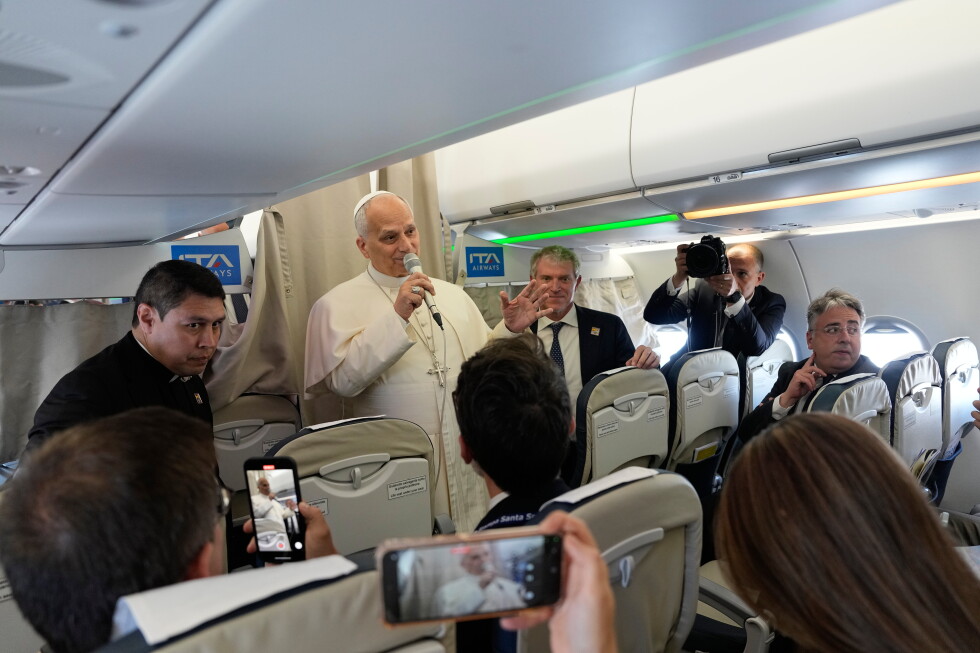
    Aboard his papal flight en route to Spain on Saturday, the first American-born pope, Leo XIV, opened up to reporters with a mix of serious reflection on his pastoral mission and lighthearted quips about unexpected cultural and sporting topics ahead of his seven-nation tour.

    His arrival in Madrid this weekend coincides with two back-to-back concerts from global Puerto Rican music superstar Bad Bunny, who is currently touring across Spain. When the pope was asked about anecdotal reports of a growing spiritual hunger among young Spanish people, he acknowledged the massive cultural draw of the Bad Bunny shows in good humor. He admitted that if young people were forced to choose between the pop star’s concert and an event with the pontiff, most would opt for the music. “If they are confronted with the question ‘Do you want to go see Bad Bunny or do you want to go to see the pope?’ I think many will see Bad Bunny,” Leo told reporters. “But I think there will also be a few here to see the pope. And that says something, you know.”

    Leo, who grew up in Chicago, said he recognized that many young adults across contemporary Europe are grappling with a widespread sense of emptiness and a lack of purpose in daily life. He expressed hope that his week-long tour across Spain would help spark a new spiritual awakening, reaching those who are open to exploring faith amid the noise of modern life.

    The tour, kicking off Saturday in Madrid, will next carry Leo to Barcelona before wrapping up with a stop on the Canary Islands. The pastoral trip comes at a fraught moment for Spain, which is currently deeply divided by bitter political divides and fresh scandals that have shaken both the national government and the Catholic Church in the country. Leo’s core mission for the visit is to deliver a unifying message, seeking to bridge divides in a nation where the Church carries a long and complex historical legacy in an increasingly secular society.

    Beyond matters of faith and church leadership, reporters pressed Leo on two high-profile sporting topics close to his personal background. First, he was asked about a recent vote by the Chicago Bears board of directors, which gave the green light this week to move forward with plans to relocate the franchise from Chicago to a new proposed stadium in Hammond, Indiana. When asked if he had any words of comfort for heartbroken Chicago fans, the pontiff joked that the issue falls far outside his area of authority. “That’s out of my pay (scale),” he quipped.

    Turning to Spanish soccer, Leo was asked to pick a side between the country’s two most iconic and bitter rivals: Real Madrid and FC Barcelona. The pope demured lightly, noting that as the universal leader of the Catholic Church, he supports all teams. But he revealed his personal allegiance ties back to his civilian life, saying “Prevost is Real Madrid” in a nod to his birth name before being elected to the papacy. He also confirmed he would throw his support behind the United States men’s national team in the upcoming FIFA World Cup.

  • Kosovo to hold third election in 18 months as frustration grows over political impasse

    Kosovo to hold third election in 18 months as frustration grows over political impasse

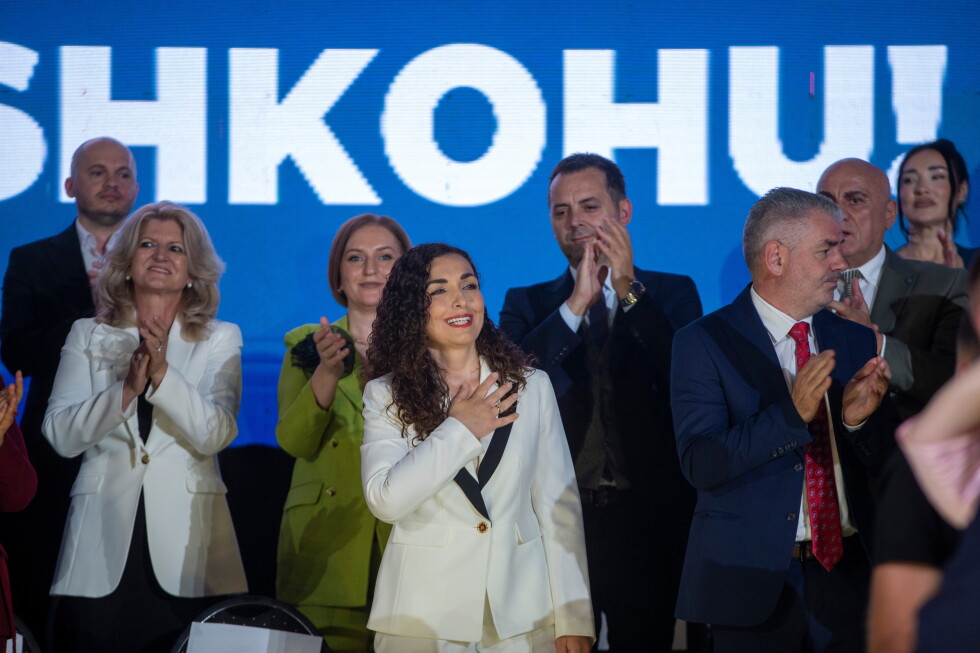
    The small Balkan nation of Kosovo is heading back to the polls this weekend, marking its third parliamentary election in just 18 months, as widespread public frustration builds over a seemingly intractable political crisis that threatens the country’s long-held goals of deeper integration with the European Union and NATO.

    This latest early vote, scheduled for Sunday, was triggered when Kosovo’s major political blocs failed to reach a consensus on a successor to former President Vjosa Osmani, whose term of office expired at the end of March. Prime Minister Albin Kurti’s center-left Vetevendosje party already holds a solid majority in parliament following the last early election held in December. However, Kosovo’s constitution requires a presidential appointment to be approved by at least 80 of the 120 sitting lawmakers – a supermajority that neither Kurti’s governing faction nor the united opposition has been able to secure.

    As key political players trade blame for the ongoing gridlock, their repeated failure to broker a compromise has sparked deep disappointment among Kosovo’s roughly 2 million eligible voters, who overwhelmingly prioritize economic growth and improved living standards over endless partisan infighting.

    Vlora Kryeziu, a 52-year-old business owner based in the capital Pristina, summed up the widespread public cynicism, noting that the same political standoff is playing out on repeat. “We will for sure have the same result,” she said. “As a citizen, I have a lot of dissatisfaction, and I think that we as a society are not doing enough to change these things.”

    This cycle of inconclusive elections stretches back to a first vote in February 2024, which left Kosovo without a fully functioning government for most of the year and forced a second snap election in December 2024.

    As one of Europe’s youngest and poorest countries, Kosovo carries a complex geopolitical backdrop: the majority ethnic Albanian state declared independence from Serbia in 2008, following a 1998-1999 armed conflict that ended with a NATO bombing campaign that forced Serbia to withdraw its forces from the territory. While the United States and most European Union member states recognize Kosovo’s sovereignty, Serbia refuses to acknowledge the declaration, backed by its key allies Russia and China. Both Belgrade and Pristina have made clear that normalizing bilateral relations is a non-negotiable requirement for advancing their respective EU membership bids.

    European Council President Antonio Costa traveled to Pristina this week to issue a clear call for Kosovar political leaders to resolve the stalemate and unify around the shared national goal of EU integration. “The European Union can support Kosovo, but it cannot do Kosovo’s own homework,” Costa stated. “Kosovo needs strong, stable and functioning institutions capable of delivering reforms and seizing the opportunities the European Union offers.”

    On the campaign trail, Kurti has urged voters to grant him a new mandate, arguing that opposition parties manufactured an artificial crisis to force repeated elections despite what he calls the “strong and clear will of the people.” In response, Kosovo’s two main opposition parties – the Democratic Party of Kosovo and the Democratic League of Kosovo (LDK) – have accused Kurti of pushing to consolidate absolute control over all of the country’s governing institutions. Notably, former President Osmani, once Kurti’s political ally, is now running on the LDK’s party list against the prime minister after he refused to support her nomination for a second presidential term.

    Political analyst Artan Muhaxhiri predicts little substantive change will come out of Sunday’s vote, pointing to Vetevendosje’s capture of more than 50% of the vote in the last election. He expects the political deadlock to reemerge after ballots are counted, noting “there are no indications that political leaders are willing to change their actual stances and narrow the existing gap.”

    The prolonged political crisis has already left tangible damage on Kosovo’s already fragile economy, which has been battered by the global energy crisis and soaring fuel prices in recent years. The recurring institutional vacuum has also delayed the country’s access to critical EU and international development funds earmarked for Kosovo, putting key infrastructure and reform projects on hold.

  • What to know about Pope Leo’s trip to Spain, from political scandal to Barcelona’s architectural gem

    What to know about Pope Leo’s trip to Spain, from political scandal to Barcelona’s architectural gem

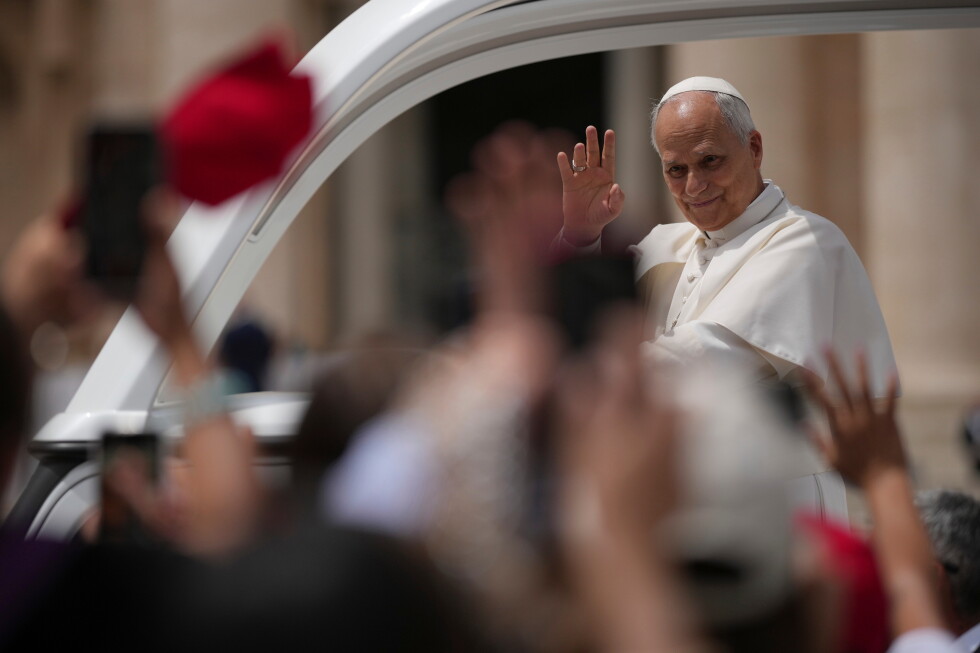
    VATICAN CITY — When Pope Leo XIV embarks on his seven-day apostolic journey to Spain starting June 6, he will step into a nation once defined by its unwavering Catholic identity, now grappling with plummeting religious participation, deep political polarization, and ongoing reckoning with the Catholic Church’s decades-old clergy sexual abuse scandals. This marks the first papal visit to Spain in 15 years, the last coming from Pope Benedict XVI for 2011’s World Youth Day in Madrid, and it will unfold across three distinct stops, each with a targeted mission that intersects with Spain’s most pressing contemporary challenges.

    Ahead of the trip, the Vatican confirmed late Friday that Leo will make space to meet with survivors of clergy sexual abuse during his visit, a mandatory inclusion for modern papal travel as the global Church continues to confront the fallout of abuse and institutional cover-up. Spain’s national Catholic hierarchy has only recently begun to acknowledge the full scope of abuse committed by clergy across the country over generations, a reckoning that has further eroded public trust in the institution amid already accelerating secularization.

    The first leg of the journey, held in Madrid from June 6 to 8, will make history in its own right: Leo will become the first pope ever to address a joint session of Las Cortes Generales, Spain’s national parliament. Papal addresses to foreign legislatures are extremely rare; the last such occurrence came in 2015, when Pope Francis spoke to a joint meeting of the U.S. Congress, and such speeches often rank among the most high-profile addresses of a pontificate.

    Leo will take the podium in a legislature deeply fractured along ideological lines. Spain’s ruling Socialist Party, led by Prime Minister Pedro Sánchez, is currently mired in a major political crisis driven by a string of high-profile corruption scandals, while the far-right party Vox has mounted fierce criticism of the government’s liberal migration policies. Beyond his parliamentary address, Leo will also meet with King Felipe VI and the Spanish royal family, and lead an ecumenical prayer vigil for young people in Madrid, a gathering that intentionally echoes the 2011 World Youth Day that brought Benedict XVI to the capital.

    Notably, the pope’s visit to Madrid will overlap with a much-anticipated pair of concerts from global Puerto Rican superstar Bad Bunny, part of the artist’s 10-show European run. The dual high-profile visits have prompted major traffic disruptions and security closures across large swathes of the Spanish capital, drawing widespread media attention to the unlikely overlap of the world’s most prominent religious leader and one of pop music’s biggest stars.

    From June 9 to 10, the papal trip shifts to Catalonia’s capital Barcelona, where the centerpiece of the visit will mark the 100th anniversary of the death of legendary Catalan architect Antoni Gaudí, a native son of the region whose work is already on the path to sainthood in the Catholic Church. Leo will celebrate open-air Mass at Gaudí’s iconic unfinished masterpiece, the Sagrada Familia basilica, and formally inaugurate the site’s new central spire, the Tower of Jesus Christ, a construction milestone that has earned Sagrada Familia the title of the world’s tallest church. While Gaudí’s sainthood cause will be a backdrop to the visit, the Vatican has confirmed no formal announcement on his canonization is scheduled. Leo will also make a pastoral stop at the Our Lady of Montserrat abbey, a site of deep spiritual and cultural significance for Catalonia, located on a sacred mountain outside the city.

    The final leg of the visit, held on the Canary Islands from June 11 to 12, fulfills a long-held priority of Pope Francis, who had long desired to visit the archipelago to minister to migrants who cross dangerous Atlantic routes from North Africa to reach European soil. Located far closer to the African coast than mainland Spain, the Canary Islands have long been the primary arrival point for irregular migration to Spain. Migrant arrivals peaked at nearly 47,000 in 2024, though numbers have dropped sharply to just over 2,000 in the first four months of 2026.

    Leo will visit two of the archipelago’s seven main islands over two days, meeting with recently arrived migrants and the humanitarian organizations that provide life-saving care and support to new arrivals. The stop comes as the Sánchez government has broken with the dominant policy trend across Europe and the United States, announcing plans to grant legal status to hundreds of thousands of undocumented migrants already living and working in Spain. Sánchez has framed the policy as an economic necessity, noting that legal migration will help offset Spain’s aging population and chronically low birth rate that have strained the country’s labor market.

    During the visit, Pope Leo is widely expected to double down on core papal priorities that cut across each of his three stops: calls for unity in a deeply polarized political landscape, a push for global peace amid ongoing armed conflicts around the world, a message of radical welcome for migrants, and words of hope for young Spaniards navigating the rapid changes brought by the artificial intelligence revolution.

    This Associated Press religion coverage is produced through a collaboration with The Conversation US, with funding from Lilly Endowment Inc. The AP retains sole editorial responsibility for all content.

  • Pope to find a secularized, polarized Spain where the Catholic Church has a complex legacy

    Pope to find a secularized, polarized Spain where the Catholic Church has a complex legacy

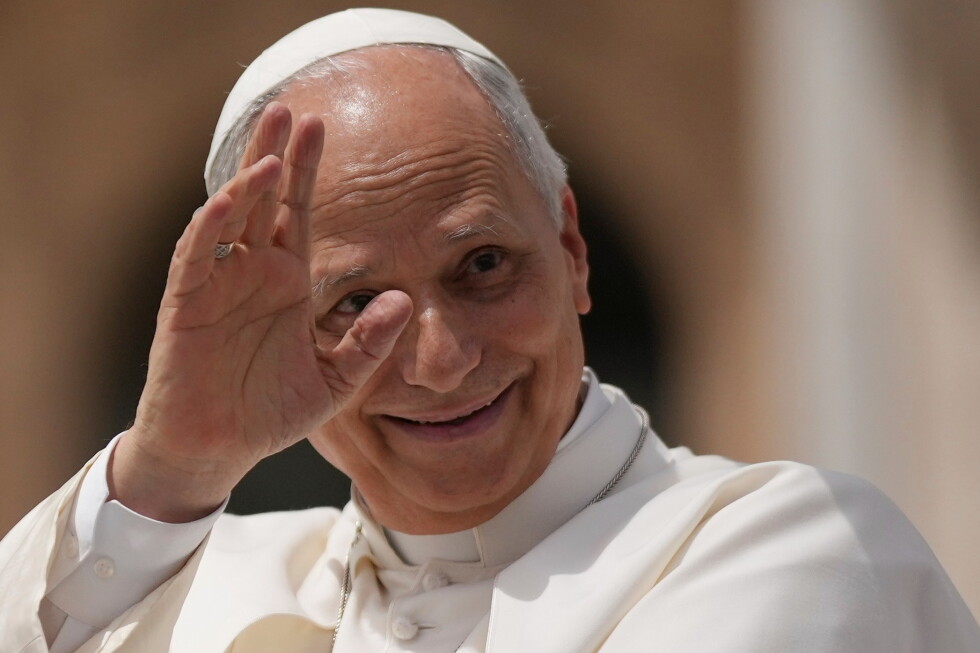
    VATICAN CITY — A new chapter in Vatican-European relations opens this weekend as Pope Leo XIV launches a week-long historical visit to Spain, a journey that will place the first American pontiff at the heart of a nation grappling with political upheaval, a decades-long Catholic credibility crisis, and shifting religious identity across modern Europe.

    The visit, the first papal trip to Spain in 15 years, marks a deliberate shift in papal outreach. Unlike Pope Francis, who prioritized smaller, far-flung Catholic communities over Europe’s traditional Christian heartlands, Leo is turning his attention back to the continent, which is currently roiled by multiple overlapping crises: the ongoing fallout from Russia’s invasion of Ukraine, rising tensions stemming from the U.S.-Israeli conflict in Iran, and widespread public anxiety over the rapid evolution of artificial intelligence. Ahead of the Spain trip, Leo has already made short visits to Monaco and San Marino this year, with a four-day trip to France scheduled for September, all part of his push to spread a message of peace, unity, and universal human dignity across the continent.

    Leo’s visit will kick off Saturday in Madrid, where he will receive an official welcome from King Felipe VI and Queen Letizia, Spain’s Catholic monarchs. The first day will conclude with a prayer vigil drawing thousands of young people, many of whom will experience seeing a pope in their home country for the very first time. In a acknowledgment of the ongoing clergy sexual abuse scandal that continues to hang over the global Catholic Church, the Vatican confirmed late Friday that Leo will meet with survivors of abuse during his visit. Spain’s Catholic hierarchy has only recently begun to confront decades of widespread abuse and institutional cover-ups in what was once one of Europe’s most devoutly Catholic nations, making this meeting a long-awaited step for survivors and church reformers alike.

    The undisputed highlight of the Madrid leg of the trip will come Monday, when Leo becomes the first pope in history to address Spain’s bicameral national legislature, the Las Cortes Generales. No previous pope, including St. John Paul II, who visited Spain five times, and Benedict XVI, who traveled there three times, has ever addressed the national parliament. Papal addresses to national legislatures are rare events, and they often stand as defining moments of a pontificate. This milestone comes as Spain’s legislature faces extreme political polarization: the ruling Socialist Party led by Prime Minister Pedro Sánchez is currently reeling from a string of high-profile corruption scandals. Opposition parties, including the center-right Popular Party and far-right Vox, have repeatedly called for Sánchez to step down ahead of scheduled 2027 elections, and have harshly criticized his government’s progressive migration policies.

    Madrid has already been overtaken by papal visit fever: Leo’s image covers subway cars, billboards, and metro station advertisements across the capital. Souvenir shops are stocking custom posters, magnets, and other papal memorabilia, while local bakeries are rolling out limited-edition papal-themed cakes and pastries. The pontiff will share the spotlight this weekend, however, with Puerto Rican global music superstar Bad Bunny, who is scheduled to perform two shows of his 10-concert Madrid residency during Leo’s visit. While small protests are expected over the trip’s estimated 15 million euro ($17.2 million) price tag, the parliamentary address still represents a landmark moment for Spain’s Catholic Church, which has been rebuilding its reputation after decades of crisis rooted in the nation’s turbulent modern history.

    Shaped by brutal anticlerical violence during the 1936-1939 Spanish Civil War, the church has more recently faced a severe credibility crisis following widespread revelations of clergy sexual abuse and institutional cover-ups. Spain’s religious landscape has shifted dramatically since the end of Francisco Franco’s 1939-1975 dictatorship. Franco, a devout Catholic who framed his rule as a religious crusade against anticlerical leftist, anarchist, and secular movements, left a church that counted 90% of Spaniards as Catholic. After the transition to democracy, however, that number has plummeted to just 55% in 2025, according to polling from Spain’s state public opinion agency, and only 19% of those identifying as Catholic report attending Mass regularly.

    Despite decades of growing secularization across Europe, sociologists tracking Spanish religious attitudes say there are early signs of renewed interest in spirituality — particularly among young Spaniards. Narciso Michavila Núñez, president of polling firm GAD3, noted that recent surveys have detected a newfound openness to faith among Generation Z Spaniards, a shift highlighted by the massive commercial success of Spanish pop star Rosalía’s overtly spiritual hit album *Lux*. “God is not just a symbolic tattoo in Spanish society anymore,” Michavila said, ahead of the pope’s visit.

    After wrapping up events in Madrid, Leo will travel to Barcelona midweek, where he will celebrate Mass at the iconic Sagrada Familia basilica to mark the 100th anniversary of the death of the basilica’s legendary architect Antoni Gaudí. While Gaudí is currently under consideration for sainthood, Vatican spokesman Matteo Bruni confirmed no announcement about his canonization is planned during the visit. The Mass will also mark the official inauguration of the basilica’s new central Tower of Jesus Christ; the completion of the spire earlier this year earned Sagrada Familia the title of the tallest church in the world.

    Leo will close out his trip with a two-day stop in the Canary Islands, a Spanish archipelago off the coast of West Africa that has become a key entry point for migrants crossing the Atlantic from West Africa. A legacy of Pope Francis, who made outreach to migrants and refugees a core priority of his papacy, the stop will see Leo meet with migrants and representatives of humanitarian organizations that provide care to new arrivals. He is also scheduled to lay a wreath in the Atlantic Ocean from the Port of Las Palmas, which earned the infamous nickname “Dock of Shame” in 2020 when thousands of migrants were forced to sleep in the open for weeks during a sudden spike in arrivals.

    Leo has continued Francis’s legacy of prioritizing migrant advocacy, repeatedly calling for dignified treatment of migrants in his native United States. For migrants already living in Spain, the visit carries profound meaning. “For those of us who are immigrants with family far from home, having someone as important as the pope come here is truly something extraordinary,” said Constantina Nchama, an Equatorial Guinean migrant living in Madrid, in the days ahead of the visit. “This is a once-in-a-lifetime moment, and I am so very excited.”

    The trip comes as Spain’s Socialist government has broken with broader trends in Europe and the U.S. by announcing plans to grant legal status to hundreds of thousands of undocumented migrants already living and working in the country. Sánchez has framed the policy as an economic necessity for Spain, which faces a rapidly aging workforce and persistently low birth rates.

  • Armenia prepares for an election that could reshape ties with Moscow and the West

    Armenia prepares for an election that could reshape ties with Moscow and the West

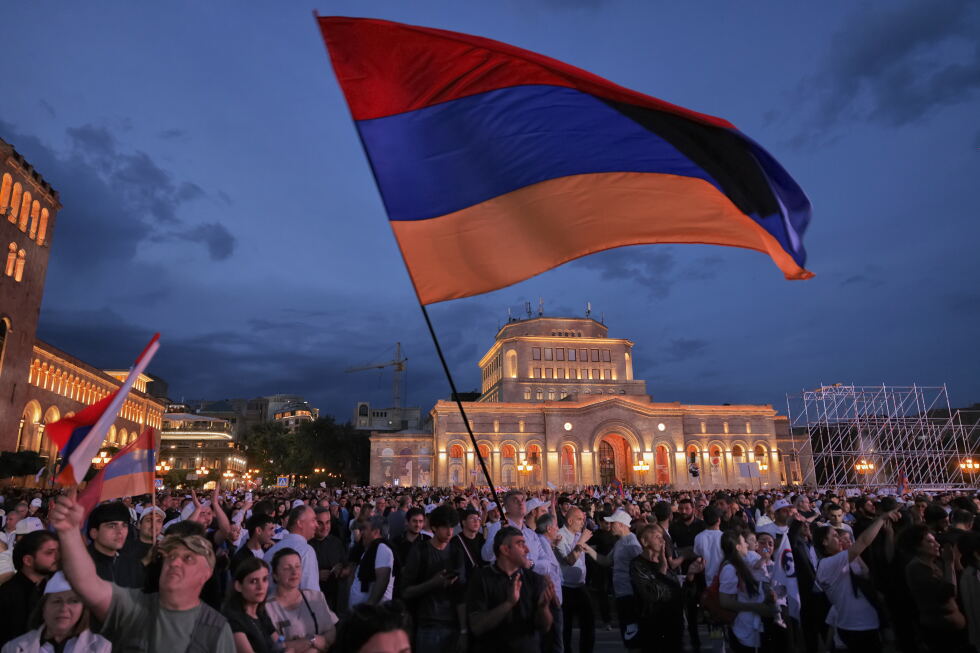
    As Armenians head to the polls on Sunday for nationwide parliamentary elections, the small Caucasus nation stands at an unprecedented turning point in its modern history. For the first time, the entire election campaign has centered on one existential question: whether Armenia will formally shift its long-standing geopolitical orientation away from Moscow and toward closer integration with the European Union and the United States. Incumbent Prime Minister Nikol Pashinyan, who leads the Civil Contract party widely forecast to retain its parliamentary majority, has already set the country on an unmistakable Western-facing trajectory, drawing fierce pushback from pro-Russian opposition blocs and direct economic pressure from the Kremlin.

    The rift between Armenia and its traditional ally Russia opened dramatically in 2023, when Azerbaijan reclaimed full control over the disputed Karabakh region after three decades of de facto control by ethnic Armenian forces backed by Yerevan. Pashinyan’s government accused Russian peacekeepers deployed to the region of failing to fulfill their security mandate and halt Azerbaijan’s military offensive. With Moscow heavily engaged in its ongoing conflict in Ukraine, the Kremlin rejected the accusations, noting its peacekeeping contingent was never authorized to intervene in the offensive. That episode shattered long-held public trust in Russia as a reliable security guarantor for Armenia. “Russia’s image as a guarantor of Armenian security was not grounded in reality, and it all collapsed after the 2023 Karabakh war,” explained Alexander Iskandaryan, director of the Yerevan-based Caucasus Institute.

    “These are the first elections in Armenia’s history where geopolitical orientation has become a decisive issue,” Mikayel Zolyan, an analyst and former Armenian MP, told the Associated Press from Yerevan. “Until now, Armenia has remained within Russia’s sphere of influence, and this was taken for granted, but now, for the first time, this status quo is being called into question.”

    Over the past two years, Pashinyan has moved cautiously but deliberately to loosen Russia’s grip on Armenian politics and policy. In 2023, Armenia joined the International Criminal Court, a move that angered the Kremlin, and in 2024, it suspended its participation in the Moscow-led Collective Security Treaty Organization, a post-Soviet military alliance. Yerevan has also formally declared its aspiration to join the European Union and hosted the high-profile European Political Community summit in its capital in early May. A clear election victory would give Pashinyan a popular mandate to lock in this geopolitical shift and finalize a long-awaited peace agreement with neighboring Azerbaijan.

    Western powers have already moved to demonstrate the tangible benefits of closer alignment with Armenia. In August, former U.S. President Donald Trump hosted Pashinyan and Azerbaijani President Ilham Aliyev to sign a landmark declaration ending decades of cross-border hostilities, which includes provisions to establish a new transit corridor connecting Azerbaijan to its Nakhchivan exclave. A preliminary agreement reached in February could clear the way for a U.S. firm to construct a new nuclear reactor to meet Armenia’s domestic energy needs. European Commission President Ursula von der Leyen has also pledged that the EU is ready to invest heavily in Armenia’s energy sector and its fast-growing digital economy, and has publicly endorsed Pashinyan’s reform agenda. Trump has personally backed Pashinyan, calling him a “great friend” and a leader who is building a “strong, wealthy, and very secure” Armenia.

    Against this Western outreach, Armenia’s fragmented political opposition remains dominated by staunchly pro-Russian groups that broadly oppose the normalization of ties with Azerbaijan and blame Pashinyan for the loss of Karabakh. Nineteen separate political forces – two electoral blocs and 17 individual parties – are contesting the 100 parliamentary seats. Pashinyan’s main challenger is the Strong Armenia Party, led by Armenian-Russian billionaire Samvel Karapetyan, who is currently on trial on charges of calling for the overthrow of the current government, charges he firmly denies. Strong Armenia advocates for deepening economic and political ties with Moscow and accuses Pashinyan of intentionally provoking conflict with Russia. Another prominent contender is the Hayastan Bloc, led by former Armenian President Robert Kocharyan, who has repeatedly accused Pashinyan of “seriously undermining” Armenia’s historic relationship with Russia.

    The Kremlin has gone far beyond rhetorical support for the opposition to apply direct economic pressure on Armenia in an attempt to derail Pashinyan’s Western pivot. Russian President Vladimir Putin has openly compared Armenia’s current trajectory to that of Ukraine, warning that pursuing EU membership carries the same dire consequences. In recent weeks, Moscow has imposed sweeping new import restrictions on Armenian agricultural and manufactured goods, citing unsubstantiated sanitation violations to block shipments of Armenian flowers, select grades of cognac and wine, eggplants, potatoes, dried fruit, fish and other key exports. Armenia’s membership in the Russian-led Eurasian Economic Union (EEU), a post-Soviet customs union, has been placed under formal review following a May member summit in Kazakhstan, with explicit threats to fully suspend Yerevan’s membership by the end of 2025. The EEU’s four other member states – Russia, Belarus, Kazakhstan and Kyrgyzstan – also demanded Armenia hold a public referendum on whether to remain in the bloc or pursue EU membership, a demand Pashinyan has flatly rejected.

    Official Armenian government data shows that 38% of the country’s total exports went to EEU member states in 2025, with the overwhelming majority bound for Russia, compared to just 8% of total trade directed to the EU. In response to Russia’s trade restrictions, von der Leyen announced last Thursday that the 27-nation EU would provide 50 million euros ($58 million) in emergency financial support to Armenia, calling Russia’s actions blatant “economic coercion” that weaponizes interdependent trade ties to achieve political goals.

    Many analysts warn that even with Western backing, Armenia faces a deeply uncertain path as it seeks to reduce its reliance on Moscow. Russia retains extensive leverage over the country, controlling large portions of Armenia’s key energy and infrastructure networks and continuing to supply heavily discounted natural gas. “It’s completely unrealistic to say that Armenia can somehow overcome Russian influence in a short period of time,” Zolyan noted.

    Armenian civil society groups and international election monitors have also documented widespread attempts at foreign interference in the lead-up to the vote. Independent Armenian election watchdog the Union of Informed Citizens has recorded multiple instances of Russian meddling, including coordinated social media disinformation campaigns, cyberattacks against government and civil society targets, illicit vote buying, and bribes paid to pro-Russian journalists. The Kremlin has repeatedly denied any interference in Armenia’s electoral process. These findings align with a recent assessment from a delegation of the Parliamentary Assembly of the Council of Europe, which visited Yerevan in May. The delegation confirmed that foreign interference includes illicit political financing, cyber operations, economic coercion, and direct attempts to manipulate vote outcomes. “These hybrid tactics aim not only to sway public opinion but to secure long-term geopolitical leverage over Armenia,” the delegation said.

  • Giant banquets rile radical left in France

    Giant banquets rile radical left in France

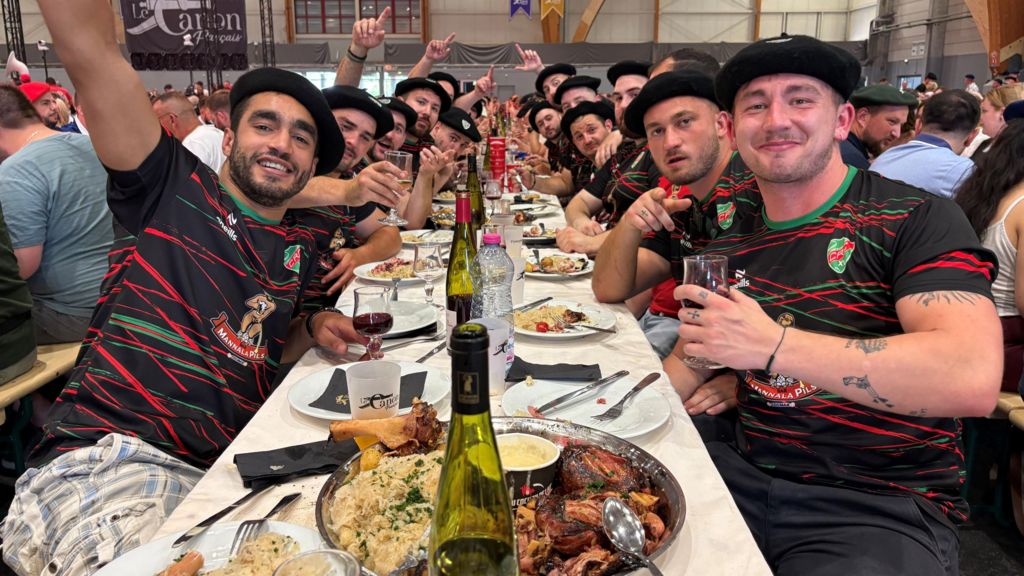
    Across provincial France, a viral trend of massive communal feasts has quickly escalated from a popular pastime into one of the country’s most heated pre-election political flashpoints. Last weekend, 3,500 attendees gathered in a sprawling hangar on the outskirts of Colmar, the picturesque medieval Alsace town famous for its half-timbered city center, for the latest installment of these massively popular banquets géants organized by events company Le Canon Français.

    For an €81 (£70) ticket, guests get a four-course menu of regional Alsatian specialties, unlimited local wine, and hours of collective sing-along camaraderie. Many male attendees adopt an unofficial uniform of berets and braces, while some women wear traditional local dress. Platters of charcuterie and choucroute are followed by regional cheeses and the iconic kougelhopf pudding, and between courses, crowds pause to belt out mid-20th century French classics from artists like Michel Delpech and Joe Dassin – songs that younger attendees in their 20s and 30s know by heart.

    But what started as a post-pandemic revival of communal dining has drawn fierce condemnation from France’s radical left party La France Insoumise (LFI), which claims the events have a hidden far-right agenda. LFI points to multiple red flags: documented allegations of racist chanting, insults directed at immigrant staff, and a menu centered heavily on pork, which the party argues is intentionally designed to exclude Muslim diners and vegetarians.

    Most notably, LFI highlights the financial backing of Pierre-Edouard Stérin, a billionaire ultra-conservative entrepreneur who made his fortune in the experience gift voucher sector. Stérin funds a prominent right-wing think tank that pushes an agenda of cutting immigration, rolling back abortion rights, and promoting France’s Christian heritage. Emma Fourreau, an LFI Member of the European Parliament, argues the involvement of Stérin is no coincidence. “If they were acting in good faith, Le Canon Français would never have accepted Stérin as an investor,” Fourreau explained. “That is because they share the same political ecosystem, whose aim is to bring the far right to power.” LFI calls the events a backward-looking caricature that does not reflect modern France’s diverse identity, and has successfully lobbied local authorities to cancel one planned banquet in the Brittany town of Quimper. French police have also opened a preliminary investigation into allegations of racial provocation at an April banquet held in Caen.

    Organizers and attendees reject these claims out of hand, dismissing the controversy as a politically motivated overreaction ahead of next year’s national elections. Le Canon Français was founded during the COVID-19 pandemic by two young entrepreneurs, Pierre-Alexandre de Boisse and Géraud de la Tour, who first began selling wine online to support a struggling vintner friend before expanding to small fundraisers for French heritage projects. The massive banquets, de Boisse argues, are just a revival of a centuries-old French tradition of communal popular feasts that once existed in every village across the country.

    “Nowadays people waste so much of their time alone, in their homes, on social media. They’ve lost the habit of being together and talking. What gives us the most pleasure is when we see the lawyer sitting next to the baker, chatting away,” de Boisse said. He denies all allegations of exclusion or extremist ties, noting the events have a publicly posted code of conduct all attendees agree to when purchasing tickets. He refutes claims the menu exclusively serves pork, and calls allegations of Nazi salutes at events completely unfounded. De Boisse also says he has never even met Stérin, who purchased a 30% minority stake purely because the events are profitable. While he acknowledges most attendees lean conservative, matching shifting voting patterns in rural France, he argues the events are focused solely on food and community, not political organizing.

    Attendees echoed this sentiment during the Colmar event. Many told the BBC they came for the food, drink, atmosphere, and chance to connect with friends, and none interviewed supported LFI’s claims of political ulterior motives. “None of this was an issue, but then Stérin became a shareholder and that gave the LFI an excuse to attack. Don’t forget there are elections next year,” said Quentin, an attendee from Besançon. On the ground in Colmar, the BBC observed no offensive language or behavior, and noted the crowd, while predominantly white, was not exclusively homogeneous. For organizers, the controversy has only amplified calls for left-wing politicians to step back. “I create jobs, I create happiness for the people who come to the banquets,” de Boisse said. “Why can’t they just leave us alone?”

  • I wanted to quit Eurovision twice – then won it, says Bangaranga singer Dara

    I wanted to quit Eurovision twice – then won it, says Bangaranga singer Dara

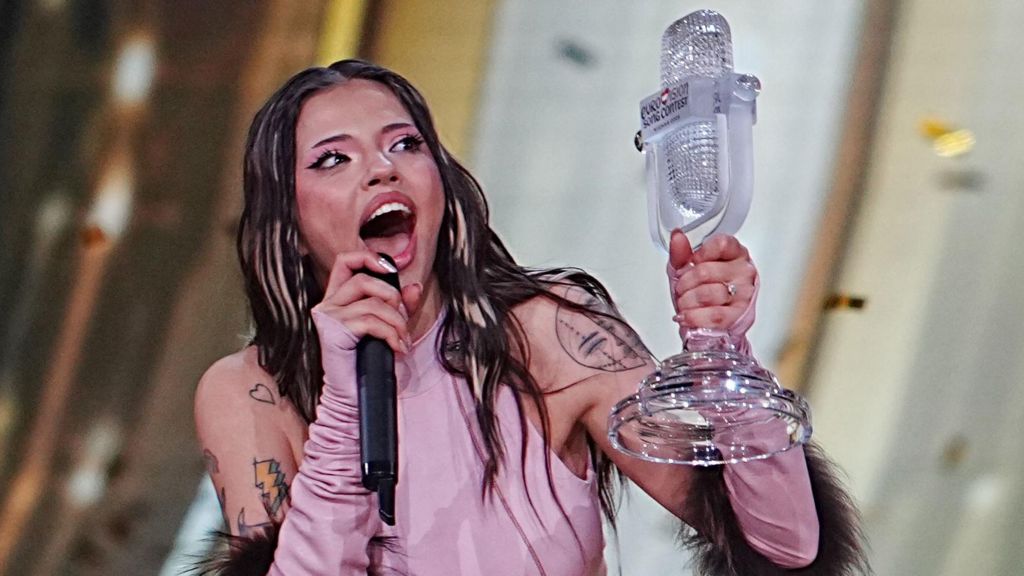
    The 2026 Eurovision Song Contest in Vienna has made history, as Dara, the Bulgarian performer behind the viral hit *Bangaranga*, delivered a landslide victory that secured Bulgaria its first ever champion title in the iconic global contest. What makes the story of this landmark win even more compelling is that Dara nearly walked away from the competition twice before stepping onto the Vienna stage, opening up in a recent interview with BBC Newsbeat about how her struggle to protect her mental health nearly cost her the historic win.

    Dara, an already established 27-year-old artist, first considered turning down the opportunity after she raised concerns over unsatisfactory terms in her initial contest contract. Even after resolving that issue, the anxiety of stepping into the Eurovision spotlight hit her immediately after she was officially announced as Bulgaria’s first contest entry since 2022. Recently diagnosed with ADHD, Dara said the pressure of the high-stakes competition left her physically overwhelmed: “I was shaking in my bed,” she recalled, adding that she spent three hours trying to calm her frayed nerves after the announcement. Fearing that the intense competition schedule would worsen her symptoms, she questioned whether she was worthy of the spot, and worried that pushing through would cause long-term damage to her mental wellbeing that she would never recover from.

    Long known as one of the most high-pressure events in global entertainment, Eurovision pushes participating artists to their limits, requiring them to navigate a grueling packed rehearsal schedule, intense public scrutiny, and a global audience of hundreds of millions. Even former contestants have highlighted the mental toll of the experience: when 2024 United Kingdom representative Olly Alexander was asked what advice he would give to future competing artists by commentator Graham Norton, he simply replied, “Get yourself a really good therapist.”

    Against this backdrop, Dara credits the professional mental health support she received after her ADHD diagnosis with giving her the tools to stay in the competition and ultimately thrive. Working closely with her therapist, she learned strategies to feel grounded in crowded, high-pressure environments, and developed a personal routine of breathing exercises, drawing, journaling, and meditation to keep herself centered amid the chaos. By the time she stepped onto the Vienna stage, that preparation had paid off: “I’ve never felt more calm on stage, more secure,” she said of her performance.

    That poised, personality-filled performance was exactly what won over global voters. Going into the contest, Dara was ranked as a little-known outside favorite, but her quirky, polished performance of *Bangaranga* — which featured sharp, clever choreography and one of the most memorable hooks in recent contest history — earned her a record-breaking points margin, delivering one of the most decisive victories in Eurovision history. Even as votes from across the continent poured in, Dara said she remained centered: “I opened my heart and just kept repeating, ‘Thank you God for putting me on that stage and for these people around me.’”

    Within days of her victory, Bulgarian national broadcaster BNT confirmed that Sofia, the country’s capital, will serve as the host city for the 2027 Eurovision Song Contest, a historic milestone for the small Eastern European nation. When Dara returned to Sofia, she was greeted by thousands of cheering fans who gathered to welcome their first Eurovision champion home. The singer will play a central role in planning and promoting next year’s host city celebrations.

    Despite the global fame and historic achievement that now cement her place in Eurovision’s hall of fame, Dara says her definition of long-term success has nothing to do with career milestones. Looking ahead, the singer says her top priorities are far more personal: “I want to have kids some day,” she said. “I want to be healthy and that is much more important than being successful in my career. Being successful as a human being is pretty big on my list.”