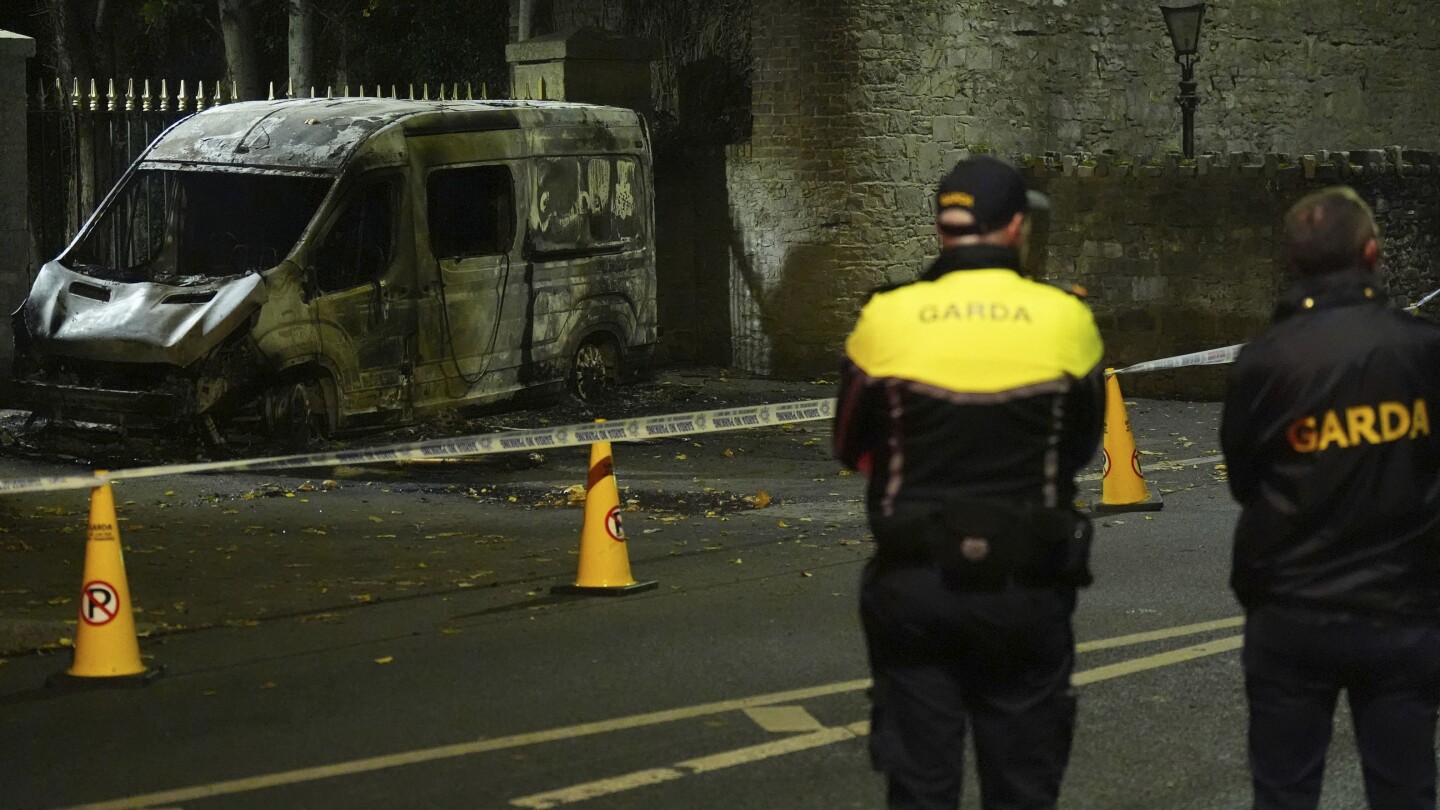
In a disturbing turn of events, six individuals were apprehended following a violent confrontation outside the CityWest Hotel in Saggart, near Dublin. The incident, which unfolded on Tuesday evening, saw a crowd hurl bricks, bottles, and fireworks at law enforcement officers, culminating in the burning of a police van. The Garda Siochana, Ireland’s national police force, reported that one officer sustained a foot injury during the melee. The unrest was reportedly incited by allegations of a sexual assault in the vicinity, prompting hundreds of demonstrators, many brandishing Irish tricolor flags, to gather outside the hotel. Attempts to breach the police line using horse-drawn carts were met with pepper spray as officers sought to disperse the crowd. Police Commissioner Justin Kelly denounced the actions as “thuggery” by a “mob intent on violence,” while Prime Minister Micheál Martin emphasized that there was “no justification” for the disorder. This incident is part of a broader pattern of protests targeting hotels housing asylum-seekers in Ireland, Northern Ireland, and Britain, often fueled by anti-immigration sentiments and far-right rhetoric. In a related development, Justice Minister Jim O’Callaghan confirmed that a man had been arrested and appeared in court over the alleged sexual assault in Saggart. He lamented the exploitation of crime to sow societal discord, reiterating that while peaceful protest is a democratic right, violence is inexcusable.
标签: Europe
欧洲
-

Dublin violence orchestrated online, Irish police say
Irish authorities have pledged to pursue those responsible for the violent clashes that erupted during a protest outside a Dublin hotel housing asylum seekers. The incident, which occurred on Tuesday evening at the Citywest Hotel in Saggart, saw Gardaí (Irish police) attacked with bricks, fireworks, and glass bottles. A female officer sustained a foot injury, while a police helicopter was targeted with lasers and a police vehicle was set ablaze. Garda Ch Supt Michael McNulty, the scene commander, described the violence as orchestrated by “disparate groups on social media, who stir up hatred and violence.” He emphasized that the protest was far from peaceful, labeling the actions as “thuggery” and an attempt to intimidate and injure. Approximately 300 officers, including half from the public order unit, were deployed to manage the situation. While a water cannon was on standby, it was not used. Officers on horseback and a dog unit were also present. Irish broadcaster RTÉ reported that around 2,000 people attended the protest, with some attempting to breach the police cordon using horse-drawn carts. Taoiseach Micheál Martin condemned the attacks, stating there was no justification for such violence. Acting Deputy Commissioner Paul Cleary reiterated that the violence was “unacceptable” and vowed to identify and prosecute those responsible, regardless of attempts to conceal their identities. The area remains cordoned off, with debris scattered and a burnt-out police van visible. Garda Commissioner Justin Kelly condemned the actions as “thuggery,” while RTÉ’s crime correspondent Paul Reynolds noted that the violence appeared pre-planned but was more contained than previous incidents. Detectives are already gathering high-quality CCTV and bodycam footage to identify further perpetrators.
-
Mosquitoes found in Iceland for first time after record heat
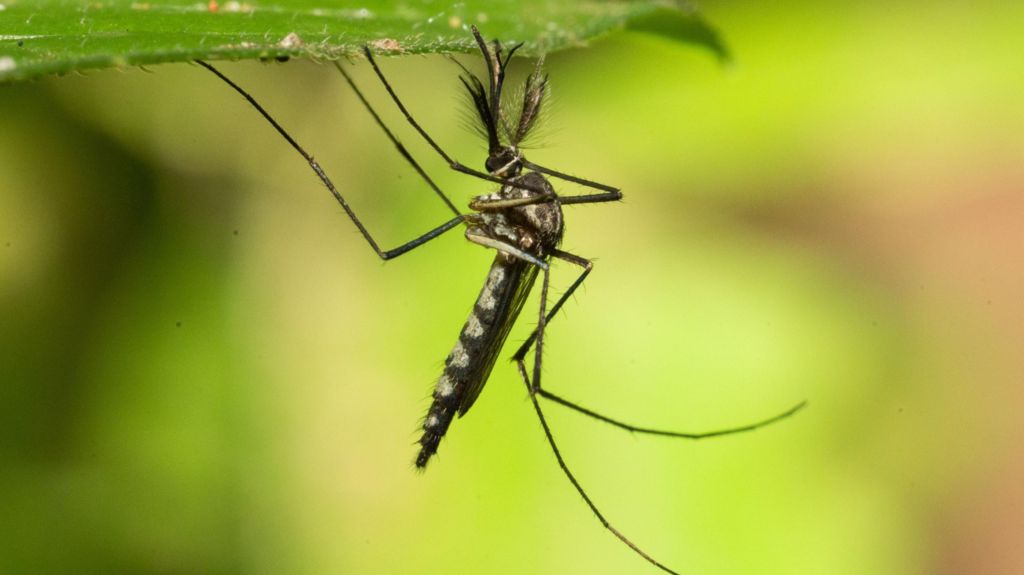
For the first time in history, mosquitoes have been detected in Iceland, a country previously known as one of the world’s only mosquito-free zones alongside Antarctica. This unprecedented discovery comes after Iceland experienced record-breaking heat this spring, raising concerns about the impact of climate change on delicate ecosystems. The mosquitoes were found by Bjorn Hjaltason, an insect enthusiast, who encountered them while observing moths using wine-soaked ropes in Kjós, a glacial valley southwest of Reykjavik. Hjaltason identified two female mosquitoes and one male, later confirmed to be of the species *Culiseta annulata*, one of the few mosquito species capable of surviving winter. The Icelandic Institute of Natural History verified the discovery, with entomologist Matthías Alfreðsson noting that the species is common in parts of Europe and North Africa but its arrival in Iceland remains a mystery. Iceland’s cold climate and lack of stagnant water have historically prevented mosquito populations from thriving. However, this year’s extreme temperatures, including a record-breaking 26.6°C (79.8°F) in May, may have created favorable conditions for their survival. A June study by the Global Heat Health Information Network highlighted the potential for significant ecological impacts as ecosystems adapted to cold climates face unprecedented temperature shifts. Hjaltason speculated that the mosquitoes may have arrived via ships or containers, though further monitoring is needed to determine if the species has become established in Iceland. This discovery underscores the broader implications of climate change, with the UN’s climate body confirming that human activities have unequivocally contributed to global warming.
-

Eurostar orders first double-decker trains
Eurostar has announced a historic move to introduce double-decker high-speed trains through the Channel Tunnel, marking a significant milestone in cross-Channel rail travel. The company has confirmed a €2 billion (£1.74 billion) deal with manufacturer Alstom to acquire 30 ‘Celestia’ trains, with an option for 20 more. This expansion will increase Eurostar’s fleet size by nearly a third, with the first six trains expected to enter service by 2031. Each 200-meter-long train will offer enhanced capacity, with a combined 400-meter service accommodating approximately 1,080 seats. These will be the first double-decker high-speed trains to operate through the Channel Tunnel, a feat unmatched since a 1949 experimental double-decker train in the UK. Eurostar CEO Gwendoline Cazenave expressed pride in bringing this innovation to the UK, emphasizing ‘exceptional comfort’ for passengers. The company, which carried 19.5 million passengers last year, aims to grow this number to 30 million. The new trains will replace older models and increase services to London by 30%. Eurostar also plans to invest €80 million in upgrading the Temple Mills depot in London, the only UK facility capable of accommodating these larger trains. However, questions remain about the depot’s capacity to serve both Eurostar and potential rival operators, including Spanish start-up Evolyn, Virgin, and a Gemini Trains-Uber partnership. The Office of Rail and Road is currently reviewing proposals for depot access, with a decision expected soon. This development follows Eurostar’s June announcement of new routes to Geneva and Frankfurt, further solidifying its position as a leader in cross-Channel rail services.
-

Pinto Balsemão, ex-Portugal leader and media tycoon, dies at 88
Francisco Pinto Balsemão, a pivotal figure in Portugal’s political and media landscape, passed away at the age of 88. His death was announced late Tuesday by the Portuguese president’s office and Impresa, the media conglomerate he founded. No cause of death was disclosed. Balsemão, a former prime minister, played a crucial role in shaping Portugal’s transition to democracy following the 1974 Carnation Revolution, which ended decades of dictatorship. Born on September 1, 1937, he graduated in law from Lisbon University and served in the Portuguese Air Force before embarking on a distinguished career in politics and media. Balsemão became prime minister in 1981, succeeding Francisco Sá Carneiro, who died in a plane crash. His tenure, marked by political turbulence and coalition tensions, saw significant constitutional reforms aimed at liberalizing the economy. After resigning in 1983, he focused on building Impresa, which became a cornerstone of Portugal’s media industry. His legacy includes founding Expresso, a respected weekly newspaper, and launching S.I.C., the country’s first private television channel. Balsemão’s commitment to freedom of expression and democratic values left an indelible mark on Portugal’s history.
-
The Louvre reopens 3 days after thieves took French crown jewels in daylight heist
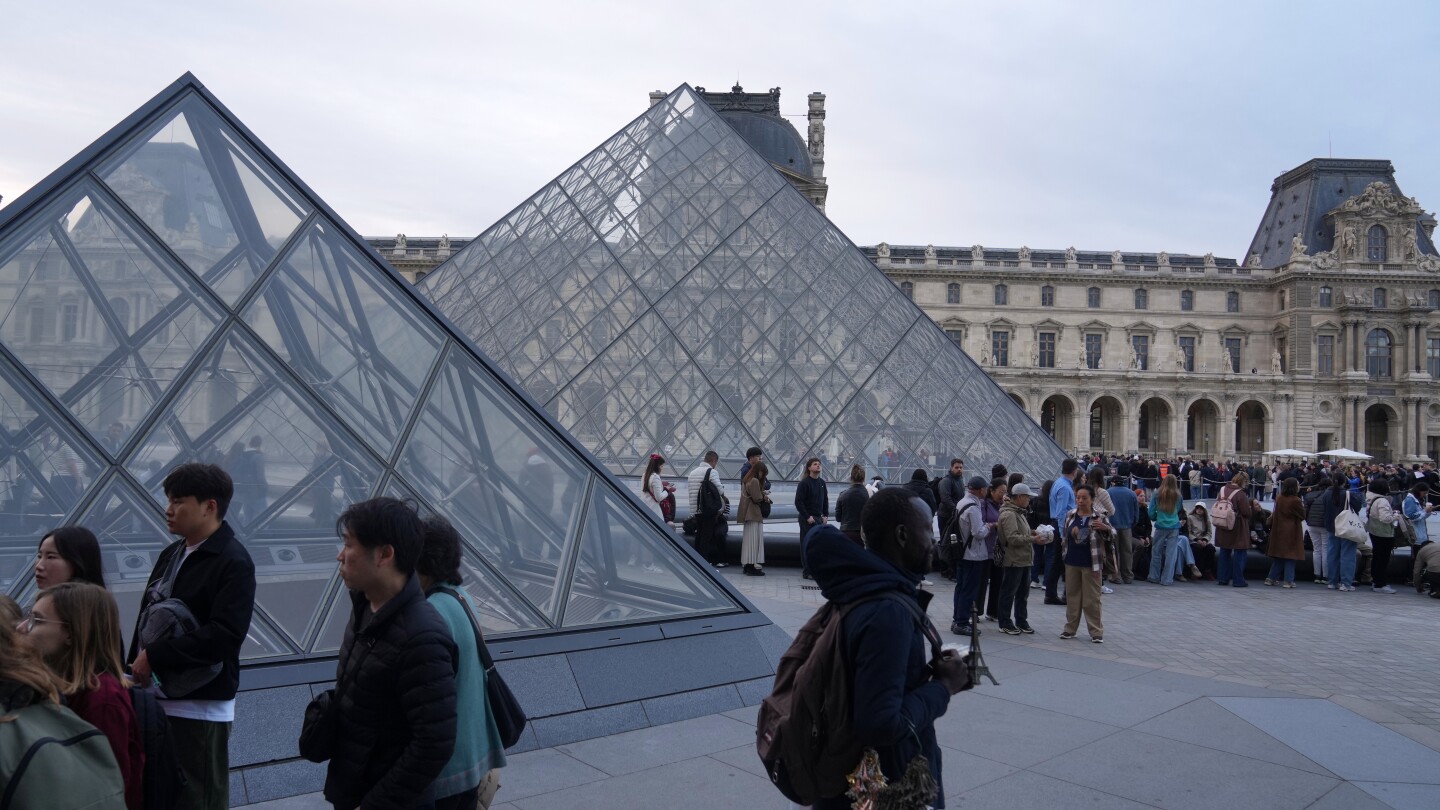
The Louvre Museum in Paris resumed operations on Wednesday, three days after a brazen daylight heist saw thieves break into the iconic institution and make off with priceless French crown jewels. The Apollo Room, where the theft occurred, remains cordoned off as investigators continue their work. Hundreds of visitors queued outside the museum’s glass pyramid entrance, eager to explore the reopened galleries. The Louvre, typically closed on Tuesdays, had remained shut since the Sunday incident to facilitate the investigation. Authorities have yet to make any arrests, and the stolen jewels, valued at approximately 88 million euros ($102 million) excluding their immense historical significance, remain missing. Paris prosecutors revealed the staggering worth of the stolen artifacts on Tuesday, emphasizing their cultural importance to France. A task force of around 100 investigators is actively pursuing leads to apprehend the suspects and recover the treasures from the world’s most-visited museum.
-
Six dead in Russian airstrikes, hours after Trump shelves bid for Putin talks
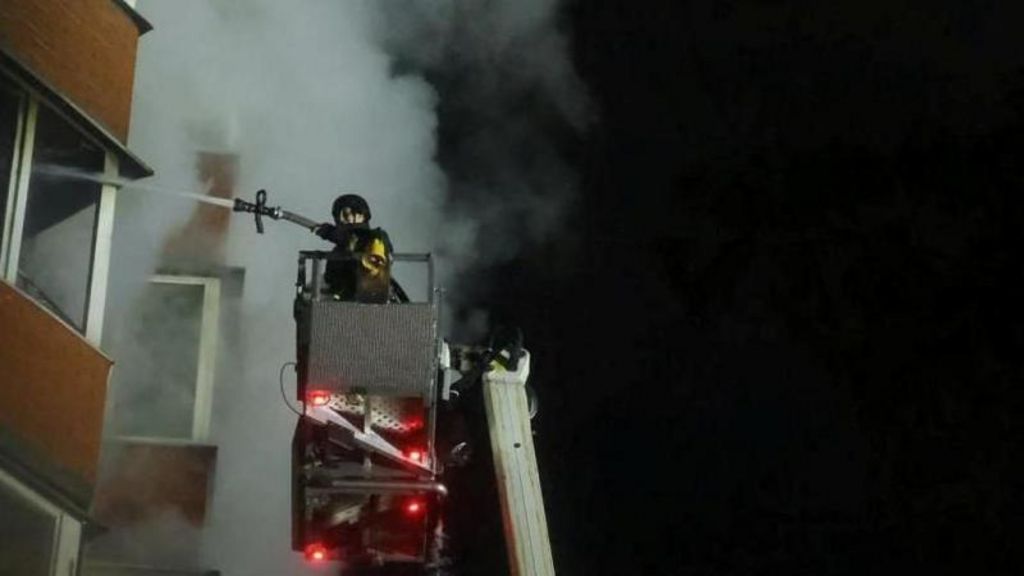
In a harrowing escalation of the ongoing conflict, Russian drone and missile strikes have inflicted severe damage across Kyiv and other Ukrainian cities, resulting in at least six fatalities, including two children, and leaving 21 others wounded. Ukrainian President Volodymyr Zelensky condemned the attacks, emphasizing that Moscow’s relentless aggression underscores the inadequacy of international pressure to halt the war. The strikes, the first of such intensity since late September, targeted residential areas and energy infrastructure, plunging several regions into emergency power outages. Among the victims were a couple in their 60s, a six-month-old baby, and a 12-year-old girl, highlighting the devastating human toll of the conflict. Rescue teams worked tirelessly through the night to extinguish fires in residential buildings as the capital remained under a ballistic missile warning. Meanwhile, Ukraine’s military reported a successful counterstrike on a Russian chemical plant in the Bryansk border region using UK-supplied Storm Shadow missiles. The plant, which produces gunpowder, explosives, and rocket fuel components, was described as a critical target in disrupting Russia’s ammunition supply chain. The attack comes amid stalled diplomatic efforts, as US President Donald Trump shelved plans for a summit with Russian President Vladimir Putin, citing concerns over a ‘wasted meeting.’ Zelensky, who recently returned from talks with Trump, expressed frustration over the US’s reluctance to provide long-range Tomahawk missiles, a move he believes could shift the diplomatic landscape. As the war rages on, the international community faces mounting pressure to address the escalating humanitarian crisis and seek a viable resolution to the conflict.
-
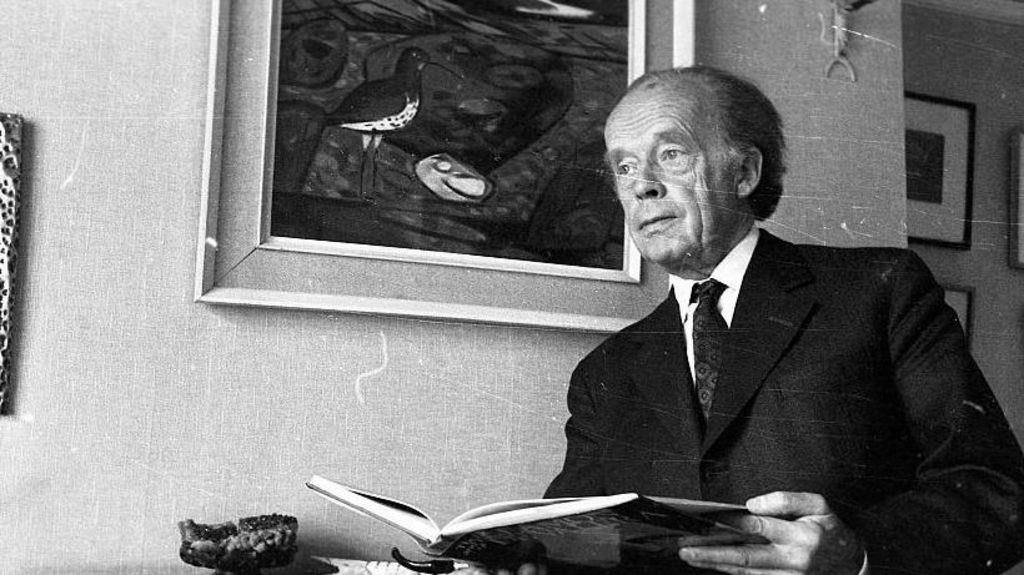
Last two-horse race in Irish presidential election left winner ‘dumbfounded’
As the Republic of Ireland prepares to elect its 10th president on Friday, the 2023 race bears striking similarities to the historic 1973 election, which saw Erskine Childers emerge as an unexpected victor. This year, voters will choose between Independent TD Catherine Connolly, supported by Sinn Féin and left-wing parties, and Fine Gael’s Heather Humphreys. Notably, Fianna Fáil’s Jim Gavin remains on the ballot but has withdrawn from the campaign, mirroring the dynamics of the 1973 contest.
-
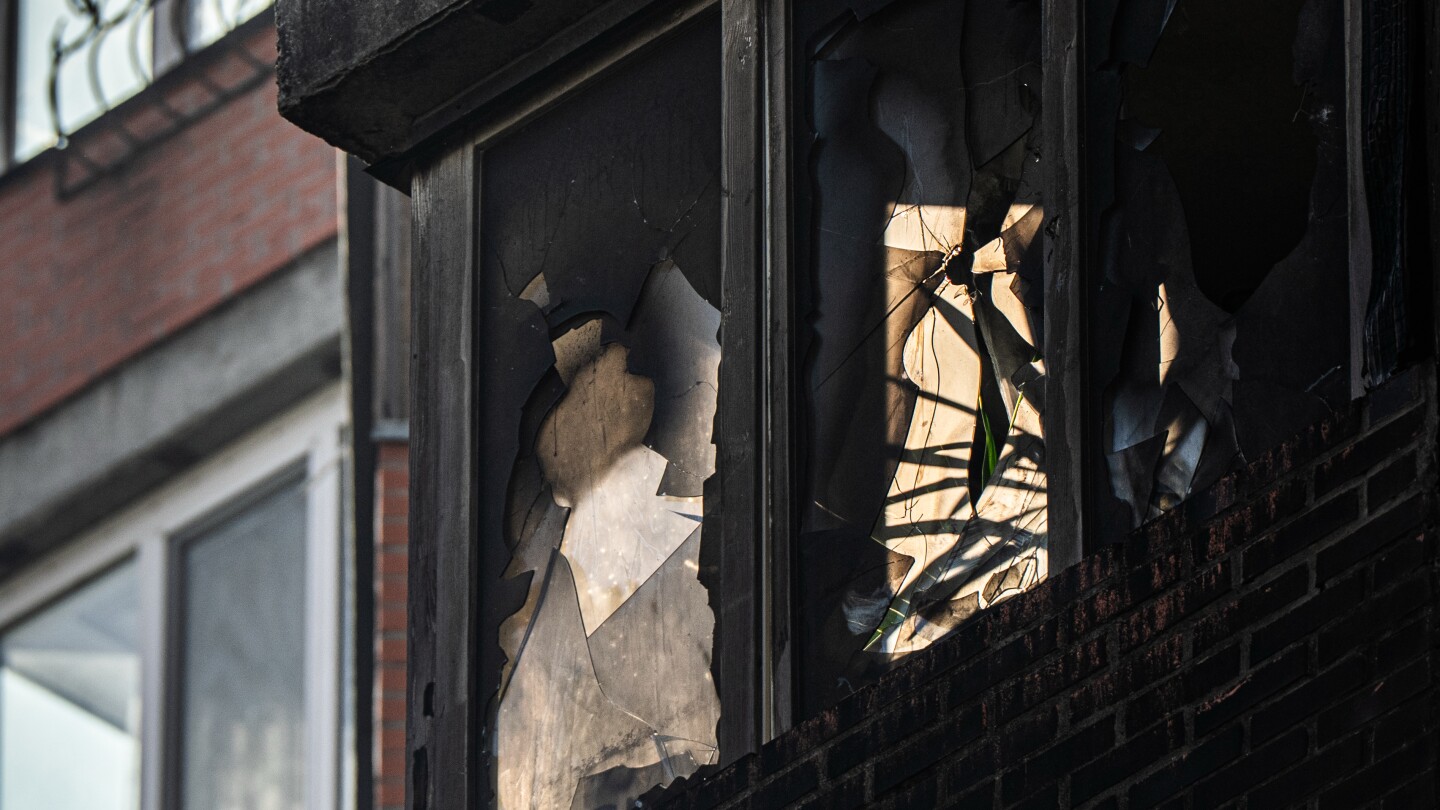
A major Russian drone and missile attack on Ukraine kills at least 6 people, officials say
In a devastating escalation of the ongoing conflict, Russia launched a massive drone and missile attack across Ukraine, resulting in the deaths of at least six individuals, including a mother and her two young daughters. The assault, which spanned the night and extended into Wednesday morning, targeted multiple Ukrainian cities, including a village in the Kyiv region where a strike ignited a house, tragically claiming the lives of the family. Regional head Mykola Kalashnyk confirmed the incident, while authorities reported at least 18 injuries in Kyiv alone. The attack also severely damaged Ukraine’s energy infrastructure, causing widespread blackouts as Russia intensifies efforts to disrupt the country’s power grid ahead of the harsh winter season. Amid these developments, U.S.-led initiatives to broker peace have faltered, with President Donald Trump expressing frustration over Russian President Vladimir Putin’s unwillingness to compromise. Ukrainian President Volodymyr Zelenskyy has called for increased military support and international pressure on Russia, emphasizing the need for sanctions, advanced missile capabilities, and coordinated diplomacy. Zelenskyy is set to engage in a week of intense diplomatic efforts, including meetings with Swedish Prime Minister Ulf Kristersson and participation in international summits aimed at bolstering support for Ukraine. Meanwhile, Ukraine’s military reported striking a critical Russian chemical plant in the Bryansk region using British-made Storm Shadow missiles, further escalating the conflict. The international community continues to monitor the situation closely as the war shows no signs of abating.
-
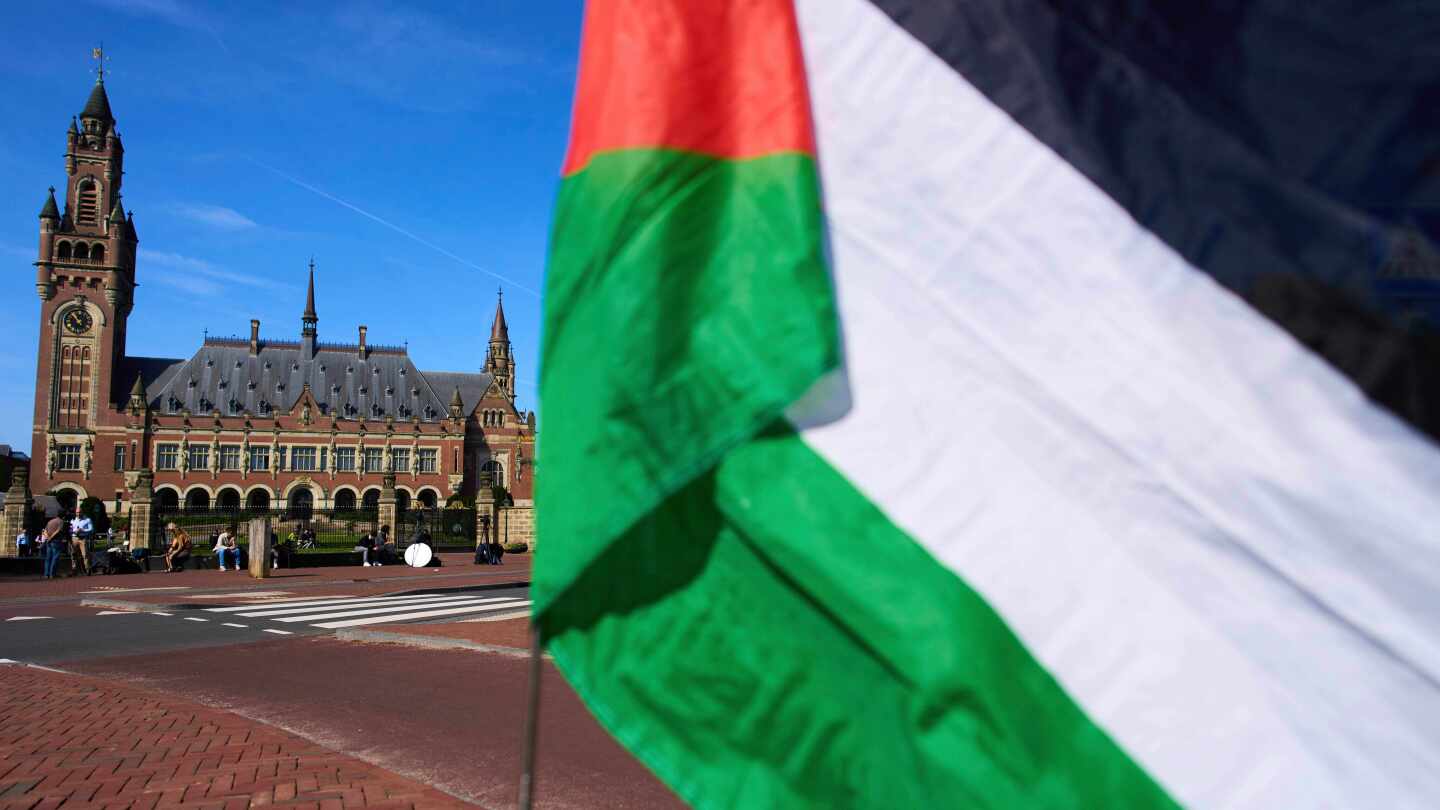
Top UN court to rule on Israel’s obligations to ensure humanitarian aid reaches Palestinians
The International Court of Justice (ICJ) in The Hague is poised to deliver a crucial advisory opinion on Wednesday regarding Israel’s legal responsibilities to ensure the delivery of urgently needed humanitarian aid to Palestinians in Gaza and the occupied West Bank. This ruling comes in response to a request from the U.N. General Assembly, made last year, following Israel’s decision to effectively ban the U.N. agency for Palestinian refugees (UNRWA) from operating in Gaza. UNRWA has been the primary provider of aid in the region. While advisory opinions are nonbinding, they carry significant legal weight and could have far-reaching implications for the U.N. and its global missions. The proceedings, which began in April, predate the fragile U.S.-brokered ceasefire that took effect on October 10, aimed at ending the two-year conflict in Gaza. Despite the ceasefire, tensions flared earlier this week after Israeli forces launched deadly strikes, citing the killing of two soldiers by Hamas militants. Under the ceasefire agreement, Israel is required to allow 600 humanitarian aid trucks into Gaza daily. The U.N. has announced plans to increase aid shipments, and Hamas has acknowledged Israel’s compliance with the agreement. However, Palestinian Ambassador Ammar Hijazi accused Israel of “starving, killing, and displacing Palestinians” while obstructing humanitarian efforts. Israel has denied these allegations, calling the proceedings biased, and did not attend the hearings, though it submitted a 38-page written response. The ICJ’s opinion could reinforce the principle that states cannot selectively restrict U.N. operations, according to international law experts. This case follows previous ICJ rulings critical of Israeli policies, including the West Bank separation barrier and the occupation of Palestinian territories. The advisory opinion is separate from South Africa’s ongoing case accusing Israel of genocide in Gaza, which Israel vehemently denies. The conflict, triggered by Hamas’ October 7 attack on southern Israel, has resulted in significant casualties, with Gaza’s Health Ministry reporting over 68,000 deaths, a figure disputed by Israel.