标签: Europe

欧洲

  • German philosopher and social critic Jürgen Habermas dies at 96

    German philosopher and social critic Jürgen Habermas dies at 96

    Jürgen Habermas, the preeminent German philosopher and towering intellectual figure whose critical theories shaped post-war European thought, has died at age 96. His publisher Suhrkamp announced his passing on Saturday, marking the end of an era for contemporary philosophy and social criticism.

    Born in Düsseldorf in June 1929, Habermas’s early life unfolded under the shadow of Nazi Germany. His father, a local chamber of commerce leader, joined the Nazi Party in 1933, and the young Habermas was enrolled in the Hitler Youth organization, though he remained too young for combat deployment during World War II.

    After the war, Habermas embarked on an academic journey that would establish him as a leading voice of the Frankfurt School. He earned his doctorate from Marburg University before joining the University of Frankfurt’s Institute of Social Research, where he worked alongside Max Horkheimer and Theodor Adorno in developing critical theory—a framework challenging capitalist society’s transformation of active citizens into passive consumers.

    Throughout the 1960s, Habermas supported student movements at West German universities while developing his distinctive critique of mass media commodification. He argued that industrialized culture systematically undermined meaningful public discourse, a concern that informed his seminal 1981 work, The Theory of Communicative Action, which proposed that human societies are sustained through rational dialogue rather than political or economic power.

    Habermas’s intellectual courage extended to historical controversies. During the 1980s Historians’ Debate, he confronted conservative scholars who questioned the Holocaust’s uniqueness as a German phenomenon. Later, during German reunification, he criticized the rapid absorption of East Germany, warning against nationalist resurgence and advocating for European unity as a safeguard against historical rivalries.

    His personal experience with a cleft palate, requiring multiple childhood operations, profoundly influenced his theories about language and communication. This physical challenge informed his understanding of dialogic rationality and the fundamental human capacity for communicative action that defined his philosophical legacy.

  • Jürgen Habermas, influential German philosopher, dies at 96

    Jürgen Habermas, influential German philosopher, dies at 96

    BERLIN — Jürgen Habermas, the preeminent German philosopher whose groundbreaking theories on communication and rationality reshaped modern sociological thought, has passed away at age 96. His publisher, Suhrkamp Verlag, confirmed his death on Saturday in Starnberg, a tranquil town near Munich.

    Habermas emerged as one of the most consequential intellectual figures of the postwar era, developing comprehensive frameworks that bridged philosophy, sociology, and political theory. His seminal two-volume masterpiece, “Theory of Communicative Action,” established revolutionary concepts about how human interaction and discourse form the foundation of modern society.

    The philosopher’s intellectual journey was profoundly shaped by Germany’s historical reckoning with Nazism. Born in 1929 in Duesseldorf, Habermas was 15 when the Nazi regime collapsed—an experience he described as catalytic to his philosophical awakening. He later reflected on the profound shock of recognizing the “politically criminal system” in which he had been raised, a realization that propelled his examination of societal structures.

    Throughout his career, Habermas maintained vigorous engagement with political discourse while navigating complex relationships with various movements. During the left-wing student protests of the late 1960s, he adopted a characteristically nuanced position—engaging with activists while cautioning against what he termed “left-wing fascism,” a phrase he later acknowledged might have been “slightly out of place.” Despite initial tensions, he ultimately recognized the movement’s role in driving Germany’s “fundamental liberalization.”

    In the 1980s, Habermas became a central figure in the Historians’ Dispute (Historikerstreit), vigorously challenging conservative historians like Ernst Nolte who sought to contextualize Nazi atrocities through comparative analysis with Soviet crimes. Habermas argued persuasively that such comparisons risked diminishing the unique horror of the Holocaust and undermining Germany’s ethical reckoning.

    The philosopher remained politically active throughout his life, supporting Chancellor Gerhard Schröder’s center-left government in 1998 while offering pointed criticism of Angela Merkel’s leadership. He characterized her administration as “technocratic” and lamented its “paralyzing effects on public opinion,” describing her policies as creating a “foam blanket” that sent citizens into political slumber.

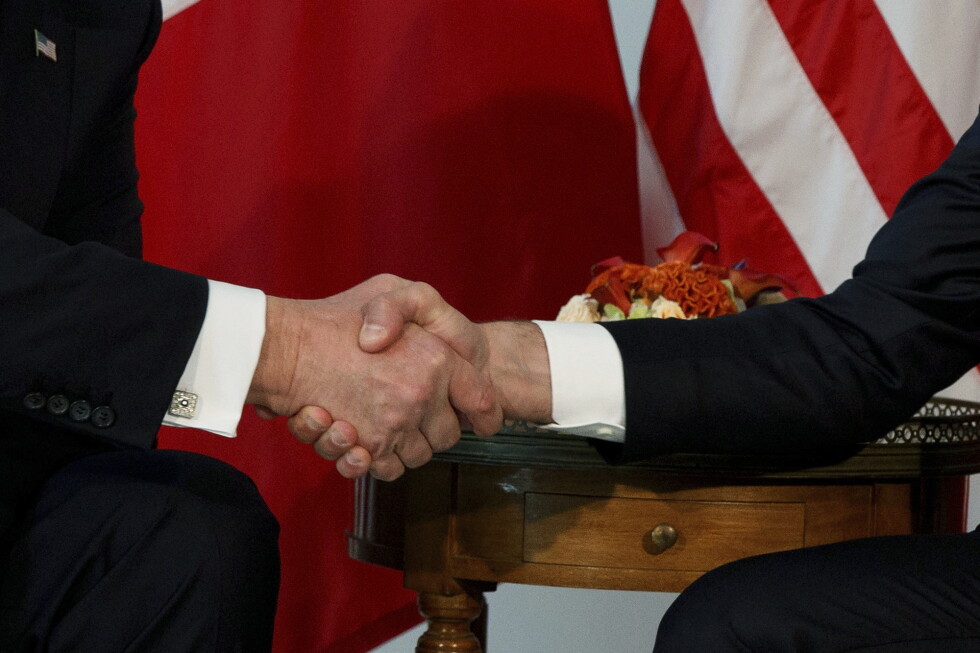
    A passionate advocate for European integration, Habermas frequently criticized German leaders for their “limited interest” in building “a politically effective Europe.” He enthusiastically endorsed French President Emmanuel Macron’s reform vision in 2017, praising his distinctive approach to European discourse.

    Habermas’s personal experiences profoundly informed his philosophical work. Born with a cleft palate that required multiple childhood surgeries, he developed unique insights into language’s essential role in human connection. He described spoken language as “a layer of commonality without which we as individuals cannot exist,” while simultaneously recognizing “the superiority of the written word” in concealing oral imperfections.

    Habermas is survived by two of his three children, Tilmann and Judith, following the passing of his wife Ute Habermas-Wesselhoeft last year and daughter Rebekka in 2023. His intellectual legacy endures as a towering contribution to contemporary thought, having fundamentally transformed our understanding of communication, democracy, and modern society.

  • Iranians grapple with whether to flee the country because of the war

    Iranians grapple with whether to flee the country because of the war

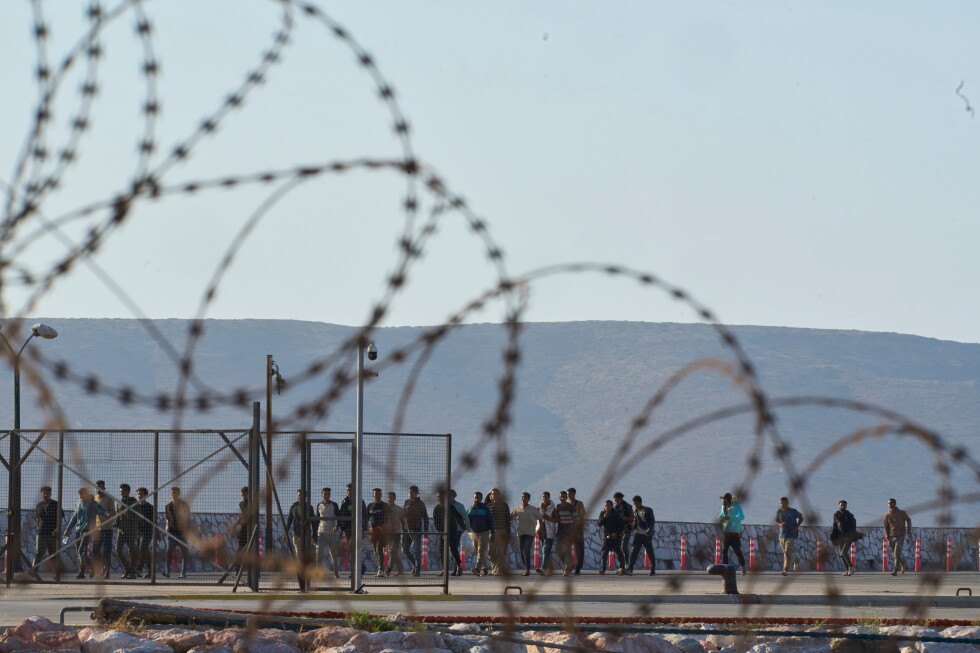
    KAPIKOY BORDER CROSSING, Turkey — Merve Pourkaz, a 32-year-old hairdresser from Iran’s eastern city of Golestan, made the arduous 1,500-kilometer journey to this alpine border crossing after explosions rocked her neighborhood. Her destination: the relative safety of Van, Turkey. ‘If they permit me, I’ll remain in Van until the war concludes,’ she told The Associated Press. ‘Otherwise, I may return home to face whatever fate awaits.’

    Pourkaz represents one of approximately 3.2 million Iranians internally displaced since the outbreak of the U.S.-Israel conflict with Iran, according to UN estimates. While many seek refuge within Iran’s borders or in neighboring nations, a counter-movement sees citizens returning from abroad to protect familial homes and loved ones.

    Current migration patterns reveal complexity: UN data indicates only about 1,300 Iranians cross into Turkey daily, with some days witnessing more returnees than departures. However, neighboring countries and European nations are developing contingency plans amid concerns that prolonged conflict could trigger a full-scale migration crisis.

    This duality of movement is embodied by individuals like Leila Rabetnezhadfard, 45, who abandoned wedding preparations in Istanbul to return to her family in Shiraz, southern Iran. ‘How could I feel secure in Istanbul while my family endures wartime conditions?’ she questioned, citing practical constraints including limited housing space, medical needs, and high costs.

    The International Organization for Migration reports that while large-scale exodus hasn’t materialized, significant internal displacement continues toward rural areas near the Caspian Sea. Salvador Gutierrez, IOM’s mission chief in Iran, attributes this to ‘people prioritizing family unity, safety concerns, and logistical limitations.’

    Experts warn that infrastructure collapse could change this calculus dramatically. ‘If Tehran, a metropolis of 10 million, loses water supply, population movement becomes inevitable,’ noted Alex Vatanka of the Middle East Institute. Such development could strain borders with Pakistan, Afghanistan, Turkmenistan, Azerbaijan, Armenia, Turkey, and Iraq.

    Turkey, having absorbed millions during Syria’s civil war under its previous open-door policy, has adopted a different approach. Reports indicate preparations for border ‘buffer zones’ and temporary settlements, complemented by enhanced border security including 380 kilometers of concrete barriers and numerous observation posts.

    European officials simultaneously grapple with the potential renewal of the 2016 EU-Turkey migration agreement, which provided €6 billion for refugee support in exchange for border control. This comes amid rising anti-immigrant sentiment in Europe and fresh displacement crises elsewhere in the region, including over 800,000 displaced in Lebanon.

    Humanitarian organizations express alarm over dwindling resources. ‘We face potential grave humanitarian consequences precisely when funding has been severely reduced,’ stated Ninette Kelley of the World Refugee & Migration Council, highlighting concerns about global readiness for another large-scale displacement event.

  • Trump seeks to close $1.6 trillion revenue gap with raft of new tariffs

    Trump seeks to close $1.6 trillion revenue gap with raft of new tariffs

    The Trump administration has initiated a comprehensive trade investigation strategy to recover approximately $1.6 trillion in lost tariff revenue following a Supreme Court decision that invalidated the president’s previous import taxes. This revenue was considered crucial for offsetting the substantial costs associated with recent tax cuts.

    Rather than utilizing emergency powers that enabled immediate tariff implementation, the administration is now employing Section 301 of the 1974 Trade Act—a more complex legal framework requiring extensive consultations, public hearings, and industry input. This approach allows affected U.S. companies to seek exemptions and potentially contest the tariffs, creating uncertainty about the ultimate revenue recovery.

    Two major investigations have been launched: the first examines 16 economies including the EU, China, South Korea, and Japan for allegedly subsidizing excessive factory capacity that disadvantages U.S. manufacturing. The second investigation targets dozens of countries including the EU, China, Mexico, Canada, Australia, and Brazil for potentially permitting goods produced through forced labor practices.

    According to economic experts, the administration faces significant challenges in recreating the previous tariff structure. While the 10% temporary tariff currently in effect can only last 150 days, the new investigations cover approximately 70% of imports initially and nearly all imports under the second probe. This breadth suggests the primary objective is revenue generation rather than addressing specific trade concerns.

    Multiple economic studies, including those from the Federal Reserve Bank of New York and Harvard University, indicate that American companies and consumers ultimately bear the cost of tariffs—contrary to the administration’s assertion that foreign countries fund U.S. government services. The Congressional Budget Office estimates the tax cut legislation will add $4.7 trillion to the national debt over a decade, with tariffs previously projected to offset about $3 trillion of that cost.

  • Cocaine worth €5.25m seized and two arrested

    Cocaine worth €5.25m seized and two arrested

    Irish law enforcement authorities have made a major breakthrough in combating organized crime with the interception of cocaine valued at approximately €5.25 million (£4.56 million). The significant narcotics seizure occurred in County Monaghan on Friday following a coordinated multi-agency operation.

    An Garda Síochána executed simultaneous search warrants targeting multiple vehicles and a commercial establishment believed to be connected to drug trafficking activities. The operation resulted in the apprehension of two suspects: a male in his fifties and a female in her forties, both currently detained under drug trafficking legislation.

    The confiscated substances have been transferred to Forensic Science Ireland (FSI) for comprehensive chemical analysis to determine purity, composition, and potential origin. This procedural step is critical for building evidence for subsequent prosecution cases.

    This intelligence-driven intervention was conducted under Operation Tara, a strategic initiative launched in July 2021 specifically designed to dismantle sophisticated drug trafficking networks operating across Ireland. The operation involved specialized units including the National Drugs and Organised Crime Bureau, with tactical support provided by the Dublin Crime Response Team.

    International cooperation played a vital role in the operation’s success, with assistance provided by the Customs Revenue Service and notably, the Belgian Federal Maritime Police, indicating the transnational nature of the investigation. Local Monaghan Garda units also contributed essential regional expertise to the operation.

    Operation Tara represents Ireland’s concentrated nationwide strategy against drug distribution networks, focusing on disrupting every aspect of illegal drug operations from importation and cultivation to street-level distribution and financial proceeds.

  • Pensioner dies after being hit by bus

    Pensioner dies after being hit by bus

    A tragic traffic incident in the coastal town of Bray has resulted in the death of a pedestrian following a collision with a bus. The fatal accident occurred on Station Road at approximately 6:00 PM local time on Thursday evening.

    According to Gardaí (Irish police), the male victim sustained serious injuries during the impact and was immediately transported to St. Vincent’s University Hospital in Dublin for emergency treatment. Despite medical efforts, the man succumbed to his injuries and passed away on Friday evening.

    Irish law enforcement authorities have confirmed that a comprehensive technical examination of the accident scene has been conducted by forensic investigators. The investigation aims to determine the precise circumstances that led to the collision. A post-mortem examination will be performed to establish the exact cause of death, which is standard procedure in such cases.

    The incident has prompted local authorities to review safety measures along Station Road, a thoroughfare that experiences significant vehicular and pedestrian traffic. Community representatives have expressed condolences to the victim’s family while calling for enhanced road safety initiatives.

    This marks the latest in a series of road traffic fatalities across the Republic of Ireland, highlighting ongoing concerns regarding pedestrian safety and public transportation infrastructure. Gardaí continue to appeal to any witnesses who may have observed the events leading to the collision to come forward with information.

  • Russian strike on the Kyiv region kills 4 and wounds at least 15, with peace talks stalled

    Russian strike on the Kyiv region kills 4 and wounds at least 15, with peace talks stalled

    KYIV, Ukraine — A severe overnight missile and drone offensive struck the Kyiv region, resulting in at least four fatalities and injuring 15 individuals, with three victims in critical condition. Mykola Kalashnyk, head of the regional administration, confirmed the assault damaged residential areas, educational facilities, enterprises, and critical infrastructure across four districts.

    Ukrainian President Volodymyr Zelenskyy identified energy infrastructure as the primary target, revealing Russia launched approximately 430 drones and 68 missiles. This escalation occurs amid heightened global tensions following the U.S. postponement of peace talks between Russia and Ukraine, attributed to the ongoing Middle East conflict.

    Analysts observe Moscow strategically benefits from Middle East hostilities through surging global energy prices, while potentially diverting Western attention and military resources away from Ukraine. Zelenskyy urgently appealed to Western allies for enhanced air defense missile production, warning that Russia intends to exploit Middle Eastern turmoil to intensify European destruction.

    Simultaneously, Kyiv awaits White House approval for a major drone production agreement proposed last year. Zelenskyy separately criticized the U.S. 30-day waiver on Russian oil sanctions, estimating it could provide Moscow with approximately $10 billion in war funding.

    In retaliatory actions, Ukrainian drones struck Russia’s southern Krasnodar region, damaging the Afipsky oil refinery and Port Kavkaz infrastructure, injuring three individuals. These developments unfold as both nations claim tactical advances along the front lines, despite Russia’s invasion entering its fifth year.

  • Explosion at Amsterdam Jewish school ‘a deliberate attack’ says mayor

    Explosion at Amsterdam Jewish school ‘a deliberate attack’ says mayor

    Amsterdam’s mayor Femke Halsema has characterized an explosion at a Jewish educational institution as a calculated assault on the city’s Jewish population. The incident occurred overnight in the Buitenveldert neighborhood, where an explosive device detonated against the school’s exterior wall, causing limited structural damage but no injuries.

    Authorities have intensified security measures around Jewish communal buildings following a recent suspected arson attempt at a Rotterdam synagogue just days earlier. Emergency services responded promptly to the blast, with police now scrutinizing surveillance footage that allegedly captures an individual planting the explosive device.

    Mayor Halsema expressed solidarity with the Jewish community, acknowledging their legitimate fears and outrage. ‘This reprehensible act of cowardice targets a community that increasingly faces antisemitic hostility,’ she stated, emphasizing Amsterdam’s fundamental commitment to ensuring Jewish residents’ safety and security.

    The investigation remains ongoing with law enforcement officials refraining from speculating about potential motivations behind the attack. This incident occurs amid global security concerns for Jewish and American institutions following recent military actions involving Israel and the United States against Iranian targets.

  • Rescuers blame weather and ‘underprepared skiers’ for rise in Alps avalanche deaths

    Rescuers blame weather and ‘underprepared skiers’ for rise in Alps avalanche deaths

    From the aerial perspective of a rescue helicopter soaring above the French Alps, the mountain range reveals a scarred landscape. Fresh avalanche tracks mar the pristine white slopes, serving as stark reminders of a particularly lethal winter season. According to the European Avalanche Warning Services, this season’s death toll has surpassed 100 fatalities—a grim statistic not witnessed in nearly a decade.

    The Tarentaise valley network, while breathtakingly beautiful under its dense snow blanket, has become increasingly treacherous. Frédéric Bonnevie, a mountain patroller with 32 years of experience, observes significant environmental shifts. ‘As with all around the world, the climate is changing,’ he notes, pointing to shorter winter seasons and premium powder snow now found at higher elevations. This season’s substantial snow accumulation has proven unusually unstable, contributing to a dramatic spike in avalanche-related fatalities.

    A concerning pattern emerges among avalanche victims. According to Stéphane Bornet, director of French snow safety association Anena, many are technically proficient skiers who frequent the resorts but lack comprehensive mountain environment knowledge. ‘Several victims didn’t possess basic safety kits—transceivers to signal their location or shovels,’ Bornet reveals. ‘They also neglected fundamental route research.’

    The survival statistics present a sobering reality: carrying a transceiver increases avalanche survival chances to 70%, with the initial 16 minutes following burial being critical. Without this equipment, survival rates plummet to 20%, while rescue operations require substantially more personnel and resources.

    Veteran slope patroller Pierre Boulonnais, with 17 years serving Val Thorens, demonstrates the snow’s hidden dangers through a simple excavation. Beneath 60 centimeters of soft powder lies densely compressed snow—invisible to the eye but potentially deadly. ‘If trapped under just 50 centimeters of this density, you already have over a quarter tonne weighing upon you,’ Bornet explains.

    The French media has extensively covered recent avalanche incidents, including the tragic discovery of two female skiers buried in La Chapelle d’Abondance and the helicopter evacuation of 64 residents from an isolated village in Isère. These events have sparked debates about climate change impacts and calls for ‘foreigners and the reckless’ to bear rescue costs.

    Despite elevated risk awareness, many visitors like snowboarder Bella acknowledge feeling ‘twitchy’ due to social media avalanche reports, though lowered risk ratings provide some reassurance. Meanwhile, rescue crews maintain that avalanche dangers remain significantly high.

    Beyond environmental factors, rescuers identify concerning behavioral shifts. An off-piste instructor with 25 years’ experience observes that modern skiers increasingly venture into dangerous terrain immediately after snowfall to maximize limited vacation time, rather than allowing proper snow settlement. Bonnevie concurs: ‘The new generation wants to be the best, biggest, and quickest.’

    While avalanche deaths have reached similar heights previously, and climate change’s exact role requires further examination, temperature fluctuations undoubtedly affect snowfall patterns. ‘We had substantial snow in late October, insufficient accumulation during Christmas holidays, then heavy snowfall in January creating high avalanche risks,’ Bonnevie explains.

    Officials emphasize that human complacency represents a manageable factor compared to climatic changes. Bornet concludes: ‘Remember that mountains constitute a magnificent playground and adventure field. Let’s ensure your memories remain positive ones.’

  • Refocused US rebounds from Italy shocker, beats Canada to reach WBC semifinals

    Refocused US rebounds from Italy shocker, beats Canada to reach WBC semifinals

    HOUSTON — Demonstrating remarkable resilience, the United States baseball squad has secured a coveted spot in the World Baseball Classic semifinals with a decisive 5-3 triumph over Canada on Friday. This critical victory marks a significant comeback for the All-Star-laden roster, which faced intense scrutiny following an unexpected 8-6 defeat to Italy during pool play that nearly jeopardized their tournament progression.

    The team’s journey to the quarterfinals was ultimately secured through Italy’s subsequent victory over Mexico, which clinched Pool B for Italy and awarded the U.S. team second place. This narrow escape fueled what players described as a transformed mentality. New York Yankees superstar Aaron Judge observed an exceptional shift in team focus, noting, ‘Guys really locked in. We saw a different level of focus at our workout the other day and then even pregame today. It felt like the boys were locked and ready to go.’

    The earlier loss to Italy had prompted criticism directed particularly at manager Mark DeRosa, who had prematurely declared the team’s advancement in a television interview. However, players uniformly dismissed external negativity, with Judge emphasizing the team’s compartmentalization of criticism: ‘There’s a lot of noise that’s been going on with that. And I think it just speaks volumes to the players in this room, the manager we’ve got, everybody, that no matter what’s being said about us, what’s going on, we still got a job to do on the field.’

    Philadelphia Phillies first baseman Bryce Harper reinforced this sentiment, stating, ‘People are going to have their opinion about us. I don’t think any of them are going to be sitting at our dinner table or our Thanksgiving dinner, so it doesn’t really matter what anybody says.’

    On the mound, starter Logan Webb delivered 4 2/3 scoreless innings, providing the defensive foundation for the victory. Webb acknowledged the unconventional path to advancement, describing the opportunity as ‘a second chance’ that generated ‘a newfound energy today.’

    Third baseman Alex Bregman praised the team’s professional response to adversity, highlighting the collective mindset: ‘One of the biggest things that you see around all these great players is everyone’s present and they’re not worried about the future or the past. They’re worried about that game, that moment, that pitch, the next pitch.’

    The victory sets up a highly anticipated semifinal matchup against the Dominican Republic on Sunday, who advanced with a commanding 10-0 victory over South Korea. The U.S. will counter with reigning NL Cy Young Award winner Paul Skenes against a Dominican lineup equally rich with superstar talent. Manager DeRosa anticipates an historic confrontation, predicting the matchup will be ‘like one of the best games of all time.’

    With the team now headed to Miami for the semifinals, Judge expressed enthusiasm for the playoff atmosphere arriving unusually early in the calendar year: ‘The boys are excited, that’s for sure. Definitely getting a taste for playoff atmosphere in March, definitely gets the juices flowing a little bit.’