标签: Europe

欧洲

  • Why France is bolstering military presence in the Middle East, as Macron prepares for postwar talks

    Why France is bolstering military presence in the Middle East, as Macron prepares for postwar talks

    In a significant strategic move, France has dramatically enhanced its military footprint across the Middle Eastern theater, deploying its nuclear-powered aircraft carrier Charles de Gaulle alongside eight warships and two helicopter carriers. President Emmanuel Macron characterized this naval mobilization as “unprecedented” while simultaneously maintaining that France’s posture remains strictly defensive in nature.

    The deployment positions France as the European nation with the most substantial military presence in the region, aimed at reinforcing anti-drone capabilities, ensuring maritime security in critical waterways like the Red Sea, and establishing readiness for potential emergency evacuations. This military calculus is particularly relevant given France’s substantial expatriate population exceeding 400,000 across Middle Eastern nations.

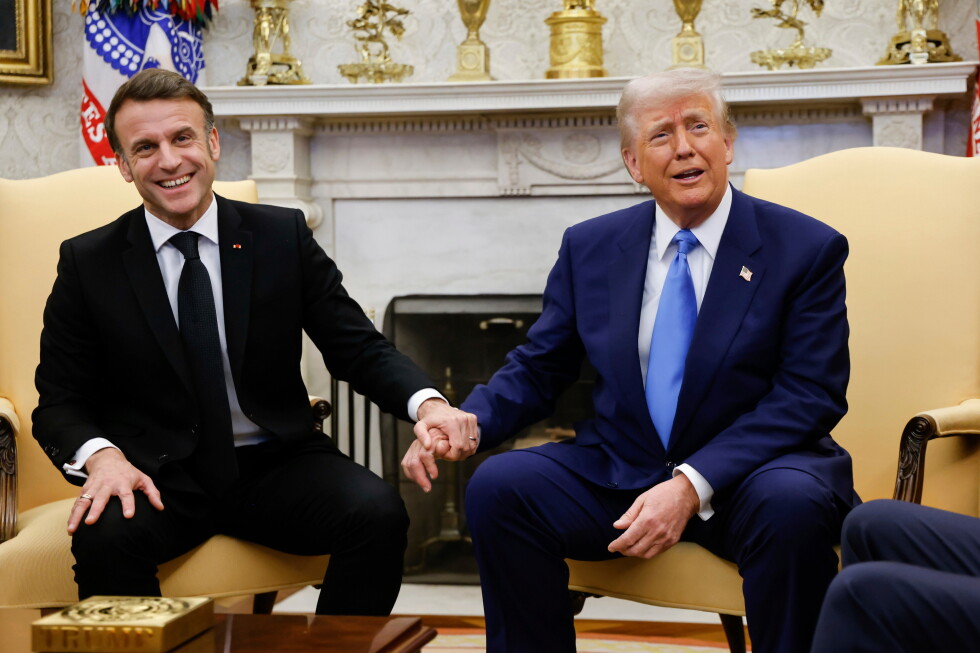
    Concurrent with military preparations, Macron has embarked on intensive diplomatic engagements, becoming the first Western leader to initiate contact with Iranian President Masoud Pezeshkian since the outbreak of hostilities. These conversations have emphasized the urgent need for de-escalation, though tangible results remain elusive. France’s diplomatic corps is additionally focused on stabilizing Lebanon, where historical ties remain strong, through support for governmental institutions and humanitarian assistance.

    The complexity of France’s dual-track approach was underscored by a recent drone attack in northern Iraq that resulted in the death of a French soldier, highlighting the inherent risks of regional engagement. While France maintains defense agreements with Gulf allies including Qatar, Kuwait, and the UAE—where interception operations have already occurred—analysts question Paris’s actual diplomatic leverage to meaningfully influence the conflict’s trajectory.

  • ‘Mr. Nobody Against Putin’ wins best documentary feature Oscar for teacher who opposed Ukraine war

    ‘Mr. Nobody Against Putin’ wins best documentary feature Oscar for teacher who opposed Ukraine war

    LOS ANGELES — In a striking moment of cinematic triumph and political statement, “Mr. Nobody Against Putin” claimed the Academy Award for Best Documentary Feature at Sunday’s Oscars ceremony. The film offers a courageous examination of how Russia’s youth are being indoctrinated with pro-war propaganda following the invasion of Ukraine.

    Accepting the award through a translator, the film’s protagonist and co-director Pavel Talankin delivered an impassioned plea in Russian: “In the name of our future, in the name of all of our children, stop all of these wars now.” Talankin, a former teacher and activities director from a small Russian town, secretly documented his students’ lessons, chants, and songs promoting the Ukraine conflict. He risked his safety by smuggling hard drives out of the country to collaborate with American director David Borenstein, who is based in Copenhagen.

    The acceptance speeches provided some of the evening’s most overtly political moments. Backstage, Talankin revealed his students had helped craft his speech. Borenstein addressed the broader theme of nations descending into totalitarianism, drawing clear parallels between his own country and Talankin’s.

    “‘Mr. Nobody Against Putin’ is about how you lose your country,” Borenstein stated. “You lose it through countless small little acts of complicity.” The director received growing applause as he elaborated that countries are lost when citizens remain silent as governments kill people in the streets and oligarchs consolidate media control.

    Kremlin spokesman Dmitry Peskov declined to comment on the award, stating he had not seen the documentary.

    Distributed by Apple TV, the film premiered at last year’s Sundance Film Festival. Its tone blends light, almost mischievous comedy with serious political commentary, with Talankin occasionally channeling the style of fellow documentary Oscar winner Michael Moore. The victory marked an upset over frontrunner “The Perfect Neighbor,” a Netflix production constructed primarily from police body camera footage.

    The Ukraine conflict has consistently featured prominently in recent Oscar documentary categories. This follows last year’s win by The Associated Press’ “20 Days in Mariupol” and the nomination this year of “Armed Only With a Camera: The Life and Death of Brent Renaud,” about an American journalist killed in the war.

    In the documentary short category, “All the Empty Rooms” prevailed, chronicling efforts to memorialize the bedrooms of children killed in mass shootings. The filmmakers yielded their acceptance time to Gloria Cazares, mother of 9-year-old Jackie who died in the Uvalde shooting, who made an emotional appeal for gun reform.

  • Is this product ‘human-made’? The race to establish an AI-free logo

    Is this product ‘human-made’? The race to establish an AI-free logo

    A worldwide movement is gaining momentum as organizations scramble to establish a universally recognized certification system for human-created products and services. This emerging trend represents a significant cultural pushback against the pervasive integration of artificial intelligence across creative and commercial sectors.

    Multiple initiatives from the UK, Australia, and the United States are developing distinctive labels including “Proudly Human,” “Human-made,” “No A.I,” and “AI-free” declarations. These markings are increasingly appearing across films, marketing materials, literary works, and digital platforms. The movement stems from growing concerns that AI-powered automation threatens to displace entire professions and diminish the value of human creativity.

    BBC News has identified at least eight separate initiatives competing to develop a certification standard that could achieve global recognition comparable to the Fair Trade logo. However, experts warn that this proliferation of competing labels, coupled with fundamental confusion about what constitutes “AI-free” content, risks creating consumer uncertainty rather than clarity.

    Dr. Amna Khan, consumer behavior expert at Manchester Metropolitan University, emphasizes: “AI is creating significant disruption, and competing definitions of what is ‘human made’ are confusing consumers. A universal definition is essential to build trust, clarification and confidence.”

    The certification landscape varies dramatically between organizations. Some platforms like no-ai-icon.com, ai-free.io and notbyai.fyi offer downloadable badges for free or minimal fees with little to no verification process. In contrast, systems like aifreecert require payment and implement rigorous vetting procedures utilizing professional analysts and AI-detection software.

    Technical challenges present substantial obstacles to standardization. AI Research Scientist Sasha Luccioni explains: “AI is now so ubiquitous and integrated into different platforms and services that establishing what ‘AI free’ means is truly complicated. From a technical perspective, it’s hard to implement. I think AI exists on a spectrum, and we need more comprehensive certification systems rather than a binary AI/AI-free approach.”

    The creative industries have emerged as ground zero for this movement. The 2024 Hugh Grant thriller Heretic explicitly stated in its closing credits that “No generative AI was used in the making of this film.” Film distributor The Mise en scène Company has incorporated a ‘No AI was used’ stamp into promotional materials for its latest production.

    CEO Paul Yates articulates the industry perspective: “We support the AI industry and think it’s an exciting time, but we believe AI content creates an economic premium for human-made content, and we want to leverage that.”

    Publishing has similarly embraced authentication efforts. Faber and Faber began applying “Human Written” stamps to select titles, with author Sarah Hall requesting the designation for her novel Helm, describing unauthorized use of books to train AI models as “creative larceny at scale.”

    UK company Books by People has established a certification system requiring publishers to complete detailed questionnaires about their practices and author vetting procedures, supplemented by periodic sample testing. Meanwhile, Australia’s Proudly Human implements even more rigorous verification throughout the publication process, including monitoring changes from manuscript to ebook formats.

    Alan Finkel of Proudly Human asserts the necessity of third-party verification: “A certification of ‘human origin’ is needed, but self-certification isn’t sufficient. We’ve established a full verification process to ensure truly human-originated material.”

    As these competing standards evolve, the fundamental challenge remains establishing technical and ethical consensus around what constitutes human creativity in an age of increasingly sophisticated artificial intelligence.

  • Ukraine’s urgent fight on the financial frontline

    Ukraine’s urgent fight on the financial frontline

    While Ukrainian soldiers continue their defense against Russian aggression, the government in Kyiv is simultaneously waging a crucial economic battle to secure the nation’s financial stability and future prosperity. This economic frontline represents an unseen but equally critical theater in the ongoing conflict.

    Ukraine’s Finance Minister Sergii Marchenko emphasizes the strategic importance of economic resilience, stating, “Our strong army depends on our strong economy because all internally mobilized resources are channeled toward national defense.” The minister articulates a vision beyond immediate survival, expressing Ukraine’s ambition to evolve from being “just a poor neighbor” to becoming a valuable provider of military expertise to Europe.

    International financial support has become the lifeline sustaining Ukraine’s economy. A monumental €90 billion ($105 billion) EU loan, approved by the European Parliament, forms the centerpiece of a $136.5 billion international support package. The first tranche is anticipated in April, providing critical budgetary support. Concurrently, the International Monetary Fund has approved an $8.1 billion loan program, with an initial $1.5 billion disbursement already received.

    These external funds are particularly crucial since American financial assistance has diminished. Minister Marchenko acknowledges that without international support, Ukraine cannot survive given its current circumstances. However, he emphasizes that Ukrainian taxpayers remain the primary contributors to military funding.

    Domestic revenue mobilization has intensified through controversial tax increases implemented in December 2024—the first since the war began—affecting personal incomes, small businesses, and financial institutions. These measures are projected to generate $67.5 billion in government revenue this year, representing a 15% increase from the previous year.

    Despite these efforts, Ukraine faces a significant budgetary shortfall. The 2026 budget outlines $112 billion in spending, with approximately 60% allocated to military expenditures. This creates a $45 billion gap that the government aims to bridge through additional tax legislation, including increased taxation on digital platforms and reduced VAT exemptions as stipulated by IMF conditions.

    The path to economic stability faces multiple obstacles. Hungary’s Prime Minister Viktor Orban has temporarily blocked EU financial assistance amid accusations of an “oil blockade” from Ukraine. Kyiv attributes pipeline repair delays to Russian attacks that have injured repair crews. The outcome of upcoming Hungarian elections may significantly influence this diplomatic and economic standoff.

    Energy infrastructure damage presents another formidable challenge. Finance Minister Marchenko identifies electricity insufficiency as the economy’s primary constraint, forcing businesses to rely on generators and reducing productivity while increasing costs. Common sights of generators outside businesses underscore the energy sector’s difficulties, which the central bank acknowledges will “restrain business activity for a long time.”

    Civilian economic hardships persist despite decreasing inflation from its wartime peak of 26.6% to the current 7.4%. Pensioners like 65-year-old Tetiana describe working additional jobs because pensions prove insufficient amid rising food and utility prices. Restaurant worker Mykyta, 19, reports staffing challenges and operational difficulties during power outages.

    The reconstruction outlook appears daunting. A collaborative assessment by the Ukrainian government, EU, World Bank, and UN estimates recovery costs at $588 billion—nearly two-and-a-half times Ukraine’s entire economy—encompassing housing, infrastructure repair, and mine clearance.

    Despite these challenges, optimism persists within business circles. Gennadiy Chyzhykov, President of the Ukrainian Chamber of Commerce and Industry, reports growing foreign business interest and investment inquiries. “They believe in victory and they believe in good business in Ukraine,” he states, noting increased delegations investigating post-war reconstruction opportunities.

    The European Bank for Reconstruction and Development has committed over $10 billion in Ukraine since the conflict began. President Odile Renaud-Basso acknowledges the “immense” challenges but expresses confidence in their management, emphasizing that “a real, just peace, credible peace settlement will be key” for investor confidence.

    Labor shortages present additional reconstruction hurdles. The UN’s International Labor Organization projects a deficit of 8.7 million workers, with millions having either joined military forces or left the country. Business leaders suggest importing foreign workers as a potential solution.

    Through these multifaceted challenges, Finance Minister Marchenko maintains that wartime economic pressures are driving transformations that could ultimately create “a better economy for the future.” He concludes with determined resolve: “The Ukrainian people, our government, and economy are resilient and determined to fight this war because we defend ourselves and we will.”

  • Sinner matches Federer & Djokovic with Indian Wells win

    Sinner matches Federer & Djokovic with Indian Wells win

    Jannik Sinner has cemented his status as a hard-court tennis legend by capturing the Indian Wells title, completing a historic sweep of all premier hard-court championships. The 24-year-old Italian superstar defeated Daniil Medvedev 7-6 (8-6) 7-6 (7-4) in a thrilling final that showcased exceptional serving and mental fortitude under the intense California sun.

    This victory marks Sinner’s culmination of an extraordinary hard-court achievement set, making him the youngest male player to secure all six Masters 1000 titles on hard surfaces, both hard-court Grand Slam championships (Australian Open 2024-2025, US Open 2024), and the season-ending ATP Finals. Only tennis icons Novak Djokovic and Roger Federer have accomplished this remarkable feat previously.

    The championship match saw Sinner demonstrate impeccable serving performance, winning 43 of 47 first-serve points and not facing a single break opportunity against the resurgent Russian. Despite Medvedev’s strong comeback attempt in the second set tie-break, where he led 4-0, Sinner mounted an impressive seven-point consecutive run to seal his victory in straight sets.

    Sinner acknowledged the significance of his achievement, stating: ‘This tournament was missing from my collection, so I prepared with maximum professionalism. Having this accomplishment now means everything to me.’ The world number two now looks toward the Miami Open, where he aims to continue his dominant form.

    Meanwhile, Medvedev’s performance despite travel disruptions caused by Middle East conflicts demonstrates his return to elite form, with his semi-final victory over world number one Carlos Alcaraz propelling him back into the top 10 rankings. In related news, Novak Djokovic has withdrawn from the upcoming Miami Open due to a right shoulder injury, missing the opportunity to defend his runner-up position from last year’s tournament.

  • Laporta set to win another term as Barcelona president after opponent concedes election

    Laporta set to win another term as Barcelona president after opponent concedes election

    BARCELONA, Spain — Joan Laporta has secured a decisive mandate to lead FC Barcelona for a second consecutive term following a resounding victory in the club’s presidential election held on Sunday. Preliminary results indicate Laporta commanding approximately 70% of the vote, a margin so substantial that his sole opponent, Víctor Font, publicly conceded defeat and extended congratulations for what he termed an “unquestionable victory.

    The electoral process witnessed robust participation, with over 48,000 socios (club members) casting ballots from a total membership of 114,000. Voting was conducted primarily at the iconic Camp Nou stadium, supplemented by four additional polling stations strategically located across the Catalonia region and in Andorra to facilitate broader member access.

    Laporta’s deep-rooted legacy with the club was a pivotal factor in his electoral success. He previously helmed the institution from 2003 to 2010, a period widely regarded as a golden era that featured the managerial genius of Pep Guardiola and the emergence of a young Lionel Messi. After an eleven-year hiatus, Laporta returned to the presidency in 2021. This overwhelming reelection underscores the membership’s continued confidence in his leadership and strategic vision to navigate the club through its current sporting and financial challenges, aiming to restore its position at the pinnacle of European football.

  • Italian team players celebrate WBC success with la dolce vita: espresso, wine and Armani

    Italian team players celebrate WBC success with la dolce vita: espresso, wine and Armani

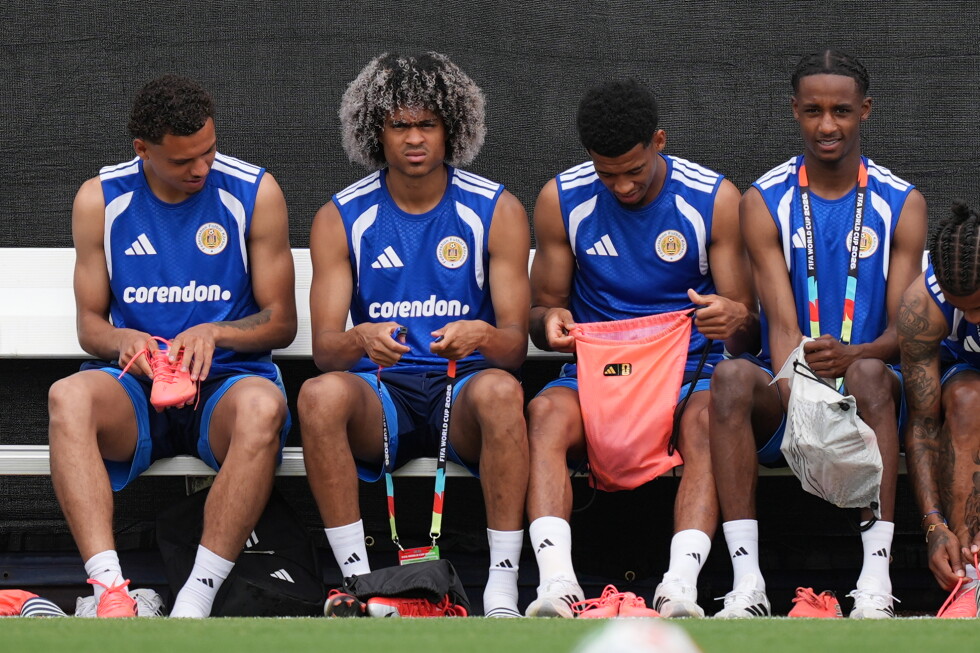
    MIAMI — In a stunning display of skill and cultural flair, Italy’s national baseball team has carved its name into World Baseball Classic history, securing an unprecedented semifinal berth after defeating Puerto Rico. The team’s remarkable 5-0 run has been powered by dominant pitching performances and celebrated with distinctive Italian traditions that have captured international attention.

    Right-hander Dylan DeLucia delivered a masterclass on the mound, pitching four scoreless innings that cemented Italy’s advancement. The victory sparked an overwhelming response that left the pitcher scrambling to manage a flood of multilingual congratulations. “I opened my phone after the game to like 60 DMs and it was in words… I didn’t know how to say,” DeLucia recounted. “So definitely going to have to do some Google translate, for sure.”

    The team’s celebration rituals have become as noteworthy as their performance. Each home run is commemorated with shots of espresso from a Lavazza Classy Mini machine, operated by team captain Vinnie Pasquantino, who also bestows traditional kisses on both cheeks of home-run hitters. Following victories, players receive premium Italian wines curated by New York Yankees publicist Jason Zillo, with selections ranging from Francesco Rinaldi Barolo to Bertani Amarone della Valpolicella Classico.

    Despite baseball’s minority status in the soccer-dominated nation, the team’s success has generated significant attention in Italian media. La Gazzetta Sportiva featured the accomplishment with the headline “CHE ITALIA” and “Altra impresa” (What an Italy… another feat). Team manager Francisco Cervelli, a former MLB catcher who moved to Florence last year, noted the growing excitement: “In the south of Italy they don’t play that much baseball and yesterday everyone was watching the game.”

    The roster presents an interesting composition, with only three players born in Italy: Sam Aldegheri of the Los Angeles Angels, and Italian Serie A pitchers Gabriele Quattrini and Claudio Scotti. The remainder consists of Italian-eligible talent including Philadelphia All-Star pitcher Aaron Nola and Kansas City first baseman Pasquantino, who qualified through his great-grandfather’s heritage.

    Italy now faces Venezuela for a chance to advance to the championship against either the United States or the Dominican Republic, carrying both their exceptional record and unique cultural traditions into the critical matchup.

  • Sweden detains captain of Russian shadow fleet ship

    Sweden detains captain of Russian shadow fleet ship

    In a significant enforcement action against Russia’s sanctions evasion network, Swedish authorities have detained the Russian captain of an oil tanker suspected of operating under a falsified flag. The judicial ruling came after the Swedish Coast Guard intercepted the 228-meter vessel Sea Owl One in territorial waters south of Trelleborg on Thursday evening.

    The captain, whose identity remains undisclosed, appeared before the Ystad court following his arrest on Friday by the Swedish Prosecution Authority. The 55-year-old faces serious allegations of utilizing forged documentation while commanding the tanker, which was sailing under what authorities believe was an illegitimate Comoran flag. The European Union had previously sanctioned this vessel as part of its restrictions on Russian oil exports.

    According to official statements, coast guard officers became suspicious when the Sea Owl One’s registration appeared inconsistent with the official ship registry of the Comoros, an African island nation. Their suspicions intensified when the captain presented documents that exhibited signs of being non-genuine during the boarding procedure.

    The tanker was intercepted during its journey from Santos, Brazil to Primorsk on Russia’s Baltic coast—a route it has frequently traveled to transport oil between Russia and Brazil, according to the Swedish coast guard. This incident marks the second seizure within a week by Swedish authorities targeting Russia’s so-called ‘shadow fleet,’ following the interception of the Guinean-flagged cargo ship Caffa on March 6th under similar circumstances.

    The Russian Embassy in Sweden confirmed that 10 of the 24 crew members aboard the Sea Owl One are Russian nationals, with the remaining seafarers originating from Indonesia. Embassy officials stated they are ‘closely monitoring the situation’ but have not provided additional commentary.

    This enforcement action aligns with broader Western efforts to disrupt Moscow’s reliance on tankers with obscure ownership and insurance structures designed to circumvent sanctions imposed after Russia’s 2022 invasion of Ukraine. France has conducted similar operations, seizing vessels including the Grinch in the Mediterranean and the Boracay in the Atlantic.

    Beyond sanctions evasion, Russia’s shadow fleet has been accused of engaging in ‘spoofing’ location data, damaging undersea infrastructure, and facilitating drone operations. The detained captain remains in custody for what is typically a 14-day period as prosecutors prepare for further interrogation proceedings.

  • Michael Lorenzen to start for Italy, Keider Montero for Venezuela in World Baseball Classic semi

    Michael Lorenzen to start for Italy, Keider Montero for Venezuela in World Baseball Classic semi

    MIAMI — The World Baseball Classic semifinal matchup between Italy and Venezuela on Monday night will feature a compelling pitching duel between two right-handers with distinctly different career trajectories. Veteran Michael Lorenzen will take the mound for Italy while emerging talent Keider Montero gets the start for Venezuela in what promises to be a historic contest for both teams.

    Lorenzen, 34, brings considerable experience to the game following his impressive performance during the group stage, where he delivered 4 2/3 scoreless innings in Italy’s stunning 8-6 victory over tournament favorites the United States. His selection has received strong endorsement from Italy’s manager Francisco Cervelli, a former major league catcher familiar with Lorenzen’s capabilities. “I faced him many times,” Cervelli remarked. “This is the perfect guy.”

    The All-Star pitcher, who recently secured an $8 million, one-year contract with the Colorado Rockies after posting a 7-11 record with a 4.64 ERA for Kansas City last season, represents Italy’s best chance to advance to their first-ever championship final in the tournament’s history dating back to 2006.

    Opposing him will be Venezuela’s Montero, a 25-year-old who demonstrated his potential with three scoreless relief innings during Venezuela’s 4-0 first-round victory against Nicaragua. Despite being optioned to Triple-A Toledo six times last season, Montero compiled a 5-3 record with a 4.37 ERA during his time with Detroit and notably recorded a save in the AL Division Series opener against Cleveland.

    Both teams have made strategic roster adjustments ahead of the critical matchup. Italy replaced left-hander Dylan DeLucia with Joe Jacques after DeLucia threw 58 pitches in Saturday’s quarterfinal victory over Puerto Rico, making him ineligible under tournament pitch-count regulations. Venezuela’s lineup remains focused on overcoming their semifinal hurdle, having lost their only previous appearance in 2009 against South Korea.

    The winner will advance to face either the United States or the Dominican Republic in Tuesday night’s championship final, with Italy potentially starting Aaron Nola should they secure victory.

  • French police detain brothers over ‘lethal and antisemitic’ plot

    French police detain brothers over ‘lethal and antisemitic’ plot

    French counterterrorism authorities have launched a formal investigation into two brothers accused of orchestrating a potentially deadly antisemitic attack. The suspects, identified as Moroccan-Italian nationals aged 20 and 22, were apprehended last week in northern France while traveling in a vehicle containing alarming evidence.

    Law enforcement officials discovered a loaded semi-automatic weapon, a container of hydrochloric acid, and an Islamic State group flag during the search of their car. The arrest comes amid heightened global security concerns as the Middle East conflict enters its third week, with numerous countries increasing vigilance against potential terrorism inspired by the ongoing hostilities.

    The brothers arrived in France with their parents in 2017 after residing in Italy for several years. According to anti-terrorism prosecutors, the siblings had recently developed a concrete terrorist plan within France after determining they could not participate in jihadist activities in Syria or Palestinian territories. Official statements indicate both men “aspired to martyrdom” through their planned operation.

    Digital evidence extracted from seized electronic devices, combined with testimonies from family members, revealed a progressive radicalization process over the past two years. Investigators noted a “marked intensification of their jihadist commitment” in the days immediately preceding their capture. While specific details of the alleged plot remain undisclosed, authorities confirmed the brothers had taken concrete steps toward executing a “lethal and antisemitic” attack.

    This case emerges against a backdrop of escalating violence targeting Jewish communities worldwide. Recent incidents include an explosion at a Jewish school in Amsterdam, a suspected arson attack on a Rotterdam synagogue, an explosion damaging a synagogue in Liège, Belgium, and a vehicular attack on a Michigan synagogue by a Lebanon-born assailant who subsequently took his own life. Security experts have expressed concerns that strikes between the US, Israel, and Iran could further exacerbate threats against Jewish populations globally.