
NEW YORK – A groundbreaking international study has pushed back the earliest confirmed evidence of human plague infection by more than 200 years, uncovering pathogen DNA in 5,500-year-old human remains recovered from ancient cemeteries near Siberia’s Lake Baikal. The discovery upends previous timelines for the origins of one of humanity’s deadliest diseases, which has shaped global population history for millennia. The team of genetic researchers published their findings Wednesday in the peer-reviewed journal *Nature*.
标签: Europe
欧洲
-

Record-breaking heatwave develops across Europe
A severe, record-challenging heatwave is currently gaining strength across the entire European continent, bringing unseasonably high temperatures that are on track to break long-standing local climate records. According to reporting from climate correspondent Simon King, the sweltering conditions are forecast to keep intensifying over the coming days, with France’s capital city of Paris projected to see temperatures climb as high as 40 degrees Celsius as early as Sunday.
Meteorological agencies across the continent have already issued heat warnings for multiple regions, as high pressure systems trap warm air moving up from northern Africa. The rapidly rising temperatures are raising concerns for public health, infrastructure strain, and increased wildfire risk in affected areas, with authorities advising vulnerable populations to stay hydrated and avoid unnecessary outdoor exposure during the hottest parts of the day. What makes this event notable is its early timing in the summer season, with many areas set to exceed average peak temperature records for this time of year by several degrees.
-
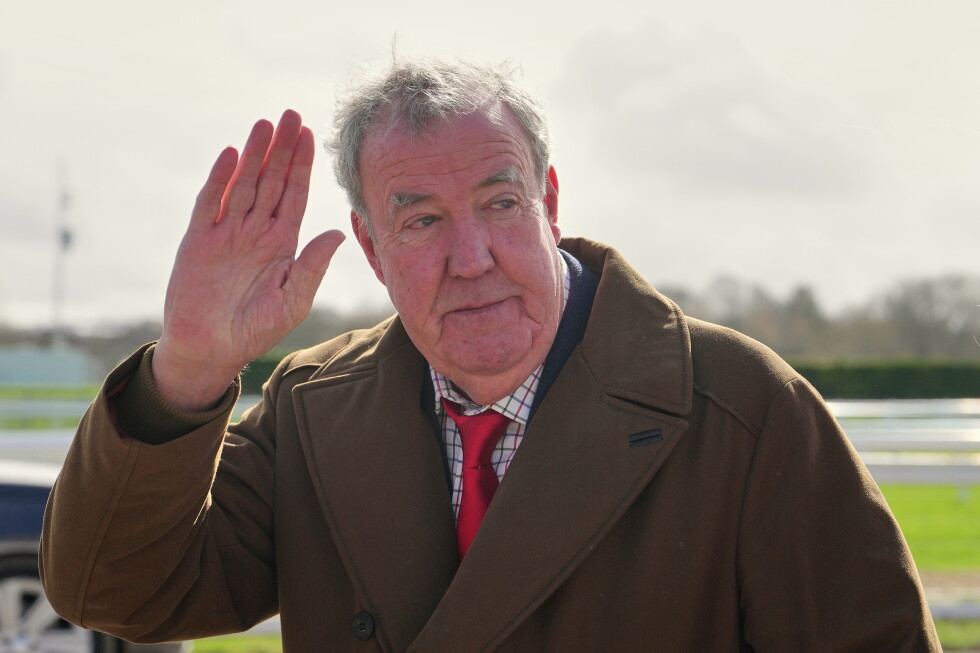
British TV personality Jeremy Clarkson reveals prostate cancer in final ‘Clarkson’s Farm’ episodes
LONDON — One of Britain’s most recognizable television personalities, Jeremy Clarkson, has opened up about a serious new health diagnosis in the latest installment of his hit Amazon Prime reality series *Clarkson’s Farm*, announcing he is living with early-stage aggressive prostate cancer. At 66 years old, Clarkson shared the deeply personal update with viewers in the recently released final episodes of the show’s fifth season, which documents his hands-on experiences running Diddly Squat Farm, a 1,000-acre working farm in the Oxfordshire countryside.
Ahead of the episodes’ global release on Wednesday, Clarkson took to social media platform Instagram on Tuesday to warn fans that the content would stray from the series’ usual lighthearted tone. “Ordinarily we try to keep the show bucolic and charming, and cheerful, but two episodes which drop in the middle of the night tonight are, they’re none of those things,” he wrote in the post. “They’re a difficult watch, they’re really, really difficult.” The moment of revelation unfolds mid-episode during routine harvest planning conversations, when Clarkson pauses his discussion with farm manager Kaleb Cooper and agricultural consultant Charlie Ireland to deliver the shocking news: “I’ve got cancer.”
This is not the first major health scare the broadcaster has faced in recent years. Two years before his cancer diagnosis, Clarkson underwent a major heart procedure, after which he told readers of his regular column in UK tabloid *The Sun* that his doctor had advised him to step back from work and prioritize leisure activities like golf.
Beyond his television career, Clarkson has long been a polarizing public figure. In 2023, a column he wrote about Meghan, Duchess of Sussex, sparked widespread public outcry and formal sanction from UK media regulators. The piece, in which Clarkson detailed violent, misogynistic fantasies about the Duchess of Sussex, was ruled in violation of press ethics guidelines, prompting Clarkson to issue a public apology for his comments.
In the years since he began farming in 2019, Clarkson has also emerged as a vocal advocate for UK agricultural interests. Most recently, he has been a prominent critic of the UK government’s 2024 decision to introduce inheritance tax on agricultural land, repeatedly speaking out against the policy on his platforms.
In the closing moments of the season five finale, Clarkson addressed the camera directly from his hospital bed following surgery to remove part of his prostate, explaining that he will not receive a full prognosis on his condition until November. “If this is all successful, I’ll see you for season six, and if it isn’t, I won’t,” he told viewers. “Take care, everyone.”
-
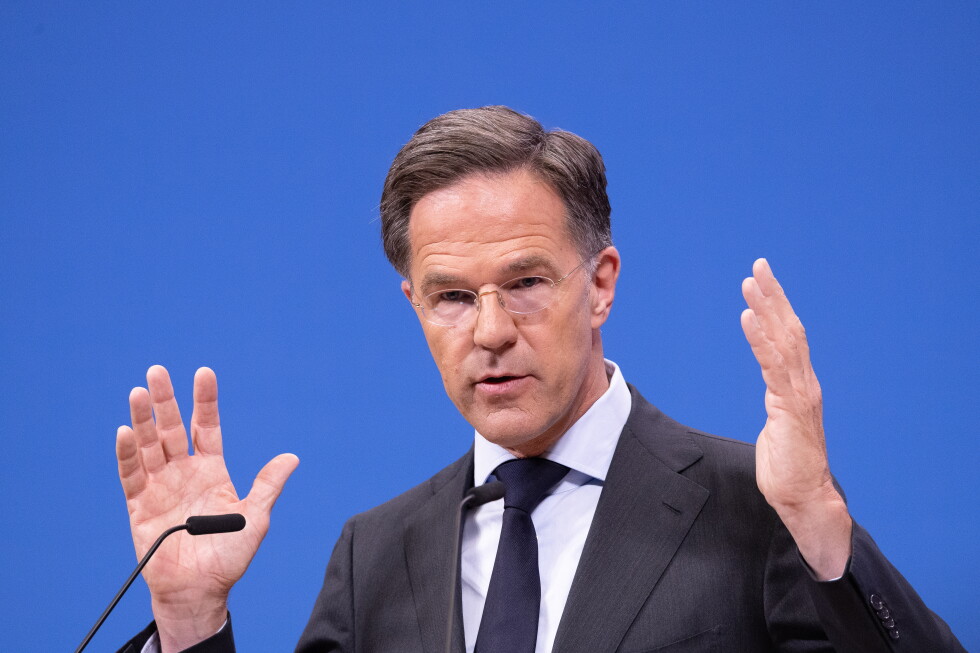
NATO chief downplays US military cutbacks as top commander makes backup plans
BRUSSELS — Ahead of a pivotal gathering of NATO defense ministers that he will chair this week, alliance Secretary-General Mark Rutte has sought to ease allied anxiety over the Trump administration’s decision to scale back the U.S. military contribution to collective defense contingency plans for Europe.
On June 3, the Pentagon notified NATO partners that the United States would no longer commit a suite of high-value military assets — including an aircraft carrier and its accompanying support vessels, aerial refueling tankers, and dozens of fighter jets — to European defense in the event of a crisis triggered under Article 5 of NATO’s founding charter. In response to this shift, NATO’s American supreme allied commander has begun developing alternative contingency plans to rebalance alliance defense posturing across the continent.
Rutte was quick to frame the adjustment as a procedural update to planning, not a drawdown of existing U.S. military presence on the continent. “This is not about where forces and assets are currently located,” Rutte told reporters Wednesday, clarifying that the change only revises commitments for when collective defense plans are activated. “It’s about who would do what if our defense plans were activated. So, let’s say in case of an Article 5 situation.”
Article 5, the cornerstone of NATO’s collective security guarantee, binds the alliance’s 32 member states to treat an armed attack on one ally as an attack on all. While the provision does not legally mandate any member to deploy military force, a broad majority of allies would typically contribute to a collective response. The U.S. currently maintains the largest military force and most expansive defense capabilities across the alliance, and the Trump administration has confirmed it has no plans to withdraw U.S. nuclear weapons deployed in Europe — a core component of NATO’s nuclear deterrence strategy. The shift in commitments comes as the U.S. reorients its global military focus to counter growing strategic competition from China in the Indo-Pacific region.
NATO’s core operational framework for coordinating collective defense, the NATO Force Model, outlines which assets from member states will be made available to alliance commanders across the first six months of a conflict, spanning peace, crisis, and full war. According to Rutte, alliance commander U.S. General Alex Grynkewich has assessed that existing and upcoming capabilities from other NATO member states are largely sufficient to fill the gaps created by the U.S. drawdown in planning commitments. “The overall picture is looking good,” Rutte said.
Even so, some European allies have expressed surprise at the range of assets being withdrawn from U.S. commitments, as many of these capabilities are already in short supply across European armed forces. The Trump administration has set a deadline for allies to outline their plans to replace the missing assets or adjust defense planning to account for the gap in advance of the July 7-8 NATO summit scheduled to be held in Ankara, Turkey. Ahead of the summit, European and Canadian allies are expecting to receive more detailed clarification of U.S. plans from U.S. Defense Secretary Pete Hegseth at this week’s Brussels meeting, after Hegseth skipped the alliance’s previous defense minister gathering in February.
The recent policy shift has already sown confusion among allies. Last month, Trump announced plans to deploy an additional 5,000 U.S. troops to Poland, a move that bewildered alliance partners even as his administration continues to reiterate its goal of reducing, not expanding, the overall U.S. military footprint in Europe.
Separate from the changes to collective defense planning, additional U.S. troop drawdowns are already underway in the Balkans. Last Friday, NATO military headquarters announced it would downsize the alliance’s Kosovo Security Force (KFOR), with U.S. troops expected to make up a significant portion of the departing personnel. Currently, 590 U.S. troops are deployed with KFOR, making the U.S. the second-largest contributing nation to the mission behind Italy, which deploys 907 personnel. The U.S. also maintains a contingent of Black Hawk helicopters at its large Camp Bondsteel base in Kosovo.
KFOR first deployed to the region in 1999 to maintain peace between Kosovo and Serbia after the end of the Kosovo War. At its peak, the mission counted more than 50,000 personnel across all contributing nations, and force levels have been gradually reduced for decades as regional tensions eased. In 2023, however, NATO deployed an additional 1,000 troops to the region after a new wave of violent unrest erupted. On Wednesday, Rutte confirmed the latest drawdown will see more than 1,000 total personnel depart KFOR, consistent with Grynkewich’s assessment that security conditions in Kosovo are now stable enough to “optimize” the mission’s size.
-
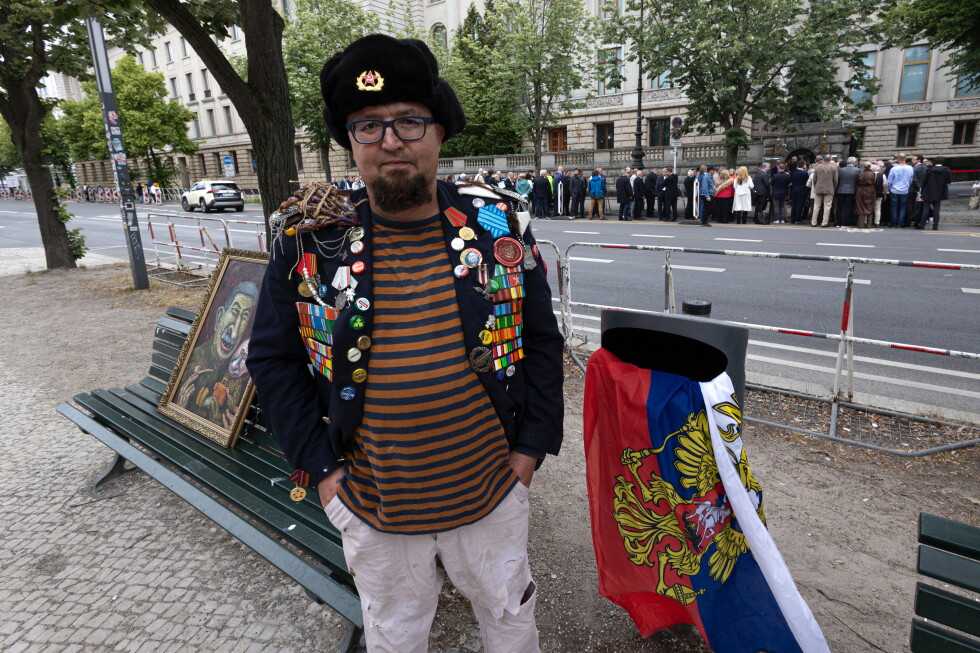
Killing of Russian artist in Poland has hallmarks of political assassination, prime minister says
WARSAW, Poland — Polish Prime Minister Donald Tusk has publicly stated that the fatal shooting of a Russian artist critical of the Kremlin’s leadership in eastern Poland bears all the markings of a coordinated political assassination, as international law enforcement continues a sprawling investigation into the killing.
The victim, Robert Kuzovkov, who worked under the pseudonym Semyon Skrepetsky, was gunned down at close range near his residence in the eastern Polish city of Biala Podlaska early Monday morning, regional prosecutors confirmed in an official statement released Tuesday.
Speaking at a press briefing in Warsaw Wednesday, Tusk laid out preliminary findings that point toward a politically motivated killing. “Everything points to this being a political murder,” Tusk told reporters. “But we must wait for concrete evidence and more definitive indications. Because if that proves to be the case — if the killing was ordered by Russia — then it is an extremely serious matter from an international perspective. It would constitute an act of state terrorism.”
Polish law enforcement initially detained two Belarusian citizens shortly after the shooting as persons of interest, but Tusk confirmed Tuesday that both have been released, as investigators found no evidence tying them directly to the crime. Tusk emphasized that the investigation remains in its active evidence-gathering phase, noting that the complexity of the case has slowed progress. “The case is difficult. If a hired killer is involved, identifying that person is unfortunately not an easy task,” he added. In a revealing detail, the prime minister confirmed that Polish security authorities had previously offered Skrepetsky protection over concerns for his safety, an offer the artist ultimately declined.
Polish prosecutors laid out the context for the killing in their Tuesday statement, confirming that through his artistic work, Skrepetsky consistently and publicly expressed sharp criticism of the current policies of the Russian government. The artist, who fled Russia for exile in Poland, became known for his unflattering portraits of Russian President Vladimir Putin, Chechen leader Ramzan Kadyrov, and other senior Russian political figures. One of his most provocative works depicts Putin being held in the arms of former Soviet dictator Josef Stalin.
Just one day before his death, on Sunday, Skrepetsky published a new video to his YouTube channel showing a protest he carried out in Berlin on June 12 — Russia’s annual Sovereignty Day holiday — where he placed a Russian national flag into a public trash can.
Prosecutors detailed the sequence of the attack: at approximately 9:45 a.m. Monday, an unidentified male suspect approached Skrepetsky near his home, fired two shots, then moved in to fire three additional rounds at close range before fleeing the scene. Skrepetsky died instantly from multiple gunshot wounds to the head, chest, and back.
The killing comes amid a growing pattern of alleged targeted attacks against Russian government opponents exiled in Europe, dating back to Russia’s full-scale invasion of Ukraine in 2022. To date, Russia has been repeatedly accused of orchestrating assassination attempts against dissidents and anti-Kremlin activists across the continent, including targeted plots against exiled opponents living in France and Lithuania.
In recent months, European security officials have uncovered multiple high-profile plots linked to Russian operatives. German authorities recently broke up planned assassination attempts targeting the head of a German weapons manufacturer that supplies arms to Ukraine, as well as a senior Ukrainian military official. Earlier this year, Polish law enforcement arrested a suspect in what authorities confirmed was a plot to assassinate Ukrainian President Volodymyr Zelenskyy during a visit to the country. In 2024, a defected Russian military helicopter pilot was also killed in a targeted attack in Spain, with Russian intelligence operatives named as the primary suspects in that killing.
-
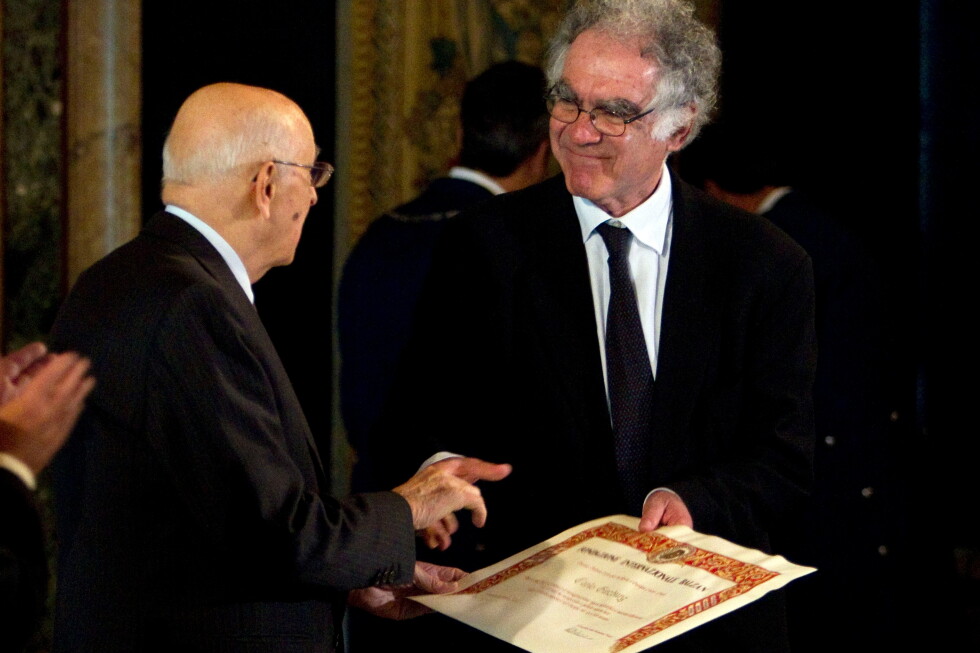
Microhistory pioneer Carlo Ginzburg, who gave voice to the marginalized, dies at 87
Carlo Ginzburg, the trailblazing Italian historian whose innovative scholarship redefined modern historical inquiry by centering the long-silenced perspectives of marginalized communities, passed away on Wednesday at the age of 87 in Bologna, a northern Italian city. The confirmation of his death came from Scuola Normale Superiore di Pisa, the prestigious academic institution where Ginzburg once studied as a student and later served as an emeritus professor.
Widely recognized as the founding father of microhistory, Ginzburg developed a radical new approach to studying the past that rejects broad, top-down macro-historical frameworks in favor of focused, granular analysis of small, specific subjects — from a single ordinary individual, to a tight-knit local community, to one isolated historical event. This method, he argued, unlocks far broader, more universal themes and structural tensions that shape larger historical narratives, a insight that upended centuries of traditional historiographical practice.
As one of the most influential voices in 20th and 21st century historical studies, Ginzburg also pioneered the groundbreaking “evidential paradigm” — an interpretive framework that centers seemingly insignificant clues, fragmented traces and overlooked small details to reconstruct the lived experiences of people pushed to the margins of dominant historical records created by ruling elites.
Ginzburg first honed his approach through early research into the benandanti, a little-known pagan fertility movement that operated in Italy’s Friuli region between the 16th and 17th centuries. Members of the group practiced shamanic healing, but were targeted as heretics by the Roman Inquisition. His research into the cult, which traced its origins to pre-Christian Central European spiritual traditions, formed the foundation of his first published book in 1966.
He solidified his global reputation with his 1976 landmark work *The Cheese and the Worms*, still widely regarded as one of the most important texts in modern Italian historiography. The book centers on the heresy trial of Menocchio, a 16th-century Friulian miller who was prosecuted for sharing unorthodox views about the origins of the universe and the nature of Jesus Christ. Drawing exclusively on surviving Inquisition trial records, Ginzburg masterfully demonstrated that the same documents created by ruling authorities to suppress dissent also contain hidden traces of that dissent, showing how power and resistance exist side-by-side in historical archives. Through this intimate small-scale case study, he illuminated far-reaching cultural frictions between elite educated culture and grassroots popular culture, as well as the enduring tension between state and religious authority and individual dissent.
Born in Turin in 1939, Ginzburg grew up in a family deeply committed to intellectual life and anti-fascist resistance: his mother Natalia Ginzburg was one of Italy’s most celebrated 20th century writers, and his father Leone Ginzburg was a prominent anti-fascist activist who was persecuted for his opposition to Benito Mussolini’s regime. Over the course of his decades-long academic career, Ginzburg held teaching positions at top global institutions, including Harvard University, Yale University, Princeton University and the University of California, Los Angeles. His body of work has been translated into more than 30 languages, reaching a global audience of scholars and general readers alike.
Ginzburg’s contributions to historical scholarship earned him dozens of the highest international honors in the humanities, including the Prix Aby Warburg, the Balzan Prize for Social and Political Sciences, the Antonio Feltrinelli Prize, and the Humboldt Research Award.
In a 2023 interview with Italian cultural magazine *Lucy*, Ginzburg emphasized that his methodological approach was not limited to academic historical research. He argued that the practice of prioritizing small clues and centering marginalized perspectives should be applied to “everyday life” as a tool to build deeper, more empathetic understanding of other people.
In a formal statement following Ginzburg’s death, Scuola Normale Superiore paid tribute to his transformative impact on the field, noting that he “changed the way of practicing the historian’s craft.” The institution added that Ginzburg’s work “restores voice to those who lack it, shows that the rigor of proof is a form of justice, and upholds a demanding idea of truth.”
Ginzburg is survived by his two daughters: Silvia, an art historian, and Lisa, a published writer and essayist. They are his children from his marriage to Anna Rossi-Doria, a fellow historian who preceded him in death.
-
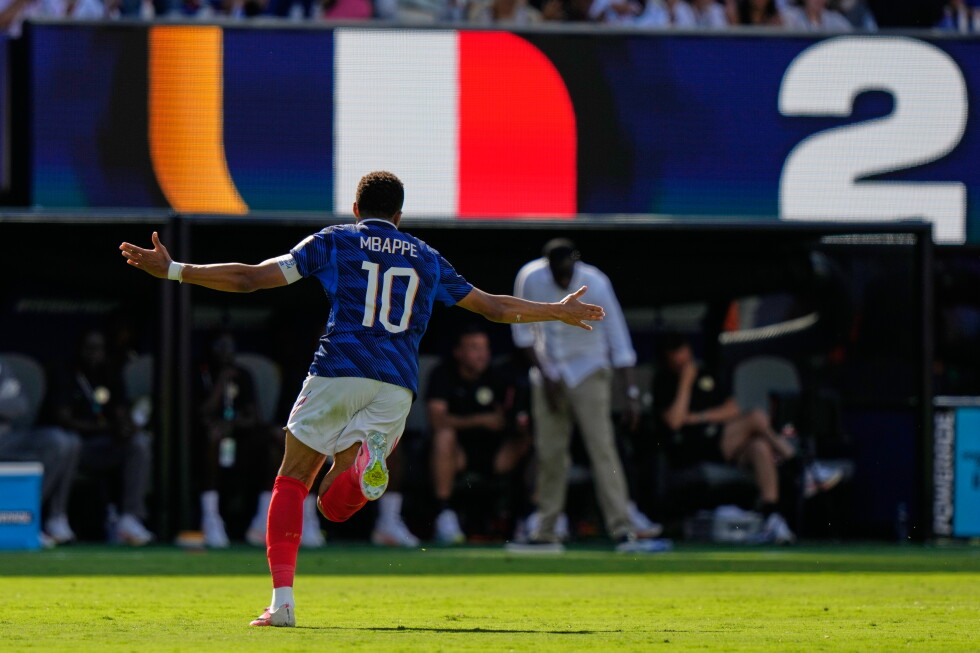
Kylian Mbappé by the numbers: Star striker starts his World Cup by breaking France scoring record
PARIS – In a defining moment of his already storied international career, Kylian Mbappé etched his name into French football history on Tuesday, netting a brace against Senegal at the 2026 FIFA World Cup to surpass Olivier Giroud as Les Bleus’ all-time leading goalscorer.
The 27-year-old Real Madrid striker found the back of the net twice in France’s 3-1 victory, pushing his national team goal tally to 58 – one clear of Giroud, who retired from international football following the 2022 World Cup in Qatar. The milestone caps nearly a decade of elite service for France, with Mbappé’s first senior international goal coming nine years after he first pulled on the iconic blue jersey.
Looking ahead, Mbappé will have immediate opportunities to extend his record. France is set to face Iraq in Philadelphia next Monday, before wrapping up Group I play against Norway in Boston four days later. If France advances deep into the tournament, the 27-year-old is also on track to break the team’s all-time appearance record. He has now earned 99 caps for his country, just four behind former manager and ex-captain Didier Deschamps’ 103 appearances, and is on pace to surpass goalkeeper Hugo Lloris’ existing record of 145 caps if he stays fit, a mark widely expected to fall before the end of his international career.
Beyond his new all-time national scoring record, the World Cup milestone also added another entry to Mbappé’s growing collection of global tournament honors. His two goals against Senegal brought his career World Cup goal total to 14, moving him past French legend Just Fontaine, who scored all 13 of his World Cup goals at the 1958 tournament in Sweden. That puts Mbappé just two goals behind the all-time men’s World Cup scoring record of 16, shared by former Germany striker Miroslav Klose and Argentina’s Lionel Messi – who ironically scored a brilliant hat trick in his own World Cup fixture just hours after Mbappé hit his brace against Senegal.
A deep dive into Mbappé’s career statistics reveals a pattern of historic achievement from the earliest days of his international tenure. He made his France debut as an 18-year-old substitute in a World Cup qualifier away to Luxembourg in March 2017, and scored his first senior goal just five months later against the Netherlands at the Stade de France in August that same year.
He has notched three hat tricks for France to date, each more notable than the last. His first came in 2021 during a World Cup qualifier against Kazakhstan, where he scored four goals alongside Karim Benzema. The second came in the dramatic 2022 World Cup final against Argentina, and the third during a record 14-0 European Championship qualifying win over Gibraltar in 2023.
Between early June 2023 and late March 2024, Mbappé notched a goal in seven consecutive international matches, the longest scoring streak of his France career. Off the pitch, he has maintained a remarkably clean disciplinary record, picking up just 10 yellow cards and never receiving a red card in nine years of international play.
Mbappé also holds a unique place in World Cup final history. He has scored in two separate men’s World Cup finals: against Croatia in 2018, when he was just 19 years old, and against Argentina in the 2022 final. He is only one of two players ever to score a hat trick in a men’s World Cup final, joining England’s Geoff Hurst, who achieved the feat in the 1966 final against West Germany. He joins Zinedine Zidane as just the second Frenchman to score in two separate World Cup finals, and is only the second teenager ever to score in a men’s World Cup final, alongside Brazil legend Pelé, who hit the net in the 1958 final as a 17-year-old.
-
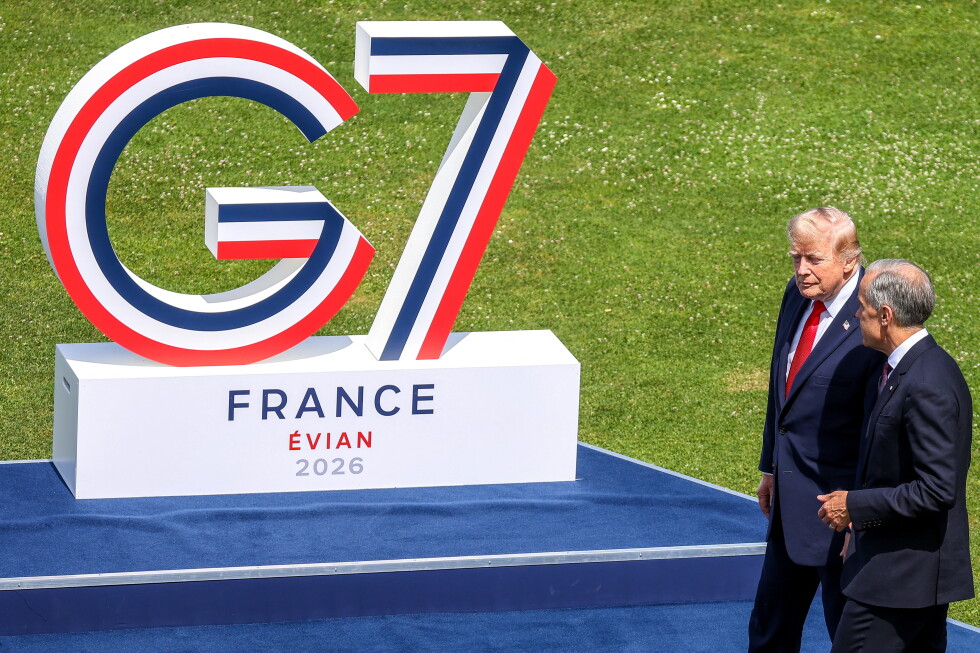
Canada’s Carney isn’t having a bilateral meeting with Trump at G7 but says it’s not a snub
EVIAN-LES-BAINS, France — Against the backdrop of the annual G7 summit for the world’s major industrialized democracies, Canadian Prime Minister Mark Carney will depart the gathering on Wednesday without holding a scheduled formal bilateral meeting with U.S. President Donald Trump, a development that comes as the future of the trilateral North American Free Trade Agreement (NAFTA) hangs in the balance.
Bilateral meetings between Canadian prime ministers and sitting U.S. presidents have long been a standard staple of G7 gatherings, but Carney has pushed back firmly against any speculation that the lack of a formal sit-down constitutes a diplomatic snub from the Trump administration. Carney told reporters that he has already held seven to eight informal conversations with Trump over the 36 hours leading up to Wednesday, with more discussions planned for the day of his departure. These talks spanned a broad spectrum of policy and personal topics, ranging from economic cooperation, cross-border relations, and emerging artificial intelligence policy to global hotspots including Ukraine and Iran, and even a lighthearted exchange about Trump’s recent birthday.
The current moment is a defining turning point for NAFTA, the trade accord that has deeply integrated the economies of Canada, the United States, and Mexico since its implementation in the early 1990s. The agreement’s renewal deadline is set for July 1, and last week Trump raised widespread alarm when he indicated he may opt to let the existing deal expire rather than approve an extension. For Canada, which relies on the U.S. market for roughly 75% of its total exports, preserving a stable, long-term NAFTA framework is a top national economic priority.
On the sidelines of the G7 gathering, Canada’s top trade officials have already been advancing negotiations: Dominic LeBlanc, Canada’s minister responsible for U.S. trade, and Janice Charette, Canada’s chief NAFTA negotiator, held talks with U.S. Trade Ambassador Jamieson Greer. LeBlanc confirmed that the discussions yielded tangible progress toward a potential agreement. LeBlanc has previously warned that the Trump administration is pushing for major changes to the accord’s structure, including mandatory annual review cycles, a shift that would create persistent uncertainty over the trade deal’s long-term permanence.
Thus far at the 2025 G7 summit, French President Emmanuel Macron, the event’s host, remains the only G7 leader to secure a formal one-on-one bilateral meeting with Trump. The U.S. president has also held formal bilateral sessions with leaders of invited non-G7 nations including Qatar, the United Arab Emirates, Egypt, and India. Carney pushed back on questions about the uneven scheduling, noting that it is standard practice for a summit’s host country to hold a formal bilateral meeting with the U.S. president as a matter of protocol.
Audio captured by open microphones during one informal interaction revealed that Carney balanced lighthearted humor with serious policy discussion with Trump. In an off-the-cuff moment, the two leaders joked playfully about “stealing” Macron’s luxury watch before shifting to a substantive conversation about Canada’s new policy framework for Chinese electric vehicle (EV) imports.
Carney explained to Trump that Canada has implemented a hard import cap on Chinese-made EVs, limiting annual imports to just 49,000 vehicles – less than 3% of Canada’s total current auto market. Carney noted he struck this cap arrangement with Beijing, framing it as a tough policy aligned with Trump’s own trade priorities. “It’s a cap, we capped, a hard line,” Carney said in the exchange. “I thought you’d actually like that.” Trump responded positively, telling Carney: “That’s good, I like it.”
Earlier this year, Canada broke with the U.S. to roll back its 100% tariff on Chinese EVs in exchange for reduced Chinese tariffs on Canadian agricultural exports. Carney confirmed he has discussed the policy with Trump twice, adding that he was not surprised the U.S. president had not followed every granular detail of the bilateral Canada-China deal. “He likes the structure. Actually, we had a follow-up conversation about it as well,” Carney added.
Peter Boehm, a veteran Canadian senator who previously led Canadian delegation planning for multiple G7 summits, backed Carney’s framing of the lack of a formal meeting, saying that the informal format of the summit actually gives leaders far more unstructured interaction time than pre-scheduled formal meetings allow. “I wouldn’t see it as a snub,” Boehm said. “It’s amazing how much time leaders can actually have to have conversations.”
-
Norway’s crown princess undergoes successful lung transplant, palace says
The Norwegian Royal Household has confirmed that Crown Princess Mette-Marit, 52, has completed a successful lung transplant at a hospital in Oslo, bringing a wave of cautious relief across the kingdom after months of declining health.
Mette-Marit first received a diagnosis of a rare, progressive form of pulmonary fibrosis in 2018, a condition that gradually scarred her lung tissue and caused persistent breathing difficulties. As her symptoms worsened over the past year, she began stepping back from official royal engagements, with her medical team describing her condition as significantly deteriorated and “dangerous” earlier in 2025. Just 12 days before the transplant procedure, the palace confirmed she had been added to the national organ transplant waiting list— a step doctors only take when a patient is estimated to have less than 12 months left to live, with priority given to the most critically ill cases.
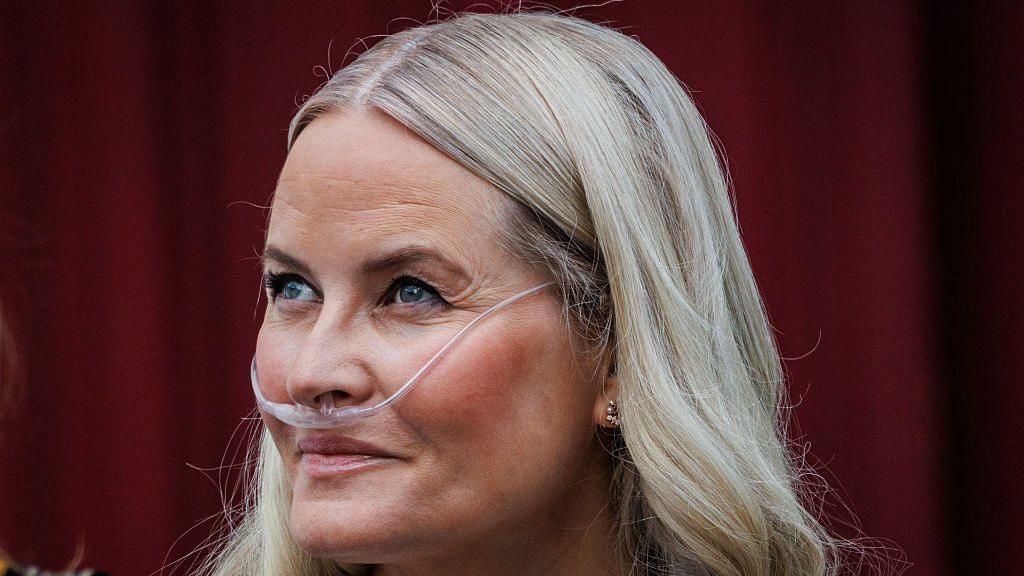
Her last public appearance came on May 17, when she was photographed using a nasal breathing tube connected to a portable oxygen device to manage her symptoms. Following the operation, lead lung specialist Are Holm shared positive updates in an official statement released by the royal palace. “We are delighted that everything has progressed well so far,” Holm said, noting that the Crown Princess will remain under close medical observation in the hospital for the next several weeks, a standard protocol for all recent organ transplant recipients. Holm also cautioned that the road to recovery remains fragile: transplant recipients must take lifelong immunosuppressive medications to prevent organ rejection, and data shows one in eight donor lung recipients do not survive the first year post-procedure, while roughly half are still alive after a decade.
Crown Prince Haakon, Mette-Marit’s husband of 24 years, has announced he will adjust all upcoming official commitments to be by his wife’s side during her initial recovery. The transplant comes amid an exceptionally difficult period for the Norwegian royal family, marked by two major controversies in recent months. Just two days before the procedure, Mette-Marit’s 29-year-old son Marius Borg Høiby was sentenced to four years in prison following conviction on two counts of rape. Though Høiby—who was four when his mother married Haakon and holds no official royal title—pled guilty to lesser included offenses, he maintains his innocence on the most serious charges, and his legal team has already confirmed plans to appeal the verdict. Prior to the sentencing, Høiby’s lawyers repeatedly requested his temporary release from custody to allow him to visit his ailing mother, but all such requests were denied.
Earlier this year, the royal family faced another public scandal when documents were released revealing Mette-Marit’s three-year friendship with the deceased disgraced financier and convicted sex offender Jeffrey Epstein. Mette-Marit later issued a public apology to King Harald V and Queen Sonja of Norway, acknowledged she had exercised “poor judgement” in maintaining the relationship, and stated in a national television interview that she regretted ever meeting Epstein.
Norwegian royal commentator and historian Ole-Jørgen Schulsrud-Hansen called the successful transplant positive news for both the royal family and the entire nation. “This was one of the most serious obstacles on the road for a better health for the Crown Princess, and I think many people are relieved the transplant was successful,” Schulsrud-Hansen noted.
-
US officials say Iran deal calls for diluting uranium at minimum, waiving sanctions, opening strait
VERSAILLES, France — Days after a pre-arranged digital signature and ahead of a planned formal ceremonial signing, former U.S. President Donald Trump confirmed Wednesday he had finalized his signature on an interim agreement with Iran, a deal that rolls out sweeping U.S. concessions to Tehran, pauses the war launched by the U.S. and Israel in February, and paves the way for renewed global oil flows through the strategic Strait of Hormuz. Pakistani Prime Minister Shehbaz Sharif, who led mediation efforts to broker the initial ceasefire framework, confirmed the deal is already taking immediate effect, with a full formal signing ceremony scheduled to take place this Friday.
Details of the agreement, negotiated over weeks behind closed doors, were first shared with reporters by unnamed U.S. officials, and the text released later by Iranian state media largely aligned with the U.S. account of the terms. The framework includes core commitments from Iran to dilute its existing stockpile of highly enriched uranium on site and reaffirm a pledge not to pursue or acquire nuclear weapons. In exchange, Washington has agreed to immediately waive — though not permanently eliminate — sweeping U.S. sanctions against Iran, a move that lets Tehran resume unconstrained global oil sales starting immediately.
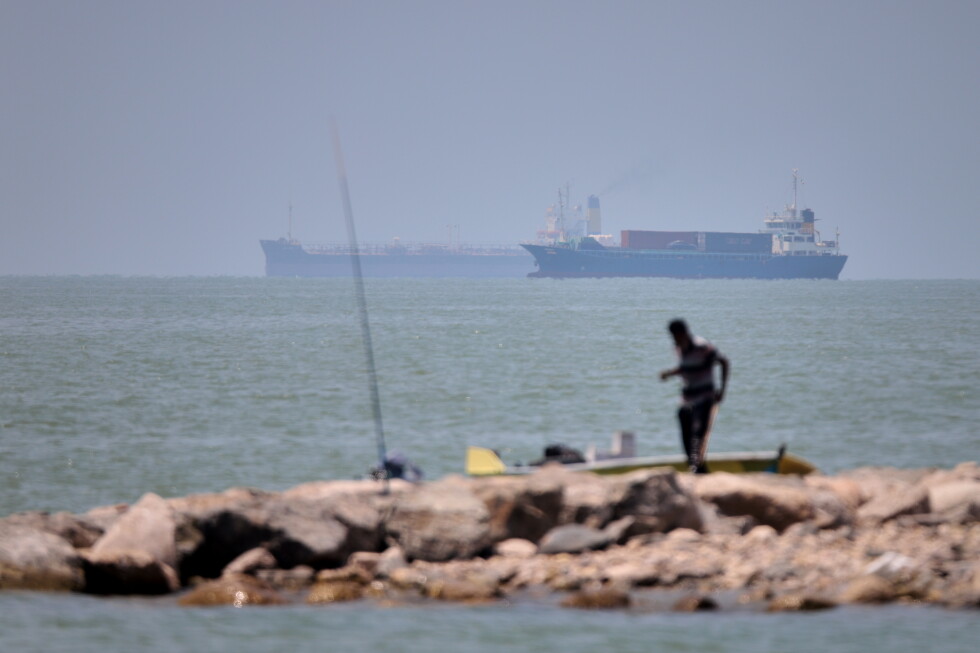
Additional key terms of the 60-day interim deal open the Strait of Hormuz to toll-free commercial shipping, a critical shift after months of closure that triggered a global energy crisis, and require a full halt to Israeli military operations in Lebanon while affirming Lebanon’s full territorial integrity amid Israel’s ongoing invasion against Iranian-backed Hezbollah militant group. The agreement also sets a 60-day negotiating window for parties to reach a permanent, final nuclear agreement.
Trump confirmed the signing as he departed the historic Palace of Versailles, following a private dinner with French President Emmanuel Macron held after the Group of Seven (G7) summit in France. A video shared online by a White House aide captured the moment: Trump seated next to Macron, signed a physical copy of the agreement, then passed the document and pen to Secretary of State Marco Rubio as attendees in the room applauded. A senior U.S. official, speaking on condition of anonymity to disclose unannounced details, confirmed Iranian President Masoud Pezeshkian also signed the agreement Wednesday, though Tehran has not yet issued an official public comment on the signing.
As of Wednesday evening, the full text of the agreement has not been formally released to the public. Confusion remains around the discrepancy between Trump’s digital signing of the deal that was announced for Sunday and this week’s in-person signing at Versailles, as well as whether the 60-day negotiating clock officially began with Wednesday’s signing.
The conflict that preceded this deal began when the U.S. and Israel launched military operations against Iran on February 28, with Trump framing the war’s core goal as eliminating Iran’s ability to develop a nuclear weapon. Over the course of the conflict, Trump expanded stated war aims to include ending Iran’s ballistic missile program, cutting its support for regional proxy groups like Hezbollah, and even calling for the full overthrow of the Iranian government. This interim agreement falls far short of those sweeping original goals, but Trump nonetheless praised the deal Wednesday.
“Nobody knows what it is, but it’s very strong,” Trump told reporters in France. He also left open the possibility of walking away from the framework entirely, adding: “It’s a memorandum of understanding, and if I don’t like it, we’ll go back to shooting at them, dropping bombs.”
For the most part, the interim deal restores the regional status quo that existed before the outbreak of war: it ends all active hostilities, reopens the Strait of Hormuz — the critical global energy chokepoint whose closure triggered skyrocketing energy and food prices worldwide — and resumes bilateral nuclear negotiations between Washington and Tehran. The framework delivers substantial immediate benefits to Iran, requiring very few upfront concessions from Tehran in return.
The terms of this new deal go far beyond the 2015 Joint Comprehensive Plan of Action (JCPOA), the Obama-era Iran nuclear agreement that Trump withdrew the U.S. from during his first term, when he famously called it the “worst deal ever negotiated.” Iran has consistently maintained its nuclear program is purely for peaceful, civilian purposes.
The deal is expected to face fierce political pushback in Washington, and it marks a significant setback for Israeli Prime Minister Benjamin Netanyahu, who has already faced growing domestic criticism from opposition groups, media, and even some of his own allies as details of the agreement have emerged.
A core provision of the deal ends months of fighting between Israeli forces and Hezbollah in southern Lebanon, one of the most contentious points of the negotiation. The text of the agreement explicitly requires all military operations in Lebanon to cease immediately and affirms the country’s territorial integrity, with Iran calling for a full Israeli withdrawal from occupied areas of southern Lebanon under the deal’s terms. Israel has so far rejected any withdrawal, but the agreement’s terms mandate an immediate end to offensive operations regardless.
Pakistani mediators, who spoke on condition of anonymity due to the sensitivity of the negotiations, outlined that broader concessions to Iran — including the full permanent lifting of all U.S. and U.N. sanctions and the release of billions in frozen Iranian assets — will be implemented gradually, tied to progress in the 60-day permanent negotiation window. Even so, the immediate U.S. decision to allow unrestricted Iranian oil sales strips Washington of one of its biggest negotiating leverage points; under the 2015 JCPOA, sanctions on Iranian oil were only lifted after Iran completed major nuclear concessions, not at the start of talks.
Unlike the 2015 agreement, which only addressed nuclear-related sanctions, this interim framework opens the door to the eventual removal of all U.S. and U.N. sanctions on Iran, including those imposed over Tehran’s weapons programs and human rights record. The agreement also includes a provision for up to $300 billion in reconstruction funding for Iran, a sum that U.S. Vice President JD Vance says will come from Gulf Arab nations. Trump confirmed Wednesday the U.S. will not contribute any funds to this package, though Gulf states have already signaled reluctance to fund Iran after Iranian attacks during the war damaged Gulf oil infrastructure and other targets.
For the global economy, the agreement delivers immediate, much-needed relief. Before the war, roughly one-fifth of the world’s traded oil and natural gas passed through the Strait of Hormuz. After the war began, Iranian attacks on commercial shipping and demands for shipping tolls effectively closed the strait to most traffic, driving up global energy prices and raising costs for essential goods including food. Under the terms of the deal, the strait will reopen to prewar traffic levels within 30 days, and the U.S. will lift its blockade on Iranian ports. The framework also acknowledges the need for coordinated demining operations to clear unexploded ordnance from the waterway before full traffic can resume.
This report includes contributions from Associated Press journalists across multiple global locations: Aamer Madhani in Evian-les-Bains, France; Darlene Superville in Geneva, Switzerland; Angela Charlton in Paris, France; and Munir Ahmed in Islamabad, Pakistan. David Gambrell reported from Dubai, Samy Magdy from Cairo, and Michael Catalini from Morrisville, Pennsylvania.