标签: Europe

欧洲

  • American Airlines and Google say AI helped airplanes reduce contrails that trap heat

    American Airlines and Google say AI helped airplanes reduce contrails that trap heat

    In a groundbreaking collaboration between aviation and technology sectors, American Airlines and Google have demonstrated a significant reduction in aviation’s environmental footprint through artificial intelligence. Their joint initiative utilized an AI-driven forecasting system to minimize heat-trapping condensation trails (contrails) formed during flights.

    The innovative approach addresses a critical climate challenge: when aircraft traverse cold, humid atmospheric regions, engine emissions trigger ice crystal formation that creates persistent clouds. These contrails account for approximately 1-2% of global warming effects according to Contrails.org, a research organization within Bill Gates’ Breakthrough Energy consortium that participated in the trial.

    During an extensive evaluation spanning January to May 2025, researchers analyzed 2,400 transatlantic flights between the United States and Europe. The experimental group received AI-generated route modifications suggesting altitude adjustments or alternative paths to avoid contrail-forming conditions. Results revealed that the 112 flights implementing these recommendations produced 62% fewer contrails while reducing associated warming effects by an impressive 69%.

    Notably, the trial achieved these environmental benefits without statistically significant increases in fuel consumption—addressing a primary industry concern about operational costs. The system integrated seamlessly with Flightkeys, American Airlines’ flight planning platform, enabling dispatchers and pilots to implement changes without operational difficulties.

    Dinesh Sanekommu, Google’s contrail initiative lead, emphasized the significance of these findings: ‘Aviation represents one of the most challenging sectors to decarbonize. Our demonstration proves that AI-powered solutions can contribute meaningfully to climate mitigation efforts through data-driven operational adjustments.’

    The collaboration builds upon previous work between Google, American Airlines, and Breakthrough Energy dating to 2023. Researchers now plan expanded trials and seek integration with additional flight planning systems to scale the technology across global aviation networks. While not yet incorporated into routine operations, the successful trial demonstrates a immediately deployable, cost-effective approach to reducing aviation’s climate impact alongside longer-term solutions like sustainable aviation fuels.

  • Deschamps picks Chevalier for France’s US friendlies despite not playing since January

    Deschamps picks Chevalier for France’s US friendlies despite not playing since January

    French national team head coach Didier Deschamps has unveiled his strategic selections for upcoming high-profile friendlies against Brazil and Colombia in the United States, demonstrating particular faith in Paris Saint-Germain goalkeeper Lucas Chevalier despite his prolonged absence from competitive play.

    Chevalier, who last featured in a match on January 26th after losing his starting position to Matvey Safonov, has been retained as the third-choice goalkeeper alongside established starters Mike Maignan of AC Milan and Brice Samba of Rennes. Deschamps acknowledged the unconventional nature of this decision, characterizing Chevalier’s current club situation as less than “ideal” while emphasizing the importance of maintaining trust and relationship-building with players experiencing temporary difficulties.

    “This scenario frequently occurs with significant players,” Deschamps explained. “While it typically involves outfield players facing challenges at their clubs, reaching out during these periods is fundamental to establishing lasting confidence.”

    The squad announcement also addressed recent injury developments, with Randal Kolo Muani receiving a call-up following Bradley Barcola’s withdrawal due to a right ankle sprain sustained during PSG’s Champions League campaign. Kolo Muani, currently on season-long loan to Tottenham, reinforced his credentials by scoring the opening goal in a recent 3-2 victory over Atletico Madrid.

    Deschamps has assembled an impressive contingent of nine forwards, highlighting the depth of attacking talent available to the French national team. The comprehensive 26-player roster features prominent names including Kylian Mbappé (PSG), Ousmane Dembélé (PSG), and Marcus Thuram (Inter Milan), alongside emerging talents such as Warren Zaire-Emery (PSG) and Maghnes Akliouche (Monaco).

    The coach explicitly framed these selections within the broader context of preparation for the 2026 World Cup, jointly hosted by the United States, Mexico, and Canada. Deschamps indicated that a substantial portion of the current squad would likely feature in the tournament, while cautioning against premature conclusions given the potential for developments over the coming months.

    “Many of those present here today will undoubtedly remain with us,” Deschamps stated. “While it’s too early for definitive assessments, we will maintain this approach understanding that much can transpire within the next two months. My primary hope is that we avoid negative occurrences, particularly regarding player injuries.”

  • Bayern teenager Lennart Karl set for Germany debut and Rüdiger returns to squad

    Bayern teenager Lennart Karl set for Germany debut and Rüdiger returns to squad

    FRANKFURT, Germany — German national team coach Julian Nagelsmann has unveiled a squad blending youthful promise with experienced returns for upcoming international friendlies. The most notable inclusion is 18-year-old Bayern Munich forward Lennart Karl, who received his first senior call-up following a spectacular breakthrough Champions League campaign.

    Karl’s selection comes fresh off his impressive performance against Atalanta, where he contributed both a goal and an assist. The teenager has now registered four goals and two assists across just seven appearances in Europe’s premier club competition, establishing himself as Bayern’s youngest-ever scorer in the Champions League since his first start in October.

    Another potential debutant is Karl’s Bayern teammate Jonas Urbig, who has capably filled the goalkeeper position during Manuel Neuer’s absence due to calf injuries. Urbig recently returned from a concussion to help secure Bayern’s comprehensive 10-2 aggregate victory over Atalanta.

    The squad also welcomes back Real Madrid defender Antonio Rüdiger, returning to international duty for the first time since September after recovering from a hamstring injury that sidelined him for much of the season’s first half and Germany’s final four World Cup qualifying matches.

    Stuttgart striker Deniz Undav makes a compelling return following an exceptional scoring streak, having found the net in each of his last five Bundesliga appearances. With 16 league goals, Undav stands as the Bundesliga’s second-highest scorer, trailing only Bayern’s Harry Kane.

    Germany will face Switzerland in an away friendly on March 27th before hosting Ghana in Stuttgart three days later. The four-time World Cup champions have been drawn into a group with Curaçao, Ivory Coast, and Ecuador for the upcoming tournament.

  • Cyprus leader calls for frank discussion on ‘colonial’ UK bases

    Cyprus leader calls for frank discussion on ‘colonial’ UK bases

    Cyprus President Nikos Christodoulides has characterized Britain’s two military installations on the island as lingering “colonial consequences” and called for forthcoming diplomatic discussions regarding their status and future. In statements made to the BBC during his arrival at an EU leadership summit in Brussels, Christodoulides emphasized the necessity for “an open and frank discussion with the British government” once Middle East tensions subside.

    The UK maintains sovereignty over the Akrotiri and Dhekelia bases under the 1960 treaty that established Cypriot independence. These installations recently gained strategic significance when RAF Akrotiri came under drone attack earlier this month, believed to have been launched by Iranian-backed Hezbollah forces from Lebanon. While two drones were intercepted, a third struck the base causing minimal damage. The incident has sparked local protests arguing that the British presence makes Cyprus a target for regional conflicts.

    Despite the bases not being utilized for US operations against Iran, the UK has authorized American forces to conduct “specific defensive operations” from these locations. The installations cover 98 square miles of Cypriot territory and provide employment for over 10,000 Cypriot citizens, creating complex socioeconomic ties alongside the political dimensions.

    Any potential negotiations would involve multilayered diplomatic considerations, as the original agreements involved the UK, Greece, Turkey, and representatives from both Greek and Turkish Cypriot communities. When pressed on whether he sought complete removal of the bases, Christodoulides declined to negotiate publicly while maintaining “a clear approach with regard to the future of the British bases.”

    In response to these developments, the UK Ministry of Defense highlighted Defense Secretary John Healey’s recent parliamentary comments noting that Cyprus’s National Guard leader stated military cooperation “has never been closer.” The UK has enhanced its military presence following the drone attack, with HMS Dragon recently entering the Mediterranean to bolster defenses. NATO allies including France, Greece, Germany, and Spain have also deployed naval assets to the region in a show of collective security support.

  • Switzerland recalls Sanches ahead of World Cup one year after he tore ACL on debut

    Switzerland recalls Sanches ahead of World Cup one year after he tore ACL on debut

    BERN, Switzerland — In a significant boost to its World Cup preparations, the Swiss national football team has recalled defender Alvyn Sanches to the squad, marking a triumphant return exactly one year after a devastating ACL injury cut short his international debut.

    The 23-year-old’s comeback headlines a series of returns for coach Murat Yakin, who has also reintegrated AC Milan playmaker Ardon Jashari and Monaco captain Denis Zakaria into his plans for crucial warmup matches this month. These returning players, now fully recovered from their respective injuries, provide renewed depth and options for Die Nati as they fine-tune their roster.

    Switzerland’s preparation schedule features two high-profile friendlies against fellow World Cup qualifiers. The team will first host Germany on March 27th at St. Jakob-Park in Basel, followed by an away fixture against Norway in Oslo just four days later.

    Sanches’ journey back to the national team has been particularly dramatic. His initial call-up last year came during an impressive club season with Lausanne, but his debut ended in heartbreak when he sustained a serious knee injury deep into stoppage time during a 1-1 friendly draw against Northern Ireland.

    Despite still recovering from his injury, Sanches secured a transfer to Swiss Super League champions Young Boys in September for a reduced fee, with his contract at Lausanne set to expire this season.

    The Swiss squad has successfully qualified for their sixth consecutive FIFA Men’s World Cup, earning placement in a group alongside Canada, Qatar, and the winner of the European playoffs bracket—potentially Italy, depending on the outcome of matches scheduled for March 31st.

  • Is soccer no longer Italy’s best sport? The Azzurri face World Cup playoff amid others’ success

    Is soccer no longer Italy’s best sport? The Azzurri face World Cup playoff amid others’ success

    While Italy celebrates unprecedented success across multiple sporting disciplines, its men’s national soccer team faces a critical juncture that threatens to extend the country’s World Cup absence to at least 16 years. The four-time world champions must navigate a challenging playoff path against Northern Ireland followed by either Wales or Bosnia and Herzegovina to avoid missing a third consecutive tournament.

    This soccer crisis exists in stark contrast to Italy’s remarkable achievements elsewhere. Nineteen-year-old Kimi Antonelli recently became Formula One’s second-youngest race winner, the Azzurri rugby squad secured a historic Six Nations victory against England, and Jannik Sinner has returned to dominant form on tennis courts. Italy currently holds world championships in both men’s and women’s volleyball, while even traditionally overlooked baseball and cricket teams have broken significant barriers.

    Sports Minister Andrea Abodi acknowledges the concerning disparity, noting that an entire generation under 15 lacks any memory of Italy’s last World Cup appearance—a 2014 elimination remembered more for Luis Suarez’s bite on Giorgio Chiellini than competitive achievement. “For generations of Italians, the World Cup was the time when the country came together and waved our flag,” Abodi told La Stampa. “Our national spirit now extends beyond soccer but it would still be nice to share those emotions with younger fans.”

    The current qualification campaign began disastrously with a 3-0 loss to Norway, prompting managerial changes from Luciano Spalletti to Gennaro Gattuso. Despite a subsequent six-match winning streak, another defeat to Norway consigned Italy to the playoffs—the same stage where they suffered eliminations before the 2018 and 2022 World Cups.

    Systemic issues extend beyond the national team. Serie A has transitioned from attracting world-class talent to becoming a destination for players past their prime. No Italian club has claimed the Champions League since Inter Milan in 2010, and the federation president recently unveiled new youth development programs aimed at overcoming what he describes as “extreme tacticalism” prioritizing defensive approaches.

    As members of the 2006 World Cup-winning squad—including Gattuso and delegation chief Gianluigi Buffon—work to revive fortunes, the team has resorted to unconventional methods like nationwide dinner meetings with players instead of formal training camps. Their immediate challenge begins against Northern Ireland in Bergamo, with the nation’s broader sporting excellence highlighting soccer’s peculiar struggle.

  • Belarus leader hosts US envoy for talks, latest step in his effort to improve ties with Washington

    Belarus leader hosts US envoy for talks, latest step in his effort to improve ties with Washington

    In a significant diplomatic development, Belarusian President Alexander Lukashenko convened with U.S. Special Envoy John Coale in Minsk on Thursday, marking a continued effort to normalize relations with Western nations. The high-level discussion centered on multiple critical issues, including the potential reopening of the U.S. Embassy in Minsk—which ceased operations in 2022—and the release of individuals classified as political prisoners.

    This engagement represents the second such dialogue between Lukashenko’s administration and U.S. officials since December, when Washington responded to previous negotiations by easing certain sanctions and facilitating the release of 123 detainees to Ukraine and Lithuania. The Belarusian leader, who has maintained authoritarian control over the nation of 9.5 million people for over three decades, faces ongoing isolation from Western countries due to systematic human rights violations and his government’s complicity in Russia’s invasion of Ukraine.

    The current diplomatic overture occurs against a backdrop of sustained international pressure. Lukashenko’s regime has been repeatedly sanctioned for its brutal suppression of dissent following the contested 2020 presidential election, which triggered mass protests and widespread allegations of electoral fraud. In the subsequent crackdown, tens of thousands were detained and subjected to police violence, forcing prominent opposition figures into exile or imprisonment.

    Recent months have witnessed a strategic shift from Minsk, with the controlled release of several high-profile prisoners including Nobel Peace Prize laureate Ales Bialiatski and dissident leaders Siarhei Tsikhanouski, Viktar Babaryka, and Maria Kolesnikova. These actions coincide with Donald Trump’s return to the White House, culminating in a August 2025 phone conversation between the two leaders where Trump reportedly suggested a potential face-to-face meeting.

    According to Coale’s post-meeting statements, discussions included the possibility of Lukashenko visiting the United States—a development that would represent a substantial diplomatic achievement for the isolated leader. However, exiled opposition leader Sviatlana Tsikhanouskaya cautioned that while prisoner releases are welcome, they must be accompanied by genuine systemic reforms. She noted that over 1,100 political prisoners remain detained in Belarus according to Viasna, the country’s leading human rights organization, and emphasized that Lukashenko frequently arrests new critics even as he releases others.

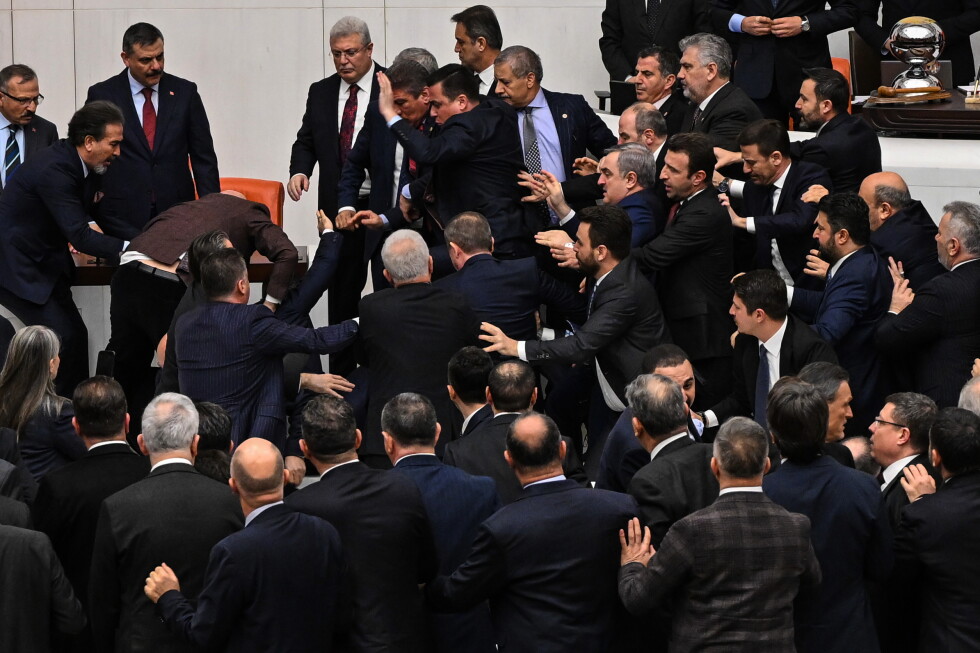
  • EU leaders blast Viktor Orbán over a Ukraine loan veto, accusing him of playing election games

    EU leaders blast Viktor Orbán over a Ukraine loan veto, accusing him of playing election games

    BRUSSELS — European Union leaders launched unprecedented criticism against Hungarian Prime Minister Viktor Orbán during Thursday’s summit, accusing him of weaponizing vital Ukrainian assistance for domestic political gains. The confrontation exposes deepening fractures within the bloc as Hungary obstructs a previously approved €90 billion ($103 billion) support package for Ukraine’s military and economy.

    Finnish Prime Minister Petteri Orpo expressed the collective frustration: “He’s exploiting Ukraine as an electoral weapon, which is unacceptable. We reached an agreement, and this constitutes a betrayal of that consensus.”

    The emergency funding, deemed essential by EU officials for Ukraine’s survival, requires disbursement by early May. This timeline necessitates immediate procedural progress within the coming weeks—a prospect now jeopardized by Hungarian obstruction.

    Prime Minister Orbán, who maintains close ties with Russian President Vladimir Putin and faces declining poll numbers ahead of April elections, has intensified anti-Ukrainian rhetoric throughout his campaign. He portrays Ukrainian President Volodymyr Zelenskyy as an existential threat to Hungary while positioning himself as the sole guardian of Hungarian security.

    Belgian Prime Minister Bart De Wever challenged Orbán’s narrative: “If this is electoral theater, it cannot override our collective decisions. It’s indefensible to approve agreements then refuse implementation.”

    The deadlock originates from January’s disruption of Russian oil shipments via the Druzhba pipeline through Ukraine. While Ukrainian authorities attribute the damage to Russian attacks, Orbán accuses Zelenskyy of deliberately withholding energy supplies to Hungary.

    European Commission President Ursula von der Leyen and European Council President António Costa attempted to break the impasse by offering EU-funded pipeline repairs. Technical teams currently await security clearance in Kyiv for site inspection.

    Orbán remains unmoved, declaring: “This transcends politics—it’s existential for Hungary. Secure oil access is non-negotiable for our nation’s survival.”

    The crisis highlights structural vulnerabilities in EU governance mechanisms requiring full unanimity among member states, enabling a nation representing just 2% of the bloc’s population to block critical multinational decisions.

  • 2 men appear in court accused of ‘hostile’ surveillance of UK’s Jewish community for Iran

    2 men appear in court accused of ‘hostile’ surveillance of UK’s Jewish community for Iran

    Two Iranian nationals have appeared before Westminster Magistrates’ Court in London facing allegations of conducting hostile surveillance operations against British Jewish targets on behalf of Iranian intelligence services.

    Nematollah Shahsavani, a 40-year-old Iranian-British dual national, and Alireza Farasati, a 22-year-old Iranian citizen residing in London, are formally charged with engaging in activities likely to assist a foreign intelligence service between July 9 and August 15 of the previous year. Both defendants were arrested on March 6 as part of a broader national security investigation.

    Prosecutor Louise Attrill presented evidence indicating the defendants targeted multiple significant locations within London’s Jewish community, including the Israeli Embassy, a Jewish community center, an educational institution, and Britain’s oldest synagogue. The surveillance operation allegedly sought to gather intelligence on individuals and establishments connected to the Israeli and Jewish communities in the United Kingdom.

    During the preliminary hearing, neither defendant entered a formal plea. However, Farasati’s legal representation indicated their client would contest the charges. Chief Magistrate Paul Goldspring ordered both men remanded in custody pending their next appearance at London’s Central Criminal Court scheduled for April 17.

    The investigation has revealed broader implications for UK-Iran relations, with two additional British-Iranian nationals arrested in connection with the same probe subsequently released without charge. This case emerges against a backdrop of heightened security concerns, as MI5 Director General Ken McCallum disclosed in October that British authorities had disrupted more than twenty potentially lethal Iran-backed plots within the preceding twelve-month period.

  • EU scrambles to contain energy costs from war in Middle East

    EU scrambles to contain energy costs from war in Middle East

    European Union leaders convened in Brussels on Thursday for an emergency summit addressing the escalating energy crisis triggered by ongoing Middle East conflicts. The assembly of 27 national leaders focused on mitigating soaring oil and gas prices that threaten economic stability across the bloc.

    The emergency meeting, prompted by supply disruptions in key energy-producing regions and critical shipping corridors, saw leaders rejecting previous appeals from former U.S. President Donald Trump for military deployment to secure the Strait of Hormuz. This vital maritime passage facilitates global transportation of approximately 21 million barrels of oil daily alongside significant liquefied natural gas shipments.

    Belgian Prime Minister Bart De Wever voiced grave concerns during pre-summit remarks, stating: “We face a compounded energy predicament. Pre-existing price elevations have been severely exacerbated by regional conflicts, creating dangerous structural economic vulnerabilities if left unaddressed.”

    The European Commission presented member states with multiple financial mechanisms designed to cushion economic impacts across diverse markets from Romania to Ireland. However, officials acknowledged that no singular policy solution would sufficiently buffer the EU’s varied economic landscapes from energy market shocks.

    Diplomatic divisions emerged regarding the Middle East conflict positioning. Dutch Prime Minister Rob Jetten characterized the situation as “a U.S. and Israel-initiated conflict against Iran,” while emphasizing European non-involvement in military operations. Jetten advocated for intensified sanctions against Tehran and increased support for opposition factions, reflecting the EU’s preference for economic pressure over military engagement.

    The summit also addressed growing apprehensions about potential refugee crises stemming from regional instability, adding migration concerns to the already complex energy security agenda.