
On Sunday, the historic city of Nuremberg witnessed a unique and charming spectacle as approximately 600 sheep paraded through its ancient streets. This annual event, deeply rooted in local tradition, has grown into a beloved celebration that attracts both residents and tourists alike. The sight of the flock navigating the cobblestone pathways of the city’s historic center offered a picturesque blend of rural heritage and urban charm. The tradition, which dates back several years, serves as a reminder of Nuremberg’s agricultural past while fostering community spirit. Spectators lined the streets, capturing the moment on cameras and smartphones, as the sheep moved gracefully under the watchful eyes of shepherds. The event not only highlights the city’s cultural richness but also underscores the importance of preserving such unique customs in modern times.
标签: Europe
欧洲
-

Fast-track deportations to be announced as part of asylum reforms
The UK government has announced a series of bold reforms to its asylum and immigration policies, spearheaded by Home Secretary Shabana Mahmood. The plans include fast-tracking the deportation of illegal migrants and overhauling human rights laws to address the record-high number of asylum claims. Under the new measures, individuals granted asylum will be returned to their home countries if those nations are deemed safe at any point, and they must wait 20 years to apply for permanent residency—a significant increase from the current five-year requirement. Additionally, the UK will suspend visa issuance for citizens of three African countries—Angola, Namibia, and the Democratic Republic of Congo—if their governments fail to improve cooperation on deportation processes. The reforms also aim to streamline the appeals system, which currently faces a backlog of over 50,000 cases, by limiting appeals to a single attempt and expediting the removal of foreign criminals. Successful asylum seekers will face stricter conditions, including biennial reviews of their status and the potential loss of housing and financial allowances. The government plans to adopt a Danish-inspired model, seizing assets like cars and e-bikes to cover accommodation costs, though sentimental items such as wedding rings will be exempt. Critics, including some Labour MPs and refugee advocacy groups, argue that the reforms risk creating prolonged uncertainty and alienation for asylum seekers. However, the government maintains that these measures are necessary to restore public trust and control over immigration. The Home Office has also signaled intentions to reform Article 3 and Article 8 of the European Convention on Human Rights, which have been used to block deportations in certain cases. While the reforms have drawn mixed reactions, they underscore the government’s commitment to addressing the challenges posed by illegal migration and asylum claims.
-
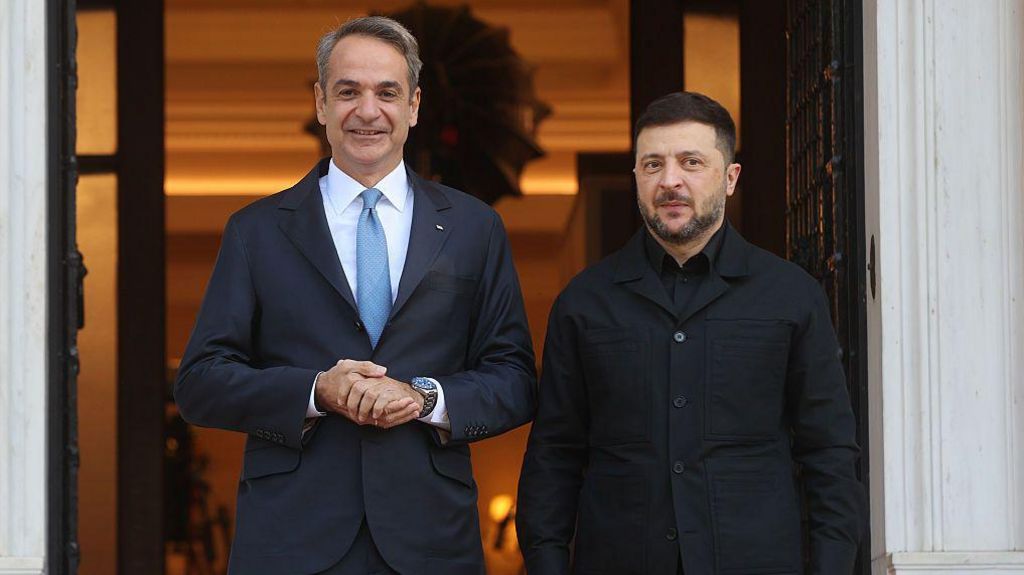
Ukraine to import US liquefied natural gas via Greece
In a significant move to enhance Ukraine’s energy resilience during the ongoing conflict, vital supplies of US liquefied natural gas (LNG) are set to flow into the war-torn nation this winter via a pipeline traversing the Balkans. This development follows a high-profile meeting between Ukrainian President Volodymyr Zelensky and Greek Prime Minister Kyriakos Mitsotakis in Athens on Sunday. Mitsotakis emphasized Greece’s role in increasing the influx of American LNG to its terminals, aiming to ‘replace Russian gas in the region.’
The European Commission has outlined plans to completely halt Russian gas imports to EU member states by the end of 2027, citing concerns that such revenues fund Russia’s military operations in Ukraine. Meanwhile, Zelensky has shifted his focus to France, engaging in discussions with President Emmanuel Macron regarding a major air defense hardware deal.
Amid these diplomatic efforts, the conflict on the ground remains intense. Overnight, Russian attacks in the Kharkiv, Kherson, and Donetsk regions reportedly claimed six lives, while Russia’s military announced the capture of three additional Ukrainian villages. These reports, however, remain unverified.
Speaking in Athens, Zelensky revealed that American LNG deliveries are scheduled to commence in January. ‘We rebuild each time the Russians destroy, but this requires significant time, effort, and resources,’ he stated. Mitsotakis affirmed Greece’s commitment, declaring, ‘Greece is becoming an energy security provider for your homeland.’
According to Reuters, Ukraine has allocated nearly €2 billion to cover gas imports through March, leveraging funds from European partners, banks under European Commission guarantees, and Ukrainian financial institutions. Since 2015, Ukraine has relied on EU states for gas supplies, bypassing direct purchases from Russia. The Soviet-era Trans-Balkan pipeline, linking Ukraine to Greek LNG terminals via Moldova, Romania, and Bulgaria, plays a pivotal role in this arrangement.
On Monday, Zelensky’s visit to France included an inspection of Rafale fighter jets, the SAMP-T air defense system, and several drone systems at Villacoublay airbase near Paris. He also reviewed the nascent headquarters of a planned multinational force, which may eventually oversee a Ukraine-Russia ceasefire.
The conflict, which began with Russia’s full-scale invasion in February 2022, has resulted in tens of thousands of casualties, predominantly soldiers, and displaced millions of civilians. As Ukraine continues to navigate the dual challenges of war and energy security, international support remains crucial.
-
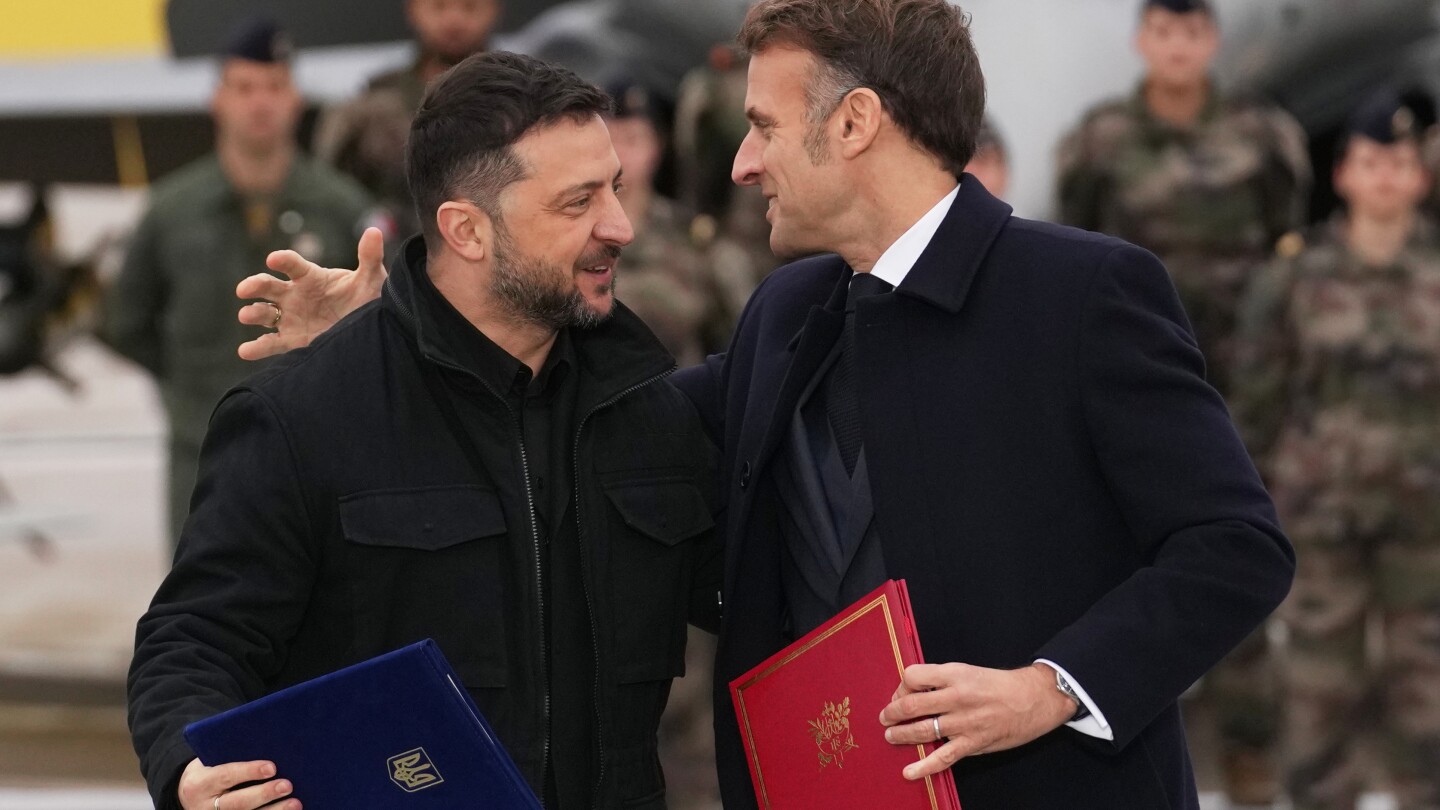
Ukraine signs a letter of intent to buy up to 100 Rafale warplanes from France
In a significant move to bolster Ukraine’s military capabilities, Ukrainian President Volodymyr Zelenskyy and French President Emmanuel Macron signed a letter of intent on Monday, paving the way for Ukraine to purchase up to 100 Rafale fighter jets from France. The agreement, announced by both the Ukrainian Embassy and the French president’s office, underscores Ukraine’s ongoing efforts to strengthen its defense systems amid relentless Russian aggression. While specific details of the deal remain undisclosed, the document highlights Ukraine’s consideration of acquiring French defense equipment, including the advanced Rafale jets. This marks Zelenskyy’s ninth visit to Paris since Russia’s full-scale invasion in February 2022, as Ukraine braces for another winter under Russian bombardment of its energy infrastructure and other critical targets. Earlier in the day, Macron and Zelenskyy toured an air base on the outskirts of Paris before meeting with representatives of a multinational force, referred to as the ‘coalition of the willing,’ which France and Britain are spearheading with over 30 nations to enforce a potential ceasefire in Ukraine. Zelenskyy expressed optimism about the deal, calling it a ‘historic agreement’ to enhance Ukraine’s combat aviation and air defense capabilities. This development follows Ukraine’s recent defense agreements, including a pact with Sweden to explore the purchase of up to 150 Gripen fighter jets and the acquisition of American-made F-16s and French Mirages.
-
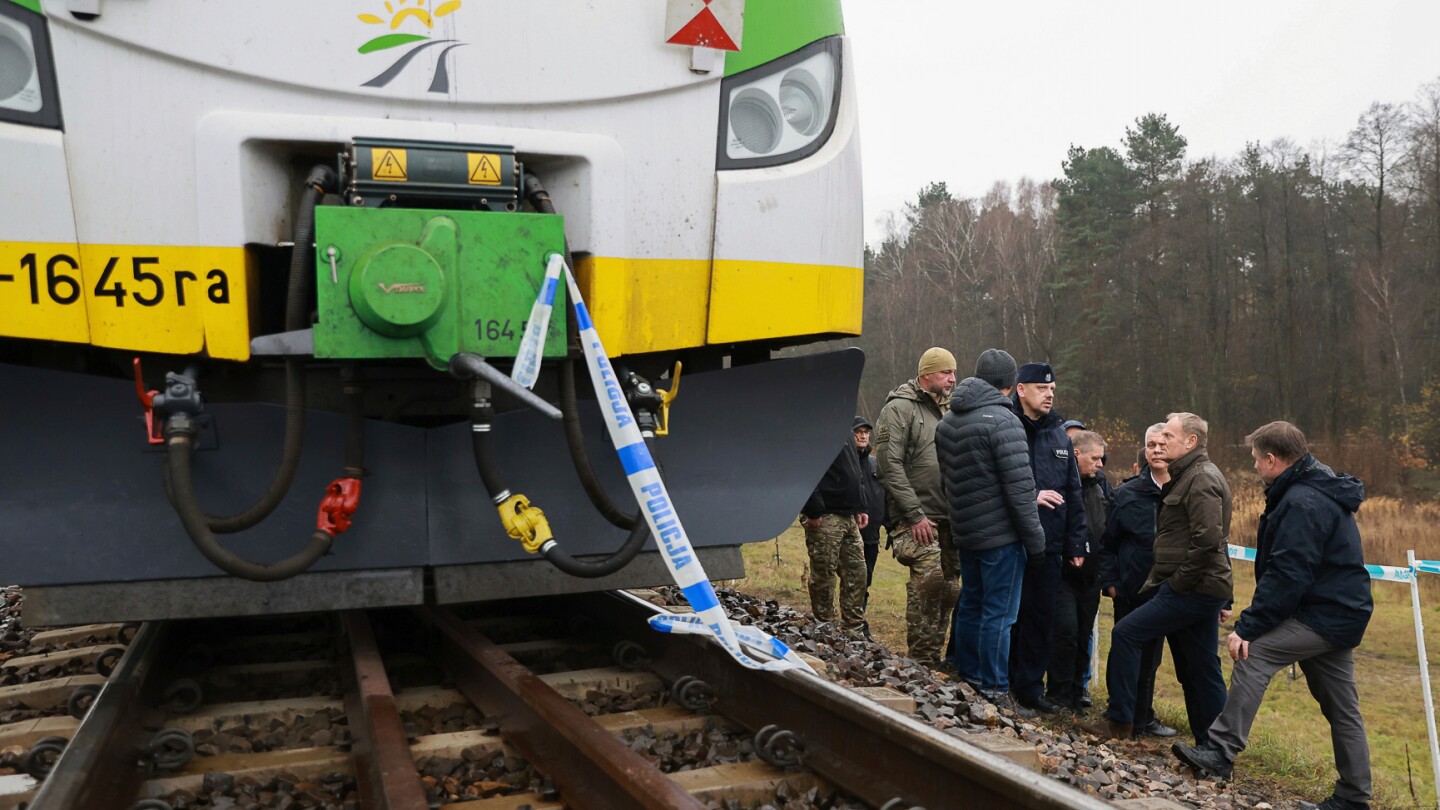
Polish prime minister says weekend rail line explosion near Warsaw was act of ‘sabotage’
WARSAW, Poland — A critical railway line connecting Warsaw to southeastern Poland was severely damaged by an explosion on Sunday, which authorities have labeled as an act of sabotage. Prime Minister Donald Tusk confirmed the incident on Monday, stating that the explosion occurred on the Warsaw-Lublin route near the village of Mika, approximately 100 kilometers (62 miles) southeast of the capital. The blast destroyed a section of the railway track, disrupting train services. Fortunately, no injuries were reported among the two passengers and several staff members aboard the train at the time. The incident was first detected by a train driver who reported irregularities on the track around 7:40 a.m. Sunday. Subsequent investigations revealed damage at multiple locations along the route. Tusk vowed to apprehend the perpetrators, calling the act ‘unprecedented’ and emphasizing that justice would be served ‘regardless of who is behind them.’ This incident adds to a series of suspected sabotage and espionage cases in Poland since Russia’s invasion of Ukraine in February 2022, with dozens of individuals detained in connection with these activities.
-

‘To think we’re going to school today and she won’t be there’
A devastating road accident near Dundalk, County Louth, has resulted in the loss of five young lives, leaving communities in shock and mourning. The incident occurred on Saturday evening at approximately 21:00 local time on the Ardee Road at Gibstown. The victims, all in their early 20s, were traveling in a Volkswagen Golf that collided with a Toyota Land Cruiser. The deceased have been identified as Chloe McGee, 23, and Shay Duffy, 21, both from Carrickmacross, County Monaghan; Alan McCluskey, 23, from Drumconrath, County Meath; Dylan Commins, 23, from Ardee, County Louth; and Chloe Hipson, 21, from Lanarkshire, Scotland. Three other individuals sustained non-life-threatening injuries and are currently receiving medical treatment. Chloe McGee, a teacher at O’Fiaich College in Dundalk, was remembered by her principal, Padraig McGovern, as a vibrant and dedicated educator. McGovern expressed the profound difficulty of conveying this tragic news to the students, emphasizing the emotional toll on the school community. North Motherwell Football Club also paid tribute to Chloe Hipson, the younger sister of one of their players, describing the Hipson family as an integral part of their football family. The club announced a minute of silence in her memory. Irish President Catherine Connolly and Taoiseach Micheál Martin both expressed their deep sorrow and extended their condolences to the families of the victims. Gardaí are investigating the circumstances of the crash and have appealed to witnesses to come forward.
-

Election campaign in Hungary heats up as Orbán challenger Péter Magyar gains rural support
As Hungary gears up for its parliamentary elections in five months, the political landscape is ablaze with a fierce contest between Prime Minister Viktor Orbán and his rising challenger, Péter Magyar. Orbán, who has dominated Hungarian politics for over two decades, is now confronting what many consider the most significant challenge of his career. Despite his enduring popularity among supporters, Orbán’s government has been marred by allegations of corruption and authoritarianism, with critics accusing his far-right Fidesz party of consolidating unchecked power. However, declining economic performance, chronic inflation, and widespread dissatisfaction have eroded his once-unassailable position. Magyar, a former Fidesz insider, has emerged as a formidable opponent, promising to dismantle Orbán’s system and steer Hungary toward a more prosperous and democratic future. Magyar’s grassroots campaign, focusing on pressing issues like the cost of living and poor public services, has resonated deeply in rural areas traditionally loyal to Orbán. Recent polls show Magyar’s Tisza party leading Fidesz, a rare feat in Hungary’s political history. Orbán, meanwhile, has sought to portray Magyar as an existential threat, accusing him of aligning with foreign interests and endangering Hungary’s sovereignty. The prime minister has also criticized the European Union, comparing it to the Soviet Union, and warned that supporting Magyar equates to supporting war. Despite Orbán’s efforts, Magyar’s momentum continues to grow, fueled by public discontent and a desire for systemic change. With the election approaching, Hungary stands at a crossroads, with the outcome poised to reshape its political trajectory.
-
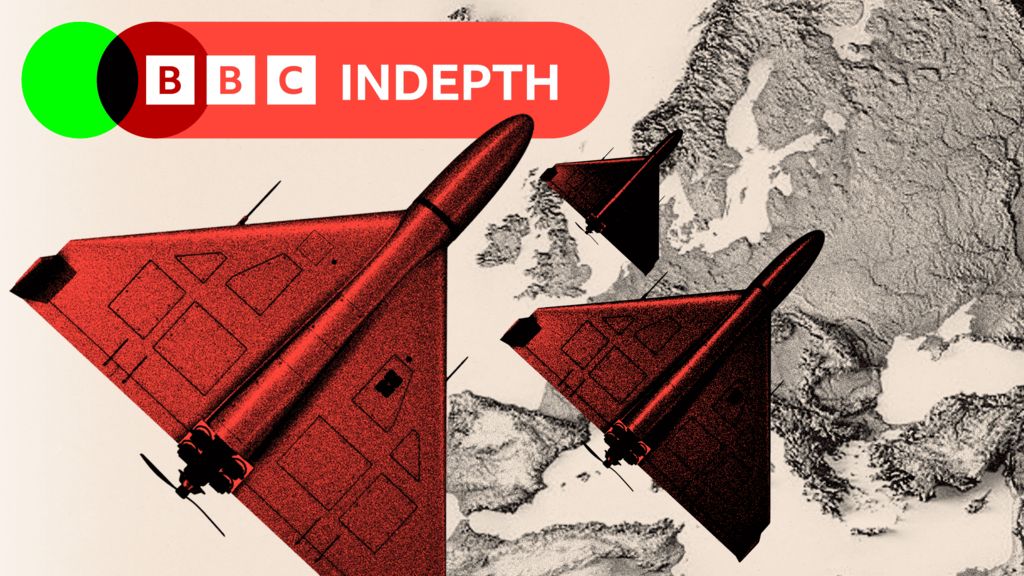
Mysterious drones have been spotted at night at airports across Europe. How worried should we be?
The escalating use of drones in modern warfare has prompted Europe to consider a groundbreaking defense mechanism: the ‘drone wall.’ This initiative comes in response to increasing incursions by Russian drones, which have not only targeted Ukraine but also ventured into NATO airspace, including Poland, Belgium, and Denmark. The drone wall, envisioned as a multi-layered defense system, aims to protect critical infrastructure and airspace across Europe from the Baltic states to the Black Sea. The system will integrate radar, sensors, jamming technologies, and weaponry to detect, track, and neutralize incoming drones. However, the project faces significant challenges, including technological limitations, financial constraints, and the rapid evolution of drone threats. Experts argue that while the drone wall is a necessary step, it is not a foolproof solution. The debate also extends to whether Europe should focus on defensive measures or target the sources of drone launches. As tensions between Europe and Russia continue to rise, the drone wall represents a critical but complex response to the growing threat of aerial warfare.
-

How my on-air ‘brain fog’ moment sparked a big debate
Zoe Kleinman, BBC’s technology editor, recently made headlines not for her tech coverage but for her candid revelation about experiencing ‘brain fog’ during a live TV report. In a LinkedIn post that went viral, Kleinman shared her decision to hold notes during a broadcast, a move she initially viewed as a professional failure. However, the overwhelming response from women across the globe highlighted a shared struggle often tied to perimenopause and hormonal changes. ‘Brain fog,’ though not a medical term, describes moments of cognitive disarray—forgetting words, losing train of thought, or feeling mentally clouded. For women in their 40s, this symptom often coincides with perimenopause, a transitional phase marked by fluctuating hormone levels. The impact is profound, especially for those in public-facing roles. Janet Edgecombe, an internal communications expert, echoed Kleinman’s experience, recounting moments of forgetting basic words mid-conversation. Research underscores the severity of the issue: 10% of women leave their jobs due to menopause symptoms, while half consider quitting. Kleinman’s decision to hold notes, initially seen as a compromise, sparked a movement. The hashtag #HoldTheNotes emerged, encouraging women to embrace practical solutions without shame. Medical experts like Dr. Louise Newson emphasize the role of testosterone in brain function, advocating for its inclusion in Hormone Replacement Therapy (HRT). Meanwhile, innovative solutions like Niraxx’s red-light therapy headband offer hope for improving focus. Kleinman’s story has opened a crucial dialogue, urging society to take ‘brain fog’ seriously and support women navigating this challenging phase of life.
-
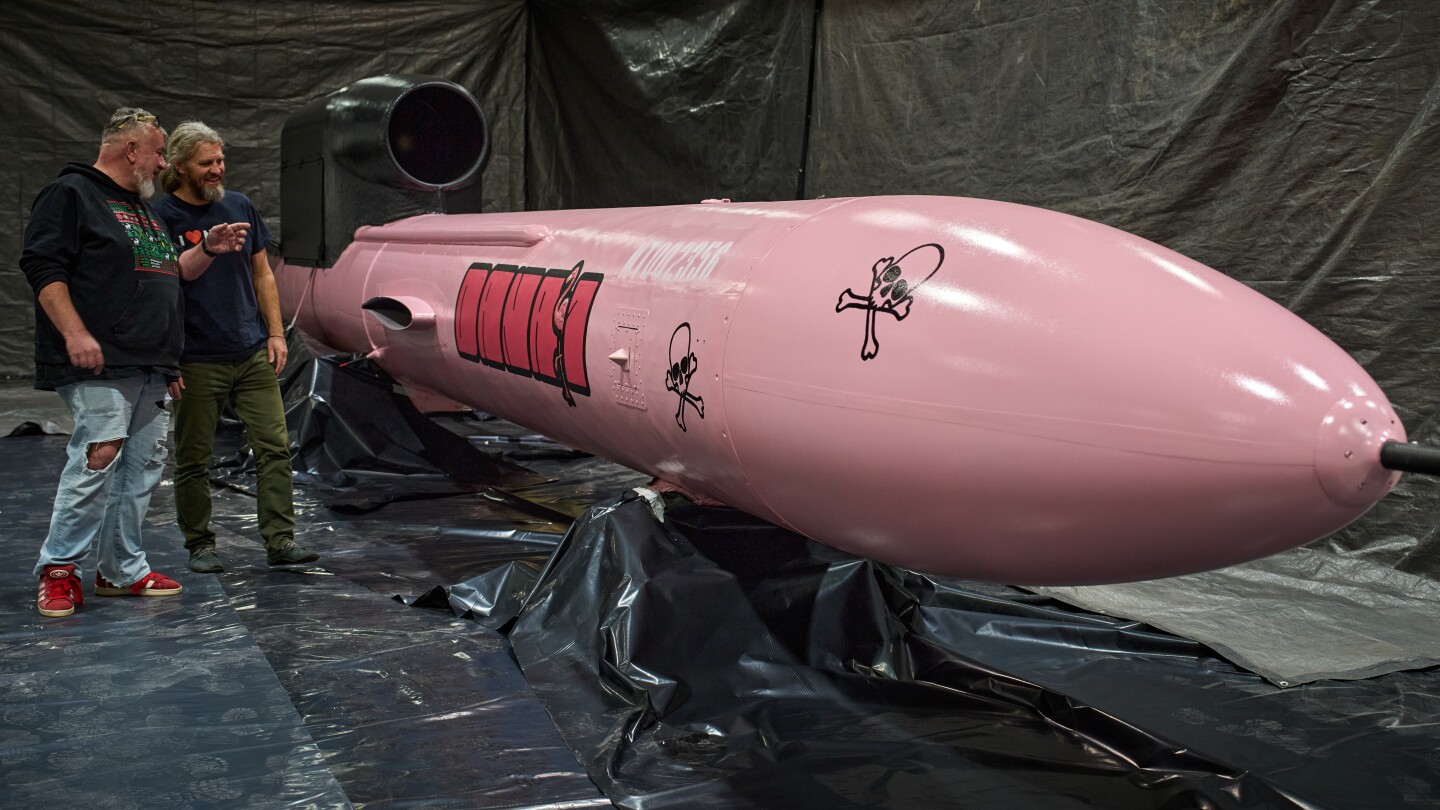
Mike Pompeo becomes adviser to scrutinized Ukraine defense company that’s looking to boost missiles
Former U.S. Secretary of State Mike Pompeo has been appointed to the advisory board of Fire Point, a leading Ukrainian defense company known for its advanced long-range drones capable of targeting deep within Russian territory. This move comes as the company faces an ongoing corruption investigation. Fire Point is actively enhancing its global presence by establishing a new factory in Denmark and expanding its production capabilities to include battle-tested cruise missiles, aiming to more than double its current output. Despite the scrutiny, company executives maintain transparency, having commissioned an independent audit to address concerns. Critics, however, highlight the firm’s opaque origins, its monopoly on Defense Ministry contracts, and alleged ties to Tymur Mindich, a controversial associate of President Volodymyr Zelenskyy implicated in a major corruption scandal. Fire Point’s Chief Technology Officer, Iryna Terekh, expressed support for the investigation, emphasizing the company’s commitment to adhering to high corporate standards. The firm has also gained international recognition, with U.S. Special Envoy to Ukraine Keith Kellogg visiting its facilities. Fire Point’s success is partly attributed to the Danish model, a financing mechanism where foreign governments directly fund Ukrainian defense companies. However, the company’s rapid rise is shadowed by ongoing investigations into potential price inflation and questionable contracts. Despite these challenges, Fire Point continues to innovate, with its Flamingo cruise missile proving effective in recent strikes against Russian targets. The company’s crowdfunding initiatives, such as a campaign by the Czech organization Weapons to Ukraine, further underscore its growing influence. As Fire Point navigates both expansion and scrutiny, its role in Ukraine’s defense industry remains pivotal.