标签: Europe

欧洲

  • Ukrainian and Russian envoys hold a second day of US-brokered talks in Geneva

    Ukrainian and Russian envoys hold a second day of US-brokered talks in Geneva

    Diplomatic envoys from Russia and Ukraine convened for a second day of U.S.-mediated negotiations in Geneva on Wednesday, attempting to reconcile profound political and military divisions stemming from Moscow’s full-scale invasion nearly four years ago.

    The discussions, organized into specialized working groups, focused on clarifying procedural mechanisms for potential agreements. Ukrainian delegation head Rustem Umerov stated via social media that teams were “working on clarifying the parameters and mechanisms of the decisions discussed yesterday.”

    These Geneva meetings represent the third round of direct talks facilitated by Washington following earlier sessions in Abu Dhabi that officials characterized as constructive yet ultimately inconclusive. U.S. President Donald Trump’s special envoy Steve Witkoff claimed the administration’s peace initiative had achieved “meaningful progress” over the past year, though he provided no specific details.

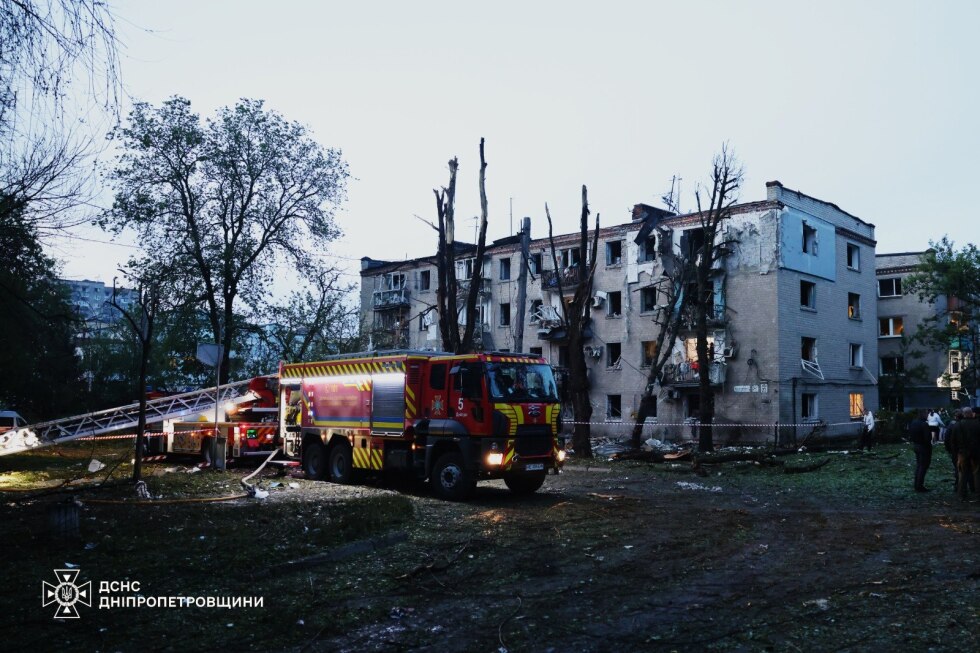
    The diplomatic efforts unfold against a backdrop of continued violence along the 1,250-kilometer frontline. Overnight, Russian forces launched one ballistic missile and 126 long-range drones targeting Ukrainian territory, according to air force officials. A separate drone strike in Zaporizhzhia killed one woman and wounded seven civilians, including two young children.

    Substantial disagreements persist between the warring nations regarding potential settlement terms. Ukrainian President Volodymyr Zelenskyy has proposed an immediate ceasefire followed by direct negotiations with Russian leader Vladimir Putin. Conversely, Moscow insists on establishing a comprehensive agreement prior to implementing any truce.

    Russia’s core demands remain consistent with its initial invasion objectives: Ukrainian renunciation of NATO membership, significant military reduction, and enhanced protections for Russian language and culture. Additionally, Putin requires Kyiv’s withdrawal from the four partially occupied eastern regions that Russia claims to have annexed.

    President Zelenskyy maintains Ukraine will not surrender sovereign territory to Russia, establishing a fundamental impediment to diplomatic resolution.

  • Is VAR any better in the rest of Europe’s top leagues?

    Is VAR any better in the rest of Europe’s top leagues?

    A continent-wide crisis is unfolding across European football as Video Assistant Referee (VAR) technology faces unprecedented criticism from fans, clubs, and officials alike. UEFA’s referees’ chief Roberto Rosetti has issued a stark warning against the trend of “microscopic” interventions that has fundamentally altered the game’s emotional landscape.

    Germany’s Bundesliga showcases the most visible fan resistance, where stadiums regularly display banners demanding “Videobeweis abschaffen” (Eliminate VAR). Augsburg supporters recently created a sea of protest messages, with one banner declaring “Football with VAR is like horse racing with donkeys.” Official data reveals Germany experiences more frequent VAR interventions than England, with error rates nearly identical—one mistake every 15.66 games compared to England’s 16.

    In Spain, structural changes including a dedicated team of 15 VAR specialists have failed to prevent controversy. Real Madrid’s television channel produces weekly referee criticism videos, while Barcelona recently issued formal complaints about “repeated damaging refereeing decisions.” The semi-automated offside technology has repeatedly malfunctioned, including one incident where it failed to identify an offside position, leading to the entire VAR team being temporarily stood down.

    Italy presents a unique case where stakeholders want more VAR intervention rather than less. Serie A advocates for expanding VAR’s scope to include corner reviews and second yellow cards. However, frustration grows as fans demand clearer guidelines and transparency, with Lazio supporters protesting what they call “audio justifications without logic or sense.”

    France’s Ligue 1 demonstrates the most frequent VAR involvement with interventions occurring in nearly every other match. The financial burden has become a significant concern, with the system costing €25 million per season amid collapsing TV rights deals. Club presidents have become the most vocal critics, with Lille’s Olivier Letang describing a “breakdown of trust” with officials.

    The common thread across all leagues is the fundamental question identified by UEFA’s Rosetti: football has forgotten why VAR was originally introduced. The technology designed to eliminate clear errors has instead created a culture of microscopic analysis, bureaucratic delays, and widespread confusion that distances supporters from the emotional core of the sport.

  • Witkoff says ‘meaningful progress’ made as Ukraine talks enter second day

    Witkoff says ‘meaningful progress’ made as Ukraine talks enter second day

    GENEVA – U.S. Special Envoy Steve Witkoff has reported ‘meaningful progress’ in trilateral negotiations between Ukrainian and Russian delegations during ongoing peace talks in Switzerland. The discussions, mediated by Witkoff and Jared Kushner, President Trump’s son-in-law, entered their second day on Wednesday amid cautious optimism from American officials despite fundamentally opposing positions from both conflict parties.

    Witkoff publicly credited President Trump’s diplomatic influence for bringing the warring nations to the negotiation table. ‘President Trump’s success in bringing both sides of this war together has brought about meaningful progress,’ Witkoff stated on social media platform X, emphasizing the administration’s commitment to ‘stop the killing in this terrible conflict.’

    The negotiations, occurring just one week before the fourth anniversary of Russia’s full-scale invasion, face significant hurdles due to Moscow’s unwavering territorial demands. The Kremlin maintains its maximalist position seeking Ukrainian cession of additional territories beyond the approximately 20% of the country it currently occupies, including complete control of the eastern Donbas region – conditions Ukraine has categorically rejected.

    Ukrainian President Volodymyr Zelensky expressed concerns about the negotiation dynamics, telling Axios that ‘it’s not fair’ that Trump consistently pressures Ukraine to broker a deal without equivalent demands on Russia. Zelensky warned that lasting peace cannot be achieved by simply ‘handing victory to Russia,’ while cautiously hoping the American approach represents ‘just his tactics and not the decision.’

    Top Ukrainian negotiator Rustem Umerov reported that initial discussions focused on ‘practical issues and the mechanics of possible solutions’ during six hours of tense negotiations that utilized both bilateral and trilateral formats. Zelensky subsequently indicated Ukraine’s willingness to refrain from military strikes as proposed by U.S. mediators, asserting that ‘We don’t need war’ but are ‘defending our state, our independence.’

    The talks proceed against a backdrop of continued violence, with Russia’s Defense Ministry reporting the destruction of 43 Ukrainian drones over Russian territory and Crimea overnight. This followed a massive combined aerial assault by Russia against Ukraine the previous night, involving approximately 400 drones and nearly 30 missiles across 12 regions that resulted in at least three Ukrainian fatalities according to officials in Kyiv.

  • Olives, opera and a climate-neutral goal: How a mural in Greece won ‘Best in the World’

    Olives, opera and a climate-neutral goal: How a mural in Greece won ‘Best in the World’

    The southern Greek city of Kalamata, historically celebrated for its premium olives and Mediterranean allure, has achieved global artistic recognition. A monumental mural transforming opera legend Maria Callas into a powerful allegory for the city has been honored as the 2025 “Best Mural of the World” by Street Art Cities, an international platform dedicated to urban art.

    This distinction emerges from a deliberate urban strategy rather than mere artistic coincidence. City officials, led by Deputy Mayor Vassilis Papaefstathiou for strategic planning and climate neutrality, conceived the mural as a visual manifesto for Kalamata’s ambitious goal to become climate-neutral by 2030. The artwork serves as an accessible representation of complex initiatives including sustainable development, agricultural innovation, and local economic resilience for its 73,000 residents.

    Artist Kleomenis Kostopoulos, 52, executed the visionary piece, explaining that the mural titled ‘Kalamata’ uses Callas allegorically rather than literally. Instead of a conventional operatic portrait, he created an earthy, grounded depiction connecting people to their land through symbolic elements: native birds, agricultural products, and tree branches representing both roots and growth. Her dress embodies the “bloom and fruition” of Kalamata’s blessed terrain.

    The creation process presented significant challenges, requiring approximately two weeks of intensive work spread across a month due to weather interruptions. Kostopoulos employed brushes, spray paint, and a cherry-picker to complete the massive installation.

    Beyond aesthetic achievement, the mural has become a civic focal point generating multiple benefits. It has enhanced tourism promotion and stimulated discussions about public art’s role in urban spaces, with additional building owners expressing interest in hosting similar works. The artwork also strengthens local identity at a critical time, as southern Greece faces increasing climate pressures including heatwaves, droughts, and wildfires that threaten the olive groves central to the regional economy.

    The Callas connection resonates deeply with locals—though born in New York to Greek immigrants, her father originated from a village south of Kalamata, making her a beloved native daughter. This bond is institutionally recognized through the Maria Callas-named alumni association at the local music school and a dedicated exhibition at the cultural center.

    Community response reflects profound pride, with tourism educator Dimitra Kourmouli expressing “immense pride” in the recognition. Officials and the artist hope the award will catalyze broader appreciation for public art’s cultural, social, and economic benefits throughout Greece, serving as a springboard for meaningful conversations about art in public spaces.

  • Fallout from Epstein and Mandelson puts Britain’s House of Lords under scrutiny

    Fallout from Epstein and Mandelson puts Britain’s House of Lords under scrutiny

    LONDON — Britain’s centuries-old House of Lords confronts mounting pressure for structural reform as scandals and antiquated traditions expose fundamental flaws in the parliamentary institution. The recent resignation of former UK ambassador Peter Mandelson, compelled by his association with convicted sex offender Jeffrey Epstein, has intensified scrutiny of the upper chamber’s accountability mechanisms and membership standards.

    The 700-year-old institution, comprising over 850 unelected lifetime members bearing aristocratic titles, faces criticism from across the political spectrum for its semi-feudal structure. While supporters maintain the Lords serve a vital democratic function in reviewing legislation, even proponents acknowledge the necessity for modernization in what Green Party member Jenny Jones characterizes as “a mess” of historical anachronisms.

    Historical transformation of the chamber began with the introduction of government-appointed “life peers” in the 1950s, expanding to include female members. The Blair administration’s 1999 reforms removed most hereditary peers, though 92 retained positions temporarily. Prime Minister Keir Starmer’s current Labour government has initiated legislation to eliminate remaining hereditary positions, denounced as “indefensible relics” of Britain’s aristocratic past.

    The chamber’s disciplinary capabilities remain historically constrained despite modifications allowing expulsion for code of conduct violations, imprisonment, or non-attendance. Notable cases include thriller-writer Jeffrey Archer’s 2001 perjury conviction and media magnate Conrad Black’s 2007 fraud sentence, neither of whom faced expulsion under previous regulations. While several members have resigned preemptively over misconduct allegations, no peer has been formally expelled for behavioral transgressions.

    Controversy extends to appointment processes, with most life peerages distributed directly by the prime minister to political allies, aides, and donors without independent quality assessment. Crossbench members undergo selection through an independent committee, creating inconsistent standards across the chamber.

    Constitutional experts describe reform progress as “glacial,” with discussions spanning decades before implementation. Recent proposals include introducing an 80-year retirement age and strengthening participation requirements, while more radical suggestions advocate replacing the Lords with an elected senate-style body.

    The Epstein-related scandals have amplified existing concerns about membership quality and selection criteria, creating political complications for Prime Minister Starmer’s administration. As Britain grapples with modernizing its parliamentary democracy, the House of Lords stands at a crossroads between centuries of tradition and contemporary democratic expectations.

  • Third Briton dies in French Alps avalanches in one week

    Third Briton dies in French Alps avalanches in one week

    A series of devastating avalanches in the French Alps on Tuesday resulted in multiple fatalities, including a British national, marking a continued pattern of winter tragedies in the region. The incidents occurred in two separate locations under elevated avalanche risk conditions.

    In the first tragedy near the resort town of La Grave, a British man in his 30s and a Polish citizen were killed while skiing off-piste with a group of five individuals. The avalanche struck without warning, burying the victims under heavy snow. Two other members of the group—a German and an Australian skier—miraculously escaped uninjured.

    Simultaneously, a second avalanche occurred in the neighboring Valloire area, claiming one life and leaving two hikers in critical condition. French authorities have launched comprehensive investigations into both incidents to determine the exact circumstances surrounding the deaths.

    The French weather service had issued elevated avalanche warnings for both regions, rating the risk at level four (high) on a five-point scale for La Grave due to recent snowfall and strong winds, while Valloire faced the maximum level five risk designation.

    These latest fatalities bring the winter season’s death toll to 28 in the French Alps, following another tragic incident just days earlier that claimed the lives of two British nationals and a French citizen. The UK Foreign Office confirmed it is providing consular assistance to affected families and remains in contact with local authorities.

    The Alpine region has experienced numerous fatal avalanches since the beginning of the year, including a particularly deadly weekend in January that resulted in six fatalities, highlighting the persistent dangers of mountain activities during winter conditions.

  • Nvidia leads the US stock market near its all-time high

    Nvidia leads the US stock market near its all-time high

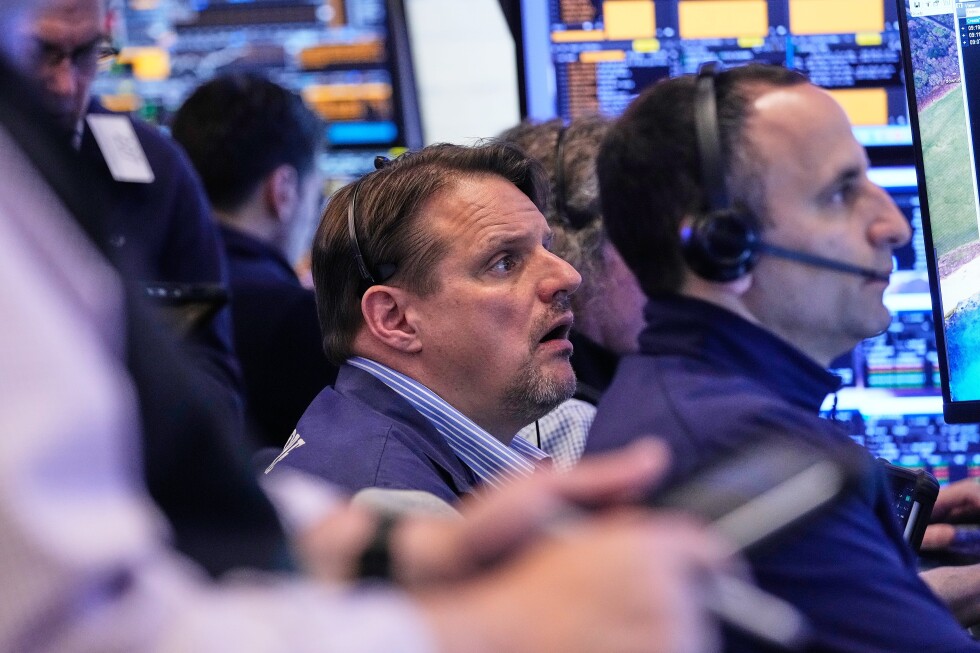
    Wall Street witnessed a significant rally on Wednesday, propelled predominantly by a landmark artificial intelligence partnership between two tech behemoths. The S&P 500 advanced 0.9%, nearing its recent all-time high, while the Dow Jones Industrial Average climbed 308 points (0.6%) and the Nasdaq composite surged 1.3%.

    The catalyst for this upward momentum was a major announcement from Meta Platforms, which unveiled a long-term strategic collaboration to integrate millions of Nvidia’s advanced chips and hardware into its AI data center infrastructure. This development sent Nvidia’s stock soaring 2.3%, cementing its position as the most influential single stock driving market performance. Nvidia CEO Jensen Huang emphasized the unprecedented scale of Meta’s AI deployment capabilities.

    While this partnership underscored the immense market optimism surrounding AI’s transformative potential, it also highlighted growing investor apprehensions. Meta’s shares experienced initial volatility, dipping 1.7% before recovering to a modest 0.3% gain, reflecting concerns over the massive capital expenditures required for AI development and uncertainty about future profitability.

    Beyond the AI sector, several companies reported strong quarterly results that contributed to the market’s positive performance. Cadence Design Systems jumped 9.1% after exceeding both profit and revenue expectations, with CEO Anirudh Devgan highlighting the resilience of their engineering software. Analog Devices gained 2.7% following better-than-anticipated earnings, citing record orders in its data center division. Moderna rose 5.5% after the FDA agreed to review its flu vaccine candidate, reversing a previous decision.

    However, not all news was positive. Palo Alto Networks dropped 5.5% despite strong quarterly results, as its future profit forecasts fell short of analyst projections.

    In the bond market, Treasury yields edged higher ahead of the Federal Reserve’s meeting minutes release, with the 10-year yield rising to 4.07%. Strong economic data, including improved industrial production and durable goods orders, suggested the economy remains robust, potentially influencing the Fed’s timeline for interest rate adjustments. The widespread expectation on Wall Street is for rate cuts to resume later this year, possibly during the summer following anticipated leadership changes at the central bank.

    Internationally, London’s FTSE 100 climbed 1.3% on encouraging inflation data, while Japan’s Nikkei 225 rose 1% following Prime Minister Sanae Takaichi’s reappointment after her party’s electoral victory.

  • Prestianni denies he racially abused Vinicius

    Prestianni denies he racially abused Vinicius

    A contentious racism allegation overshadowed Real Madrid’s narrow 1-0 victory against Benfica in Tuesday’s Champions League knockout phase play-off, triggering a stadium evacuation and sparking intense debate across the football world.

    Brazilian winger Vinícius Júnior reported alleged racial abuse from Benfica midfielder Gianluca Prestianni to referee Francois Letexier during the second half of the match in Lisbon. The accusation prompted an immediate 10-minute suspension as players from both teams left the pitch shortly after Vinícius had scored what would become the match-winning goal.

    The 25-year-old forward, who has endured multiple racist incidents throughout his career, took to Instagram post-match, stating: ‘Racists are, above all, cowards. They require the concealment of their identities to demonstrate their profound weakness. Unfortunately, they frequently operate under the protection of those who should be holding them accountable. Tonight’s events represent nothing novel in my experience or that of my team.’

    Prestianni, 20, vehemently denied the allegations through his social media channels: ‘I must clarify that I never directed racist insults toward Vinícius Jr., who unfortunately misinterpreted what he believed he heard. I have never engaged in racist behavior toward anyone, and I deeply regret the threats I have received from Real Madrid players.’

    Benfica’s official X account supported their player, posting video evidence alongside a statement suggesting the distance between players made auditory perception impossible. The Portuguese club emphasized their historical commitment to anti-racism, referencing legendary black striker Eusébio as testament to their inclusive values.

    The controversy intensified when Benfica manager José Mourinho suggested Vinícius had provoked spectators with his goal celebration and questioned the validity of the racism claims. His post-match comments drew sharp criticism from pundits including former Real Madrid midfielder Clarence Seedorf, who called Mourinho’s justification of potential racial abuse ‘a significant error.’

    Real Madrid defender Trent Alexander-Arnold condemned the incident as ‘a disgrace to football that tarnished an exceptional performance and magnificent goal.’ Teammate Kylian Mbappé went further, explicitly calling for UEFA to ban Prestianni from Champions League participation indefinitely.

    Football legends Thierry Henry and Theo Walcott added their voices to the growing condemnation, with Henry recalling his own experiences with racial abuse and noting Prestianni’s suspicious gesture of covering his mouth during the exchange.

    The incident now places significant pressure on UEFA to conduct a thorough investigation ahead of the second leg scheduled for February 25th at Santiago Bernabéu Stadium.

  • Climber on trial for leaving girlfriend to die on Austria’s highest mountain

    Climber on trial for leaving girlfriend to die on Austria’s highest mountain

    A landmark trial opening Thursday in Austria examines whether a mountain climber bears criminal responsibility for his girlfriend’s hypothermia death during a disastrous winter ascent of the Grossglockner peak in January 2025. The case has ignited international debate about liability in extreme sports.

    Prosecutors allege Thomas P, 33, committed nine critical errors during the ill-fated climb that resulted in Kerstin G’s death at 3,798 meters (12,460 feet). As the more experienced climber who planned the expedition, he is charged with gross negligent manslaughter for allegedly failing to protect his partner from lethal alpine conditions.

    The prosecution’s case centers on Thomas’s role as ‘responsible guide’ during the January 18-19 climb. Evidence indicates he initiated the ascent two hours behind schedule despite his girlfriend’s lack of experience with high-altitude winter tours. Prosecutors further contend he permitted inadequate footwear and carried insufficient emergency bivouac equipment.

    Webcam footage timestamped 21:00 on January 18 captures the couple’s torchlights ascending through gathering storms. Despite deteriorating conditions featuring -20°C wind chill and 74km/h winds, they continued toward the summit rather than turning back.

    The defense maintains both climbers were experienced, well-prepared, and in excellent physical condition. Attorney Karl Jelinek characterizes the death as ‘a tragic accident’ rather than criminal negligence, noting the couple felt capable until Kerstin suddenly exhibited extreme exhaustion near the summit.

    Critical disagreement surrounds events after midnight. Prosecutors allege Thomas failed to signal a police helicopter overhead at 22:50 and delayed emergency notification until 03:30. The defense claims he left his immobilized partner at 02:00 to seek help, descending the opposite slope as captured by webcam imagery.

    Mountain rescue teams couldn’t launch helicopter operations until morning due to violent winds. Kerstin succumbed to hypothermia alone on the mountainside before help arrived.

    The verdict could establish precedent for criminal liability in mountain sports, potentially creating what Austria’s Der Standard newspaper calls ‘a paradigm shift’ for adventure tourism accountability.

  • Food prices are surging in Russia. Is the war hitting Russians in the pocket?

    Food prices are surging in Russia. Is the war hitting Russians in the pocket?

    Russia’s economy is exhibiting clear signs of distress as persistent inflation, directly linked to the nation’s military engagement in Ukraine, severely impacts the cost of living for ordinary citizens. Comprehensive analysis reveals a troubling economic trajectory characterized by soaring prices for essential goods, diminishing household budgets, and growing financial uncertainty.

    Economic pressures have become increasingly palpable since the beginning of 2026, with official statistics from Rosstat, Russia’s federal statistics service, indicating a sharp 2.3% surge in supermarket prices within just one month. This acceleration follows a pattern of steady price increases that began with the full-scale invasion of Ukraine nearly four years ago, though the effects remained somewhat masked until recently by substantial government spending and wartime economic activity.

    The BBC’s longitudinal price monitoring study, tracking an identical basket of 59 basic goods in Moscow since 2019, demonstrates the cumulative impact: the cost has escalated by 18.6% since 2024, rising from 7,358 roubles to 8,724 roubles. This aligns closely with Rosstat’s documented food inflation rate of 18.1% over the same two-year period.

    Particularly affected are fruit and vegetables, which have increased nearly 15% since 2024 due to Russia’s dependence on imports and vulnerability to rouble fluctuations and supply chain disruptions. More dramatically, dairy products—typically domestically produced—have skyrocketed by 41% over two years, reflecting critical challenges within Russia’s agricultural sector including rising farm costs, expensive credit, and labor shortages.

    The recent implementation of a value-added tax increase from 20% to 22% on January 1, 2026, explicitly intended to finance defense and security expenditures, has further exacerbated price pressures. This fiscal measure directly links consumer price inflation to military funding priorities.

    Personal accounts from Moscow residents illustrate the tangible consequences. Alexander, an advertising professional, witnessed his monthly food budget jump 22% in one month. Nadezhda, a 68-year-old pensioner, now allocates her entire monthly pension of 32,000 roubles exclusively to food, forcing the postponement of other essential expenses. Kristina, a marketing specialist, reports that her home-cooked dinner costs have more than doubled, compelling her family to rely on savings for basic groceries.

    Despite Central Bank Governor Elvira Nabiullina’s previous assertions about approaching balanced economic growth, independent economists express concern. The convergence of falling oil prices—a critical revenue source for the federal budget—and stringent US sanctions disrupting energy exports to key markets like India threatens to widen Russia’s budget deficit beyond planned levels.

    With limited borrowing options due to high interest rates and international reluctance to finance a nation engaged in active conflict, Russian authorities face difficult choices between further tax increases or spending cuts. Economic experts including Tatiana Mikhailova, an economist at Penn State University, warn of impending economic stagnation and potential GDP decline, noting that oil price volatility consistently poses recession risks for Russia’s commodity-dependent economy.

    The collective evidence points to a deteriorating economic environment where military priorities continue to dictate fiscal policy at the expense of household financial stability, with no immediate relief in sight for consumers bearing the brunt of wartime economic management.