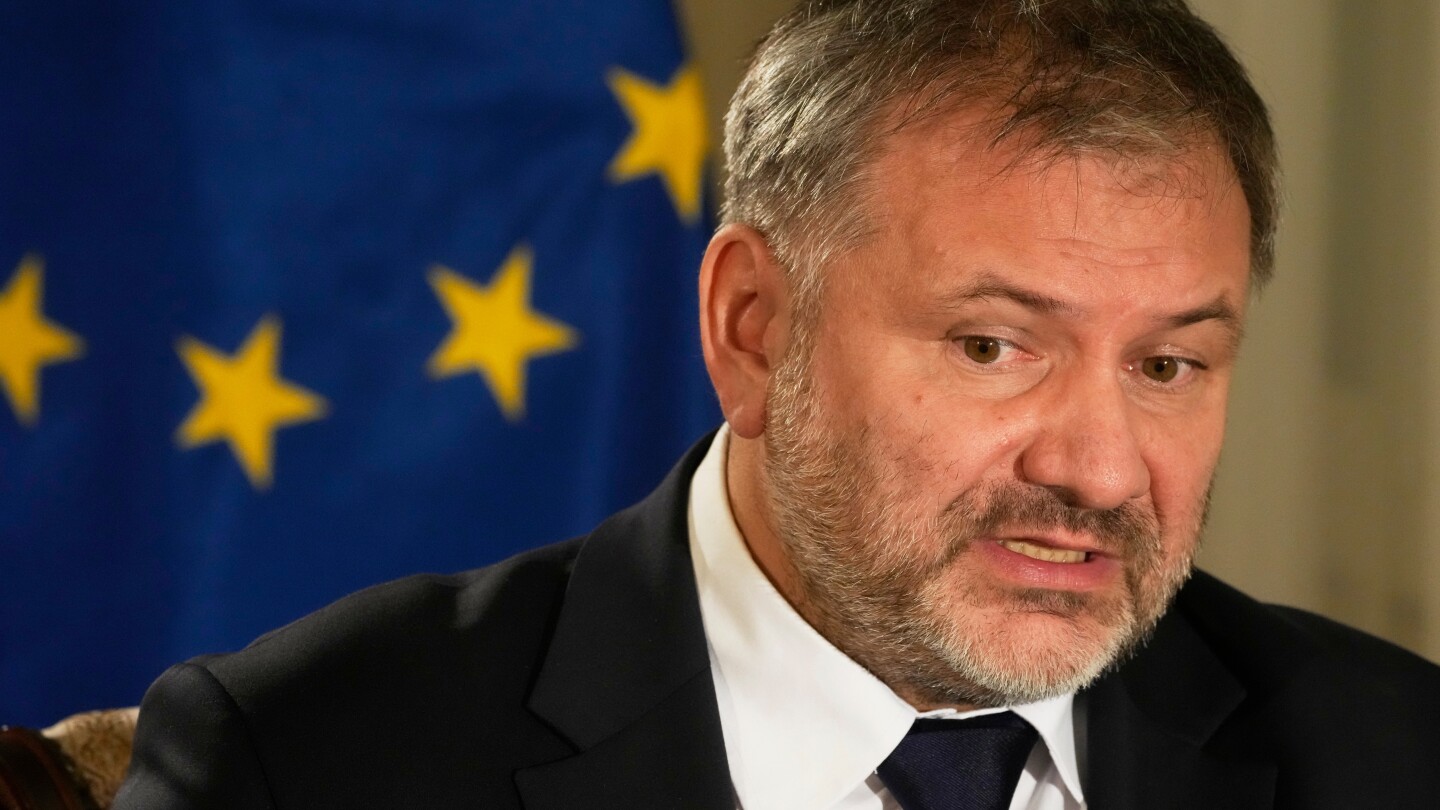
WARSAW, Poland — Two years into Donald Tusk’s government, Poland’s ambitious plans to reverse the judicial overhaul by its nationalist predecessor, Law and Justice (PiS), have encountered significant obstacles. PiS, which ruled from 2015 to 2023, consolidated political control over key judicial institutions by appointing sympathetic judges and punishing critics. These changes, condemned by European courts, have left Poland’s legal system in disarray. Despite Tusk’s promises to restore judicial independence, progress has been hindered by PiS-aligned presidents and deep political polarization. Tusk’s first justice minister, Adam Bodnar, was replaced in July due to perceived inaction. His successor, Waldemar Żurek, has adopted a more aggressive stance, pursuing legal action against PiS figures, including former Justice Minister Zbigniew Ziobro, accused of misusing funds for surveillance software. However, Żurek’s efforts face potential vetoes from President Andrzej Duda, a PiS ally. The government’s inability to pass reforms has led to a focus on prosecuting PiS allies, aiming to expose alleged abuses of power. Analysts warn that Poland’s judicial crisis is part of a broader democratic challenge, exacerbated by political polarization. Żurek emphasizes the need to engage with all citizens, not just legal experts, to safeguard democracy. Despite incremental progress, the path to restoring judicial independence remains fraught with challenges, as PiS remains a formidable political force.
标签: Europe
欧洲
-

Friday-night drug deals helping Russian war machine, UK crime agency warns
The National Crime Agency (NCA) has revealed a shocking connection between cocaine purchases in the UK and the funding of Russian arms factories. A Russian-led money-laundering network operating in Britain has been using a Kyrgyzstan-based bank to facilitate payments for Russia’s military-industrial complex, including arms production for the Ukraine war. The NCA’s investigation, dubbed Operation Destabilise, has uncovered a sprawling criminal ecosystem that processes cash for drug gangs, illegal firearms suppliers, and people smugglers.
-

Colombian scientists recover cannon, coins and porcelain cup from 300-year-old Spanish shipwreck
Colombian authorities announced on Thursday the recovery of several artifacts from the legendary Spanish galleon San José, which sank in the Caribbean Sea in 1708 after an attack by an English fleet. Among the retrieved items are a cannon, three coins, and a porcelain cup, marking the first tangible findings from the historic shipwreck. The recovery is part of a government-authorized scientific investigation initiated last year to study the wreckage and determine the causes of its sinking. The galleon, located in 2015 by Colombian researchers, remains a subject of legal and diplomatic disputes, with its exact location classified as a state secret. The San José is believed to carry a treasure trove of 11 million gold and silver coins, emeralds, and other precious cargo from Spanish-controlled colonies, potentially worth billions of dollars. President Gustavo Petro’s administration emphasized that the expedition’s primary goal is research, not treasure recovery. The artifacts will undergo conservation at a specialized lab dedicated to the project. The wreckage lies 600 meters (nearly 2,000 feet) deep in the Caribbean Sea. While the prevailing theory suggests an explosion caused the ship’s sinking, the Colombian government has proposed alternative explanations, including hull damage. The San José has also sparked a legal battle involving Colombia, Spain, and the U.S.-based Sea Search Armada, which claims a $10 billion share of the treasure, alleging its discovery in 1982.
-

Italian prosecutors investigate luxury group Tod’s for labor abuses, seek ad ban
Italian prosecutors have launched an investigation into luxury group Tod’s and three of its executives over allegations of labor exploitation and abuse, according to judicial documents revealed on Thursday. The Milan prosecutor, Paolo Storari, has also sought a six-month ban on the company’s advertising, with a hearing scheduled for December 3. The documents, obtained by The Associated Press, accuse Tod’s — renowned for its premium loafers and bags — of being complicit in the exploitation of Chinese workers at subcontracted workshops in Milan and the Marche region. Prosecutors allege that Tod’s was fully aware of the workers’ dire conditions, including excessive working hours, inadequate pay, workplace safety violations, and substandard housing. Despite conducting third-party audits on these workshops, Tod’s allegedly failed to address the issues uncovered, a behavior described as “intentional blindness” by Storari. In a statement issued on Thursday evening, Tod’s denied any wrongdoing and pledged to defend itself in court. This investigation is part of a broader crackdown on labor abuses by high-end brands in Italy. Earlier this year, Italian police revealed that Chinese workers employed by an unauthorized subcontractor had produced handbags and accessories for Giorgio Armani, highlighting systemic issues in the luxury fashion industry.
-
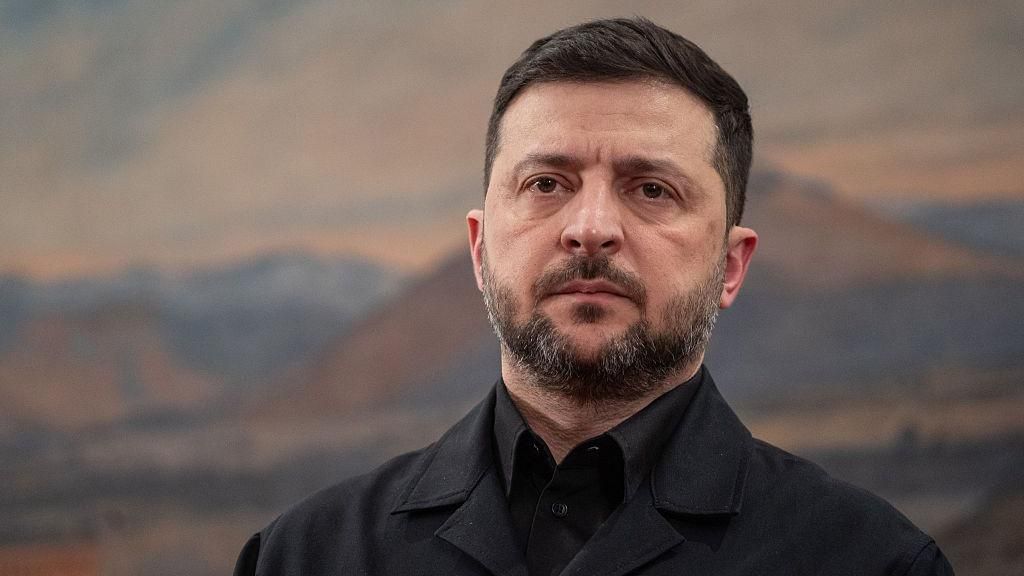
Zelensky to speak with Trump after US proposes Russia-Ukraine peace plan
The United States has presented a draft peace plan to Ukraine aimed at ending the ongoing war with Russia, a proposal reportedly crafted without Kyiv’s direct involvement. The plan, developed by US special envoy Steve Witkoff and his Russian counterpart Kirill Dmitriev, has sparked mixed reactions from both sides. Ukrainian President Volodymyr Zelensky’s office acknowledged the US’s belief that the draft could “help reinvigorate diplomacy” and expressed Ukraine’s willingness to engage with its provisions to achieve a “just end to the war.” However, details of the proposal, as reported by Axios, the Financial Times, and Reuters, suggest it includes demands for Ukraine to cede control of parts of the Donbas region, significantly reduce its military size, and relinquish many of its weapons—terms that appear heavily skewed in favor of Moscow. This has led to a lukewarm response from Kyiv. The White House revealed that President Donald Trump has grown “frustrated” with both Russia and Ukraine for their reluctance to commit to a peace agreement, prompting his administration to develop a “detailed and acceptable” plan. Meanwhile, the Kremlin downplayed the significance of the 28-point proposal, with spokesman Dmitry Peskov stating that while there have been “contacts” with the US, there is no formal consultation process. The draft plan emerged following a meeting between Zelensky and senior US military officials in Kyiv, including US Army Secretary Dan Driscoll and top US army commander in Europe Gen Chris Donahue. European leaders have also expressed concerns, with EU foreign policy chief Kaja Kallas emphasizing that any viable plan must involve Ukrainians and Europeans. Ukrainian MP Lisa Yasko criticized the lack of consultation, stating that it “looks like someone wants to decide things for us,” a sentiment that resonates deeply with many Ukrainians. As the fourth anniversary of Russia’s full-scale invasion approaches, the conflict remains unresolved, with both sides continuing to inflict significant damage on each other. Recent Russian missile and drone attacks on Ukraine’s western city of Ternopil resulted in at least 26 deaths, underscoring the ongoing brutality of the war.
-

Spain’s attorney general convicted in controversial leak case
Spain’s Attorney General, Álvaro García Ortiz, has been compelled to resign following a Supreme Court ruling that found him guilty of unlawfully disclosing confidential information. The case, which has deepened the nation’s political divide, centered on García Ortiz’s revelation of the tax status of Alberto González Amador, a businessman and partner of a prominent conservative politician. The court imposed a two-year ban from public office and a €7,200 fine on García Ortiz, who must also pay €10,000 in compensation to González Amador. The trial has exacerbated tensions between Prime Minister Pedro Sánchez’s left-wing government and the right-wing opposition. Conservative People’s Party spokeswoman Ester Muñoz called for Sánchez’s resignation and immediate elections, while the government stated it respected the ruling despite disagreeing with it. Left-wing politicians, including Health Minister Mónica García, criticized the verdict as politically motivated and damaging to the presumption of innocence. The case originated in March 2024 when the attorney general’s office corrected erroneous press reports about González Amador’s tax evasion plea bargain. González Amador filed a complaint, alleging a breach of privacy, and García Ortiz was accused of leaking information to the media. Despite the lack of direct evidence linking him to the leak, the court ruled against him. García Ortiz retains the right to appeal. This ruling adds to the judicial pressures facing Prime Minister Sánchez, whose family and party members are embroiled in various legal controversies.
-
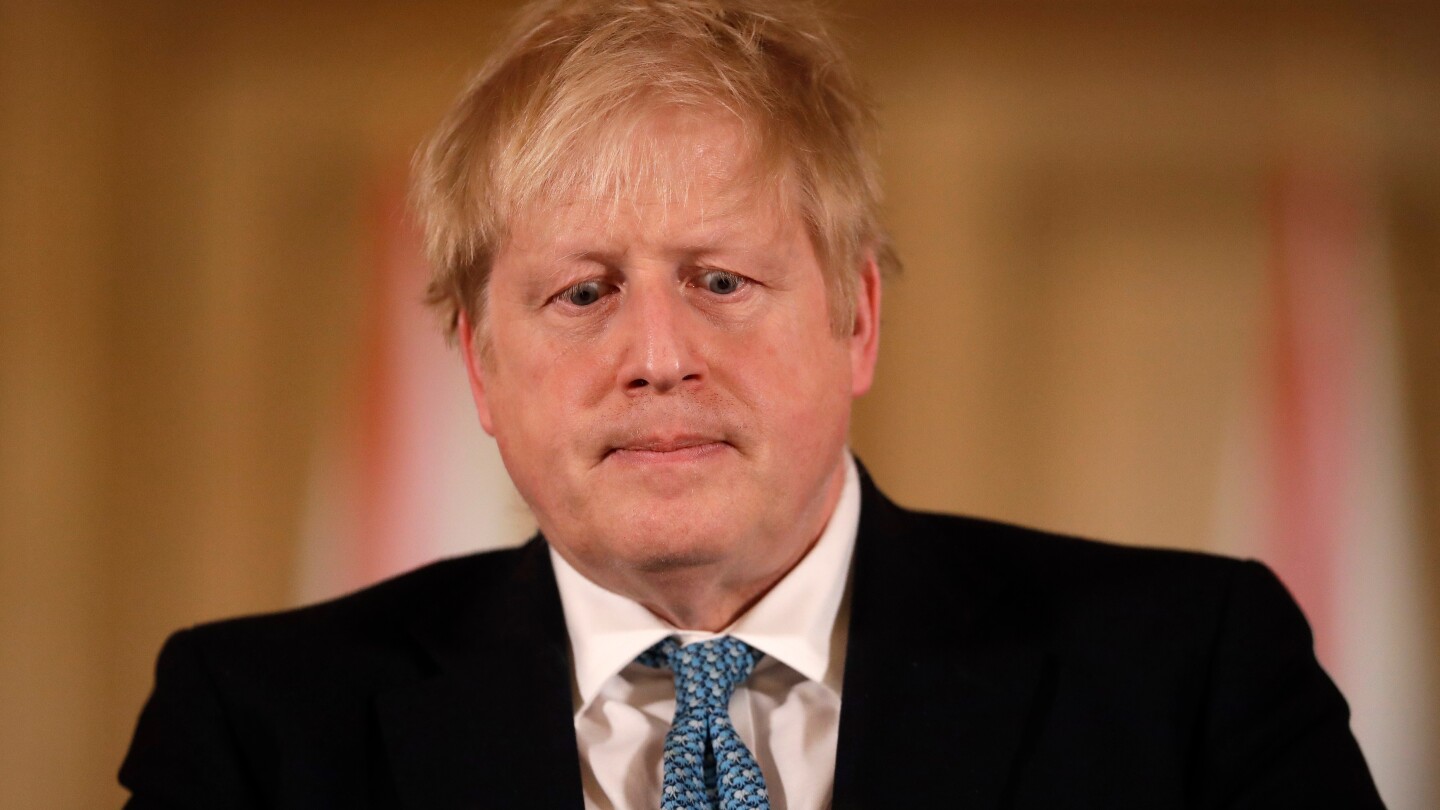
‘Too little, too late:’ Former UK government slammed for its initial COVID-19 response
A damning public inquiry report released on Thursday has sharply criticized the UK’s initial response to the COVID-19 pandemic, labeling it as ‘too little, too late.’ The inquiry, led by former judge Heather Hallett, revealed that the delayed implementation of lockdown measures in early 2020 resulted in an ‘unacceptable loss of life,’ potentially costing 23,000 lives in England alone during the first wave of the pandemic. The report highlighted chaos within the Conservative government at the time, with Prime Minister Boris Johnson accused of fostering a ‘toxic’ culture in Downing Street and frequently changing his stance on critical decisions. Key cabinet members and scientists also failed to act with the necessary urgency to combat the virus. The UK-wide lockdown, announced on March 23, 2020, came weeks after most European nations had already imposed restrictions. Hallett emphasized that an earlier lockdown could have reduced deaths by 48%, saving thousands of lives. The report also criticized Johnson’s overly optimistic outlook and the behavior of his special adviser, Dominic Cummings, who was accused of using ‘offensive, sexualized, and misogynistic’ language, further exacerbating the government’s dysfunction. The COVID-19 Bereaved Families for Justice group welcomed the findings, placing much of the blame on Johnson for prioritizing his political reputation over public safety. Hallett’s inquiry, which began two years ago and is expected to continue until 2027, is now focusing on the impact of the pandemic on children.
-

Belarus frees 2 imprisoned Catholic priests after talks with Vatican
In a significant development, two Roman Catholic priests imprisoned in Belarus on charges widely regarded as politically motivated were released on Thursday. The release followed diplomatic discussions involving the Vatican, as confirmed by the Conference of Catholic Bishops in Belarus. This move has sparked speculation about a potential thaw in relations between Belarus and Western nations, particularly after a recent phone conversation between Belarusian President Alexander Lukashenko and former U.S. President Donald Trump led to the release of several political prisoners earlier this year. Among the freed clergymen was Rev. Henrykh Akalatovich, a 65-year-old priest sentenced to 11 years in prison in 2023 on treason charges. Akalatovich, who had criticized the government in his sermons, denied accusations of espionage for Poland and the Vatican, calling them baseless. His arrest marked the first politically driven case against Catholic clergy in Belarus since the country’s independence in 1991. Also released was Rev. Andrzej Yukhnevich, who was serving a 13-year sentence for child molestation charges that he and human rights activists claimed were politically motivated. Yukhnevich had previously been detained multiple times, including for displaying a Ukrainian flag on social media. The releases followed a visit to Belarus by Cardinal Claudio Gugerotti, a papal envoy and former Vatican ambassador to Belarus, in October. The Conference of Catholic Bishops expressed optimism about renewed dialogue between Belarus, the U.S., and the Vatican. However, the whereabouts of the released priests remain unknown, with many political prisoners previously relocated to Lithuania without proper documentation. Opposition leader Sviatlana Tsikhanouskaya praised the Vatican’s intervention, emphasizing the need to end repression against believers. The case highlights the ongoing crackdown on dissent in Belarus, where over 1,200 political prisoners, including 29 clergy members, remain incarcerated. Despite Orthodox Christianity dominating Belarus’ religious landscape, Catholics and Protestants continue to face persecution for their opposition to Lukashenko’s regime.
-
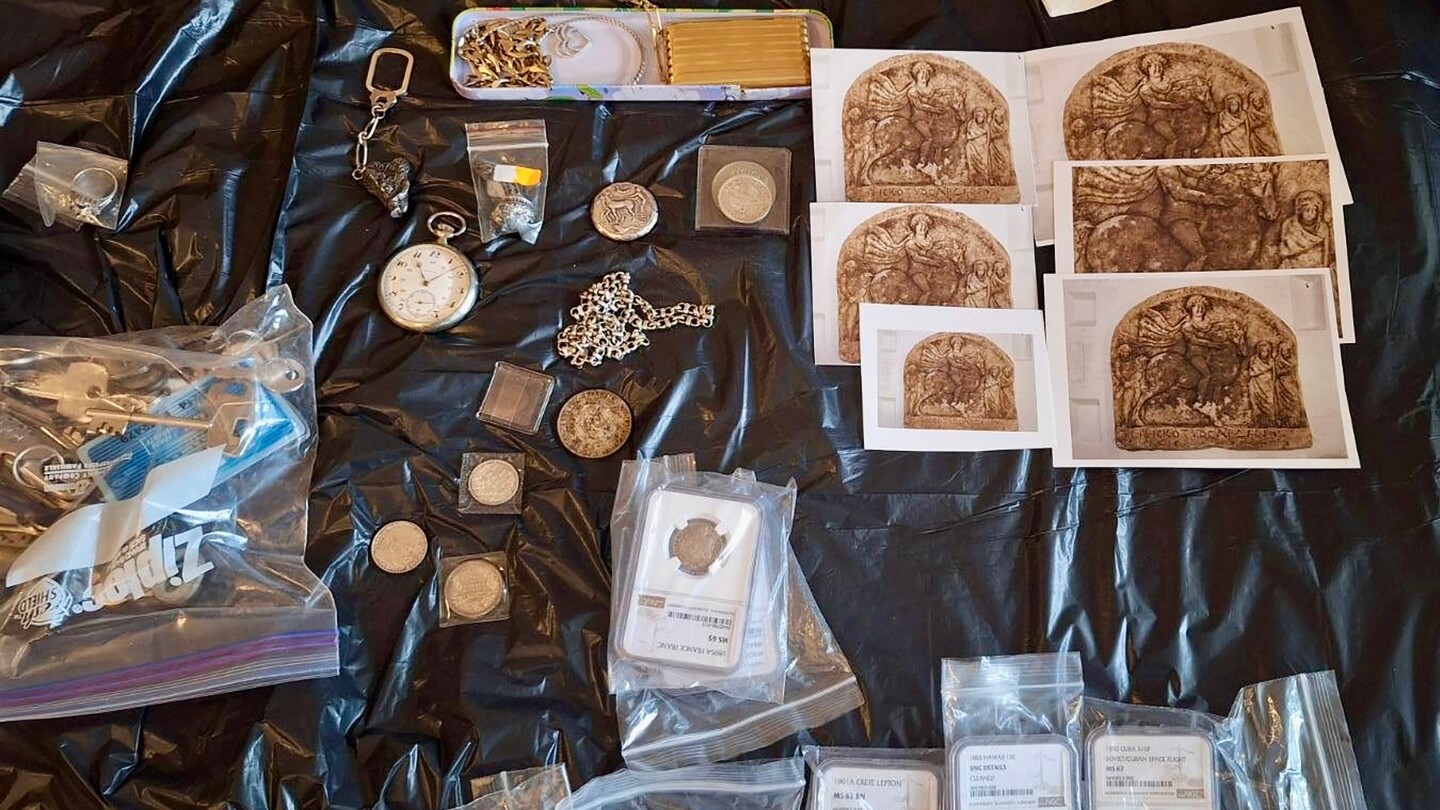
Coordinated operation across Europe dismantles antiquities smuggling ring
In a groundbreaking international effort, law enforcement agencies from seven countries, in collaboration with Eurojust and Europol, have successfully dismantled a sprawling criminal network involved in the trafficking of stolen cultural artifacts across Europe. Bulgarian authorities announced the operation on Thursday, revealing that 35 suspects have been arrested in connection with the smuggling ring. Among them, 20 individuals are facing charges of antiquities trafficking and money laundering. Bulgarian Prosecutor Angel Kanev disclosed that the group has been active for over 16 years, operating across Western Europe, the Balkans, the United States, and other regions. The investigation has uncovered illicit funds exceeding $1 billion. Coordinated actions were carried out in Albania, Bulgaria, France, Germany, Greece, Italy, and the United Kingdom, resulting in 131 searches of properties, vehicles, and bank safes. Authorities seized over 3,000 artifacts, including ancient golden and silver coins, artworks, weapons, and investment gold, with an estimated total value surpassing €100 million ($116 million). Paolo Befera, deputy head of Italy’s Carabinieri cultural heritage protection directorate, described the operation as the largest of its kind, with 300 historical artifacts recovered in Italy alone. The Balkan region and Italy, rich in Greek and Roman archaeological treasures, have long been targeted by criminal networks despite stringent national laws. The international black market continues to fuel demand for such stolen artifacts.
-

Paris wax museum unveils new Diana figure in ‘revenge dress,’ decades after her death in the city
The Grevin Museum in Paris, one of Europe’s oldest wax museums, unveiled a new life-size figure of the late Princess Diana on Thursday. The figure depicts Diana wearing her iconic black off-the-shoulder cocktail dress, famously known as the ‘revenge dress,’ which she wore to a Serpentine Gallery event in London in 1994. The dress gained notoriety as it was the same night Prince Charles, now King Charles III, publicly admitted to his infidelity with Camilla Parker Bowles. The unveiling holds particular significance for Paris, where Diana tragically died in a car crash in 1997. The city remains a place of pilgrimage for her admirers, who continue to leave flowers and notes at informal memorials. The museum’s director commissioned the figure after being unimpressed with a similar one at Madame Tussauds in London. The timing coincides with the 30th anniversary of Diana’s explosive BBC ‘Panorama’ interview, which significantly impacted the monarchy’s reputation. The figure is positioned away from wax likenesses of her ex-husband and former mother-in-law, emphasizing her independence. The sculpture, complete with high heels, a pearl choker, and a small handbag, captures the essence of Diana’s liberation. French novelist Christine Orban, author of ‘Mademoiselle Spencer,’ noted the dress symbolized Diana’s break from royal norms. The Grevin Museum, known for its collection of political leaders, artists, and pop-culture figures, continues to attract visitors with its star-studded exhibits. Diana’s figure joins another royal who died in Paris, Marie-Antoinette, further cementing her legacy in the city.