标签: Europe

欧洲

  • Banquet, Royal Family and Starmer on first day of German state visit

    Banquet, Royal Family and Starmer on first day of German state visit

    The United Kingdom rolled out the ceremonial red carpet for Germany’s President Frank-Walter Steinmeier, marking the first German state visit to Britain in over a quarter-century. The historic occasion commenced with traditional pomp and circumstance at Windsor Castle, where the Royal Family hosted a series of diplomatic engagements.

    This significant diplomatic event featured an elaborate state banquet attended by key political figures including Prime Minister Keir Starmer, signaling the reinforced ties between the two European powers. The meticulously orchestrated ceremonies blended centuries-old royal traditions with contemporary diplomatic dialogue, creating a powerful visual representation of Anglo-German relations.

    The three-day visit represents a carefully choreographed demonstration of post-Brexit European cooperation and international diplomacy. Beyond the ceremonial aspects, the agenda includes substantive discussions on trade, security cooperation, and collaborative efforts addressing global challenges from climate change to geopolitical stability.

    The choice of Windsor Castle as the primary venue underscored the visit’s importance, with its rich historical significance providing an impressive backdrop for strengthening bilateral relations. This state visit, the first since 1997, occurs at a pivotal moment as both nations navigate new European political dynamics and seek to deepen their strategic partnership.

  • Royals host glittering state banquet for German president

    Royals host glittering state banquet for German president

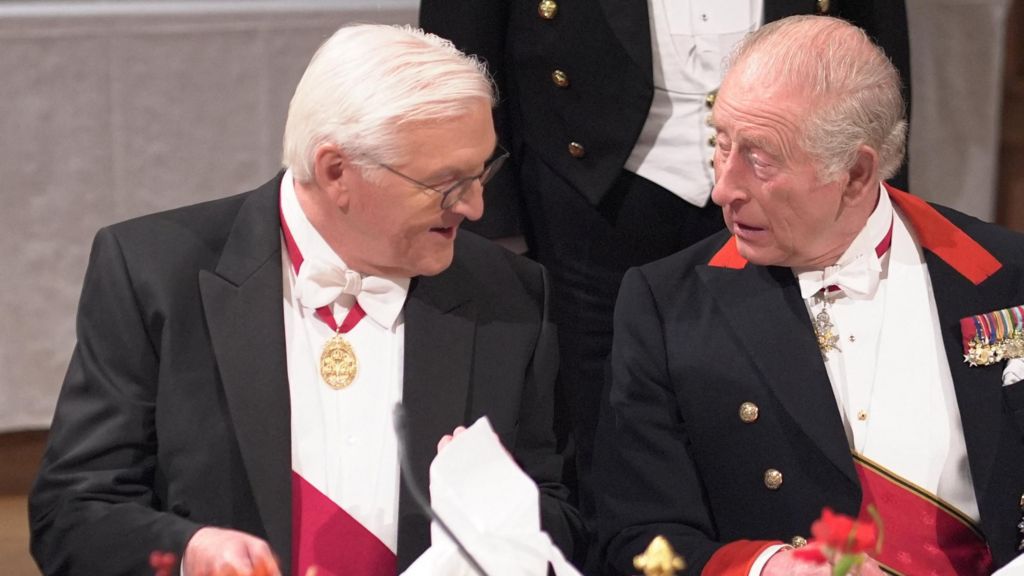
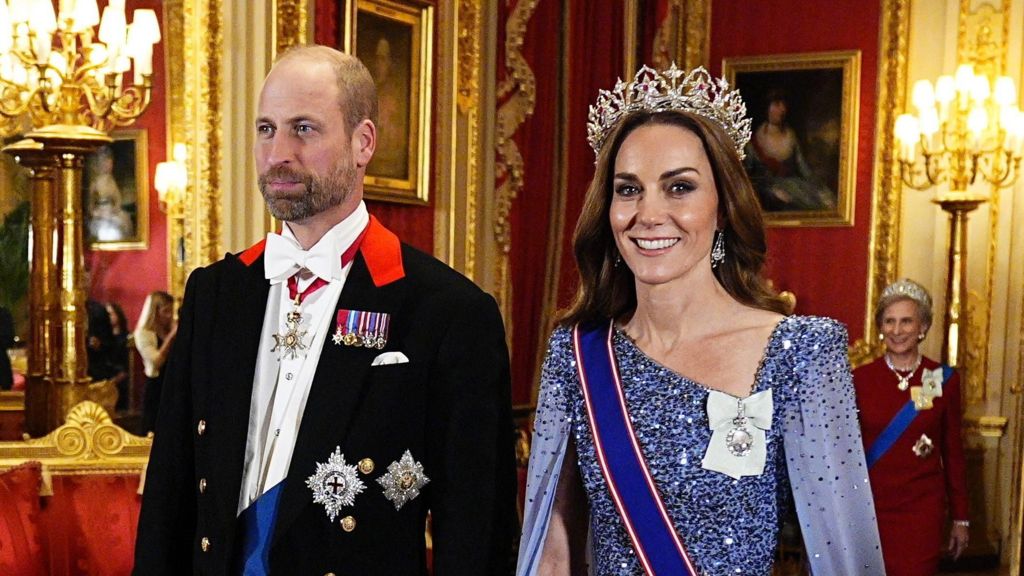
    Windsor Castle hosted a momentous state banquet on Wednesday evening as King Charles III welcomed German President Frank-Walter Steinmeier, marking the first German state visit to the UK in 27 years. The glittering event, adorned with seasonal decorations including a 20-foot Christmas tree illuminated by thousands of lights, brought together 152 distinguished guests from political, business, and cultural spheres.

    The royal family was prominently represented with Queen Camilla, the Prince and Princess of Wales, the Princess Royal, and the Duke and Duchess of Edinburgh in attendance. Catherine, Princess of Wales, made a notable sartorial statement wearing Queen Victoria’s diamond and ruby tiara, originally designed by her German-born husband Prince Albert.

    Among the celebrity guests were model Claudia Schiffer—seated beside Prime Minister Sir Keir Starmer—renowned film composer Hans Zimmer, and virtuoso violinist Anne-Sophie Mutter. The banquet menu featured a fusion of British and German culinary traditions, including tartlet of hot smoked trout with langoustines, Windsor partridge supreme, and Black Forest gateau-inspired cocktails.

    In his address delivered in both English and German, King Charles emphasized the critical need for Western allies to support Ukraine against Russian aggression, stating: “The United Kingdom and Germany together stand with Ukraine and bolster Europe against the threat of further Russian aggression.” President Steinmeier reciprocated this sentiment, affirming Germany’s unwavering support for Ukraine.

    The King also reflected on the profound historical connections between the two nations, acknowledging both cultural exchanges and the “most terrible consequences of conflict.” He spoke thoughtfully about the social and political transformations following the fall of the Berlin Wall, noting how change can be “unsettling and even frightening” and emphasizing the necessity of defending democratic values.

    Lighter moments included the King’s humorous reference to football rivalries: “One has to admit some element of truth in the famous description of football as a game where 11 people play 11 people and then, in the end, Germany win!” He also quipped about horse-drawn royal coaches being the “ultimate low-emissions vehicle.”

    The banquet culminated a day of ceremonial activities that included a military parade featuring 850 service personnel and 150 horses. Gift exchanges held symbolic significance, with German presents including an umbrella, Bach’s Christmas Oratorio, and traditional nutcrackers, while the King offered a horn-handled walking stick and rare literary editions.

    President Steinmeier later remarked on the improved UK-Germany relations following post-Brexit challenges, praising the recent bilateral treaty signed in July as instrumental in achieving closer cooperation. Meanwhile, First Lady Elke Budenbender visited Judith Kerr Primary School in London, honoring the German-born author of beloved children’s literature.

    The visit will include gestures of reconciliation, with plans for President Steinmeier to visit Coventry Cathedral ruins, bombed during World War II. Minor protests by anti-monarchy groups occurred but were managed peacefully by Thames Valley Police without arrests.
  • Stop wasting the world’s time, Ukraine tells Putin after US talks in Moscow

    Stop wasting the world’s time, Ukraine tells Putin after US talks in Moscow

    High-stakes diplomatic efforts to end the Ukraine conflict reached an impasse as US-Russia negotiations concluded without substantive progress. Ukrainian Foreign Minister Andrii Sybiha sharply criticized Vladimir Putin for “wasting the world’s time” following the unsuccessful talks, warning of consequences if Russia continues to “spit into the world’s face.”

    The extensive five-hour meeting between Putin and US envoys Steve Witkoff and Jared Kushner at the Kremlin failed to bridge fundamental divides. Kremlin adviser Yuri Ushakov confirmed “no compromise” had been achieved, though he acknowledged some US proposals appeared “more or less acceptable” pending further discussion.

    Core disagreements remain entrenched, particularly regarding the status of Russian-occupied Ukrainian territories and future security guarantees. Ukraine and European allies maintain that NATO membership represents the most effective deterrent against future Russian aggression—a proposition both Moscow and the Trump administration explicitly reject.

    Russia’s negotiating position appears strengthened by recent battlefield gains. Putin’s military commanders reported capturing the strategic city of Pokrovsk in eastern Ukraine, with Russian forces seizing approximately 701 square kilometers of territory in November alone, bringing total controlled Ukrainian territory to 19.3%.

    As US-Russia relations show tentative warming, European nations are moving decisively toward energy independence. EU member states finalized an agreement to completely eliminate Russian gas imports by 2027, with European Commission President Ursula von der Leyen heralding “the dawn of a new era.”

    Simultaneously, the EU proposed a €90 billion financial package for Ukraine, potentially funded through frozen Russian assets—a plan facing resistance from Belgium and the European Central Bank over legal concerns. The proposal would cover two-thirds of Ukraine’s financing needs through 2027 amid ongoing conflict.

  • Missing boy’s case ‘could not have been anticipated’

    Missing boy’s case ‘could not have been anticipated’

    An independent review into the disappearance of Irish schoolboy Kyran Durnin has concluded that child welfare authorities could not have anticipated the tragic outcome based on information available to them at the time. The National Review Panel (NRP), which examines serious incidents involving children in state care, released its findings regarding the case that has shocked the Republic of Ireland.

    Kyran was reported missing from his Drogheda, County Louth home in August 2024 alongside his 24-year-old mother, Dayla Durnin. The last confirmed images of the boy dated back to June 2022 when he was just six years old. In a devastating turn of events, gardaí launched a murder investigation in October 2024, stating they were treating Kyran as ‘missing, presumed dead.’

    Dr. Helen Buckley, head of the NRP, emphasized that while the review identified certain practice and policy weaknesses within Tusla (Ireland’s Child and Family Agency), no direct causal link was established between these shortcomings and Kyran’s disappearance. ‘The serious incident which elicited this review could not have been anticipated from knowledge available to Tusla’s social work department at the time,’ Dr. Buckley stated.

    The comprehensive investigation has involved extensive police resources, with gardaí confirming over 570 investigative actions, two arrests (a man and woman suspected of murder), searches of three residential properties with adjoining lands, and review of more than 29,500 hours of CCTV footage. Despite these efforts, Kyran’s whereabouts remain unknown.

    In response to the tragedy, the review panel has recommended significant systemic changes including enhanced tracking of pupil movement between primary schools (including cross-border monitoring), GDPR regulation reviews, updated guidance for social workers, and revised protocols between Tusla and gardaí.

    Tusla CEO Kate Duggan committed to ‘full transparency and meaningful reform,’ acknowledging the need to review the agency’s interactions with children, families, and service providers. Meanwhile, Children’s Minister Norma Foley described the case as ‘heartbreaking’ and confirmed that while the full report cannot be published due to potential prejudice to future prosecutions, the recommendations would be made public.

    The government has approved the Child Care (Amendment) Bill 2025, which will establish the NRP on statutory footing with enhanced powers to compel evidence and publish reports. The legislation will also formalize a ‘duty to cooperate’ among relevant agencies including Tusla and government departments.

    Kyran’s educational history shows he attended a primary school near his Dundalk home but did not return following summer holidays in 2022. His family relocated from their Emer Terrace residence in May 2024, with Tusla alerting gardaí about ‘significant concerns’ regarding the child in August 2024. The last confirmed sighting of Kyran and his mother occurred in Drogheda on August 28, 2024, with their formal disappearance reported two days later.

  • Exclusive drone footage shows devastated Ukrainian town almost encircled by Russian forces

    Exclusive drone footage shows devastated Ukrainian town almost encircled by Russian forces

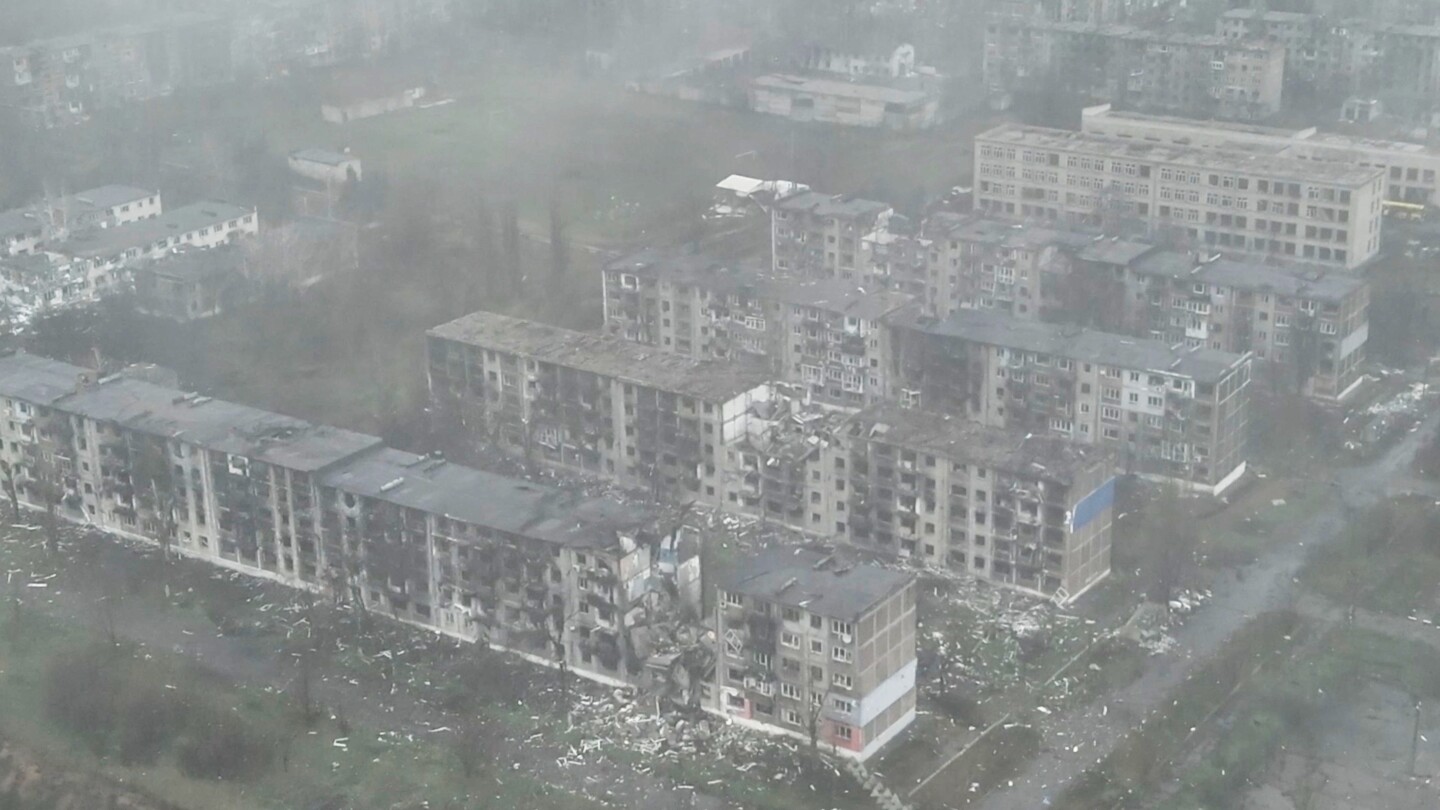
    KYIV, Ukraine — Exclusive aerial footage captured by The Associated Press reveals the near-total destruction of Myrnohrad, a strategically significant Ukrainian town now almost completely encircled by Russian forces in the Donetsk region. Located merely 12 kilometers from the contested logistics hub of Pokrovsk, the settlement shows virtually no intact structures, with recent bombardment so intense that smoke continues to rise from fresh impact sites.

    Military officials describe a desperate situation where Ukrainian marines from the 38th Brigade continue to mount a defense despite overwhelming odds. Oleksii Hodzenko, press officer for the brigade’s drone battalion, stated Russian forces are attempting to ‘erase the town from the face of the earth’ through relentless aerial assaults using 500-kilogram glide bombs, attack drones, and sustained artillery barrages.

    The tactical situation has deteriorated to the point where standard military logistics have become nearly impossible. While Ukrainian command confirms supply lines are being maintained through innovative methods—including ground-robot drones delivering essential provisions—personnel rotations occur only rarely, leaving defenders entrenched for weeks without relief.

    This devastation follows Russia’s disputed claim of capturing Pokrovsk, a declaration firmly rejected by Ukraine’s military leadership. Colonel Volodymyr Polevyi of the 7th Corps Assault Brigade confirmed ongoing combat operations in Pokrovsk’s northern districts, contradicting Moscow’s victory assertions.

    The humanitarian toll is catastrophic. Myrnohrad, once home to 46,000 residents, now stands largely empty after more than two years of full-scale invasion, mirroring the fate of numerous eastern Ukrainian communities.

    Amid the battlefield developments, Kremlin officials signaled that recent territorial gains have strengthened Russia’s diplomatic position. Presidential aide Yurii Ushakov stated military successes have positively influenced negotiations regarding a U.S.-drafted peace proposal.

    Ukrainian forces continue to appeal for sustained Western military support, emphasizing that adequate assistance remains critical to preventing broader regional escalation.

  • What latest Ukraine talks reveal about Putin’s state of mind

    What latest Ukraine talks reveal about Putin’s state of mind

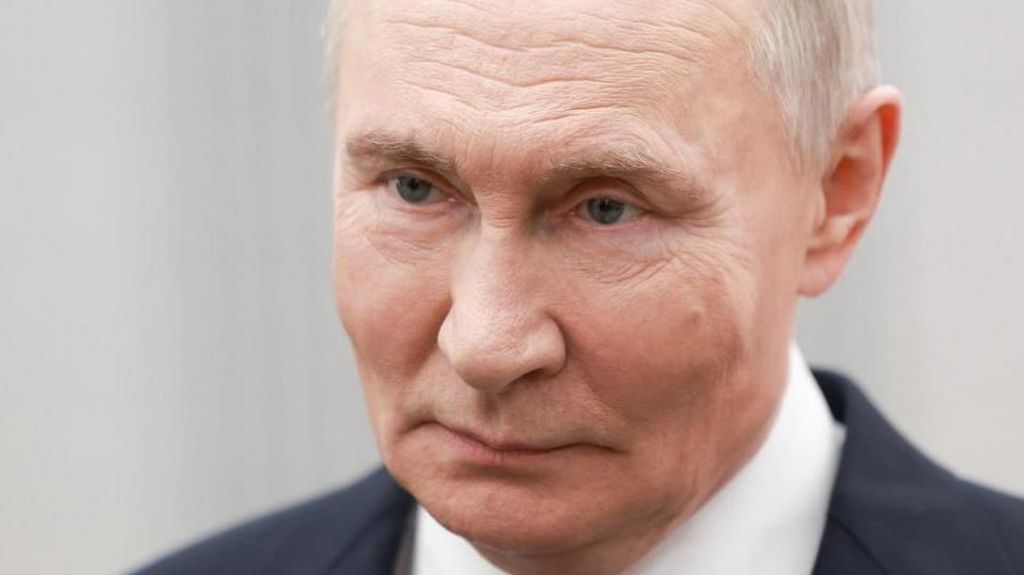
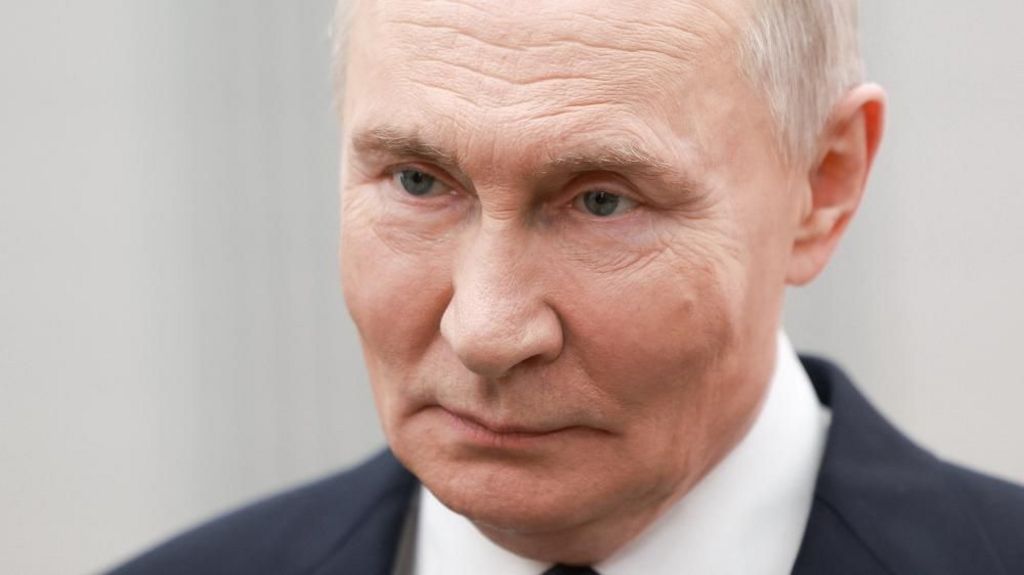
    Recent diplomatic engagements concerning Ukraine have revealed Russian President Vladimir Putin’s unwavering position on continuing military operations despite growing economic challenges. During five hours of negotiations in Moscow involving U.S. envoy Steve Witkoff and Donald Trump’s adviser Jared Kushner, Kremlin foreign policy aide Yuri Ushakov explicitly stated that “no compromise version has yet been found” regarding potential peace agreements.

    This hardened stance aligns with Putin’s recent rhetoric, where he has characterized Ukrainian leadership as a “thieving junta” and accused European officials of undermining peace initiatives. Russian state media has simultaneously projected images of Putin in military attire analyzing frontline maps and celebrating alleged battlefield advances—claims frequently disputed by Ukrainian authorities and international observers.

    Nearly four years into Russia’s full-scale invasion, the Kremlin leader appears convinced of his strategic advantage despite substantial Russian casualties and economic strain. Putin’s demeanor suggests a leader determined to persuade Western nations of his inevitable victory, projecting an image of unstoppable momentum in pursuing military objectives.

    However, beneath this show of confidence lies increasing economic vulnerability. Despite circumventing international sanctions, Russia faces declining hydrocarbon revenues and expanding budget deficits. Putin himself acknowledged concerning “imbalances” within the Russian economy, noting decreased production output across several sectors this year.

    The critical question emerging from these developments is whether mounting economic pressures will eventually compel Moscow to recalibrate its military ambitions. While Putin currently maintains a posture of invincibility, the sustainability of Russia’s war effort remains contingent on continuous financial resources that show signs of deterioration.

  • Germany starts putting into place the Arrow 3 missile defense system, bought from Israel

    Germany starts putting into place the Arrow 3 missile defense system, bought from Israel

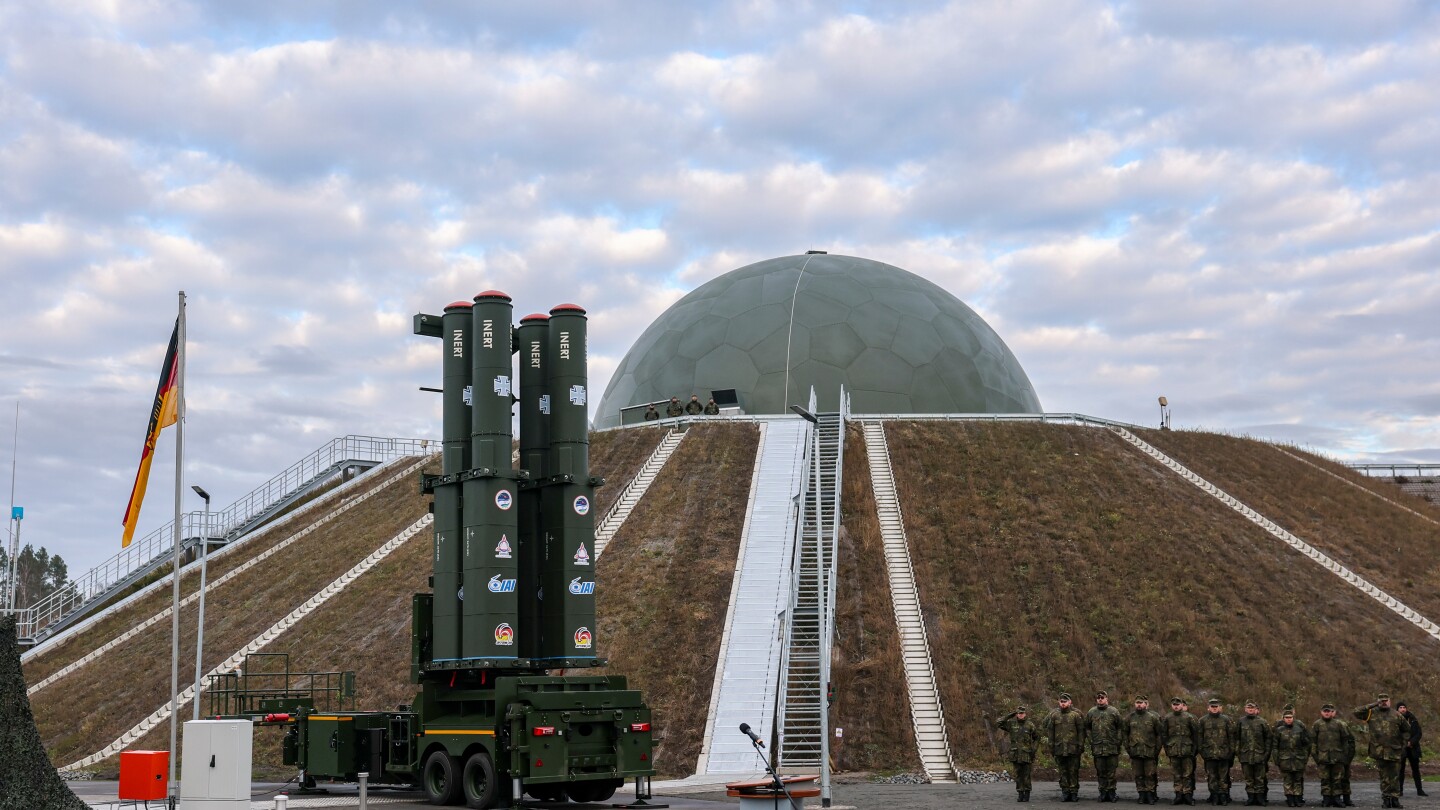
    BERLIN — In a significant advancement of its national security infrastructure, Germany has officially commenced the deployment of the cutting-edge Arrow 3 missile defense system, acquired through a landmark agreement with Israel. The inaugural components of this sophisticated defense network were activated Wednesday at the Schönewalde military installation south of Berlin, marking the initial phase of a comprehensive rollout across multiple sites.

    Defense Minister Boris Pistorius emphasized the transformative nature of this acquisition, stating that Germany has now established its first-ever early-warning and protective capacity against long-range ballistic missile threats. “This strategic capability, which remains unique among our European partners, reinforces our central role at the heart of Europe,” Pistorius declared. “Consequently, we are providing protection not merely for ourselves but equally for our allied nations.”

    The procurement agreement, finalized in September 2023 following necessary authorization from the United States—a development partner in the Arrow system’s creation—represents a direct response to evolving security challenges following Russia’s military operations in Ukraine. The German Defense Ministry has allocated approximately €3.8 billion (equivalent to $4.4 billion) for the complete implementation, with spokesperson Mitko Müller confirming subsequent elements will be progressively integrated.

    Germany intends to incorporate the Arrow 3 system within broader NATO and European air defense initiatives, enhancing collective security architecture. The technology originates from Israel’s proven multi-tiered missile defense framework, which has demonstrated effectiveness against rocket threats from Gaza, Lebanon, and more recently, Yemeni rebels and Iranian capabilities.

  • D-Day veteran Charles Shay, who saved lives on Omaha Beach, dies at 101 in France

    D-Day veteran Charles Shay, who saved lives on Omaha Beach, dies at 101 in France

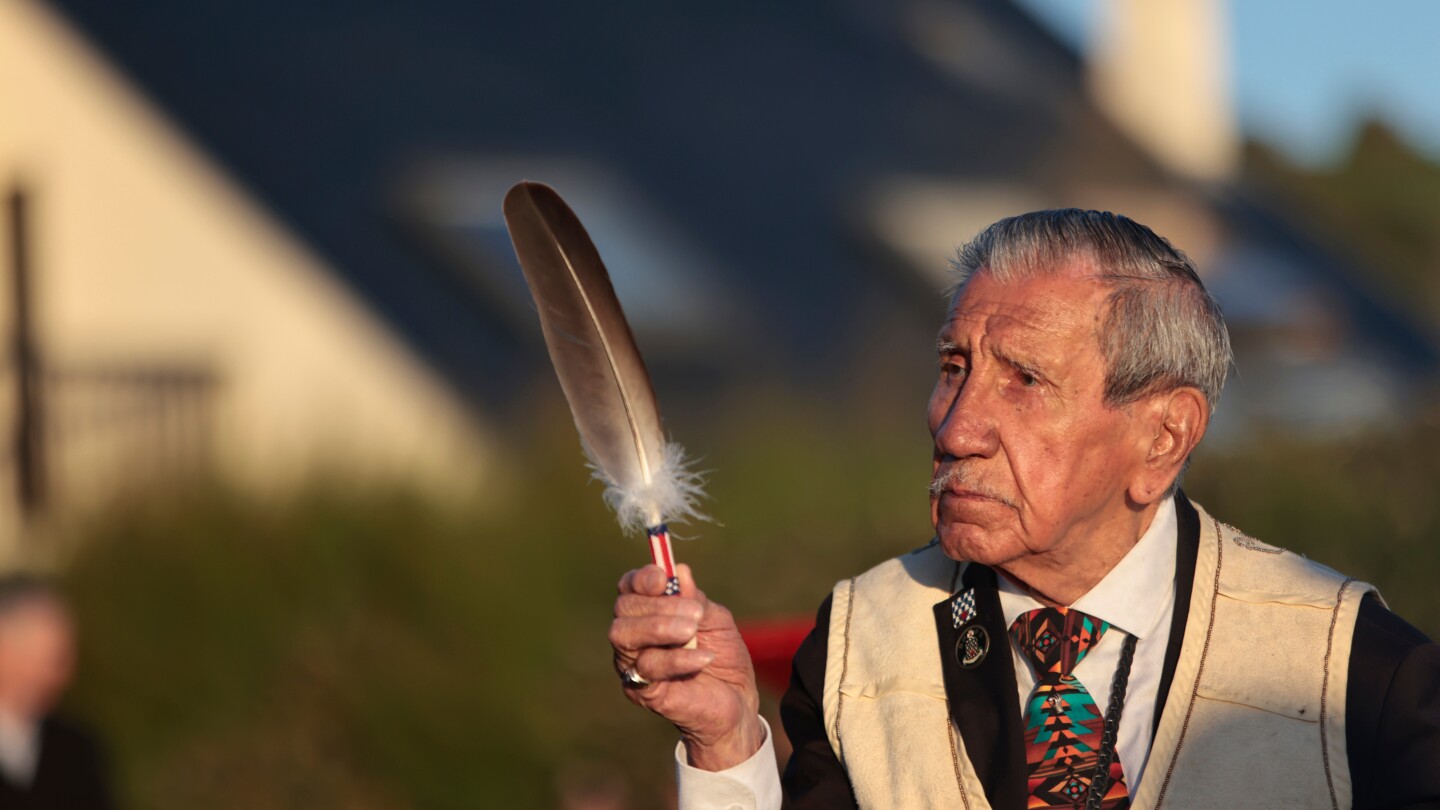
    Charles Norman Shay, the decorated Native American medic who courageously saved lives during the historic D-Day landings at Omaha Beach, passed away peacefully on Wednesday at age 101. His longtime friend and caregiver Marie-Pascale Legrand confirmed his passing at his residence in Bretteville-L’Orgueilleuse, Normandy, where he had lived since 2018.

    Shay, a Penobscot tribe member from Indian Island, Maine, was merely 19 years old when he participated in the largest amphibious invasion in military history on June 6, 1944. His extraordinary bravery under fire earned him the Silver Star – one of America’s highest military honors – for repeatedly entering treacherous waters to rescue critically wounded soldiers from drowning amidst the chaos of battle.

    In 2007, France recognized his valor with the Legion of Honor, the nation’s highest distinction. Shay had become a permanent resident of the Normandy region, living in close proximity to the hallowed shores where nearly 160,000 Allied troops from the United States, Britain, Canada, and other nations commenced the operation that would ultimately accelerate Germany’s defeat within the following year.

    The Charles Shay Memorial organization, dedicated to honoring approximately 500 Native Americans who participated in the Normandy landings, announced on social media that their “hearts are deeply saddened” by the passing of “our beloved Charles Norman Shay.” The group’s statement celebrated him as “an incredibly loving father, grandfather, father-in-law, and uncle, a hero to many, and an overall amazing human being” who leaves behind “a legacy of love, service, courage, spirit, duty and family.”

    For years, Shay conducted traditional sage-burning ceremonies at a memorial site overlooking Omaha Beach – now named in his honor – paying homage to the fallen soldiers. In 2022, he formally passed this solemn duty to Julia Kelly, a Gulf War veteran from the Crow tribe, ensuring the continuity of this sacred tradition.

    The D-Day invasion claimed 4,414 Allied lives, including 2,501 Americans, with over 5,000 wounded. German casualties numbered several thousand. Reflecting on his experience in a March 2024 interview with The Associated Press, Shay demonstrated characteristic humility: “I guess I was prepared to give my life if I had to. Fortunately, I did not have to. I had been given a job, and the way I looked at it, it was up to me to complete my job.”

  • Greek farmers block border crossing routes in escalating dispute over delayed EU subsidies

    Greek farmers block border crossing routes in escalating dispute over delayed EU subsidies

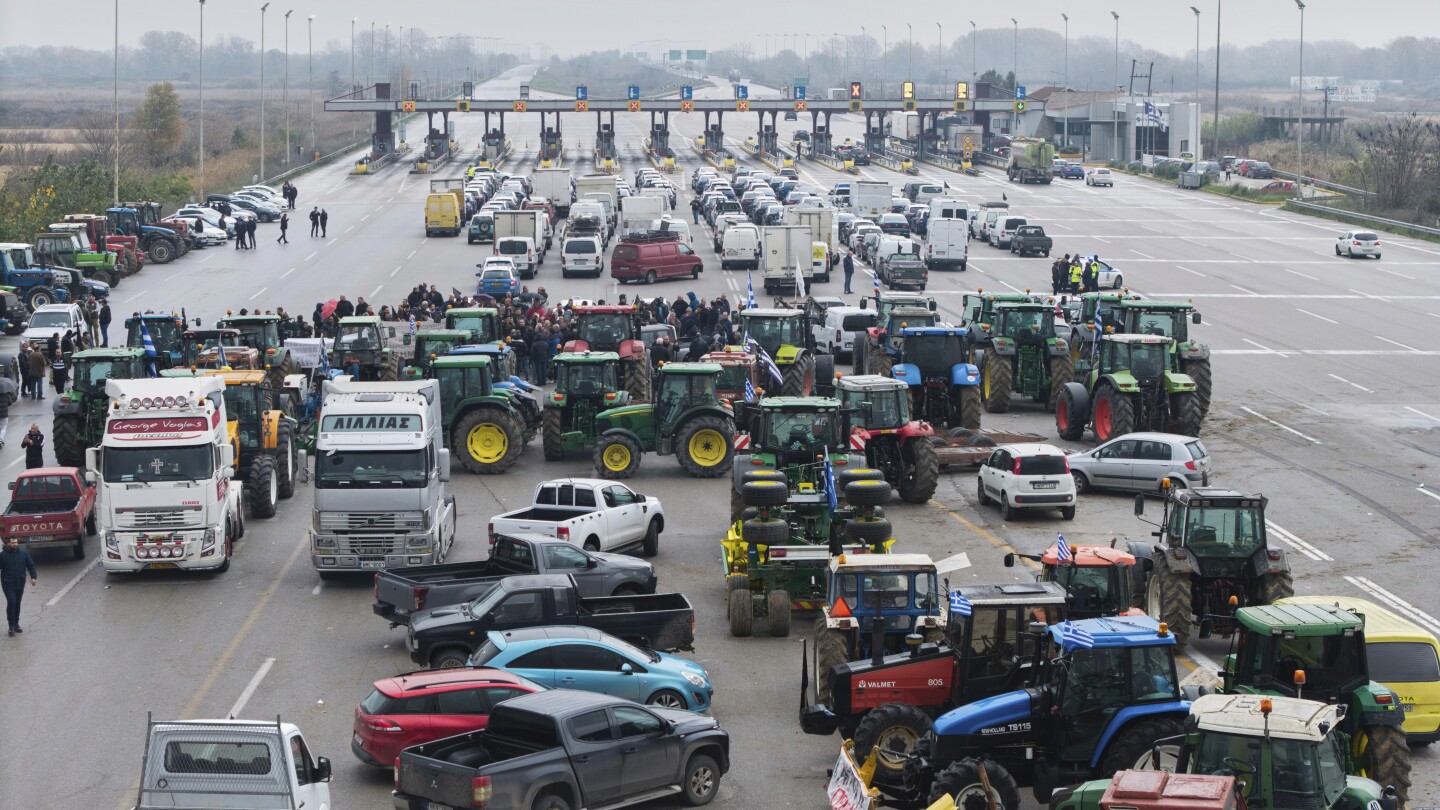
    THESSALONIKI, Greece — Agricultural producers across northern Greece intensified demonstrations Wednesday by deploying tractor convoys to blockade key border crossings, creating significant disruptions to international transit routes. The protests target prolonged delays in European Union subsidy distributions connected to an ongoing corruption investigation that has shaken the nation’s agricultural sector.

    Farmers effectively sealed access points to North Macedonia, Bulgaria, and Turkey, compelling commercial and passenger vehicles to seek extensive alternative routes. This action follows weekend demonstrations where hundreds of agricultural workers mobilized farming equipment to obstruct roadways throughout multiple regions.

    While farmer protests occur periodically in Greece, the current unrest stems specifically from suspended subsidy payments after revelations of extensive fraudulent claims within the EU funding system. The scandal previously triggered the June resignation of five high-ranking government officials and the systematic dismantling of a state agency responsible for managing agricultural subsidies.

    In recent weeks, dozens of individuals have been detained nationwide for allegedly submitting falsified claims. The investigation, directed by the European Public Prosecutor’s Office (EPPO), has uncovered what the independent EU financial crime body describes as “a systematic large-scale subsidy fraud scheme and money-laundering activities” according to their late October statement.

    Greek Minister for Public Order Michalis Chrisochoidis stated this week that while the government maintains willingness to negotiate with protest organizers, it will not permit the shutdown of critical infrastructure including ports and railway hubs.

  • Three French teens drown after car crashes upside down in swimming pool

    Three French teens drown after car crashes upside down in swimming pool

    A horrific automotive accident in southern France has resulted in the tragic drowning deaths of three teenagers whose vehicle plunged into a private swimming pool under extraordinary circumstances. The incident occurred in the town of Alès during the early hours of Wednesday amid heavy rainfall conditions.

    According to official reports from French authorities, the vehicle carrying victims aged 14, 15, and 19 skidded off the roadway, smashed through a low garden wall, and executed a complete inversion before landing upside down in the pool. Public Prosecutor Abdelkrim Grini characterized the event as “the height of horror,” clarifying that the impact itself was not fatal. Instead, the teenagers became trapped within the submerged vehicle, positioned upside down in approximately 1.5 meters of icy water, with doors rendered inoperable due to water pressure and the car’s inverted orientation.

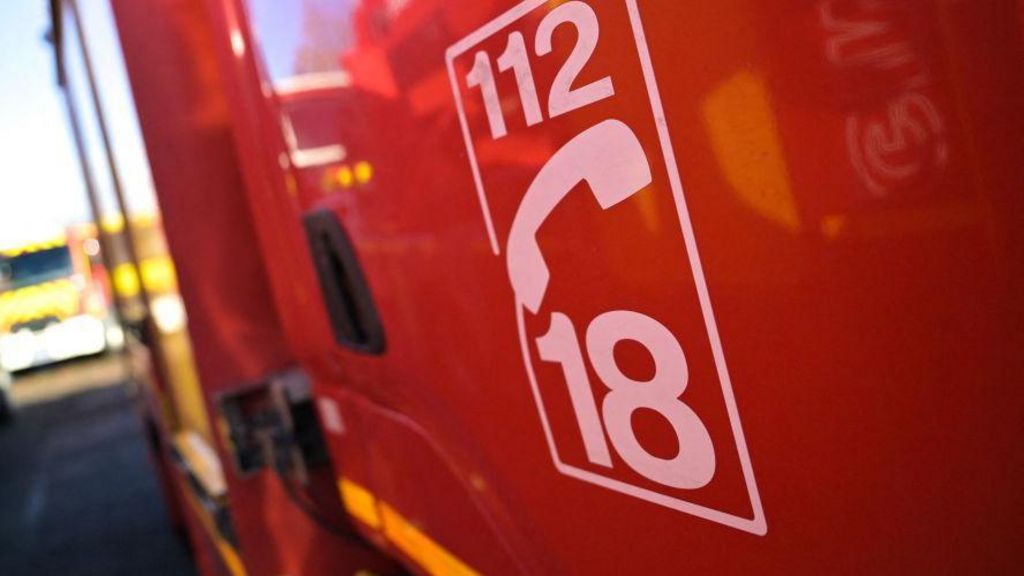
    The vehicle’s dimensions nearly matched those of the pool, creating a perfect trap that prevented escape. Emergency services were not alerted until several hours after the incident, requiring firefighters to drain the pool before extracting both the vehicle and victims. Unconfirmed reports indicate the youngest victim may have been operating the vehicle at the time of the accident.

    Investigators discovered canisters of nitrous oxide—a substance sometimes used recreationally for its light-headed effects—within the vehicle. However, authorities have emphasized the role of an “unbelievable series of circumstances” rather than immediately attributing causation. The victims’ bodies have been transferred to the forensic institute in Nîmes for postmortem examination as part of an ongoing investigation into the precise causes of death.