标签: Europe

欧洲

  • Lithuanian court convicts the leader of a governing party of inciting hatred against Jews

    Lithuanian court convicts the leader of a governing party of inciting hatred against Jews

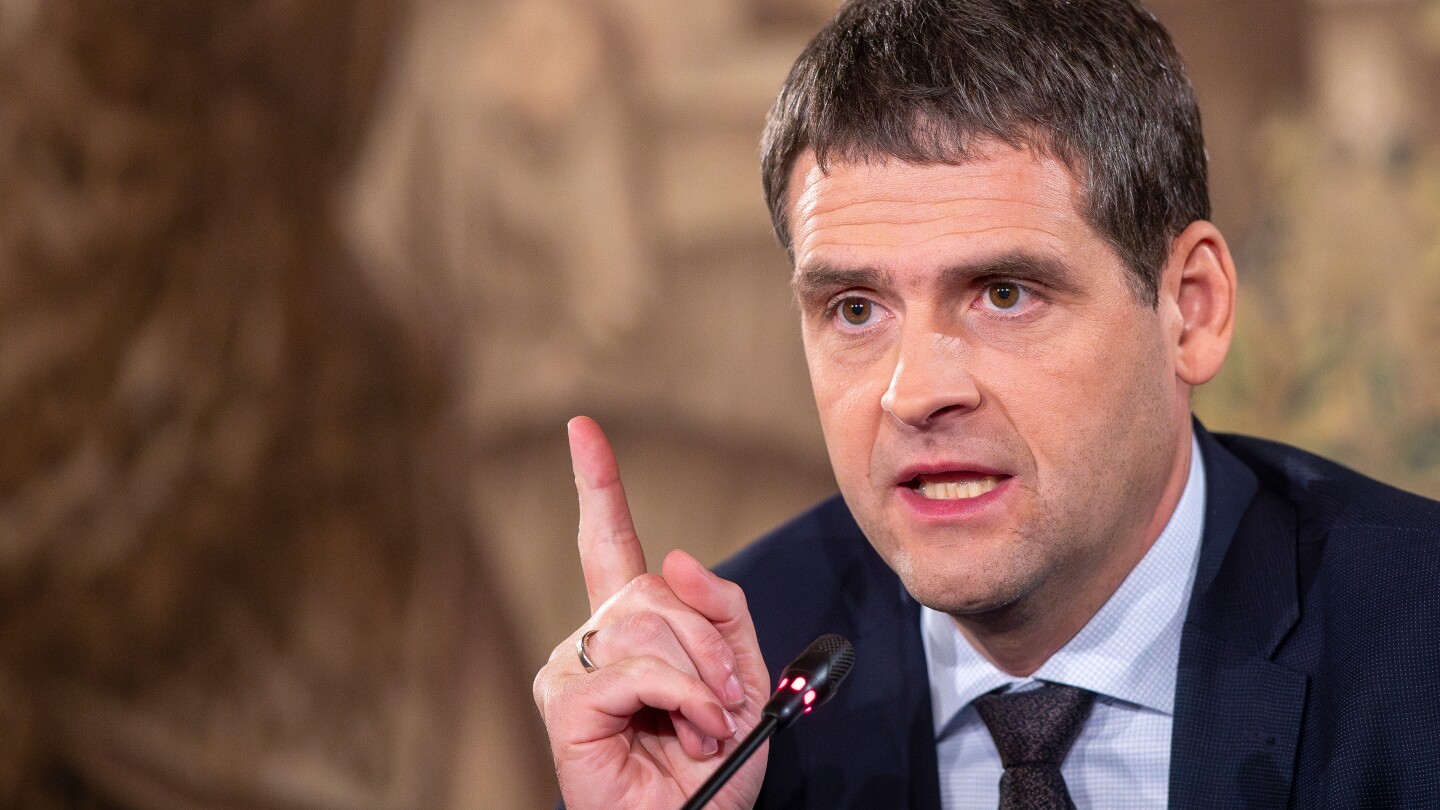
    A Vilnius district court has delivered a landmark verdict against Remigijus Žemaitaitis, leader of the coalition partner Nemuno Aušra party, convicting him Thursday for antisemitic hate speech and Holocaust minimization. The court imposed a €5,000 fine—significantly below prosecutors’ requested €51,000 penalty—for comments deemed to have “incited hatred against Jews” and “grossly downplayed Nazi Germany’s crimes.

    The case centered on inflammatory social media posts from May-June 2023, including one comparing the demolition of Palestinian schools to “pastime” activities for Lithuanian Jews, alongside antisemitic nursery rhymes and historically distorted World War II references. Judge Nida Vigelienė condemned Žemaitaitis’s language as “degrading, violating human dignity and demonstrating hatred.”

    Despite having resigned from parliament in 2024 following a constitutional court ruling that he violated his oath, Žemaitaitis returned to politics through elections last year. His populist party subsequently joined the center-left Social Democrats’ governing coalition, though he holds no cabinet position.

    The convicted leader, absent during proceedings, denounced the verdict as “politicized” and plans to appeal. Meanwhile, the Social Democrats issued a Facebook statement condemning antisemitism and Holocaust denial as incompatible with party values, while acknowledging the non-final status of the ruling.
  • Henry Zeffman: Less than meets the eye to Starmer’s words on Brexit

    Henry Zeffman: Less than meets the eye to Starmer’s words on Brexit

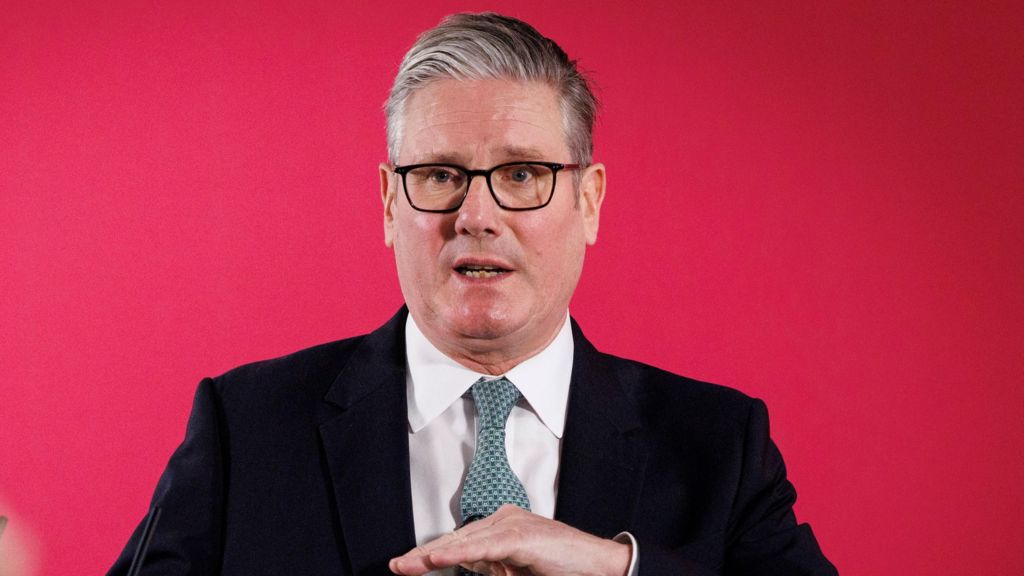
    In a notable rhetorical pivot, British Prime Minister Keir Starmer has initiated a deliberate campaign to advocate for enhanced economic collaboration with the European Union, while simultaneously affirming his commitment to the fundamental structure of the post-Brexit settlement. This nuanced positioning represents Starmer’s most explicit acknowledgment to date that the current Brexit agreement has adversely impacted Britain’s economic landscape.

    The Prime Minister articulated this stance across multiple high-profile platforms on Monday, including an op-ed in The Guardian and speeches to influential audiences. He characterized the implementation of Brexit as ‘botched’ and lamented the ‘wild promises’ made to the British public that remained unfulfilled. ‘One element of our economic renewal will be continuing to move towards a closer trading relationship with the EU,’ Starmer declared, marking a significant evolution from his previous cautious approach to EU relations.

    Despite this rhetorical shift, government sources emphasize that substantial policy changes remain unlikely. During Wednesday’s Prime Minister’s Questions, Starmer reaffirmed that remaining outside the single market and customs union constitute ‘clear red lines’ for his administration. The apparent contradiction between rhetoric and policy reflects a carefully calibrated strategy to prepare the ground for incremental improvements in specific sectors rather than wholesale renegotiation.

    Current negotiations focus on technical enhancements including streamlined food checks, carbon tariff agreements, and potential youth mobility schemes. The recent cabinet appointment of Nick Thomas-Symonds, who has overseen EU negotiations, has sparked speculation about more ambitious goals, though government insiders characterize this as organizational restructuring rather than policy shift.

    Within government circles, a quiet debate persists regarding the possibility of customs union reintegration. Some advisors, including Starmer’s chief economics adviser Baroness Shafik, reportedly advocate rejoining the customs union as the most straightforward method to stimulate economic growth. However, practical obstacles remain substantial, including potential EU demands for concessions and the sacrifice of Britain’s independent trade policy—a cornerstone of the government’s current international approach.

    Politically, Labour strategists detect shifting public attitudes toward Brexit. According to one ‘red wall’ MP representing a strongly pro-Leave constituency: ‘It’s much less visceral than it was. Even in constituencies like mine there’s space to go quite far. The single market is a non-starter because you reopen the immigration issue. But there’s space to rejoin the customs union. It’s about trade. No-one is going to object to better trade.’

    This assessment finds support in recent polling indicating majority public belief that leaving the EU was mistaken. A cabinet minister noted the changing political landscape: ‘Brexit is becoming like the Iraq War. Lots of people supported it at the time but now you can’t find anyone who admits to it.’

    The government’s calibrated approach reflects both economic pragmatism and political calculation, seeking to appeal to progressive voters desiring closer EU ties while avoiding alienation of traditional Brexit supporters. This balancing act will likely define Britain’s evolving relationship with Europe throughout Starmer’s premiership.

  • Norway donates a Christmas tree to London every year. Here’s how the tradition began

    Norway donates a Christmas tree to London every year. Here’s how the tradition began

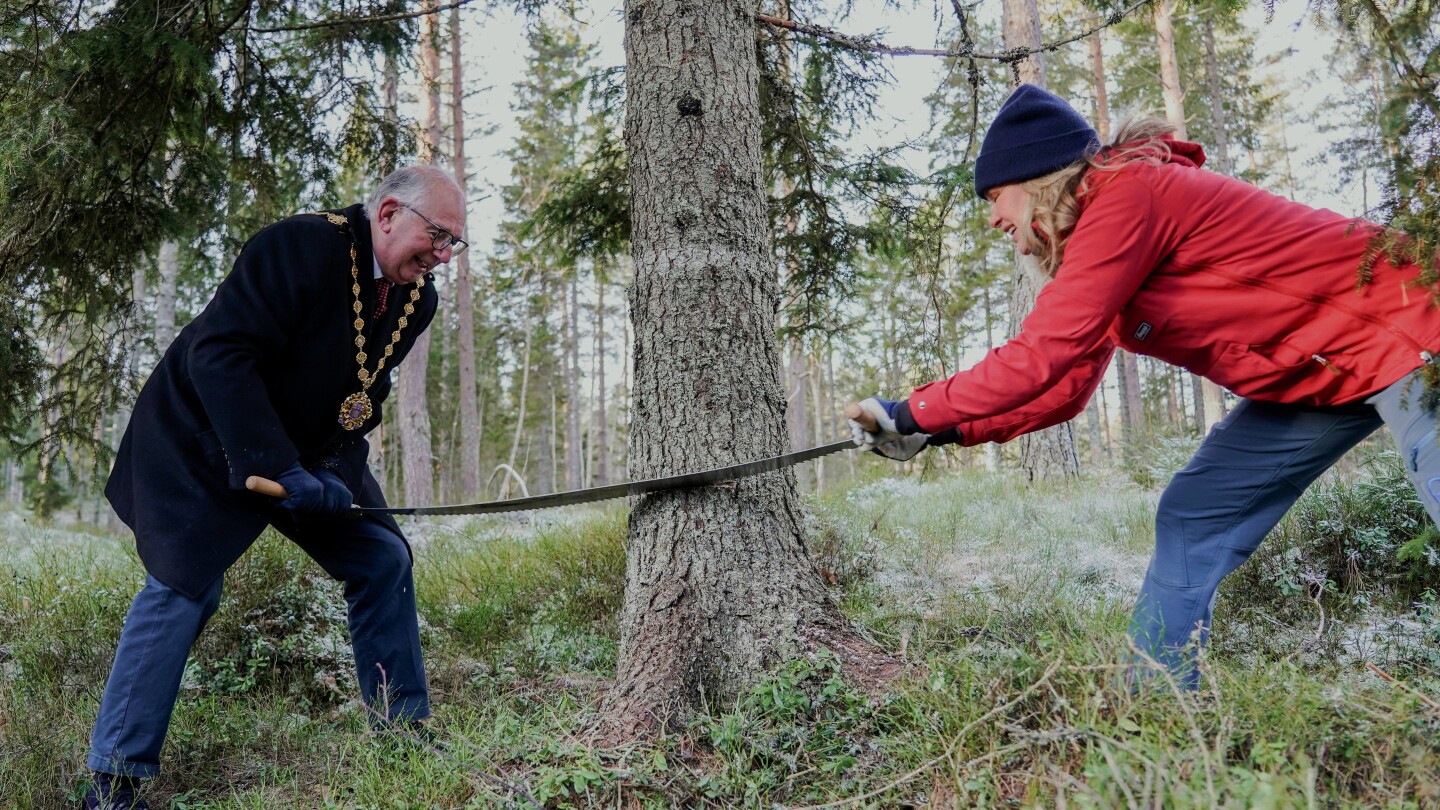
    LONDON — The iconic Christmas tree in Trafalgar Square was ceremoniously illuminated on Thursday, marking the continuation of a profound seven-decade tradition between London and Oslo. This annual lighting ceremony represents far more than seasonal decoration—it stands as an enduring symbol of international friendship forged during World War II.

    The tradition originated in 1947 when Norway began gifting Christmas trees to Britain in gratitude for London’s support during the Nazi occupation. When Germany invaded Norway in 1940, King Haakon VII and his government established a government-in-exile in London. The BBC’s Norwegian-language broadcasts became a critical information lifeline for occupied Norwegians, who risked severe punishment to listen to prohibited transmissions.

    Each tree undergoes an extensive selection process, with potential candidates identified five to ten years in advance. This year’s specimen, affectionately nicknamed ‘Ever Oslo,’ stands approximately 20 meters tall and is estimated to be sixty years old. Selected over competitors ‘Nordic Star’ and ‘Fjord Fir,’ the Norwegian spruce was carefully harvested on November 21st.

    The tree’s journey to London involved meticulous transportation planning. After ceremonial felling, it traveled 180 kilometers to port in a specialized cradle, underwent cleansing to remove road salt, then embarked on a 26-hour sea voyage stored below deck for protection. The final leg involved truck transportation to central London.

    The lighting ceremony—promoted on social media as ‘Britain’s national tree-sure’—traditionally occurs on the first Thursday of December and features vertically hung lights according to Norwegian custom. The tree will remain illuminated until January 5th (Twelfth Night), after which it will be recycled into compost and mulch. Meanwhile, Norwegian authorities will plant a replacement tree in the Oslo forest, ensuring the continuity of this meaningful tradition.

  • UK and Norway will mount joint naval patrols to protect undersea cables and hunt Russian submarines

    UK and Norway will mount joint naval patrols to protect undersea cables and hunt Russian submarines

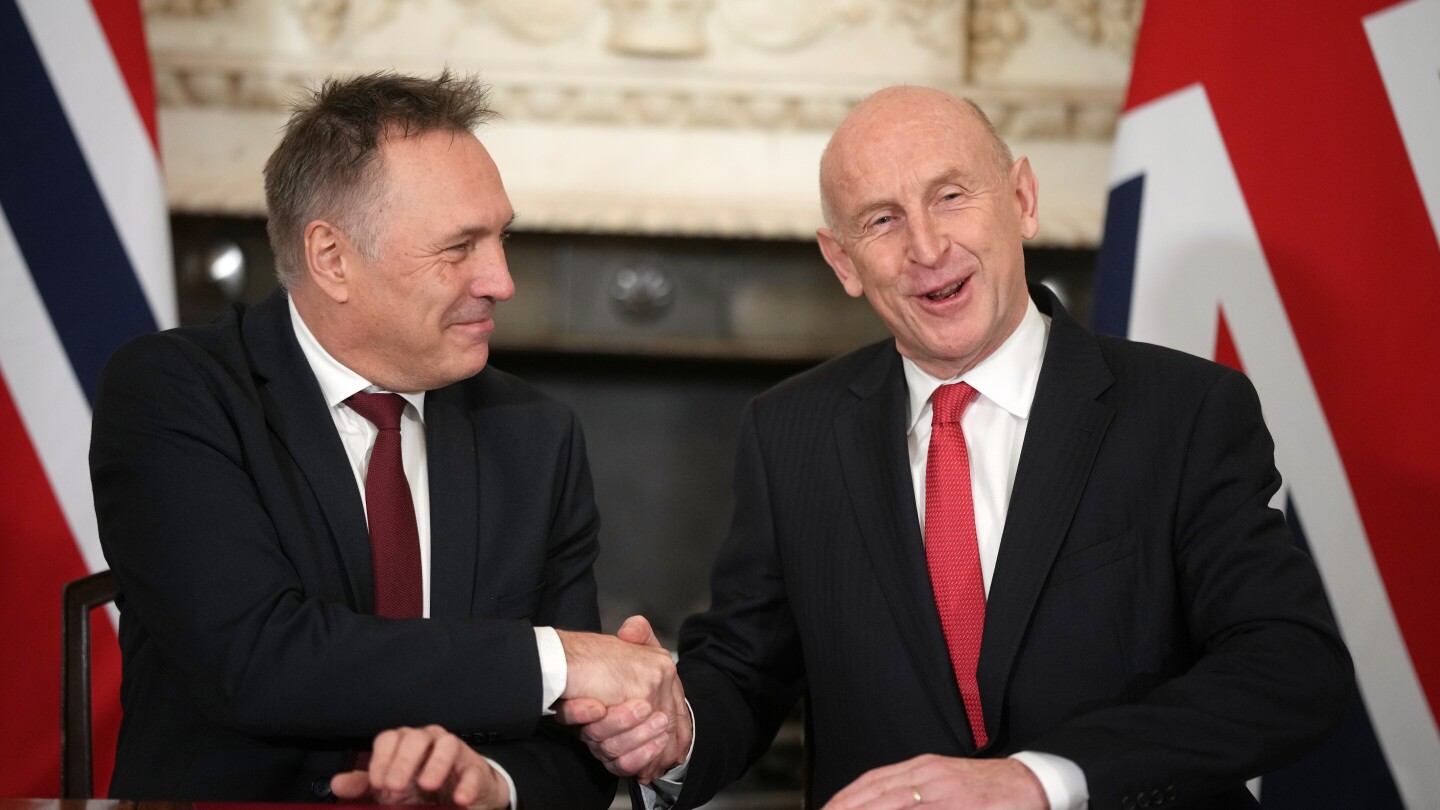
    In a significant escalation of NATO’s northern defense capabilities, the United Kingdom and Norway have formally established a joint naval task force dedicated to safeguarding subsea infrastructure from Russian threats. The landmark agreement, signed Thursday in London by defense ministers from both nations, creates a combined fleet of at least 13 warships that will conduct coordinated patrols across the North Atlantic.

    The strategic partnership, announced following high-level talks between British Prime Minister Keir Starmer and Norwegian Prime Minister Jonas Gahr Støre, represents a direct response to what both governments describe as increasingly aggressive Russian naval activity. Official statistics indicate a concerning 30% surge in Russian vessel operations around UK waters over the past two years, raising alarms about the vulnerability of critical communication and energy cables on the seabed.

    This enhanced military cooperation builds upon a previously established £10 billion ($13.4 billion) defense procurement agreement finalized in August, through which Norway committed to acquiring a minimum of five British-manufactured frigates. These Norwegian vessels will operate alongside eight Royal Navy ships, forming a specialized fleet tasked with detecting and deterring Russian submarine operations along NATO’s northern flank.

    In a reciprocal arrangement strengthening bilateral defense ties, the UK has agreed to integrate Norwegian missile systems into the Royal Navy’s surface fleet. The partnership extends beyond hardware integration to include joint operational planning and intelligence sharing between naval commands.

    The two leaders were scheduled to personally assess the strategic situation firsthand with a visit to RAF Lossiemouth in Scotland, where they met with British and Norwegian personnel responsible for monitoring Russian maritime movements. This base serves as a critical hub for NATO’s surveillance operations tracking Russian naval activity in the North Atlantic and Arctic regions.

  • Putin calls talks with US on ending the Ukraine war ‘useful’ but also ‘difficult work’

    Putin calls talks with US on ending the Ukraine war ‘useful’ but also ‘difficult work’

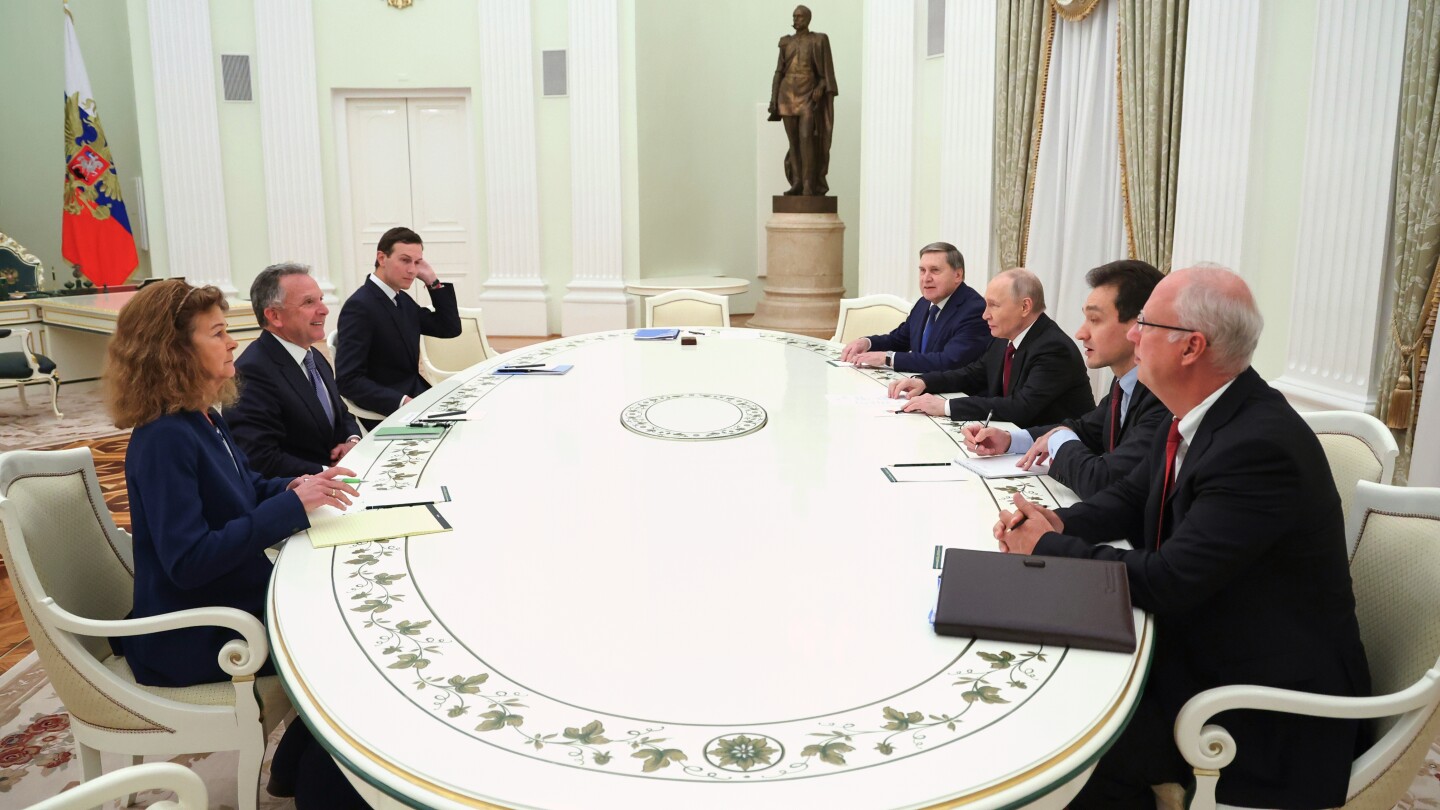
    Russian President Vladimir Putin has characterized his extensive five-hour diplomatic engagement with U.S. representatives as both “necessary” and “useful” while simultaneously acknowledging the challenging nature of negotiations aimed at resolving the ongoing Ukraine conflict. In pre-recorded comments for India Today TV channel, obtained by Russian state media outlets Tass and RIA Novosti, Putin revealed that certain American proposals presented during the Kremlin discussions remained unacceptable to Moscow’s strategic interests.

    The high-level talks occurred as U.S. President Donald Trump’s special envoy Steve Witkoff and senior advisor Jared Kushner prepared for subsequent negotiations with Ukrainian lead negotiator Rustem Umerov in Miami. According to an unnamed Trump administration official, these parallel diplomatic efforts represent a renewed American initiative to broker peace in the nearly four-year conflict, despite the significant challenges in reconciling the fundamental positions of both warring nations.

    President Trump expressed optimism following the Moscow meeting, stating that his emissaries departed the marathon session with strong confidence in Putin’s genuine desire to reach a negotiated settlement. “Their impression was very strongly that he’d like to make a deal,” Trump remarked on Wednesday.

    Putin provided additional context regarding the protracted nature of the discussions, explaining through Tass that both parties meticulously examined each component of the American peace proposal. The Russian leader described the exchange as a “very concrete” conversation that required thorough examination of all points. While indicating Moscow’s willingness to engage with certain aspects of the proposal, Putin unequivocally stated that other provisions remained beyond the Kremlin’s acceptable parameters, characterizing the overall process as “difficult work.”

    The diplomatic developments occur against the backdrop of continued violence in eastern Ukraine, where government forces and Russian-backed separatists have been engaged in conflict since 2014. The recent flurry of high-profile negotiations signals potentially the most serious effort to date to find a political solution to the crisis that has claimed over 13,000 lives and displaced millions.

  • Eurovision chiefs face thorny question of whether Israel should take part in the 2026 song contest

    Eurovision chiefs face thorny question of whether Israel should take part in the 2026 song contest

    GENEVA — The European Broadcasting Union (EBU) convened a critical general assembly Thursday to address mounting tensions over Israel’s eligibility for the 2026 Eurovision Song Contest. This annual pop music spectacle, traditionally celebrated for its unifying spirit, now faces its most significant political challenge since Russia’s 2022 exclusion following its invasion of Ukraine.

    The core dispute centers on calls from several member nations—including Iceland, Ireland, the Netherlands, Slovenia, and Spain—to exclude Israel from competition. These broadcasters cite both Israel’s conduct in the Gaza conflict and allegations of voting interference in previous contests as primary concerns. Conversely, nations including Austria and Germany have expressed support for Israel’s continued participation.

    Experts observing the Geneva proceedings noted the unlikelihood of a unified resolution. Paul Jordan, a prominent Eurovision commentator known as ‘Dr. Eurovision,’ described the situation as ‘messy and toxic,’ noting the irony that an event branded ‘United by Music’ has become profoundly divided through geopolitics.

    The EBU proposed structural reforms to safeguard contest integrity, including modified voting procedures and reinstating professional juries during semifinals. These measures aim to address claims of political manipulation in viewer voting. The union stated that a formal vote on Israel’s participation would only occur if member broadcasters deem these safeguards insufficient to protect the competition’s neutrality.

    The implications of potential boycotts extend beyond symbolism. Dean Vuletic, author of ‘Postwar Europe and the Eurovision Song Contest,’ warned that withdrawals by democratic EU members would represent an unprecedented escalation in the event’s history. Such actions could significantly impact viewership metrics and financial stability for an institution already navigating media fragmentation and budget constraints.

    With member broadcasters required to confirm 2026 participation by mid-December, the controversy threatens to overshadow the anticipated return of Bulgaria, Moldova, and Romania after absences for financial and artistic reasons. The resolution—or lack thereof—will determine whether Eurovision can reclaim its celebratory purpose or continue serving as a geopolitical battleground.

  • China’s Xi and France’s Macron pledge cooperation on global crises and trade

    China’s Xi and France’s Macron pledge cooperation on global crises and trade

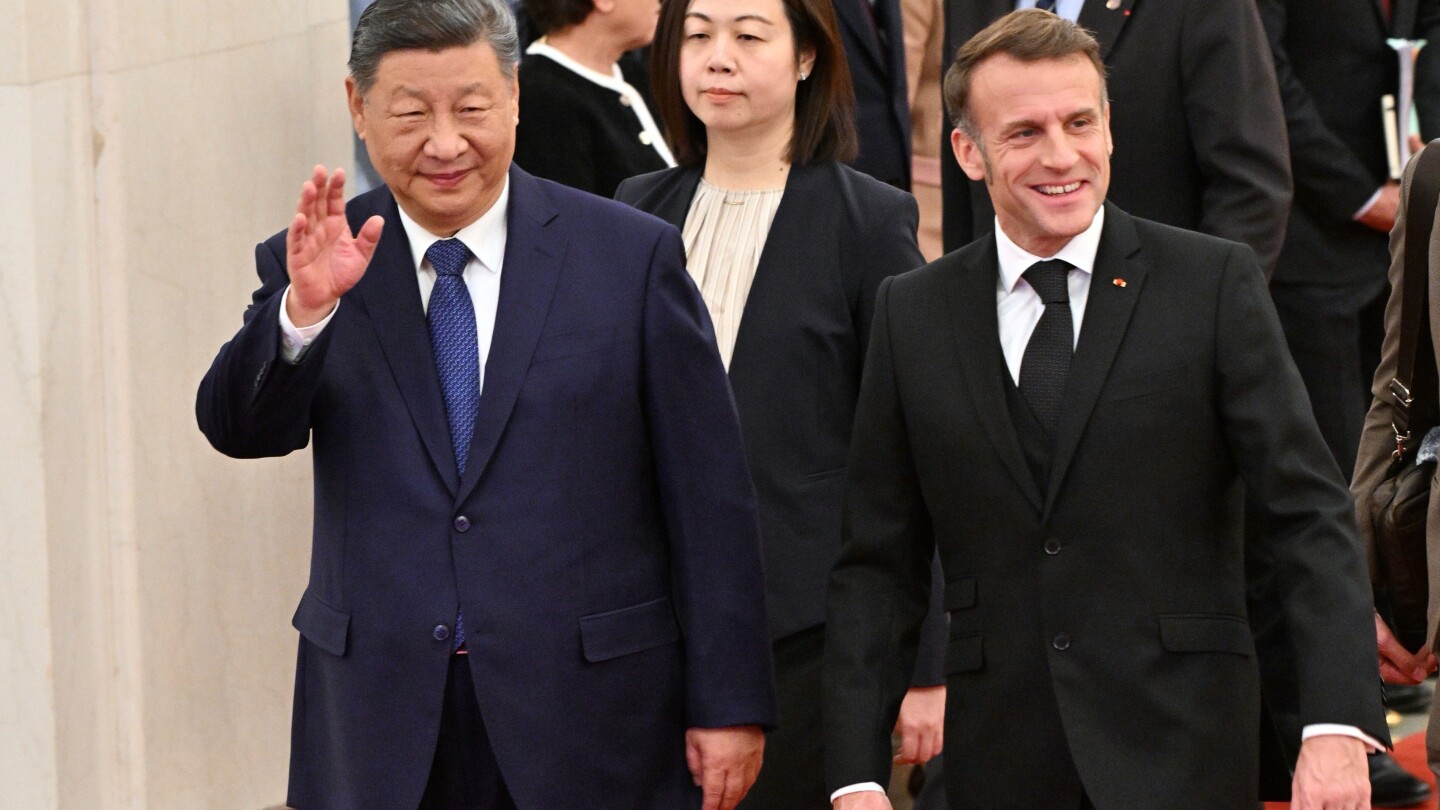
    In a significant diplomatic engagement, Chinese President Xi Jinping and French President Emmanuel Macron convened in Beijing on Thursday, emphasizing strengthened bilateral cooperation amidst global geopolitical challenges. The high-level discussions, part of Macron’s three-day state visit, centered on two primary agendas: resolving the Ukraine conflict and rebalancing economic relations.

    President Macron articulated the urgency of Sino-French collaboration in preserving international order, explicitly requesting China’s support for achieving an immediate ceasefire in Ukraine. “We confront the potential disintegration of the international order that maintained global peace for decades,” Macron stated. “In this context, Franco-Chinese dialogue becomes critically essential.” He specifically urged Beijing to endorse a moratorium on strikes targeting critical infrastructure in Ukraine.

    While President Xi refrained from directly committing to France’s ceasefire appeal, he affirmed that “China endorses all peace-seeking endeavors” and advocated for a universally acceptable peace agreement. China maintains its position of providing substantial diplomatic and economic support to Russia since the invasion commenced.

    Beyond Ukraine, the leaders announced concrete cooperation measures. President Xi pledged $100 million in humanitarian assistance for Gaza’s recovery and reconstruction. The nations signed twelve bilateral agreements spanning aerospace, nuclear energy, green industries, and artificial intelligence. Notably, the agreements included panda conservation initiatives and enhanced academic exchanges between higher education institutions.

    The economic dimension revealed underlying tensions, with the European Union recording a €300 billion trade deficit with China last year. Despite the EU’s characterization of China as simultaneously “partner, competitor and systemic rival,” France secured exemptions for most cognac producers from recent trade investigations. President Xi committed to further market liberalization, stating China would “expand market access and open investment areas” to facilitate rational industrial and supply chain布局.

    Analysts observed that China potentially seeks to strengthen bilateral ties with individual EU members like France, potentially at the expense of EU unity. The leaders emphasized strategic independence and multilateralism, with Xi noting that major powers should “demonstrate independence and strategic vision… on core matters and major critical issues.”

    The French presidential delegation subsequently traveled to Chengdu, home to China’s premier panda conservation facility, symbolizing the cultural exchange dimension of the relationship.

  • Turkey’s energy minister warns of threat to oil and gas supplies after tankers targeted

    Turkey’s energy minister warns of threat to oil and gas supplies after tankers targeted

    ISTANBUL — Turkish Energy Minister Alparslan Bayraktar has issued an urgent appeal for safeguarding critical energy infrastructure in the Black Sea following a series of naval drone strikes targeting Russian oil tankers near Turkey’s coastline. The recent attacks, claimed by Ukrainian forces, have raised significant concerns about the security of energy transportation routes and underwater pipelines in the region.

    Speaking at a press conference on Wednesday, Minister Bayraktar emphasized the dual vulnerability of maritime shipping and two crucial subsea pipelines—Blue Stream and Turk Stream—that transport natural gas from Russia to Turkey. Drawing parallels to the 2022 Nord Stream pipeline sabotage incident, Bayraktar highlighted Turkey’s substantial dependence on imported energy resources.

    “We implore all involved parties to exempt energy infrastructure from military conflicts, as these facilities directly impact civilian daily life,” Bayraktar stated. “Maintaining uninterrupted energy flows through the Black Sea and the strategic Bosphorus and Dardanelles straits remains imperative for regional stability.”

    Ukrainian authorities confirmed targeting two tankers on November 28, with a third vessel struck Tuesday en route to the Turkish port of Sinop. President Recep Tayyip Erdogan condemned these incidents as serious threats to “navigation safety, human life, and environmental protection” within Turkey’s exclusive economic zone.

    The situation presents complex geopolitical challenges for Turkey, a NATO member that relies on Russian hydrocarbons for nearly half its total energy consumption. This dependency has drawn pressure from Washington, including during President Erdogan’s September meeting with Donald Trump, where the former U.S. president encouraged reduced Turkish energy ties with Moscow.

    Despite these pressures, Bayraktar defended Turkey’s energy relationship with Russia, noting Moscow’s historical reliability as a supplier since Turkey’s gas transition in the 1980s. However, he acknowledged the necessity of diversifying Turkey’s energy portfolio: “While Russia has proven dependable, maintaining a balanced supply framework remains crucial. We are actively pursuing competitive gas from multiple sources to avoid overreliance on any single nation.”

    Concurrently, Turkey continues expanding energy cooperation with Russia beyond hydrocarbons. The Russian state corporation Rosatom is constructing the Akkuyu nuclear power plant on Turkey’s Mediterranean coast, projected to generate approximately 10% of Turkey’s electricity upon completion. However, the project faces significant challenges including Western sanctions-related delays and a reported $2 billion financing obstruction at JP Morgan due to frozen Russian assets.

    Bayraktar revealed that project administrators have sought Chinese components to replace unavailable Western technology and are now seeking mediation to release frozen funds for project continuation. The minister anticipates the first electricity generation from Akkuyu by next year, despite ongoing complications arising from geopolitical tensions.

  • Russia bans Roblox over concerns about safety and extremist content

    Russia bans Roblox over concerns about safety and extremist content

    Russian authorities have implemented a nationwide ban on the popular gaming platform Roblox, citing significant concerns regarding child safety and the proliferation of extremist content. The country’s media watchdog, Roskomnadzor, officially restricted access to the U.S.-based platform after identifying numerous violations of Russian digital laws.

    According to official statements from Russian media outlets, the regulator determined that Roblox contained ‘inappropriate content that can negatively impact the spiritual and moral development of children.’ The platform’s open architecture, which enables users to create and share custom games, has reportedly facilitated the spread of content related to terrorism simulations, gambling activities, and LGBT themes—the latter being classified as extremist under Russian law.

    The multiplayer platform, which has ranked among Russia’s most downloaded mobile applications in recent years, now joins several other countries that have restricted Roblox over similar concerns. Turkey previously banned the platform, while Singaporean authorities investigated Roblox in 2023 after a self-radicalized teenager accessed ISIS-themed servers through the platform.

    Roblox Corporation responded to the ban by emphasizing its commitment to user safety. ‘We respect the laws of the countries where we operate,’ a company spokesperson stated. ‘Our platform provides a positive space for learning and creativity, backed by robust proactive and preventative safety measures designed to detect and prevent harmful content.’

    The Russian ban comes amid increasing global scrutiny of Roblox’s safety protocols. Last month, Texas Attorney General Ken Paxton filed litigation against the company, accusing it of ‘flagrantly ignoring’ child protection laws and ‘deceiving parents’ about potential dangers. In response to mounting criticism, Roblox recently announced it would prohibit children from chatting with adult strangers, marking a significant policy shift for its networking features.

  • Eurovision faces crucial decision over Israel

    Eurovision faces crucial decision over Israel

    The Eurovision Song Contest confronts its most consequential crossroads in decades as organizers convene in Geneva for a pivotal emergency session. At stake is Israel’s continued participation in the world’s largest music competition amid escalating geopolitical tensions and allegations of improper voting practices.

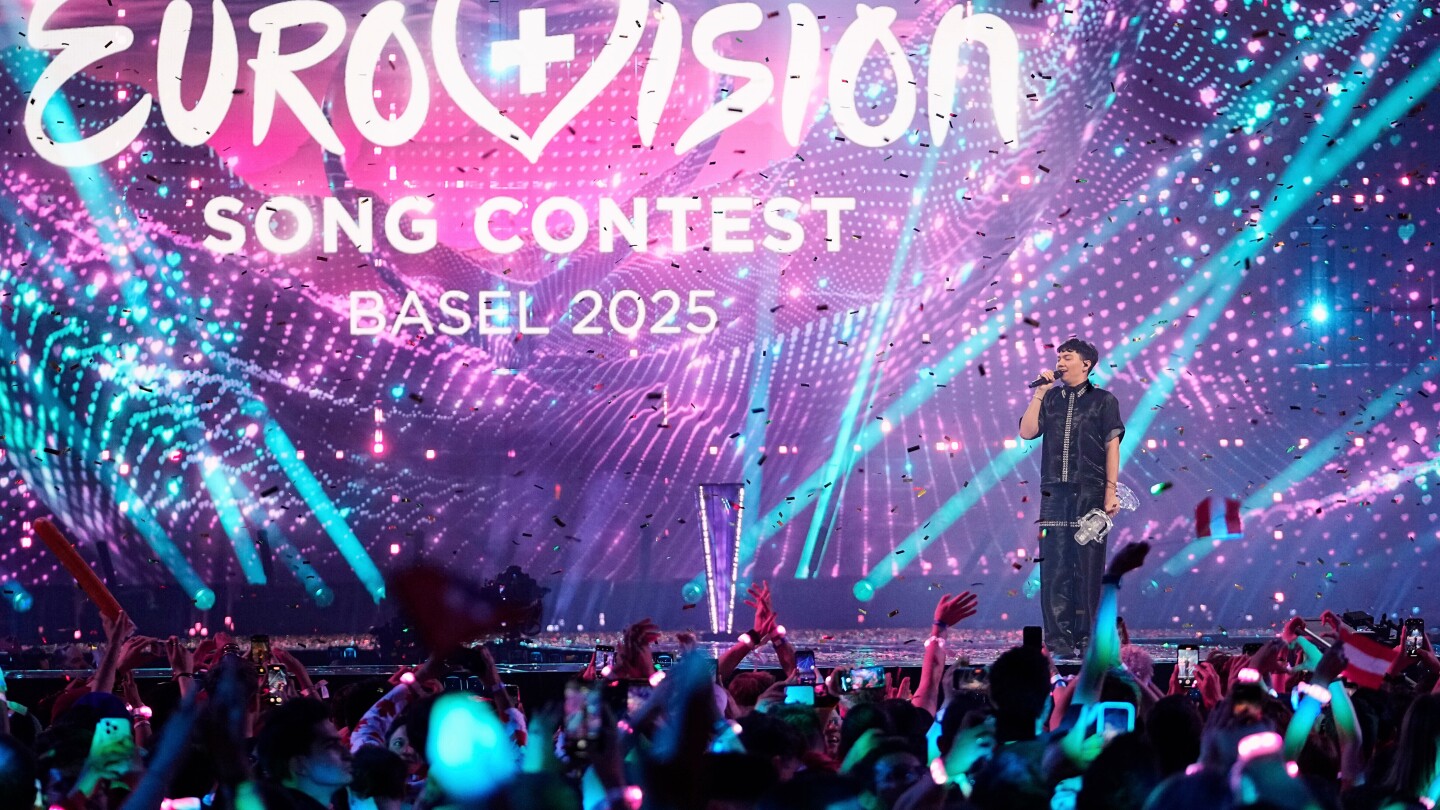
    The emergency meeting follows two consecutive years of significant protests targeting Israel’s involvement. During the 2025 grand final in Basel, Switzerland, security personnel intercepted two protesters attempting to storm the stage and throw paint on Israeli contestant Yuval Raphael—a singer who had previously survived the October 2023 Hamas attacks. Despite the disruption, Raphael secured second place overall after winning the public vote, a result that sparked immediate controversy.

    Multiple participating nations, including Ireland, Spain, the Netherlands, and Slovenia, have threatened complete withdrawal if Israel remains in the competition. Their objections center on Israel’s military operations in Gaza and allegations of government-mediated voting manipulation. Conversely, Germany has indicated it would boycott if Israel is excluded, creating a diplomatic stalemate.

    In response to voting integrity concerns, the European Broadcasting Union (EBU) recently announced sweeping reforms to safeguard contest neutrality. These measures include reducing maximum votes per person from 20 to 10, implementing enhanced fraud detection systems, and explicitly discouraging ‘disproportionate promotion campaigns’ supported by governmental entities.

    EBU leadership hopes these changes will alleviate concerns regarding Israel’s participation. However, should member broadcasters—including BBC Director General Tim Davie—deem the measures insufficient, a direct vote on Israel’s Eurovision future will proceed.

    Natalija Gorščak of Slovenian broadcaster RTV stated her country would refuse participation regardless of the outcome, emphasizing moral principles over musical diplomacy. Eurovision analyst Paul Jordan described the situation as ‘a real crisis point’ for an event designed to transcend politics.

    The decision carries practical implications for the 2026 contest in Vienna, where Austrian broadcaster ORF has already declared Israel ‘an inseparable part of Eurovision.’ Meanwhile, Spanish RTVE’s president has condemned Israel’s participation as ‘untenable’ given Gaza casualties, which Hamas-run health authorities report exceed 70,000.

    With the EBU attempting to balance artistic unity against deepening geopolitical fractures, Thursday’s meeting may determine whether the contest can preserve its apolitical ethos or succumb to irreversible politicization.