标签: Asia

亚洲

  • Pakistan denies reports of cancelled Islamabad International Airport deal with UAE

    Pakistan denies reports of cancelled Islamabad International Airport deal with UAE

    Pakistan’s Privatisation Commission has issued a formal rebuttal to circulating rumors suggesting the cancellation of a proposed airport management agreement with the United Arab Emirates. Contrary to speculative reports, the Commission clarified that no formal lease agreement had ever been executed between Pakistan and the UAE regarding Islamabad International Airport’s operations.

    The government has been evaluating multiple strategic options for outsourcing operations at three key aviation facilities: Islamabad International Airport (IIAP), Karachi’s Jinnah International Airport, and Lahore’s Allama Iqbal International Airport. Initially, authorities had approved in August the potential transfer of Islamabad Airport’s management to UAE entities through a government-to-government framework arrangement.

    This proposed arrangement contemplated comprehensive management contracts and extended commercial concessions aimed at modernizing airport infrastructure. However, in a significant policy shift last November, Pakistani officials transitioned from exclusive government-to-government negotiations to an open competitive bidding process for all three airports.

    The decision emerged following substantial investor interest from multiple international parties beyond the UAE, including entities from Turkey and Saudi Arabia. This competitive approach ensures equal participation opportunities for both domestic and foreign investors while prioritizing transparency and optimal economic outcomes for Pakistan.

    Authorities emphasized that this procedural modification stems exclusively from economic considerations rather than diplomatic or political factors. The competitive tender process aims to enhance operational efficiency, upgrade service quality, maximize revenue generation, and attract substantial private investment into Pakistan’s aviation infrastructure.

    Islamabad International Airport, inaugurated in 2018, has encountered various operational and financial challenges that the outsourcing initiative seeks to address. Involving globally experienced airport operators promises to significantly improve performance standards at Pakistan’s premier aviation facilities.

  • One-day bank strikes in India over 5-day workweek demand

    One-day bank strikes in India over 5-day workweek demand

    India’s banking sector witnessed widespread operational disruptions on Tuesday as employee unions orchestrated a coordinated one-day strike across the nation. The industrial action primarily sought to amplify long-standing demands for implementing a standardized five-day working week within the banking industry.

    Financial institutions nationwide proactively communicated with customers regarding anticipated service interruptions, ensuring minimal public inconvenience through maintained operational efficiency of ATMs, digital banking platforms, and mobile banking applications. While physical branch operations experienced suspensions affecting traditional counter services like cash withdrawals and deposits, electronic banking channels remained fully functional throughout the strike duration.

    Union representatives emphasized the peaceful nature of their demonstrations. Sanjay Kuthe, General Secretary of the Indian Bank Officers Association for Maharashtra and Goa, confirmed to ANI that the demand for reduced working days has remained unresolved for over two years despite repeated appeals to governmental authorities. ‘We demand the government implement five-day working days for employees in a week—a long-pending matter that has been delayed excessively,’ Kuthe stated.

    Echoing these sentiments, Wilbur Anton, General Secretary of the National Confederation for Bank Employees in Maharashtra, characterized the protest as a disciplined demonstration seeking improved working conditions. Banking unions argue that transitioning to a five-day workweek would enhance employee work-life balance while aligning operational standards with other financial sector segments.

    The unions have indicated potential escalation of industrial actions should their demands continue to be overlooked by policymakers. This strategic work stoppage highlights ongoing tensions between banking sector employees and administrative bodies regarding labor reforms and working condition enhancements within India’s rapidly modernizing financial ecosystem.

  • Mukaab: Saudi Arabia suspends construction of controversial cube structure

    Mukaab: Saudi Arabia suspends construction of controversial cube structure

    Saudi Arabia has officially suspended construction on the Mukaab, a monumental cube-shaped megastructure that was planned as the centerpiece of downtown Riyadh’s New Murabba development. According to a Reuters report citing four sources with knowledge of the decision, the project is being paused while Saudi authorities conduct a comprehensive review of its financial viability and feasibility.

    The Mukaab, initially conceived as an architectural marvel with each side spanning 400 meters, was designed to be large enough to contain 20 Empire State buildings within its volume. The structure was planned to feature an immense internal dome displaying advanced holographic AI imagery from a 300-meter-tall terrace, positioning it to become the world’s largest built structure.

    This suspension represents the latest in a series of scaling back of Saudi Arabia’s ambitious Vision 2030 projects amid financial constraints and shifting priorities. Three sources confirmed that work beyond initial soil excavation and pilings has been halted, though surrounding real estate developments in the New Murabba area will continue according to five informed sources.

    The project had previously drawn significant criticism for its visual resemblance to the Kaaba in Mecca, Islam’s holiest site. While Saudi commentators defended the design as inspired by the Najd region and a contemporary reinterpretation of Riyadh’s Murabba Palace, the controversy added complexity to the project’s development.

    The New Murabba development, originally scheduled for completion by 2030, has now been extended to 2040 and was estimated by Knight Frank real estate consultancy to cost approximately $50 billion – comparable to Jordan’s entire GDP.

    This decision coincides with broader reassessments of Saudi megaprojects, including significant downsizing of the NEOM megacity project and its 170-kilometer linear city component. The Financial Times recently reported that NEOM is being repositioned to focus on industrial sectors, particularly data centers as part of Crown Prince Mohammed bin Salman’s push into artificial intelligence. Additionally, the Trojena ski resort within NEOM has been downsized and will no longer host the 2029 Asian Winter Games.

    These strategic shifts are partially attributed to stagnating oil prices and refocused efforts toward hard deadlines for the 2030 Expo international trade fair and the 2034 World Cup. Saudi Economy Minister Faisal al-Ibrahim acknowledged the transparent reassessment process, stating that the kingdom is not shying away from admitting necessary project delays and rescoping as part of its comprehensive Vision 2030 strategy review.

  • Australia cancels visa of British-Israeli influencer for ‘spreading hatred’

    Australia cancels visa of British-Israeli influencer for ‘spreading hatred’

    In a decisive move against hate speech, Australian authorities have revoked the visa of British-Israeli social media influencer Sammy Yahood, preventing his entry into the country. The decision, executed just three hours before his scheduled departure from Israel, was confirmed by Home Affairs Minister Tony Burke on Monday evening.

    Yahood, an Instagram personality with 171,000 followers known for his anti-Islam rhetoric, had planned a speaking tour and self-defense workshops across Australia. The influencer has repeatedly characterized Islam as a ‘disgusting ideology’ and called for the deportation of Muslim politicians from Western nations.

    Minister Burke defended the cancellation, stating unequivocally that ‘spreading hatred is not a good reason to come to Australia.’ He emphasized that visitors must apply for appropriate visas and demonstrate legitimate purposes for their entry.

    The controversial figure, who recently relocated to Israel after growing up in London, serves as a volunteer instructor in Krav Maga, the martial art developed by the Israeli military. Following the visa denial, Yahood launched a social media tirade against Minister Burke, labeling him a ‘tyrant’ while praising the United Arab Emirates for their hospitality.

    This action occurs against the backdrop of Australia’s recently enhanced federal hate speech legislation, enacted following the mass shooting at a Jewish festival in Sydney’s Bondi Beach. The new legal framework empowers the government to designate groups that incite communal violence, deport associated individuals, and impose stricter penalties for hate crimes.

    Notably, this represents the third high-profile visa cancellation involving Israeli figures under Australia’s strengthened hate speech laws. Previous cases included far-right MP Simcha Rothman and tech entrepreneur Hillel Fuld, both denied entry over concerns about spreading division and Islamophobic rhetoric.

    The decision has drawn mixed reactions, with the conservative Australian Jewish Association issuing strong condemnation of Yahood’s visa cancellation, highlighting the complex intersection of free speech and social cohesion in contemporary immigration policy.

  • PLA’s aerobatic jets arrive in Singapore to take part in air show

    PLA’s aerobatic jets arrive in Singapore to take part in air show

    Singapore’s skies are set to witness a spectacular display of aerial prowess as China’s elite August 1st Air Demonstration Team arrived at Changi Airport on Tuesday. The team, operating seven advanced J-10 fighter jets, will participate in the 10th Singapore Airshow, marking their second appearance at the prestigious Asian aviation event.

    According to Senior Colonel Xie Peng, spokesman for the People’s Liberation Army Air Force, this deployment represents the team’s 13th international performance. The aerobatic unit, China’s most renowned demonstration team, previously graced the Singapore Airshow during its 7th edition in February 2020.

    The journey from their southwestern China airbase involved sophisticated aerial refueling operations conducted by a YY-20A tanker aircraft. Team pilots will now conduct training flights to acclimatize to Singapore’s unique environmental conditions and airspace.

    Aviation enthusiasts will be treated to two distinct variants of the J-10 series: the J-10SY, derived from the J-10S two-seat trainer, and the J-10CY, developed from the combat-proven J-10C fighter. These supersonic multirole aircraft, designed and manufactured by state-owned Aviation Industry Corp of China, represent cutting-edge aerospace technology.

    The participation comes amid growing international attention on the J-10 platform, particularly following reports that an export variant of the J-10C achieved its first combat success in regional conflicts last year, highlighting the aircraft’s operational capabilities beyond ceremonial displays.

  • China’s garbage sorting drive still has a long way to go in many cities

    China’s garbage sorting drive still has a long way to go in many cities

    China’s ambitious national garbage classification campaign demonstrates pronounced regional disparities, with only a handful of metropolitan areas achieving world-class implementation while most cities struggle with foundational adoption. According to a comprehensive five-year study by the Institute of Public and Environmental Affairs, the initiative remains in its preliminary stages across much of the country despite notable successes in pioneering urban centers.

    The environmental organization developed an innovative monitoring system that collected approximately 134,000 photographic and video submissions from public contributors to evaluate urban waste management performance. This crowdsourced data enabled the creation of a specialized garbage sorting index to measure and compare municipal effectiveness in promoting waste classification systems.

    Recent assessments reveal that China’s waste management infrastructure has transitioned from experimental pilot programs to an increasingly structured national framework. The eastern cities of Suzhou and Shanghai emerged as exceptional performers, with Suzhou leading the rankings at 95.74 points followed by Shanghai at 83.98 points, establishing global benchmarks for urban waste sorting efficiency.

    However, the report uncovered significant implementation challenges beyond these showcase municipalities. Among 41 designated key cities, the average waste sorting score reached merely 29.54 points, while other urban centers averaged a concerning 10.56 points. This disparity resulted in an overall national average of just 18.04 points across all 104 evaluated cities.

    Ma Jun, director of the Institute, emphasized that despite exemplary progress in leading cities, most urban areas remain in early developmental phases where voluntary waste separation habits have not taken root. The persistent practice of mixed waste disposal without effective oversight continues to hinder national progress, particularly affecting the recovery rates of less valuable recyclable materials that require more sophisticated sorting infrastructure.

  • Former Chengdu official Bao Hui under investigation

    Former Chengdu official Bao Hui under investigation

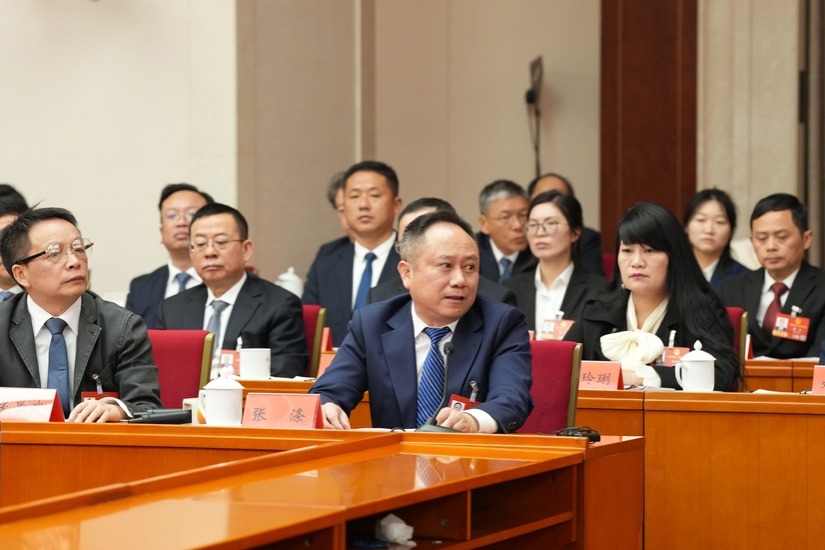
    Chinese anti-corruption authorities have launched a formal investigation into Bao Hui, former director of the Chengdu Municipal People’s Congress Standing Committee, for suspected serious violations of discipline and law. The announcement was made on Monday by the Communist Party of China Central Commission for Discipline Inspection and the National Supervisory Commission.

    Bao Hui, 62, a native of Yunnan province, has held numerous significant positions throughout her four-decade political career. She joined the Communist Party in 1983 and began her professional journey in 1984, initially spending over ten years at Southwest Jiaotong University before transitioning to government roles.

    Her political trajectory included serving as head of Chengdu’s united front work department and publicity department. From September 2012 to 2018, Bao held the dual positions of mayor and Party chief of Dazhou in Sichuan province. She subsequently advanced to deputy director of the Standing Committee of the Sichuan provincial people’s congress.

    In January 2022, Bao assumed her most recent leadership roles as secretary of the Party Leadership Group and director of the Standing Committee of the Chengdu Municipal People’s Congress. She maintained these positions until March 2025, shortly before the investigation was made public. The disciplinary review and supervisory investigation represent the latest development in China’s ongoing anti-corruption campaign, which has consistently targeted high-ranking officials across various government levels.

  • Trump says Iran ‘wants to make a deal’ as US aircraft carrier in Middle East

    Trump says Iran ‘wants to make a deal’ as US aircraft carrier in Middle East

    Tensions escalate in the Middle East as the USS Abraham Lincoln carrier strike group positions itself in regional waters, creating a backdrop for complex diplomatic maneuvers between the United States and Iran. President Donald Trump delivered contradictory statements regarding potential intervention, simultaneously highlighting military capabilities while expressing confidence in Tehran’s desire for negotiations.

    The geopolitical standoff follows Iran’s severe crackdown on domestic protests, accompanied by a nationwide internet blackout that humanitarian organizations report has complicated accurate casualty assessment. According to Human Rights Activists News Agency (HRANA), verified fatalities exceed 6,100 individuals, with thousands more potentially killed and over 41,000 arrests documented.

    Trump’s remarks to Axios revealed the administration’s dual-track approach, noting ‘We have a big armada next to Iran’ while asserting Iranian officials had made numerous overtures for dialogue. This comes weeks after similar military posturing preceded US intervention in Venezuela that resulted in President Nicolas Maduro’s capture.

    Analysts suggest the White House is considering multiple options ranging from targeted strikes against military installations to comprehensive regime-change operations. Senator Lindsey Graham reinforced this perspective, stating unequivocally that ‘the goal is to end the regime’ during discussions with the president.

    Iranian officials have responded with measured rhetoric alongside military warnings. Revolutionary Guards spokesman Mohammad Ali Naini cautioned that any incursion into Iranian territorial waters would prompt immediate retaliation, while conservative media outlets threatened closure of the strategically vital Strait of Hormuz.

    The New York Times reported intelligence assessments indicating the Iranian government’s stability has reached its most vulnerable point since the 1979 revolution. Despite this apparent weakness, communication channels reportedly remain open between Iranian Foreign Minister Abbas Araghchi and US envoy Steve Witkoff, suggesting behind-the-scenes diplomacy continues even as public posturing intensifies.

  • How Britain could be embroiled in US attack on Iran

    How Britain could be embroiled in US attack on Iran

    Amid escalating geopolitical tensions, the United Kingdom has deployed a squadron of Typhoon fighter jets to Qatar’s Al Udeid airbase, raising questions about potential British involvement in a possible US-led offensive against Iran. This military movement occurs as the Trump administration reportedly considers precision strikes against Iranian officials linked to the suppression of recent anti-government protests.

    While the UK Ministry of Defence characterizes the deployment as enhancing defensive capabilities and regional stability through the newly formed joint RAF-Qatari No. 12 Squadron, analysts note these advanced aircraft are capable of intercepting Iranian Shahed-136 drones. The deployment follows Iran’s previous rocket attack on the same base in response to US actions against Iranian nuclear facilities.

    Prime Minister Keir Starmer’s government maintains strategic ambiguity regarding potential cooperation with US military operations. Despite the Labour administration’s desire to strengthen UK-US relations, it has distanced itself from Trump administration policies on multiple occasions, including refusing participation in the Gaza ‘Board of Peace’ and maintaining neutrality during previous Israel-Iran conflicts.

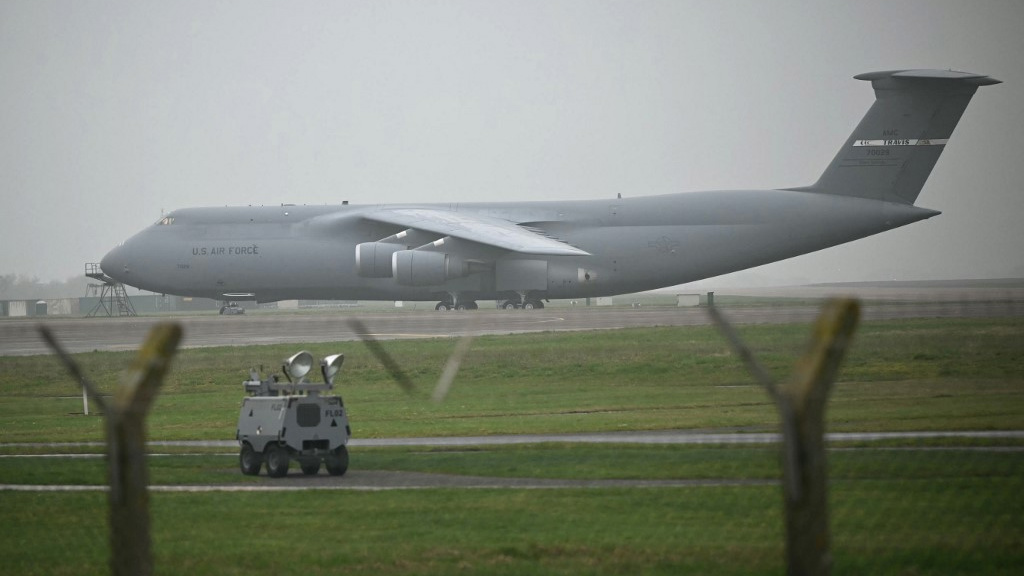
    The strategic significance of British military assets extends beyond Qatar, encompassing naval facilities in Bahrain, air bases in the UAE, Oman, and Cyprus, and most critically, the joint UK-US base on Diego Garcia. This Indian Ocean installation places US bomber aircraft within striking distance of Iran while avoiding contested Gulf airspace, though any American deployment from this territory requires explicit British authorization.

    Recent UK actions include imposing fresh sanctions targeting Iran’s finance, energy, and transportation sectors, alongside individual sanctions against Iranian businessman Ali Ansari, whose £150 million portfolio has been frozen over alleged IRGC financing connections. The British government has simultaneously evacuated its Tehran embassy staff and heightened security precautions throughout the region.

    As the US reinforces regional military presence with additional warplanes, air defense systems, and the Abraham Lincoln aircraft carrier, diplomatic attention remains focused on Washington’s next moves and potential allied responses.

  • US suggests Hamas disarmament would come with amnesty deal

    US suggests Hamas disarmament would come with amnesty deal

    The United States has proposed a potential amnesty arrangement for Palestinian combatants as part of a broader initiative to disarm Hamas in Gaza, according to statements made by American officials on Tuesday. An anonymous U.S. official disclosed to Reuters that both Israeli and American strategies assume weapon surrender would be accompanied by clemency provisions for fighters.

    “We are listening to many of their people talk about disarming. We believe they will comply,” the official stated, emphasizing that disarmament would constitute a fundamental component of any negotiated settlement. “Failure to relinquish weapons would constitute a violation of the agreement. We envision disarmament proceeding alongside appropriate amnesty measures, and we have developed a robust program to facilitate this process.”

    This development coincides with France’s urgent call for implementing the second phase of the Gaza ceasefire framework following the recovery of the final Israeli hostage’s remains from the Palestinian territory. Pascal Confavreux, spokesperson for the French Ministry of Foreign Affairs, expressed “immense relief” at the resolution of the hostage situation while emphasizing the critical need for transitional measures.

    “Commencing the second phase of the Gaza peace plan must now facilitate the transition from ceasefire to durable peace, ensure massive humanitarian aid delivery, and reestablish credible political prospects for a two-state solution with mutual security,” Confavreux articulated via social media platform X.

    The truce, originally brokered by U.S. President Donald Trump in October, aimed to terminate over two years of severe conflict that resulted in more than 71,660 Palestinian fatalities and the near-total destruction of 90% of Gaza’s infrastructure. Despite the ceasefire, monitoring groups have documented over 1,300 violations attributed to Israeli forces since its inception.

    Phase two of the Trump administration’s peace blueprint requires the disarmament of Hamas, progressive withdrawal of Israeli military units from occupied portions of the Gaza Strip, and the introduction of international peacekeeping forces. Hamas officials have countered that Israel must fully adhere to the ceasefire terms, particularly regarding unimpeded aid access and complete territorial withdrawal.

    Recent tensions escalated when Israel announced the discovery of the last captive’s body near Gaza City following intensive military operations involving artillery shelling and bulldozing activities. Local reports from the Wafa news agency detailed extensive ground operations in eastern Gaza City, including the desecration of multiple graves during search operations for 24-year-old policeman Ran Gvili.

    The Israeli military’s operations have resulted in dozens of casualties from heavy artillery and drone strikes since Sunday. In a concurrent development, the Al-Aqsa Martyrs hospital in central Gaza received nine Palestinian detainees released through Red Cross mediation on Monday evening.

    Post-ceasefire violence has claimed at least 486 Palestinian lives with over 1,341 wounded, while Israeli authorities maintain strict limitations on humanitarian assistance, continuing bans on essential shelter and heating supplies.