标签: Asia

亚洲

  • Lawmaker lays stress on plant protection

    Lawmaker lays stress on plant protection

    At the ongoing 14th National People’s Congress, Deputy Song Bao’an has presented a comprehensive proposal advocating for enhanced plant protection measures and new legislative frameworks. The lawmaker, who also serves as President of Guizhou University, emphasized that robust plant protection systems are fundamental to preventing widespread crop pest outbreaks and safeguarding both staple food crops and commercial agricultural products.

    Speaking from a decade of frontline research experience, Song highlighted China’s paradoxical position as an agricultural powerhouse that still grapples with systemic challenges including pesticide overuse and recurrent crop diseases. “Despite numerous efforts in this field, China lacks a high-level legal framework specifically addressing plant protection,” Song noted, referencing the nation’s 2025 food output of 714.88 million metric tons according to National Bureau of Statistics data.

    The proposal calls for establishing clearly defined regulatory bodies and specialized enforcement teams to ensure nationwide plant health monitoring. Song’s research team has pioneered innovative green pest control methods, particularly for tea cultivation—a crucial crop covering approximately 466,667 hectares in Guizhou province. Their breakthrough approach involves deploying natural predator insects to combat tea pests, creating a sustainable biological control system.

    These integrated pest management techniques have demonstrated remarkable success domestically, with implementation expanding across Guizhou, Hainan, and Hunan provinces. The methods have also gained international recognition through the China-Sri Lanka Joint Laboratory for Green Tea Pest Control Technology, established in 2024. Since January 2025, Professors Jin Linhong and Hao Gefei have led repeated technical missions to Sri Lanka, where small family tea farms struggle with extensive management and severe pest problems.

    After one year of trials combining biological control with improved farming practices, demonstration tea gardens reported a 50% reduction in disease incidence and improved soil conditions. Yield increases ranged from 23% to an extraordinary 110%, with the project expanding from initial pilot areas to approximately 333 hectares. The program has also facilitated knowledge exchange, with over 50 Sri Lankan students studying at Guizhou University and implementing these techniques upon returning home.

    Song directly links advanced plant protection to broader national priorities: “Crops from the field end up on people’s plates. Strengthening oversight and legislation concerns not just tea or cash crops but personal health and national food security.” The proposal positions green agriculture—incorporating organic fertilizers, biopesticides, and water-saving irrigation—as essential for addressing soil depletion, water pollution, and climate change challenges through drought-resistant varieties and climate-smart farming practices.

    “China’s agriculture has reached a turning point,” Song concluded. “Matching laws are essential to ensure practitioners can implement technologies correctly and scientifically, making agriculture greener and food safer.”
  • Agricultural innovation goes global

    Agricultural innovation goes global

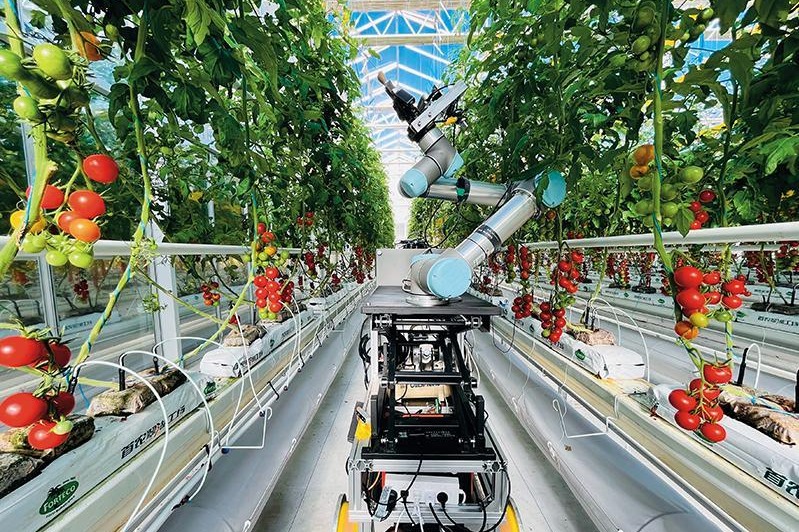
    A pioneering agricultural development model pioneered by China is poised for international scaling as national legislator Zhang Fusuo proposes its formal integration into the country’s foreign assistance programs. The Science and Technology Backyard initiative, which dispatches graduate students and researchers to provide hands-on technical assistance to farmers, has demonstrated remarkable success domestically with 5,700 installations established across China since 2009.

    The innovative program, which connects academic institutions directly with agricultural communities, has already expanded tentatively to ten countries including Malawi and Kenya through 14 international backyards established since 2019. These pilot projects have contributed significantly to food security in numerous villages across the Global South.

    Professor Zhang, an NPC deputy and academician at the Chinese Academy of Engineering, emphasizes that the program’s next developmental phase requires systematic incorporation into China’s national foreign aid framework. This institutionalization would address critical challenges including reliance on research funding and the absence of stable financial channels for international operations.

    The current model faces limitations in private sector and non-governmental organization participation, hindering a comprehensive approach that integrates education, technology and industry. Zhang proposes creating standardized operational procedures and dedicated funding streams while offering financial incentives for domestic agricultural companies to partner with overseas backyards.

    The Global Science and Technology Backyard Center in Hainan Province serves as a strategic hub, attracting both Chinese and international agricultural enterprises to establish operations. Researchers in Sanya are transforming high-quality agricultural practices into replicable business models suitable for international expansion, particularly in tropical regions resembling Hainan’s climate.

    Complementing technological transfer, the initiative emphasizes human capital development through expanded scholarship programs for Global South students and a innovative ‘1+1+1’ model combining study in China, practical experience in home countries, and further training in China. A dual-mentor system pairing Chinese and local experts ensures effective adaptation of technology to local languages, cultures, and policies.

    This approach represents an evolution from traditional aid models, shifting from direct implementation toward guidance and capacity building that empowers local communities to sustain agricultural development independently.

  • Xinjiang’s foreign trade grows steadily

    Xinjiang’s foreign trade grows steadily

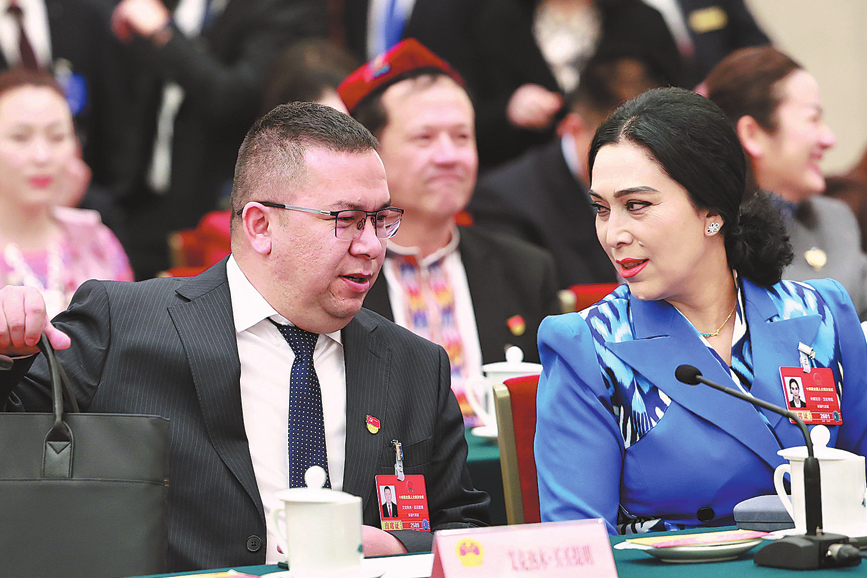
    Despite facing international sanctions, China’s Xinjiang Uygur Autonomous Region has demonstrated remarkable economic resilience with sustained foreign trade growth, according to representatives at the 14th National People’s Congress in Beijing.

    Wang Kuiran, NPC deputy and secretary-general of Xinjiang’s People’s Government, addressed what he characterized as politically motivated sanctions during the ongoing legislative sessions. “The nature of these sanctions represents economic bullying grounded in false narratives about forced labor,” Wang stated. “They constitute deliberate attempts to contain China’s development through Xinjiang.”

    The region’s trade metrics reveal a compelling growth story. From a baseline of 156.91 billion yuan ($22.72 billion) in 2020, Xinjiang’s foreign trade volume progressively surpassed the 200, 300, 400, and 500 billion yuan thresholds between 2022 and 2025. The 2025 figures reached 520.37 billion yuan, marking a 19.9% year-on-year increase that led national growth rates.

    Zheng Jun, NPC deputy and finance department official, attributed this success to strategic geographical advantages and infrastructure development. “Xinjiang serves as a golden transport corridor connecting Asia and Europe, positioning us as China’s western gateway for international trade,” Zheng explained. The region currently maintains trade relationships with 228 countries and territories.

    Structural transformation has been equally crucial. Xinjiang’s export profile has evolved from energy and raw materials toward high-value manufactured goods. Mechanical and electrical product exports surged to 186.5 billion yuan in 2025 (40.7% growth), while electric vehicle and solar cell exports exploded by 99.9% and 187.4% respectively.

    The region has developed comprehensive logistics networks integrating rail, road, and air transportation, facilitating efficient market connections globally. Policy initiatives promoting goods, services, and digital trade complement these infrastructure advantages.

    Looking ahead, Zheng outlined ambitions for the 15th Five-Year Plan period (2026-2030): “Xinjiang will accelerate institutional opening-up and trade-investment integration, pursuing high-quality foreign trade development through scale expansion, diversified market participation, and optimized structure.”

    Wang concluded with defiant optimism: “We stand firm as a mountain against challenges—unshaken by wind and rain, determined until we achieve our goals, sailing through waves to reach our destination.”

  • Green expertise helps clean up war-tarred soil

    Green expertise helps clean up war-tarred soil

    In the vast expanse of Kuwait’s Burgan oilfield—the world’s second-largest—patches of green vegetation now emerge following seasonal rains, representing far more than natural regeneration. These fragile sprouts symbolize a remarkable environmental recovery from one of history’s most devastating ecological disasters: the 1991 Gulf War oil catastrophe.

    When retreating Iraqi forces ignited nearly 700 oil wells three decades ago, they created apocalyptic conditions that persisted for months. Daylight vanished beneath smoke clouds, nights glowed with burning wells, and approximately one-third of Kuwait’s territory became contaminated. The resulting ‘oil lakes’—massive pools of crude—poisoned groundwater and transformed fertile desert into toxic wasteland.

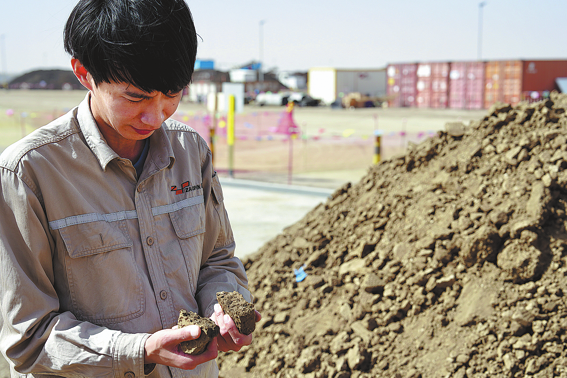
    The turning point arrived in 2019 when Kuwait launched a global initiative to address this enduring environmental crisis. Among the international respondents was Hangzhou Zaopin ST Co Ltd, a Chinese environmental technology startup specializing in microbial remediation. Despite lacking prior international experience, the company possessed decade-refined proprietary technology developed through partnerships with China’s leading universities.

    Zaopin’s breakthrough involved identifying and bioengineering specific bacterial strains from Kuwait’s oil sludge into highly efficient petroleum-degrading microorganisms. At operational sites within Burgan field, specialized vehicles now churn contaminated soil while sprinklers distribute these tailored microbial solutions. This process reduces oil content from 5% to below 1% within three months—meeting Kuwait’s stringent environmental standards.

    For heavily contaminated areas, Zaopin deployed secondary soil washing technology utilizing heat, chemical agents, and mechanical separation. This method not only cleanses the soil but recovers reusable crude oil, transforming environmental liability into economic opportunity.

    The project’s quantifiable success includes treatment of over 5 million tons of contaminated soil and recovery of 150,000 barrels of crude oil. Additional Chinese firms like Jereh Group have joined the effort, introducing pyrolysis systems that process the most contaminated sludge at 300-600°C while recovering high-quality crude.

    Kuwaiti officials initially expressed skepticism about these unconventional methods. Mohammad Khalaf, senior engineer at Kuwait Oil Company, admitted: ‘I didn’t believe the Chinese soil washing method would work. But they overcame every technical challenge. Now I trust them 110 percent.’

    The collaboration’s significance extends beyond technical achievement—it represents ecological restoration previously considered impossible. As Zaopin founder Dai Baiping reflects: ‘We’re not just fixing soil. We’re helping bring back a desert ecosystem that was written off as lost.’

  • Investigation finds US-sanctioned Kinahan cartel leaders ‘living openly’ in Dubai

    Investigation finds US-sanctioned Kinahan cartel leaders ‘living openly’ in Dubai

    An investigative collaboration between The Sunday Times and open-source outlet Bellingcat has revealed that Irish crime syndicate leaders Christy Kinahan and his son Daniel continue to reside openly in Dubai despite international arrest warrants and multimillion-dollar bounties on their heads. The investigation, utilizing advanced digital forensics and AI-powered facial recognition, captured photographic and video evidence of the duo attending a mixed martial arts event at Dubai’s Coca-Cola Arena before an audience of 6,000 spectators.

    The Kinahan Organised Crime Group, valued at approximately $1.1 billion, represents one of Europe’s most formidable transnational criminal networks. According to Irish law enforcement authorities, the cartel dominates narcotics trafficking from mainland Europe to the United Kingdom, establishing itself as a primary supplier of illicit substances to British markets.

    Notably, Christy Kinahan was observed occupying premium VIP seating without apparent concern for his conspicuous status as a globally wanted fugitive. The report documented both men appearing remarkably relaxed and making minimal efforts to conceal their identities during the public gathering.

    United States authorities had previously designated the Kinahan organization as a significant criminal threat, announcing sanctions against family members and offering rewards up to $5 million for information leading to the network’s dismantlement. Multiple nations accuse the cartel of orchestrating large-scale drug trafficking operations, weapons smuggling, and sophisticated money laundering schemes.

    Recent developments have exposed the cartel’s expanding global reach. A September incident involving a light aircraft carrying 200kg of ‘SpaceX-branded’ cocaine that crashed in Brazil revealed connections to the group’s African and European operations. Furthermore, U.S. court records obtained by The Sunday Times indicate the Drug Enforcement Administration successfully infiltrated a narcotics operation linked to the family, providing concrete evidence of their direct involvement in North American drug markets, including methamphetamine and fentanyl trafficking.

  • Action pledged to build healthy China

    Action pledged to build healthy China

    National political advisers have committed to accelerating China’s healthcare modernization following a pivotal meeting with President Xi Jinping in Beijing. The engagement, which occurred during a joint group meeting of the Chinese People’s Political Consultative Conference (CPPCC), has ignited renewed determination among health experts and policymakers to achieve the ambitious ‘Healthy China 2035’ vision.

    President Xi emphasized that the forthcoming 15th Five-Year Plan period (2026-2030) represents a critical phase for establishing decisive progress toward nationwide health objectives. His address to advisers from the medical, health, welfare, and social security sectors highlighted the strategic importance of coordinated planning and rapid implementation.

    Professor Jiang Jiandong, a CPPCC member and pharmaceutical sciences expert at the Chinese Academy of Medical Sciences, described the meeting as both inspirational and demanding. “President Xi’s profound concern for public health left a deep impression,” Jiang stated, outlining his commitment to developing a comprehensive pharmaceutical innovation ecosystem spanning from foundational research to clinical applications and commercial distribution.

    The convergence of artificial intelligence with medical science emerged as a recurring theme. Jiang advocated for combining AI capabilities with biological intelligence to enhance drug design and data analysis while mitigating algorithmic limitations. This dual approach aims to advance treatments for cancer, metabolic diseases, and central nervous system disorders.

    CPPCC member Wang Lu highlighted practical measures to bridge urban-rural health disparities, noting China’s current average life expectancy of 79.2 years and the target of reaching 80 years by 2030. Wang proposed expanding AI-assisted diagnostic platforms to empower rural clinics, potentially increasing their treatment capacity from several hundred to over 2,000 conditions while improving accuracy.

    Innovative solutions for grassroots healthcare received significant attention. Ma Xiuzhen, a political advisory leader from Ningxia, proposed providing every resident with an AI-powered ‘intelligent family doctor’ at an estimated annual cost of less than 50 yuan per person. This digital solution would handle routine consultations, facilitate disease screening, and alleviate pressure on overworked community physicians.

    The National Health Commission reported encouraging progress in primary care, with grassroots institutions handling 52.6% of all medical visits in 2025—a steadily increasing share that reflects improvements in tiered diagnosis systems.

    The meeting also featured specialized contributions, including altitude sickness research from Xizang autonomous region expert Pasang Drolma, who reported successful prevention of altitude-related fatalities among workers on major infrastructure projects like the Qinghai-Xizang Railway. She expressed particular motivation from Xi’s emphasis on integrating traditional Chinese medicine with modern medical science.

  • Deepening cross-Strait relations emphasized

    Deepening cross-Strait relations emphasized

    Senior Chinese officials emphasized the nation’s unwavering stance on Taiwan and regional development strategies during deliberations at the ongoing National People’s Congress session in Beijing.

    Wang Huning, Chairman of the Chinese People’s Political Consultative Conference National Committee, articulated China’s firm position against Taiwan independence separatist activities and external interference while participating in discussions with Taiwan delegation representatives. He stressed the critical importance of upholding the one-China principle and the 1992 Consensus as fundamental to cross-Strait relations. Wang advocated for implementing the Party’s comprehensive strategy for Taiwan question resolution in the new era, enhancing confidence in eventual reunification, and fostering the inevitable trend toward national unity through peaceful development of cross-Strait relations.

    Emphasizing the familial bond between mainland China and Taiwan, Wang called for intensified cross-Strait exchanges and cooperation, promoting integrated development, and jointly creating sustainable wellbeing for the Chinese nation.

    Concurrently, other senior leaders engaged in policy deliberations with provincial delegations. Cai Qi, member of the CPC Central Committee Secretariat, discussed Qinghai’s development strategy, emphasizing the need for maintaining strategic focus and leveraging comparative advantages for differentiated development aligned with local conditions. He encouraged exploring innovative pathways for ecological conservation and green development coordination while improving livelihoods and preventing large-scale poverty recurrence. Cai further highlighted strengthening ethnic unity and fostering a robust sense of community among all Chinese ethnic groups.

    Vice-Premier Ding Xuexiang met with delegations from Hong Kong and Macao special administrative regions, noting the remarkable progress in implementing the ‘one country, two systems’ framework over the past five years. He urged both regions to actively align with China’s 15th Five-Year Plan (2026-30), better integrate into national development frameworks, and contribute significantly to Chinese modernization. For Hong Kong, Ding emphasized consolidating its international financial, shipping, and trade center status while fully leveraging educational, scientific, and talent advantages. For Macao, he stressed advancing economic diversification and accelerating construction of the Guangdong-Macao In-Depth Cooperation Zone in Hengqin.

  • Legal protection of vulnerable groups given priority

    Legal protection of vulnerable groups given priority

    China’s judicial system is demonstrating unprecedented commitment to protecting vulnerable populations through innovative public interest litigation mechanisms, according to Supreme People’s Procuratorate Prosecutor-General Ying Yong. The system specifically addresses protection gaps affecting elderly citizens, minors, women, and persons with disabilities who often lack resources or capacity to pursue legal remedies independently.

    National procuratorial authorities have significantly expanded their role as public interest representatives since the system’s conceptualization in 2014. This institutional innovation, regarded as a practical implementation of Xi Jinping Thought on the Rule of Law, has evolved through systematic legislative development. A milestone occurred in October 2025 when the National People’s Congress Standing Committee conducted its first review of dedicated legislation governing procuratorial public interest litigation.

    The system operates through multidimensional protection strategies. For elderly populations, prosecutors have addressed critical issues including medication safety, resulting in over 2,000 cases since 2023. One landmark intervention involved requiring pharmaceutical companies to provide accessible medication instructions through large-print and audio formats—a measure subsequently incorporated into China’s Barrier-Free Environment Development Law enacted in 2023.

    Minor protection efforts have generated approximately 45,000 cases addressing issues ranging from tobacco and alcohol sales to minors to regulating emerging sectors like e-sports hotels and mystery game venues. Prosecutors employ a comprehensive approach considering minors’ rights to development and social participation alongside fundamental health and safety concerns.

    Women’s rights protection has manifested through over 5,300 cases combating employment discrimination and dignity violations. Regional prosecutors in Shanghai, Jiangsu, and Shandong have successfully challenged unlawful practices including pregnancy-related dismissals and reduced maternity leave entitlements.

    Disability-focused litigation primarily targets barrier-free environment improvements, with 8,000+ cases pursued since relevant legislation took effect. Achievements include enhanced transportation accessibility, voice-assisted public service software, and text-based emergency systems.

    Internationally, China showcased these advancements at the United Nations Human Rights Council’s 59th session in June 2025, receiving global attention for its inclusive governance model. Domestically, the Supreme People’s Procuratorate has strengthened collaborative mechanisms with civil affairs departments, women’s federations, and disability organizations to create synergistic protection networks.

    Ying emphasized that beyond case-specific resolutions, the system focuses on addressing systemic regulatory gaps through coordinated governance improvements, ensuring sustainable protection for vulnerable groups across Chinese society.

  • 12 years on, renewed hunt for missing Flight MH370 comes up empty as families press for answers

    12 years on, renewed hunt for missing Flight MH370 comes up empty as families press for answers

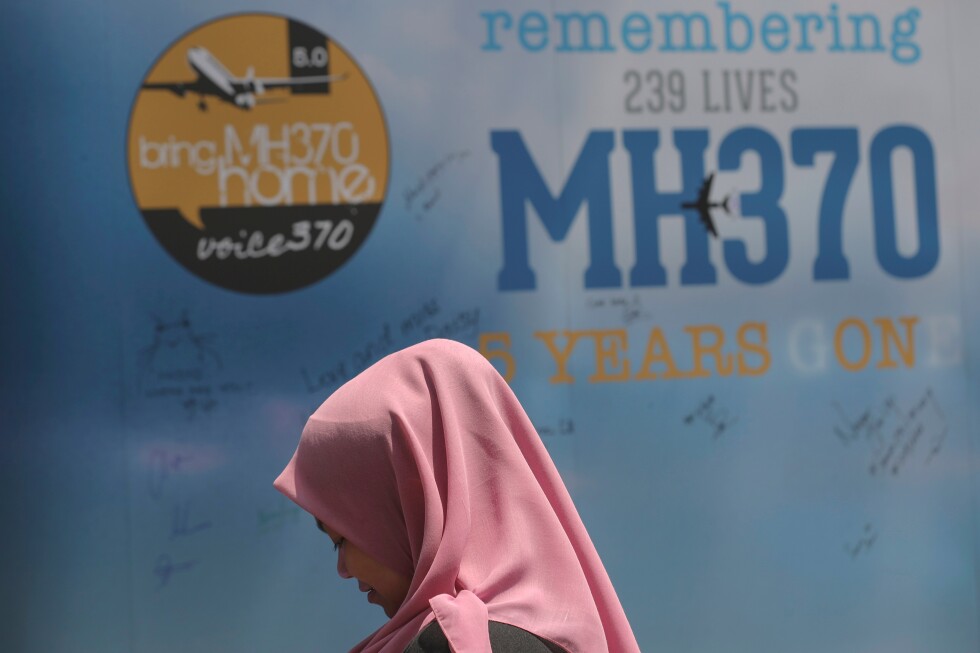
    Malaysian authorities have confirmed the unsuccessful conclusion of the latest deep-sea search operation for Malaysia Airlines Flight MH370, which disappeared twelve years ago with 239 passengers and crew aboard. The Air Accident Investigation Bureau reported Sunday that Ocean Infinity, a Texas-based marine robotics company, completed an extensive survey of the southern Indian Ocean seabed without locating the aircraft wreckage.

    Operating under a unique “no-find, no-fee” agreement that would have earned the company $70 million upon successful discovery, Ocean Infinity conducted search operations across 7,571 square kilometers (2,923 square miles) of ocean floor. The mission, executed in two phases between March 2025 and January 2026, faced periodic weather disruptions that hampered progress. The search focused on a newly identified 15,000-square-kilometer zone where the aircraft is believed to have crashed based on satellite trajectory data.

    The Boeing 777 vanished from radar on March 8, 2014, during its scheduled flight from Kuala Lumpur to Beijing. Most passengers were Chinese nationals. Previous multinational search efforts and a 2018 private search by Ocean Infinity similarly failed to locate the main wreckage, though debris fragments later washed ashore along African coastlines and Indian Ocean islands.

    Voice 370, representing families of the victims, has urgently appealed to the Malaysian government to extend Ocean Infinity’s contract and consider engaging other deep-sea exploration companies under similar performance-based arrangements. The group emphasized that the current contract remains valid until June but noted that Ocean Infinity’s vessel has been redeployed for other projects. With approaching winter months likely to worsen sea conditions, the window for immediate continuation appears limited.

    The families’ organization declared their unwavering commitment to pursuing answers, stating: “We will continue the fight for answers. We will never give up!” Malaysian authorities have not provided specifics regarding when or if the search operations might resume.

  • Japan rallies late to beat Australia 4-3 behind Masataka Yoshida’s home run, Taiwan tops South Korea

    Japan rallies late to beat Australia 4-3 behind Masataka Yoshida’s home run, Taiwan tops South Korea

    In a spectacular display of resilience, defending champion Japan mounted a dramatic comeback to defeat Australia 4-3 in a Pool C showdown at the World Baseball Classic on Sunday. The game reached its climax in the seventh inning when Masataka Yoshida launched a two-run homer with two outs, completely shifting the momentum in Japan’s favor.

    The Japanese team, which had been largely contained by Australia’s pitching arsenal throughout the evening, broke through against Jon Kennedy, Australia’s fifth pitcher of the night. Yoshida’s powerful swing sent the ball soaring to right field, electrifying the Tokyo crowd and putting Japan ahead for the first time in the contest.

    Japan bolstered their lead in the eighth inning with two additional runs. Ukyo Shuto crossed home plate on Teruaki Sato’s timely double, while Sosuke Genda capitalized on Ky Hampton’s bases-loaded walk. These insurance runs proved crucial as Australia mounted a fierce ninth-inning rally with back-to-back home runs from Alex Hall and Rixon Wingrove, narrowing the gap to a single run before Japan ultimately secured the victory.

    The win ensures Japan finishes atop Pool C, having already secured advancement to the quarterfinals. Chihiro Sumida earned the pitching victory while Taisei Ota recorded the save for the Japanese squad.

    In earlier tournament action, Taiwan delivered an extra-innings victory over South Korea, winning 5-4 in ten innings. The game-winning run was scored by Chieh-Hsien Chen, who advanced on Kun-Yu Chiang’s sacrifice bunt. Taiwan’s victory was powered by three home runs, including Stuart Fairchild’s two-run shot in the eighth inning. Fairchild, playing for Taiwan through his maternal heritage, described the contest as “one of the most fun games I’ve ever played in my life.”

    The tournament continues with critical matchups that will determine the final quarterfinal berth from Pool C, as Australia faces South Korea on Monday with advancement implications on the line.