
In a historic turn of events, Sanae Takaichi has been elected as Japan’s first female prime minister, marking a significant milestone in the nation’s political landscape. The 64-year-old leader of the ruling Liberal Democratic Party (LDP) secured her position after a decisive victory in the Lower House elections, garnering 237 votes against her closest rival, Yoshihiko Noda of the Constitutional Democratic Party of Japan, who managed 149 votes. This was followed by a successful runoff in the Upper House, where she secured 125 votes, meeting the constitutional requirement for leadership. Takaichi’s ascension comes at a critical juncture for the LDP, which has faced consecutive electoral defeats, leading to a minority status in both houses of the Diet. To bolster her government, Takaichi has formed a coalition with the Japan Innovation Party (JIP), whose 35 Lower House votes were pivotal in her election. The new coalition has pledged to focus on national revival and self-sustainability. As Takaichi prepares to assemble her cabinet, expectations are high for her to navigate Japan through both domestic and international challenges. Her predecessor, Shigeru Ishiba, who resigned after 386 days in office, expressed gratitude for public support and urged continued backing for the new administration. Takaichi’s leadership is anticipated to bring a fresh perspective to Japan’s governance, with her cabinet formation expected to reflect her commitment to innovation and resilience.
标签: Asia
亚洲
-

Prime Minister Sanae Takaichi, Japan’s Iron Lady 2.0
Sanae Takaichi, a staunch conservative and admirer of Margaret Thatcher, has made history by becoming Japan’s first female prime minister. Appointed by parliament on Tuesday, Takaichi’s rise to power comes amid significant political and economic challenges for the country. Her leadership, however, is not seen as a feminist milestone but rather as a continuation of her hardline stance on defense, economic security, and immigration. Takaichi, a former economic security minister, has been a vocal critic of China and a supporter of Taiwan, emphasizing the importance of strengthening security ties between Taipei and Tokyo. She has also been a regular visitor to the controversial Yasukuni Shrine, though she recently toned down her rhetoric on China and avoided a festival at the shrine. Takaichi’s political journey is marked by her conservative views on gender, including her opposition to revising a 19th-century law requiring married couples to share the same surname. Despite this, she has vowed to improve the gender balance in her cabinet to ‘Nordic’ levels, addressing Japan’s poor ranking in gender equality. Takaichi’s policies echo those of her mentor, Shinzo Abe, including aggressive monetary easing and big fiscal spending, which could unsettle markets. Her tough stance on immigration and foreign influence is seen as an attempt to regain voters lost to a new nationalist party. On tariffs, Takaichi has indicated she will push for renegotiations with the United States if the current deal is deemed harmful to Japan.
-
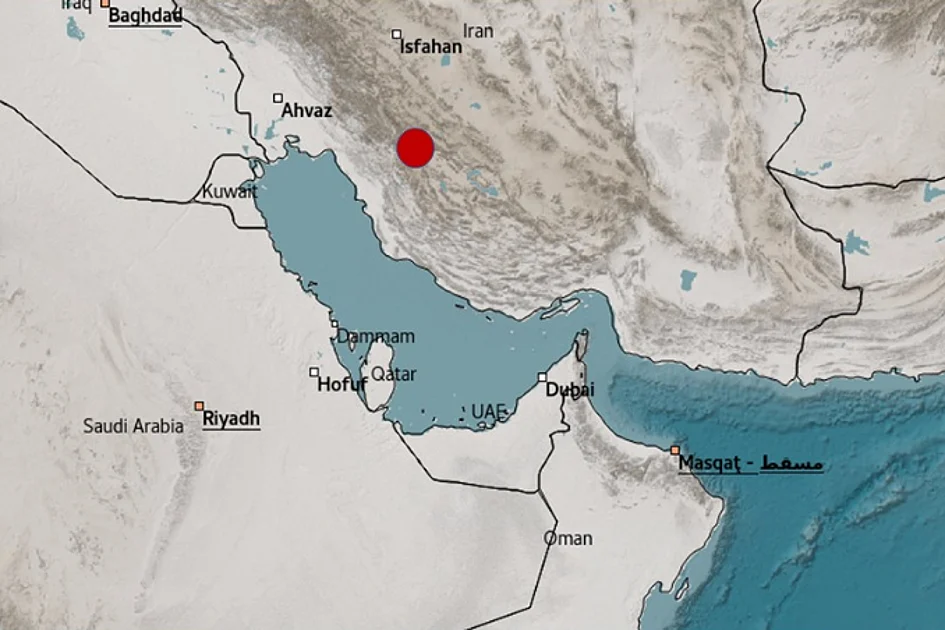
Magnitude 5.3 earthquake hits south Iran; no effect in UAE
A moderate earthquake with a magnitude of 5.3 struck southern Iran on Tuesday, October 21, 2025, according to the National Seismic Network of the National Centre of Meteorology (NCM). The tremor occurred at 12:02 PM UAE time, with its epicenter located at a depth of 10 kilometers. Despite the significant magnitude, the quake was not felt by residents in the United Arab Emirates (UAE), and no adverse effects were reported in the region. The NCM confirmed that the seismic activity had no impact on the UAE, ensuring public safety and normalcy. This event follows a series of recent earthquakes in Iran, including a 5.5-magnitude quake on September 13 and a 5.2-magnitude tremor on September 14. Additionally, a more substantial 5.9-magnitude earthquake had shaken southern Iran in August, with tremors felt as far north as the country’s northern regions. Authorities continue to monitor seismic activity closely, emphasizing preparedness and public awareness.
-

Over 300,000 migratory birds expected to flock to China’s Guangdong
South China’s Guangdong province is set to welcome an extraordinary natural spectacle as more than 300,000 migratory birds are expected to arrive during the autumn and winter migration season. According to the provincial forestry administration, these birds will flock to coastal mudflats, inland wetlands, and nature reserves across the region, underscoring Guangdong’s pivotal role in global bird migration routes. The migration season, which began in August as temperatures in North China dropped, sees Guangdong serving as a crucial stopover on the East Asian-Australasian Flyway. The peak period for bird migration through Guangdong spans from September to November, as highlighted by Zhang Qiang, deputy director of the Institute of Zoology at the Guangdong Academy of Sciences. With its extensive 4,114-kilometer coastline—the longest in China—and vast red mangrove forests, Guangdong offers abundant food resources, making it an ideal habitat for a diverse range of species. Historically, the province has recorded 584 species of wild birds, 412 of which are migratory. This annual event not only showcases the region’s ecological richness but also emphasizes the importance of conservation efforts to protect these vital habitats.
-
Soil sample study offers clues on lunar water evolution
A groundbreaking study conducted by Chinese scientists on a 2-gram lunar soil sample from the Chang’e 6 mission has uncovered rare CI chondrite impact residues, shedding light on the mass transfer processes within the inner solar system and offering fresh perspectives on the distribution and evolution of water on the moon. The research, spearheaded by a team from the Guangzhou Institute of Geochemistry under the Chinese Academy of Sciences, was published in the prestigious journal Proceedings of the National Academy of Sciences on October 21, 2025. CI chondrites, also known as Ivuna-type carbonaceous chondrites, are exceptionally rare meteorites with a primitive chemical composition akin to the sun’s nonvolatile elements. These meteorites, rich in water and volatiles, primarily formed in the outer solar system and migrated into the asteroid belt during the early stages of planetary formation. The discovery of CI chondrite residues in the lunar soil suggests that such materials can travel to the Earth-moon system. Furthermore, the research team posits that the water with positive oxygen isotope characteristics previously detected in lunar samples likely originated from impacts by these meteorites. This revelation opens new avenues for future studies on the sources and evolution of water on the lunar surface.
-

France’s ex-leader Sarkozy jailed, proclaiming his innocence
In a historic and dramatic turn of events, former French President Nicolas Sarkozy was incarcerated on Tuesday, marking the first time a former leader of an EU state has been jailed. Sarkozy, who served as France’s president from 2007 to 2012, was convicted last month for his involvement in a scheme to secure illegal campaign funding from the late Libyan dictator Muammar Gaddafi. The verdict, which carries a five-year prison sentence, has sent shockwaves through France and beyond. Sarkozy, 70, entered La Sante prison in Paris under heavy police escort, maintaining his innocence in a defiant social media post. ‘It is not a former president of the republic being jailed this morning, but an innocent man,’ he declared on X (formerly Twitter). ‘I have no doubt. The truth will prevail.’ The case, known as the ‘Libyan affair,’ centers on allegations that Sarkozy’s aides struck a deal with Gaddafi in 2005 to fund his 2007 presidential campaign. In return, Gaddafi allegedly sought assistance in rehabilitating his international image, tarnished by Libya’s involvement in the 1988 Lockerbie bombing and other atrocities. Sarkozy’s imprisonment has drawn mixed reactions. While a recent poll by Elabe found that 60% of French citizens consider the sentence fair, supporters gathered outside his home, chanting ‘Free Nicolas’ and singing the national anthem. Sarkozy’s wife, singer Carla Bruni, stood by his side as he left for prison. The former president’s legal troubles have been mounting since his 2012 re-election defeat. He has faced multiple trials, including a previous conviction for graft, which led to house arrest and the revocation of his Legion of Honour. Despite his fall from grace, Sarkozy remains a significant figure in French politics, occasionally meeting with current President Emmanuel Macron. Macron defended a recent meeting with Sarkozy, calling it ‘normal, on a human level.’ Sarkozy’s incarceration is a stark reminder of the legal and ethical challenges facing political leaders, even after leaving office.
-
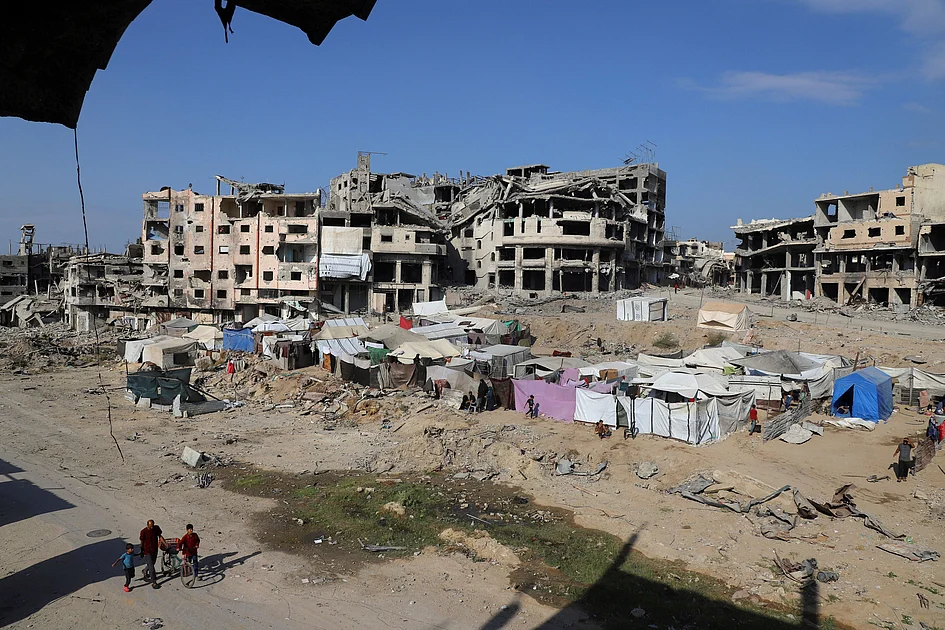
Qatar’s emir condemns ‘continued violation’ of 11-day-old Gaza ceasefire
Qatar’s Emir, Sheikh Tamim bin Hamad Al Thani, has strongly condemned Israel’s repeated violations of the 11-day-old Gaza ceasefire, accusing the nation of actions that render the Gaza Strip uninhabitable. In his annual address to the Shura Council on Tuesday, the Qatari ruler, a pivotal mediator in the ongoing truce, expressed deep concern over the deadly strikes on Hamas positions and the broader humanitarian crisis in the region. ‘We reiterate our condemnation of all Israeli violations and practices in Palestine, particularly the transformation of the Gaza Strip into an area unfit for human life and the continued breach of the ceasefire,’ Sheikh Tamim stated. His remarks underscore Qatar’s critical role in regional diplomacy and its commitment to addressing the escalating tensions in Gaza. The Emir’s address highlights the urgent need for international intervention to uphold the ceasefire and mitigate the humanitarian fallout in the embattled territory.
-

UAE expat’s son dies by suicide after alleged humiliation by teacher in Kerala
A devastating incident in Kerala, India, has shocked the community as a 14-year-old boy, A.J., the son of a UAE expatriate, died by suicide following alleged humiliation by his teacher. The tragedy occurred on October 14, when A.J. was found hanging in his home, dressed in his school uniform. The incident has led to widespread protests, the suspension of two teachers, and an ongoing investigation by the state’s education minister.
A.J.’s suicide came just a day after he was disciplined for using offensive language in an Instagram group chat with classmates. The issue was brought to the school’s attention by a parent on October 13, and the boys involved were reprimanded. However, the matter was not escalated further as the students appeared to acknowledge their mistake.
On the following day, A.J.’s class teacher reportedly addressed the issue in front of the entire class, threatening to file a cybercrime case against him, which could result in a 1.5-year jail sentence. Witnesses claim that A.J. was deeply distressed by the teacher’s public shaming and was found dead later that day. His father, who works in the UAE, returned home for the funeral on October 15.
The incident sparked outrage among students and local student unions, who boycotted classes and staged protests demanding accountability. In response, the school suspended the class teacher and headmistress for 20 days. However, the school principal defended the teacher, stating that she had only warned A.J. about the potential consequences of his actions.
The state’s education minister has ordered a detailed probe into the incident, and a case of unnatural death has been registered. A.J.’s family has filed a separate complaint alleging mental harassment by the teacher, claiming that she had targeted him for months following a previous complaint by his father. Police are currently recording statements from students, staff, and the teacher involved. The school is expected to reopen soon, but the incident has left a lasting impact on the community, raising questions about the treatment of students and the pressures they face.
-

Magnitude 4.6 earthquake jolts Pakistan at 170km depth
A moderate earthquake measuring 4.6 on the Richter scale shook Pakistan on Tuesday, October 21, 2025, as reported by India’s National Centre for Seismology (NCS). The seismic event occurred at a depth of 170 kilometers at 10:59 AM local time (9:29 AM UAE time). This follows a series of tremors in the region, including a magnitude 4.7 quake on Monday and multiple moderate quakes over the weekend. The affected area, encompassing Afghanistan, Pakistan, and northern India, is one of the world’s most seismically active zones due to the collision of the Indian and Eurasian tectonic plates. This geological activity frequently results in earthquakes that are felt across borders. Pakistan, in particular, is highly vulnerable to seismic events, with regions like Balochistan, Khyber Pakhtunkhwa, and Gilgit-Baltistan lying on the southern edge of the Eurasian plate, while Sindh and Punjab are situated on the northwestern edge of the Indian plate. These areas are prone to frequent and sometimes violent earthquakes, posing significant risks to the local population.
-
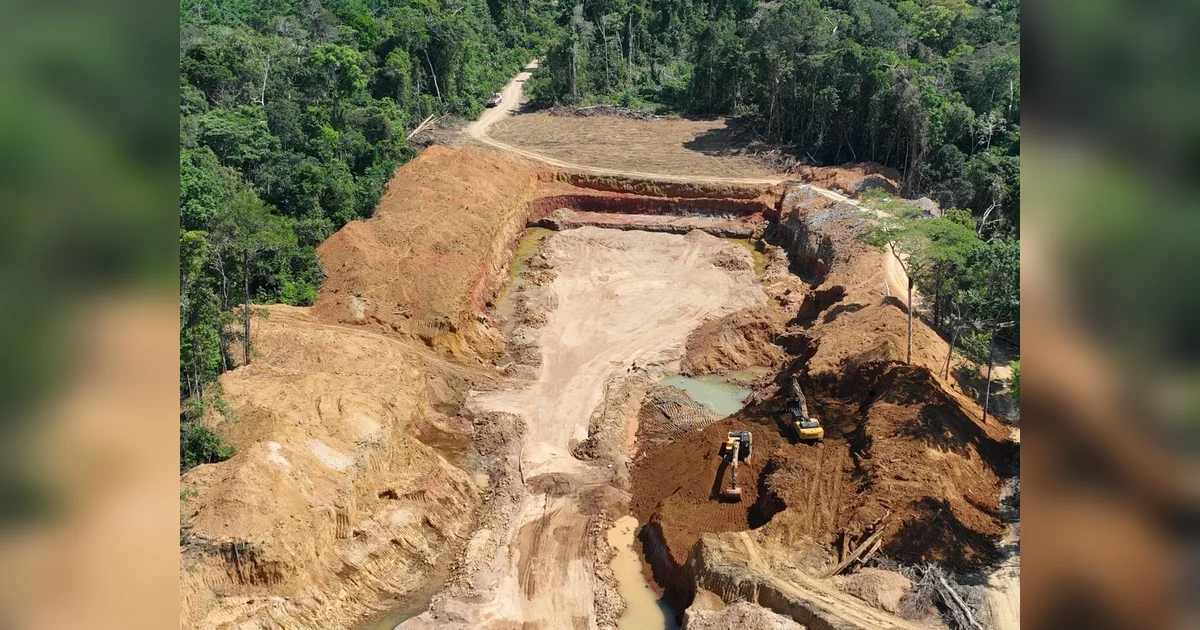
Ayni Gold announces upcoming retail access following strong OTC interest amid elevated gold prices
Ayni Gold, a blockchain-based initiative tied to operational gold processing in Peru, is set to launch limited retail access later this month, as revealed by the company’s Chief Technology Officer, Daniel C. Tschinkel. This retail phase will operate concurrently with existing over-the-counter (OTC) allocations, allowing participation starting from approximately $100, subject to jurisdictional restrictions and Know Your Customer (KYC) requirements. The announcement coincides with gold prices nearing record highs, driven by global demand for safe-haven assets and increasing interest in tokenized commodity exposure. Recent geopolitical tensions, persistent inflation, and central bank gold acquisitions have further fueled the metal’s momentum, sparking discussions on how blockchain technology can enhance traditional gold-linked financial instruments. Unlike conventional vault-backed tokens or those tied to unmined reserves, Ayni Gold tokenizes gold-mining capacity, directly linking blockchain participation to active processing throughput. Each AYNI token represents a fixed share of the project’s processing capacity, measured in cubic meters per hour (m³/h), ensuring transparency and verifiability. The initiative operates in collaboration with Minerales San Hilario, a licensed Peruvian mining company with a proven production history. To bolster transparency, Ayni has commissioned an independent scoping study and third-party audit, complemented by routine on-chain reporting of token issuance and production data. This dual-reporting approach enables participants to monitor operational progress through both blockchain and traditional methods. Ayni’s model emphasizes predictability, as tokens are tied to processing capacity, potentially enhancing returns with rising gold prices. Additionally, 15% of project revenue is allocated to buyback and burn mechanisms, though outcomes depend on operational and market conditions. Staking participants receive variable PAXG-denominated distributions via smart contracts, allowing them to earn rewards tied to global gold prices without exposure to AYNI’s market volatility. By using PAXG for rewards instead of issuing additional AYNI tokens, the model reduces volatility and provides a familiar reference point for participants accustomed to traditional commodities. However, staking remains optional, with rewards varying based on mining performance and operating costs.