标签: Asia

亚洲

  • Dubai unveils electric buses with driver monitoring, Wi-Fi, 360° cameras

    Dubai unveils electric buses with driver monitoring, Wi-Fi, 360° cameras

    Dubai’s Roads and Transport Authority (RTA) has initiated a groundbreaking shift toward sustainable public transportation with the delivery of 250 new buses, including 40 fully electric models—the largest such acquisition in UAE history. This delivery represents the first phase of a comprehensive 735-bus procurement contract designed to modernize Dubai’s transit infrastructure while significantly reducing carbon emissions.

    The newly unveiled Zhongtong electric buses, specifically engineered for Dubai’s demanding climate conditions, feature revolutionary technological capabilities. These include a sophisticated Driver Behaviour Monitoring System that utilizes artificial intelligence to enhance safety standards, 360-degree camera coverage for complete situational awareness, and automated passenger counting systems integrated with fare collection technology to prevent evasion.

    Each electric bus boasts an impressive 280-kilometer range on a single charge, enabled by a 434 kilowatt-hour battery system powered by ABB’s 360-kilowatt chargers. This extended range eliminates the need for mid-route charging, allowing the vehicles to complete daily operational requirements without returning to the depot.

    During an extensive three-month trial period conducted on Dubai’s actual routes, the buses demonstrated exceptional performance metrics. The testing confirmed remarkable energy efficiency, reliable braking systems, and climate-appropriate cooling mechanisms that maintained optimal performance despite frequent stops and variable speeds. The trial resulted in an unprecedented 95% satisfaction rate among both drivers and passengers.

    Mattar Al Tayer, Director-General and Chairman of the RTA, emphasized the strategic importance of this initiative: ‘This deployment aligns with our Zero-Emission Public Transport Strategy 2050, which targets complete transition of all public transportation vehicles to zero-emission operations. These efforts directly support Dubai’s broader climate objectives, including carbon neutrality by 2050 and the Dubai Economic Agenda D33’s goal of establishing Dubai among the world’s premier urban economies.’

    The advanced buses incorporate numerous passenger-centric features including complimentary Wi-Fi connectivity, mobile charging ports, ergonomic seating with adjustable safety harnesses, low-floor accessibility for people of determination, dedicated bicycle storage areas, and contemporary interior design reflecting Dubai’s modern identity. The fleet also includes 76 double-decker Volvo buses and 70 articulated Isuzu Anadolu models specifically designed for high-density urban corridors and newly developed communities.

    This initiative establishes a new regional benchmark for sustainable public transportation, incorporating the Gulf’s first standardized fuel-consumption testing protocol to enhance operational efficiency and environmental sustainability.

  • Jerusalem Christian leaders warn against Christian Zionist ‘interference’

    Jerusalem Christian leaders warn against Christian Zionist ‘interference’

    Jerusalem’s highest Christian authorities have issued a stark warning against the growing influence of Christian Zionist ideologies, declaring them a fundamental threat to the survival of ancient Christian communities throughout the Holy Land. The Patriarchs and Heads of the Churches in Jerusalem released an official statement expressing profound concern about how these externally-driven theological movements are undermining the unity and stability of Christianity’s oldest continuous community.

    The church leaders identified a troubling pattern where proponents of Christian Zionism—a theological framework that emphasizes unwavering support for modern Israel as fulfillment of biblical prophecy—receive official endorsement at both local and international levels. These ideologies, frequently promoted by political actors with ties to Israel, propagate the notion that material blessings follow those who provide uncritical support to the Israeli state.

    This warning emerges against a backdrop of escalating pressures on Palestinian Christians, including land confiscation, expanding illegal settlements, and restrictive policies in occupied territories. A recent comprehensive report by the Council of Patriarchs documented how settlement expansion and punitive taxation policies specifically threaten the viability of Christian institutions across the West Bank and Gaza, with particularly severe impacts in East Jerusalem.

    The educational sector has become a focal point of this struggle, with Christian schools in Jerusalem implementing mass strikes and class suspensions in response to Israeli restrictions on work permits for West Bank teachers. Palestinian church officials condemn these measures as deliberate attempts to disrupt Palestinian education and systematically diminish Jerusalem’s Christian presence through bureaucratic means.

    Church authorities emphasize the urgent need for international awareness and protection mechanisms for Christian communities facing increasing settler violence and institutional pressures throughout the occupied territories.

  • Authorities urged to prepare as cold wave hits Central China

    Authorities urged to prepare as cold wave hits Central China

    Chinese disaster response authorities have initiated a Level IV emergency protocol across multiple central provinces in anticipation of a severe cold front expected to bring hazardous winter conditions. The National Disaster Prevention, Reduction and Relief Commission announced the measure on Sunday evening as meteorological warnings indicated significant temperature drops and complex precipitation patterns affecting Anhui, Henan, Hunan and Guizhou provinces.

    The National Meteorological Center concurrently issued yellow alerts for cold waves and freezing conditions, supplemented by a blue alert for blizzards. Weather forecasts project extensive rain and snow coverage across central and eastern China from Sunday through Wednesday, with the powerful cold mass moving southward.

    Emergency response coordination has been intensified with specialized working groups deployed to critical regions. The existing team in Henan will maintain operations while additional units have been dispatched to Hunan and Guizhou to provide on-site guidance and support local preparedness efforts.

    Officials have been directed to implement comprehensive safety measures focusing on transportation infrastructure, power supply stability, and essential public services. Local authorities received specific instructions regarding timely snow and ice removal operations and emergency repairs to prevent casualties and substantial property damage. The commission emphasized the importance of proactive measures to mitigate the cold wave’s impact on vulnerable communities and critical infrastructure.

  • Ball girl collapses in Australian Open heat as players rush to help

    Ball girl collapses in Australian Open heat as players rush to help

    A dramatic medical emergency halted play at the Australian Open on Sunday when a ball girl collapsed courtside during intense Melbourne heat. The incident occurred during a first-round match between Russian 11th seed Ekaterina Alexandrova and Turkish qualifier Zeynep Sonmez.

    With temperatures soaring to 28°C (82°F) on court, the young volunteer suddenly fell backward near the umpire’s chair during the second set. Both players immediately abandoned competition to provide emergency assistance. Alexandrova rushed to retrieve ice packs from a courtside refrigeration unit while Sonmez sprinted to the girl’s side to administer first aid.

    The match was suspended for approximately ten minutes while medical staff attended to the collapsed volunteer, who received immediate treatment for heat-related distress. Tournament organizers confirmed the ball girl recovered fully after receiving medical attention.

    When play resumed, world number 204 Sonmez completed a stunning upset victory against the favored Alexandrova with scores of 7-5, 4-6, 6-4. This marks the most significant win of the 23-year-old Turkish player’s career, who previously gained attention at Wimbledon by becoming Turkey’s first Open-era Grand Slam third-round participant.

    The incident highlights ongoing concerns about extreme heat conditions at the Australian Open, where temperatures frequently exceed 40°C (104°F) during tournament play. Meteorologists forecast temperatures reaching 36°C (97°F) throughout the coming week, prompting tournament officials to review heat safety protocols for players, staff, and volunteers.

  • Trump’s Gaza ‘Board of Peace’: Which Arab officials have been appointed, invited?

    Trump’s Gaza ‘Board of Peace’: Which Arab officials have been appointed, invited?

    In a significant diplomatic move, US President Donald Trump has established two pivotal institutions—the “National Committee for the Administration of Gaza” and a “Board of Peace”—as central components of phase two in Washington’s comprehensive 20-point plan to resolve the Gaza conflict. The White House confirmed that President Trump will personally chair the Board of Peace, which is designed to provide strategic oversight, mobilize international resources, and ensure accountability during Gaza’s transition from conflict to sustainable peace and development.

    Special Envoy Steve Witkoff outlined that the initiative will involve complete demilitarization and reconstruction efforts, specifically emphasizing “the disarmament of all unauthorized personnel” within the territory.

    The founding Executive Board features prominent international figures including US Senator Marco Rubio, former UK Prime Minister Tony Blair, and Presidential son-in-law Jared Kushner. Notably, several Arab officials have been appointed or invited to participate, reflecting the region’s crucial role in peace restoration efforts.

    United Arab Emirates’ Minister of State for International Cooperation Reem Al Hashimy has been formally appointed to the Gaza Executive Board. Minister Al Hashimy expressed pride in the appointment, stating that the Emirates believes “achieving lasting peace requires the concerted efforts of the international community.” She emphasized that Gaza must be governed in a manner that “ensures the legitimate rights and aspirations of the brotherly Palestinian people.”

    Qatar’s representation comes through Ali Al-Thawadi, Advisor to the Prime Minister for Strategic Affairs, who previously played a pivotal role in Qatar’s contribution to Trump’s 20-point Gaza plan. This appointment maintains Qatar’s position as a key mediator between Hamas and Israel, despite ongoing challenges including Israel’s deadly 2025 attack on a Hamas compound in Doha.

    President Trump has extended personal invitations to Egyptian President Abdel Fattah al-Sisi and Jordan’s King Abdullah II to join the Board of Peace. Both governments have acknowledged receipt of the invitations, with Egypt’s Foreign Ministry stating Cairo was “studying” the request and Jordan confirming they were reviewing related documents through their internal legal procedures.

    The Gaza Executive Board will serve as the operational link between the National Committee for the Administration of Gaza and the broader Board of Peace, creating a multi-tiered approach to conflict resolution and reconstruction.

  • Two dead and five missing after blast at metal plant in Inner Mongolia

    Two dead and five missing after blast at metal plant in Inner Mongolia

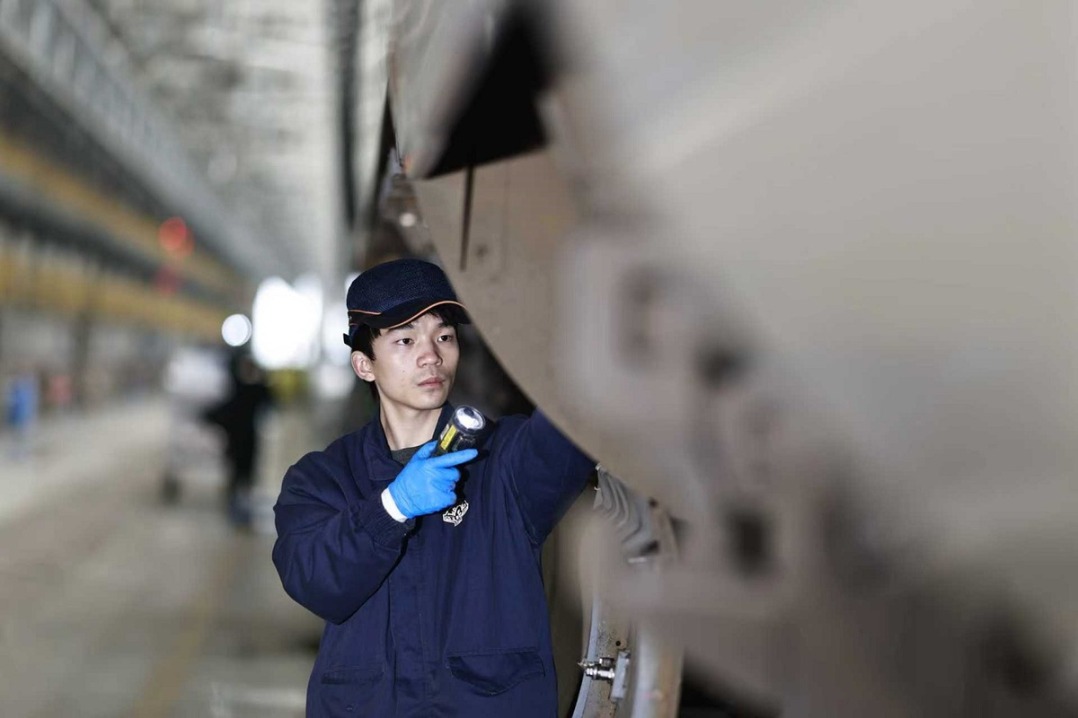
    A severe industrial explosion rocked a sheet metal manufacturing facility operated by Baotou Steel Union Co Ltd in China’s Inner Mongolia Autonomous Region on Sunday afternoon. The incident, which occurred at precisely 3:05 pm local time, has resulted in multiple casualties and triggered a massive emergency response operation.

    According to official statements from regional authorities, the immediate aftermath of the blast proved devastating. Preliminary assessments confirmed two fatalities, with five individuals remaining unaccounted for several hours after the explosion. The human toll extended significantly further, with sixty-six workers transported to medical facilities for emergency treatment. Among those hospitalized, three were reported to be in critical condition, fighting for their lives.

    Emergency protocols were activated immediately following the detonation. Coordinated response teams comprising fire rescue units, law enforcement personnel, and medical emergency specialists converged on the disaster site. Specialized search and rescue equipment was deployed to facilitate operations within the compromised industrial complex. The comprehensive rescue mission continued into the evening hours, with teams working against time to locate missing personnel and secure the affected area.

    The Baotou Steel Union Co Ltd facility, situated within one of China’s significant industrial regions, represents a major component of the area’s manufacturing infrastructure. While investigation teams have begun preliminary assessments, the specific cause of the explosion remains undetermined at this early stage. The incident highlights ongoing challenges in industrial safety management within manufacturing sectors.

  • Indian rupee nears Rs25 per UAE dirham; GCC expats could see remittance gains

    Indian rupee nears Rs25 per UAE dirham; GCC expats could see remittance gains

    The Indian rupee is approaching a psychologically significant threshold of 25 against the UAE dirham, creating favorable conditions for expatriate workers across the Gulf Cooperation Council (GCC) region. This currency movement signals potential gains for remittance flows as overseas earners benefit from improved exchange rates.

    Current trading positions the rupee at approximately 90.87 against the US dollar, translating to a UAE dirham rate between 24.70 and 24.75 rupees. Market analysts project further depreciation potentially reaching 92 rupees per dollar, which would push the dirham beyond the unprecedented 25-rupee benchmark. This development would substantially increase the rupee value of monthly transfers sent home by millions of GCC-based workers.

    The Reserve Bank of India (RBI) has indicated a flexible approach to currency management. Governor Sanjay Malhotra clarified that the central bank does not target specific exchange levels, focusing instead on curbing excessive volatility rather than defending psychological thresholds. This policy stance reflects India’s commitment to market-driven exchange rates while maintaining financial stability.

    Several factors contribute to the rupee’s downward trajectory, including global dollar strength, sustained foreign investor outflows, and widening external imbalances. The currency recorded its most significant annual decline in three years during 2025, falling 4.72 percent to close at 89.87 against the dollar—the weakest performance since 2022.

    Economists note that unlike the 2022 currency crisis driven by Federal Reserve rate hikes, the current depreciation occurs despite a 9.5 percent decline in the dollar index. This divergence suggests domestic and regional factors are increasingly influencing the rupee’s trajectory. IDFC First Bank economist Gaura Sen Gupta describes the situation as “largely a capital-flow story” with the RBI adopting a more pragmatic approach to currency management.

    Despite short-term pressures, India’s macroeconomic fundamentals remain robust. The country maintains substantial foreign exchange reserves of approximately $690 billion, coupled with high growth rates and relatively manageable inflation. The RBI governor noted that the rupee’s average annual depreciation of about 3 percent aligns with historical patterns given India’s inflation differential with advanced economies.

    For GCC expatriates, the currency movement translates to tangible financial benefits. Each incremental decline in the rupee’s value amplifies remittance purchasing power, potentially generating thousands of additional rupees annually for families managing education, housing, and healthcare costs in India.

  • Iranian official says at least 5,000 killed in protests

    Iranian official says at least 5,000 killed in protests

    In a rare official disclosure, an anonymous Iranian authority confirmed on Sunday that at least 5,000 individuals perished during recent anti-government demonstrations that swept across the nation. The protests, initially triggered in late December by widespread discontent with Iran’s deteriorating economic conditions, rapidly evolved into nationwide mobilizations demanding governmental overthrow.

    The administration responded with severe suppression tactics, including a comprehensive internet blackout initiated on January 8th that isolated the country from global communications. Multiple sources documented security personnel employing live ammunition against demonstrators, with the northwestern Kurdish regions experiencing particularly intense violence due to historical tensions between separatists and governmental forces.

    The official attributed the substantial death count to “terrorists and armed rioters” allegedly supported by “Israel and armed groups abroad,” claiming these elements killed “innocent Iranians.” This statement represents the first governmental effort to quantify the human cost of the unrest, though independent organizations present conflicting statistics. US-based HRANA documented 3,090 verified fatalities, while Oslo-based Iran Human Rights NGO reported evidence of execution-style killings against wounded protesters.

    Supreme Leader Ayatollah Ali Khamenei publicly acknowledged the crisis on Saturday, referencing “several thousand” casualties while assigning full responsibility to the United States. Khamenei specifically denounced President Donald Trump as “criminal” for allegedly instigating the violence, destruction, and social turmoil. Despite Trump’s threats of “very strong action” should Iran execute detained protesters, Iranian officials subsequently denied any plans for such measures.

    Recent developments indicate a potential de-escalation, with Tehran residents reporting diminished protest activity and partial restoration of internet and SMS services, though connectivity remains approximately 2% of normal levels according to monitoring group NetBlocks.

  • Syrian army gains ground as Kurdish forces withdraw from key oil field

    Syrian army gains ground as Kurdish forces withdraw from key oil field

    In a significant shift of territorial control, Kurdish-led Syrian Democratic Forces (SDF) withdrew from Syria’s largest oil field on Sunday amid expanding government military operations across northern and eastern regions. The al-Omar oil field, previously housing the largest US military base in Syria, was evacuated by SDF units at dawn according to the Syrian Observatory for Human Rights monitoring group.

    The government offensive has reclaimed numerous strategic locations including two neighborhoods in Aleppo following recent clashes, along with territories east of the city and the Tabqa area in Raqqa province. This advance marks the government’s most substantial gain in predominantly Arab territories that had been under Kurdish control since the campaign against Islamic State.

    The withdrawal follows the collapse of a negotiated agreement for Kurdish forces to retreat to areas east of the Euphrates River. Both sides reported casualties and exchanged accusations regarding which party violated the arrangement. The Kurdish administration claimed government forces launched attacks across multiple fronts, while the Syrian army asserted that SDF fighters failed to honor their commitment to completely withdraw east of the river.

    In response to the escalating situation, Kurdish authorities implemented a curfew in Raqqa province after the army designated the southwestern Euphrates region as a “closed military zone.

    Concurrently, President Ahmed al-Sharaa issued a decree granting official recognition to Kurdish rights, interpreted as a goodwill gesture amid the government’s push to reassert authority nationwide. However, the Kurdish autonomous administration, which controls substantial territory in northeast Syria, dismissed the announcement as insufficient, noting that implementation of agreements to integrate Kurdish forces into the state structure has remained stalled for months.

  • Iranian official says verified deaths in Iran protests reach at least 5,000

    Iranian official says verified deaths in Iran protests reach at least 5,000

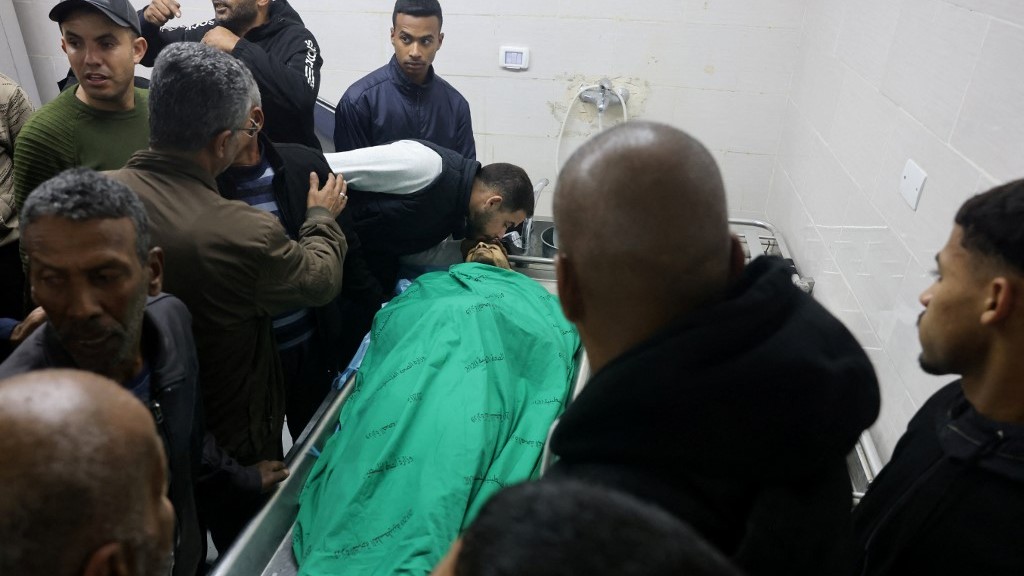
    An unnamed Iranian official has disclosed that government-verified fatalities from recent civil unrest have reached approximately 5,000 casualties, according to a Sunday statement to Reuters. The official indicated that security personnel accounted for roughly 500 of these deaths, while attributing the remaining civilian casualties to what authorities describe as “terrorists and armed rioters.”

    The northwestern Kurdish regions experienced the most severe violence, with the official noting these areas witnessed both the most intense clashes and highest concentration of fatalities. This region has historical significance as a center of Kurdish separatist activity and has consistently been the epicenter of violent confrontations during previous periods of civil unrest.

    While the official suggested the final death toll would not increase substantially, the statement contradicted reports from international monitoring organizations. The US-based HRANA rights group documented 3,308 confirmed fatalities with an additional 4,382 cases undergoing verification, alongside more than 24,000 confirmed arrests.

    The Iranian government maintains its longstanding position that foreign adversaries have instigated the unrest. The official specifically cited Israel and overseas armed groups as providing support and equipment to protesters. This accusation aligns with Tehran’s frequent attribution of domestic opposition to external forces, particularly its regional arch-rival Israel, which conducted military strikes against Iranian targets in June.

    Norwegian-based Hengaw, an Iranian Kurdish rights organization, corroborated reports of particularly violent clashes in northwestern Kurdish areas since protests initially erupted in late December. The disclosure comes amid increasing international diplomatic pressure, with several nations including New Zealand and Slovakia temporarily closing their Iranian diplomatic missions.